Tag: McDonald

  • Dentsu Creative launches 2023 CMO Report

    By Our Staff


    Dentsu Creative’s 2023 Global CMO Report, ‘Creativity at a Crossroads’, reveals optimism from today’s marketing decision-makers in the face of change and challenge. Using data from a survey of 700 CMOs and senior marketers in the US, UK, Australia, Brazil, Canada, China, India, Italy, and Spain, the report has identified eight key themes which show that despite being an industry at a crossroads, it is one empowered by creativity and technology.


    Said Julie Scelzo, Global Clients Chief Creative Officer: “Creativity at a Crossroads dives deep into the hearts and minds of marketers today. From embracing the ‘Frenemy at the Gate’ that is AI, to their resolute belief that advertising can be a force for good, this report shows that CMOs remain both optimistic about the future and committed to the transformative power of creativity, with 85% believing that creativity is a catalyst for economic growth, rising to 94% in the US.”


    Amidst volatilities of the modern world, such as climate change, inflation, and geopolitical instability, CMOs are focusing on the things they can control. Their number one concern for 2023, and as they look ahead to 2030, is owning and connecting with their audience in a world where third parties often seem to hold the cards.


    Patricia McDonald, Dentsu Creative’s Chief Strategy Officer and lead author on the report observes, “To own the audience, we need to connect in the spaces and places that matter most to them. The challenge is that audiences are changing: they have new expectations, new behaviors, and new values shaped by a deeply connected world. Their expectations have soared while their attention has polarised-they can dive deeper than ever into the things they love and find it easier than ever to ignore the things they don’t. So, brands must be built in new ways through experiences, through culture, and through action. The choice is simple: engage or be ignored.”


    Amit Wadhwa, CEO, DENTSU CREATIVE India adds, “Today’s landscape demands that brands navigate a complex web of audience attention, technology advancements, and societal shifts. In the midst of these challenges, where change and challenge intersect, the ‘Creativity at a Crossroads’ report delves into marketing leaders who emphasize the integration of creativity and technology. Now, in a world where AI threatens to steal the spotlight from human creativity, it is reassuring to see that a massive 73% of India’s marketers firmly believe that Generative AI will never outshine the boundless brilliance of the human imagination. Frankly, I couldn’t agree more. The report underscores this crucial juncture where creativity, technology, and strategic insights blend – setting the stage for an exciting future in the world of marketing.”


    Written in collaboration with leaders across the Dentsu Creative global network, the report’s eight themes allow CMOs to benchmark their areas of focus against their peers, such as whether their investments in technologies and platforms are keeping pace with the industry, and whether they hold similar views on the fundamentals of marketing in 2023 and beyond.


    WINNING THE AUDIENCE

    In an era where social platforms, retailers, and technology partners are siphoning audience attention away from brands, and when consumer-brand interactions have become increasingly demanding and sophisticated, the single biggest concern for CMOs now and in the future is owning and connecting with a rapidly evolving audience. For 30% of respondents ‘owning the customer relationship’ has been their focus for 2023 and will continue to be as they look forward to 2030. Engaging with changing audiences, responding to changing consumer behavior, representing more diverse audiences, and understanding, and keeping up with new technology were a focus of 28% of CMOs respectively, with understanding Gen Z audiences still a challenge for nearly a quarter of respondents.


    AUGMENTED HUMANITY

    Today’s CMOs demand experiences that connect technology and humanity, 87% agree that brands today are built through experiences, and 88% agree that it is essential that the customer experience matches up to the brand promise. To achieve this, they are embracing new interfaces from voice to gesture, AR to AI, blurring the boundaries between on and offline, content and commerce, and enabling ideas that are distinctive, delightful, and disarmingly human.


    CULTURAL CAPITAL

    CMOs agree entertainment will be a key component of brand building and are looking to build their brands in the spaces and places that matter most, investing in platforms from podcasts to programming to engage audiences that are harder than ever to interrupt. 79% of CMOs agree with the statement, ‘In a world where advertising is easier to ignore’ and 80% agree that technologies such as live streaming are blurring the boundaries between content and commerce as never before. We also see that humor is making a comeback with 58% of marketers looking to create moments of joy during current difficult times and agreeing that today’s advertising today isn’t entertaining enough in a crowded sea of bold and bullish promotional messaging.


    PURPOSE GETS REAL

    The way marketers are approaching Purpose is shifting. 69% of those surveyed agreed that we have been so focused on purpose that we have forgotten how to sell. Moving beyond “purpose washing” campaigns it is felt that Purpose must evolve from a side project to an integral element of business strategy as there is no longer any disconnect between what is good for society and what is good for business, 78% of marketers believe that in a world where economic volatility is accelerated and exacerbated by climate volatility, renewed innovation and infrastructure is badly needed and only through the power of emotion can we impact this and affect lasting behavioural change.


    FUNDING FEARS

    Signifying a deepening awareness of the industry’s responsibility to balance purpose and profit, CMOs are concerned over the polarised, sometimes toxic, media landscape brands could be funding with their investments. 62% of CMOs are worried about the potential adverse consequences of their campaigns and investments on the environment and society, while 64% expressed concerns that their media spending may inadvertently contribute to political polarisation, raising questions about advertising’s role in shaping public discourse. In defiance, marketers remain convinced that advertising can be a force for good and 81% agree that brands can use their budgets to amplify independent and diverse voices.


    AI: FRENEMY AT THE GATE

    AI is cause for cautious excitement and 87% agree that it represents the future of advertising and marketing. CMOs welcome the efficiencies it allows and are keen to experiment, but doubt AI-generated content will ever truly move their customers, and 81% of respondents agree that customers will be prepared to pay a premium for human-created content. Despite over half of respondents questioning if Generative AI could take their jobs in the future, 75% believe that Generative AI will never fully replace the essence of human creativity.


    CONNECTED PEOPLE

    CMOs now demand flexibility and diversity from the people they work with. 86% want their agencies and partners to connect the right talent at the right moment, wherever it sits inside the network or beyond. 83% believe brands benefit from consolidating their efforts with one agency holding company, acknowledging the power of the network in a data and technology-driven world. However, 85% do value the diversity of thought that comes from partnering with multiple agencies, calling out the flexibility and agility of local partners. As such, the perfect team for today’s fast-changing and volatile world does not exist, and CMOs want the ease of one agency, with the power of many.  The businesses and brands that can connect the right talent at the right moment, or introduce unique perspectives to unlock new outcomes are those that will thrive.


    THRIVING IN A CONNECTED WORLD

    Responding to audiences with a heightened expectation of brand integrity and customer experience, and an increased tendency to completely avoid content that fails to engage or entertain, CMOs remain committed to the transformative power of creativity, and 85% view creativity as a catalyst for economic growth. Unlocking the creativity needed to thrive in today’s connected world sits firmly at the intersection of brand, experience, and culture and sweet spots are emerging for brands and businesses to connect with modern customers in the spaces and places that matter most.
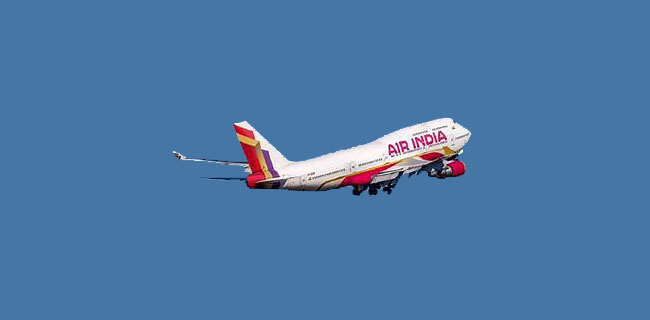
     

  • Air India- let’s not confuse logo with a mascot


    With apologies to none at all


    By Vikas Mehta


    Vikas MehtaOk, let’s begin with a question. What is the current Air India logo before the unveiling of the new logo? Simple question and the answer should be simple too. While we are all ranting about the new logo or mourning the demise of the Air India Maharaja, we must not forget to compare like to like.
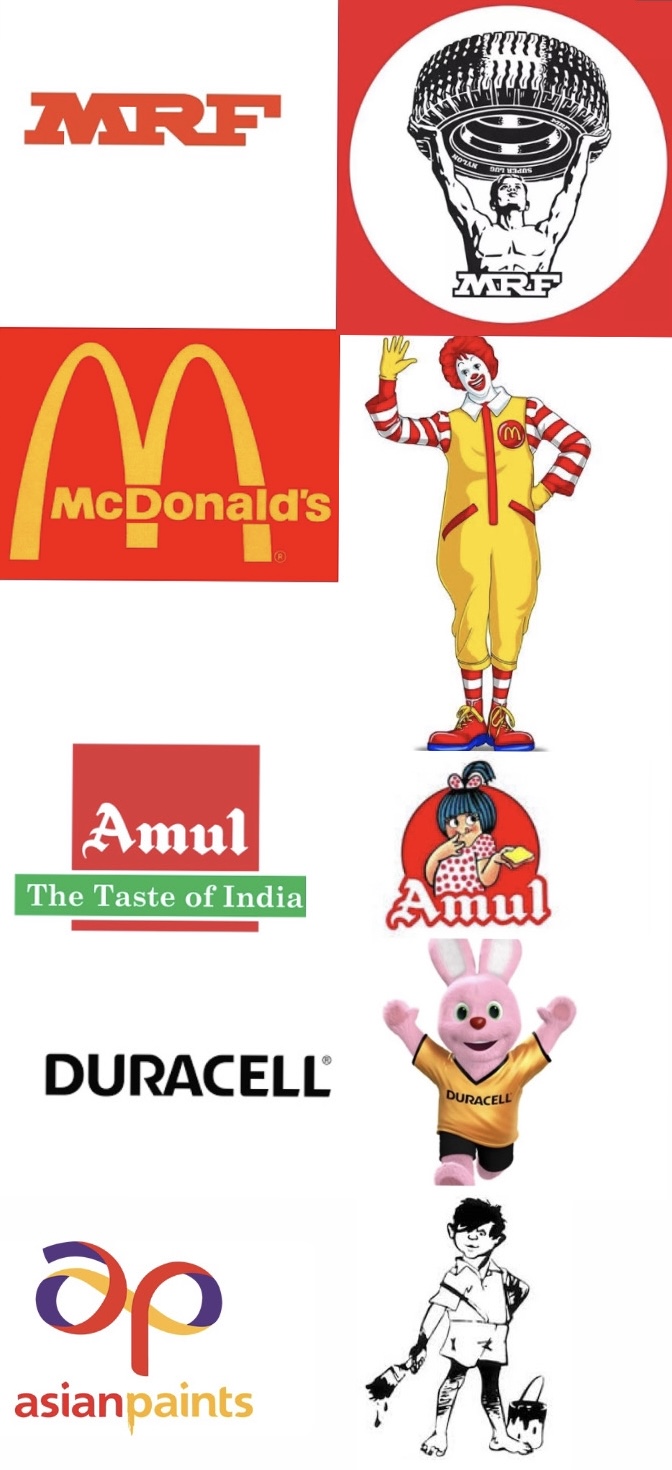

    Let’s get this very clear. Maharaja is not the current Air India logo. It never was. At best you can call it a mascot. I would prefer to call it brand personification. Every mascot, be it the Asian Paint Gattu or the Amul girl or KFC Colonel Sanders or the Michelin man for Michelin Tyres were not brand logos but mascots. Amul’s logo is the way it writes Amul in a distinct registered typeface. McDonald’s logo is its famous M arch. But its mascot is the clown, Ronald McDonald which you will find outside its outlets. Duracell Bunny is its mascot. Not its logo.

    Below are some examples of logos and some examples of mascot of the same brands.

    So, what is the difference between the two and can they be used interchangeably?

    Let’s dive in.

    Simply put, the logo is the identity of the company. It’s a reminder of the brand or company. The name. The mascot defines the value, personality and sometimes even the culture of the company. In a way, a mascot is the extension of a logo. Many companies incorporate the logo in the mascot or make it a part of it. KFC is a good example of the same. So is the Duracell bunny.

    Earlier, brands strived to have a mascot. Even in India, MRF had the muscle man. Cherry Charlie for Cherry Blossom shoe polish. Asian Paints Gattu. Air India Maharaja. These mascots told a story. They were the brand personified. Gattu was the personification of Asian Paints. It was a mischievous boy, maybe a brat who could not stop painting. And in old ads, Gattu painted anywhere. Even used a bald man’s pate. And the tag line that went with Gattu was ‘any surface that needs painting needs Asian Paints’.

    In India, all these mascots worked because the also transcended the literacy barrier. Specially in rural areas Gattu, MRF Muscle man etc stood out as they identified a brand and also what the brand stood for.

    But we must not forget that for all brands with a brand mascot, there were always two elements to play with. Twin identities. One was the brand logo. In many cases it was just the way the brand was written, with a tag line. And the second was the brand mascot. As media proliferation started and media started becoming more expensive with a premium on space or time, something had to give. Mostly, it was the mascot. Because the logo was the brand identity. Indispensable. And over a period of time most brand logos were just the way you write the brand. No separate design element also.

    So, coming back to my initial question. What was the last Air India logo? And in categories like airlines, logos become more important because that’s what you see on the planes. The airlines is recognised by its logo. Air India also went through various logo transformations. I think its most famous logo was the centaur.

    And its last logo, which is in current use, is the swan with the konark wheel inside it. Remember this?

    The new design that Air India has released is therefore a replacement of the same. The vista along with the way Air India is going to be written now is the new logo of Air India. It is not replacing the Maharaja. For all you know, the brand may continue to use the Maharaja as a property in a limited way. Or maybe a different version of the Maharaja which imbibes the thinking behind the new logo.

    I raise this point because I was dismayed to see not just marketing pundits but even national media announcing the death of the Maharaja when the new logo was unveiled. It may still happen. But it will not happen because a new logo has been designed. It’s not about a logo vs a mascot.

    And let’s not forget another point. Logo is not just a design to be seen in isolation. Logo cannot be judged immediately just because of a design element. Logo is what the company makes of it. And it evolves, registers and rules, over a period of time.

    The famous Nike swoosh. When Nike launched it, it was not exactly the current design but close to it. It evolved to what it is today. I am sure, if it was presented to the world then it would have met with outrage as a failed design. Nike was the name of the Greek goddess of victory. So, what had the swoosh to do with that? What Nike did over a period of time was identify the swoosh with its tagline, “Just do it”. Indeed, today the logo is so strongly identified with the brand that the brand name is not necessary when the logo of swoosh is around. Even Nike outlets today just have the swoosh logo outside. The brand name sometimes appears very discreetly in a small corner. Who would have thought of it, then? As I said, it’s what you make of the logo.

    Or take Apple. Imagine calling a technology company with the name of a fruit. And that too a half-eaten one! But today, Apple is the ultimate in technology and design. And the Apple logo is ubiquitous. Indeed, it’s so famous that in India I have seen the logo being used by even a potato chip manufacturer and as a garment brand too. This logo also evolved and was used in an iconic way on its products too. The logo is so important that a cursory check on Amazon and Flipkart reveal that most of the iphone covers have a punch at the back which reveal the logo. Full covers or covers without the punch are not many. For, who would want to own a iPhone without flaunting its logo. I am also amused that Apple still gives in its product boxes 2 stickers of its logo. And people use it. On their laptop bags, back packs, indeed even on cars and scooters. Again, it’s what you make of the logo.

    I would therefore not pass any judgment on the vista logo. It’s too early to make anything out of it. Even the critique that it’s not Indian is hollow. The brand is owned by a private company. It no more represents India. It’s as private or global as is British Airways or Air France. Why should it stick to representing India?

    How will Tatas use the logo? Will they be more creative with it? Will they strive to make it standout? Or will they just let it be one anonymous airline logo? Indigo has done very well with its logo of the dots as a plane, its typeface and the colour indigo.


    Indeed, even its airline code. It’s not 6E. It’s to be read as sexy. And all that has contributed to the brand personality. But that story is for another day.

    The ball is now squarely in Air India’s court to make the new logo count.


  • The Obsession To Be Premium


    By Avik Chattopadhyay


    The other day I was chatting up with a Maruti Suzuki Nexa dealer. Post the expected lament on lack of footfalls and the still elusive operating profit, we got into discussing the basic Nexa model – the purpose, the promise and the delivery. After a lot of soul-searching and head scratching, he finally brought it down to the wooden flooring, fancy furniture and focused lighting as the “premium” experience being offered to a customer vis-à-vis one who walked into a Maruti Suzuki Arena!


    Sounds preposterous? Totally believable!

    Let’s just spend a few more words on this Nexa vis-à-vis Arena case. The two channels of the same Maruti Suzuki brand offer separate products to customers, hence ensuring a minimum level of footfalls in both. I cannot buy an Ignis from an Arena outlet, hence go to a Nexa. Similarly, I cannot pick up a WagonR at a Nexa, hence go to an Arena. It is not that I have a similar product portfolio in both, yet I choose a Nexa over an Arena as the entire customer promise and experience is what I associate with and aspire for.


    There are various ways I can be premium in being a Nexa channel partner.

    In my product pricing. But the Nexa offers the Baleno that is in the same price band as the Swift.

    In my product positioning by addressing a different customer psychographic. But, then, the Ciaz was moved from Arena to Nexa to allow more revenues to the latter.

    In my overall experience. But the service and ownership experience, as per customer feedback and dealer inputs, are the same in Nexa and Arena.


    So, I am fundamentally undifferentiated from my less privileged channel cousin and totally confused in what I am supposed to be in the first place. Yet, I boast that I am “premium”. Not a very sustainable business model, is it?


    Maruti Suzuki’s urge to go premium is not an oddity. It is another demonstration of the common malaise many Indian brands have – the obsession to be premium!


    From aviation to automobiles, food to furniture, healthcare to homes, brands and businesses make proud statements in press releases and communication that they are a premium brand or aim to go premium.


    It is as if being entry-level or mass-market is a protozoan life rid of all respect and pride. It is as if being affordable is an affront to business logic and purpose.


    In the three decades I have spent working for a living, I have come across a handful of seniors and bosses who have also expressed this desire to ‘elevate’ the brand into a premium one. Basically, making the customer pay more money for the same product or solution. And how will that happen? Magical marketing! Spend on symbols of an elevated status like brand ambassadors, sponsorships and imagery to package the same product in a new avatar!


    Does this not work? It does, for some time and for some people. But it is never sustainable as the brand is desperately trying to live on borrowed clothes and makeup.


    Have I been successful in any such attempt? Not once. Have tried a few times but failed miserably. But in the process, have learnt five important lessons which I wish to share.


    Premium vis-à-vis Expensive

    These are two separate concepts. A Harley-Davidson is expensive. It is not premium. It is expensive because the Americans can just not get efficient enough. But in its home market no one buys it for its premium-ness but for its distinct imagery and culture code.


    Mass vis-à-vis Premium

    A Bic ballpen is mass. And people love it because it is so. But a special edition Bic commemorating the Black Lives Matter movement will certainly sell at a premium. Similarly, a Maruti Suzuki Swift is mass. But a 15th anniversary limited edition Swift Sport will be premium. Hence, mass and premium are not mutually exclusive concepts… in reality.


    Premium vis-à-vis VFM

    These are not conflicting at all. In fact, the better a brand is able to demonstrate value-for-money [VFM] to its target customer, the better the premium it will attract. And not extract. I once met Mr R M Dhariwal, the owner of the Manikchand Group, who told me that he bought a Maybach for his daughter on her birthday as believed for the amount of money he wanted to spend, the Maybach offered him best value for money!


    The intangible value of a product or experience, over and above the physical value is what allows a brand to command a premium. And not just demand it.


    Premium vis-à-vis Profit

    These two are not necessary and sufficient conditions to co-exist. There are mass-market brands that make profits that many luxury brands would give both arms for. A premium offering need not make higher profits than an entry-level one. The focussed definition and delivery of its promise is what makes a brand charge a premium.


    Response vis-à-vis Objective

    This is the biggest lesson for me. Being “premium” is a desired consumer response and not a business goal or objective. It is an outcome and not the process. It is the end and not the means. This clarity of brand management happens only when the brand stays true to its intended purpose and promise.


    We experience brands like Bata, Amul, McDonald’s and Chevrolet not because they are positioned as “premium” but because they are true to their brand DNA and carry no pretensions. As customers, we give them their due premiums when we wait for the pack of Amul Taaza milk to arrive at the store, love to see the sparkle in the eyes of our children on getting them a Happy Meal, squeal the hell out of the tyres of a gleaming Corvette or splash about in muddy puddles in the Naughty Boy shoes. Each of these experiences is what truly makes a brand “premium”!


  • McDonald’s adds digital to Madison Media mandate

    By A Correspondent


    Madison Media has announced that McDonald’s has once again entrusted the agency to handle its digital responsibilities. While the account has been with Madison Media since 2004, McDonald’s has renewed the agreement for another three years adding digital to Madison’s kitty, notesa communique. The agency will now handle traditional and digital media planning, buying and strategy including offline media and digital OTT.


    Said Arvind R P, Director-Marketing & Communications, Hardcastle Restaurants: “The Madison team has added immense value to our brand over the last many years. We are at an important juncture in our brand journey with digital being a strategic pillar of marketing and growth for us. Through this partnership, we hope to create new benchmarks and take the brand to new heights.”


    Added Vikram Sakhuja, Group CEO, Madison Media & OOH: “McDonald’s remains one of the most advanced marketers and we are thrilled to be awarded the consolidated account covering the entire Marketing Funnel.”


    Said Vanita Keswani, CEO, Madison Media Sigma: “We are really excited to take the partnership to newer heights since Digital has been added to our kitty after a long span of 16 years of handling mass media.”


  • McDonald’s North & East retains DDB Mudra

    By A Correspondent


    Robert Hunghanfoo

    DDB Mudra Group has been assigned the integrated marketing communications mandate for McDonald’s India – North & East (Connaught Plaza Restaurants Pvt. Ltd.). The enhanced scope will include digital marketing by 22feet Tribal Worldwide and digital media planning by OMD Mudramax, in addition to the existing brand strategy and creative mandate.


    Commenting on the partnership, Robert Hunghanfoo, Head, CPRL said: “DDB Mudra brings a deep understanding of the brand philosophy and ethos. Their creative work and successful partnership with us makes them our preferred partner for the extended mandate in digital marketing.”


    Kriti Awasthi

    Added, Kriti Awasthi, DGM, Marketing at McDonald’s India – North & East: “Digital media has revolutionised the way brands connect, communicate and interact with their customers’ world over. Covid-19 has further accelerated the need for robust digital marketing for successful consumer outreach. With strong experience in the digital marketing space and in-depth understanding of brand McDonald’s, we are confident that DDB Mudra Group will enable us to reinforce our brand love and strengthen our consumer outreach on the digital platforms as well. We look forward to delivering a great McDonald’s experience through innovative and strategic interventions.”


    Ashutosh Sawhney

    Talking about the expanded partnership, Ashutosh Sawhney, Managing Partner, DDB Mudra Group, North said: “Brand McDonald’s needs no introduction anywhere in the world. We are thrilled to have secured the overall communications mandate for McDonald’s North & East India. This is a testimony of a progressive, consumer-first client who believes in DDB Mudra Group’s combined ability of creating media agnostic ideas and deploying them based on the deepest understanding of consumer journeys.”


  • McDonald’s North & East launches its festive McSaver combos

    By A Correspondent


    This festive season, McDonald’s has lined up its McSaver combos for customers in North and East India at prices starting Rs 59. The McSaver combo meal includes a burger or a snack with a select beverage.


    Said Ajita Saxena, Director, Marketing, McDonald’s – North and East India: “We understand that our customers associate McDonald’s with great tasting food, great value and fun moments. With the festive season fervour, they are also looking forward to exciting offers and deals from their favourite brands. We thought of evoking that warm, cheerful feeling of the season by offering more value for menu items that our customers crave,”


    McDonald’s has planned an integrated advertising campaign across print, radio, television and digital media to create awareness amongst customers. We aren’t sure what happens for the Big Mac (we hate it being called Mac-D!) customers in the South and West… but that we guess is another ad, another communique and possibly another news report.


  • McDonald’s urges the youth to vote and make a difference

    By A Correspondent


    To encourage young voters to go out and make their choice in the ongoing elections, McDonald’s has executed an interesting social activation. As a part of the activation, customers who didn’t vote in the ongoing elections were served something other than what they had ordered. When the baffled customers complained about the wrong order, the crew pointed out that since they did not cast their vote, they have lost their right to choose what they want.


    The activation was  conceptualised and executed by the DDB Mudra Group.


    Sharing his views on this campaign, Arvind R.P., Director – Marketing and Communications, Hardcastle Restaurants Pvt. Ltd., said: “At McDonald’s, we believe in standing up for good and with this social initiative we are making a small yet significant effort to sensitize the youth about the power of their vote and urge them exercise their right to choose their elected representative. The message is simple – if you don’t vote, you lose the right to choose.  We feel it is our duty as a responsible corporate citizen to drive the change that we want to see in the mindset of the Indian youth. In a few cases, we actually had customers who came back to our restaurants after voting and that is a testimony of the how small efforts can make a big difference.”


  • Arvind RP joins McDonald’s as Director – Marketing & Comms

    By A Correspondent


    Hardcastle Restaurants Pvt. Ltd. announced the appointment of Arvind RP as Director- Marketing & Communications. In his new role, Arvind will lead the overall marketing and communications strategy for brand, to further strengthen its leadership in the QSR space.


    Arvind joins McDonald’s from Kaya Limited where he led marketing and analytics.  During his six-year tenure there, he spearheaded various brand-building initiatives, product & services innovations, digital and CRM initiatives.


    Commenting on his appointment, Seema Arora Nambiar, Senior Vice President – Strategy, Innovation & Capability, McDonald’s India (West & South) said: “We are delighted to welcome Arvind to the McDonald’s family.  Arvind has a proven track record of building strong brands, driving insightful product and service innovations and leading digital projects. I am confident that he will be instrumental in leading McDonald’s to its next phase of growth.”


    Speaking on his new assignment, Arvind RP said, “McDonald’s is one of the world’s most iconic brands that has always been at the cutting edge of food, service and technology. I look forward to working closely with the team to create new benchmarks for the industry.”


  • McD appoints Sagar Kargutkar as Director – Mktg & Comms

    By A Correspondent


    Sagar Kargutkar

    Hardcastle Restaurants, master franchise of McDonald’s restaurants in West and South India, has announced the appointment of Sagar Kargutkar as Director, Marketing and Communications.


    He joins McDonald’s from The Times of India group where in his last assignment was National Lead, Marketing for Times of India’s metro supplements.


    Commenting on his appointment, Seema Arora Nambiar, Senior Vice President – Strategy, Innovation & Capability, McDonald’s India (West & South) said: “We are delighted to welcome Sagar to the McDonald’s family. Having successfully led various big-ticket campaigns, he is a perfect fit for this role. His immense knowledge and strong capabilities in brand building and marketing communication will add tremendous value to our ambitious growth strategy.”


  • McDonald’s executes I-Day initiative


    Reaching out to consumers in a cinema hall may not be new but driving their participation through an on-screen message is unique in a sense. This is what McDonald’s did this Independence Day partnering with DDB Mudra Group for an experiential campaign to bring this message alive among a captive audience base.


    Speaking on the activation, Seema Arora Nambiar, Senior Vice President – Strategy, Innovation & Capability, Hardcastle Restaurants said: “McDonald’s launched Happy Price combos to celebrate variety, affordability and value for money offering. Happy price combos now allowed people to choose what they want without compromising. Thus the #BeDifferentTogether found its leap in terms of messaging and activation among the movie goers, to be able to celebrate their differences and yet be together”.


    Added Brijesh Jacob, Chief Creative Technologist, DDB Mudra Group: ”We wanted to go beyond a traditional film or a post for Independence Day. We thought that movie theatres would be the best place to conduct this activity as a theatre inherently houses different people, who are together. And being a patriotic occasion, using the ‘Stand Up’ formula just before the national anthem made perfect sense!”


  • McDonald’s new anthem celebrates beauty in diversity

    By A Correspondent


    McDonald’s India has unveiled a new TV-led integrated campaign created by Leo Burnett India that showcases relationships that are polar opposites, yet together. The anthem, sung by kids, echoes the unity in diversity philosophy.


    Speaking about the Happy Price Combos, Kedar Teny, Director – Marketing and Digital, McDonald’s India said: “McDonald’s innovative product offerings have always struck a chord with the ever-evolving consumers. With the launch of Happy Price Combo, we want to give our customers a chance to customise and enjoy their favourite meal and beverage combo. Moreover, the #BeDifferentTogether campaign also highlights how McDonalds is a melting pot of divergent lifestyles coming together to create some classic moments. We are confident that this campaign will resonate well with our audiences.”

  • McDonald’s new anthem celebrates beauty in diversity

    By A Correspondent


    McDonald’s India has unveiled a new TV-led integrated campaign created by Leo Burnett India that showcases relationships that are polar opposites, yet together. The anthem, sung by kids, echoes the unity in diversity philosophy.


    Speaking about the Happy Price Combos, KedarTeny, Director – Marketing and Digital, McDonald’s India said: “McDonald’s innovative product offerings have always struck a chord with the ever-evolving consumers. With the launch of Happy Price Combo, we want to give our customers a chance to customise and enjoy their favourite meal and beverage combo. Moreover, the #BeDifferentTogether campaign also highlights how McDonalds is a melting pot of divergent lifestyles coming together to create some classic moments. We are confident that this campaign will resonate well with our audiences.”