Tag: McCann

  • Diamonds are wherever…

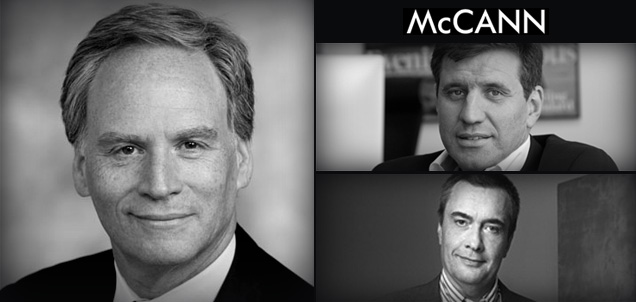
    Left: Harris Diamond, Right top: Gustavo Martinez, Right bottom: Luca Lindner


    By A Correspondent


    Imagine the head of a large Indian PR agency being appointed CEO of his network’s well-known creative agency? You can’t dream of such an eventuality in India, but not so in the United States of America, where public relations hasn’t hit the bottom of the pyramid as it has here in India.


    On Tuesday, November 13, the Interpublic Group announced a series of top management changes at McCann Worldgroup:  Harris Diamond was moved from being Chairman and CEO of IPG’s Constituency Management Group (CMG, which includes Weber Shandwick) to a similar role at McCann Worldgroup, replacing Nick Brien. A new, three-person office of the Chairman has been created which will have Mr Diamond along with Luca Lindner and Gustavo Martinez who have assigned bigger roles with geographic and operational responsibilities.


    McCann Erickson is the dominant unit of McCann Worldgroup which also includes UM, Weber Shandwick, Momentum, MRM, Craft Worldwide, McCann Health and Future Brand.


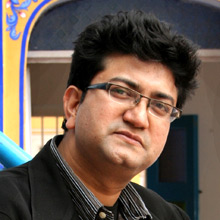
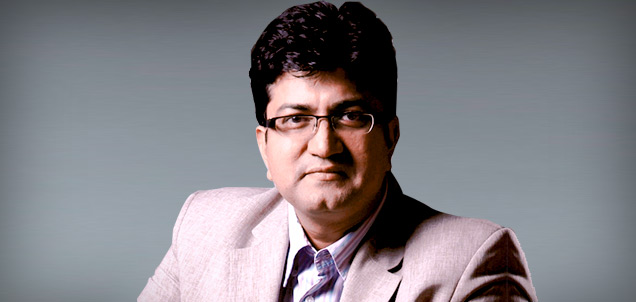
    Prasoon Joshi

    What does this mean for India? Not much. Except that until Tuesday, Prasoon Joshi as head of McCann in South Asia reported directly to CEO Nick Brien will now relate with Mr Martinez who takes charge of Asia-Pacific in addition to Europe. Mr Diamond told a Campaign Asia journalist that he had been in touch with Mr Joshi.


    Part of the reason why the office of the Chairman has been created is reportedly Mr Diamond’s background of being a Public Relations maven. Widely regarded as among the top 10 PR practitioners in the world, Mr Diamond role at CMG and Weber Shandwick specificially has received several accolades.


    His appointment to McCann is significant as he’s possibly the first true blue Public Relations professional taking charge of a large, global creative advertising company.  For IPG, industry observers say, it’s all about managing a communications firm, keeping costs under control, maintaining  a disciplined organization and most importantly: get in sync with the customer’s future strategy.


    Reasoned a former colleague David Brain: “In the era of enfranchised consumer and stakeholder and when everyone now ‘gets’ the need to engage and change strategy based on the long term needs of stakeholders and consumers, it is PR thinking not advertising thinking that is best placed to succeed.  Note, I’m labeling advertising thinking as the problem, not necessarily advertising agencies.”


    Mr Diamonds work appears cut out. Along with Messrs Lindner and Martinez plus Linus Karlsoon and Daryl Lee, global creative and strategy officers respectively who will take charge of the day-to-day operations of the agency, he needs to first ensure that people do not use ‘ailing’ as a descriptor for McCann Erickson.


    PR Week magazine reports on how in the 11 years that Mr Diamond led Weber Shandwick, he created a “powerhouse that had other shops looking over their shoulders”. The magazine’s website notes: “Contemporaries in the industry said he was a visionary who led his firm to be one of the most successful in the country.”


    Mr Diamond has the reputation of being cost-conscious and Mr Brain has this view: “My top tip for anyone at McCann who will be meeting Harris in the next few days and weeks is make sure you know how to forecast your revenues; make sure you know your cost base; make sure you are intimately connected with your clients and their needs and make sure you do quality work, because he can sniff BS a mile away!”


    Will Harris Diamond shine where Nick Brien didn’t. After all, Mr Brien too came with the reputation of being a successful Universal McCann captain and very customer-focussed. Guess time will tell.


    There are many people watching.  The success of this appointment could well see winds of change blowing across adland and the entire world of marketing communications.


    And to the world of PR professionals in India: fingers crossed. It could well be your time soon!


  • If we are divided as an industry, we will sink: Prasoon Joshi


    Forty-one-year-old Prasoon Joshi’s has been a remarkable story. A young lad from the mountainous region of Tehri Garhwal (Uttaranchal), who once struggled to get a book of poems published, is not only heading a top ad agency today, he is much sought after in Bollywood for his superlative song writing skill.


    The Chairman and Creative Chief of McCann opens up on his multi-faceted existence, the challenges the ad world faces today, his approach to creativity and the things about the industry that disappoint him. Joshi also admits that ‘Bose DK’ made him frown. Despite his close friendship with Aamir Khan.


    By Anil Thakraney


    Excited about Milkha Singh?

    Yes, I have written the story, screenplay, songs and dialogue. It’s been two years since I started working on this project.


    Must have been a time-consuming project.

    Only in phases. One had to spend time with Milkha Singh, since this is a biopic. You have to know the person and his life very well. But there was enough time, and I only do projects which give me that kind of time. Because my first job is to run the ad agency.


    Don’t your big daddies at McCann get hassled with your moonlighting?

    No. In fact, I would say any intelligent boss would understand how it helps them in return. I do these things in my free time. Now, if this takes a toll on your free time, then that’s a choice you have to make. Today is a Sunday and I am sitting with you. After meeting you, I am meeting a musician who wants to collaborate. My wife understands this, my family understands this. This keeps me happy, and when you are a happy, satisfied person, everyone likes you. Your organization likes you, your wife likes you. I whistle at home and at work. People from my organization will tell you, no matter how difficult the problem is, I have a very positive attitude about life. And positivity happens when you are not frustrated. My organizational leadership has understood that this man has many needs. He is a musician, he is a poet.


    Which means you say no to many film producers.

    Yes. 90 per cent of them.


    You are the global creative director?

    Till now, I am the chairman of the global creative council. Soon this mantle will shift from me to our creative director of New York and London office.


    How exactly does the creative council work?

    You are like the global creative director for that period. You go through the work, advise people, send them feedback. There is a chosen set of seven or eight of us who meet quarterly and review the work. This was the idea of our new CEO, Nick Brien. It was his vision to start a council where the best minds of the company can collaborate.


    Don’t you want to play a global role now?

    I have been doing it. Working out of India, I am the global creative director. I am the Asia Pacific creative director as well. I heard this couplet when I was in college: ‘Phool wahi sar chadha jo chaman se nikal gaya, izzat usi ko mili jo watan se nikal gaya.’ And I thought this was wrong. Why do Indians respect only those people who leave the country? I decided I will be here, and I will do global work. In fact, I have been instrumental in getting the Commonwealth hub to Mumbai. This is an unprecedented collaboration between two rival groups, IPG and Omnicom. There will be four Commonwealth hubs around the world. Detroit, Milan, Sao Paolo and Mumbai. This means the global work for General Motors’ brands will be generated out of Mumbai. And I will head that.


    Why was the need felt for Commonwealth?

    What happened is that in the US, General Motors was being handled by Goodby Silverstein & Partners. And some other agencies around the world, including McCann, were handling this account. A collaboration of minds happened between Jeff Goodby, myself and a few others. And it’s interesting because Goodby is owned by Omnicom and McCann by IPG. The client felt that these minds are rare to get together, so why not start another set-up, which will be dedicated to GM around the world. So my ambition is to get India onto the global map, and not just Indians.


    What about growth plans for McCann in India?

    McCann has grown in leaps and bounds in the last three years. Last year we grew by 50 per cent, this year’s projected growth figure is 45 per cent. We are No 2 in Delhi. It’s amongst the top four agencies in India. And let’s not forget that McCann doesn’t have a history, unlike JWT, Ogilvy or Lintas. We are the youngest multinational agency in this country. We are fifteen years old, unlike the hundred year legacy of the others. Also, we are expanding beyond advertising. Into things like branded content and events. For example, we have launched ‘Chevrolet Jam’. What happens is that a veteran artist comes and introduces a young musical band, and then they jam together. And this not restricted to the club culture, it extends to the rural culture. There will be a series of such musical events, and this will finally lead to making of albums.


    You come from the Northern heartland, and this has played an important part in your success. Do you prefer to hire people from the North?

    We do hire people from the heartland a lot. We have a great combination of IIM grads and people who come from extremely different background, from smaller towns. This is because we have a large base of local clients. Dabur, Marico, TVS, Videocon, Britannia, etc.

     

    “We need IPR (Intellectual Property Rights). Our ideas need to be valued much more”

    Do you feel pressure has increased in the ad world? You said this to me when we met last.

    There is pressure of growth and it percolates down from the top. If the pressure is on the CEO, he expects more from his marketing head. Who then expects more from his team. And advertising being a very important part of the marketing mix, the pressure percolates down to the ad agency. There are aggressive growth targets. Also, people come and go very fast. The new guy comes in with new aggression, and he starts evaluating everything, even the ad agency. Which is why we need IPR (Intellectual Property Rights). In the older days, clients and agencies had a long term relationship. Today it’s different, you might be there for just one year, and the client continues to use what you created for him, and you hardly got returns for that. Our ideas need to be valued much more.


    “I think there is too much animosity in the ad world. This is the reason I desist from going for certain ad functions”

    Prasoon, here’s the problem: You ad guys talk a lot about these things but no one takes the lead in trying to change things. Shouldn’t you people get together and find solutions?

    That’s a good observation. I think there is too much animosity amongst each other. This is the reason I desist from going for certain ad functions. I think it’s high time we understand that together we will succeed. And if we are divided as an industry, we will sink. And I take part of the blame for this. As the youngest of the big agency leaders, I expected the older people to take the lead.


    Another observation is that you old world chaps have a TV fixation. And no one’s even trying to understand the digital space.

    I am a geek, I was the first to launch a virtual office in Asia. But let me speak for everyone. Age has nothing to do with it, and it’s not a TV fixation. Also, I must tell you Indians are very adaptable people, history will tell you we are the least resistant race. We have been invaded, we have dealt with many cultures, and we have emerged victorious. So there’s no resistance to digital. The needs are very complex. There are certain products which do not have any need for digital. In some categories, it’s really needed. The market needs out here are very different from those in the West. If we are doing a lot of television, it’s because of the market. You know, my driver bought his first TV set only last year! But I must tell you, at McCann, we have moved away from the copy/art model. Now it’s copy/art/digital. So there are three people working together.


    “The younger talent is in too much of a hurry. Today the patience is not there, they don’t dive deep into problems”

    The biggest challenge facing the ad world today.

    Client relationships are becoming very short term. There used to be a time when you understood the brand, there used to be consistency of people. Too many changes are happening at the client’s side. As a result, new expectations keep coming up. So we are re-inventing the wheel far too often. Also, on the advertising side, the younger talent is in too much of a hurry. And I keep telling them to nurture a brand for some years, to understand it. Else you’ll have one-offs in your portfolio but not great campaigns. Today the patience is not there, they don’t dive deep into problems.


    We didn’t do well at Cannes this year. What happened?

    Well, our agency did win a Gold. We have to understand that a number of new media have emerged, such as interactive, digital, etc. We don’t have that much of work in these categories to begin with, so our number of entries in these categories is very less. What worries me however is that we should be doing much better work on television. We need to introspect on what went wrong.


    Never thought of moving full-time into Bollywood? Surely they pay you very big bucks now.

    I have a lot of respect for Bollywood, and they have given me a lot of respect. The masses have accepted my work and I have won awards. But I don’t want to do too much of work in Bollywood, not every film excites me. Tell me which film you have seen, for which you wished Prasoon had written the lyrics? You’ll probably come up with one or two names. Also, I love advertising, I like the adrenalin, it keeps me on my toes. I come to know about the global perspective, the changes, it’s a business which keeps you alive and kicking.


    Given your sensibility, a song like ‘Bose DK’ must have appalled you. Did you speak to your friend Aamir Khan about this?

    I honestly expressed my point of view to him. I told him I would never do this. Because there is something called sanctity of a language. I feel it’s easy to abuse it and difficult to maintain it. I am of the view that you have to entertain people, but tehzeeb ke daerey mein rahe ke. But Aamir’s an individual, he believed there’s nothing wrong with it, and that he was having fun.


    An honest review of Satyamev Jayate.

    I believe in people who do something, I am against arm-chair criticism. Aamir went ahead and did something he believed in. And hats off to him.


    You really think the programme will make a difference on the ground?

    Will things change overnight? No. A taxi driver in Delhi asked me to thank Aamir on his behalf. He said, on the issue of child sex abuse, he (Aamir) told his children things which he was not able to do himself. So at the grassroots’ level, it does make an impact on the psyche of people. How far will this get manifested, is very difficult to measure.


    What is the ad sensibility you bring to Bollywood?

    Simplicity and single-mindedness. Every song of mine communicates something, and it’s crafted in a way that the message doesn’t get garbled.


    One Indian creative director you admire.

    Piyush Pandey. He leads by example, he is such a hard working man. He sweats it out. And that’s exactly what I am today.


    Why did you leave him in that case?

    After a point, you have to find your own world. My upbringing was of a certain kind. Piyush had the language of the street in him. I wanted to bring in literature and music. I wanted to bring in my surrealism, my minimalism. Which is why I chose McCann, they offered me an open platform, a canvas to paint on.


    One thing that disappoints you about the Indian ad world.

    There’s unhealthy competition. The talk is less constructive and more destructive. One-up-manship is the name of the game. We forget that this is only advertising, and we aren’t at war. When I asked a few of my clients to come to Goa Fest, they said, “You people are too much into mud-slinging and we don’t want to be a part of that.”
     

  • The Best of Print Ads – 2011


    By A Correspondent


    You may have seen only a few of them and probably even forgotten the underlying message that the campaigns had to tell. But now you could make a dash to have a hard copy of MOSAIC, a compilation of the Best in Print (campaigns) to have hit India n shores in 2011. The compilation has been put together by 23 creative agencies who have submitted their best pieces of work for the category in 2011. Conceptualised by Sanjeev Kotnala and team from the Dainik Bhaskar Group, the initiative has been made special through the “insights” and “personal favourite” sections that have been provided by Media agency bosses. These include Lynn de Souza of Lintas Media Group, Mallikarjun CR, CEO, Starcom MediaVest Group, PM Balakrishna, Chief Operating Ofiicer, Allied Media and Punitha Arumugam, Director – Agency Business, Google India.


    Lynn de Souza, Chairman and CEO, Lintas Media Group, Chairman, Aaren Initiative and Director, Karishma Initiative

    “An excellent idea to recreate interest and remind all about the power and impact of the print medium. My only reservation is that there were too many submissions of ‘pretty pictures-pithy headlines’ work that may or may not have been published and did not appear to fully grasp how the medium must be used effectively.”


    TOP 5 Choices:


    Click on the picture for larger view

    1) DNA – ISKCON (Scarecrow India)

    Reasons for choosing: The intelligent use of the cigarette-turned-food visual immediately targets the smoker and invites him/her to contribute in a very simple way to a cause that benefits both beneficiary and the giver – something not easy to achieve. I like the simple, clean look of the ad and the directness of the headline and copy.


    Click on the picture for larger view

    2) Flying machine “What an Ass” (Lowe)

    Reasons for choosing: This is my idea of perfect ad! One that has used all the elements of the print medium – headline, visual, copy to present a bold, modern attitude through a perfectly harmonised contribution of all three. It’s an unmissable ad whether you are a guy or a gal.


    Click on the picture for larger view

    3) Parker – Ramnath Goenka Excellence in Journalism Awards (Lowe)

    Reasons for choosing: A stark headline supported by the simple bottle of ink that says it all. An attention grabbing reminder of the power of the pen to influence the world. Perfect synergy for the subject – Journalism awards and the ‘always memorable’ image of a gold Parker fountain pen.


    Click on the picture for larger view

    4) The Times of India – A day in the Life of India (Taproot India)

    Reasons for choosing: Fantastic art direction – great visual appeal that hooks you into reading the whole ad. The contemporary feel, using India n kitsch, with attention to detail, is riveting. (Check out the dog lifting his leg to pee on the bed of nails!) Bright, colourful, crowded yet not messy. I could read it again and again!


    Click on the picture for larger view

    5) Vaseline ‘Dear Mr. Vaughan’ (BBH India)

    Reasons for choosing: The kind of ad that every Creative Director who woke up to it that morning would have said: “I wish I had written this”. There are some things you can do impactfully in a topical yet ‘permanent’ medium like print that you can’t do anywhere else, and this ad fits the bill. Nose-thumbingly outstanding!


    Mallikarjun CR, CEO, Starcom MediaVest Group

    “This is a fantastic initiative. As media agency professionals, our lenses to view the world are different. However, what comes across is that great creative work is universal. Really enjoyed it.”


    TOP 5 Choices:


    Click on the picture for larger view

    1) Audi – World Cup (Creativeland Asia)

    Reasons for choosing: Great connect with the Champion’s Trophy ’85 win. Most of the target audience that can buy an Audi will connect immediately with that moment. For a lot of us India ns, that was the first moment of connect with Audi.


    Click on the picture for larger view

    2) DNA ISKCON Food Relief Foundation (Scarecrow)

    Reasons for choosing: A nice calculus linking smoking to food relief. Very innovative, eye catching visuals.


    Click on the picture for larger view

    3) Indigo Campaign (Weiden+Kennedy)

    Reasons for choosing: Stark, consistent visuals. The colours, space everything reflects the qualities of the airlines. Nice word play that grabs your attention and makes you read the copy. The reference to price is as value and not cheap.


    Click on the picture for larger view

    4) Nissan Micra (TBWA\ India)

    Reasons for choosing: Simple stark visuals. Driving home the relevance of a small car without talking price, affordability etc. Great, understated use of a celebrity.


    Click on the picture for larger view

    Reasons for choosing: Great expedient use of Michael Vaughan’s comment. Superb cut through and great visuals.


    PM Balakrishna, Chief Operating Ofiicer, Allied Media

    “I think this is a wonderful initiative and exposes the fantastic creativity. It is a very different platform as it is more an appreciation of great work rather than a competition as I believe each creative is great on its own.”


    TOP 5 Choices:


    Click on the picture for larger view

    1) Bajaj Fans (Leo Burnett)

    Reasons for choosing: The best part of this creative is the way it has integrated everyday common issues and weaved them into the core communication of the product. The creative is also very well crafted visually using the very cause of the product making it very effective.


    Click on the picture for larger view

    2) Birla Cellulose (Salt Brand Solutions)

    Reasons for choosing: The sheer aesthetic treatment to the communication draws you and I like the beautiful and colourful way the creative has used nature and the human body (woman). It brings out the environmental friendly nature of the product in a very soft and appealing manner.


    Click on the picture for larger view

    3)Fuji(Grey)

    Reasons for choosing: Colour and background are intrinsic material for any great creative and nothing better than drawing inspiration from Mother Nature and wildlife. The beautiful use of the animals brings the message home effectively and creatively and connects with any photographer or photo enthusiast.


    Click on the picture for larger view

    4)NipponPaints (JWT)

    Reasons for choosing: They say a great picture is worth a thousand words and the effect is breathtaking when it is beautifully woven into the message making the communication very compelling and effective. In this case the product USP, a central factor in the category has been brought home very beautifully for correct impact.


    Click on the picture for larger view

    5) Zee 24 Taas (Draftfcb Ulka)

    Reasons for choosing: Ganpati Bappa has a significant connect with the India n diaspora and especially with Maharashtrians who revere the elephant God. I like the way the creative has beautifully engaged the viewers in an innovative and personal manner and makes it unique and different.


    Punitha Arumugam, Director – Agency Business, Google India


    “This initiative continues the long tradition of Dainik Bhaskar – breaking boundaries and setting new trends in the industry.”


    TOP 5 Choices:


    Click on the picture for larger view

    1) DNA Mumbai Marathon (Scarecrow)

    Reasons for choosing: The power of long copy. It brings back memories of the old era, which was marked by a great headline and the power of long copy. It inspires and bonds with its audience.


    Click on the picture for larger view

    2) Murphy Richards epilators (Contract)

    Reasons for choosing: The power of a picture. The visual intrigues, makes you pause, demonstrates the benefit and brings a smile – all this without a single word.


    Click on the picture for larger view

    3) MTR Spicy Pickle (Ogilvy)

    Reasons for choosing: The power of insight. A true South India n like me will see this ad and can only say “How true!” Equating spicy with ‘tears’, the way the ad captures the cultural nuances – awesome!


    Click on the picture for larger view

    4) Parker – Ramnath Goenka Excellence in Journalism Awards (Lowe)

    Reasons for choosing: The power of words. While most entries used the power of the picture, this ad stands out because it uses print for what it does best – leverage the power of words and intriguing headlines.


    Click on the picture for larger view

    5) Saffola Healthy Heart (McCann)

    Reasons for choosing: The power of an innovation. A great collaboration between the creative agency, the brand team, the media agency and the publication to convey the brand message interestingly and inclusively so as to trigger an action from the reader.

    Best of Print in Dainik Bhaskar Group’s MOSAIC
     

    Some may see India’s performance of bagging just four Press Lions at Cannes out of the 30 that were shortlisted as a drab effort, but then there are some who would like to think of it as being otherwise. After all, Press Lions as a category managed to get India its largest tally of four metals versus any other category at the awards – a valiant effort considering that India finished 2012 with just 14 metals in its kitty.


    While the category may have received its fair share of fame at the pinnacle of creative awards, many would agree that Indian adland has failed to laud the finesse that stems out from Print creatives over the years. While such is not the case in some large international markets where creative works across categories gets noticed and rewarded that gesture seems to be missing when it comes to India. Luckily for the creative frat in India, an opportunity to showcase their best works – besides the awards shows – were given a fillip by the Dainik Bhaskar Group that released the first of its kind creative compilation of the finest works produced in Print in the form of MOSAIC 2011.


    Elaborating on the initiative, Sanjeev Kotnala, VP & National Head, Dainik Bhaskar Group said, “This has been a first year for MOSAIC, which is a rich collection of 150 creative units part of 77 campaigns that have been submitted by 23 agencies.” The creative showcase has been made special through some individual comments and insights that have been posted by creative leaders of individual agencies.


    Elaborating on the thought process behind the compilation, Mr Kotnala said: “As a group, we believe that the Indian creative across mediums and media is of international standards, in its thinking, relevance and in its execution. Unfortunately there has been no single reference point for the same. MOSAIC bridges this gap and we would want it to be referred by the creative, clients, media and trade.”


    As for the method that was adopted in getting the agencies to submit their campaigns, Mr Kotnala said that it began with Dainik Bhaskar requesting the creative heads at the agency to send their best Print work. “They know better than us – as by placing it in MOSAIC affirms it to be their best work. Though we did have constraints on the number of campaigns we could place in Mosaic from a single agency. This has all been a by-invitation. On the other side, there were few agencies that sent lesser number of creative units as they felt others were not up to the standard to feature in such a compilation. So it was created and evaluated by the creative teams themselves.”


    On how print has evolved over the years as a medium, Mr Kotnala said: “Today print ads are working on all fronts of communication. They are not just for the purpose of awareness building or as a source of providing tactical information; they engage and involve the readers and are very result-oriented in their approach. We always held that the idea is more important than the medium. And it will automatically find its right medium for better efficiencies and effectively delivery of the message.”


    In fact, the compilation has been made special with the involvement of four media agency heads who’ve provided their assessment of the campaigns. They include Lynn De Souza, Chairman and CEO, Lintas Media Group, Chairman, Aaaren Inititative and Director, Karshma Initiative; Mallikarjun CR, CEO, Starcom Mediavest Group; PM Balkrishna, Chief Operating Officer, Allied Media and Punitha Arumugam, Director- Agency Business, Google India.


    With the first edition already finding appreciation within the industry, the Dainik Bhaskar group have their task cut out for the next year too. On his plans for a sequel, Mr Kotnala said, “We would want to see more regional and language work in the collection – and they still should meet the standards set. We would and could try getting clients and media owners also picking their favourites and definitely may wish to incorporate a section on media innovations. Though we have taken the task and brought out the book, in our mind it is an industry level initiative and we would want to keep it that way.”


    Mosaic 2011 can be accessed and downloaded at http://i10.dainikbhaskar.com /dainikbhaskar2010/books/ Final_Book.PDF


  • The Anchor: Rajesh Mehta on 5 highs for a marketer winning a Gold at Cannes

    By Rajesh Mehta


    1.  Winner at a global level:

    It was a campaign that was conceptualized and visualized by the team and received laurels globally. The appreciation that we received was absolutely exciting. The admiration that we got withWestern Unionwining at such a global platform was thrilling for our entire team.


    2. Not expected from financial services:

    Western Unionmoney transfer, being a financial services company, is associated as the category from which cutting edge creative work is not expected. But to break the standard belief that the category can also be innovative was an achievement in itself. The entireWestern Unionmarketing team, along with McCann (creative agency), worked together to develop the campaign, that enabled us to cut through the clutter.


    3. It’s a Gold:

    There couldn’t be a better feeling than winning a Gold at the Cannes. And apart from that, it was the first Gold win forIndiaat the Cannes 2012. Western Union accomplished two victories with one Award – won the Gold at Cannes and the first gold forIndiafor 2012. There couldn’t be a greater feeling for us than winning these accolades in one night.


    4. Befitting to theWestern Unionbrand:

    As a marketer, it is a thrill to know that the ad campaign has captured the essence of the brand and has reached out to the right audience. The win at Cannes not only proves the creativity behind the campaign but the spot on messaging captured through it. The out-of-the-box thought process of our creative agency, along with theWestern Union’s internal marketing team’s insights, made this campaign an award winning one.


    5. Stood out among all the entries:

    For all of us, standing out in a crowd matters more than anything else and that’s exactly what we achieved with this win. There were 4,843 entries from 87 countries sent this year in the OOH Category which was higher than last year. This clearly indicates thatWestern Union’s win of the Cannes Lion Gold stood out and it certainly speaks volumes about the brand.


    Rajesh Mehta is Director-Marketing, Western Union India


  • Yatra.com to partner with McCann for their creative business

    By Shubhangi Mehta


    Travel company Yatra Online has gone ahead and announced the appointment of McCann as its creative agency. McCann takes over from TBWA who handled the account for the agency until recently. On the appointment of McCann, a senior official from Yatra Online Pvt Ltd said, “Yatra and TBWA have decided to part ways. Though they helped us present ourselves as a ticketing brand and position us rightly in the online travel space, we felt the need to engage the services of a bigger agency and hence we called in for a pitch.” The official confirmed that the agencies that took part included Ogilvy, Percept H, McCann and TBWA.


    Sources close to the development have confirmed to MxM India that there is also a media pitch happening for the online travel company.


    Before TBWA, Yatra.com had appointed Rediffusion Y&R as its creative agency in 2009; while Leo Burnett was the official agency in 2007.


    The online travel company entered the market in August 2006. It had initially appointed Everest Brand Solutions as its creative agency, and Mudra’s media agency, Optimum Media Solutions (which was re-christened Mudra Connext), handled its media duties.


    Yatra Online is a travel company providing information, pricing, availability and booking facility for air travel, hotels, buses and car rentals across 5,000 large cities and small rural areas around the globe. It acts as a complete tour planner for travellers and is a one-stop shop for every travel need.


  • The Anchor: Prasoon Joshi on 5 songs he wishes he had written

    1. Ye dunia agar mil bhi jaaye to kya hai
    from the movie Pyaasa. This is a legendary song and the kind of work that I like doing. The song has a philosophical bent and is almost cathartic. It reflects the feeling of people and a song that has a social impact. This is Sahir Ludhianvi at his best.


    2. Bird on the wire by Leonard Cohen. The lyrics present a compelling imagery. Like a worm on a hook, Like a knight from some old fashioned book… It is a brilliantly written song and I admire the whole construct of the song.


    3. Mora gora rang laile from the movie Bandini. This is one of the first compositions of Gulzar Sahab and the lyrics are sheer poetry. In India where fair complexion is revered, here the request is to make her dark-skinned just like Krishna so that she can hide in the darkness and meet him. Beautifully stringed words that touch the core of your heart.


    4. Jyoti kalash chhalke from Bhabhi ki Chudiyaan. Again it presents a powerful imagery and a superb play on words. Huye gulaabi, laal sunahare, rang dal baadal ke, jyoti kalash chhalke/Ghar aangan van upvan, karti jyoti amrit ke sinchan, mangal ghat dhalke. Writing poetry is different when it has to be set on music as one has to ensure that while the song is written well it must also sound well. This is a perfect example of such a work.


    5. Mr Tambourine Man by Bob Dylan. I love the lines – I’m ready to go anywhere. I’m ready for to fade. Into my own parade, cast your dancing spell my way. I promise to go under it.


    Prasoon Joshi is the Chairman & CEO McCann Worldgroup India, Executive Creative Director of the Asia Pacific region and Chairperson, McCann Global Creative council. He is also an awardwinning lyricist.

    Photograph courtesy Shailendra Pandey/Tehelka

  • Dainik Jagran calls agency to handle its creative business

    By Shubhangi Mehta

    Dainik Jagran, the Hindi daily has invited agencies to handle its creative mandates, some of the agencies participating in the pitch are Grey, McCann, Percept H.

    Though no official confirmation could be attained at the time of writing this report, industry sources close to the development have confirmed the news to MxM India.

    Dainik Jagran was founded by Puranchandra Gupta in Jhansi in 1942. In 1947 Dainik Jagran shifted its headquarters to Kanpur, where it launched its second edition on 21 September 1947. The Rewa and Bhopal editions were added in 1953 and 1956. In 1975, publication of Gorakhpur edition started, followed by Varanasi, Allahabad and Lucknow in 1979. In 1984, Meerut edition was launched, followed by Agra in 1986, Bareilly in 1989 and Delhi in 1990. Between 1997 and 2006,

    Eighteen new editions were added, and through 2007-08, six new editions were launched.

    More than 55.7 million people read Dainik Jagran making it the largest read daily in India. Currently, Dainik Jagran’s 36 editions are published across eleven states of India.