Tag: McAfee

  • Why sharing of kiddie images on social is uncool


    By A Correspondent

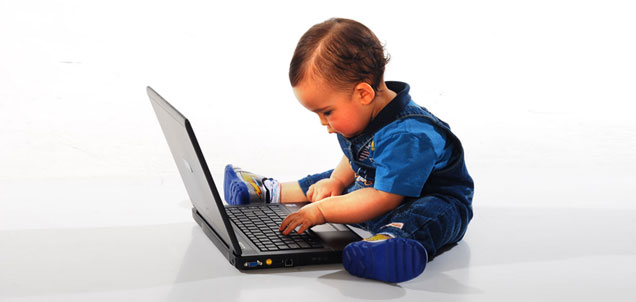
    McAfee, the device-to-cloud cybersecurity company, announced results from its latest survey, ‘The Age of Consent’, and found 40.5 per cent of parents in India post a photo or video of their child at least once a day on their social media accounts with 36 per cent posting a picture of their child once a week – highlighting the extent of child exposure on the web arising out of a desire to stay connected with friends and family. Most parents identified the following concerns associated with sharing images online including pedophilia (16.5 per cent), stalking (32 per cent), kidnapping (43 per cent) and cyberbullying (23 per cent), but many (62 per cent) don’t even consider if their child would consent to their image being posted online. What’s even more alarming is that a whopping 76 per cent of parents say they are aware that the images of their children posted online could end up in the wrong hands.

    The survey also found parents from Mumbai to be most active with 48 per cent posting a picture of their child on social media at least once per day in comparison to other metros like Delhi (38.5 per cent) and Bangalore (31 per cent). Parents from Bangalore (59 per cent) exercise highest caution and post pictures of their children only from private social media accounts, closely followed by Mumbai (57 per cent) and Delhi (48.5 per cent). Parents

    Said Venkat Krishnapur, Vice-President of Engineering and Managing Director – McAfee: “Social Media is a great way to connect with friends and family, to share what’s going on in our lives with loved ones. However, the survey reveals parents are not giving enough consideration to what they post online and how it could harm their children. Posting kids’ information may compromise their personal information. Responsibility lies with parents to understand the implications of their social media habits/actions and the repercussions the child may face.”

    While it’s clear that parents are worried about physical risks to their children’s safety, results indicate less concern about the emotional risks. While 46% of parents are concerned that posting an image of their child online could be embarrassing or lead to anxiety, they do it anyway. Emotional side effects should not be discounted. According to a survey from ComRes, more than one in four children between 10 and 12 years old feel embarrassed, anxious or worried when their parents post pictures of them online.

    Interestingly, it appears moms consider the embarrassing side-effect more than dads, with 47% mothers admitting that they would never post images their children would be embarrassed by, in comparison to 38% of dads.  However, when they do, mothers (63%) are also less likely to seek their child’s permission before posting an image of them on social media, as opposed to fathers (55%). The survey also highlights how mothers are more conscious about online behavior when it comes to their children with 73% admitting they would never share an image of their child under 2 without clothes on over social media in comparison to men (66%). On the other hand, the dangers that discourage the two are varied as fathers (47%) are most concerned about the danger of identity theft while mothers (49%) are most concerned about the image of their children being edited/photoshopped.   

    Parental Tips for Safe Sharing

    Watch out for geo-tagging: Many social networks will tag a user’s location when a photo is uploaded. Parents should ensure this feature is turned off to avoid disclosing their location. This is especially important when posting photos away from home.

    Lock down privacy settings: Parents should only share photos and other social media posts with their intended audience. Services like Facebook and Instagram have features that allow posts to be shared only with confirmed connections, but everything posted on a social network should be treated as if it’s public.

    Set ground rules with friends, family and children: Be clear with friends and family about guidelines when posting images. These rules can help avoid unwanted situations where a family member has shared photos without explicit permission. Don’t forget that these ground rules should also apply to parents to protect the children in the images from embarrassment, anxiety or even cyberbullying.

    Take control of your personal information: As the number of reported data breaches continue to rise, so does the possibility of identity theft. For children who are too young for a credit card, parents should freeze their credit to avoid any unauthorized use. An identity theft protection solution like McAfee Identity Theft Protection can help consumers proactively protect their identity and keep their personal information secured from misuse.

    Survey Methodology

    McAfee commissioned OnePoll to conduct a survey of 1000 parents of children aged 1 month to 16 years old across Mumbai, Delhi and Bengaluru.


     

  • McAfee survey reveals interesting facets of Indian internet users

    McAfee has released its ‘Digital Assets Survey’ which reveals that Indian internet users place an indicative value of Rs 25 lakh on their owned digital assets stored across their digital devices. The survey also showed that almost half of the respondents use 3 to 4 connected devices on average; but do not adequately secure each of them.


    With multi-device usage becoming mainstream in India, the need for comprehensive and all-in-one security protection across devices becomes paramount. McAfee’ LiveSafe service addresses the need, as the industry’s first unlimited cross-device security service that uses cutting-edge facial and voice recognition technology that is poised to protect users’ digital lives.


    The relevance of this solution is further substantiated by the results of McAfee’s ‘Digital Assets Survey’ which was aimed at analyzing the perceived worth of digital assets of Indian respondents and evaluating awareness levels to protect such precious data. Some of the other interesting findings from the survey include-


    } India has the second highest perceived value of their total digital assets, with an average cited value of US$ 41,589 (Rs 25 lakh) preceded by North American (U.S. and Canada) having an average cited value of US$ 52,154 (Rs 31 lakh).


    } 60 per cent store digital assets on devices that would be impossible to re-create, re-download or re-purchase


    } 62 per cent of respondents claimed that they do not protect smartphones with comprehensive security


    } 85 per cent of respondents claimed that they do not protect tablets with comprehensive security


    “With the proliferation and adoption of multiple internet enabled devices in Indian households, there is a compelling need to store and secure personal data and identity across all the devices,” said Jagdish Mahapatra, MD, India and SAARC, McAfee, part of Intel Security. “McAfee and Intel are jointly dedicated towards plugging this need with cutting-edge solutions that deliver unprecedented data protection across multiple devices with simplified security management. With McAfee LiveSafe service, we are leading the way to deliver the most complete and deepest protection available with innovative features to protect all devices, identity and personal data of our customers so they can connect with confidence.”


  • Realm activation popularizes McAfee mobile security application

    By A Correspondent


    Since consumers are already exposed to various anti-virus options for their smartphones McAfee joined hands with Airtel to promote their mobile security application, with the challenge being to create an acceptance for McAfee Mobile Security.


    For this, Realm Media, an integrated media agency of the Indraksh Group, strategized, designed and executed a three-day out-of-home activation programme at the Airtel Campus in Gurgaon. The objective was to create a buzz for the launch of McAfee’s Mobile Security Application with basic features for all Airtel subscribers with smartphones.


    Savio A

    Savio A, Sr Manager, Client Servicing, Realm Media Solutions Private Limited; said, “For this campaign Realm created the ‘smart protection for your smartphone’ concept which was promoted using a BTL + Digital approach. From designing of the creatives to strategizing & executing the entire plan we worked closely with both brands to ensure that the launch not only creates an impact from a brand perspective however also generates an amplified brand recall. We launched our show stealer ‘Coot Coot’ the latest YouTube sensation and the face of the campaign who is smart, cool, friendly, fun-loving, confident, happy and free from worries because he always feels protected, whether he is on the go or in whatever he does. We encourage people to see this MMS mascot as their ‘new best friend’ in whose company they will always feel secure & protected.”


    Krishita Motwani

    Krishita Motwani, Marketing Manager-India, Consumer Mobile Small Business Division, McAfee, said, “Having worked with Realm in the past and knowing the passion and commitment they bring to the table, they were our preferred agency. Realm Media functions more like an extended arm of our marketing team. They understood our tonality and got their plan in action for the activation, which was a success and garnered us the expected ROI.”


    Yuvraj Agarwal

    Yuvraj Agarwal, Co-Founder and Group CEO, Indraksh Media & Realm Media Solutions Pvt Limited, said, “Today clients are constantly striving to use innovative ways of engaging with the TG. With Krishita’s support and guidance, the team at Realm worked tirelessly to create an out of the world experience that actively brought the brand message to life and allowed the TG to have a lasting impression. Coot-Coot as a concept is absolutely great and can be carried forward in an engaging manner and successfully used across media platforms.”


  • Sunny Leone the most dangerous celeb in Indian cyberspace, finds McAfee

    By A Correspondent


    Sunny Leone emerged as the ‘most dangerous celebrity’ in Indian cyberspace this year, followed by Katrina Kaif; according to security technology company McAfee.  For the sixth year in a row, McAfee researched popular culture’s most famous people, finding the riskiest celebrity sportsmen, actors and politicians across the web to reveal the 2012 rendition of ‘Most Dangerous Celebrity’ research.  In the India ranking this year, Sunny Leone displaced Katrina Kaif, who owned this title in the 2011 edition of this annual research.


    Commenting on the findings of the report, Lubna Markar, Sr. Marketing Manager India & South Asia, McAfee, said, “Cyber criminals continue to leverage top celebrities to lure people to websites with malicious software.  This year too, we saw cyber crooks leveraging Bollywood stars whereby the maximum number of malicious software laden sites pertained to Sunny Leone. This testifies her top position as the most dangerous celebrity in Indian cyberspace in 2012.”


    Cyber criminals follow the latest trends, often using the names of popular celebrities to lure people to malicious sites designed to steal passwords and personal information. Fans looking for results on search engines using strings such as ‘name of celebrity’ combined with words like ‘free downloads’, ‘hot pictures’, ‘screen savers’, and ‘videos’ are at risk of running themselves into such sites. This year, searching for a celebrity name with “sex videos” and “free downloads” as part of the search term resulted in the highest number of risky sites.


    The study for ‘Most Dangerous Celebrity’ used the McAfee SiteAdvisor site rating which indicates the sites that are risky to search for celebrity names on the web and calculate an overall risk percentage. The top 10 celebrities in India from this year’s study with the highest risk percentages are:


    Rank Celebrity
    1 Sunny Leone -This sexy Canadian model/actress who made headlines with her presence in the celebrity reality show Bigg Boss, ranks first with 9.95% chances of luring people into clicking on malicious links.
    2 Katrina Kaif – India’s ‘chikni chameli’  was the most dangerous Indian celebrity of 2011, but has slipped down to the 2nd position this year with a risk percentile of 8.25%
    3 Kareena Kapoor – The 3rd Most Dangerous Celebrity and winner of six film fare awards has a 6.67% possibility of making users fall into a trap of malware laden websites.
    4 Priyanka Chopra – This former Miss World who has been the reigning queen of Bollywood occupies the 4th position on the Most Dangerous Celebrities list with a risk percentile of 6.5%.
    5 Bipasha Basu – With Raaz 3, this Bengali bombshell has moved up the ranking from 8th in 2011 to the 5th position in 2012. She has a 5.58% percentile of leading users to a malicious site.
    6 Vidya Balan- After her ‘Dirty Picture’, Vidya Balan has a 5.33 % chance of leading users to malicious sites. The versatile Indian actress has marked her presence even in the cyber space.
    7 Deepika Padukone – This sultry actress of ‘Cocktail’ fame, was the  2nd most dangerous celebrity in the year 2011, but has plummeted to 7th  position this year, with a 4.92% chance of being led to a malicious website.
    8 Salman Khan – One of the most sought after stars in Bollywood, Salman Khan has redefined the trends of the Hindi film industry with his roles in movies such as Dabangg and Ek Tha Tiger. With a risk percentile of 4.83%, he is on the eighth position in our Most Dangerous Celebrities ranking.
    9 Aishwarya Rai Bachchan – Touted as ‘the most beautiful woman in the world’, Aishwarya Rai Bachchan, is the ninth most dangerous celebrity in India with a risk percentile of 4.58%
    10 Poonam Pandey – The Kingfisher calendar girl who was also amongst the top 8 contestants in ‘Gladrags 2010’, has a risk percentile of 4.25% and  is the tenth most dangerous celebrity


    Â