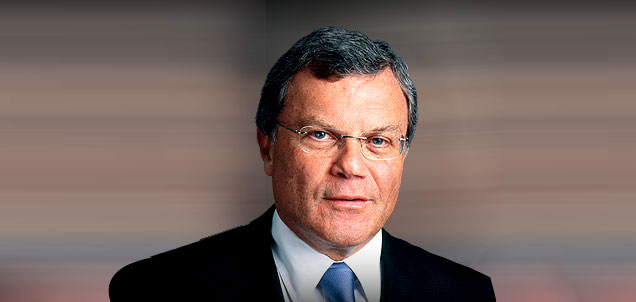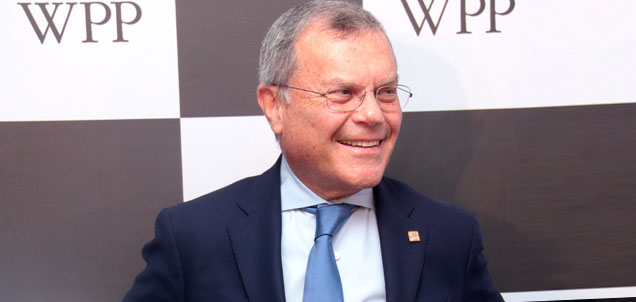
Tag: Martin Sorrell

  • MediaMonks announces content partnership with WhiteBalance

    By A Correspondent


    Sir Martin Sorrell’s S4 Capital’s content practice firm MediaMonks has agreed to a merger with Delhi-based content creation and production company, WhiteBalance. It may be recalled that S4 had appointed Poran Malani as S4 Capital’s Director for India as also opened an office in Bengaluru.


    With the merger, MediaMonks adds 50 experts to the team, with the intent of doubling the India business in the coming six months. MediaMonks will also continue to invest in growing the content studio in Bengaluru into a creative hub for APAC, and aims to size up the teams and studio facility in Delhi.


    Said Sorrell: “India is a country very close to my heart – one built on a heritage of creativity, and characterised by a vibrant culture. As you can imagine, I’m delighted to continue to expand into this fast growing market, offering a wealth of talent and significant growth opportunities, and the merger with WhiteBalance is the next step for us to build a leading creative content business here. At the same time we’re strengthening our position in the APAC region – ever more important – as India continues its trajectory to become the most populous country on earth.”


    Added Robert Godinho, Founder & CEO WhiteBalance: “WhiteBalance is a close-knit family of artists, designers and visual storytellers. Our dream is to put a ding in the universe by creating internationally recognised work from our home, India. Having worked with the world’s leading media organisations, we’re incredibly excited that our journey has led us to join forces with MediaMonks. We’re looking forward to bringing the same professionalism to customising creative solutions for our clients in the APAC region.”


    Said Victor Knaap, Global CEO MediaMonks: “We are happy to welcome a company this talented to the MediaMonks family. It’s unbelievable how well our cultures match in terms of passion for creativity and quality. What MediaMonks can bring to the Indian market is merging the disciplines of film and tech, by inviting directors and developers to come together and produce world-class digital storytelling.”


    Added Malani: “The opportunity for the S4 Capital model in India is huge. India is globally recognised for its creativity and its leading-edge technology, making it the perfect place for integrating the two into a new service model. With operations in our current production hub in Bengaluru, combined with the strength of WhiteBalance, bundling our forces in the pursuit of excellent fit-for-format content is an exciting prospect as we introduce our global network to this dynamic market and open it up to world-class digital work.”


  • Thumbs up for Congress in Kochi


    By A Correspondent


    The weather was typical of what one can expect from Kochi in February: warm and sweaty. But all that was left behind as one entered the Lulu Bolgatty Convention Centre which played host to the 44th IAA World Congress.


    Around 2000-odd attendees from 25 countries were present, set to witness the 40-odd speakers and partake in the entertainment cultural nights.


    The inauguration was marked by the lighting of the ceremonial lamp, albeit digitally. Reliance Industries CMD and Chairperson of the World Congress Mukesh Ambani couldn’t make it due to some other pressing engagement, but ensuring a packed house was the presence of actor Amitabh Bachchan and spiritual guru Sri Sri Ravi Shankar. Bachchan spoke at length and Sri Sri got the audience to meditate. Also present at the inaug were:. Srinivasan Swamy Chairman & World President, International Advertising Association, Punit Goenka , MD & CEO, Zee Entertainment Enterprises Limited, IAA India President and Kaushik Roy , Vice President/Area Director, Asia Pacific, IAA Global and MV Shreyams Kumar, Joint MD of the Mathrubhumi group and Global VP of IAA were present for the inauguration ceremony.


    In his opening address, Goenka stressed on the ‘Brand Dharma’ theme of the World Congress, as the basic principle a brand should follow, to connect with its customers and society at large. “what matters at the end of the day is the deep connect a brand establishes with the audience and the language, dialects in which the brand speaks with the audience,” he said, adding: “Also, how purely and honestly does the brand believe in the culture and value system of the audience.”


    Bachchan spoke passionately on the topic of Brand Dharma. He mentioned that “Customer’s hard-earned money is Dharma, and a brand should sell their products accordingly, that should become brand’s Dharma.  He internalised the theme and said that “My face is present on over 24 product’s packaging. Not endorsing tobacco and alcohol products, that’s my Dharma.”


    Sri Sr Ravi Shankar said that If you believe in your product’s quality, it is Dharma. He spoke about the dangers of the virtual world that had resulted in personality disorders in young children. “Video games per say encourages violence in children. Too much of screen exposure to kids impacts their central nervous system and hence the screen usage shall be controlled,” Shankar said.


    One of the star sessions was that of Nandan Nilekeni, former Chairman, UIDAI and co-founder and Non-executive chairman Infosys. In the session titled “How India uses Digital Technology”, Nilekani spoke about how Aadhar has been essential to provide everyone a digital ID.  He also asserted Aadhar was not a data gathering instrument and rather uses minimal data to fulfil two key requirements of providing a basic and unique identity document as well as to ensure welfare benefits reach the right person.


    In other sessions, Hans Paul Burkner, Chairman BCG spoke on the topic ‘Tech for Good’ and how personalisation is possible and doable and is absolute must for most companies as new consumers are really expecting personalisation of information and now companies have the tech to make it work. He indicated the fact that in today’s society, privacy is dead but security is a big issue and both these are interlinked as there is need of respecting privacy and security needs of the customers. “There is an issue of collecting data stealthily and utilising for the benefit of select enterprise,” he said.


    Penny Baldwin, Senior VP and CMO, Qualcomm Technologies spoke about how Mobile is the world’s largest tech platform in the history of mankind and how Brand Dharma of Qualcomm is innovation.   According to Baldwin, mobile is the largest technology platform with 8 BN connections all over world and There’s a huge opportunity for marketers and advertisers to reach their audience even in remotest areas with the rise in data consumption.


    D Shivakumar, Group Executive President-Strategy & Business Development, Aditya Birla Group, introduced the audience to the DUCA (Digitally Unacceptable Content and Attitude) World. He mentioned that digital has become mainstream and in the digital world, consumers are more aware and more cynical and more distrusting. “In a digital world it is society not your stakeholder and not your board that matters. If you need to build trust you need to build that trust in society,” he said.


    Jonas Kjellberg, Lecturer, author, venture investor who was also associated with Skype, talked about three key gears building game changing companies and deploying capital. He spoke about customer acquisition, customer delight and zero cost innovation. Said Kjellberg: “what a customer loved before, today it has become commodity so there is need to spend time and energy on tomorrow ‘s delight through innovation and not only about today’s efficiency and functionality. Innovation in business model should be zero/ no cost innovation like Airbnb, Uber and Alibaba  as these businesses gained from innovating and not imitating.”


    Also part of the Congress Day 1 was a chat that PayTM’s Madhur Deora had with journalist-anchor Mini Menon and Boris Eremin, President, IAA Russia Chapter welcomed delegates to St Petersburg, Russia for the 45th IAA World Congress in 2020.


    The highlight of the second half was a fireside chat with media strongman, yet-again-entrepreneur with S4 Capital and former WPP CEO Martin Sorrell conducted by journalist Anant Rangaswami. “Transparency in data is important in India,” Sorrell said, adding: “


    The position of the media industry is much better than what it was 10 years back and it’s a good business to get into. Our biggest clients are tech. Our recruits are really excited about technology. We are more attractive to population than ever before.”


    The evening ended with a window to the local culture and cuisine curated and sponsored by the Mathrubhumi Group.


  • WPP loses Ford creative portfolio to Omnicom’s BBDO. Activation, media, digital and production to stay with GTB. W+K also on board

    By A Correspondent

    Over the past five months, Ford Motor Company has been reviewing its advertising and marketing relationships. In the first major exit of a prized client after the exit of founder Martin Sorrell, WPP has announced it has lost the creative agency business to a rival. And the rival is BBDO. Wieden+Kennedy has also been hired for innovations and special projects.

    Said BBDO CEO Roberson Andrew via a tweet: “Today is a big big day. We have a wonderful new brand to help build.”

    WPP agencies will continue to handle activation, including media planning and buying, digital and production. These responsibilities also include Tier Two advertising work in the U.S., the China advertising operations with its joint venture partner, all Lincoln advertising, and all the Ford public relations business.

    BBDO will take on the creative process starting November 1, 2018. Meanwhile, WPP will internally be discussing the impact of this development and a townhall is said to have been arranged later today.


  • Mark Read assumes charge as WPP CEO


    By A Correspondent


    Very proud to be given the chance to lead @WPP with our fantastic people and clients. Time to update my twitter profile!

    • Mark Read, hours after the announcement of his appointment to the corner office at WPP. On Twitter (@readmark).


    For some weeks now, the name of Mark Read as the new CEO of WPP has been doing the rounds. It was imperative for WPP to have someone who is familiar with the set-up and has considerable equity with its long-standing clients.


    Read has held multiple leadership positions across the company, including nine years as an Executive Director of WPP plc. For 12 years, as Head of Strategy and then CEO of WPP Digital, he was responsible for the company’s digital development, including the move into technology through the acquisition of 24/7 Real Media, the creation of digital network Possible and the launch of Stream, WPP’s celebrated “unconference”.

    In 2015, he was appointed Global CEO of Wunderman, where he transformed the network into one of the world’s leading customer-focused digital agencies. Wunderman, as we know, is among WPP’s largest businesses, with more than 10,000 people in 200 offices across 70 countries and clients including Microsoft, Dell, Shell, BT and Adidas.

    In April 2018 he was named joint Chief Operating Officer of WPP, with responsibility for clients, operating companies and people.

    Earlier in his career, Mark co-founded and developed internet start-up WebRewards. He also specialised in the media and marketing industries as a principal at consultancy Booz Allen & Hamilton, having started his career at the WPP parent company working on corporate development.

    Mark has an MBA from INSEAD and an Economics degree from Trinity College, Cambridge University, and was a Henry Fellow at Harvard University. He is the Chairman of the Natural History Museum Digital Council. Wired magazine ranked him as one of the Top 25 Digital Influencers in Europe in 2014 and he was named The Drum’s Digital Individual of the Year in 2015 and 2017. He lives in London with his wife and two children.

    According to the New York Times, Jon Williams, a former Grey CEO, told Reuters: “For any leader coming into any business the most important thing is to have respect. Because of Mark’s operational delivery and because he’s got a personal relationship with a lot of the business leaders, he’s got that respect. He can hit the ground running.”

    Around noon India time on September 3, WPP made official the appointment of Mark Read as Chief Executive Officer and his appointment to the Board of WPP as an Executive Director with immediate effect.


    Said Roberto Quarta, Chairman of WPP: “The Board carried out a rigorous selection process, assessing internal and external candidates. That process, alongside Mark’s wise and effective stewardship of the business in the last few months, left us with no doubt that he is the right leader for this company, and we are delighted to announce the Board’s unanimous decision to appoint him as Chief Executive Officer of WPP,” adding:  “Recognised for his leadership throughout the industry, he has an intimate understanding of the business, he enjoys very strong internal support, and he has earned the respect and endorsement of our clients with his constant focus on their needs. He has played a central role in many of WPP’s most successful investments and initiatives, and he has deep experience at board and operational level. Most recently, Mark led the transformation of Wunderman into one of the world’s top digital agencies, and he understands the importance of culture in creating successful organisations. In short, he is in every way a 21st -century CEO.  WPP is a world leader in communications services. The priority for the Board and the task ahead for Mark and the new management team is to build on this position of strength, while pursuing a clear vision for change and value creation.”


    Added Read: “WPP is a great company with exceptional people and strong relationships with clients who place a high value on our work. Few organisations have our global reach – 130,000 people delivering results for clients in 112 different countries. Fewer still have our powerful combination of creativity and expertise in technology and data. “Our industry is going through a period of structural change, not structural decline, and if we embrace that change we can look ahead to an exciting and successful future. Our mission now is to release the full potential that exists within the company for the benefit of our clients, to accelerate our transformation and simplify our offering, and to position WPP for stronger growth. To achieve that we need to foster a culture that attracts the best and brightest: inclusive, respectful, collaborative, diverse. What makes our company special is its people, and I am very proud to have been given the chance to build a new WPP with them.”

    Meanwhile, Quarta has resumed his role as Non-Executive Chairman on the appointment of Mark Read as Chief Executive Officer. Andrew Scott will continue in his role as Chief Operating Officer of WPP on a permanent basis as a key member of the senior management team.


    Read will be paid in accordance with the Compensation Policy approved by share owners on June 7, 2017, as set out in the 2016 Annual Report.

    • Annual Salary of £975,000 (that’s Rs 8,93,03,662.50… Rs 8.93 crore)
    • Annual Bonus of up to 250% of salary with mandatory deferral of at least 40% of bonus into

    shares deferred for a two-year period.

    • LTIP award of 350% of salary. Performance will be measured over a five-year period using

    measures in line with the WPP Compensation Policy.

    • A cash allowance of 20% of salary, less employers’ national insurance, in lieu of pension.
    • A benefits allowance of £35,000 per annum to cover health, risk and other benefits.

    His contract of employment contains restrictive covenants including an industry non-compete, a non-deal with clients and a non-poach and non-employ of key WPP individuals.

  • Return of The Sorrell


    By Prabhakar Mundkur

     If you thought that Martin Sorrell’s exit from the WPP group was the end of a great career you were wrong. Sorrell now 73, who stepped down from WPP a few months ago, is making a comeback with a new advertising (and marketing services) venture.


    With his experience of taking over an unknown firm called WPP which was largely a shell company 33 years ago, it was natural for him to try his hand again at a similar experiment.


    Sorrell now is taking charge of another shell company – Derriston Capital – which he intends to turn into an advertising venture. Confirmation of the Derriston deal was confirmed first by Sky News.  Derriston as a company has been on the New York Stock Exchange since 2016.


    In this first interview with Anant Rangaswami on CNBC last night at Zee Melt, Sir Martin spoke on a number of issues with his usual eloquence. For those branding experts who are wondering about the significance of S4, it stands for four generations of Sorrells in the UK. (His grandparents came to the UK from Eastern Europe in 1899.) He quoted Brian Whipple the CEO  of Accenture Interactive while speaking about how competition from consulting might affect the advertising agency business.  Quoting  an interview that Whipple gave he said: “the consulting companies don’t compete with the agencies head-on.  They go above the agencies to the CEOs and CFOs, the CMOs and the CIOs and CTOs. And they say to them you are going through significant change, they might describe it as a digital disruption. You are spending a lot of money. Let’s look at it as one and let’s see how we can improve your productivity, improve your technological response, digitise your company, transform your company and at the same time spend less money. And by the way pay us on the basis of what we save. Which is a very alluring concept”.


    Whipple has led Accenture Interactive’s disruption of the traditional agency landscape by creating a new service model.  Whipple is known to have said “[Holding companies] are changing, but the pace of change is woefully slow. And it’s not because of the intent. It’s because of the structure and the culture.”  One couldn’t help feeling that Sir Martin is welcoming the fact that by starting on a clean slate he might be able to do things differently with S4 than what he could do with WPP.


    As a new way of doing business Sorrell said in the interview that S4 would not only like to sharpen its tactical response but also develop its strategic response at the higher levels of the company.  He reiterated the need to be ready for change, whether cyclical or strategic.


    But what shape might Sorrells new venture take?  Given his penchant as a ‘math man’ and his various criticisms of the ‘mad man’ era of advertising he is likely to be more interested in the world of data and digital.  It is quite likely that Sorrell’s new venture might be devoid of the traditional advertising agency.  In any case revenues of all his advertising agencies put together in WPP were much smaller than the media company or the research company.  Which goes to show that he perhaps thought that advertising was really an old-world phenomenon.  Sorrell is putting in his own personal investment of £40 million into the new venture.  Institutional investors include Lombard Odier, Miton, RIT Capital Partners, Schroders and Toscafund would add a further £11 million.


    That of course does not mean that the new venture will be devoid of creativity in other forms.  Sorrell always believed in creativity and the power of ideas although he is often accused of marginalising creativity.  Sorrell always said that the definition of creativity needs to change because he said “we are not in the advertising business anymore”.  Sorrell in the past has also said “75 per cent of what we [WPP] do now, Don Draper and maybe even Sir John Hegarty wouldn’t recognise.”


    So what might we expect from Sorrell’s new venture is perhaps a smaller WPP minus traditional advertising and the traditional way of doing business by holding companies.  But like WPP it would grow through acquisition.


    To go back to Whipple he is known to have said that for agencies to survive they must leave the founder’s culture behind.  In the case of Sorrel it might well the opposite.  A case of the founder leaving his agency’s culture behind.


    Prabhakar Mundkur, better known as Prabsy, is a veteran advertising agency professional, having led agencies in India and globally. And if he’s not thinking brands and strategies, he’s into music, cycling and writing. A prolific writer, he was LinkedIn’s most influential voice in 2016. He also writes ‘Ad Buzz’, a weekly column on MxMIndia.


  • Martin Sorrell to deliver keynote at Zee Melt

    By A Correspondent


    Anant Rangaswami

    It’s a coup no doubt. The Kyoorius-run Zee Melt conclave has announced that former WPP CEO Sir Martin Sorrell will deliver the keynote at Zee Melt 2018, scheduled to take place in Mumbai on May 30 and 31. He will also interact with senior journalist Anant Rangaswami and take questions from the audience. Sorrell’s session is scheduled on May 30 at 2.30pm at the Dome at the National Sports Complex of India (NSCI), Worli.


    Sorrell, one of the most powerful A&M professionals in the world, was forced to exit WPP after an investigation due to allegations of personal misconduct. Sorrell announced his departure in April.


    Martin Sorrell

    Meanwhile, while speaking at the Techonomy NYC 18 conference last week, he said: “I’m going to start again. I’m not going to go into voluntary or involuntary retirement.”


    And this is what the Wall Street Journal reports him say at an ad industry digital media conference earlier this week: “What I’m looking at, and what I will focus on and try to do again — as we did in 1985 — is look at where are the opportunities from a technological point of view, and look at where are the opportunities from a geographic point of view and put the two together.”


    Sorrell is scheduled to make an announcement in a few weeks, and his Melt interaction could well be the first after he does that. This will be Sorrell’s second ‘appearance’ at the annual conference held by Kyoorius for the marketing and media fraternity. He had connected via a live video link at Zee Melt in 2016.


  • GroupM unveils content investment and rights management company, Motion

    By A Correspondent


    GroupM has announced the launch of Motion Content Group (Motion), a new global content investment and rights management company, to meet the ever-growing market demand for new economic models for premium content across the entertainment and media marketplace.


    Motion will invest and partner with the world’s leading talent, producers and distributors to fund, develop, produce and distribute premium content. It will also consolidate and diversify GroupM’s content investments and operations to-date, as well as utilise GroupM’s & WPP’s global network of relationships and content expertise for scale and competitive advantage.


    Richard Foster, currently the head of GroupM Entertainment, has been appointed CEO of Motion Content Group, which will be headquartered in London and Los Angeles.


    Said Martin Sorrell, CEO, WPP in a statement: “With new content companies such as Netflix and Amazon growing rapidly, the competition for premium content is heating up across the globe. WPP is investing in Motion Content Group to strengthen our content creation and distribution capabilities, to help meet evolving viewer needs, and to help advertisers continue to reach consumers in high qualitycontent environments.”


    Added Kelly Clark, GroupM CEO: “We have always used our global scale and reach to find innovative approaches that strengthen the media ecosystem for advertisers and media partners alike. Motion is a major commitment by GroupM to expand on these efforts.”


    And this is what Richard Foster, CEO, Motion Content Group had to say: “Our objective is to help create and support editorially and commercially vibrant premium content for the benefit of our content partners and advertisers. We will achieve this by continuing to invest into the content industry and lead the development of new models, commercial content structures and partnerships with media networks, platforms, talent, producers, and distributors.”


  • Piyush Pandey on Martin Sorrell


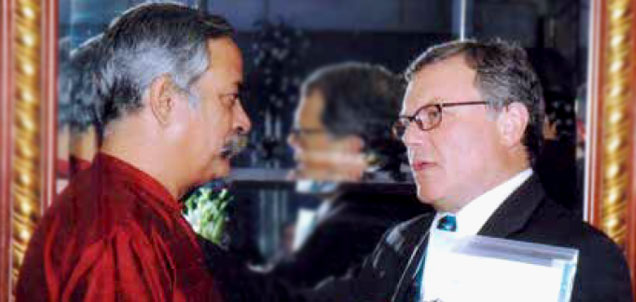
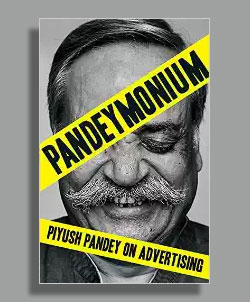
    On Wednesday, Piyush Pandey’s memoirs ‘Pandeymonium’ was released in Mumbai with much fanfare with Amitabh Bachchan releasing the book and several dignitaries, family and friends in the audience. It was tough pulling out an extract from the book, but here’s one that we though we thought would interest MxMIndia readers…


    By Piyush Pandey


    People would like to believe that Martin is a control freak—nothing could be further from the truth. Martin’s name is misused by his managers in the operating companies so as to help them achieve their own ends. Martin would not even be aware of many of the things that his managers claim that he has an opinion on. His interest is in communication, in the health of his companies, in the finances, in corporate-governance issues, in the stock price and in WPP’s shareholders. Martin does not interfere in the running of the companies and has little interest in decisions that ought to be taken by his local managers-which is perhaps why WPP does so well globally. The fact that India is so important to WPP now, and yet the Indian operations are run totally by Indian managers underlines his belief that global businesses are best run by managers who know the lay of the land.


    If cigarettes helped me spend more time with David* than was warranted by my designation, it was cricket that helped build my relationship with Martin. Martin is a huge cricket fan, following the game from wherever he may be in the world. In London, he watches matches at Lord’s whenever he gets the opportunity. He plays as well, taking part in charity matches for causes that he believes in.


    Review in 164 words. Unputdownable


    By Pradyuman Maheshwari


    Why a hundred and sixty four words? Piyush Pandey’s Pandeymonium can be reviewed in just one. Unputdownable.


    It’s a breezy read. The way Piyush speaks. And the way his ‘curator’ Anant Rangaswami writes. You can read it in one post-dinner sitting.


    The first part of the book is great fun. Depending on how much other people’s experiences move you, you can possibly have tears rolling a few times. I cried a bit.


    The second part of the book gets him into talking specifics about Ogilvy. To those not into advertising and Oglivy, in particular, this could be a stretch, but Piyush ensures that he doesn’t get too much into details.


    I was hoping to read some juicy comments and comments on people and issues, one has heard Piyush feels very strongly about. But there’s none of that.


    Pandeymonium is a must-read for all those whose lives have been touched by Piyush or his advertising. It’s a mustest-read for those wanting to get into advertising.


    Planning for one of his earlier trips to India, he mentioned to Ranjan Kapur that he wanted to play a cricket match in India. He asked him to get me to sort it out (he was aware that I had played first-class cricket). He wanted the teams to be formed from employees of the three larger agencies WPP had in India those days: Hindustan Thompson Associates (HTA); Contract (which was considered a separate company, though it was 100 per cent owned by HTA); and O&M. Martin also wanted a couple of former India cricketers to play so as to add some flavour to the match.


    I did the maths and decided that each of the three agencies would contribute six players, making it eighteen players. Martin would make it nineteen. That would leave us three players short. I requested Bapu Nadkarni, Eknath Solkar and Ashok Mankad to play, and they all agreed.


    We now had twenty-two players, and the next challenge was the composition of the two teams. I had some thoughts on that. I wrote to the managers of HTA and Contract asking each of them to send me the names of their six players—and their heights. They wrote back and asked me why I wanted to know about their heights. I told them that it was for the cricket whites that we needed to play in.


    Martin was to captain one team, while I would captain the other. I divided the remaining twenty players into two teams.


    Martin came to the ground and discovered that his team was called Short Legs XI and that mine was Long Legs XI. I had created the teams based on the heights of the players. Martin came up to me and said, ‘You cheeky bastard.’


    For me, Martin is a human being and no more.


    That match set the tone for my relationship with Martin. It allowed us to be relaxed, frank, trusting and honest with each other—and that makes for a profitable working relationship.


    During another of Martin’s visit, I planned something else. When you entered the office, from far you could see a poster outside my room with ‘WPP’ written on it. WPP did not have an office at Ogilvy. So when Martin came, he saw the signage and walked to my room. From close, you could see the small letters between WPP. It said, ‘Worldwide Office of Piyush Pandey’. ‘Cheeky bastard’ is what he said to me again, as he laughed.


    ‘Cheeky bastard’ is a phrase that Martin loves to use, and I’ve been described as one by Martin on more than two occasions. In 2000, I was flying to judge the Cleo Awards at Aspen, Colorado. The perks of being a juror meant that I flew first class on British Airways. First class was a rarity as WPP’s policy did not allow it. I was in the first-class lounge in London, waiting for my connecting flight to the US, when I bumped into Martin. I walked up to him and said, ‘Hi, Martin, Cleo is paying for this trip. Just in case you call up Rane (my colleague and then Finance Head of Ogilvy in India) and ask him who is paying for this.’ ‘You cheeky bastard, did I ask you?’ He said. ‘No, you didn’t, but you would have called up Rane; I just saved you a couple of pounds on the phone call,’ I replied.


    When we meet now, conversations are relaxed and direct. Martin discusses larger issues with me, such as the company’s reputation and corporate governance, two areas where he spends considerable time and energy. We hardly ever talk about work or revenues. Indeed, sometimes we have to contrive devices which get him to look at recent work that has been done; I do not think that he has ever asked for a formal review.


    I’ve learnt so much from Martin-perhaps because I saw him as a human being and no more. Approach Martin with fear or trepidation or guile, as many do, and what you have achieved is to ensure that Martin doesn’t relax. That’s your loss.


    * reference made to David Ogilvy whom he refers to earlier in the chapter


    Pandeymonium
    Piyush Pandey on Advertising
    By Piyush Pandey
    Penguin Books India (Portfolio)
    Hardback, Pages 244
    Rs 799
    (Rs 556 on Flipkart)


    ​Excerpted with permission from the publisher​


  • Sorrell bullish on India story


    By A Correspondent


    WPP chief executive officer Martin Sorrell isn’t an infrequent visitor to India. In India for his annual reviews and announcing some key business initiatives, Sorrell is bullish about the country, and as he is with Prime Minister Narendra Modi whom he met in the United States with media captains last fortnight.


    The India revenues for WPP are around USD 600 million, but it’s growing over 10 per cent, far above the global average.


    Sorrell announced multiple new business initiatives in the country. After the Cohn & Wolfe acquisition of majority stake in Six Degrees PR and Alphabet Consulting, as reported by MxMIndia a few weeks back, he also inaugurated the WPP School of Communication in association with the Indian School of Design and Innovation in Central Mumbai. He also announced the launch of the Data Alliance with the objective of helping clients exploit data and analytics.


    Part of the Sorrell agenda was the announcement of the coming together of Geometry Global and Encompass Network (GGEN). The merged entity fashions itself as the biggest experiential marketing player in the country. Sorrell also announced the WPP India Corporate Social Responsibility Foundation that orchestrates all CSR activities of WPP companies.


  • Piyush is not a grumpy old man. Neither am I. WPP chief Martin Sorrell on retirement plans for the Ogilvy India boss and himself

    By Shephali Bhatt


    Piyush Pandey

    We caught up with WPP’s chief Sir Martin Sorrell on the last day of Cannes Lions 2015, to talk shop and to clear the air on some rumours. The latter first: Piyush Pandey, the executive chairman and creative director of Ogilvy & Mather (O&M) India and South Asia (a WPP company), celebrated his 60th birthday in Goa earlier this year. While David Mackenzie Ogilvy, the founder of O&M, retired at the age of 62; the industry has been abuzz for quite some time about Pandey’s imminent retirement plans.


    Is he finally retiring, we ask Sorrell. And he says: “I read an article featuring Maurice Saatchi, Jeremy Sinclair (founders of Saatchi & Saatchi and M&C Saatchi) and Bill Muirhead (executive director, M&C Saatchi) highlighting that these men were ruling their organisations at the age of 68-69. They said that the grumpy old men are going to carry on. Piyush is not a grumpy old man. He’s not dead yet. Neither am I.”


    On being questioned about the succession plan for both Pandey and him (since he’s 70 himself), Sorrell says, “We have succession plans across the top 200 employees, but I’m not going to discuss that with you.”


    Sorrell’s biggest concern

    His biggest concern about this business is that clients are too short-term focused. They think about the bottom line, and not the top line, especially since the Lehman Brothers crash that heralded the financial crisis of 2008. “Clients have been very focused on cost and not on developing brands and top line, for understandable reasons,” he says. The global GDP growth rate has been slow at 5% nominal and 3-3.5% real. There’s very little price inflation. “As a result you see the rise of procurement department on the client’s end. They get to their numbers, they’re focused on cost rather than developing the revenue. Which is why the irony that people are looking for growth from Western Continental Europe when that’s the one part of the world that hasn’t supplied growth for seven years, since Lehman basically,” he explains.


    Running a business between disruptors and investors

    Sorrell talks about running a business where on one end you have disruptors like Uber and Airbnb (in the old days it was Google and Facebook, and still is to an extent), on the other end you have zero-based budgeters like 3G, Valeant and Endo. And in the middle are investors like Bill Ackman and Nelson Peltz running a legacy business. “The businesses that do best are those that get the concentration of ownership,” he notes. “Indian oligarchs control the ability to make decisions which is good,” he adds.


    Narrowing gap between fast and slow growth markets


    At the moment, there’s focus on cost because growth is hard to come by. The fast growth markets still give you more growth than the slow ones but it’s getting more difficult, he says. “The gap has narrowed.”


    Why clients needs to shift focus from cost

    If you were a client faced with slower top line growth, no pricing power, the disruptors on one end, zero-based budgeters on the other, and the activist investors in the middle, there’s no running away then, Sorrell points out.


    “What you can do is map the top brands in every region using valuation techniques and you’ll find out that people who invest in brands grow their top line faster (which is logical, you would expect that). The biggest driver of total shareholder growth is revenue return, organic revenue growth,” he says.


    Trying to get someone to act on that when it’s for the long term is very difficult when everyone is thinking short term, he rues. “What we have to do effectively, is spend money on an online+offline campaign, which clearly lays out the argument that marketing is an investment not a cost.”


    Investing in tech, data and content – to differentiate the business meaningfully

    WPP has been focusing on bolstering their portfolio across technology – with AdNexus (ad tech for targeted marketing) and Xaxis (programmatics software); data – with Rentrak, Comscore and Kantar; and content — with Media Rights Capital (producer of ‘House of Cards’, ‘Ted’ and ‘Elysium’), refinery29, Snapchat, Truffle and more. “To differentiate the business meaningfully, to win businesses for factors beyond just the talent of the presenter and the price, we have to get the client to focus on these,” he asserts.


    On tech companies

    “Tech companies have gotten very active. Google may have got softer because of some regulatory issues but Facebook is more aggressive than ever. In a non-constructive way I’d think because they feel more ballsy about catching up to Google on Mobile. Yahoo is very hungry, constructively so. Apple is much more open now. Microsoft is much more coordinated. Twitter, LinkedIn and BuzzFeed have interesting opportunities as well.”


    Source:The Economic Times

    Copyright © 2015, Bennett, Coleman & Co. Ltd. All Rights Reserved

    Licensed to republish


  • #ZeeMelt15: Multiple screens, many needs

    By Labonita Ghosh


    Digital is mainstream

    Adam Ostrow, Chief Strategy Officer, Mashable

    “In 2015, digital culture is the mainstream culture,” says Ostrow. Statistics show that the size of the online market has quadrupled in the last couple of years, he points out. Among other curious findings is the fact that about 38 per cent of two-year-olds now use mobile devices. However, while ad revenues for TV and broadcast are rapidly shrinking, as per research by Google, about 56 per cent of digital ads are never seen. Ostrow points out a few key trends in the media and advertising space. Social media has become primarily a mobile activity, he says. People are turning to social platforms for news and entertainment. “To succeed in 2015, you have to be relevant in your feed, you have to be able to draw attention in seconds,” he says. Nowadays, on a social media page, posts from advertisers and any corporate house are competing with posts from friends and family. You have to find a way to stand out of the crowd, he says emphatically, adding: “In a world where everyone is a content creator, data provides your competitive edge.”


    Content no longer king 

    Joshua Black, CEO, GroupM

    “If you believe that content is king, you’re probably still stuck in the 80s,” says Black. “Content is not king. The days of capturing a mass audience through television are over. If you’re not in the right place, distributing your content to audiences where they are, when they want it and how they want it, you’ve failed.” Today, the consumer is in control; people no longer have to sit before their TV waiting for their favourite show. “People are also always on the go,” says Black. “They don’t live in their houses any more. They live in offices, in coffee shops or even outdoors.” So content has to reach them wherever they are. Consumers want content in a specific way too. Studies in the US have shown that large numbers of people report binge-viewing their favourite TV shows, sometimes for six or eight hours straight. Clearly, consumers want control over this sort of consumption. “Producing great content is not a strategy,” says Black. “It’s only a part of the strategy.” The bigger, more critical part is delivering it, in a custom-made manner.


    Too many screens

    Tom Goodwin, SVP Strategy and Innovation, Havas Media

    There was a time when the TV was the most important screen in people’s lives. Then came the laptop. Now there are tablets, mobile phones and digital watches. A host of screens are competing for our attention. So what is a marketer to do? The answer, says Goodwin, is not to make ads smaller; but to “reimagine advertising for the future not by the size of the screen, but by the richness of data all around us.” Indeed, marketers will also have to keep some other things in mind. While the phone has become a gateway to everything, it will continue to become a thinner, more personal web experience. Moreover, the debate is no longer about digital versus traditional marketing; it’s just the modern world one has to cater to. Similarly, it’s no longer TV versus video; it’s just about video being viewed on multiple and different screens. “A whole generation of people will grow up with no concept of what it is to go offline,” says Goodwin.


    TV is a second screen

    Huib van Bockel, Marketing and (Social) Media Expert, The Social Brand

    Just as there is a whole generation that might never know what it’s like to be offline, there is likely to be a whole generation that will never know what a TV commercial is. Huib van Bockel has actually glimpsed such a future. On a recent vacation, van Bockel sat his kids in front of a TV to keep them occupied. After some time, his six-year-old daughter came rushing to him to say the ‘film’ they were watching was bad one because it had a man who was only talking about toothpaste. van Bockel explains that children today (his included) are so used to TiVo, provisions like TVadblocker or ad-less channels like Netflix that a whole generation might grow up never seeing a TV commercial. And that will pose a new challenge to traditional marketing. “Online has already or will soon pass TV,” says van Bockel. “Unlike an earlier time, the television is now your second screen. Your mobile phone is your first. There is no longer an ‘audience’ waiting for your message.” Consumers will decide, with just one swipe of their mobile screen, if they like or dislike a product. So brands have literally one second to grab their attention.


    It’s all about the moments

    Parminder Singh, Managing Director for SEA, India & MENA, Twitter

    Singh feels the important thing that marketers need to worry about today are the changing rules of customer engagement. After all, the mobile phone is less of a voice device today and more of both a content provider and a content creator (even when you take a selfie and upload it, it counts as content). According to Singh, in 2015, there are eight million connected devices. By 2020, this figure is estimated to grow to 50 billion. “We are in an age of digital Darwinism,” says Singh. “Only those who are adaptable to change, will survive.” Singh does provide solutions, too. He says there are at least two ways to improve engagement. First, to find the relevant moments, and then to create great content around those moments. “Brands don’t just have target markets any more, they have target moments,” he says. As a Twitter study shows, people tweet a lot during the Oscars or the World Cup, but they also tweet about special “moments” during their day, like the sunrise or a special meal.


    Mobile is the future

    Tomi Ahonen, Author and consultant

    The average smartphone owner looks at his or her phone at least 221 times a day, says Ahonen. He should know; among other things this long-time observer of the mobile industry has written 12 books on the subject exploring practically every aspect. “The mobile industry is worth 1.6 trillion dollars [as of 2014],” says Ahonen. “It is as big as the FM radio, internet, personal computers, and television and landline business combined. And its only 35 years’ old. While all of the other media continue growing, mobile is the future.” Indeed, there will be a ‘grand convergence’ of other industries with mobile, says Ahonen. “We all know that media is merging with the internet, which in turn is merging with advertising, which is then merging with mobile,” he says. “In all, some 17 industries will eventually land in the mobile space.” That is, they will find ways to do business on the mobile platform. “And the golden age of the mobile is only now starting,” says Ahonen. So what should marketers do? Jump on the mobile bandwagon, of course, with creativity and imagination. “But don’t spam and don’t spy,” says Ahonen. “Opt in to serve your customers better.”


    Navigate well through fragmentation

    Martin Sorrell, CEO, WPP Plc

    Sir Martin has no doubt that mobile phones and mobile content will become increasingly more important. At the same time, so will data (“Big Data is just a sexy term that trips lightly off the tongue”). So what can agencies do to keep pace? “We’re doing a lot to stimulate creativity and programming to various kinds, including lot of native advertising and sponsored content for mobile,” says Sorrell of WPP’s initiatives. But this will only get more challenging, he cautions. Digital today comprises about 10 per cent of the market. But as it grows, the market will get more fragmented. The role agencies will then have to play is to integrate the various kinds of media and lead their clients safely through the fragmentation jungle in a safe and coordinated way. Shouldn’t be too difficult for Indian agencies, however. Sir Martin believes India has the best talent in the world in the A&M sector, and that this will always be the case.


    Need ‘wide’ data, not Big

    Jason Harrison, Worldwide CEO, Gain Theory

    In this session about what keeps marketers up at night, Harrison said he found a few common ‘pain points’ in this group. They often find themselves swamped by data, which can be confounding; They work in a field which is replete with jargon and terminology, whereas it needs to be less so and more simplified; They often have to deal with inconsistent answers that they receive to questions and findings, and – the worst one – everything is about speed. That is, everyone feels the need to get faster and smarter insights. The last point, in particular, can be most challenging, says Harrison. “The reality of data is that it has created expectations among marketers that we should all be able to make decisions more quickly and effectively to grow our brand,” says Harrison. The fact, however, is that Big Data – that magical thing that everyone is talking about – is a misnomer, according to Harrison. “What we need to solve a problem is ‘wide’ data,” adds Harrison.


    Humanise the data

    Pele Cortizo-Burgess, Chief Media Strategist, MEC

    Cortizo-Burgess is a man with a mission. He wants to change what he believes is a globally-prevalent idea, that when it comes to various aspects of marketing, media people are always given the last 10 minutes of a meeting. In other words, the least important place in the discussion. “Media is treated as a backroom practice,” says Cortizo-Burgess. “[Brands feel] we need to create the idea first, and then we will invite the media people to come and take it forward.” Whereas the media function is extremely important because “the role of the media is to insert the brand and its products into the moments when people really need an ally,” says Cortizo-Burgess. But to be effective, the media team must be able to humanise data points; they must create insights that can ‘incite’ a change in thought or behaviour and keep connecting and reconnecting the dots till they have a better understanding of the market. “Don’t ask what’s the digital strategy,” says Cortizo-Burgess, in a refreshing change from the current preoccupation of marketers to create content for smaller and more multiple screens. “It’s all about storytelling.”


    (with inputs from Dyanne Coelho)


  • Much influence of Big Data on Research


    By Moinak Mitra


    The late Steve Jobs famously eschewed market research arguing that customers don’t know what they want. It’s a viewpoint many chief executives may not see merit in but the jury is out on this question: Is Big Data killing market research? After all, why should companies spend time and money on market research to understand how customers feel about a product when they are out there on Twitter and Facebook, speaking their minds for free?


    We put that question to Richard Ingleton, CEO of TNS, a wholly owned subsidiary of Martin Sorrell’s WPP Group and one of the largest market research firms in the world. A former consultant with EY & Accenture, Ingleton believes that though its contours are being changed, market research still has a place in the world of business. Edited excerpts.


    How is market research changing as things go digital?

    The research industry is here to help people make decisions. So traditionally, we’ve asked people to punch in data by asking questions— what’s my brand equity, should I launch this product, are my products doing well? The way of answering is slightly different now. I can get data through a survey but I can also get it through search and social media.


    Market research is becoming much more real-time. There are two things that are driving that— social media and mobile. With social data, the ability to ask questions in the moment means we can give our clients a much more accurate answer than any of the traditional techniques. They’re still asking the same questions, we’re just answering them better—more quickly, more accurately and more relevantly.


    What about visualisation tools and apps available today at a fraction of the cost?

    You can argue that market research was the original big data business. We’re paid for finding insights. And if it can be automated and you don’t need a human being, we’re fine with that. When it comes to understanding why my brand’s moving or product innovation, you still need people to interpret that.


    And you also have to understand that there is a big part of our industry which we call qualitative research — which uses tools that computers can’t—to get into the human psychology. If the gathering of data becomes cheaper, that might affect our revenues, but not our profits. We used to have thousands of people in the field. That moved to call centres calling people up, then online and now to mobile. So the amount of money we’ve made from gathering data has gone down.


    Big data is helping us to bring it down further. It just makes it cheaper for clients, which means where we really make our money is in the research expertise, asking the right questions, the storytelling. I’m less concerned with revenue, more concerned with the margin. If you are a consultancy and if you have a business like ours, which is half the price of a consultancy on a daily rate basis answering these questions, maybe we’re a threat to the consultants. Big Data is helping and threatening us.


    How are clients viewing this shift?

    Our clients too have researchers and they’re much like us. So this understanding of how research is going to be done in the future with the two coming together helps. But we’re a little bit ahead of the clients because we’re doing it in 80 countries for 26,000 clients, while they’re doing it in their country for themselves. So hopefully we’re there before them on average, if not in one particular case. So we’ve got an education job helping our clients understand there are faster, better, cheaper ways of doing what we’ve always done.


    It also depends upon the study. For example, big data just won’t help if you want to understand some complex social issues, like how do I get people to use toilets, how do I get kids to go to school, how do I get adults to use contraception? For governments, there are important questions that are never going to get answered from social media.


    Where does TNS figure in the new scheme of things?

    We’re using social media and search data to help in our research. We’re using mobile as well as online communities. The combination works for us.


    With all this digitization, isn’t there a tipping point in the horizon?

    There’s Ray Kurzweil, who was professor at MIT’s Media Lab and invented the Kurzweil synthesizer. He’s written a book called Singularity. He says computer intelligence is scaling so quickly, there will come a point where computers will be as intelligent as humans. He estimates that point to be 2040-42.


    That point is called singularity, beyond which we don’t know what will happen. But two years later than that point, those computers will be twice as intelligent as humans, and it will grow accordingly. So when you talk about humanoids or computer intelligence or one-man businesses, you never know what will happen.


    Can computers understand us better than we can?

    Computers will be able to understand what people think about a brand by observing them through their online behavior, which means we won’t need people to go to the market and ask questions. At the other end of the spectrum, complicated math like discreet choice modeling (which needs very good statisticians) can be done at the press of a button.


    So at one end of the scale we’ve got low value activities being undertaken and at the other end of the scale, we’ve got complex math and difficult statistics. Computers can do them too. Humans become designers and managers of the process. In 20 years, I’m sure it will get to genuine artificial intelligence in which it will be able to interact in a way which is completely indistinguishable from a human being.


    What do clients want more of?

    They have all of this social data, internal data, survey data and they have to put it together to get some kind of insight. So we have data integrators, which collect data from all sources and put them together to ask appropriate questions.


    For example, we have done some work for Holiday Inn. We’ve surveyed 5,000 people who travel through Holiday Inn: what they wear, what they drink, age, mode of transport. We’ve built a very detailed profile of them. Then you use that profile against a data set of 50 million people.


    Why such a large universe?

    Because it is a large hotel chain across so many continents. If I get a database of 50 million people, I will get at least 15 million people who are more likely to go to that hotel brand with targeted advertising. So you go from a survey to build a profile. You apply that profile against a massive database. Then you do targeted advertising against that super-set of people


    And what was the outcome?

    There was a 34 per cent increase in consideration, which is a massive increase in people who are likely to stay at Holiday Inn.


    So let’s say the hotel is automated and all data is being captured on an integrated dashboard, where my software tells me exactly what I need to do. Do I reward the market researcher or the IT guy?

    The difference between market research and IT is getting smaller and smaller. We’re using IT to do research. So I think you reward both. In what you defined as your smart hotel, somebody designed the questions to ask your customers, somebody designed the profile of your customers for you to target, somebody designed the pricing and promotional models that you used. So you put all of that research into your process, and you merged your business.


    The IT guy doesn’t know anything about how to ask a question. Behavioral economics, which is a big part of what we’re about, is about skillful question asking. This is the thing we’re selling and computers can’t do yet.


    Is the talent required in market research different from the past?

    Not massively different. I think we’re looking for people who’re curious about the human condition—psychologists, philosophers, statisticians. To understand regression and other drivers, we need analytical people too.


    Daniel Kahneman, a psychologist who won the Nobel for Economics, has identified what he calls ‘thinking fast, thinking slow’. He is actually saying the brain is not rational. The math guy is very logical, very rational. But human beings are not logical. So, on average, what you say is true, but in particular, it’ll be wrong. This is where behavioral economics comes into play.


    That is why 60 per cent of our business is creative and analytical together, the things computers can’t do now. It’s quite hard to identify the irrational motivations of behavior and to ask questions in a way people understand. That is why I don’t feel our industry is under threat.


    So how much would you say is that mental part to your business in per centage terms?

    The money we make from that thinking part is about 60 per cent of our business. The rest is gathering data in all sorts of different ways. The big data guys have a point but it’s still about the quality of data and about the truth.


    You’re a philosophy student. Draw a parallel between philosophy and market research?

    Philosophy is about understanding big subjects, great unknown questions. And that’s what market research does. And the philosopher who demonstrates that best is Socrates, the grandfather of great questioners. If market research were a philosopher, it’s got to be Socrates because he was the greatest questioner.


    Where is big data being used today?

    Accenture’s ‘Big Success with Big Data’ report focuses on companies that have implemented one or more big data projects. For the study, Accenture Analytics interviewed more than 1,000 experienced users of big data from 19 countries and seven industries, including Banking, Communications, Consumer Goods & Services, Energy, Healthcare Providers & Payers, Insurance, Retail.


    In India, 65 per cent of the companies sampled are using big data to analyse customer behaviour while 59 per cent rely on big data to improve customer personalisation. Only 14 per cent use big data as a tool to get a grip on cost. Incidentally, most of these areas are core areas of enquiry for market research firms.


    Source:The Economic Times

    Copyright © 2015, Bennett, Coleman & Co. Ltd. All Rights Reserved

    Licensed to republish