Tag: Mark Zuckerberg

  • The Third Eye Flutters


    By Ashoke Agarrwal


    Ashoke AgarrwalThe Screen Age dawned with the spread of TV. Today, it has reached its apex with the ubiquity of the smartphone.


    There are now indications that over the next decade, a new age will dawn that lessens humankind’s obsession with the screen.


    I have always considered augmented reality more potent than virtual reality and could not fathom Mark Zuckerberg’s obsession with the Metaverse. A week ago, Zuckerberg revealed a use case for virtual reality technology that made immediate commercial sense in his interview with Lex Friedman.


    The interview itself was perhaps the first public demo of a powerful new technology that Meta has developed – Pixel Codec Avatars (PiCA): “a deep generative model of 3D human faces that achieves state of the art reconstruction performance while being computationally efficient and adaptive to rendering conditions during execution”. Behind the technical jargon is a hot new metaverse experience that led a usually stone-faced gnome like Lex Friedman to drool.


    PiCA is poised to take over the online meeting space at the high end, pending software and hardware developments.


    Beyond PiCA, the interview revealed a shift in Zuckerberg’s attitude that will make Meta more of an Augmented Reality (AR) player than a Virtual Reality (VR) player.


    Zuckerberg speaks about thinking of AR as a shift in how people experience everyday reality in contrast to VR or the Metaverse, which is about people living in a separate reality.


    Zuckerberg now sees an AR world as one that adds a 4th dimension to the 3-D world of time and space we live in – the AR-driven digital dimension – not as static or moving texts and images on a screen – but as an integral part of the lived reality – an integral part that instead of detracting us from our surroundings, immerses us deeper in it.


    Zuckerberg thinks that with advances in AI, IoT, and PiCA technology, we could be, in a decade or so, living in a world where two people wearing Quest 2030, a spectacle light VR set, can play table tennis on a holographic table with holographic paddles and ball! When the game is over the table, the paddles and ball return to the digital world, leaving the real-world 3D space accessible to the next visitor from the digital dimension.


    The failure of Google Glass in the consumer world was because it was just an uncomfortable shifting of the screen from a handheld to a lens in front of our eyes.


    AR is now in its second generation, where leaps in bandwidth and computing power combined with innovations like PiCA will allow for wearable headsets that are as comfortable for all-day use as spectacles and which project digital 3D objects into real 3D space that one can interact with through voice, gesture, and other digital 3D things.


    That will be a whole new paradigm in experiencing reality.


    When it takes hold, it will be the screen’s death. A paradigm that will add a new sense organ to us humans – the Third Eye- bringing into our lives a fourth digital but actual dimension to our old-world three-dimensional reality. The Screen Age brought us distraction and shallowness of thought- almost a collapsing of our world into 2D. What will the Era of the Third Eye get us? It is difficult to predict, but the magnitude of change in the human experience will be almost metaphysical.


    Why do I feel the Third Eye is fluttering, heralding the not-too-distant dawning of the Era of the Third Eye? Besides the revelations in the Zuckerberg interview, another rumour said that Sam Altman of Open AI and the legendary designer Jony Ive (of iPhone fame) plan to collaborate on an AI hardware device. I bet a million dollars that it will be a Third Eye design if they come up with one.


    When I was a kid in the 1960s, we used to drool over the Dick Tracy watch that did all sorts of things and fantasise about what devices advertised as X-Ray glasses would do for us. Over the next decade or so, the world will likely be flooded with Third Eye devices, a combination of a powerful wrist computer and lightweight, normal-looking eyeglasses, delivering an almost godlike dimension to everyday reality.

     

  • Trust Deficit UnLtd

    Twitter logo reimagined by Rafiq Barak


    By Ranjona Banerji


    Ranjona BanerjiThe almost total collapse of the social media site Twitter reached one more landmark on July 1, when billionaire owner Elon Musk announced that he was limiting the number of posts that people could see to combat “data-scraping”.


    Immediately, the internet was in a roil. First of all, not everyone saw Musk’s tweet so they didn’t know why they were being restricted. Most assumed it was something to do with internet freedom and government. Then some explanations emerged, although with Twitter restricted not everyone saw the announcements!

    Musk’s target was not customers and subscribers, but AI companies who were helping themselves to Twitter’s data without permission. Thus “data-scraping”. Most people had no clue what that means. The internet being what it is, there was a clear division between those who explained that Musk was wrong and others who insisted he was right.

    https://www.reuters.com/technology/musk-says-twitter-applies-temprary-limit-address-data-scraping-system-2023-07-01/


    There is however a massive trust deficit between users and the new owner. Without offending those who will start huffing and puffing with rage, let me acknowledge that Twitter was not perfect under Jack Dorsey and his team. But as a long-time user, it is clear that we are worse off. The removal of verifications by Twitter itself means that it is hard to sift misinformation from facts. Taking payment for verification adds another layer of mistrust, since any fake news spreader can pay without any control. Musk has also declared that he is happiest with the alt right ideology and that means Twitter is susceptible to control by the most effect fake news spreaders and manipulators of all.

    Musk’s open admission that he has no option but to kowtow to dictators, fascists and any government which demands personal information adds an extra layer of danger for activists and dissenters.

    The problem for users is that many have spent years building networks on Twitter. It is extremely useful for gathering and sharing information with credible sources. It is also useful for engaging with a variety of people who you would not have access to. Unlike other social media sites, Twitter was the ideal place for journalists to connect with each other and potential sources.

    A few years ago, pre-Musk, many Indian Twitter user switched to Mastodon. But although the experience was friendly, it did not have either the scope or reach of Twitter. It was more like Facebook, where you chatted within a created community. And because big news sites did not join, it was not useful.

    Dorsey announced Blue Sky, Mark Zuckerberg has announced Threads. These are possible alternatives, when they arrive. But it will require existing Twitter users to remake their networks, which is tedious and inconvenient.

    The fact is that we cannot work without social media and the internet any more. And thus in a sense, we are trapped. Hostile governments, capricious owners, devious fraudsters notwithstanding, the internet has become indispensable. Even the spectre of AI looming over us, with its own demons and magic, will not stop us from becoming more digital.

    For Musk as for traditional media, the problem seems to be money and effective ways of monetisation in the age of digital information. We will pay for entertainment streaming services but we won’t pay for streams of credible information.

    Musk might reach Mars before he can figure that one out!

    The rest of us might well have flown into a blue sky hanging on a thread by then…


    Ranjona Banerji is a senior journalist and commentator. She writes on MxMIndia on Tuesdays and Fridays. Her views here are personal.


  • Advertising in the Gameverse: The Need for a New Paradigm


    By Ashoke Agarrwal


    Ashoke AgarrwalWhile the Metaverse is just a gleam (fading?) in Zuckerberg’s eyes and Large Language Models is the latest hot tech trend, the Gameverse has, over the past decades, changed, almost unnoticed, the media world.

    The numbers are impressive enough.


    The forecast is that consumers will spend USD 185 billion globally on video games – five times more than they will spend on cinema and 70% more than what they will spend on TV streaming services like Netflix. The latest Harry Potter title, “Hogwart’s Legacy” – a video game – took in USD 850 million in two weeks. Gaming concepts are spawning TV and movie spin-offs- “The Last of Us” on HBO and the upcoming movie – “Tetris’ – on Apple TV. Increasingly powerful smartphones put gaming consoles in consumers’ pockets, increasing the time spent on games. Smart TVs, streaming and subscription libraries will further accelerate the growth of games. In 2022 3.2 billion people – four in ten worldwide played video games, rising by 100 million annually. Gaming occupies the entire engagement spectrum – from individual absorption to small and large group play to a mass spectator activity that is e-sports. E-sports is now among the big leagues of sport. For example, Riot Games sold the streaming rights of its Chinese league to Huya, a streaming service, for USD 310 million. The Asian Games in September will include digital games.


    Besides the growing audience for professional e-sports, there is an equally large audience for user-generated gaming content. With its USD 30 billion ad revenue, YouTube says gaming is its second largest category after music. In addition, Twitch, a user-generated gaming content platform, has over half a million quarterly active streamers. Gaming-As-A-Service (GAAS) is a growing business model. “World of Warcraft” offers a subscription service with regular updates to maps, missions and characters. Grand Theft Auto has blockbuster sequels, and GTA Online offers continuously refreshed content at $6 a month.


    What about gaming in India? In value terms, it is small but growing – USD 1.2 billion in 2020 and projected to grow at a CAGR of 26%. However, gaming’s reach in India is already high. Five hundred and ten million people played video games in India in 2022. 94% of Indian gamers use mobiles as their platform, 9% use PCs and 4% play on consoles.


    Over the coming decades, will India leapfrog into being an advanced video game market? Perhaps, given the fast pace of technology diffusion as a society transits upwards economically.


    Given the preferences of the young and its multi-directional growth, gaming will be the driver of a new media paradigm.


    What about advertising in the Gameverse? Does it need a new paradigm?


    Advertising strategy and grammar underwent a paradigm shift from the age of print to the age of radio and then TV. Over the last two decades, with the advent of search and social media, performance marketing has driven a seminal shift in advertising grammar. In addition, the age of generative AI will significantly impact advertising processes and economics.


    If brands and their advertising are to harness the opportunity that gaming presents, they will have to resonate with gamers’ unique needs and motivations.


    A 2020 book – Games: Agency As Art by C. Thi Nguyen – offers insight into why games engage people.


    Games engage because they are a motivational inversion of life. In life, means are for the sake of ends; in games, ends are for the sake of means.


    People play games because they offer them the chance to assume different roles within a given set of rules. The gamer plays to achieve a particular end, but the engagement and enjoyment are in the playing. The core motivation driving gaming engagement is that it offers the gamer an agency different from his real-life persona. This agency transformation is true not just for video games but even simple games like card games of poker or rummy. Many highly engaged players of these card games assume a game persona that is very different from the real persona. For example, a quiet man transforms into a chatty one at the card table, and a chatty one becomes the strong, silent type.


    The highly creative and immersive worlds of modern video games multiply the agency that games offer to unprecedented levels.


    The mediums of television, radio and advertising offer convenient spaces where advertising can insert itself without any connection or reference to the content it has interrupted. The creative challenge here is to overcome the irritation caused by the interruption. This challenge multiplied with the arrival of the multi-channel world and the remote control, but the core challenge and the response remained the same.


    In the era of performance marketing, the creative challenge of overcoming the urge to ignore remains. However, the grammar has shifted with the arrival of performance marketing; the objective now is action – click a link – and not the amorphous building of brand awareness and equity.


    In the Gameverse, interruption is not a challenge; it is taboo, given the intense nature of the engagement. Instead, the advertising’s challenge in the Gameverse is multi-fold:

    :: An advertised brand needs to be present as an integral part of the gaming experience and not as an interruption.

    :: The brand needs to allow the gamer to remain in their chosen persona.

    :: Outside the game, the gamer’s interaction with the game continues by creating and watching user-generated content and e-sports events centred on that game. The brand can maximize its impact by a) enabling the gamer to generate content and b) enhancing the gamer’s experience as a spectator of e-sports or other user-generated content.


    The path to profiting from advertising in the Gameverse is to choose a shortlist of games to focus on and build a 360-degree customized strategy for each game. The advertising strategy focused on a specific game that follows the tenet of going with the game’s flow can only be achieved in collaboration with the game creators. Therefore, good advertising within a game is not about buying space and time but about a creative partnership with the game’s creators.


    For example, a brand could offer a bonus race in a specially branded car in a car-racing game. Red Bull has done so in some games.


    The higher the degree of integration into the game, the greater the impact and, thus, the ROI for the advertiser’s brand. For example, a game-integrated brand could offer players a branded assistant who analyses, offers tips and gives pep talks. With advances in generative AI, such a strategy offers fascinating possibilities. Moreover, this assistant becomes a part of the content creation and e-sports-watching experience outside the game.


    Is the Gamverse advertising opportunity category agnostic? TV, press and digital are product category agnostic in that advertising across product categories can be effective with the right creative and media strategy.


    Given its unique characteristics, advertising in the Gameverse can be genuinely effective for categories and brands that, at the core, connote a persona and a lifestyle- fashion, personal accessories, cars etc.


    The estimate is that in 2020 advertising in the Gameverse worldwide was USD 65 billion. By consensus, the most effective brand with its Gameverse advertising strategy is Red Bull, with a Gameverse budget of nearly USD 600 million. Red Bull’s core brand proposition is that it empowers its consumers – encapsulated in the theme “Red Bull Give You Wings”. This brand proposition resonates in the Gameverse, where the primary motivation driving Gamers is, as Ngyuven’s book proposes, to find a new persona, a new agency – a new set of wings.


    To sum up, if your brand is considering the Gameverse as a medium for advertising, first make sure that there is a fit between your brand’s proposition and the essential motivation that drive gamers. The subsequent steps then consist of finding a suitable game or a concise list of games to focus on and building a partnership with the game developers to create a highly integrated brand presence in the game.


  • Indrani Sen: Monopolising the Metaverse

    Indrani SenBy Indrani Sen


    Seventeen years after he launched Facebook from his university dorm in 2004, Mark Zuckerberg announced in a virtual press conference on October 29, 2021, a change of the corporate name of the company from Facebook Inc. to Meta Platforms Inc. which is being referred in short as Meta.


    A recent Amul topical ad on the ‘Meta’ change

    As explained by Zuckerberg, internet technology has moved on and the corporate name Facebook no longer fits in with the future vision of the company which is being built around the metaverse. “Over time, I hope that we are seen as a metaverse company and I want to anchor our work and our identity on what we’re building towards,” Zuckerberg said.


    The rebranding of the company name would align better with the objectives of the company at this stage when it plans to broaden its reach beyond social media into areas like virtual reality (VR). The various social media platforms owned by the social media giant, i.e. Facebook, WhatsApp and Instagram would continue to retain their individual names and brand identities under the corporate branding of “Meta”.


    The metaverse a virtual-reality space in which users can interact, meet and play with a computer-generated environment and other users using virtual reality glasses, smartphone apps and other devices. The word “metaverse” has been coined from the two words “meta” and “universe”. Loosely defined, it is an extensive 3D online world where people interact via various “digital avatars.” The word meta is generally used as an adjective or as a prefix to a name, often indicating a change or a transformation or a great futuristic idea. Example of uses of metaverses, in some limited form, can already be found on platforms like VR Chat or video games like Second Life.


    Current development on use of metaverse is centred on addressing the technological limitations with modern virtual and augmented reality devices as well as expanding the use of metaverse spaces beyond business to retail applications, entertainment and education. Many digital technology organisations as well as entertainment and social media companies are investing in metaverse-related research and development for future usage.


    The metaverse in many ways is still a speculative future iteration of the Internet part of shared virtual reality, to be used in social media and other applications. The metaverse in a broader sense may not only refer to virtual worlds operated by social media companies but the entire spectrum of augmented reality across the world wide web.


    Critics of the metaverse are arguing that as a speculative concept it is overhyped. Same concept is being used as a part of public relation campaigns by organisations having vested interests. Privacy of user’s information and user’s addiction to platforms are concerns within the metaverse, as already found in the current challenges being faced by the social media and video game industries across the world.


    Mark Zuckerberg’s announcement to change Facebook’s name to Meta has caused a massive uproar in Israel as the word “meta” sounds like the Hebrew word for “dead”. There is also a news that a US-based Meta Company is contemplating to sue Facebook Inc. for Infringing on its it’s company name. Meta was founded by Menon Gribetz, then a student of Colombia University in 2013. Though the company met with some initial success, it had to declare itself as insolvent after its primary lender foreclosed in January 2019. It is doubtful if they have the financial strength to launch a legal battle against Zuckerberg’s company. A Berlin based migraine app developed by Newsenselab M-Sense Magazine has given a backhanded compliment to Facebook who seemingly has been inspired by the logo design of the e-magazine. It is unlikely that Facebook was aware about the existence of that app or its logo and the similarity id the logo design is most likely a creative coincidence which at times happen in the advertising industry.


    The change in the company name is an extremely clever move by Zuckerberg which can help his company to monopolise “the metaverse” space, though many other companies will be using such technologies and operating in the same space in near future. To a lay internet user, Meta Platforms inc. would appear as the original provider of metaverse technology and therefore would have an edge over many of their future competitors.  Meta Platforms Inc. would not be able to monopolise the metaverse, but the name of the company would surely create an illusion of a monopoly.


  • When Times of India boss Vineet Jain damns Facebook on hate speech & fake news…


    By Ranjona Banerji


    Vineet Jain, managing director of Bennett, Coleman and Company, set off an interesting discussion on Twitter the other day. Bennett, Coleman is the owner of The Times of India and Times Now amongst a large array of newspapers and television channels. India’s largest media conglomerate is how the company is often described. Jain is the MD and part of the family which owns the group.

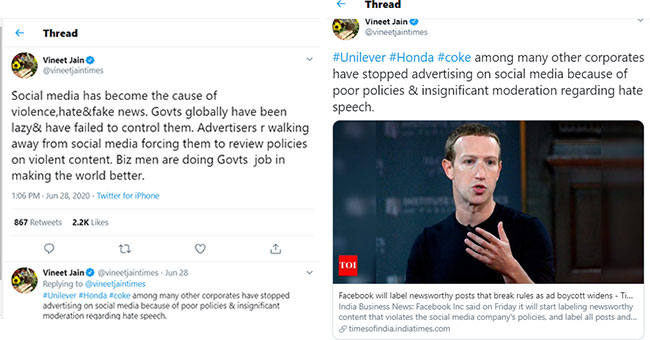
    Jain tweeted this, about ongoing discussions about Facebook, and advertisers applying pressure on Mark Zuckerberg’s social media platform to eliminate hate speech and fake news: “Social media has become the cause of violence, hate & fake news. Govts globally have been lazy & have failed to control them. Advertisers r walking away from social media forcing them to review policies on violent content. Biz men are doing Govts job in making the world better.”


    Jain went on to post a link to a Times of India article on the issue, and also tweeted this: “Unilever #Honda #coke among many other corporates have stopped advertising on social media because of poor policies & insignificant moderation regarding hate speech.”

    O the irony, the irony. Jain’s “news” channel Times Now is a regular purveyor of both hate speech and fake news, and has substantially helped to destroy the reputation of the venerable Old Lady of Bori Bunder, The Times of India, the group’s flagship publication.

    I can hear the scoffing. Because much of the destruction of the credibility of the Indian media is thanks to TOI. You could start with the hegemony of Response over editorial, the appointment of “brand managers” to oversee the hegemony, the introduction of Medianet where the company itself sold editorial space to advertisers and so on.

    But for all its many faults, there were many things – and still are – that are right with the Times of India. I myself have benefitted from a management that did not interfere and indeed supported us when we reported on the 2002 Gujarat riots from Gujarat, as I have mentioned many times before. And this is despite huge pressure from the Response section to get us to stop taking on Narendra Modi’s culpability as chief minister of Gujarat. I quit TOI just as Medianet began, so perhaps I did not see the worst of it.

    However, what Times Now does is far worse than anything that any print publication within Vineet Jain’s empire can conjure up. A non-stop barrage of anti-Muslim debates, a distinct pro-Hindu slant to what passes for news and for discussions, rabid anchors in Rahul Shivshankar and Navika Kumar, an absolute inability to question the Narendra Modi government at the Centre on anything, an endless blame game against the Opposition. It is essentially a propaganda channel for the Modi government, the BJP and the RSS.

    Here’s one small example of its behaviour. A recent poll run by the channel on how Modi had handled the ongoing China crisis had 60.2 per cent of the people saying it was handled badly and 39.8 per cent voting Modi handled it well. Times Now put up a pie chart where the 39.8 per cent was bigger than the 60.2 per cent. This ran until it was trolled on social media. I know there are many kind souls who will want to give them the benefit of the doubt but anyone who has followed the channel knows it was deliberate.

    Mr Jain might perhaps want to rephrase his observations about hate, violence and fake news being seen on social media alone. He might perhaps want to steel himself to watch his own toxic channel. The second tweet in his thread is particularly interesting because it comes to the conclusion, in the Facebook case, that it is business which does the government’s job by withholding advertising from FB and making it change its ways.

    Is this a message to Indian businesses to stop advertising with Times Now? I joke of course, but think about it. Perhaps a withholding of money is the only way that the company will consider getting Times Now to become a news channel rather than a purveyor of filth and fakery.

    It is unlikely that Jain wants government interference. The Newspapers Owners Association of India fight off any sort of government interference because it might interfere with their ownership patterns, not because they care about freedom of expression or a free press. The Association also fights against the Wage Board Commissions which work on fair-ish wages for badly paid newspaper employees.

    Or, is something strange brewing???


    Ranjona Banerji is a senior journalist and commentator. She is also Consulting Editor, MxMIndia. Her views here are personal


  • 10 years of being much-liked


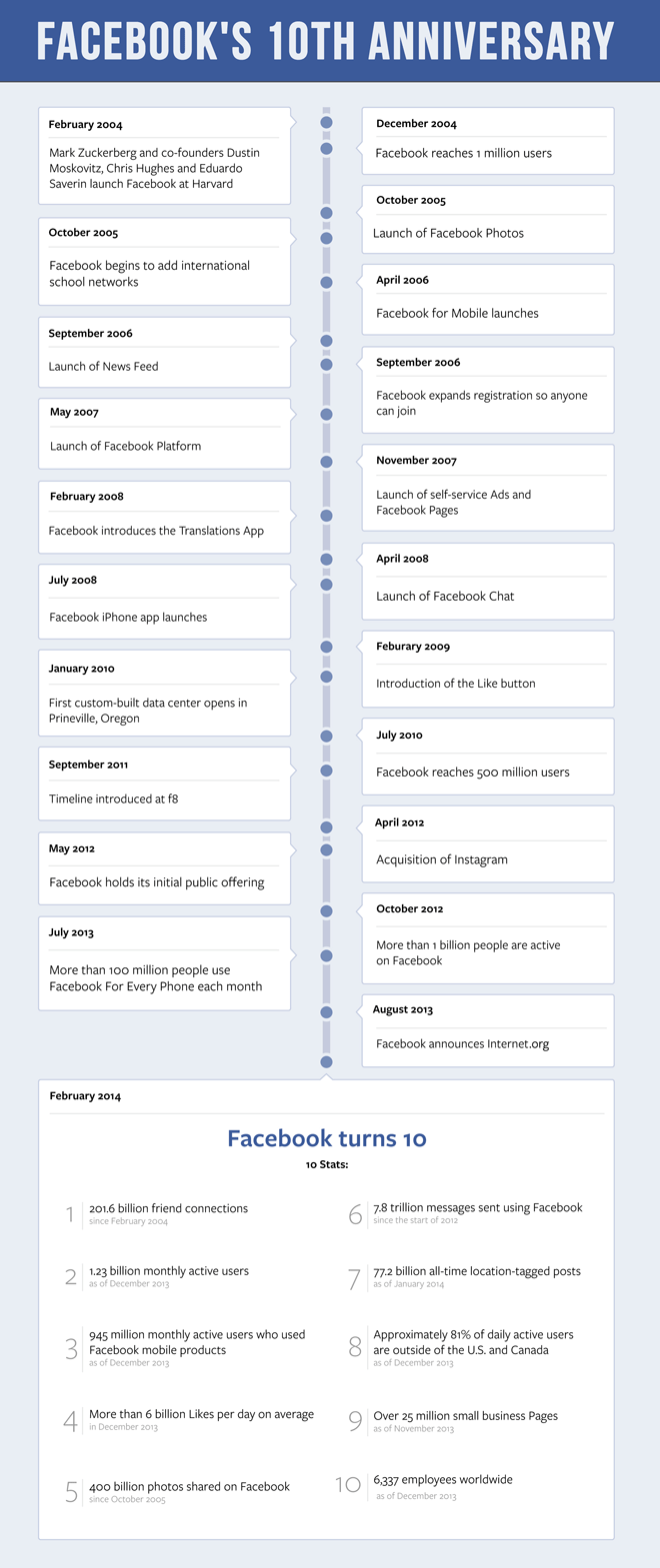
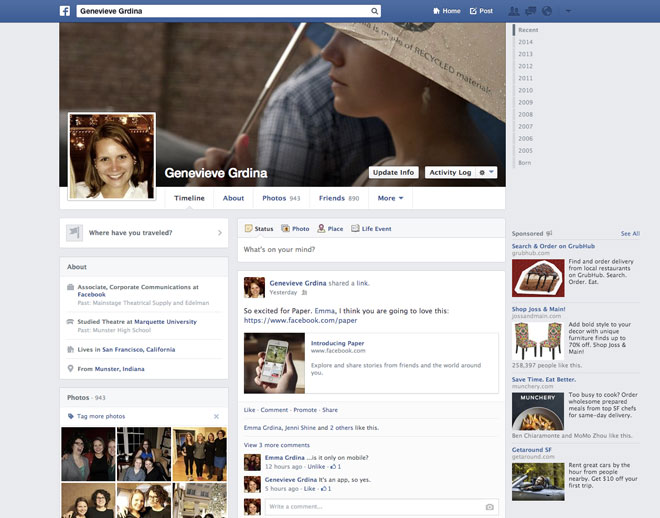
    Today (Feb 4) is social networking platform Facebook celebrates its 10th anniversary. The site went live on February 4, 2004 in founder and CEO Mark Zuckerberg’s Harvard University dorm room, and since then has grown to become a global service with more 1.2 billion monthly active users.


    Said Zuckerberg on the occasion:  “It’s been an incredible journey so far, and I’m so grateful to be a part of it. It’s been amazing to see how people have used Facebook to build a real community and help each other in so many ways. In the next decade, we have the opportunity and responsibility to connect everyone and to keep serving the community as best we can.”


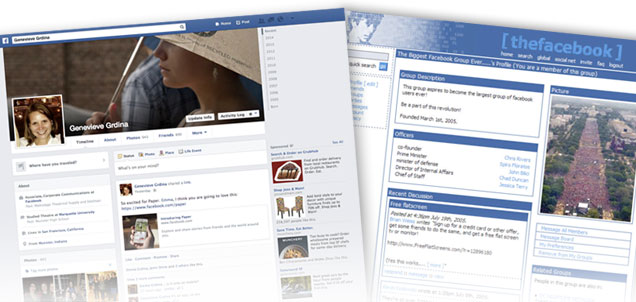
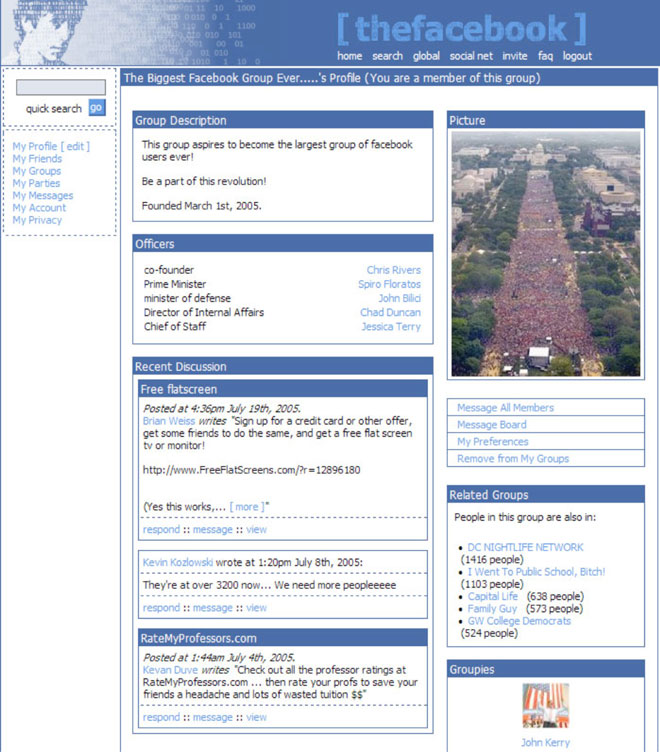
    Take a look at the pages above on the site today and the way it was around 2004-05. Plus timelines, milestones and vital stats.


  • Into the all-new world of Facebook Home


    Mindshare’s “Original Thinker Series” is a series of thought pieces and PoVs from Mindshare on a range of subjects. These cover topics like digital trends, innovation and new platforms and products in the media and technology, to name a few. To subscribe or find out more, please mail Shruti Dixit at Mindshare (shruti.dixit@mindshareworld.com). Republished with permission.


    By Ciaran Norris


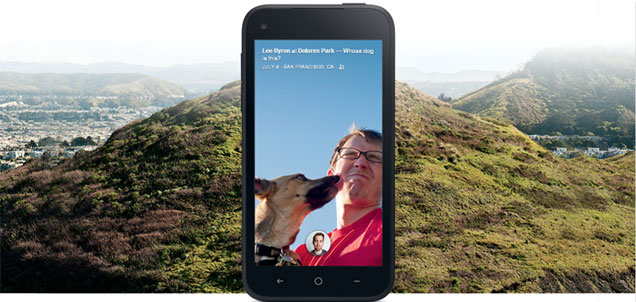
    After years of rumour, we finally saw the release of the Facebook phone a couple of weeks ago. Except it wasn’t a phone at all, rather a phone running Facebook Home, an application which changes many aspects of how the phone operates. Rather than get involved in a lengthy, and costly manufacturing and development battle with the likes of Apple, Android and all of the device manufacturers, Facebook has decided to take a shortcut in its attempt to rule the mobile web.


    Details

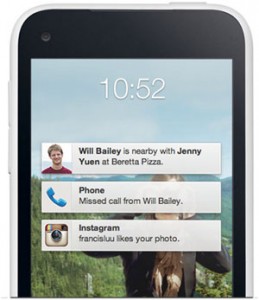
    The elements of Home that have generated the most comment are the Cover Feed and Chat Heads. The first swaps out a phone’s lock and home screens for live versions of the owner’s News Feed. Chat Heads allows people to use Facebook’s messaging services even when using another app. Both of these highlight how tightly integrated Facebook is in the new system, replacing or overlaying on top of previously core functions.


    Whilst the new system was previewed on a mid-priced new HTC Android phone, it will be released through Google Play and available on a wider variety of handsets overtime. Facebook clearly have designs on the hundreds of millions of Android handsets worldwide. There will be no Apple equivalent, as Apple would never allow such tinkering with its core products.


    Implications

    Facebook’s Mark Zuckerberg has claimed that Home will help sell more Android phones. However the fact that it was launched on a phone retailing at $99 suggests that in fact Facebook is using Android’s mass-market dominance as a Trojan Horse; this isn’t something aimed at the early-adopters – it’s for those for whom Facebook essentially is the Internet.


    This is a clear play by Facebook to try to replicate its dominance of the desktop web on mobile devices – many put its disappointing IPO down to the fact that it wasn’t adapting to mobile quickly enough. It’s certainly an ambitious and aggressive move, potentially building up its already massive data pools, and enabling it to create truly personalised ad opportunities with mobility at their core. Some have suggested that Apple will be forced to start to mimic the flexibility of the Android platform in order to allow people to download Facebook Home, but it could equally have the entirely opposite effect.

     

    The recent move to align Android and Chrome under one team, following the departure of founder Andy Rubin, could have many reasons. But one could be that it is starting to become hard to see how Android materially benefits Google’s bottom line. Samsung & Amazon barely mention Android anymore, China’s fastest growing mobile company uses it, yet most of Google’s services are banned or limited in that country, and now one of Google’s biggest competitors has launched a product that could well cut Google’s products out of the picture.


    Summary

    Facebook’s mobile strategy is now clear to see: try to dominate the platforms, rather than replicate or compete with them. For advertisers who have invested heavily in Facebook up till now, this could well offer opportunities to start to take their messages to everyday phone-owners as they go about their day-to-day.

     

    But equally Facebook’s ambitious attempt to take over the main parts of the mobile experience could well back-fire, whether due to consumer concerns about the amount of data Facebook will now have access to, or because Google decides it is no longer interested in building its competitors’ businesses as well as its own.


    Ciaran Norris is @ Digital Nation, Mindshare


    Photograph source: https://www.facebook.com/home


  • Facebook tests tech to link pages of under-13s with parents’ accounts

    If Facebook wants to open its doors to kids under 13 – as well as acknowledge the millions that are already there – it’s going to need to tread cautiously.


    The social network is testing technologies that would link children’s pages to those of their parents and enable parents to approve friend requests and access to applications, according to a report in the Wall Street Journal.


    These mechanisms wouldn’t be introducing young children to Facebook for the first time, but rather would give them a way to be there officially.


    While the fact that young children are using Facebook is about as secret as the gambling at Rick’s in “Casablanca,” the notion of shepherding more kids onto the platform is bound to be controversial for reasons ranging from cyber-bullying to the unseemliness of potentially feeding their data into the engine that drives Facebook’s advertising business.


    The report has already triggered a reaction from regulatory powers, with US Reps Ed Markey and Joe Barton, co-chairmen of the Bipartisan Congressional Privacy Caucus, writing to Facebook CEO Mark Zuckerberg: “While Facebook provides important communication and entertainment opportunities, we strongly believe that children and their personal information should not be viewed as a source of revenue.”


    There’s evidence to suggest that millions of parents would welcome the opportunity to give their children access to Facebook, with a Microsoft Research-backed study showing that 36 per cent of parents surveyed had knowledge of their children joining Facebook before they turned 13. But even though millions of children are already illicitly using the platform, Facebook could be more exposed legally if it opts to bring them out into the open, since the current setup allows for the company to maintain that the site is not designed for children under 13, according to Linda Goldstein, chair of the advertising, marketing and media division at law firm Manatt, Phelps & Phillips.


    “I think they’re going to be buying a lot of additional regulatory headaches,” Ms Goldstein said. “The value of the data and the ability to eventually capture this data at such an early age is interesting, but they’re going to have to weigh that against consumer perceptions.” In order to move forward with any plan to open up the platform to children under 13, Facebook will need to comply with the Children’s Online Privacy Protection Act, which states that sites collecting data from children under 13 must obtain parental consent.


    Source: The Economic Times
    Copyright © 2012, Bennett, Coleman & Co. Ltd. All Rights Reserved


  • Anil Thakraney: Death in Mumbai, an excellent first effort

    By Anil Thakraney


    Just finished reading Meenal Baghel’s ‘Death in Mumbai’. And must say, I thoroughly enjoyed the book. Apart from the fascinating subject itself… the sensational murder of television executive Neeraj Grover and the subsequent nefarious deeds by the killer and his partner, model/actress Maria Susairaj… what interested me is that the author is a journalist and former colleague.


    When a reputed journalist writes a book, you can be assured of authenticity of material, and particularly so in Meenal’s case, I have known her to be a journalist of high integrity.


    I must say the writing is sharp and the style captivating. You simply cannot put the book down. What the author has been able to do very effectively is to bring out the motivations and compulsions of the three participants in the sordid drama. After reading the book, one has a clearer idea of what drove the three to that extremely lethal point, from where there was no possibility of return to innocence.


    And Meenal’s done her research, she’s done the leg work, she’s journeyed into their past and studied their behavioural patterns over a period of time.


    The section I most enjoyed reading is where the author paints a colourful picture of the very showy and the very wannabe Oshiwara area of Mumbai. The desperation to make it into the showbiz, and the sexual price many young people have to pay in the process. The most hilarious chapter is on the TV queen Ekta Kapoor and her mother, some recounts of the two leave you in splits, the tragedy notwithstanding.


    All in all, a great first effort from Meenal. The only disappointment (for me) was not being able to get a clear point of view from the main accused, the navy officer Emile Jerome. Since he was the man who executed the heinous crime, his voice is key to the story. I suppose the author would have found access to the man extremely difficult, and therefore one can’t really blame her.


    * * *


    PS: Must read: Facebook has announced a $5 billion initial public offering. And here’s what Mark Zuckerberg says to investors. His long message gives you an idea of how razor sharp and cunning the man is when it comes to capitalizing on human interaction in the virtual world.


    Link: http://www.wired.com/epicenter/2012/02/zuck-letter/