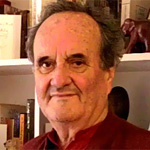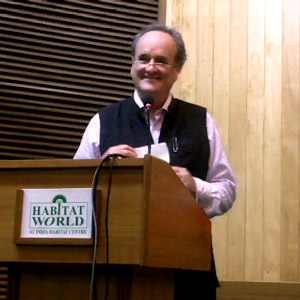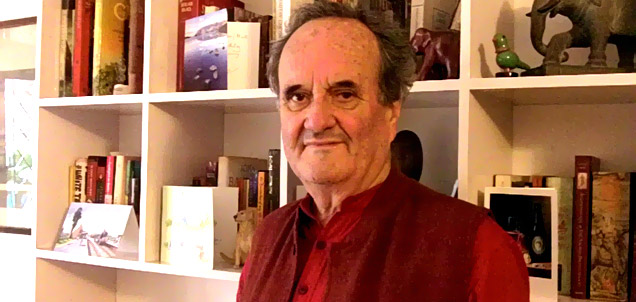
Tag: Mark Tully

  • Red Ink Awards presented to Mark Tully, Faye D’Souza, others


    By A Correspondent


    To ensure freedom for the news media, it was necessary to ensure the financial stability of journalists and job security. It is only if a journalist is financially secure that he can do his job with peace of mind, said Justice C K Prasad, Chairman of the Press Council of India (PCI).


    Giving his closing remarks as the chief guest at the ‘National Red Ink Awards for Excellence in Journalist’ on Friday, Justice Prasad said it was not fair on the part of media owners to run down the appointment of Wage Boards for media employees. Other industries such as cement and pharmaceuticals are all governed by the Minimum Wages Act, where such law does not exist for newspaper employees, he pointed out.


    “An editor returning to his office only to receive a pink slip did not augur well for the free press,” he said, adding that he had examined the balance sheet of many media groups and found the profits they were making could easily support the payment of Wage Board salaries.


    Earlier, he emphasised that the job of the Press Council of India is to ensure the freedom of the press, and “we are not here to regulate the


    Sir Mark Tully, who worked for over two decades as the Bureau Head of BBC in the subcontinent, received the RedInk Award for Lifetime Achievement’. In his acceptance speech, Tully said he grew up as radio reporter, and he would always prefer radio to television. Radio broadcasts gave a personal touch as “the listener gets the feeling that the news reader or reporter talks to him directly,” he said and recalled how at a village gathering in Uttar Pradesh, people greeted him as “a friend”.


    Tully, who was deported during the Emergency, said for journalists credibility was everything, and in today’s age they must learn to grapple with fake news. Just a small crosscheck and verification of facts would help in giving the right information to the society. He said public service broadcasting was a bolstering factor of a free press. Citing the BBC as an example, Tully said in his 40 years of working for the organisation, he could not recall a single instance where he had been asked to change or drop his news dispatch.


    Faye D’souza, Executive Editor of TV channel Mirror Now, who was given the ‘Journalist of the year’ Award, said her reporting was built on covering the issues that affected the common man. Focusing on credible news without much antics helped her channel stand out in the crowd and make a mark for itself.


    “I stick my neck out to report not what politicians are saying but what hits the man on the street, even as the entire media could be busy with irrelevant breaking news,” she


    Earlierr, a power panel consisting of Vijay Darda, Chairman, Lokmat Group, Raghav Bahl, Founder & Chairman, Quintillion Media, Anant Goenka, Executive Director, The Indian Express Group, and Samir Patil, founder and CEO of Scroll Media, debated the important and relevant issue of: Is there a business in News Media’.  Senior Journalist and Founder of IndiaSpend.Org  GovindrajEthiraj anchored the panel discussion.


    Most of the panellists agreed that news media was not a great business but there was money to be made. Bahl stressed that as the scenario shifted to digital platforms, a healthy business in niche areas was not difficult; however as the business scaled up along with the number of brands, the challenges also increased. He emphasised that the mandatory legal requirement in broadcasting for 51 per cent Indian ownership had become a bottleneck to expansion. It was not a level playing field as the law did not apply to other areas like print or digital.


    Mumbai Press Club secretary Dharmendra Jore said this year the RedInk Awards had received a record over-2,000 entries. Gurbir Singh, the convenor of the Awards Committee, said accusing the media of being anti-Establishment was foolish as by its very nature news media will always be anti-Establishment irrespective of the party in power.


    Awards were given away in 11 competitive categories and 5 special categories. As many as 32 journalists received trophies and Rs 1 lakh as cash prizes. The RedInk Award for ‘A Media Start-up that is making a difference’ was given to IndiaSpend.org, for its initiative in developing data journalism in India.


    Winners of Redink Awards 2018:

    Business & Economy

    Print : Sruthisagar Yamunan, Scroll.In | Kabir Agarwal, The Wire

    TV : Sushil Kumar Mohapatra, NDTV India


    Crime

    Print : Santosh Singh, The Indian Express

    TV : DeepuRevathy, Manorama News


    Environment

    Print : T. R. Vivek, Newslaundry.com | Aruna Chandrasekhar, The Caravan

    TV : Sushil Chandra Bahuguna, NDTV India


    Health & Wellness

    Print : Menaka Rao, Scroll.in


    Human Rights

    Print : Radhika Iyengar, Al Jazeera Media Network

    TV : Shone Satheesh, Scroll.in


    Lifestyle & Entertainment

    Print : Shamik Bag, Mint


    Politics

    Print : RikyntiMarwein, Highland Post

    TV : Jainendra Kumar, ABP News


    Science & Innovation

    Print : R Ramachandran, Frontline

    TV : Jugal R Purohit, India Today


    Sports

    Print : Shail Desai, Mint

    TV : Smitha Nair, Scroll.In


    The Big Picture

    Winner : Vinod Kumar T, The New India Express

    Runner up 1 : Indranil Mukherjee, Agence France Presse

    Runner up 2 : SibuBhuvanendran, Malayala Manorama


    Women Empowerment & Gender Equality

    Print : Leena Gita Reghunath (Surabhi Kanga), The Caravan : Shalini Nair, The Indian Express

    TV : Moumita Sen &Ruchira Sharma, India Today


    Media Start-up of the year : IndiaSpend.com


    Mumbai Star Reporter : Yadu Joshi, Lokmat & Chaitanya Marpakwar, Mumbai Mirror


    Journalist of the Year : Faye D’Souza, Mirror Now


    Lifetime Achievement Award : Sir William Mark Tully


  • Mark Tully to be awarded Lifetime Achievement Award, Faye D’Souza is Journalist of the Year at Press Club’s RedInk Awards

    By A Correspondent


    The RedInk Award for Lifetime Achievement in Journalism for 2018 will be awarded to veteran journalist Sir William Mark Tully. The award, a part of the National RedInk Awards for Excellence in Journalism instituted by the Mumbai Press Club, will be presented to Tully by Maharashtra Chief Minister Devendra Fadnavis and Union Commerce Minister Suresh Prabhu on Friday, May 18, in Mumbai.


    The RedInk Award for ‘Journalist of the Year’ will be presented to Faye D’Souza, Executive Editor of Mirror Now, for her coverage of issues that touch the lives of common people. “Her passionate and honest style with which she handles subjects like corruption, political opportunism, price rise and communalism over calendar 2017 has made her and her programme ‘The Urban Debate’ a subject of appointment viewing,” notes a communique.


    Apart from these awards, the Redink Awards for Excellence in Journalism are given in 13 competitive categories to 32 journalists after a process of short-listing selection by a jury appointed for each of the 13 categories.


    Star India is the Presenting Partner for Mumbai Press Club Redink Awards for Excellence in Journalism 2018, while Aditya Birla Group, Glenmark Pharmaceuticals, Zee Entertainment, Eros International, Indiabulls Housing, Dr Reddy’s Laboratories, Nanavati Hospital, Edelweiss Group, Jaslok Hospital, Global Health Strategies and Earth are the Award Partners. The Hindu Group is the media partner.MxMIndia partnered the Press Club in sending out promotional mailers at the entries stage.

  • Memories of Ayodhya, December 6, 1992


    By Ananya Saha


    Twenty years have passed since the Babri Masjid demolition. While the Ayodhya verdict did bring some cheer to the country, December 6 1992 has been engraved as a blot to India’s history. Two journalists, who were present on the scene, recall the horrific incident.


    Mark Tully former Bureau Chief for BBC in New Delhi was also present on the scene.


    My memory is of the complete failure of security to control the situation and of the extremely violent and disgusting slogans which were being shouted by the people who attacked the mosque. Lotof violence and damage was done to journalists. And I myself was surrounded by these so-called Kar Sevaks. There was an argument whether to beat me up or let me go. Eventually, a compromise was reached and they decided to lock me up in the temple room. That is my recollection.


    It was a sad day for India. It was a sad day for me because I have maintained that India is naturally, culturally, a secular country. But I believe that India has returned to its secular moorings. I think there are many lessons to be learnt from Ayodhya.

    Ajay Jha, currently, is the Delhi Bureau Chief for Gulf News. He was working with Mid-Day in 1992 and witnessed the demolition of Babri Masjid in Ayodhya in 1992.


    It feels that it happened just the other day. Even after 20 years, people feel anxious of the day. It was a blot for the country.


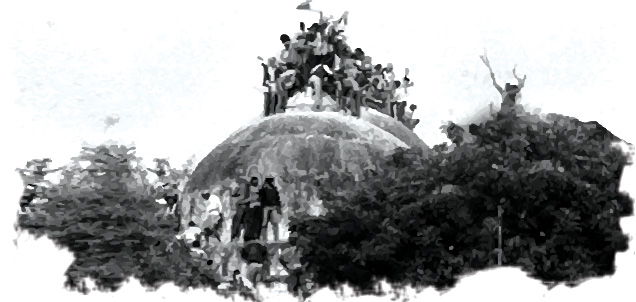
    I was staying at a hotel in Faizabad. I reached the spot about 9’o clock in the morning. It was, of course, not very easy to reach there due to security and administration. But finally when I reached there, I saw people running out of the Babri Masjid campus and shouting ‘Kaam hogaya’ (work is done).  As I went inside, I saw a mob atop tombs dancing and celebrating. There were three tombs at Babri Masjid. Then they started demolishing one of the central tombs. They were using iron bars to break it, which implies that they were prepared for the demolition. It continued for over three hours. It was not easy for them to demolish it.


    Suddenly I saw that lot of journalists were being assaulted. The reason, I was told, was something different. I was not the eyewitness to the reason. I was told that some foreign TV crew had apparently thrown biscuits towards the crowd that was hungry. They were angry that foreign media saw them as poor and hungry and second, that it should not go out to the world that demolition is going on until work is finished. Hence, the journalists were thrown out of the complex. Journalists were assaulted and mobbed. Probably, I was the only person who remained there throughout the evening.


    The first thing I did was to throw the pen and paper away. I started pretending that I was one of the Kar Sewaks. They looked at me suspiciously, and when asked I told them I had come from Delhi, they asked me to do kar seva, which I did.


    When they had demolished two tombs, they realised that it was already 1’o clock. They wanted to finish the work the same day because in winters it gets dark early, and it wouldn’t be possible for them to carry on after dark. After a while, we heard another noise telling the people, ‘sab hat jaao’ (everybody move away). It never came out in any of the enquiries but I can say it for sure, out came the huge dynamite sticks to blow up the remaining two tombs. The area was cleared. I could not see who said it, but heard it clearly, ‘ek dhakka do aur babri masjid tod do’ (give one push and destroy Babri Masjid).


    Finally, when everything was demolished by 3:30, lot of celebration was evident.


    While the demolition was going on, Advani requested the crowd to not carry on the destruction it in the name of Lord Ram. Whether it was union call or it could be that he created a monster he could not control. At least for public consumption he was urging the public to get off of the tomb.  But nobody would listen to him. In the evening when I left, I carried with me a small-sized brick on which was engraved 1516 in Hindi, the year that the brick was made.


    I had to walk a long way before I could reach Faizabad and file my report. It was very tough day. Interestingly, I reached there again the very next day around 9’o clock and I couldn’t see or find a single brick. Entire place was transformed overnight. They cleared everything and you could not recognise the area. Complicity of UP govt, administration, police, and to some extent govt also was evident. Policemen were present but were only watching what was happening. It was responsibility of Kalyan Singh govt, Narasimha Rao govt. local administration: everyone was working together towards the same aim that the mosque has to go and it went. It was all done in a planned manner – they brought their rods and what not to tear it down.


    I was told that dynamite sticks were brought from Punjab and that was the time that militancy in Punjab was at peak and it could have been done with Sikh militants.


    When I came back to Delhi, people used to come and worship the brick that I had as a reminder of the day. When riots had started next day, we were told to write timid reports so as not to create Hindu-Muslim tension.  I did visit Ayodhya thereafter as well. I still get the same feeling that what was the need to demolish it? It was a structure of mosque but it was temple inside. Now, you cannot get inside. You could not get the ‘mandir’ you wanted, and Hindu fanatics did not get anything by damaging a functional temple. You have to stay 50 metre away from structure, and only ‘pandit’ can do a ‘pooja’ on your behalf.


    Yes, BJP came to power after that, so probably that was the achievement. It was a power game, a political campaign.


     Image: Artist Rafiq’s impression of what happened on December 6


  • Primetime debates an excuse for doing TV cheap: Mark Tully


    By Shruti Pushkarna


    [youtube width=”350″ height=”200″]http://www.youtube.com/watch?v=2RilcOb3GrQ[/youtube]
    [youtube width=”350″ height=”200″]http://www.youtube.com/watch?v=PdgXFlJ8g1g[/youtube]

    He likes to refer to himself as ‘British who is much influenced by India’. Often called an ‘expert on India’, Sir Mark Tully is famous for his extensive reportage of the changing social, political and economic trends in India as the BBC India Correspondent and as BBC Bureau Chief later. He quit the BBC in 1994 after an argument with the then BBC Director General, John Birt, where Mr Tully accused him of running the corporation by fear. But his deep-rooted familiarity with India and its culture made him stay on here even after his term ended with the BBC.


    Sir Mark Tully has co-authored and authored quite a few books on India, his latest being Non Stop India which he released in the capital last week.

    He is currently the regular presenter of the weekly programme, ‘Something Understood’ on BBC Radio 4.

    In this interview with MxM India at his Nizammuddin residence, the veteran journalist shared his views on what he thinks of the Indian media today. Mr Tully also shared some instances from his BBC days to point out the changes that the media has seen over the years. While he seemed extremely hopeful of the print media, he felt there is a need to hold back the expansion in Indian television to see what’s going on really. “Technology,” he says, “is being badly used to overload journalists, particularly in multimedia organizations, to make journalists into radio, television and online journalists at the same time, with the net result that they have absolutely no time to find out what’s going on.”


    And although he believes that India has a great future, he urges India to stop following the western model and to create its own way forward.


    Q: Much has changed from the time you wrote No Full Stops in India. If you were to write that book now, what would change?

    I think the big thing that would change would be that India is in a very different position economically than it was before, and India is in a very different position in what I call ‘morale terms’ as well. At the end of the ’90s, things were looking very bleak in India, we’d had twenty years or more of Neta-Babu Raj and the economy was stagnant basically because of that neta-babu raj and all the bureaucratic controls that existed, particularly controls on investment and on doing business. So that would be very different. But one thing I would say which would not be different would be the emphasis on that India must find its own way ahead and not simply ape and follow American or the western model.


    Q: The Indian media has gone through an explosion in the last five to 10 years. As someone who dominated the airwaves just before that, what’s your take on the current explosion?

    Well I don’t think I ever dominated the airwaves but what has happened basically is that television has taken over in a big way and sadly radio, the media which I love best and which I think is a very very important media, has not been allowed to develop properly because the government has restrained control over news and current affairs. Television has expanded and I believe that what is now needed with television is to sort of in a way call a hold to the expansion and look at what is going on on television and see whether improvements cannot now be made in that.


    Q: We have had a Press Council Chairman Justice M Katju virtually damning the media and media persons. There are many who agree with him but say he’s got no right to say it. As an outsider now, do you agree with Justice Katju’s views?

    I think that maybe he overstated the case, probably he did. But I don’t think we should react hysterically as journalists. I think that we should examine ourselves and see what is going wrong and there are things which are going wrong. And the first thing I would say is our failure to stand together to resist the onslaught of commercial pressures which have turned television and newspapers, and even radio into commercial rather than news organizations. Secondly, I think that we journalists, very much need to examine the way we exercise the editorial function. There isn’t, particularly in television, enough editing going on. I’ll give you one example, the Bombay attacks, if the editor in the studio had exercised tight control over reporters in the field then we wouldn’t have gotten into the mess that we did over the Bombay attacks. That’s just one example. Time and again, you see examples of shows which drift on, breaking news which drifts on without any apparent editorial control. And thirdly, what I find whenever I ask anyone in television, whether there are reviews of what has gone on the day before or a week before so that people can learn from their mistakes, so that you can criticize and benefit from that criticism, I’m always told that reviews don’t take place. When I worked in BBC World Service Radio, we used to have two meetings regularly every day; part of that meeting was looking forward to the news we would be covering that day or expected to have to cover and part of it was very much a review, and a critical review of what we’d done the day before.


    Q: Your views on the long-drawn-out debates with the usual suspects as panelists on Indian television prime time news?

    Well, as someone who is sometimes on these panels, frankly I am amazed that there are so many of them. There is a stage army of people really who come on to these panels and they always get politicians, and the political parties send the same people every time. And I think this is largely an excuse for doing television on the cheap. I personally believe that we should have other ways of presenting the news, discussing the news than endless panel discussions, and of course one way which you would have seen nearly often enough is through news and current affairs documentaries.


    Q: And while Indian media has gone through this explosion, how would you think the British media has seen the last decade?

    Well I think that the British media has changed a great deal in the last decade because of course of the media which you are in, the internet and the electronic media, that has had a very considerable effect on newspapers. Newspapers have been the main victims really and you’ve got a situation in London for instance, where a historic paper like the ‘Evening Standard’ is now given away free because it couldn’t get enough circulation to attract advertising. I think the commercial impact has been there in Britain as well. And the other thing I think change has come to over very much, which I think is a pity, is that there is far more of correspondence giving you the news in conversations with presenters rather than properly crafted news stories; and very often television just turns into bad radio. The other day I saw a comedian do a wonderful imitation of these dreadful interviews where clearly the presenter has warned the correspondent of what the question is going to be. So the presenter very earnestly asks him a question like, ‘Is the rupee going to fall further?’ And the correspondent says, ‘Yes, yes you are quite right, that is the big question.’ That sort of thing rather than the properly crafted news stories. And also like in India, because it is so much easier to broadcast from the site, there is too much broadcasting from the site now and too much repetition. I was watching the night that Gaddafi was killed, and you saw the same pictures going round and round and round.


    Q: Since the time you were active and on the field in India, what do you think has been the changes that the political class has had towards the media?

    I think the political classes have become more organized, they have these spokesmen now and all that. I think some of them rather like coming on the Tele, they weren’t so interested in coming on the radio. When I was with the BBC, it was a strange fluke of history really because the transistor radio had come and so radio listening was very widespread but all the listeners had was to listen to the All India Radio. So lots of them turned to the BBC as an alternative source of news and we became in effect, a domestic news broadcaster. So that meant that the politicians were much more concerned about the BBC than I think they are now, their attention is much more on the local media now.


    Q: And vice versa? Journalists towards the politicians? After all they are all in the hunt for the exclusive?

    I’m not sure that there has been any big change about that except one thing, I wouldn’t say they are in the business of exclusives, they are in the business of much less worthwhile, which is ‘bites’. Time and again, when I go to a book launch or something like that, quite often a young journalist would come up to me and say, ‘can you give me a bite?’ That didn’t use to happen nearly as much. And we used to have many more set-piece interviews. I must in my time have done five or six interviews with the Prime Minister, with Indira Gandhi, I interviewed Rajiv several times, I interviewed Morarji, I made a whole film about Morarji. Now you don’t see those set-piece interviews and the big leaders don’t seem to have as many set-piece press conferences as they used to have.


    Q: What’s your view on the Indian print media? With the breaking news constituency now clearly dominated by news television, has Indian print been able to adapt itself to the new times?

    I think that the Indian newspapers do seem to have adapted quite well, circulation figures as far as I know are doing very well. What there has been I think which is very important and very good thing really, is there has been a realization of the power and influence of the media in languages other than English. Even twenty years ago, general assumption of advertisers was why bother to advertise in a Hindi or Punjabi or Bengali media because people who read those papers, they don’t have much money, they can’t buy what we advertise. So all the stress was on the English media. Now if you look at the top ten newspapers, you will find there is only one English newspaper in that, and that was the Times of India. So I think this is a good and healthy development which has taken place.


    Q: Do you think a News of the World-like scandal could ever happen in India?

    Yes it could happen anywhere. I’m not saying that I have evidence that people are tapping phones here but there’s obviously a risk that journalists will fall into that. If you take the whole question of sting operations which comes fairly near that, there have been cases In India where sting operations have been mounted against the wrong person or not for proper reasons and that has caused problems and we do know perfectly well that in the local press, in remote areas, sting operations are sometimes used as a way of blackmailing people. In my view, sting operations should only be used when there is a story of very considerable importance and there is no other way of getting at it.


    Q: Rupert Murdoch isn’t a bad name here in India… our values are different.

    Perhaps he’s not a bad name in India because he isn’t a name here really. Yes he is involved marginally in television here but you don’t have Murdoch newspapers here and you don’t have a channel like Fox News either. And you haven’t had a phone-tapping scandal like the News of the World one. So maybe he is comparatively unknown here, although maybe he wouldn’t like to hear that.


    Q: And what about our corporate sector? You have written a whole chapter celebrating the Tatas. Did the Radia tape controversy impact your views on the group? Especially Mr Ratan Tata?

    Well that’s all very muddy and I mentioned in my chapter about Ratan Tata and I mentioned that his voice was heard but I didn’t come to any conclusion about it. The reason why I’ve written about Tatas in my book was something which some people haven’t quite understood. It wasn’t really to investigate them and say that are they good or are they bad, what is good about them, what is bad about them. The thing was really to bring to the attention of people, the remarkable achievements of the Tata group once they were freed from the restraints of the Neta-Babu raj and of the license permit raj. So that was the intention, to demonstrate the enormous ability that there is in India if only we can get governance right. And also to get into the book some criticism of the government and bad governance by business because I always contend that if only business will raise its voice against bad governance then we may get something done about bad governance; because if business doesn’t flourish, then the economy doesn’t grow and all the politicians seem to be interested in is the economy growing. But I would just add one thing there, I don’t believe that business should be able to dictate the policies of the government; I do believe that business needs to play a role in a balanced economy in which all sorts of other elements are also playing a balanced role.


    Q: The fact is that the news media is dictated by technology these days. Is that a good thing or bad?

    Well, you know, I didn’t think things in life to be wholly good or wholly bad. There are advantages in technology and disadvantages. The great disadvantage I think of technology now is that it is the ability to transmit news on the spot is being badly misused. It’s being badly misused by the endless badly edited breaking news syndrome. It’s being badly misused by this overuse of this syndrome of a presenter talking to a journalist on the spot. And it’s being badly used to overload journalists, particularly in multimedia organizations, to make journalists into radio, television and online journalists at the same time, with the net result that they have absolutely no time to find out what’s going on. So the ability to communicate in any way is of course valuable but we always forget that there can be over-communication. I think many people spend far too much time in front of screens rather than meeting people face to face. Recently I did a radio programme about the difference between talking to people on the net and talking to people face to face.


    Q: India doesn’t have any news on private radio (except of course the government saying that private FM saying you can take All India Radio feeds). Do you think that once in, there could be yet another dramatic change in the way we will see news?

    Yes, I think there would be a dramatic change, I think it will make a difference to FM radio. It would give FM radio many more listeners. If you take the example of Britain, the No. 1 political show of the day is not on television, it’s on radio; the one which sets the agenda is the Today programme on BBC Radio 4. If you go to Britain and you talk to a lot of people, for many people it’s almost become fashionable to say ‘I don’t watch television but I do listen to radio’. Radio is a hugely powerful medium and of course news can be prepared to broadcast on FM radio, it will make a big difference to radio and I think there will be many people who’ll turn to FM radio for their news.


    Q: And one final question: Telling a story on radio versus telling a story on television?

    Well I think telling a story on radio is much harder than telling a story on television. But, and I firmly believe this, the pictures on radio are better than the pictures on television. And the pictures you tell/show on radio, you describe on radio, the stories you tell on radio are much more likely to stick in people’s heads than television shows are. The art of radio broadcasting, in many forms of radio broadcasting, is to make each listener think that you’re speaking to them individually and I think you can do that in a much deeper and more meaningful way on radio than you can do on television.

  • Corruption a symptom of governance: Mark Tully (Video Report)

    By Shruti Pushkarna


    Almost twenty years after he wrote ‘No Full Stops in India’, veteran journalist Mark Tully unveiled his latest addition to the India series, ‘Non Stop India’, in the capital on Saturday, November 19. Addressing a packed hall of avid readers, Mr Tully confessed that he was most nervous about talking to the Delhi audience. Citing an Indian cricketer’s concern, he said, “It’s hardest to play against a home crowd, and Delhi is very much my home and all of you all will be my severest critics.”


    Mr Tully also confessed that he didn’t want this book launch to be another one of the mutual admiration sessions that these things are often brought out to be. He admitted, “We journalists are actually very good at having self-congratulatory sessions.” He said he was delighted that his old friend, Karan Thapar, agreed to join him, “…as Karan would be the last person to give me an easy ride.”


    Acknowledging that much has changed in terms of how India looks at itself as well as how it is looked at in the international arena, since he wrote ‘No Full Stops in India’, Mr Tully said, “I think the danger in the Indian story, and this in a way is the point of this book, is that it can lead to ‘jugaad’, the concept that we are going to get there anyhow, so why do we worry about the problem which we have. It’s like the gentleman who I once met, who I asked, what does he think about India and he said, ‘Main bhagwan main bharosa karta hoon.’”


    [youtube width=”400″ height=”250″]http://www.youtube.com/watch?v=iUgdUEPanZA[/youtube]

    Known for his love and admiration for this country, Mr Tully also confessed to his audience that he didn’t find himself very settled in Britain so he thought that maybe his ‘karma’ has landed him here.


    Defending his work against one criticism made by Outlook reporter Pavan K Varma where the latter said that he would have liked Tully Saheb to leave the safer shelter of an observer and give his own views far more robustly, of what is wrong or right with India, Mr Tully said that it’s not entirely a negative book and it does warn about problems which lie ahead. He also added that for one to be able to criticize, one has to be extremely understanding and sympathetic of the issues at hand.


    Quoting a journalist who once said, ‘these are my conclusions on which I base my facts’, Mr Tully hoped that this book produces some facts which contradict some commonly held conclusions. A few of those that he has written about in this book include, the problem of Naxalites, the Dalit situation in the country today, the issue of privatization and the problem with ministers pouring money into troubled areas, like Kashmir. He said, “Overall the story is really about governance, something that you all hear about now. And I hope the story makes the point that this corruption that we are so concerned about, is, I think and many of the stories suggest this, more like a boil…boils are created by blood poisoning, they are not the blood poisoning themselves, they are a symptom rather than what is going wrong, And corruption in my view is basically a symptom of governance which needs reform.” Adding on, he said, “…And that’s why I fear that this whole Lokpal campaign. Yes maybe Lokpal will be a help but it would be more of a problem if everyone then sits back and says we’ve solved the problem, everything’s all right.”


    When asked how much of a problem was the Prime Minister himself, Mr Tully unswervingly admitted, “I think the PM has a major problem because we all know where the power lies very often and it’s not necessarily the PMO and we also all know that Manmohan Singh for all his many qualities, is not basically a politician who has grassroots experience. And in my view one of the problems with the Congress party is, at the Centre most of the people are not really grassroots politicians.”


    Probing him further on the issue of governance, Karan Thapar asked him whether the problem actually lies with Sonia Gandhi. To which Mr Tully candidly replied, “I think the difficulty and the problem with Sonia Gandhi’s position is that too much influence lies there when in fact it should lie in the PMO.”


    While Mark Tully spoke at length on the first two chapters of the book that concern the problem of Naxalites and Dalits in the country, he also remarked on the recent criticism of Indian media made by the Chairman of Press Council of India, Justice Markandey Katju. Mr Tully said, “I think that one thing that we should look at is, we are culpable as journalists because we don’t stand together, we don’t fight for our right to do our job, we are meant to be the professionals who know what goes on television screens, who should know what goes into newspapers and yet all the time we allow ourselves to be dictated to, by managements who basically have interests other than putting out the news in a readable and a fair and balanced way. And this is the problem everywhere. This is the problem which gives rise to this continuous obsession with breaking news and rolling news on Indian TV.”