Tag: Man Jit Singh

  • Man Jit Singh is king at Sony Pictures Home Entertainment

    By A Correspondent


    We were told that another announcement was coming on Monday. And we thought it could possibly concern the elevation of someone to the position of COO, now that NP Singh has been elevated.


    But that hasn’t happened, not yet. Meanwhile, Sony Pictures Entertainment announced that Man Jit Singh has been named President of Sony Pictures Home Entertainment (SPHE), reporting to Michael Lynton, CEO, Sony Entertainment, Inc and Amy Pascal, Co-Chairman, Sony Pictures Entertainment.


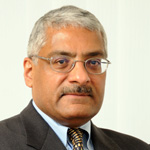
    Man Jit Singh

    Mr Man Jit Singh, who was previously Chief Executive Officer, Multi Screen Media Pvt. Ltd. (MSM), the operating company that manages Sony Pictures Television’s TV networks in India, will continue as Non-Executive Chairman at MSM while transitioning from his role in the television division to his new role in Home Entertainment.


    As reported earlier, Mr NP Singh, formerly Chief Operating Officer at MSM, has been appointed Chief Executive Officer, managing Sony Pictures Television’s Indian TV networks. Mr NP Singh will report to Andy Kaplan, President, Worldwide Networks, Sony Pictures Television.


    “Man Jit is a savvy global executive with a long track record of success at Sony Pictures, having built our Indian TV channels into high-performance, high-margin businesses. I am confident in his vision for Sony Pictures Home Entertainment and his ability to provide strong leadership for the division as the marketplace continues to evolve,” said Mr Lynton.


    At SPHE, Mr Man Jit Singh will continue the studio’s focus on reducing overhead costs, while growing high-margin businesses, according to a communiqué.


    Man Jit Singh has a strong background in technology, entertainment, and consumer products, with over 20 years of experience in global operations. He has worked in North America, Europe, Asia and Australia. Since 2009, he has overseen Sony Pictures Television’s Networks business in India where he was previously Chairman of the Board of Directors of MSM. He spent much of his early career in general management consulting, and he held senior positions at firms including Sibson & Co., LLP in Los Angeles, The Cast Group AG in Zurich, Switzerland and Los Angeles, and Cresap in Los Angeles. Man Jit began his career at Nestle India.


  • Sony Six acquires rights to TNA Wrestling

    If wrestling is what excites consumers after cricket and tennis and soccer and F1 and whatever else, here’s news: Sony Six has acquired exclusive broadcasting rights to Total Nonstop Action (TNA) Wrestling for the Indian sub-continent.


    The channel will hence air TNA Wrestling programming every week including Impact Wrtestling, Xplosion, Greatest Matches and Unfinished Business, along with four episodic Pay Per View programmes and eight One Night Only specials throughout the year.


    To those not in the know: TNA is home of ‘The Immortal’ Hulk Hogan, ‘The Icon’ Sting, ‘The Charismatic Enigma’ Jeff Hardy, Olympic Gold Medalist Kurt Angle, Quinton ‘Rampage’ Jackson, Bully Ray, Magnus, AJ Styles, Gail Kim, TNA Knockouts Champion Mickie James and TNA World Heavyweight Champion Chris Sabin. Phew!


    Man Jit Singh
    NP Singh

    On acquiring the rights, both Man Jit Singh CEO, MSM and N P Singh, COO, MSM were ecstatic. And TNA Wrestling President Dixie Carter was quoted in  a press release saying: “The Indian sub-continent is home to some of the most passionate and dedicated wrestling fans on the planet – and they now have more than 500 hours of the very best in professional wrestling to enjoy. We can’t wait to debut!”


  • Sony Six wins broadcasting rights to Euro qualifiers, FIFA World Cup

    By A Correspondent


    Sports channel Sony Six has won the exclusive broadcasting rights across the Indian sub-continent for the European Qualifiers to UEFA Euro 2016 and the 2018 FIFA World Cup.

    Man Jit Singh

    The new arrangement with UEFA provides Sony Six with coverage of 546 international matches in total, over three years, starting with UEFA EURO 2016 qualifiers in September 2014 to November 2015 with 10 matches of each national team across 12 match weeks. In addition to this, Sony Six will also broadcast the 2018 FIFA World Cup (European) Qualifiers starting September 2016 to November 2017. With this acquisition, viewers will enjoy some of the best international footballing action exhibited by the best players of the sport in their national colours over the next four years.


    Commenting on this, Man Jit Singh, CEO, MSM India, said, “The Qualifiers starting from 2014 through 2017 will set the stage for two of the biggest tournaments in World Football – the UEFA Euro 2016 and 2018 FIFA World Cup. These are exciting times for all sports fans and we are delighted to bring such world class sporting events to their homes.”


    NP Singh

    Adding to this, NP Singh, COO, MSM India, said, “We at Sony Six reiterate our commitment to give the audiences the best of International football. The Qualifiers for both UEFA Euro 2016 and 2018 FIFA World Cup (European Nations) will complete the exciting qualifying journey for the fans to set up two of football’s biggest tournaments.”


    Guy-Laurent Epstein, UEFA’s Marketing Director, said, “We are delighted to have extended our partnership with Sony Six on UEFA Euro 2016 to the European Qualifiers to the UEFA Euro 2016 and the 2018 FIFA World Cup. Sony Six will be offering to football fans in India a comprehensive platform and an extensive coverage of European national team football.”


  • Sony Six wins UEFA Euro 2016 broadcast rights

    By A Correspondent


    Sony Six has added the UEFA Euro 2016 football tournament to its kitty, winning the exclusive broadcast rights for it across the Indian subcontinent. The channel will telecast live all 51 matches of the tournament.


    Man Jit Singh

    Expressing his joy at the acquisition, Man Jit Singh CEO, MSM, said, “Football has grown immensely in India over the past few years and has found great interest amongst the youth. With the successful acquisition of the UEFA Euro 2016 tournament broadcasting rights, we look forward to attracting viewership to Sony Six by leveraging on the growing popularity of European football in the country.”


    European football’s premier international competition will be Sony Six’s first entry into international football. Having broadcast the 2014 FIFA World Cup qualifiers, this will be the first successful acquisition of a major professional football competition by the channel.


    NP Singh

    N P Singh COO, MSM, said, “We are delighted to bring one of football’s elite tournaments to the Indian viewers exclusively on Sony Six. As a broadcaster we are always in pursuit of the best of International Sport and through our latest acquisition we will take the fans closer to the high impact action that the UEFA Euro 2016 promises to deliver.


    Guy-Laurent Epstein, UEFA’s Marketing Director, said, “We are pleased to welcome Sony Six to the family of broadcasters for the UEFA Euro 2016. UEFA believes that the Sony Six channel and its commitment to high quality programming and sport is an excellent home for UEFA’s flagship national team competition.”


    The 2016 UEFA European Football Championship will be held in France with provisional dates of June 10 to July 10 2016.


  • Digitization reaches 67% in Phase II cities: MIB

    By A Correspondent


    Fresh data from the Ministry of Information and Broadcasting states that 67 percent of the digitization target has been achieved in the 38 cities which are set for digitization by March 31. According to DTH operators and MSOs, a total of 108 lakh Set Top Boxes (STBs) have already been installed in Phase-II cities against the target of 1.60 crore, registering overall achievement of over 67 percent digitization.


    Hyderabad, Amritsar, Chandigarh and Allahabad have achieved nearly 100 percent digitization, according to the MIB, and 75 percent digitization has been achieved in eight cities – Jodhpur, Thane, Aurangabad, Jaipur, Pune, Faridabad, Nashik, and Ghaziabad.


    Analysis of the data further reveals that out of 38 cities to be digitized in Phase II, 28 cities have achieved more than 50 percent digitization individually.


    The ministry has also stepped up the public awareness campaign to sensitize consumers on the benefits of digitization, through print and electronic media. Both All India Radio and private FM broadcasters are airing radio jingles, the ministry has brought out a print advertisement in all 38 cities in the respective regional languages, SMS campaign is under way, and television channels have been frequently running video spots, blackout advertisements and scrolls.


    Meanwhile, the Indian Broadcasting Foundation (IBF) has reiterated its commitment to television broadcasting digitization. As mandated by the Ministry of Information & Broadcasting under the Cable Television Network Amendment Ordinance 2011, for the 38 cities notified in the Phase II sequence of the digitization roll out, television broadcasters will comprehensively switch off all analogue signals from midnight Sunday, March 31.


    The IBF board has stressed that such a move is necessary to smoothen the transition from analogue to digital cable TV. IBF members have been running regular awareness campaigns to educate consumers on the various benefits of digitization. Some of these benefits include better picture and sound quality, enhanced services such as high definition, video on demand content and eventually, higher quality content. In addition, digitization will also enable viewers to choose and pay for only those channels they want, rather than pick from packages with fixed prices. Digitization will also bring about greater transparency between broadcasters, cable operators and consumers.


    Man Jit Singh

    IBF President Man Jit Singh said, “IBF and its members are committed to the successful implementation of digitization in India. Our awareness campaign has received very good response. We are confident that the successful implementation of DAS-II will tremendously improve the quality of television content and consequent viewership in the country.”


  • #Frames2013: Making Phase 2 of TV digitization a reality

    By Johnson Napier


    When phase 1 of digitization became a reality in India there was a sense of accomplishment that was witnessed amongst most factions within the broadcast industry. Apart from the huge advantages that it presented to the broadcasters and allied interests, it was also seen as an exercise that enabled the consumer to become empowered like never before. But while issues remain about the impending challenges emanating from phase 1 of the rollout exercise and also the non-interest shown by some metros, the industry seems to be waiting with bated breath for phase 2 of the rollout to take shape.


    In the session on ‘The second phase of TV digitization’ noted panelists from the sector came together to discuss and mull options of making the exercise a more robust and achievable one. The panellists comprised of N Parameshwaran of TRAI, Sameer Manchanda of DEN, Sunil Lulla of TTN, Man Jit Singh of Multi Screen Media, Raman Kalra of IBM, Tarun Katial of Reliance Broadcast and Anuj Gandhi of Indiacast. The session was moderated by Vivek Couto of Media Partners Asia.


    N Parameswaran

    N Parameswaran, Principal Advisor, TRAI began by highlighting the outcomes witnessed by rolling out of P 1 of digitization. “We all know what has happened with P1 of digitization where metros like Mumbai and Delhi have recorded a remarkable conversion rate. We may have questions about the metros of Kolkata not yet achieving their target and Chennai not yet taking off but rather than the negatives we should focus on the positives from this exercise, including the role that the industry players and stakeholders played in making this dream a reality.” According to Mr Parameshwaran, while P2 digitization would be kicked off from March 31, 2013 it would again require the coming together of industry players, trade bodies, MSOs/LCOs and the government itself in making this dream an achievable one.


    Sameer Manchanda

    Sameer Manchanda, Chairman and MD of DEN began by appreciating the efforts put in by all from the industry and added that “digitization has been the biggest change that has ever happened to our industry. While there are a lot of positives from this exercise, one of the big drawbacks as been lack of accountability. The MSO/LCO operators have to ensure that the KYC forms are filled by the consumers as it is mandatory and binding on them. There is still some time to go before that becomes a reality. Where I see it, P2 of digitization is a transition phase and will start rolling out over the next 60 days.”


    Anuj Gandhi

    Without wanting to sound too cynical, Anuj Gandhi, Group CEO, Indiacast said that while digitization has bought about a positive change for the industry there was some serious thinking that is needed. “If P1 of digitization is taking us about 7-8 months to become a reality we can imagine what P2 would be like. The onus lies on the MSO/LCOs to make this rollout a reality but I can assure you that this won’t be possible without the coming together of all from the industry.”


    Man Jit Singh

    Man Jit Singh, CEO, Multi Screen Media had a similar feeling to share as he voiced his excitement at the good that was seen from rolling out P1 of digitization. “Due credit should be given to one and all from the industry who made this a possibility and we can hope for a similar outlook from P2 as well. Even the government’s role has been encouraging but there are a few shortcomings that have to be worked upon if further rollout is to become more successful. There are issues that are cropping up at the MSO/LCO level regarding filling of KYC forms, data collection etc. All these have to be addressed immediately.”


    Raman Kalra

    Raman Kalra of IBM Global Business Services said, “We have entered an era where it is the end of digital. By that I mean that we are already in the know-how of how digital works and the benefits that the medium presents but the challenge now is how do we take it to the next level. There is need for the industry to come up with strategies to cater to the ever-evolving ecosystem.” Pointing out that the consumer today was faced with an array of choices to access entertainment, he said that consumers won’t mind paying more money to access content but it is essential that we know who our customer is and what are his likes/dislikes.”


    Tarun Katial

    Tarun Katial, CEO, Reliance Broadcast said that what DAS has done is enabled channels to have a wider reach and get carried more easily. “Early data has shown how most channels, especially those offering niche offerings, have benefitted in terms of ratings and acceptability from DAS. For new players, as you sharpen your positioning there are high chances of they getting lapped up more easily. The exercise has also opened new avenues for advertisers who will be looking at niche channels with renewed interest. I guess the advertisers will have to shell out more advertising dollars where niche channels are concerned.”


    Sunil Lulla

    Sunil Lulla, MD & CEO, TTN highlighted that the current economics do not fund the ecosystem as the industry is going through a transition and there is need for change. According to Lulla, it would do the industry a lot of good if the prices were to be lowered but that is not a logical thing to do. “In fact it is commendable to see how the industry has come together in making phase 1 a reality and the same can be expected from phase 2 too. At the end it is essential that we keep the customer at the centre of all that we do and keep on satisfying him so that he comes back to us for more.”


  • IBF appoints Shailesh Shah as secretary general

    By A Correspondent


    Indian Broadcasting Foundation (IBF) has announced the appointment of Shailesh Shah as its secretary general. With over 28 years of experience in a variety of industries, Mr Shah will augment IBF’s efforts in building a robust and profitable broadcasting industry in India.


    In a career spanning three decades, Mr Shah has worked with The Hay Group, PriceWaterHouse Coopers, Watson Wyatt, Satyam Computers and the JSW Group.


    He was also involved with organizations such as The World Economic Forum, The Economic Development Board of Singapore and NASSCOM. He is a mechanical engineer, has a master in Operations Research and an MBA in Finance and has read at Bangalore University, Syracuse University, Drexel University and the Wharton School at the University of Pennsylvania.


    Man Jit Sigh

    IBF President Man Jit Singh said, “His wide experience in delving into industry fundamentals to drive value creation will be of immense value to the foundation. I, along with the rest of the members, welcome Shailesh to IBF.”


  • BCCC received 8,628 complaints as of Nov ’12

    By A Correspondent


    There has been a rapid increase in the number of complaints being handled by the Broadcasting Content Complaints Council (BCCC), following the various measures implemented by the IBF’s member channels and increased awareness among the Indian television audience.


    The BCCC is the independent self-regulatory body for non-news general entertainment channels, set up by the Indian Broadcasting Foundation (IBF) in June 2011. The council came into being after consultations between the IBF and the Ministry of Information & Broadcasting to implement ‘Self-Regulatory Guidelines and Complaints Redressal Mechanism’ for all non-news channels, including general entertainment, children and special interest channels.


    The council held a conference in New Delhi recently, which was addressed by BCCC Chairperson Justice (Retd) AP Shah, IBF President Man Jit Singh, BCCC Members Shabana Azmi and Bhaskar Ghose, and IBF Vice President Rajat Sharma. Also present were BCCC Broadcast Members Ashok Nambissan (MSM Media Pvt. Ltd.) and Sujit Jain (Viacom 18).


    BCCC Chairman Justice Shah said, “The BCCC has taken a serious note of complaints relating to women and children and issued advisories in this regard. Broadcasters should strictly avoid showing children below the age of 12 dancing to item numbers. The treatment of children during the course of the programme is also important. Stereotyping of women should be discouraged in TV programmes.”


    “We have made certain suggestions and recommendations to the Ministry of Information & Broadcasting with regard to Clause 10.2 of the Uplinking Guidelines. We feel a provision for graded financial penalty can be introduced in for serious violations by channels,” Justice Shah added. The BCCC submitted a report to the MI&B in this respect on January 22, 2013.


    IBF President Man Jit Singh said, “Self-regulation is the most appropriate way to handle content on television. The BCCC is a truly independent council that looks into complaints from all over the country. The broadcasters take all recommendations, directions and advisories of the BCCC very seriously and will continue to support the council’s efforts.”


    BCCC Member Shabana Azmi said, “Freedom of speech and expression, especially artistic freedom, is very important and a democratic right. This freedom, however, comes with responsibility, and this is where BCCC plays an important role. At BCCC, we hear the channels when serious complaints come before us. We are happy to say that there has been full compliance of the BCCC’s directives by the member channels.”


    IBF Vice President Mr Sharma said, “The BCCC is a credible and successful system of self-regulation that has been functioning for 21 months now. It has done good work and we are sure it will continue to do so.”


    BCCC Member Bhaskar Ghose said: “At present, debates relating to content and similar issues cater only to a defined audience. We feel its scope needs to be expanded with fruitful participation of a much wider audience in society.”


    Till November 30, 2012, BCCC has received 8,628 complaints and suggestions, including 1,072 specific complaints. So far, BCCC has issued seven advisories to the member channels on different topics of concern. During the personal hearings, the BCCC gives an opportunity to the concerned channel’s Standard & Practices heads/Content heads to place their point of view and arrive at appropriate action as per the established norms of self-regulation.


    The BCCC has also held two interactive sessions with Channel heads/ S&P heads/ Content heads to develop a better understanding about the IBF’s Self-Regulatory Guidelines and to make television content suitable for unrestricted viewing.


    The BCCC has decided to hold similar sensitization sessions with S&P heads of channels in other parts of the country.


  • Uday Shankar is new Chairman of FICCI’s M&E Committee

    By A Correspondent


    Uday Shankar

    The Federation of Indian Chambers of Commercie and Industry has announced the appointment of Star India CEO Uday Shankar as Chairman of its Media & Entertainment Committee. The position was held earlier by film-maker Yash Chopra who passed away in October this year. Mr Shankar will be supported by film-makers Ramesh Sippy and Karan Johar as Co-Chair of the Committee.


    Man Jit singh

    Mr Man Jit Singh, CEO, Multi Screen Media, will now be the new Chairman of the FICCI Broadcast Forum, a position held by Mr Shankar.


    On taking over as the Chairmanship, Mr. Shankar said that he would work with all industry stakeholders closely to formulate an agenda for sustained growth of the burgeoning entertainment sector and keep up regular and meaningful dialogue with policy-makers.


  • Stakeholder view of one month of digitization


    By Ananya Saha


    It has been a month of mandatory digitization in the three metros of Mumbai, Delhi and Kolkata. Even though government officials may make us believe that the metros are completely digitized, , the ground reality appears to be different. Analogue signals continue to be available, and not all stakeholders are happy with the way things are shaping up. Meanwhile, in Chennai, the digitzation hearing has been postponed by four weeks. It is likely to happen only by December 31, though given a cloud over whether the government will be allowed to run a cable service (in Arasu Cable),  will be allowed to be


    Man Jit singh

    Calling the Phase I a tremendous success for industry, Man Jit Singh, President of the Indian Broadcasting Federation (IBF) and CEO, Multi Screen Media said, “Digitization has been a huge success. The kinds of effort that was done to get digitized, no where in the world have we seen this kind of achievement has been done. Kolkata has not reached 100% digitization yet, but I think it will get there.” He also acknowledged that fact that there are few illegal signals in Delhi and Mumbai but assured that the IBF is working with other stakeholders to have these illegal signals completely switched off.


    Roop Sharma

    On the other hand, Roop Sharma, President, Cable Operators Federation of India (COFI) highlighted how none of the promises made on digitization by MIB have been achieved so far. She said, said, “During Parliament discussion on the Cable TV Act Amendment Bill last November, the then I&B Minister Ambika Soni said digitization will provide choice of channels to consumers-through a-la-carte selection, provide high quality service, controlled pricing of pay channels and thus lowered billing to consumers, and that consumer to pay only for what they wish to watch. Consumers were to get internet video-on-demand and value added services through set-top-boxes, and she had said that small cable operators will not be rendered unemployed, there will be transparency and correct accounting of channel viewership, govt will get tax on all connections as no under-declaration will exist, and that there will be no ambiguity in TRP ratings. Now, with one month of digitisation over, has this been achieved?” She is of the view that nothing that I&B Minister had promised the Parliament has been achieved yet and still, the Ministry has announced successful completion of phase I and started roll out of phase II.


    The figures

    Swapan Chowdhury

    Currently, according to various stakeholders, over 95% digitization has been achieved in Delhi and Mumbai even as Kolkata trails behind with quite a less percentage. Swapan Chowdhury, General Secretary, Cable & Broadband Operators’ Welfare Association, Kolkata, however, estimated, “Mumbai achieved 75% digitization and 70% in Delhi while digitization in Kolkata is only about 40-45%.”


    Mr Chowdhury also said that the actual activation of set-top boxes in November for Kolkata has been than a lakh. Arvind Prabhoo, Owner, Orbit Television Network, Mumbai said that the actual reason behind high numbers from Mumbai is because of stopping of analogue signals. “Most of the networks have reported 90-95% switchover in Mumbai. This figure has happened after the stoppage of analogue signals. We were hardly touching 60-65% before the analogue signals were not switched off. Even then, at least 35-40% people have not taken to digitisation voluntarily.” Though the piracy is still an issue in some pockets of Mumbai, over 8-9 lakh STBs were installed this month alone.


    Certainties and Uncertainties

    “There are certain distributors who have not made their pricing policy clear yet. There us a lot of confusion over revenue-sharing. One of the major issue is Entertainment Tax. If the govt charges Rs 45 per STB connection, does that mean every house that has two television sets, pays Rs 90 entertainment tax,” voiced Mr Prabhoo.


    Ms Sharma said that broadcasters are making lumpsum deals with MSOs for pay channels and not based on the number of consumers opting for those channels. “Hence, there are no accurate figures. Discrimination is rampant. Rates of pay channels are not based on market demand but whims of the large content aggregators, vertical monopoy business houses/ companies like MediaPro who enjoy monopoly in pay TV content distribution,” she remarked.
     

    Ashok Mansukhani

    Although, the DTH operators this writer reached were unavailable for comment, there have been mixed reports on its success rate. While one report says it has done well in the Capital where the availability of analogue signals has been low, MSO Alliance chief Ashok Mansukhani has another view. “DTH is surprised at its poor performance. They need to take a call on what they are upto: have they grown in the last six months,” he asked. “According to statistics, it’s 70:30 in favour of cable and that is not going to change soon. Where did cable have the capacity to retain 70% of cable base? For DTH, there is enormous churn which is as much as 33% of the total amount claimed. And how come the government doesn’t take the churn into account,” asks Mr Mansukhani.


    While Ms Sharma and Mr Prabhoo said that the issue of carriage fees has not been sorted out yet either, Mr Man Jit Singh sounded optimistic, “We expect there will be decrease in carriage fees as digitization rolls out for simple reason that the capacity constraint of analogue system will go away. However, carriage fees is not going away completely and it will take time. Both broadcasters and MSOs are working together to make a gradual transition to reach a stage economically in the short run so that it sorts itself out in the long run. We feel that carriage fees is moving in the right direction.”


    Phase II: Lessons from Phase I

    Phase I was not a smooth ride. And Phase II will be even tougher since it will be rolled out in 38 cities simultaneously. Apart from stronger communication aimed at the end consumer, the stakeholders need to tighten their belt for doing their bits too.


    Mr Mansukhani said that in the second phase, more attention should be given to the consumers and less to the broadcaster. “Awareness creation by all stakeholders is necessary since once people are aware, they are open to change. In the phase I, we were not communicated on the need of digitization and we still do not know why digitisation is happening,” said Mr Prabhoo.


    Ms Sharma said insisted that for the next phase transparency is required on each level: between broadcasters and channel aggregators; between channel aggregators and MSOs; between MSOs and LCOs and between LCOs and consumers. “Digital Cable System is new and is not tried and tested. Lots of teething problems, application hazards are poping up which needs to be addressed. Redressal of all such issues should be considered on practical ground and not on any task force or ministrial meeting. The first phase of digitization is practically incomplete. Supply of STB in the first phase is inadequate, the pressure of second phase will push the process into much more complication. Authority is not accepting the time for settling down for supply of STB and the technology,”said Mr Chowdhury.


    Mr Singh concluded, “The early seeding of boxes and getting the message out to consumers that they need to get their boxes early is one key message. IBF’s campaign to build public awareness was extremely effective and we should continue with that campaign for phase II. The ministry’s effort to coordinate with all stakeholders was in excellent trend that should continue. If anything, I think MIB  is going to take even more proactive stance of monitoring the actual implementation of the roll out of boxes city by city. So I think a lot of the learning from phase 1 will apply to Phase 2 and it is very positive.”

     

  • NBA, MSM ink deal for Sony Six

    By A Correspondent


    The National Basketball Association (NBA) and Multi Screen Media (MSM) today announced a new multiyear television partnership that makes Sony Six the NBA’s exclusive broadcast partner in India.


    The comprehensive partnership will include live NBA games, original programming, and a joint commitment to host grassroots basketball events on the ground. The two companies will create customized local programming and will focus on engaging Indian youth by bringing together talent from the NBA, Sony Entertainment and Bollywood.


    Man Jit singh

    “We are thrilled to associate with the NBA as its exclusive broadcast partner in India,” said Man Jit Singh, CEO, Multi Screen Media. “The NBA is the largest professional basketball league in the world and we at SONY SIX plan to tap into the youth segment that already has a passion and love for the game and grow new fans. Our channels’ focus on India’s youth fits very well with the audience that wants to watch basketball.”


    “Sony Six has a great track record of engaging Indian youth through sports and entertainment which makes them an ideal partner to bring high-quality NBA broadcasts to our fans,” said Matt Brabants, Senior Vice President, International Media Distribution. “Through live games, increased local programming and comprehensive league recaps we will deliver more ways for fans in India to experience the NBA than ever before.”


    Sony Six will air live NBA games each week on Thursday, Friday and Sunday with replays in prime-time. The Sunday game will be the “Game of the Week” featuring the NBA game airing at noon or 1:00 pm ET in the U.S. In total, fans in India will have access to 72 NBA regular season games, up to 18 NBA Playoff games, the Eastern and Western Conference Finals, the NBA Finals and NBA All-Star events including the All-Star Game, All-Star Saturday Night, and the Rising Stars competition.


    The NBA and MSM first announced a partnership during the 2010-11 NBA season. This announcement represents a substantial expansion of the NBA’s previous partnership with MSM.


  • The Sun Rises on New Era of Digitization


    By A Correspondent

    Okay, there are the hiccups. The plea to push digitization in Chennai was successful with the Court extending the date to November 5. In Mumbai, the plea was rejected even as local cable operators are gathering in the afternoon to decide on the next course of action. They may even go in for an appeal to the Supreme Court.

    What the stakeholder body bosses say:

    Man Jit singh

    Man Jit Singh, President IBF and CEO, Multi Screen Media

    This has been the biggest step in the broadcast industry. Not only is digitization good for broadcasters as it will bring subscription revenues in line but will also enable us to launch new channels, the carriage fees will be lower; but it is also good for consumers. This is the chance for consumers to get different content, it is also a chance for them to get broadband connectivity, which will bring a great information revolution. It is great for MSOs as they will get fair revenues from customers after having invested in the boxes. FDI is allowed too, so the MSOs can look for investments. For LCOs, ARPUs will go up when they offer services like cable modems and broadband connectivity. Government will get more taxes. It is going to be a fantastic phase.

    Arvind Sharma

    Arvind Sharma, President AAAI and ASCI and chairman and CEO of India subcontinent, Leo Burnett

    Digitiation will be a big leap for everybody involved, either as an advertiser, as a businessman, as an agency. So all of the stakeholders are looking at the day with the hope that all will go well.


    Roop Sharma

    Roop Sharma, President, Cable Operators Federation of India

    We all were waiting for digitization. But i have mixed feelings for the day. We have not been able to deliver what we had promised the consumer. There is no transparency, the electronic bill system is not in place, and moreover, the required number of boxes have not been seeded. What can one say? Chennai has extended the deadline. Mumbai will now be moving to Supreme Court for the extension of deadline.

    In Kolkata, the opposition is kind-of state-sponsored with Chief Minister Mamata Banerjee objecting to the mandatory digitization and the impact it has on the poorest of poor.

    In Delhi, there were some objections raised, but they appeared to have fallen on deaf ears.

    The result: mandatory digitization in three metros is here. And at long last there is going to be some order in the broadcast business. One is not very sure whether those who are very elated about the move will be so in future. Because transparency comes with its own set of problems. Especially for those who have been used to the inefficiencies for far too long.

    See also:
    Shailesh Kapoor/TV Trail: Channel Brand: The Digitization RealityThe Anchor: 5 problems and that you and I will face thanks to digitization


    So, who gains and who loses by the digitization:

    Consumers: Will they gain? Yes and No. It’s great for those who can afford it, but for the lowest common denominator already burdened with rising salaries and falling incomes, it’s going to pinch.

    Broadcasters: Content-makers will now get the money they ought to get as they will know how many people are subscribed to their channel, but no longer will they be able to give the spiel of millions of viewers watching their channel without the relevant proof.  They will save some of the carriage fees paid to Multiple System Operators (MSOs)

    MSOs: Monies coming from carriage fees will take a beating, though it won’t vanish entirely as some revenues from placement etc can be made. Their incomes could rise with better reporting from the local cable operators.

    LCOs: While quality of content will mean greater number subscriptions to niche channels and hence more commissions, the overall revenues will reduce as the set-top boxes will mean zero unaccounted connections (unless of course there’s pilferage)

    Distribution Bouquets: MediaPro with Star and Zee channels in its fold will be the biggest gainer as will be IndiaCast with the Network18 and allied group channels. However, others smaller group but with key channels like, say, Times Now could also flex their muscles.

    Advertisers and Media Agencies: They will now have a better idea of the reach and may be able to negotiate harder, but there may be a few hiccups

    Hiccups there will be for all. The next few months – possibly till end-December – will see a state of uncertainty for stakeholders. The fight for mandatory digitization may have been won, but the battle has just begun.