
Tag: Mainardo de Nardis

  • It’s 10 years for OMD in India


    By A Correspondent


    Omnicom Media Group-owned agency, OMD India completes a decade of being in business in India. The 10th anniversary will be celebrated through the year with a series of initiatives. OMD India commenced operations in Mumbai on February 7, 2007 and expanded to Delhi, Bengaluru and Chennai. The agency has over 550 staffers in India with a billing of over USD 650 million.

     

    Jasmin Sohrabji

    Commenting on the milestone, Jasmin Sohrabji, CEO, SEA & India Omnicom Media Group said: “It has been an amazing journey so far, marked by both global and local client wins, a full-fledged national presence and a great team committed to taking OMD to even greater heights. We have built a fantastic momentum based on a straightforward strategy of pitching, winning and growing,” adding: “Starting from Ground Zero, OMD has transformed into one of the country’s fastest growing media networks, and it makes me immensely proud to be a part of OMD India’s winning journey since inception.”


    Much of the rapid growth of the agency is attributed to digital and mobile prowess which has helped to future proof the business. In November 2016, OMD India scaled up its operations by consolidating Omnicom-owned DDB Mudra Group’s media business under the OMD brand. The consolidation has helped solidify OMD’s presence across all platforms and create an integrated media brand to take on the expanding India market.
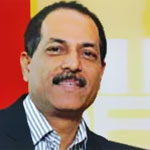
     

    Harish Shriyan

    Added Harish Shriyan, COO, Omnicom Media Group India: “We have always encouraged a culture of growth built on a solid foundation of ideas, insights and results. Raising the benchmark on forward thinking especially in the realm of digital, diversification of our capabilities and being recognized for our work – rooted in consumer understanding and psyche – has certainly helped to offer integrated solutions to our clients. As we celebrate this milestone, OMD India is gearing for its next level of growth.”


    And what plans to take OMD India to the next level:  “We will continue to lead the industry by leveraging our strong foundation that incorporates the best of innovation and effectiveness. Adtech is a huge area of focus and we will be enhancing our data, analytics and programmatic offering by consolidating the expertise of Omnicom specialist units such as Annalect (data driven marketing) within OMD. Another area of focus is talent development with planned initiatives to further nurture entrepreneurism, diversity, fresh thinking and creativity of our work force as they are critical elements of an agency’s success,” added Sohrabji.


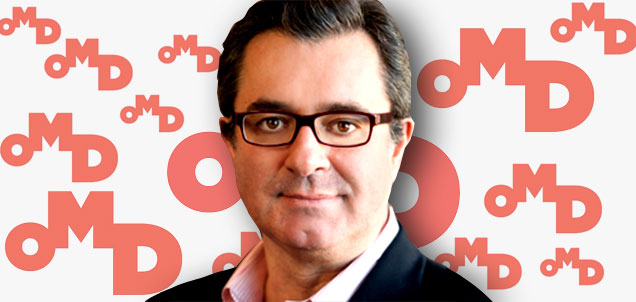
    Meanwhile, Mainardo de Nardis, Global CEO OMD Worldwide who was in India recently, has said in a communique: “OMD India has grown tremendously over the past 10 years thanks to an exceptional team and leadership. India will continue to be a market of importance, contributing to our growth across the region. I am confident that OMD India will charge ahead with the momentum of being a preferred agency of choice for brands and nurture the talent that fuels its growth.”


    Added Stephen Li, CEO, OMD APAC: “OMD India’s offering has gone from strength to strength and the team has been consistently delivering innovative work. As we celebrate this moment in history, I am confident that OMD ’s reputation will only get better in the years to come.”.


    The agency has experienced double digit growth in terms of awards over the last few years including being awarded as the Best Agency in Mobile Marketing at the Mobby’s and five of its planners being named in Businessworld and Digital Market Asia’s India’s Top Digital Planners list in 2016
     

  • Madison BM creates a warm TVC for Amul Bodywarmer

    By A Correspondent


    Madison BMB has conceptualised a new TVC for Amul Bodywarmer. The TVC features a young north Indian couple, at home dealing with the harsh winters.


    With the winter approaching, the objective of the TVC was to bring the focus back to Amul Bodywarmer and the convenience of a bodywarmer in everyday life.


    Apart from the TVC, Amul Bodywarmer will also reach out to its consumers via outdoor, print and various other points of contact.


    Said NavinnS eksaria, Director, JG Hosiery: “In a world where exaggeration is a suspension of disbelief, we wanted to keep away from the exaggeration and follow the keeping it simple theory. We wanted to communicate the multiple aspects of warmth & unisex garment delivered through sweet & humorous story, which has been achieved“


    Said Raj Nair, CEO and Chief Creative Officer, Madison BMB: “Amul Innerwear and Bodywarmers have historically had a legacy of creating clutterbreaking work. We told ourselves that the work needs to be fresh, simple in ideation and yet totally stand-out in execution. We believe that we have achieved that.” 


    For more information,  please contact Mr.  Raj Nair – 09820505335


  • Need balance between big and small data: Mainardo de Nardis


    Mainardo de Nardis has been at the helm of OMD Worldwide since 2009, and having been in the advertising and marketing services industry for 36 years, 25 of which have been heading global operations of media agency networks, he is on top of the way the industry is moving, spotting trends far ahead of most others. In India this week to address industrypersons, his team at OMD and clients, he took time off to meet Pradyuman Maheshwari for an interview on video for Admatazz.in and in text for MxMIndia.com. The full interview will appear on www.Admatazz.in tomorrow (Thursday, November 17).


    On disruption, Brexit and the US election results being disruptors and whether the two events will impact adspends:


    I think disruption is a positive word in our business because it means evolving from one situation to another and we shouldn’t be scared of change. I don’t think we know it yet in terms of Brexit and the US elections and it’s too soon to judge. The forecast for Brexit is that not too much is going to change in the short term because Brexit has not happened. Brexit may happen over the next two years if they are lucky or it may take a little longer. Yes, uncertainty is not good for our business but it does not look like it’s going to affect the advertising expenditure in the short term in UK. In the longer term, we still have to understand what is going to have the impact in Europe. On the American elections, I really don’t know because we have a president who is yet to take office. So let’s wait and see what kind of government he has and their first priorities… I think we have got to see but I wouldn’t expect any major change in the short term.


    On data science and how the US election results have thrown questions as whether big data analytics work.

    Ten years ago, everything was about small data. Small analysis, understanding, in depth thinking of consumers was what is reading their brain and their passion for a brand or a political party. In the past five to eight years, we have seen big data approach. I think in the future we will put big data and small data together. Big data is like electricity, you cannot live without it. We may not talk about it but we don’t talk about electricity either ,it just helps us to do everything we do. I think we need to bring back people who brought us small data and that insight and that level of depth that we need in order to match and combine the two to have big trends supported by data and deeper, in depth understanding of consumers and what they love. That was not done and both Brexit and US elections are good examples of too much data focus whereas we needed in depth understanding of consumers of that specific political product for better understanding of what was gonna happen.


    Whether technology dominates the media agency business (over creativity and innovation):

    I don’t know what it is but I know what it should be. It should be a good balance between what is in our heart and what is on our brain. Exactly as I said before, we need balance between big data and small data. We need balance between long term and short term, we need balance between building brands and performance especially in digital to achieve short term specific objectives. We need balance between big ideas and technology and the systems and data which will allow us to deliver that. It is never one thing or the other, it is always one thing and the other. That should be the approach. If sometimes in the past we had too much on one side or too much on the other side, we always understood that and paid the price because we need to find that balance again. I don’t think the agency’s work should only be about data and technology. It is about finding a balance which is really important for our clients to relaunch and generate profits with sales.


    There’s loads more that the OMD Worldwide CEO spoke. Watch out for the Admatazz interview tomorrow (on www.admatazz.in)


    Nirmala:: ground floor

    Mr Mainardo de Nardis

    CEO, OMD Worldwide

    OMD Worldwide is a leading global media communications agency, recognized for its global footprint, strategic integration and creative innovation


    Since 2009 CEO, OMD Worldwide


    Since 1980 working – 36 years, of which more than 25 have been as Global CEO


    OMD India started in 2007


    Hello, and welcome to Admatazz.


    Over the last 10-odd weeks, we’ve met with a large number of biggies from India. But today we have one of the

    Disruption is the buzzword in media and advertising. And we’ve seen the biggest of them all – in the form of Brexit earlier this year and now the Donald Trump election. What do you anticipate the mood to be for media spends?

    disruption in India continues to be outside of digital even thought mobiles are ubiquitous

    One of the spends report out just yesterday by GroupM says growth of AdEx in Britain will actually increase?

    Data Science is what everyone is talking about. I’ve watched you in interviews also talk of the new reality. But now marketers appear to be rethinking how to read consumers after the results were misread by most pollsters and the media?

    I am told your New York office has more than a 100 data scientists. While media agencies are all about crunching numbers to achieve innovation and creativity, do you think your business is being taken over by the technologists?

    In the new media agency order, how do you manage to get talent? Two years from now, would you see the likes of a GroupM or Publicis Media or Interbrands as competition or some other consulting or number-crunching firms?

    And my next question on this is: so does an OMD reinvent itself?

    Moving to India… are you happy with hwo it is today?

    You had mentioned some years back that you expect India to be amongst your Top 5 revenue markets by 2020. Is this oncourse.

    I ask you this question because in a recent interview you’ve spoken about China and Latin America as the places to look at, but not India. Sob, sob!

    Awards are key and the way of measuring oneself… awards are important. But in India, OMD doesn’t appear to be as aggressive on the awards circuit.


    PcP study, or the recently released ‘teqknow, Checkmate, global tools… global account management programme

    What are the targets that you have marked for India in 2012?

    To be the benchmark of excellence for the media industry in India, and continue to be one of our star operations in the network.

    50 per cent global, 50 per cent local

    agency model is going to change?

    so many pitches last year, how do you ensure the relationship with brands

    key trans tbat will dominate industry over the next 12 months

    data scientists… over a hundred in the New York office…


  • I’m not sure if DDB will participate in Cannes next year: Amir Kassaei

    By A Correspondent


    DDB Worldwide Chief Creative Officer Amir Kassaei has indicted some Cannes Lions 2012 jurors of bias. Mr Kassaei alleged that judges of certain global holdings had been ordered to vote for work from their respective groups. In a video interview to Campaign Brief, Mr Kassaei said that the integrity of Cannes was at stake and the authority as well as the value of the festival was being undermined. In the same interview, he also hinted at boycotting Cannes next year if a proper investigation was not undertaken by the organizers of Cannes for this year’s jury decisions.


    [youtube width=”400″ height=”225″]http://www.youtube.com/watch?v=t27gPMSJND0[/youtube]

    Mr Kassaei said: “We (DDB) as the most awarded network in the history of Cannes will go into a very tough discussion about next year because we cannot accept that the people are willingly voting against the best work in the jury.”


    Mr Kassaei’s accusations follow claims by WPP’s Chief Executive Sir Martin Sorrell that Cannes judges could have been pressured into block voting, which has damaged his agencies chances of winning. Sir Martin Sorrell was quoted in The Guardian saying he had heard rumours of certain jury members being pressured into voting for selected entries and dismissing quality pieces of work from the judging process without due cause.


    The jury in question was chaired by Mainardo de Nardis, the Chief Executive of OMD Worldwide and Manning Gottleib OMD, Omnicom-owned media buying agency won the Grand Prix award for a Google Campaign.


    Reacting to Sir Martin Sorrell’s allegations that Omnicom somehow rigged the Media Lions award in favour of Manning Gottlieb OMD’s work for Google, Mr Kassaei said that WPP executives were ordered to discriminate against Omnicom agencies’ work in the jury voting: “I have since been notified by no fewer than 12 jury members that people from other holding companies this week are being briefed to kill Omnicom, especially BBDO, DDB and TBWA, this is a fact.”


    He added, “What differentiates Omnicom from WPP is the creativity and innovation. I would respect them if they did the better work. Just look at the objective facts, in the media category, WPP is doing better than Omnicom, so accusing us that we’re playing silly games is not right.”


    Furthermore, Mr Kassaei said: “The problem we have at the moment is that Cannes used to be the World Cup of advertising because of the qualification and the result of the juries, and at the moment I don’t have a feeling we are at the World Cup of advertising because a lot of people are playing politics instead of judging the best work of all.”


    In an interview to Afaqs on the judging of Media Lions, Dominic Proctor, President, WPP’s media holding company, Group M, said: “I’ve heard a lot of whisperings in bars and restaurants that there did seem to be some kind of strange voting…I heard rumours that certain blocs of votes were being encouraged. If that’s the case then it would be a worry because if Cannes wants to be taken seriously as a media and a creative platform, then we need to make sure that the process is not in any sense corrupted.”


  • AdAsia | Day 2 – Exec Summary: Food for thought, and plenty

    By Tuhina Anand

    Conversation, exchange of ideas, networking and business as usual was the order of the day at AdAsia. Day 2 of Congress at AdAsia 2011 started with a session by Frederika Meijer, Representative UNPF, India and Country Director UNFPA, Bhutan. The session was on `The Female Equation: Communicating with conscience. The session was an attempt to bring to attention, provoke debate, and challenge the minds present to think of providing creative solutions to one of the critical issue on ‘The girl child’.

    The next session on Marketing 3.0-New Rules of Engagement was an interesting session where Joseph Tripodi, Executive Vice President and Chief Marketing and Commercial Officer, The Coca Cola Company discussed how marketing is dead and engagement is in. He talked about balancing the notion of Brand Love and Brand Value. As consumer engagement is rapidly changing he pointed that the challenge is to navigate in this new universe. He talked about the `Liquid and Linked’ philosophy that the company embarked on last year. It’s this philosophy which has helped in creating the FIFA World Cup campaign celebration campaign. Tripodi introduced the newly launched campaign on Arctic Home that Coca Cola has taken to give homes to polar bears. Then he gave a peek into what the company has planned for London Olympics 2012 which again is truly a Liquid and Linked philosophy. It’s basically about unlocking the social side of Olympic and dubbed it as `integrated and ambitious’ plan. Prasoon Joshi, Chairman and CEO, McCann Worldgroup India and ECD McCann Erickson was the session anchor who threw some tricky questions to Tripodi who answered them all with ease.

    There is business uncertainty, market uncertainty and media uncertainty and that’s what the next session delved on. Kelly Clark, Worldwide CEO, Maxus, Mainardo De Nardis, CEO, OMD Worldwide discussed Media Fragmentation: How to navigate through traffic? The session was moderated by Bob O’Leary, MD, Head of Global Marketing, Consumer, Citi. The panel discussed the explosion of media in the market along with changing human behaviour and the need to find a way through this. Mainardo about the changing Asian market where the role has reversed and other countries are borrowing from best practices from Asia while the scenario was completely different few years ago.

    It was a change to see finally young blood take to stage with the next session on `Ideas that are Contagious’ by Will Sansom, Writer and Consultant, Contagious Communications. HE showed works that were truly innovative uncovering new opportunities and collaborative cultures. An interesting example was that of luxury brand Burberry which used Tweetwalk to engage consumers while managing to retain the exclusivity that only front row gets during its fashion show. Through the use of social media it engaged people to follow the brand online by putting a shot of model just before the walk thus getting its fans to follow the brand online and not disturbing the dynamics offline.

    There was also a session by TED/INK-The New Age of Advertising. Lakshmi Pratury, Host, The INK and Ronda Carnegie, Head of Global Partnerships, TED talked about the movement that provokes people to think and challenge the consumer consciousness.

    Times have change and with that has changed strategies of communication from brand to consumers. For much of its history, the art of advertising revolved around the creation of the ad: an expertly crafted message conveyed through traditional media and consumed by end audiences. But the audiences today have changed, they way the consume media today has changed. The session ‘Acts. Not ads’ deconstructed how, in today’s multidimensional media landscape, advertising messages are evolving into true social movements and acts that can affect and drive positive change. The panelists gave several examples to drive home their point of how acts are much more efficacious as compared to merely advertising. Today, the consumer wants to be a part of an ad and engage with the brand, making it an act.

    There are several brands in the market and with the cacophony emanating from brand declarations, trying to out-shine other brands, results in only a ‘trust-famine’ in the mind of the consumer. Trust becomes very important and that is what the session in adasia discussed ‘Building brands in a trust deficit world’. For the panelists, the essence of building trust was to talk and engage customer and be ethical and responsible as a brand. Consumers like to associate themselves with responsible brands. The latent psychological element of how people buy things at the first place is also important. It is essential for brands to have consistency in the messaging over time and across all touch point to create trust. The key is to keep the old and add the new… In the urge of doing new one should not discard the old value systems for the new. Moreover, for brands to be trustworthy, they have to be modest, even when they are doing very well because one never knows where the next problem is coming from.