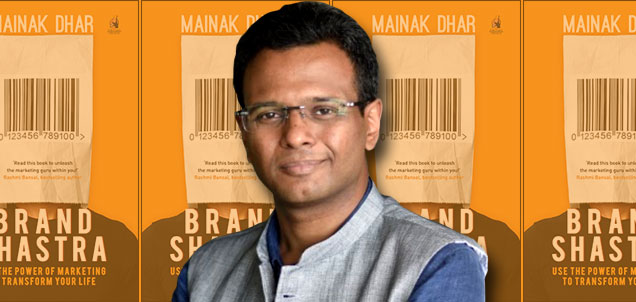
It’s Day 3 of the National Lockdown and while there are some who are getting bored and feeling restless there are some others who are looking at using this opportunity to do stuff that they never really got the time to do. Our all-new all-new series called ‘Stay@Home’ that we introduced yesterday received tremendous response. On Day 3, we have with Mainak Dhar, Region Vice President, Asia, Middle East, Africa (AMEA); Member, Global Marketing Council at General Mills, telling us about how to stay positive.
5 Things to Ask Yourself
We are living through unprecedented times, the likes of which most of us have never seen in our lifetimes. To put it bluntly, we are at war, a war against an unseen and deadly enemy, a war that affects every nation. A war being fought on the frontlines by healthcare workers, law enforcement personnel, and others providing essential services like transportation, sanitation and retail. For the rest of us, the ‘civilians’ in this war, our lives have been changed in dramatic ways. A large part of the world’s population is living in conditions of restricted movement and in India we have entered a phase of total lockdown. In such a situation, anxiety is to be expected – anxiety about our health, about the safety of our loved ones, and about what the future holds. As with any crisis we face in our professional or personal lives, I believe the best way to deal with whatever curveball life throws our way is to focus not on what we cannot control, but on what we can- how we feel and the energy we give off. Here are five thoughts on how we can all try and stay positive and keep those around us positive during the lockdown.
1. Plan, don’t panic:
Don’t be the guy lugging a suitcase to the grocery store to hoard essentials that others need. The first step in avoiding panic is to take a level-headed, objective assessment of things. So do the maths- how much do you actually need of what? What do you really need and what is just nice to have? You may be surprised by how many things we hoarded or bought are actually not essential at all, and how little we can get by with. Second, plan your days. Yes, I’m not going to office and I have a lot more time at home, but I use my calendar to plan what I’ll do (including paying bills, household chores, writing etc). Planning makes your actions more thoughtful, gives you small bite-sized chunks you can be in control of versus giving into blind panic about what is happening around us.
2. Keep fit:
One of the best ways of getting positive energy is to get regular exercise. Don’t let the lockdown be an excuse not to exercise. My regular routine is to wake up very early and jog for two hours every morning, and I’m still doing that even though I’m in the house (hint- put on music you love, plug in earphones and run around the dining table!). The dojo is closed but my son and I are practising Karate every alternate day so we don’t get rusty. Whatever form of exercise you enjoy – skipping, jogging, yoga – do it, and do it everyday. It’s the best start you can give your day in uncertain and anxious times. It helps not just keep you fit but helps calm your mind.
3. Keep busy:
They say an idle mind is the devil’s workshop, and it’s never truer than at a time like this. If all you do is watch the news on TV or scroll social media, you’re going to amplify anxieties, and the various rumours and quackery that seem to proliferate on social media only make things worse. So get off your backside and get busy. Some of us are working from home, but that still leaves a lot more time at home than we’d normally have (eg. Time we’d use for commutes). Pick up a hobby you wanted to, and spend some time on the things you’d say you never get around to because you’re ‘too busy’. I’m working on a new novel and writing about triple the amount each day than I’d do in ‘normal times’. Gain renewed appreciation for how much hard work goes into running a home, and help out at home by dividing chores. I’m the designated laundryman, dishwasher and while my cooking skills are not a patch on my wife’s, I’m cutting vegetables, helping prepare meals and also brushing up my own cooking skills (I made a veg biryani which seemed to have passed the ‘wife test’). Doing things together not just keeps you busy but brings the family closer (see point 5).
4. Support and seek support:
We are all human and it’s natural to feel stressed at a time like this. If you see someone among your family or friends stressed or anxious, offer words of comfort or a hug (a virtual one if it’s a friend in the age of lockdowns!). Importantly, be vulnerable. Ask for help when you need it, let family and friends know when you’re troubled by something. We’re all in this together, literally every single person on this planet- so don’t let your fears gnaw away at you alone.
5. Strengthen connections:
Spending more time at home with family should give us an opportunity to reconnect and strengthen bonds, and at a time of anxiety and uncertainty, take comfort from the one thing that is certain – our love of our families. As a family, we are spending more time having longer conversations, playing board games together which we hadn’t touched for months, and playing our own indoor Cricket league. Whatever you and your family like doing together, use this as an opportunity to reconnect with each other. None of us can control what happens tomorrow, but we can ensure we make the most of today with the ones we love. Also, connect with those around you in the community and strengthen those bonds and support each other. If you have staff working for you, ensure they’re paid in full even if they can’t work, so their families are taken care of. See how you can help support those who are serving at the frontlines of this struggle- donate or just share your appreciation. Help those around you in your community and seek help. In our apartment complex, with our typical fast-paced lifestyles, we’d barely get to know our neighbours, but now I’m amazed at how our WhatsApp group is buzzing with people offering advice to those who need it, sharing ideas and encouraging each other.
We will prevail, and when we do, I hope that these days teach us something. In the days before this crisis, it was fashionable to talk of a ‘connected world’. I hope we now realise that being connected transcends how many Facebook ‘friends’ or Insta ‘likes’ we have. Being connected means that in the face of a worldwide crisis of the sort we face, we realise that we all share more in common than we might have thought. We are very good at dividing ourselves- on the basis of religion, colour, nationality or political affiliation, but this crisis should teach us that we are all more alike than we may have believed. We are all on the same side- against a common enemy. When it comes down to it, all of us are united by our love of life, of our families, of wanting to create a better tomorrow for ourselves and those in the community around us. I hope the legacy of this crisis will not be the memories of anxiety, tragedy and loss that are inevitable, but a putting aside of many of our differences and a renewed appreciation for our shared values, dreams and humanity.
Stay safe, stay healthy and stay positive.
Mainak Dhar is a husband, a father, a bestselling writer, a Black Belt in Karate and also leads the Asia, Middle East & Africa business for General Mills.