By Ranjona Banerji
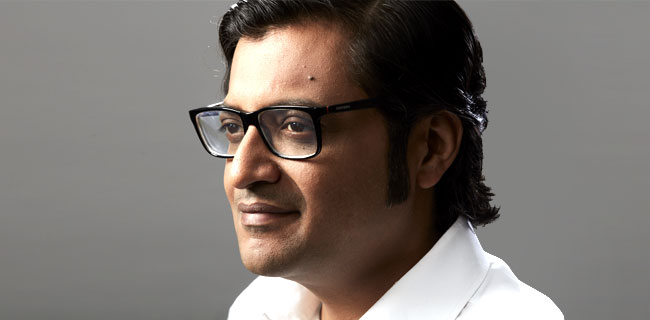
 I started this morning impressed, amazed and a little horrified at both. On a whim, I decided to check on the most dramatic man on Indian television, and someone I have ignored for a long time: Arnab Goswami. And what do I find? That the Lord of the Shouts, the Nation wants to Know, the Burning Flame of Melodrama was very happy that the Supreme Court had sent the 11 convicted rapists of Bilkis Bano back to prison.
For those who do not remember, last August a Gujarat court decided that these 11 men had suffered enough after 14 years and set them free, with due permissions from the Central government. These convicted rapists were then garlanded and welcomed home like heroes.
In case more reminders are needed, the men were part of the various mobs that ravaged Gujarat in 2002, attacking and killing Muslims. Bilkis Bano was pregnant with her second child when she was raped by these men; she lost the child and 14 members of her family.
https://www.bbc.com/news/world-asia-india-67909348
It was the concerted efforts of a group of committed women – politicians Subhasini Ali and Mahua Moitra, academic Roop Rekha Verma, journalist Revati Laul, former police office Meeran Chaddha Borwankar – who filed a petition against the remission of these convicts. Some of India’s best lawyers joined in battle.
https://indianexpress.com/article/india/a-professor-a-politician-a-journalist-3-women-joined-hands-to-fight-for-bilkis-bano-9100867/
Justice BV Nagarathna of the two-judge Supreme Court bench said, “Justice encompasses not just the rights of the convicts but also the rights of the victims… rule of law must be preserved unmindful of the ripples of the consequences”.
The ripples of the consequences are in fact large and important. The BJP-run state Government had pushed for the release of these rapists. The BJP-run Central government had allowed the release of these men. The BJP and its affiliate Hindutva organisations had been part of the post-release celebrations. All are culpable in the release and all of them should and must be questioned.
https://www.thehindu.com/opinion/editorial/unlawful-remission-the-hindu-editorial-on-the-bilkis-bano-case/article67719957.ece
However. Regardless of Arnab Goswami’s eloquent grandstanding, the rest of the mainstream media has behaved with as little conscience, ethical understanding and moral underpinning as possible.
We know that nothing can be taken for granted in India any more: that Constitutional provisions will be upheld by courts, the elected governments will fulfil their basic democratic obligations, that the rights of citizens will get precedence over the demands of political compulsion, and that an independent media will vigorously throw truth to power. If all of these were transgressed in some form or the other over the last 75 years, they have never been as enthusiastically contravened at the same time and over a period of 10 years.
And even in this important instance, there were so many other distractions available to the media.
Let us not forget that seven months of ongoing civil war and violence in Manipur have been successfully ignored by the Modi Government and its lapdog media. What heft and influence does a case going back to events 22 years ago wield, especially when it shows Narendra Modi, when he was chief minister of Gujarat, in a bad light?
The news focus was skilfully positioned on Modi, as he posed and strolled about the beaches of Lakshadweep. Around that developed a whole campaign to push Lakshadweep as a tourist destination over the Maldives. A few ministers in the Maldives government made some needless and rude remarks about Modi, calling him a clown and a puppet in the hands of the Israeli government. India’s honour at stake, the media, social media influences and stars and starlets began attacks on the Maldives. Unfortunately, in their enthusiasm they used photographs of the Maldives to promote Lakshadweep, but never mind.
The upshot is that the obvious happened. Bilkis Bano and the Supreme Court were pushed to one side and this tiny little fracas over tiny little islands gained media prominence.
Must be honest, I did not go as far as to check Goswami’s take on the Maldives. After all, there is only so much I can withstand!
Ranjona Banerji is a senior journalist and commentator. She writes on MxMIndia on Tuesdays and Fridays. Her views here are personal.

 I hope we all had fun on April 1. I remember playing—and being played–dumb pranks at school on April Fools’ Day, back in the 1970s. It is so heartening (not really) to see that the tradition of schoolboy pranks lives on in adulthood. It gets sillier when the media plays pranks with us. Eyeball-roll level silly.