Tag: Maggi

  • Maggi connects with rural India in new campaign

    By Our Staff


    Maggi in its latest campaign celebrates the consumers who make Maggie noodles an iconic brand. It has cast real consumers from UP and Bihar in its campaign titled “Khao to Maggi Noodles Khao”.


    The campaign will be rolled out across print, out-of-home and social media.


    Talking about the campaign, Rajat Jain, Head – Foods Business, Nestlé India, said:  “Maggi is a brand truly loved by everyone across the country. Our consumers remain our true champions, and their love and trust have played a big role in the brand story. It is our privilege to give a voice to that love in this campaign which is truly a category-first initiative. Who better than them to be the face of our campaign which speaks to the years of quality, trust, and unmatched happiness that Maggi Noodles is known for.”


  • W+K get Shreekant Srinivasan to head Delhi

    By Our Staff


    Shreekant Srinivasan
    Shreekant Srinivasan

    Wieden Kennedy  (W+K) India has hired Shreekant Srinivasan, as Head of Business for its Delhi office. In this role, he will lead the new business agenda as well as head the account management function for the office.


    Srinivasan joins W+K from McCann Worldgroup India where he was a Senior Vice President leading the Maggi portfolio and the Expo Dubai business. In a career spanning over 21 years, he has worked in multiple agencies, set up new offices and managed more-than-many brands – Maggi, Thums Up, Chevrolet, Dominos, Expo Dubai 2020, Royal Enfield to name a few.


    Said Srinivasan: “In the 21 years of my advertising life, I have worked with some really interesting bunch of individuals. From oddballs to seasoned surgeons to mavericks to absolute bat shit crazy, I have seen the best of work come out of each one of my creative partnerships.And this belief that creation is inclusive and personality-agnostic is the biggest driving force at W+K. If you have the hunger for good work and love for advertising, you will blend right in. With Paddy and Ayesha, I intend to build this inclusive creative culture on the shoulders of some ground-breaking work.”


    Ayesha Ghosh
    Ayesha Ghosh

    Added Ayesha Ghosh, President, Wieden Kennedy India: “We’ve been looking for people of substance who don’t take themselves too seriously and Shreekant fits that mould just right. He’s been at the helm of important moments in the life stage of significant brands, as well as of agencies. With the talented team that the Delhi office already has, we’re keen to sink our teeth into more and more challenges facing brands.”


    Santosh Padhi
    Santosh Padhi

    Said Santosh Padhi (Paddy), CCO Wieden Kennedy India: “Shreekant has a unique point of view on life, creativity and how to run this wonderful creative business called advertising, his energy is truly infectious and we are pretty sure all of these will bring in a very new dimension to our leadership unit.”


  • Maggi turns 40

    By Our Staff


    Maggi noodles has turned 40 and to celebrate the milestone, the brand has launched a new campaign.


    Said Rajat Jain, Head – Foods Business, Nestlé India: “Maggi has been an integral part of the lives of millions of Indians for four decades. While Indian cooking tradition remains anchored in our love for everyday fresh food and century-old recipes it is being silently transformed. At Maggi, we deeply understand this transformation and see evolving consumer need for extraordinary taste in everyday food and the  increasing reliance on digital ecosystems for daily cooking.”


  • Maggi’s new campaign on Indian masalas

    By A Correspondent


    With the aim to celebrate this diversity and these indigenous masalas of India, Nestlé India has launched a campaign for Maggi Special Masala Noodles.


    Said Nikhil Chand, Director, Foods & Confectionery, Nestlé India: “Maggi Masala Noodles have been a part of our kitchens for almost four decades. In these four decades, we have witnessed an entire generation growing up to love the signature taste of Maggi. In this time, we have developed a deep understanding of consumer’s taste preferences and rich Indian heritage of spices & herbs. This comes together to create Maggi Special Masala noodles which leaves a lingering taste of India’s vibrant spices in every bite.”


  • Maggi unveils new TVC

    By A Correspondent [updated]


    It’s not the first company which sends us a communique on a new TVC and doesn’t name the agency or production house creating it. Sad. For, in the entire attempt to re-orient the mindset of the nation after the outrage on ingredients that go on to make the snackbrand, the work of McCann cannot be ignored.


    So, well, we learnt yesterday that the new campaign rolled by Maggi revolves around “a story of a mother and her son, wherein the mother encourages her son to prepare for life and be independent. This campaign introduces the ‘First Cook’ and celebrates those life moments, which help us grow up and take responsibility.”


    Here’s what Nikhil Chand, Vice-President Foods and Confectionary, Nestlé India said in the communique: “Indians love Maggi noodles and most of us have our favourite Maggi and memories. From countless consumer conversations, we learnt that cooking Maggi noodles is often the first culinary moment for many people. For 36 years, moms have cooked Maggi noodles for their loved ones. This time, we found magic in a teenager trying to cook Maggi for the first time that makes this film beautiful.”


    We wrote to the PR agency representing Maggi, but haven’t heard from it at the time of publishing. Is it McCann or some other creative agency. One wonders why Nestle chose not to name the creator of the ad? Not right, na?

    We have since heard from the PR agency who has informed that the agency is indeed McCann. One still wonders why Nestle (and its PR agency) refused to name the ad agency upfront.


  • Famous Innovations gets Nestle to change packaging of Maggi, Kit Kat & Nescafe in support of Nanhi Kali

    By A Correspondent


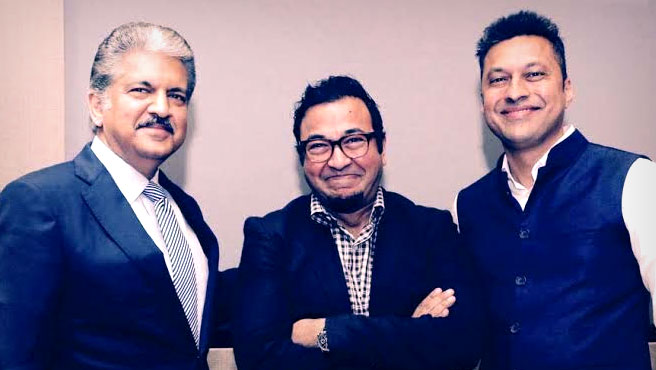
    Raj Kamble with Anand Mahindra and Chandrasekar Radhakrishnan of Nestle

    Nestlé India has brought about a change in packaging of three of its iconic brands – Maggi, Kit Kat and Nescafé to support girl child education in association with Project Nanhi Kali – an initiative by K C Mahindra Education Trust and the Naandi Foundation.


    Said Raj Kamble, Founder and CCO, Famous Innovations: “We were thinking of ways to increase corporate engagement for Project Nanhi Kali and we found ourselves wondering – what can corporate brands contribute with, other than just money? “Taglines” was the simplest, yet the most daring of answers. The one asset that any brands holds dearest to its heart and closest to its name. We salute Nestle India and Project Nanhi Kali for this bold step towards educating girls in India, a cause that we all know needs urgent attention.”


    In their new avatar, Maggi has changed its tagline from “2 minute noodles” to “2 minutes for education”, Kit Kat has changed the visual of the finger snap to one without the break with the line “no break from education” and Nescafe comes with the tagline “ It all starts with a Nescafe” to “It all starts with education”. The message is further reinforced with a call to action and the URL nanhikali.org. A hundred million packs in the new avatar will hit the shelves this week, notes a communiqué.


    Speaking on the partnership,. Suresh Narayanan, Chairman and Managing Director, Nestlé India said: “Brands are built by earning the love and trust of consumers over time. Every time a consumer picks a pack off the shelf, the visual properties of the brand serve as symbols of the promise the brand has made to the consumers. They are therefore invaluable assets, protected and treasured by organisations. We are changing the packaging of three of our most iconic brands to sensitise and draw attention to the fact that society needs to embrace collective responsibility in ensuring that more girls have the opportunity to pursue education. Girls with access to education not only improve their own lives but also bring changes to their families, communities and economies. This is Nestlé India’s humble way of making a small yet deeply felt contribution to a cause that is important and vital to our society.”


    The initiative will be further amplified by TV, outdoor, print, digital and on-ground activities, the communiqué adds.


  • Can Maggi make a Thumping Comeback?


    By Harish Bijoor


    So Maggi is back. For those who ask ‘what the #@*& is Maggi?’, this is India’s most darling brand of instant noodles that has made contemporary marketing history, not only by notching up a humongous turnover in hard-earned Indian rupees from middle-class Indian homes, but by also going through a recent trial-by-fire of its own, thanks to an over-zealous food regulator. Maggi is now out of the frying pan, but is it in the fire? Is the Maggi comeback going to be easy? Will Maggi really regain its lost glory?


    I do believe it will. In fact, in the case of Maggi I just have no doubt at all. Here are three compelling reasons why.

    1. The Brand Angle: Maggi has emerged from the tumult stronger. The six days of trial-by-media that the brand went through, gave Maggi top-of-the-mind, top-of-the-mouth, top-of-the-psyche, top of everything recall. Those six days made the brand the talk of the town and village alike; never mind the fact that this was mostly negative publicity, these six days had the nation breathing fire over a Nestle brand. This has bestowed Maggi top-of-the-mind status for days and months to come. Maggi went through all the paces of check and counter-check, and emerged a winner. When the brand returns, it is sure to regain its glory. Later than sooner. Awareness is it!


    2. The Retail Angle: Maggi vacated valuable shelf space from an alleged six million-plus outlets in the country during its two-month ban. This might well have been India’s single largest brand-recall exercise. This vacation meant that retail counters across the country lost valuable contributions that the brand made to retailer turnovers and incomes. Retailers scurried around to fill vacated shelves with alternatives, which just did not match up and retailers realised that nothing can really replace Maggi. Now, they are waiting to stock up once again on a brand that gives them effortless offtake, and consequently effortless and assured profits. Money talks with retailers.


    3. The Consumer Angle: Consumers love Maggi. This is a brand that is both prescriptive and proscriptive. Mothers prescribe the brand for their kids, and the kids love the taste prescribed. There has been a vacuum. Kids are tired of waiting [for Maggi to return] and harassed mothers, looking for alternatives. The kids are tired of the sandwiches and are looking to get back to the good old funky noodle. Yet another thing to remember is that the consumer is convinced that Maggi did no wrong. Maggi has gone ahead to reinforce that in its communication, and in the stance it has taken not to change packaging colour and graphics. Consumers seem to believe that Maggi is the wronged party. That’s good for Maggi; consumers always root for the underdog and the wronged. In this case, that is Maggi.


    Harish Bijoor is a well-known brand expert and founder of Harish Bijoor Consults. This article first appeared in dna of brands dated November 16, 2015


  • Can the new Nestle CEO restore confidence in Maggi?


    By Kala Vijayraghavan & Ratna Bhushan


    More than allegedly selling Maggi with excessive lead content or mislabelling packs, perhaps Nestle India’s biggest transgression in the run-up to the noodles hitting the fan in early June may well have been the inadequate communication with government and regulators. Small wonder, then, Suresh Narayanan, the 55-year-old Indian managing director at Nestle India, who’s been brought in to douse the fire, talks about “stepping up engagement with the government.” This, of course, will be in addition to taking “all necessary steps to engage with the consumer,” and the “first task” of getting “Nestle as an organisation to regain its self-confidence.”


    Narayanan’s predecessor, Etienne Benet who took over in October 2013, replaced another expat, Antonio Helio Waszyk. To be sure, Nestle India has almost always had expat CEOs since it began operations in the country over a century ago; and Narayanan is the first Indian in that role, although he has come in from an overseas Nestle outpost (the Philippines).


    Having an Indian at the helm is doubtless good for perception, credibility and communication, with regulators, consumers and even employees, reckon human resource experts. Says R Suresh, founder of RGF Executive Search: “Some European companies tend to have a mindset that expats should be at the helm of the company. But for Nestle India, which wants to get Maggi up and going, an Indian as CEO is a great decision.” D Shivakumar, chairman of PepsiCo, feels two strengths of Narayanan will come to fore at Nestle India. “He excels at customer management and boosting the morale of those who work with him.”


    The new CEO, though, will be the first one to remind you that he does not have “a magic wand,” and the journey back to normalcy promises to be a long, winding one. Nestle posted its first loss in over three decades for the April-June 2015 quarter (of Rs 64.4 crore compared to a net profit Rs 288 crore in the corresponding quarter a year ago), thanks to the disruption in the instant noodles business. Consider what Maggi is up against: the 30-year-old brand with over 75 per cent market share has disappeared from shelves, virtually overnight. The national food regulator has banned sale of Maggi noodles nationally citing excessive lead levels, more than the permissible quantity of 2.5 parts per million; mislabelling on packs which declared ‘no added MSG (monosodium glutamate, a controversial flavour enhancer); and for selling Maggi oats masala noodles without product approval. Nestle has insisted that neither its noodles nor pasta contain added MSG, adding that many packaged foods contain hydrolysed groundnut protein, onion powder and wheat flour, all of which contain glutamate. The matter is in the courts.


    For its part, the top brass at Nestle stresses that Narayanan has not been airdropped just because of his nationality, although being Indian has its advantages. Says Wang Ling Martello, executive vice president, Nestle SA, head of Zone Asia, Oceania and Africa: “Suresh is Indian, knows the market here, can hit the ground running. But when I scanned the world, I did not look for nationality. I looked for the skillsets… We don’t pick people depending on nationalities,” she says.


    A former CEO at a multinational consumer goods company points out that an Indian in the hot seat is also good for PR – a front Nestle hasn’t emerged smelling of roses not just in India but globally too. In 2010, for instance, the Swiss MNC found itself at the receiving end of flak from environment group Greenpeace – and consequently on social media – which accused it of not heeding a cry to stop buying palm oil from an Indonesian company that was allegedly consciously destroying Indonesian forests. Nestle was duly slammed on social media for its apparent arrogance.


    When the Maggi crisis broke in June, fingers were similarly pointed at Nestle India for living in denial, not communicating with consumers and a poor attempt at countering the criticisms on social media. The former CEO at the MNC says Nestle culturally has had condescending attitude towards the marketplace. “This is a world where leadership and brands have to be humble —to admit that, yes, we made mistakes, we will rectify them, and move on”.


    “It is a tough one to resolve. Nestle allowed too much delay and let doubts creep into consumers’ minds, who have moved on to rearrange life around new habits. The company failed to present a different story. It will not be easy for Suresh even as an Indian to fix the damage,” says Santosh Desai, MD & CEO, Futurebrands, a brand management and marketing consulting firm.


    Rajeev Bakshi, a former CEO at PepsiCo India, reckons that more than winning over the consumer, Narayanan’s biggest challenge is to win over the government. “This is not an attack from third party, unlike when Pepsi was attacked by an NGO.” In 2010, the Centre for Science and Environment had alleged that leading food brands including PepsiCo’s Lays, McDonald’s, KFC and, yes, Maggi, were guilty of “large scale misbranding and misinformation.” But today the government is the protagonist. “Nestle can’t afford to take an adversarial role here. They have to align and collaborate with the government,” says Bakshi, now managing director of wholesaler Metro Cash & Carry India.


    Fifty-five-year-old Narayanan, who began his career with Hindustan Unilever, doubtless has his toughest mandate yet. “Deep down in my gut, the words that come to me are, we shall overcome… we (employees, colleagues, associates) can rebuild brick by brick, together.”


    They’ll need plenty of help from government and consumer.


    Source:The Economic Times

    Copyright © 2015, Bennett, Coleman & Co. Ltd. All Rights Reserved

    Licensed to republish


  • Could Nestle have handled it better in a world of social media & 24×7 News TV?


    By Dyanne Coelho


    The boycott, the pull-out of stocks and the subsequent bans have put the popular Maggi noodles in an avoidable mess. The brand has been brought under severe scrutiny for high content of lead; above the permissible limit as well as MSG; a taste enhancer. While at a press conference convened last Friday, Paul Bulcke, Global Chief Executive Nestle, defended the brand saying it is safe for consumption, regulators point out otherwise. The controversy has hit Nestle hard and communication with the consumers and others seems to have taken a backseat, causing distrust and confusion. MxMIndia spoke with senior marketing and media professionals (in alphabetical order of their last names) Manish Bhatt (Founder-Director, Scarecrow Communications), Harish Bijoor, Brand Advisor and Commentator, CEO, Harish Bijoor Consultants, Rajiv Dingra, Founder and CEO, WATConsult and Lloyd Mathias, Marketing Head, Hewlett-Packard India and requested them for some insights on what went wrong for Brand Maggi, how such a crisis ought to be handled in the age of the digital media and 24×7 news television and the role of celebrities as brand ambassadors.


    Would you say the controversy around Maggi has been badly handled in terms of the way the company has communicated with all stakeholders especially consumers?

    Manish Bhatt: No, I would not say that. I would say that this happens. There must have been something that went wrong. This is a decision between the company and the food and drug authority. It’s a very scientific matter. It’s a scientific and chemical lab kind of matter. Marketing and communication is an absolutely different thing. We can’t command authority and say whether they are right or wrong, especially with a reputed company whose products we have grown up with. Now communication is a completely different ball game and this can happen to anybody.

     

    Harish Bijoor: Most certainly yes. Each of the stakeholders need a different degree of communication. The regulator, the traditional media, social media and consumer communication needed to be quick, forever-on and active, more active than what was seen.



    Rajiv Dingra: The handling has been efficient but not effective. During crisis it’s not only important to clarify or state facts but it’s also important to come across empathetic and concerned for your consumers. Nestles responses have been defensive and at some point dismissive as well, which is why they have been ineffective even though they have been quick to react.



    Lloyd Mathias: I think Nestle could have been far more proactive when the issue first surfaced by directly communicating with stakeholders and clarifying issues.  Their initial silence – on both paid and unpaid media – has complicated matters and contributed to the issue spiralling out of control.


    Has the presence of a hyperactive news media – especially 24 x 7 news television and the social media make matters worse in handling crises?

    Manish Bhatt: Yes, but this can happen to the media also, some things can go wrong. Everyone wants information round the clock. Today news is not like a morning event, where the newspaper comes in the morning and you get your news. With social media, the news is not getting analysed by the right kind of people. It is done by anybody and everybody.


    Harish Bijoor: Absolutely. Today, brands cannot escape the scathe and scythe of television and social media.  If you are not agile, you need to pay the price. At times an unfair price of reputation erosion even. I do not believe Maggi deserves the kind of reputation-erosion it saw in the last week.


    Rajiv Dingra: The world has changed and the power is in consumers hands since the advent of social media. It only grows in their hands and brands need to embrace and not fight this reality.


    Lloyd Mathias: No. 24×7 news and social media is a reality and one must come to terms with it.  For corporations it means devising communication strategies and means to stay responsive to this medium. Consumers tend to air their grievances and concerns on social media and these need to be addressed effectively.


    Would you say that the social media and TV news media often becomes a mob and hence all consumer-facing organisations need to train themselves better to interact with both?

    Manish Bhatt: Today people get swayed by these things. But after sometime there will be more maturity and there will be more understanding and people won’t get affected by it. Today it becomes a mob and if any issue happens, people throng to social media, twitter, etc. It’s uninvited, but social media is at such a stage. But maybe after some time, it will mature and people will not get affected by these things. What happens on social media is really out of your hands. People also are 24×7 sitting at Ramlilamaidan, and if any issue happens they protest, it’s the same attitude on social media. It makes everybody nervous. I’ve worked with the present company, and they are pretty systematic and organised and very concerned and responsible. But what can one do in such a situation?


    Harish Bijoor: Absolutely. This is the new reality. No corporate and brand entity is perfect and infallible. You need to have the ability to manage the tender and weak-points of possibilities in this day and age.


    Rajiv Dingra: Mobs happen when you frustrate people by either not answering them or try to talk over them in a loud voice. People have busy lives no one wants to indulge in non-productive banter. But when products that concern them let them down they do speak up. Brands need to realise that consumers place their trust in them and hence when trust is broken there will be noise. Brands need to be more caring and humane in the era of social media.


    Lloyd Mathias: The viral effect of social media together with 24×7 news certainly tends to magnify issues – often unreasonably. Consumer facing organizations and indeed all businesses must devise strategies to address this. Keeping communication lines open, putting out clarifications, responding real time to social media posts, having spokespersons addressing live media – help considerably in crisis situations.


    Would you have advocated Nestle to be apologetic in their assertiveness about the safety standards as against being defensive and uncommunicative?

    Manish Bhatt: It is not right for us to comment on this. It is absolutely none of our business. As a consumer if it affects us, then yes, the sales would be affected, but I would not say that anybody is right or wrong right now. It’s like the law. You have to wait for the law to take its course now.


    Harish Bijoor: No. I do believe Nestle has handled that well. It has taken the high ground of quality and it has withdrawn packs occupying that high-ground.


    Rajiv Dingra: Maybe apologetic is too strong but certainly more empathetic and more concerned for consumer health. The war is not proving oneself right, it should be about ensuring consumer safety. A great way could have been to pause Maggi supply and redo packaging which reassured consumers and relaunch. They could also release videos on how Maggi is produced. Cadbury did that when worms were found years back. It showed commitment to consumers on ensuring they upped their safety and product standards.


    Lloyd Mathias: Being communicative always helps.  I think stating the facts clearly while highlighting safety standards the company adheres to both locally and globally would have helped.


    Do you think it is appropriate for celebrities endorsing brands to take the heat and while legally they may be protected, they must take the moral authority for the product’s attributes?

    Manish Bhatt: Whoever the celebrity may be, he/she is not a chemical engineer or anything. He can’t really check what is there in the product. Beyond a point, nobody can go into anything to that extent. You really can’t accuse them. They can’t check everything. This is the technical and moral responsibility of the company who produces it, or it is the duty of the governmental authorities to keep on checking things on time. You can’t accuse the endorsers.


    Harish Bijoor: No. Celebs are really indemnified. No celebrity can be 100% certain of everything about a brand.


    Rajiv Dingra: Consumers don’t think legally but logically. Logic is that if you endorse it and I eat it and I fall sick then I will hold you responsible.Consumers will always question celebrities on their actions because celebrities are there due to consumers love and fandom. Though it’s an opportunity for the celebrity brand too to take a higher moral ground and win more fans.


    Lloyd Mathias: I think celebrities must be selective and fair in their selection of products, as their endorsement often swings public opinion.  So, yes, they carry a moral responsibility. However, in specific instance of Maggi, I don’t think the brand ambassadors are to blame at all. Instant noodles are a relatively safe category and if the food safety authorities had cleared the product, the celebs would obviously believe them. Clearly the brand ambassadors can’t be expected to have independent labs checking on product safety beyond what food safety authorities do.


    And lastly: Do you think celebrities need to be more careful in their selection of products while signing up endorsement deals

    Manish Bhatt: They should have one more clause added in the agreement that says that they will not be responsible in such an event.


    Harish Bijoor: Yes, celebs need to be and will be more careful in the future.  And celebs will continue to take risks in the future as well. Let’s accept it. What one celeb refuses, another will pick with glee.


    Rajiv Dingra: Maggi is an iconic brand and no celebrity would be able to say no. What comes across from this incident though is that brand aside what’s the actual impact of products on consumer health is also to be considered. The future is one where the consumer is an evolving and educated being and his needs and reactions will be far more evolved than consumers of yesteryears. He will be more profound in his articulation of needs and wants and will also create more movements together due to social media. The powerful thinking and action oriented consumer is here. Brands need to be ready for him.


    Lloyd Mathias: Yes, they always need to be careful.  As I said above their endorsement is meant to swing public opinion, so they need to be very careful.


     

  • Nestle ropes in US lobbyist APCO to tone down Maggi backlash

    By Shramana Ganguly


    Nestle has appointed American lobbying giant APCO Worldwide to help overcome the widespread backlash against its flagship Maggi brand of instant noodles in India and create a positive opinion among different stakeholders, a person privy to the development said.


    APCO, which doubles as a public relations agency and boasts of clients ranging from dictators to global investment banks, is best known in India for helping Gujarat change its post-2002 riots image to present itself as an investment hub, or ‘Indian Davos’, since 2009.


    It was APCO that organised and ideated Nestle’s first media conference on Friday after the ‘lead in noodle’ controversy broke almost a fortnight ago, said the person quoted earlier.


    The Swiss food giant was under flak for not communicating enough with stakeholders and consumers even as several state governments started banning Maggi.


    Nestle did not respond to a mail pertaining to its association with APCO as of press time on Friday. Sukanti Ghosh, managing director at APCO Worldwide’s India operations, said, “We do not talk about clients.”


    From its headquarters in Washington, APCO has long influenced many hot-button political and economic debates that roiled the US and the world. It fire-fought “medical” crisis for Merck & Co’s scandal involving Vioxx, the arthritis drug that killed thousands before it was withdrawn, and Kazakhstan president Nursultan Nazarbayev hired it to extricate himself from a four-year-long dispute with his former son-in-law Rakhat Aliyev.


    APCO stepped into India in 2006 and muscled out a raft of PR companies to win the contract to promote Vibrant Gujarat, the showpiece investment meeting of the then chief minister Narendra Modi, in 2009. Over the two successive summits it handled, APCO transformed Vibrant Gujarat from a modest show to a major event with the likes of the US, UK, Netherlands, Canada, Australia, Singapore, South Africa and Japan coming in as partners.


    In 2013, APCO handled crisis for Johnson & Johnson when the brand faced flak for unacceptable contents in its baby powder in the Indian market. A year hence, the brand came out with advertisements in leading newspapers that even smelt of its distinctive baby powder. “That is how APCO firefights,” said a former APCO executive. It also serves Dow Corning, Walt Disney, Mastercard, Cairn, Welspun and Facebook in India.


    On its website, APCO says, “Defending the brands, markets and reputations you have worked so hard to create is critical for continued business success. Let us show you how we can help protect your permission to operate by anticipating and mitigating risks while staying true to your values and brand.”


    Nestle will not want more than that as the firm took Maggi off the shelves in the country on Friday.


    Source:The Economic Times

    Copyright © 2015, Bennett, Coleman & Co. Ltd. All Rights Reserved

    Licensed to republish


  • Amith Prabhu: Brand Maggi – 20 years to build, 2 minutes to get destroyed!

    By Amith Prabhu


    I complete two years of writing this weekly column. I think this is now easily the longest running weekly column in India on Public Relations. Thank you for reading it and supporting me with feedback. No better way to start the third year of writing than with the focus on the ongoing crisis to have hit one of India’s most loved brands.


    I don’t think there is anyone who grew up in urban or semi urban India, now in their 20s, 30s and 40s and did not savour Maggi in its myriad forms. Maggi was part of every kitchen and has been a leader in the instant noodles category. The last few weeks have been dreadful for this much loved brand.


    Most of the damage has happened because the brand failed to communicate. There has been a ‘Promoted’ tweet that has been floating but nothing much else. And to think of it the real problem began in Barabanki 15 months ago which was resurrected recently.


    I wrote a column in December when Uber faced a crisis and the simple steps apply even to this crisis. What starts as a risk turns into an issue and then emerges as a crisis before becoming a disaster. The type of crisis Maggi is facing has been experienced by leaders in the past – Cadburys with worms and Pepsi and Coke with pesticides.


    The straightforward approach is to Be Alert, Admit the mistake, Apologise genuinely, Act fair, shun Arrogance, Advertise remedies, Accept criticism, Allow questions. Maggi’s silence has been deafening and confusing. Not sure if it is ignorance of crisis management principles, high confidence in the product and therefore arrogance or both.


    But this has hit the brand and the corporate parent very hard. No one ever died because of Maggi. But this episode makes it feel as if Maggi is a silent killer. There are various angles including conspiracy theories that competition may have played a trick or two. All that talk will keep happening until Nestle India takes control of the message and does a few things.


    The CEO needs to put out a two part video. One part where he is having a Maggi meal at home with family and at office with colleagues. The other part where he is talking about the confidence the company has in the product and its safety.


    The company needs to bring out front-page advertisements because the opportunity to enjoy earned media has gone away. These ads should run for a week educating consumers about the action being taken and the goodness of the product. With the kind of market share Maggi enjoyed and the revenues it brought in it would not be a bad idea for the global CEO to fly down and meet the authorities.


    It needs to use social media to interact smartly and there are several recent examples of cases where the brand custodians have defended products vigorously on the online medium. None of this is rocket science and it is surprising that Nestle has not taken the basic steps during a crisis. Maggi is a good example of how a brand takes twenty years to build and just two minutes to get destroyed.


    As I was writing this column over the weekend there was news that Nestle had hired a communications firm to help it in these days of crisis. It may be too little too late. Fortunately, Indians have a weak memory and easily forgive brands. There are groups already planning Maggi meet-ups to show solidarity to the instant nodle they grew up on. Time will tell what becomes of this iconic brand. In the meantime, other FMCG brands may do well in pulling their socks.


  • Nestle replaces Maggi ads with Nescafe & KitKat commercials, to lose about Rs 10 crore

    By Pritha Mitra Dasgupta & Shramana Ganguly


    Nestle India stands to lose advertising inventory of about  Rs 10 crore due to Maggi recall despite its move to air commercials of Nescafe or KitKat in all advertisement slots booked for the instant noodles brand, broadcasters and media planners say.


    “The channels have been told to subtly replace Maggi ads with Nescafe and KitKat commercials,” a senior media planner said. “But despite this attempt to recover as much inventory possible, Nestle will have to let go of advertising inventory worth  Rs 8-10 crore,” the person said on the condition of anonymity.


    On Saturday, Nestle notified broadcasters and other media houses in India to stop publishing Maggi ads from Sunday. While the Swiss company has stopped digital advertising for the brand as well, it is using various social media platforms liberally to sell its side of the story to Indian consumers.


    A Nestle India spokesperson said that while the firm has taken action to stop Maggi ads, “you may see a few since changing the programming pipeline could take a little longer”.


    Nestle is one of the biggest advertisers in India, spending over  Rs 400 crore on advertising a year. Its ad spend on Maggi brand alone is estimated at over Rs 150 crore, according to industry insiders.


    Publicis Worldwide is Maggi’s creative agency, while Zenith-Optimedia handles the brand’s media buying and selling activities. The digital mandate of Maggi is handled by GroupM’s Maxus. Sources in these agencies said that Nestle stopped airing Maggi Oat Masala noodle commercial featuring actor Madhuri Dixit right after the scandal broke.


    In February, Maggi had launched a campaign, ‘Khushiyon Ki Recipe’, which was on air till Saturday despite Food Safety and Standards Authority of India (FSSAI) dismissal of Nestle’s defence about the brand embroiled in controversy over excessive lead content and mislabelling on MSG.


    Nestle has now instructed channels to take these commercials off air.


    Meanwhile, Ahmedabad-based Consumer Education Research Centre (CERC) is contemplating legal action to push Nestle to do corrective advertising across print and television space.


    “Considering Nestle advertisements have been misleading the consumers, they ought to engage in corrective advertising to tell the consumer in as many words about what is factually correct,” said Pritee Shah, chief general manager at CERC and a member of an inter-ministerial monitoring committee for misleading advertisements under the ministry of consumer affairs.


    G Gurucharan, additional secretary (consumer affairs), too, had recently stated that Nestle could be asked to put out corrective advertisements.


    Shah said that considering Nestle has been misleading the consumer about the health aspect of Maggi, it should redo its commercials. In addition to lead and MSG, the firm needs to clarify that one helping of Maggi is not equivalent to three chapatis as claimed by one of its ads, he said.


    Source:The Economic Times

    Copyright © 2015, Bennett, Coleman & Co. Ltd. All Rights Reserved

    Licensed to republish