Tag: Magazines

  • Magazines were supposed to die in the digital age. So why haven’t they?

    Although this article talks about the status of magazines elsewhere in the world, some of the points made are relevant for India as well. In fact the fact that the Indian edition of Esquire is set to launch later this from the RP Sanjeev Goenka group, clearly magazines aren’t dead in India. Not yet.


    By Julian Novitz


    In the classic comedy Ghostbusters (1984), newly hired secretary Janice raises the subject of reading, while idly flipping through the pages of a magazine. The scientist Egon Spengler responds with a brusque dismissal: “print is dead.”

    Egon’s words now seem prescient. The prevailing assumption of the past couple of decades is that print media is being slowly throttled by the rise of digital. Print magazines, in particular, are often perceived as being under threat.

    While not nearly as popular as they once were, magazines haven’t died. New ones have started since the dire predictions began, while others continue to attract loyal readerships.

    So what’s the enduring appeal of the print magazine? Why didn’t it die, as so many predicted?


    Printed words in an online world

    The word “magazine” derives from the term for a warehouse or storehouse. In its essence, it is any publication that collects different types of writing for readers. Each instalment includes a range of voices, subjects and perspectives.

    Print magazine culture has certainly seen a decline since its heyday in the 20th century. Once-popular print magazines have moved entirely online or are largely sustained by growing digital subscriptions.

    Elsewhere, internet media sites, of the type pioneered by Buzzfeed and its imitators, increasingly fulfil the need for diverse and distracting short-form writing.

    The explosion of social media has also cut into the advertising market on which print magazines have traditionally depended.

    Online audiences have come to expect new content daily or even hourly. Casual readers are less willing to wait for a weekly or monthly print magazine to arrive in the post or on a newsstand. The ready availability of free, or significantly cheaper, digital content may deter them from purchasing print subscriptions or individual issues.


    Turning from screens to the page

    And yet print magazines refuse to die. Established periodicals, such as the New Yorker and Vogue, stubbornly cling to a global readership in both print and digital formats.

    New titles are emerging as well – 2021 saw the launch of 122 new print magazines in the United States alone. The number is smaller than some previous years, and this perhaps reflects the generally shrinking market for print media.

    But given the accepted wisdom, it is remarkable there are any new periodicals at all.

    In Australia, print magazines sales have risen 4.1% in 2023 and previously axed publications – such as Girlfriend – are now receiving one-off, nostalgic returns to print.

    The market for print magazines isn’t exactly thriving. But they haven’t vanished as quickly as anticipated.

    Some commentators have attributed the enduring appeal of print magazines to the physical experience of reading. We absorb information differently from the page than from the screen, perhaps in a less frantic and distractable way.

    “Digital fatigue” from the years of the pandemic has arguably resulted in a small pivot back to print media. The revived interest in print magazines has also been attributed to the “analog” preferences of Gen Z readers.

    As the writer Hope Corrigan has noted, there is also something appealing about the aesthetics of print magazines. The care taken with layout, images and copy can’t always be replicated on as screen. Indeed, magazines with a significant focus on photography and visual design – such as fashion and travel magazines – are enduring in print.

    Magazine expert Samir Husni has observed that emerging independent print magazines are more focused on targeting a niche readership. Advances in printing technology have made smaller print runs more cost-effective. This allows new magazines to focus on quality over quantity.

    The new wave of print magazines tend to have a higher cover price and standard of production. They are also published less frequently, with quarterly or biannual schedules becoming more common.


    What was old is cool again?

    This trend moves away from the idea of magazines as cheap and disposable. Rather, it reframes them as a luxury product.

    Print magazines cannot compete with digital media in providing constantly up-to-date content to a mass audience. But they can potentially maintain a dedicated readership with a meaningful and aesthetically pleasing publication.

    This means print magazines may be spared some of the turbulence suffered by media websites that are solely dependent on digital advertising revenue. The past few years have seen staffing upheavals, mass resignations and shutdowns at popular magazine-style websites such as Deadspin, the Onion AV Club, the Escapist and Jezebel (although the latter has since returned). The original vision and standards for these sites have arguably suffered from the constant drive to increase daily traffic and reduce costs.

    Print magazines may also be seeing a revived interest from advertisers. Recent research indicates a strong preference for print advertising among consumers. Readers are far more likely to pay attention to a print advertisement and trust its content. By contrast, online advertising is more likely to be ignored or dismissed.

    In a 2021 profile of magazine collector Steven Lomazow, Nathan Heller writes:

    […] what made magazines appealing in 1720 is the same thing that made them appealing in 1920 and in 2020: a blend of iconoclasm and authority, novelty and continuity, marketability and creativity, social engagement and personal voice.

    While the circulation and influence of print magazines may have reduced, they are not necessarily dead or even dying. They can be seen as moving into a smaller, but sustainable, place in the media landscape.The Conversation


    Julian Novitz is Senior Lecturer, Writing, Department of Media and Communication, Swinburne University of Technology. This article is republished from The Conversation under a Creative Commons license. Read the original article.
     

  • Digital is changing the publishing game: IMC panel

    By A Correspondent


    There is a revolution happening in India, and publications have to ride the wave. This has been the dominant theme ever since the digital eruption began, and the urgency has only grown. The message was echoed at the panel discussion on ‘The State of Digital Publishing – Challenges and Opportunities’ on the second day of the Indian Magazine Congress.


    Kirthiga Reddy, Director, Online Operations, and India Head, Facebook, said that according to the Indian Readership Survey, digital media has been growing faster and bigger than print media, and its drivers are technology and changing consumer behaviour.


    On the technology side, India has the highest growth rate in internet adoption. “We are in the midst of a smartphone, tablet, featurephone revolution,” she said. “On the consumer side, consumers want to find exactly what they want, when they want it, as the pressure of time is intensifying, and this is changing how people are doing things.”


    There are three big opportunities in social media, Ms Reddy said. One is reach, the second is two-way interaction, and third is using that interaction for unprecedented personalization. “On the Facebook platform for example, you can reach one billion people globally. Marketers need to think about platforms including the lowest end feature phones, as well as using the range of regional languages.”


    People do not just want to consume information, they want to interact and share it, she said. This desire to share is higher in India than the global average. Some best practices are to have a content strategy that leverages the power of each platform, it’s not about one content strategy for all. The most effective use of social media is when the company thinks of social media as part of everything that they do; it is not something separate.


    Moving on to personalization, Ms Reddy said that in five years from now, it will be unthinkable that an individual goes to a website and sees the same thing as other individuals. Consumers are going to demand personalization. No one is going to have the time to flip through pages and pages of matter which is irrelevant to them. One challenge to highlight at this time, she said, is education to help people navigate the new world of new and social media.


    Umang Bedi, Managing Director, South Asia, Adobe, said the global trend is to put digital first, and India has to keep in step. The way the world looks at content strategy is about taking content into a digital format first, giving the flexibility of creating content any time anywhere, and rendering that content and distributing it. Then it is about optimizing, personalizing and monetizing the content, breaking down the traditional silos. Adobe, he said, is very close to a solution for meeting the consumer need of personalized customization.


    “Mobile traffic has exploded in India, and everyone wants to put content in digital format. And every time someone goes online and interacts, they leave a digital set of signals. Brands need to listen to these signals, assimilate data and make decisions based on these observations which are tailored to each individual. Conversions grow by 4x or 5x when brands are able to differentiate themselves in this way,” Mr Bedi said.


    Punitha Arumugam, Director, Agency Business, Google India said that thinking about digital has to go beyond desktop and mobile, but the context is likely to become one comprehensive device – the Google Glasses – as early as by the end of the year. Adapting publishing to existing digital devices has to include developments of the future such as this, she said, which will change the way consumers interact.


    The advent of technology has ended up making consumers increasingly lazy, she said, and this also influences the way brands reach them. She cited the example of pizza company Red Tomato, which has a fridge-magnet application that can be used to order pizza instantly based on previously ordered choices. However, when reading a magazine online, consumers behave the same way as they do with magazines in hard copy, she said. Which is, they stop at pages, stop at ads, etc, in contrast with other online behaviour which is search-oriented.


    In the publishing space, magazines need to be frenemies rather than enemies, Ms Arumugam said, highlighting that collaboration can help the industry as a whole, and thereby benefit individual brands as well. She also added that measurement needs to include online readership as well as the traditional offline numbers, and the next IRS, in collaboration with Google, would be tuned to reflect this.


    The discussion was moderated by Pradeep Gupta, Chairman and Managing Director of Cybermedia.


  • Into the printed world of luxury


    By Johnson Napier


    Be it a shopping mall or a supermarket, one cannot help but notice some loud and in-your-face visuals that crave the consumer’s indulgence. In fact this practice is not just limited to malls and large stores where consumers flock in droves – these humongous posters seem to greet us everywhere.


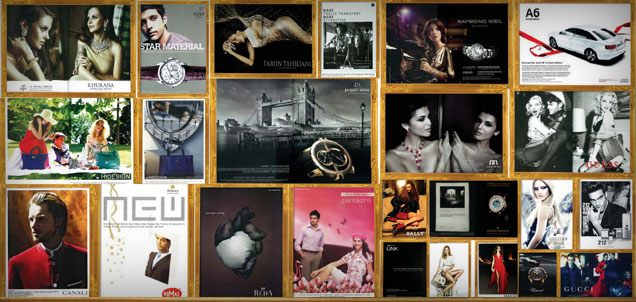
    And they are familiar sights – one sees them not just outdoors but within the pages of glossy magazines as well. Most of these larger-than-life posters are for luxury brands. While out-of-home is generally the medium of choice for brands, it still doesn’t compare to what the medium of print has been delivering as it continues to rule the course where advertising of niche and lifestyle-centric brands are concerned. At least that’s what can be inferred from a survey released by Cogito Consulting.


    In its report ‘An Analysis of Marketing Communication of Luxury Brands through the Lens of Luxury Magazines’, Cogito Consulting decided to do a deep dive into leading upmarket magazines carrying advertising for luxury brands to unearth key trends and semiotic codes of luxury advertising in India.


    The report is an analysis of some 511 advertisements in leading luxury magazines like Vogue, Verve, Time N Style, GQ, Harper’s Bazaar, MW and Cosmopolitan. All the ads were mapped quantitatively on various parameters and additionally, a qualitative analysis along with few expert interviews were done to arrive at some key learnings.


    Kinjal Medh

    Sharing his thoughts on the study, Kinjal Medh, COO, Cogito Consulting said, “The idea was to understand whether there were any patterns or codes that were common to most luxury brands. What we observed through our course of analysis over a six-month period is that a lot of luxury brands follow a similar pattern of advertising. We sampled over 500+ publications which typically feature advertising by luxury brands.” In fact according to Mr Medh, the unique trend that this study throws up is that “Luxury brands have grown perhaps more than the other brands in the market as they are not sensitive to economic conditions. As a result, people who can afford them can do so without being worried about what the economic climate in the country is. In fact my guess is that this sector will grow even faster and has a long way to go in India.”


    Composition of Ads

    According to the study, personal adornment brands feature the maximum number of ads in the magazines under study. On the other hand, products which do not directly enhance personality are advertised far lesser. For example: Apparel and watches which are a direct gateway to status elevation have the highest number of ads. While categories like real estate, home furnishing, hospitality etc. are relatively lesser.


    Affirms Mr Medh on the trend: “Where the composition of ads is concerned, it has remained somewhat the same. In fact it has not changed since the coming in of international brands in India. Before that there was not much of luxury brands who advertised; just a few jewellery brands. This was a trend prevalent almost about a decade ago. But that has now changed with the coming of international titles in India who brought with them the scope for luxury brands to associate with.”


    Another important trend that the study analyzed was the use or rather non-use of celebrities for luxury advertising. The study notes that only 12 percent of the ads studied, featured celebrities. Among the ads which featured celebrities, Watches, Jewellery, Perfumes and Apparel were the top categories using celebrities in their advertising. Further, of this 12 per cent, the majority (52 percent) were international celebrities while 48 percent featured Indian celebrities.


    Sharing his views on the trend, Mr Medh asserted, “One of the things happening in India is that there is a celebrity overplay. In fact there are instances where a same celebrity endorses high-end products and then also endorses hair oil, which is contrasting in a sense. As a result the level of exclusivity that luxury brands require is often not possible. This is not the case with international celebrities who are very selective in terms of the brands they accept to endorse.”


    Paradoxes of Luxury Advertising

    An important facet of the study or rather a paradox is the occurrence of luxury brands going increasingly local while mainstream Indian brands were going international. The study goes on to state that lot of Indian brands are trying to project an international imagery by using international models in the advertising. Approximately 14 percent of Indian brands advertised have used international models in their advertisements, it claims. “It is part of the experimentation that luxury brands do to discover new ways of marketing themselves. So while international brands tend to look inside India most Indian brands are looking outside to expand their base,” Mr Medh commented.


    Another interesting finding that the study highlights is that most of the brands advertised in the magazines have no body copy. About 60 percent of the ads analyzed did not have any copy, it noted. They featured only visuals and brand name. The ads project visuals which define the personality of the brand and along with visuals just the brand name. For those consumers well versed with the personality of the brand, only the name is enough and for the uninitiated, sharp visuals work in attracting them.


    Ironically, from the consumer’s point of view the financial investment in luxury brands is far higher than mass brands and the justification from the seller’s point of view is correspondingly far lesser. In other words, Mass brands’ advertising sell, Luxury brands’ advertising evoke Desire.


    The analysis revealed that primarily there are six key tenets that form the basis of most luxury brand advertising. These 6 codes include The Two Tone Code, The Exclusivity Code, The Sensuality Code, The Craftsmanship Code, The Origin Code and The Heritage Code. Of the whole lot, the study noted the Two Tones Code to be more effective. In its analysis of 511 ads, about 66% of brands that were advertised had black/white logo. On the other hand, in the case of mainstream Indian brands, logos do not necessarily follow a black and white pattern.


    Asserted Mr Medh about the popular Code, “I think that the Two Toned Code is the most interesting be it for its advertising or even the use of logo which mostly is black & white. I expect this trend to continue going forward as black and white tones do lend a certain amount of mystique and sophistication; unless certain brand advertising demands the use of colour I largely see two toned as the most popular form of advertising.”


    As for the Sensuality Code, the study observed that advertising for luxury brands is much more sensual than mass brands. Probably it is one of the ways to create a desirable personality and distance luxury brands from others brands. From perfumes to handbags to watches, sensuality is an integral part of luxury advertising, it noted.


    Where the Exclusivity Code was concerned, the study noted that luxury brands try and create an aura of uniqueness since it gives an assurance of being owned only by selected people. Over abundance and easy availability of a luxury brand can cause dilution of luxury character, hence many brands try to maintain the perception that the goods are scarce.


    Where the Craftsmanship Code is concerned, the study states that luxury brand advertising lays more emphasis on the craftsmanship and intricate mechanisms involved in the product. For example, an apparel ad shows the cut and fabric up close or a watch ad shows the mechanisms inside the watch.


    The study further notes that for the Origin Code, some luxury brands elucidate the luxury quotient of their brand by mentioning the country of origin of the brand. Going ahead, luxury marketers are taking a step further and using the city of origin and bringing in more credibility to the brand.


    As for the sixth code, the Heritage Code the study notes that the heritage of a brand builds an aura of several years of finesse and excellence in providing luxury products. It exemplifies the years of mastery or lineage to add a mystique to the brand. A mystique is generally built around the exceptional legendary founder character of the past, making up an integral part of the brand story and brand personality.


  • The Anchor: Mitrajit Bhattacharya on 5 areas where print (& mags in particular) need to upgrade their knowledge

    By Mitrajit Bhattacharya


    1. Use of econometric modelling to measure advertising impact on sales

    Econometrics can be used to reveal the effects of diminishing returns, ad memory decay and optimisation of media strategies.


    2. Measurement of magazines’ social media engagement and building overall engagement indices

    How can social media provide competitive advantage in an undifferentiated market? How tone and themes of conversation can help guide social media strategy? How does social media engagement compare with more traditional measures of engagement?


    3. Research into branded content and do’s and don’ts about how to create great advertorials

    Advertorials, whether in print or web, are valued, appealing, well-read if strategised well.


    4. Usage and attitude towards iPads and how users experience advertising and content on the device

    How is the consumer engagement with digital devices? How does an iPad user use the device? How many apps do they download? Free apps vs paid apps and usage and attitude towards them.


    5. How tablet in-app advertising works

    Learnings to increase the marketing efficiency of in-app ads on tablets.


    Mitrajit Bhattacharya is President and Publisher, Chitralekha and Vice-President, Association of Indian Magazines


  • Stagnancy stages a comeback in IRS 2012Q1


    By A Correspondent


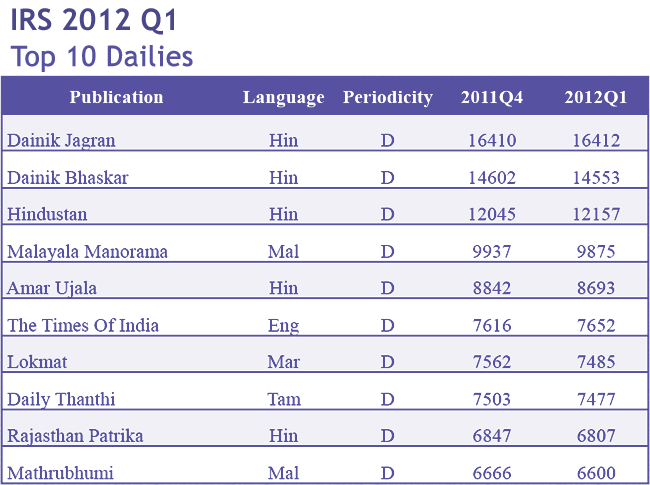
    The IRS 2012 Q1 readership results released by MRUC and Hansa has nothing new to tell but the obvious tale of the apparent rise in numbers of a few publications and the decline in readership of a majority of players. Going by the Average Issue Readership norm, in the Top 10 dailies there has been no change in the pecking order of the top performers but the readership of 7 out of 10 dailies has seen a marginal decline. Of the ten publications, five are Hindi in origin, two are in Malayalam, and one each in Tamil, English and Marathi.


    Emerging a frontrunner once again, Dainik Jagran manages to hold its forte showing slight readership growth with 16,412 in 2012Q1 as against 16,410 that it reported in 2011Q4. At No 2, Dainik Bhaskar has reported numbers totalling 14,553 a decline by 0.33 per cent from 2011Q4 figure of 14,602.Hindustansits comfortably at the third spot having reported a 1 per cent growth of 12,157 as against 12,045 reported in 2011Q4. Malayala Manorama is at the fourth spot with an AIR of 9,875 as against 9,937 in 2011Q4 – a drop of 0.6 per cent. Amar Ujala is next reporting an AIR of 8693 against an AIR of 8842 in 2011Q4 – a drop of 1.7 per cent. The Times of India English edition continues to see growth and comes in sixth with AIR of 7,652 as against 7,616 registered last quarter. Marathi daily Lokmat sees a marginal decline to end 2012Q1 at 7,485 compared to 2011Q4 AIR of 7,562. Tamil daily Daily Thanthi is next with AIR numbers of 7,477 as against 7,503 recorded in 2011Q4. Rajasthan Patrika with 6,807 and Mathrubhumi with 6,600 end the tally occupying the ninth and tenth spot respectively.


    Reacting to the overall trend, Dinesh Rathore, Vice President, MediaVest Worldwide said, “The study hasn’t thrown any new surprises. What is known is that the readership time spent on print is coming down these days, which is even lesser in case of magazines. Newspapers as a habit are not going to die soon but the time spent is surely on a decline. Also, if people were subscribing to more newspapers earlier, they are subscribing to one less now because of the options available on digital.”


    Highlighting her stance on the numbers, Anamika Mehta of Lodestar UM said: “What I infer is that the drop is very marginal. Print will continue to hold its ground in India. With literacy rates going up and the launch of several new products print will continue to drive growth in India . Also, what is seen is that there is a growth of consumption that is happening on the web and moreover, India is a very young country. Almost 60 per cent plus of the population are younger than 35 years. With these audiences the consumption is more on the web than on the physical newspaper. Also, we are seeing a lot of launches by players in the regional markets. So it’s not as bad as it seems.”


    Voicing a similar opinion as given by Mr Rathore, Priti Murthy, National Director – Insights, Maxus said, “I am not surprised by the overall trend that has been thrown up. Why do we read newspapers and magazines, for the sheer content that it provides and content is available faster in other mediums today – definitely digital and to a large extent even TV. I see this trend continuing in the next 3-4 years after which it will reach a saturation point. Also, how much ever tactical initiatives publications engage in to increase circulation, it clearly shows that readership is not going to increase. The time spent in reading newspapers and magazines will continue to see a decline. Also the new generation that is growing up may not grow up on a newspaper alone. They rely on mobile and other AV modes to receive their communication.”


    (AIR numbers; all figures in ‘000)


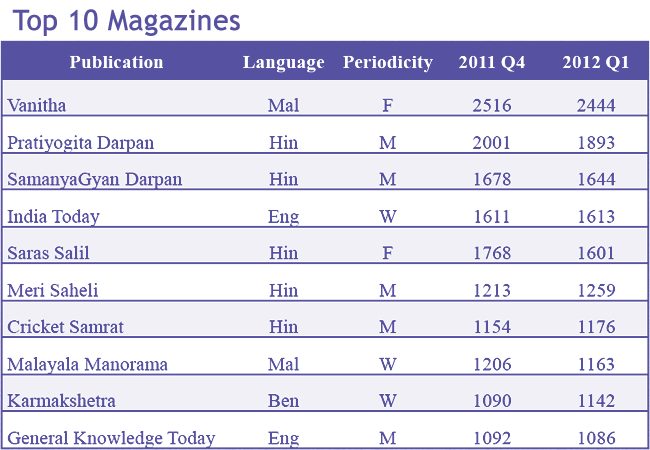
    The downfall story continues with magazines as well with leader Vanitha (Malayalam) reporting an AIR of 2,444 as against 2,516 in 2011Q4 – a decline by 3 per cent. Pratiyogita Darpan too sees a decline of 5.4 per cent having registered an AIR of 1,893 in 2012Q1 as against an AIR of 2001 in 2011Q4. SamanyaGyan Darpan sees a marginal decline with an AIR of 1,644 as against 1,678 reported last quarter. India Today is the topmost English magazine in this list and figures at the fourth spot with 1,613 as against an AIR of 1,611 reported last quarter. Saras Salil is next on the line-up and has reported a big drop of 9.5 per cent registering an AIR of 1601 as against an AIR of 1,768 reported in 2011Q4. Meri Saheli and Cricket Samrat have posted growth with an AIR of 1,259 and 1,176 respectively. Malayalam Manorama at 1,163 has seen a decline of 3.5 per cent while Bengali magazine Karmakshetra has seen a growth in its AIR at 1,142 as against 1,090 in 2011Q4. General Knowledge Today completes the list with an AIR of 1086.


    Throwing light on the trend spotted in magazines, Anamika Mehta said: “In the case of magazines, what we are seeing is that the time spent on magazines is going down but there are a lot of new and niche products being launched. A lot of international players too are coming into this market. So that should give it some scope for growth. But right now I think magazines are in a more worrying state than dailies in India but having said that I do not see the death of the medium coming here anytime soon.”


    (AIR numbers; all figures in ‘000)


  • The Anchor: Ruby Bana on 6 reasons FMCGs need to look beyond TV

    By Ruby Bana


    For years I hear again and again from FMCG clients that 90 per cent of our budget goes into TV first, we need to handle that well. Sure we DO! TVCs are what helps us stay in place (unless a brand is a new entrant). TVCs help us maintain SOV, and hence market share by helping remind consumers close to purchase that we are still there. But TV is such a passive medium and consumers are becoming active. They are educated, demanding and skeptical…. So to complete our communication we need to look beyond TVCs


    1. Tell the whole story: Nothing does it better than magazines.


    2. Immerse the consumers in the brand experience: Nothing does that better than the events.


    3. Interact and engage them: Nothing does that better than online website or social networking and consumer forums.


    4. Win credibility: Nothing does that better than Socially Responsible Marketing.


    5. Become local: Nothing does it better than newspaper or radio.


    6. Become part of lifestyle: Nothing does it better than ambient media.


    All of these add competitive advantage to our brands and help us get noticed, remembered and enrich our interaction with our consumers. The older and better established a FMCG brand becomes, the lesser and lesser must it rely on TV. It’s a fundamental truth… the strategies/tactics that get us to the top are not necessarily those that keep us there OR help us evolve to the next level.


    Ruby Bana is Chief Strategy Officer, Madison


  • The Anchor: 6 mantras for starting a magazine

    By Shivani Darshan


    #1 Homework. Always understand who your consumers are; more important, who your competitors are. A good, in-depth understanding of the market will allow you to create a solution for the end users.


    #2 Eye on Money. Many businesses fail because they forget to focus on the revenue stream. Great paper, great pictures and articles account for nothing if you do not have advertisers and subscribers. Keep your focus and energies targeted on the money.


    #3 Supplier Management. Always keep your suppliers, vendors, contributors on check and keep a good backup at all times. Many startups fail to have backup writers and printers, and end up being blackmailed by a few good ones. Do your homework and always keep options open.


    #4 Money Management. Most startups fail to keep cash flow in check. Negotiating credit period and collecting money on time are some of the most difficult things to do when you start something new. Master this and you are ready to do business.


    #5 Future Planning. One of the biggest needs in today’s environment is to keep the future in mind. If you are launching a magazine you should also plan an ezine (e-magazine). After all the future is e-publishing and not paper publishing. The market is changing and today’s businesses need to be dynamic and ready for change.


    #6 Have Fun. Most people work so hard that they forget to have fun. It’s no use launching a new business if you are not going to enjoy doing it. Have a fun-filled atmosphere in your office. Always remember, a happy team is a productive team.


    Shivani Darshan is the Managing Director at Boutique Publishing India Pvt Ltd.


  • The Anchor: 4 reasons South India needs its own special interest mags

    By Bina Sujit


    India is such a diverse nation and every region has its own unique characteristic. It is therefore, very difficult to cater to the sensibilities of everyone through a common magazine. There would certainly be a large segment of people who would tend to get neglected in this case. Hence a region-specific, special interest magazine is the answer to fill the gap. Our research before the launch of our magazine JFW (Just for Women), targeted at the women in South India, showed that there was a need to focus on women out here, and the success of our magazine just goes to prove that finding.


    The advertisers’ needs also vary from region to region and they would probably need to position/focus various products in different states /regions. That is why brands also have different brand ambassadors at the national and regional levels (for example, if it is Shahrukh for the national campaign then it is Suriya and Mahesh Babu at the regional level for a particular brand). Hence the availability of a regional medium of communication helps companies to communicate their region-specific brand message.


    Just like our country, personalities are also very varied in various fields. Speaking from JFW’s point of view, women from South India have been making a big mark in the national and international arena. A dedicated magazine for these women ensures that such achievers are given the focus and recognition they deserve.


    The outlook of people across different regions also varies in our country. This results in differing tastes and preferences in what people in South India would want to read and how they would like it to be visualised. Again, a region-specific magazine is the answer to cater to the preference of readers.


    Bina Sujit is the Director & Editor-in-Chief, JFW, CLub Class & A la Carte at Options Media Pvt Ltd.


  • The Anchor: 5 publications you (nearly) forgot but are (often) unputdownable!

    By A N Chorrea


    #1 Caravan
    Published by Delhi Press, would be wrong to call it India’s answer to New Yorker, but a good read nevertheless. Was resurrected by the younger generation of the Naths and with a gora editor in tow.


    #2 Reader’s Digest
    Oh, yes, it’s still around. The format may not have changed much, but it’s the Digest content and attention to detail and fact-checking makes it a great buy.


    #3 Economic & Political Weekly
    You may not get it at all the railway stalls, but get hold of a copy and we’re sure you’ll enjoy it for the quality of content.


    #4 Current
    Resurrected by the late owner-editor Ayub Syed’s son Asif, Current is a super read with some incisive political analyses, often by heavyweights in the biz. Check content on the website, currentnews.in.


    #5 Screen
    Critics may say it exists more for the awards than to serve as the voice of the Indian film trade as it once did, but the bold new tabloid avatar is interesting and easy-to-navigate.One does miss those big broadsheet ads, but this is the age where smallness rules.

  • No crisis for magazines in India: Chris Llewellyn

    Chris Llewellyn, President and CEO, FIPP, UK spoke to Akash Raha and Shruti Pushkarna of MxM India at the recently held World Magazine Congress. Mr Llewellyn spoke about the future of magazine, future events of FIPP and about the recently held World Magazine Congress in New Delhi, India.  Federation of the Periodical Press (FIPP) is a worldwide magazine media association, which represents companies and individuals involved in the creation, publishing, or distribution of quality content, in whatever form, by whatever channel, and in the most appropriate frequency, to defined audiences of interest.
     

    Q: FIPP has been taking up the interest of magazine publishers around the globe. What are the upcoming events that we can expect?

    FIPP exists to help its members construct better strategies and to build better media businesses. And the way they do that, is by finding what is happening around the world. So we come together at various meetings and events, share experiences and share knowledge, and go back better informed. I am really pleased to be able to confirm that next year September 19 to 21, Seoul Korea will be holding the third Asia Pacific Digital Magazine Media conference. And that will be specifically geared towards the Asian market and the hot topics of the time then; and we are talking digitally, so a year from now god knows what they’ll be, but they’ll be on the top of publishers mind. We will bring in some international speakers and we will engage with the Korean market which itself is incredibly digital. So that is an exciting new event next year. On top of that, we will be doing in early November, an American conference, out of Central America. In fact, I can even confirm that it is going to be in Costa Rica, which is a very attractive venue. And again that will be talking about the hot issues of the day, appropriate for the publishers of that territory.


    Q: How do you think the Indian magazine marketing is shaping up?

    The issue at the moment is that we have these two huge forces at play. One is this structural change that the digital revolution is forcing on our thinking and the second one is just the cycle of poor economy. You know, India, which is still booming, still ‘incredible India’, and yet people in India think there is a crisis. But it is not a crisis in India, believe me. This is just the cycle and this will turn around. How long, well, if I knew how long I will be a very rich man. But the truth is, it will change. At the same time, I think the publishers are responding magnificently to the digital changes and realizing that the strong magazine brands that have an emotional engagement with the audiences can be taken to different platforms and it just deepen the engagement. Don’t confuse content with how you deliver content. Content is an art and that content can be on magazines and it can be on any other format that we want it on. But it will still be the magazine publisher’s knowledge of his audience, which is the key, and that’s not going away.


    Q: How do you think digital will affect print?

    Hollywood films have never being bigger – huge blockbusters. Hollywood is making so much more money but not at the box office … their business model has changed. Today, Hollywood is built on the sales of popcorn, the sales of the food and drinks when you visit the cinema. It’s the full cinema experience, not the box office that entails profits. Similarly, in the magazine industry too, we will see a change in the business model, that’s certain. But the medium will still be there because of the strength of the medium. The emotional engagement of turning the pages, fresh magazines, just the way that we represent images is fantastic.  The women’s fashion sector needs glossy magazine too. So magazines are not going away, but the business models will change.


    Q: One can say that the World Magazine Congress has been immensely successful. What are the important points that have emerged from the conference?

    There is still a huge print industry and print is not at all dead. Innovation in print, as we have seen in several publications, is there, creativity is there and it will get more creative. And we have a bigger train set to play with now with all these new mediums and that’s exciting. So print is fine and we have a world of opportunity that is opening up. That is the big take away from the conference I feel.


    Q: What has been the feedback from the World Magazine Congress?

    You know, when we planned this conference two years ago, coming to India and quite a few people were saying ‘that could be interesting’. They clearly meant it in both ways… It could be interesting because it’s exciting and it could be interesting because it is quite a logistical challenge. I can’t tell you how difficult it is to get a visa to come to this country. My word, I am British and we left you bureaucracy which you have taken to another level (he jokes). However, the feedback I have got is really good. The opening reception just got the energy into everyone; The Bollywood dancing, the charisma of Shahrukh Khan. A lot of international people had never heard of him, they do now. I was told that the programmes were fantastic and there was lots of value to it. Many international visitors are extending their stay in India and are going to see a little more of this country. I am going to have the pleasure of seeing the Taj Mahal too. All in all, the congress in India has been absolutely wonderful.


    Watch Chris Llewellyn:

    On the magazine market
    [youtube width=”350″ height=”250″]http://www.youtube.com/watch?v=5rgYpWMJhjU[/youtube]


    Magazine business model might change, but the medium isn’t going anywhere
    [youtube width=”350″ height=”250″]http://www.youtube.com/watch?v=rCMEvZtioqc[/youtube]


    Takeaways from WMC 2011
    [youtube width=”350″ height=”250″]http://www.youtube.com/watch?v=Gtgers8eSAw[/youtube]
  • Huge expectations from ‘Good Food’: Tarun Rai

    Tarun Rai has been the CEO since 2008 of the Worldwide Media group which, during his tenure, has seen several new launches and titles. The most recent in the long list of magazines is BBC Good Food which is to be launched on October 21. In a conversation with MxM India’s Akash Raha and Shruti Pushkarna, Mr Rai, who took over as AIM President from Mr Pradeep Gupta, Chairman and Managing Director, Cybermedia, talks about the Engagement Study, Good Food, Zinio platform and the future of magazines in India.


    [youtube width=”350″ height=”250″]http://www.youtube.com/watch?v=KKPL01uKuDA[/youtube]

    Q: You are launching BBC Good Food in India. What are your expectations from the magazine?

    I just got to hear that the magazine is ready; it’s bound, ready for dispatch. We are launching BBC Good Food on Good Food Day, October 21, which we are celebrating and we are encouraging people to try something new on the day. We have huge expectations from Good Food. India is changing, food habits are changing. People are experimenting with food both in their kitchen as well as when it comes to eating out in restaurants. We believe that the time is right for such a magazine. There are no precedents; there are no international food magazines in the country. We are going into uncharted territory and we are beating a new path. There are dangers but as I said, somebody has to do it and we believe that the potential is huge. And the response we’ve got from advertisers for the magazine is excellent and you’ll see it in the number of ad pages we’ve got in the first issue.


    Tarun Rai on Indian magazines becoming successful international brands
    [youtube width=”350″ height=”250″]http://www.youtube.com/watch?v=-gdT17SBAtk[/youtube]

    Q: Several international brands are licensed to India. When do you see an Indian title becoming a successful international brand?

    As you know Femina and Filmfare are heritage brands for us and they are doing fantastically well. Femina already is present in Sri Lanka. Filmfare we’ve licensed last year to UAE and we’re hoping that we will take it to many countries; there is already interest because Bollywood today is international. The Indian diaspora still wants to connect with Bollywood and I think very soon you’ll see Filmfare in many other countries. The other advantage is, thanks to what people say the ‘digital issue’ but I see it always as an opportunity, we are already on the Zinio platform with Filmfare for the past month; and the response has been fantastic. Almost 60 percent of our total sales of all the magazines that we’ve put on Zinio have been for Filmfare because this is the demand which is coming from the international markets and now suddenly it has become very easy to subscribe to Filmfare just at the click of a button. So I think there are going to be huge opportunities on some of the brands like Filmfare and Femina.

    Q: What do you feel at being appointed the President of the Association of Indian Magazines? What does this responsibility mean to you?

    It’s an honour… I have been a part of AIM for four years now, pretty much as soon as I joined the industry. For me it has been a fantastic experience. I come from advertising and I had no idea about the magazine business. Thanks to my membership of AIM, very quickly I was co-opted to the magazine industry. I have learnt a lot from my peers in AIM and I owe a lot to them. Mr Pradeep Gupta, the outgoing President, has had a terrific run in the last two years and as I take over from him I hope to continue the good job that AIM has done over the last two years. We are a small organization but I think we have learnt a lot to collaborate and make sure that we do things that are beneficial to the entire industry. Right now we are too small. We are just 3 percent of the total ad spends. We deserve more, but just by saying that we deserve more we are not going to get it. So we have to do things to convince the advertisers about the strength of our media. That is the reason we instituted the engagement survey and we are going to take it to its right conclusion by having a proper campaign around it and material which will convince the advertisers. That’s just one of the things. Generally speaking, the magazine industry can do with a higher profile.  So my attempt will be to raise the profile of the magazine industry by doing activities. One of the things it will do is to bring more talent to our business. The way our industry is growing we need a lot of people very fast. We need different kinds of people; with this digital opportunity that has come up we need different and varied kinds of young people to come to our business. By raising the profile of the industry we will also attract new talent to the business. That is going to be one of my important priorities.”


    Q: Do you think the Engagement Study that AIM has come out with will solve the measurement woes of the industry? Moreover, do you think that the advertisers will accept it as a robust currency?

    You never know until you try, and this is our attempt. Now it’s up to us to convince them. One piece of research is not going to do it. The good news is that the media buyers and the advertisers themselves are trying to understand media better. Ambika Srivastava spoke about the touch point study, the brand experience points, about how magazines score very highly when it comes to influence. So the conversation has already started. We want to push that conversation along where the judgment on one media is not only dependent on the numbers but also dependent on the quality of numbers, on the quality of engagement. And therefore the engagement survey is just the first step; it is not going to persuade people overnight but we don’t know whether we’ll be able to persuade people till we make our first step. So this is our first initiative to do that.

    Q: What are the take-aways from the India edition of the World Magazine Congress, moreover, on the 360-degree opportunity theme?

    It is called the 360-degree opportunity, not challenge, because I am of the firm opinion (and the board of FIPP was of the firm opinion) that we should look at it as an opportunity rather than as a threat. I just think it’s a fabulous place to trade ideas, to get to know what people in the developed market are doing, what people are doing in the South East Asian market which is still coming up. It’s new territory for us. Organization structures are being experimented with; we had this whole thing about how do you manage content along with so many platforms, do you have a core editorial team…? Business models are being experimented with. So to me it’s still a time of flux. Everyone agrees it’s an opportunity which we cannot ignore; do we have the right answers yet, maybe we don’t but this is a forum where you can learn, you can share, you can discuss and hopefully going forward we will arrive at some solutions which will work for different magazines.


    Q: What according to you is the future of magazines in India?

    I think the potential for magazines in India is huge. I always say that magazines, specially the lifestyle and special interest magazines, in India are a sunrise sector. So if it’s a sunrise sector, we are only 3 percent, the only way is up. We are too small to go any lower than that, the only way for us is up and I am very bullish about magazines in India.

  • Magazine readership looking up

    By A Correspondent

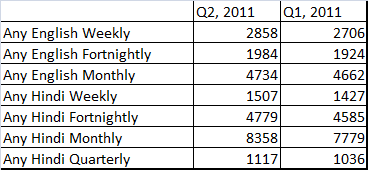
    Magazines have been witnessing a bit of rough weather of late. It is not an Indian phenomenon but is being witnessed worldwide. However, this IRS Q2, 2011 shows an increase in readership of both Hindi and English magazines as compared to Q1, 2011. Here is a quick look at AIR for the same:

    Readership in this duration has increased for Kannada and Telugu publications also. For Assamese, Gujarati and Marathi it has gone down – while for other languages the response is mixed.

    Keeping the focus on English and Hindi magazines for the purpose of this article, is it safe to assume that this IRS marks the revival of magazines? Says Anita Nayyar, CEO – Havas Media, India & South Asia, “This IRS certainly indicates better health for magazines but not necessarily revival.”

    Rajni Menon, Associate Vice President, Carat Media India, too believes that it is not really the revival of magazines and mentions two reasons for marginal upward trend for the magazines. She said, “The Week and Business World have been actively working towards increasing readership and it has had an impact in the market. Secondly, new magazines which were not captured in IRS earlier, eg 2010 Q2 IRS did not cover the following magazines – Outlook Profit, Economist, People, Life Positive. The biggies like India Today, Outlook have seen only marginal shifts only.”

    However the experts believe that there is definite scope of growth in niche and special interest publications, which have shown an upward trend. Ms Nayyar said, “Niche magazines are doing better than mass magazines.” Ms Menon endorsed this, “There has been growth in numbers for niche magazines : India Today Travel Plus, Good Housekeeping, Femina WTW, so that could show an indicative trend along with the fact that one does see more new magazines on the stands every few months. Travel, Women, Lifestyle. “

    However, a major issue faced by media planners and buyers is that a number of niche magazines are not tracked in IRS. As per Ms Menon, “We still can’t make a definite decision on magazines because there are so many in the market which are not covered by IRS. Mainline magazines like Open and Tehelka are yet to be covered, so seeing new niche magazine get covered is a long shot.

    Ms Nayyar too stated that niche and special interest publications are set to grow, but most niche magazines are not tracked.