Tag: Madison Media

  • Madison Media appoints Amit Duggal as Director Digital

    By A Correspondent


    Madison Media has announced the appointment of Amit Duggal as Digital Director to head its Delhi and Kolkata Digital business. Mr Duggal joins Madison from Mindshare, and will report to V Achuthan Kutty, overall Digital head of Madison.


    Mr Duggal has about 10 years of experience in advertising and digital, having worked with agencies like Indiatimes.com, Yatra online, Travelguru.com, Geodesic, Attano.com on the digital side and Rediffusion DY&R, Leo Burnett and Percept on the agency side. His last position was with Mindshare where he was Partner Invention, leading the Digital practice for Pepsico.


    Said Gautam Kiyawat, Group CEO, Madison Media, “We are delighted to have Amit lead our team in Delhi and are confident that he will be able to add a lot of value to our digital clients and help them make Digital a significant driver of their business and also win new business”.


    Mr Duggal said, on his joining Madison, “I am excited with this new opportunity and looking forward to contribute to an impressive roster of clients that Madison has.”


  • Madison Media wins Radikal Rice Media AOR

    By A Correspondent


    Madison Media has recently won the media mandate of Radikal Rice.  The account was won in a multi-agency pitch, where MEC, Zenith Optimedia and Carat participated. Radikal is one of the leading manufacturers and suppliers of premium basmati rice with nutritive value. The account size is estimated to be approx Rs 25 crore and will be handled by Platinum Media in Delhi.


    Says Mr. Siddharth Chaudhary, Managing Director, Radikal Overseas, “After reviewing several agencies, we found the right partner in Madison Media, given their expertise of the Indian media market and proven track record.”


    Says Gautam Kiyawat, Group CEO, Madison Media, “We are excited to partner with this new age food company, and are looking forward to helping them gain their rightful share in India’s growing food industry.”


  • We’re already No 1: Gautam Kiyawat


    By Johnson Napier


    While 2012 will be remembered as another familiar year at the Emvies given the absence of a new winner, what it will also be remembered for is the emergence of new challenger brand. Madison Media Pinnacle – the agency that emerged a close runner-up with 135 points – was a surprise entrant at the top having beaten other notable agencies by quite some margin.


    While it was the campaigns for big-spending client Cadbury that did the trick for the Pinnacle, CEO of Madison Media, Gautam Kiyawat offers other facets of the agency that he believes made it race its way to the top. According to Mr Kiyawat, what has worked for all of Madison’s various media agencies is to create the right structures for the right clients and to enable the team to drive results. In fact, without sounding too pompous, he even goes on to state that if Pinnacle and Infinity are combined (as the teams operate under a single roof), then Madison is the No 1 agency at the Emvies this year.


    In conversation with Johnson Napier, Kiyawat throws light on the factors that worked well for the network this year, on Madison Infinity bagging the Grand Emvie, on how clients are reacting to their newfound success and what to expect from Madison on the awards front for 2013. Excerpts:


    Q: A brilliant performance by Madison at Emvies this year. What according to you were the factors that worked in your favour?

    I would term our performance at Emvies this year as fantastic. It’s a result of all the hard work that the team has put in over the last year. We’ve put in a structure that creates excellence by design and not by accident. The fact that the wins have been so emphatic and across the board is testimony to the above statement. That’s the way forward for Madison which is to create the right structures for the right clients and to enable the team to drive results.


    Q: Personally, did you have any favourites from across the units under Madison Media that you had pinned your hopes on?

    All the entries were truly deserving of the awards that they received; I wouldn’t want to single out any one of them. In some cases there were other agencies in some categories which had potentially more deserving work. So I wouldn’t want to take the credit away from the other winners. But at the same time the entries that went from Madison were equally deserving of the awards. Let’s not miss the point that if you look at the agencies under Madison (Pinnacle and Infinity) and add up the tally, we beat leader Mindshare by quite some margin. The way we work at Madison is that we put dedicated teams for each client but they all sit under Madison Media.


    Q: You will also be remembered this year for edging out several other big agencies to emerge a worthy runner-up at the Emvies. Would it be a good re-invention accolade to move forward with?

    Madison has always been a force to reckon with. The philosophy at Madison has always been to be the best agency that it has the potential of becoming. We’ve been fortunate to do what we think is right for the client’s business and we keep our eye on that ball and then everything else follows from there. It’s clearly a question of achieving our own potential as opposed to comparing versus other agencies.


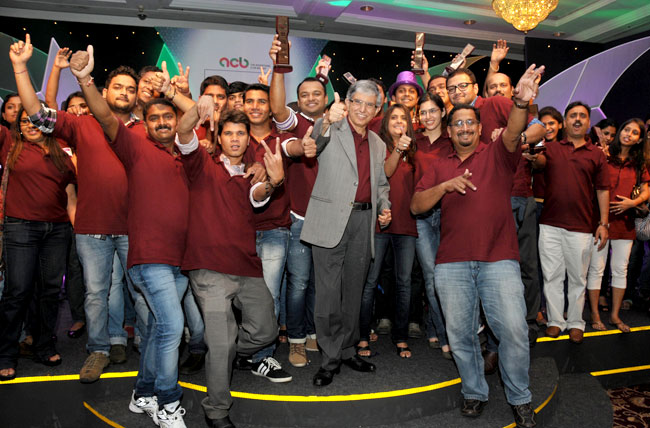
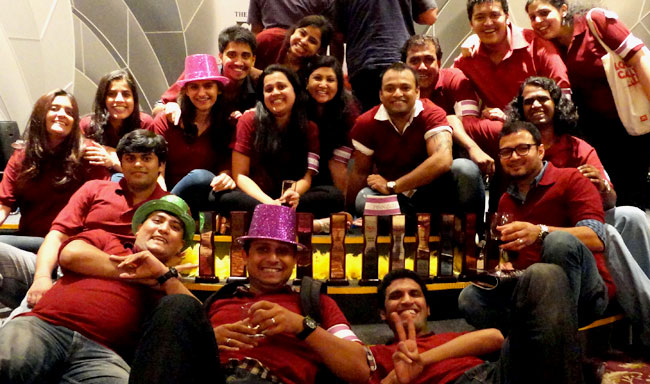
    The Madison Media winning team at Emvies 2012 A jubilant Madison Media team


    Q: It looks like the decision to float an agency for a large client like Cadbury has paid off… at least on the awards front. Do you see this as an encouraging move, one that may find more followers going forward?

    I think every decision has to be taken in its own merit and its own context. So I am not a big fan of blindly re-applying the way teams are set up; I think teams should be set up in context of what the client’s needs are and then everything else moves on from there. We’ve done what is right for Madison and our clients and that’s what working in the context of the objective that we’ve set out with.


    Q: What has been the response from Cadbury over your performance at the Emvies?

    Cadbury is over the moon. They are a fantastic client to be working with. They treat the Madison team as an extension of their own organization and the results are there for all to see. Apart from the fact that we have capable teams to handle all of our clients, it really makes a difference when the client makes an environment for driving excellence. And we all know that it takes two hands to a clap and that’s what’s driving both Madison and Cadbury.


    Q: Do you see Cadbury upping marketing spends on the back of a super showing at the Emvies this year?

    Marketing budgets will always be a function of the business priorities so an award win as emphatic as the Emvies doesn’t necessarily mean more market budgets would come in, going forward. That continues to be a separate parameter that gets decided by the business priorities of the client.


    Q: How would you rate the judging task that was set out for the jury members at the Emvies?

    I would say the judging process was very well done. It deserves to be added that it was judged by a jury of peers in the first round and a jury of clients in the second round, so how much more rigorous can it get? Among the other parameters the judging process that was done online this year was good. The results are for all to see. People had a chance to go and have a look at the entries and case studies, and it was clear that there were a few that stood head and shoulders above the rest, which showed in the results.


    Q: Also, Madison Media Infinity won the Grand Emvie award for Saffolalife-Saving Private Heart campaign. Surprised at the win, or was it expected?

    This again was a fantastic piece of work and an example of a great team working very seamlessly with the client towards a common objective. We were quietly sure that Infinity would do well and convert shortlists into sure-shot winners. The client too is extremely thrilled at the outcome.


    Q: Are you looking at a better showing in 2013? What would it take for a new winner to emerge at the Emvies 2013?

    Like I said we are going to keep our eye on the ball, do fantastic work in line with the business priorities of our clients and the results will be there to show for it. In my mind, Madison is already No 1 because Pinnacle and Infinity sit under the same roof and are part of one Madison Media entity. If you add that we are already at the top. But yes, if you continue to do good work in line with driving client’s business the results will be there to show for it.


  • U-turn to comfort zone!


    By Tuhina Anand


    Anita Nayyar

    After a fabulous five-year stint at Havas Media, Anita Nayyar is returning to the agency post a four-month stint at Bennett Coleman & Co Ltd (BCCL). The news of her joining BCCL as Director, Customer Strategy was seen as a big leap and an opportunity for her to be on the other side of the table. Her decision to come back and reclaim her old role as the CEO for Havas Media for India and South Asia hence came as a surprise. The fact that post has been vacant ever since she left in April this year evidently made it easier.


    On her part, Ms Nayyar maintains that she was missing the pace of her agency life; after all she has been with media agencies for more than two-and-a-half decades. “There was nothing wrong at BCCL. In fact, it was an interesting assignment and BCCL is a fantastic organization and they took good care of me. However, I have realized that my heart lies in being on the other side of the table and that is on the agency side,” she told MxMIndia.


    “In fact, the stint made me understand the issues from a publication point of view which often we fail to see as we have not been a part of it. It gave me an opportunity to see a new side of business and will surely help me in the way ahead,” she added.


    CVL Srinivas

    CVL Srinivas, Chairman, SMG India and MD, LiquidThread, APAC, moved to Private Treaties at BCCL after Maxus and now with SMG. Talking about his moves, Mr Srinivas said: “I moved at a time when I was to head to Singapore to run Maxus Asia-Pacific. I had chosen a successor to head Maxus India and completed the handover, so it was a good time to sit and evaluate career options. Having worked in media agencies for 13 years on the trot, I felt it was time to get out of my comfort zone and explore the world outside. I had always done roles that involved scaling up businesses, building teams, so I thought working with or for start-ups would be a good way to build on my strengths and yet do something different.


    On the stint at Private Treaties (now called Brand Capital) ending soon, Mr Srinivas commented, “I consulted for a few start-ups before joining Times Treaties where I had a two year stint. In all, I was outside of media agencies for a good four years. I chose to come back because of the role that was offered to me by SMG. It seemed to have all the right ingredients at that stage of my career.”


    It is not uncommon of an advertising person to move to the client side of the business but only few switch to the media side of the business (print and broadcast primarily) and more importantly even rarer come back to the agency once again. However, as we understand that it’s not the case of sour grapes for comebacks.


    Karthik Lakshminarayan

    Karthik Lakshminarayan, COO at Crest (Madison Media) re-joinedMadisonwhere he had worked for close to eight years post his foray into broadcast and production when he was with Colors, FoodFood and Fremantle Media. For him the decision to join broadcast was, as he puts it: “A challenge thrown to be a part of a launch and do something completely different and radical from Media Planning and Buying which I was doing for over 14 years and was adept at.”


    However, the decision to come back was, “purely because it was Madison as it was a home-coming. Any other agency would not have been the same or felt the same.”


    A senior industry person who had been in a similar situation pointed that while hiring an agency person is desirable for media houses as they come with multiple experience of working on various brands, but the difficulty begins once you are inside the publication or broadcast company. There is a huge cultural difference, because the kind of monies the media houses deal with is humongous as compared to what the agencies deal with. In his words: “The agency people are bound by certain set of responsibilities, it’s like a relay race where you do your work and then hand the baton to the next yet at the same time be part of a team, however the media house is huge and set of responsibilities diverse hence making the transition becomes difficult. Also, one could be a CEO of the agency and be well recognized but the same person will get lost in the media house where there are many biggies ruling the roost.”


    Suresh Balakrishnan

    Talking of the scale of business being different, Suresh Balakrishna who joined back LMG as CEO of Brand Programming Network after a decade of being with print explained, “The media houses definitely means operating on much bigger canvas and the scale of monies involved being huge. You learn to be a business man as there are hard trade-offs and you need to take hard calls on driving the bottom line as well as the top line. So the pressure involved in definitely higher. ”


    While that’s the view of people who have made a comeback, the recruiters have a different take. An advertising industry recruiter on anonymity said: “I can’t really think of many who have made a transition and then come back to the media agency. Yes for us, those willing to come back especially at senior level are good prospects for recruitment considering the dearth of talent besides they are value for money. There is comfort in coming back to your old set up.”


    However she added: “I do think that people who are willing to come back are usually those who are having a tough time in their current set up.”


    On the other hand, those who made the switch and then came back to agency feel that the experience only helped them in their career. As Mr Srinivas puts it: “I learnt a lot at BCCL. Firstly, to get a first-hand experience of being on the media owner side was very helpful. Secondly, I worked with some very fine minds at Private Treaties and got a much better understanding of how businesses are built and brands created from scratch. And being part of India’s largest media company (when one is not used to such scale on the agency side) was a huge learning in itself.”


    Mr Balakrishna too added, “The learnings at media houses have been immense as I had  joined HT around 2001 which was a time when media houses were just getting professional in their approach and this was an aggressive phase of growth. Mint and DNA were challenger brands as they were not the leaders so one had to be literally on our toes thinking all the time to take away whatever possible from competition to establish ourselves.”


    However he added that his decision to join back was primarily because he felt that while he had acquired depth of learning he was missing the width of learning that an agency offers. One gets to work on different categories and with market becoming increasingly competitive and clients keeping a vigil on ROI the media agency business has become only more organized and scientific in their approach.


    Imaging: Rafiq, Images: Clipart


  • Mediavest appoints Atul Sharma as GM

    By A Correspondent


    MediaVest Worldwide, a Starcom MediaVest Group agency has appointed Atul Sharma from Madison Media as GM in their Delhi office. Mr Sharma, who joined on June 20, will oversee the Dabur business and report to Sulina Menon, Executive Director, SMG.


    Mr Sharma is a postgraduate in marketing with specialization in research and consumer behaviour. He has more than 11 years experience in Strategy, Procurement and Implementation. He started career with NDTV in research and marketing. He worked extensively on audience segmentation models, business development and marketing plans.


    Mr Sharma had stints at Initiative Media and MPG, working with clients such as LG, Nestle, ITC, Maruti and Reckitt Benkiser.  He spent the last four years at Madison where he worked on Coca Cola amongst other clients.


    Commenting on the appointment, Sulina Menon said: “We are happy to have Atul on board for Dabur. With his extensive FMCG experience and the research background we are looking at him to drive strategy led solutions to the Dabur brands.”


    On his reason for joining SMG, Mr Sharma said: “SMG is a future ready organization and I am excited to work with the new age tools like Tardiis and optimize plans across TV and Web in one go.”


  • Hindi channels say ‘Vanakkam’ & ‘Namaskaaram’ to Southern hits


    By Meghna Sharma


    What is common between Ghajini, Wanted and Bhool Bhulaiya, apart from the fact that they were all blockbusters and starred A-listed actors? The fact that they were all remakes of popular South Indian films.


    Lately, Bollywood has been experimenting with a lot of films made down south. And since, the small screen is a reflection of what happens on the big screen, even the channels – movie as well as GECs – are cashing in.


    There has been a spate of south Indian dubbed films being shown on the television. According to the recent data, there isn’t much difference between the ratings for Hindi and dubbed films on TV. On an average, both get a 0.3TVR (HSM CS15+ on channels like Colors, Star Plus, Sony Max, UTV Movies, Star Gold in Jan -June) as compared to prime time where Hindi movies score better.


    So, it is logical to wonder, why the sudden acceptance of South Indian dubbed films on national channels? Is it a Rajnikanth effect or there is more than what meets the eye…


    Formula or freshness?

    Manisha Sharma, weekend programming head, Colors feels that the acceptance started gradually over four-five years ago with experimentation by all three stakeholders – Bollywood, broadcaster and viewer.


    Anilkumar Sathiraju

    “The viewer was getting hungry for content and the increased frequency with which Hindi blockbuster movies were being repeated ensured that he was willing to experiment with dubbed movies. The other thing that worked for the dubbed movies was the fact that the production quality of south Indian movies has gone up tremendously in the last decade. Also, the movies which were initial successes were the ones which had stars who, at some point, had crossed over into Hindi like Rajnikanth and Nagarjuna,” she added.


    According to media planner Anilkumar Sathiraju, associate VP and head South, Mudra Max, the fresh content and faces are working in favour of the dubbed movies on channels. “Movies down south, especially Telugu films, have a certain mantra – say six over-the-top fight scenes, two behind-the bushes romantic songs – which isn’t very common in Bollywood movies of late. So, people don’t mind watching something ‘different’.”


    Mohan Gopinath

    However, there are movie channels like Zee Cinema, which have been showing South Indian dubbed films for a long time, which feel that the trend has caught on other channels recently. “To be frank, these movies have always rated on Zee Cinema, so the appetite has always been there. Other channels have picked the trend up in the past few years and now the viewer gets South films, dubbed in Hindi, all across. Now with South Indian films being remade into Hindi films, the appetite for dubbed films has increased,” says Mohan Gopinath, business head, Zee Cinema.


    Manasi Sapre

    Also with broadcasters taking precautions to maintain the real essence of the film while dubbing, not much is lost in translation. So, viewers find it easy to relate to the films.


    Manasi Sapre, director programming and acquisitions, Movie channels UTV, said: “Though, dubbing is a challenging job, we make sure that the essence of the film isn’t lost in the process. Therefore, it varies – sometimes they are sourced dubbed and sometimes we do it.”


    Vijay Subramaniam

    “Till a decade or so ago, most regional movies were shown with subtitles which didn’t attract the viewer as much it does today, since they are dubbed. So, not only masala movies but also artistic films are able to find their way into one’s living room,” said Vijay Subramaniam, deputy GM, Madison Media.


    Apart from the content and viewer’s acceptance, Anamika Mehta, COO, LodestarUM feels that it’s the explosion of media which is behind this: “What happened with the song Kolaveri di is the finest example one can give today. Boundaries are shrinking and more and more people are coming to know about the film culture down South.”


    Cost cutting

    Vajir Singh

    Vajir Singh, editor, Box Office India accepts that freshness in content and crossover of actors – famous like Rajnikanth or lesser-known ones like Siddharth – does play a role, but feels that it is the cost of acquisition that plays a bigger part here: “If a channel can purchase entertainment at cheaper rates, then why shouldn’t it? South Indian films in comedy and action genre have always done well as they provide pure entertainment to viewers and eyeballs to the channel.”


    He’s not the only one to voice such a sentiment. Even media planners feel that cheaper acquisition rates are a main reason why suddenly these movies are being shown on television so frequently. “It is far cheaper to acquire little older or newer South Indian movies than latest Hindi movies which are showcased as premieres on the weekends by channels. So, it helps them to build a bigger library,” said Ms Mehta.


    “Broadcasters, over years, have been struggling with increased cost of acquisition, limited hits and increased competition. As compared to about a decade ago when a Bollywood star would have 2-3 releases a year, today stars prefer to do one movie at a time. Also, in a good business year the number of blockbuster movies will not cross 10. This, coupled with the fact that there are new channels getting launched in both Hindi GE and Hindi movie space, ensured that broadcasters was struggling for content and more willing to experiment with south Indian dubs,” explained Ms Sharma.


    The new experimentation seems to be working for Bollywood and it is working for the channels and viewers too. No one seems to mind it!


    Pictures courtesy: maxtelevision.com, Imaging: Rafiq


  • Dinesh Singh Rathore is COO, Madison Media Omega

    By A Correspondent


    Madison Media announced that Dinesh Singh Rathore has been appointed as COO of Madison Media Omega, based in Bangalore. Mr Rathore joins Madison from Starcom MediaVest Group, where he was Head,  MediaVest, Mumbai & Delhi offices.


    Mr Rathore has over 17 years of experience in media, working with media agencies like Starcom MediaVest Group and Mudra. He was the head of FutureWorks, the specialist unit of SMG that handled the Future Group business. Across his career, Mr Rathore has worked on interesting brands including Zydus Wellness, Emirates, The Mobile Store, Tata Housing, Novartis, World Gold Council, Wipro, Toyota, SabMiller, Essilor, Hitachi, Rasna, Only Vimal.


    Gautam Kiyawat, Group CEO, Madison Media said: “I am delighted to have Dinesh join our Leadership team and am sure he will add a lot of value to our clients in Bangalore.”


    Mr Rathore, on his joining Madison said: “I am looking forward to this new role and contributing to an enviable list of clients.”


    Madison Media was recently in the news for winning the Crompton Greaves, Enamor and Dixcy Textile’s Media AOR.


  • Colors jumps to No 2, thanks to JDJ

    By A Correspondent


    Reality shows are the flavour of the season; and the latest entry to the bandwagon is Colors’ Jhalak Dikhla Ja.  The celebrity dance show in its fifth season premiered on July 16 on Colors and thanks to the show, the channel saw its highest growth this week. Colors has jumped to No. 2 again.


    According to the latest data for week 24, Star Plus is on number 1 position with 268 GRPs this week (last week 269). Zee TV has slipped to No. 3 with 212 GRPs (last week 203). Sony Entertainment Television went below the 200 mark, at No. 4, the channel has recorded 187 GRPs (last week 201).


    DID Little Masters on Zee has been doing well for the channel, but saw a drop in TVR ratings (2.8)  as Jhalak Dikhla Ja  got a 3.13 TVR. Both are dance shows, but whereas one deals with children, the other has celebrities like Madhuri Dixit and Karan Johar to its credit.


    So what worked for the show as well as the channel? Dinesh Rathore, vice president, India- West, MediaVest Worldwide, feels that though celebrities do arouse curiosity and makes them switch to a particular channel, there is no dearth of celebrities on television today as most reality shows feature them. “I think the show has done well on its opening weekend because of the initial curiosity. It would be difficult to say if it will continue to do so for the channel. We’ll just have to wait and watch.”


    Monaz Todywalla, general manager, Madison Media, said: “From the content point of view, the show is well packaged and promoted. Hence, it was bound to get such ratings on the opening weekend. However, the channel cannot rest on the shows shoulders alone. If it wants to remain on the slot or even reach the numero uno position, it will have to do a lot more, especially content wise.”


    Meanwhile, Zee TV’s DID Li’L Masters which earned a launch rating of 5.8 is adding a Bollywood flavour to its show on the coming Sunday with a tribute to the iconic dancing stars of Indian cinema.


    Surely what we have seen is a mere ‘jhalak’ of the two warring dance shows.


  • Jobs Not OK Please!


    By Johnson Napier


    If you’re among those contemplating switching jobs given growth constraints at your current place of work or just the sheer temptation to move on to a job more thrilling, you better think twice. Going by the reactions drawn from the Indian media and entertainment marketplace and from consultancy firms dealing with manpower issues, companies are in no mood to go on a recruitment drive, unless of course, there is a dire need for the same.


    With 2012 starting off on a sluggish note and with the crisis making a fresh comeback, the growth forecast for the media and entertainment sector is being questioned unabatedly by all and sundry: will media will touch the 12% ballpark growth figure that was estimated for year 2012. This in turn will dictate whether there are enough opportunities for brands and clients to go talent hunting or whether they’ll have to make-do with internal makeshift arrangements to handle extra responsibilities.


    But the prevailing sentiments definitely don’t appear inspiring on the jobs front, be it for clients looking to source great talent at the senior level or for those wanting to explore opportunities beyond their current realm. Explaining the current sentiment in the marketplace, Abha Kapoor, Executive Director, K&J Search Consultants that specialises in placement services for media executives reckons that after 2008-09, the M&E sector has become a lot more conservative in terms of both headcount and pricing. She observed, “The trend being observed currently is that mid-level people are being involved to do high-level jobs. There is also lack of funds coming in from P/E, venture capitalist firms into the sector. For example, our firm K&J is used to working for three start-ups simultaneously including mid- to CEO level. We’ve always had a television start-up, a radio start-up, an internet start-up but that’s because the money was coming into the sector. Right now that is not the case.”


    According to Ms Kapoor, this trend has led to a shift in paradigm. “First there was lot of chasing that was done for talent, and salaries too were high, but right now there is lot of talent that is available but the headcount is not that high,” she reasons. According to her, there are no new jobs being created and there are also not enough replacement requirements.


    Agreeing with Ms Kapoor’s observations is Pankaj Raj, Managing Partner, Search Value, a firm specialising in placement services for senior media execs. “Earlier, people were not willing to accommodate new talent due to financial constraints but right now they are saying, do not go overboard with the hiring; do so only if extremely critical or make-do with internal replacements only,” he said. “So the current trends suggest internal movements as the in-thing and also, salaries are not being hiked to the levels that it was done earlier.”


    Reasoning the recurrence of the slump, Sarabjit Sachar, Founder and CEO of Aspirations said, “My reading is that it is a consolidation phase; it’s not going to go away easily. If you assess the media in the recent past, there were several takeovers that took effect like that of Nai Dunia being taken over by Jagran Group etc. This led to many senior people looking out for options at other places. Many organisations felt that they could either absorb them or give them roles as per the necessity. But what happens in a takeover is that the roles are not that enriching. Secondly, there is a lot of realignment that is taking place where the whole organisation’s business is being realigned into certain other businesses or products. Here the trend is that they want to retain the same resource and not hire anybody from outside. Thirdly, it is also about consolidation where most units are facing shutdown due to larger plans by parent groups. So while the falling value of rupee, hike in petrol prices etc have played some role more than that it is solely about consolidation.”


    According to Mr Sachar, it is due to consolidation that there is a shortage of senior positions in organisations. “Due to this, senior executives will find themselves in two situations, one is where the role is not enriching and therefore they would want to leave, or they would not be left with a choice and therefore would leave the organisation.” According to the response that his firm has been eliciting, there has been a big drop in senior positions within organisations. “There are a lot of candidates at the top level who are not able to shift jobs due to lack of decent availability. I think the figure is somewhat in the range of 30-40 per cent. Even amongst the media companies, what they would’ve hired at the top level is down by 25-30 per cent this year.”


    Industry in caution mode

    On the strains being felt across domains, Mr Raj opined: “Sector-wise if analysed, radio isn’t hiring anyone right now, print is on a business-as-usual kind of hiring while television is almost zero. That said, digital is the best performing of the lot and is seeing hiring taking place in full swing. Overall the mood is of caution and being sensible.”


    Providing an insight on the trend being felt in the broadcast space, Yannick Colaco, COO, Nimbus said, “From what I understand, the MIB has recently issued licences for new channels and more channels means more jobs. Also, with the digitization drive in full swing that should act as a boost for the industry as it will increase monetization abilities of all broadcasters. All these factors will lead the industry to its next phase of explosive growth. Today, everything is a function of demand. If you have more number of channels coming up it will only have a more positive impact on the overall growth of the industry.”


    Throwing light on the trend at his organisation, Colaco said, “There are specific functions in the company for which we are hiring people. For example, World Series Hockey that was taken up by us was a new project and we went ahead and hired a whole bunch of people for the job. So as business grows, we will obviously need more talent. The thing is that when you have explosive double digit growth one year and when you move to single-digit growth in the next, it is considered to be a bad thing. So even if the growth is not what was expected from the medium, it is still a good single digit growth and that is what should be considered by the industry.”


    The status at the Discovery Network is also not gloomy. Said Discovery Network, Rahul Johri, Senior Vice President and General Manager (South Asia): “Discovery continues to expand its business in India. We have a robust portfolio of eight distinct brands satisfying curiosity of millions in India. We recently announced our foray in the kids genre with the launch of Discovery Kids that offers entertainment embedded with learning. Discovery is committed to the Indian market and will continue to invest here.”


    Jaisurya Das, COO, Sakal Media Group expressed concern with the current situation as he said that the print sector was indeed experiencing rough weather. This had to do with the rise in oil prices, fall in value of the rupee and global uncertainty. But that didn’t have to do anything with his organisation which has been recruiting people as and when the need arises. But things are not that rosy for the sector, going by what Alok Sanwal, Project Head & Editor, iNext had to say. He said: “From what I have heard it is not an extremely upbeat mood where recruitment is concerned. As far as new recruitment drives are concerned, they would be faced with a challenge but then again I haven’t come across organisations that’re on retrenchment mode or anything like that. So the jobs scenario too is on a cautious and alert note, so to speak.”


    The tide is not as bad for media agencies, it seems. Lara Balsara, Managing Director, Madison Media said that they were recruiting people for replacements and new positions because they had won some new businesses. Similarly, Sujay Ghosh, Senior Vice President, DDBMudra South said, “We are still recruiting as per our plan, because we don’t see any major dip in our revenues. Also, our involvements with clients have gone up significantly, so we can’t afford not to hire. But I have heard that in some industries, hiring freeze has started.”


    A similar sentiment was felt by radio players like Red FM who prefer to see an upside to the whole issue. B Surender, Senior Vice President and National Sales Head, Red FM seemed confident as he said: “The job scenario is still very good within the radio industry and it is not facing any extreme situation. In fact, radio tends to retain quite a lot of talent and it is handling the current situation quite well compared to other mediums and thus is better prepared to handle the slowdown than any other medium.” Echoing his thoughts, Prashant Panday, CEO, Radio Mirchi said: “At Mirchi, we continue to attract the best in the industry. We recruit our senior management cadre from FMCG, telecom, durables, auto and allied industries. We have no problems in hiring excellent quality talent…”


    So while caution is the name of the game, recruitment will be an exercise that the industry will engage only if essential. Those seeking an exponential growth in salaries and designations in the shortest possible timeframe may have to hold on to their wishes, unless, of course they bring exceptional value to a company. For the others, it is about waiting for the right moment to take the leap.


    With inputs by Robin Thomas


  • The not-so-chhota success of Chhota Bheem


    By Tuhina Anand


    Chhota Bheem, the nine-year old boy and his small group of friends – Raju, Chutki and Jaggu (the talking monkey), have been having a dream run on Pogo. Launched in 2008 on the channel, the character of Chhota Bheem has gone on to become immensely popular and we have seen the character move to the bigger screen with Chhota Bheem movie and there is no dearth of merchandise based on his character, including comic book, tee-shirt, fun puzzles, bags, bean bag, toys and more.


    Krishna Desai

    Talking about the popularity of the show, Krishna Desai, Director Content, Turner International India Pvt. Ltd, said: “Since its launch in 2008 on Pogo, Chhota Bheem became an overnight success. Today, Chhota Bheem holds several titles to its credit including being ‘Kids’ Favourite TV Character’ (Ormax Media 2011 Report). In addition to other popular shows like Mr Bean and Kumbh Karan, Chhota Bheem has helped Pogo sustain its No 1 since 2011. In fact, this year, the premieres of ‘Chhota Bheem: Dholakpur to Kathmandu’ movie in March and ‘Chhota Bheem aur Hanuman’ movie in May, were the number 1 programs across all channels.” (Source: TAM, All India , 4-14 yrs, 12:00-13:30, March 25 and May 1, 2012)


    However, TAM data for the period of April 15-May 12 (CS 4-14 yrs, all India market, excluding feature films shown on kiddie channels) shows that for the channel share, one sees a fluctuation between Pogo and Disney for the top slot where in week 18, Pogo has a share of 25.5 as opposed to 20.4 of Disney. In week 19, Pogo is at 21.2 while Disney has jumped to 24.6.


    Giving his take on the popularity of Chhota Bheem and Doraemon, Karthik Lakshminarayan, COO, Crest (Madison Media), said: “Be it Chhota Bheem or Doraemon, both are exceedingly popular in the kids genre. Even for the top slot there is a tussle between both the shows. The popularity works well for the advertisers as well as the channel. However, if one were to look at superior production quality then Chhota Bheem scores over Doraemon as the latter seems dated.”


    While Doraemon might seem dated, there is no lacking in its popularity. The show runs on Disney as well as Hungama almost round the clock. Same is the case with Pogo, where Chhota Bheem and its repeats are shown numerous times during the day. Mr Desai, talking about this strategy said: “Normally, most shows face the issue of fatigue over a period of time. But in the cases of popular shows like Chhota Bheem, this factor is not applicable. When any show is launched there is a novelty factor which draws in new audiences. Thereafter, the true test of success begins. If kids like the show, they will tune in to watch their favourite episode over and over again. Over a period of time, kids tune-in to pre-empt the dialogues or even sing along with the theme song, making them feel like a part of the toon world. Also, the non-sequential flow of episodes helps to steer clear of boredom.”


    “Being a pioneer in the kids’ genre, we have done in-depth studies analysing the viewing patterns of kids between the ages of 4-14 years so as to effectively target our core TG. Basis these studies we decide the schedule for our channels. The second factor taken into consideration is to ensure that the scheduling of both our channels (Cartoon Network and Pogo) complement each other and don’t eat into each others share. We also consider the competition and other TV genres scheduling while lining up our shows,” he added.


    Some of the other popular shows on Kids channel include Kumbh Karan on Pogo, Roll No 21 on Cartoon Network, the Suite Life of Karan and Kabir on Disney, Art Attack again on Disney, Ninja Hattori on Nick, Oggy and the Cockroaches on Nick, Mr Bean the Animated Series on Pogo and Tom and Jerry Show on Cartoon Network.


    However, the success of Bheem lies in the fact that it’s an indigenous animated series created by Green Gold Animation Pvt. Ltd, based in Hyderabad. As Mr Desai of Pogo pointed that what stands out about the series is the strong story and characters. Although it is based in the mythical and timeless village of ‘Dholakpur’, the characters are very relevant to the mannerisms of kids today. Thus, kids relate to the characters and aspire to be like them be it a superhero or a best friend. “Yes, we did anticipate the show to do well but we all have been happily surprised at how phenomenally well it is doing,” said Mr Desai.


    With the success of Chhota Bheem, came its movies that Pogo co-produced, the recent one being Chhota Bheem and the curse of Damyaan which was released last Friday.


    Source: TAM Media Research, TG: CS 4-14 yrs, Market: All India, Period: Week 16 to 19 (Apr 15 to May 12), 2012 *Note : The analysis excludes Feature films aired on Kids channels


    Some of these movies were aired in 2011 on Pogo and the channel has a more aggressive strategy for them in 2012, wherein they will showcase one new movie every alternate month. In March, Pogo aired ‘Chhota Bheem: Dholakpur to Kathmandu’ and in May premiered ‘Chhota Bheem aur Hanuman’.


    Also seeing the popularity of other supporting characters in the show, like Bheem’s best friend Raju, Pogo  create a successful spin-off movie on him called ‘Mighty Raju’ in 2011. Sequels to Mighty Raju will also be seen in 2012. Its online success can be gauged from the fact that on www.pogo.tv, there are 700+ games on the site out of which Chhota Bheem enjoys a majority.


  • 1000 episodes, and counting!


    By Meghna Sharma


    Avika Gaur

    In 2008, when general entertainment channel Colors, was launched by Viacom18 – a joint venture between Viacom Inc and the Network18 Group, there was much promise of  a new spectrum of emotions and entertainment. While there were high profile reality shows on offer, the one serial that caught everyone’s attention was Balika Vadhu, a story of Anandi, married off in a rich family as a child. The show will complete 1,000 episodes today (May 14), a feat not many shows have accomplished in the Indian television industry.


    Ashwini Yardi

    Balika Vadhu show caught everyone’s attention because of its simple story and real emotions. Anandi captured the hearts of millions, making it the No 1 show at that time slot. Talking about Balika Vadhu, former programming head of the channel, Ashwini Yardi recollects: “It is the only show I said yes to in 30 seconds. Balika Vadhu is a cult show that portrays the journey of a child bride into womanhood. Even when the channel was launched, the show wasn’t promoted or marketed as much as the other shows. So, it has achieved everything on its own.”


    Child marriage isn’t something new, many young girls and boys are forced into it even today and the government and activists have tried to curb this social evil. Through the show, the writer and the channel wanted to convey the side-effects a child marriage can have on one’s life.


    Purnendu Shekhar

    “The realism in the characters and storyline is what made the show connect with its audience. We have never compromised of the plot and concept of the story to gain TRPs. Balika Vadhu is the first show which raised a social issue as its main plot on a primetime. And we wanted to educate people as well as entertain them,” says Purnendu Shekhar, the writer of the show.


    Agreeing with Mr Shekhar, Prashant Bhatt, fiction head, Colors says: “The story is the hero. The concept of the show decides how the look and treatment of the show will progress. So much so that the cast, the sites, the look, the makeup, even the language is completely tied to the concept. Balika Vadhu brought about authenticity, consistency and meaningfulness and that has worked. Today, Anandi, Sumitra, Dadisa, Bhairon and many others are household names solely because of the way the characters have been portrayed; the actors literally live their roles. The dialogues and its delivery has raised the bar completely. In totality, the show is an honest effort from our end to highlight issues to a mass audience and its acceptance is a great high for us.”


    Monaz K Todywalla

    Of the 197 weeks of being on-air, it’s been the No 1 show in the slot for 172 weeks. According to Monaz K Todywalla, general manager, Madison Media, the reason why the show has worked well for so long is: “The simple storyline of Balika Vadhu, in its early days was a refreshing change from the high drama soaps that existed. The show started off a new trend of addressing social problems that exist within the fabric of the country; people empathize with the story of a young girl who was married at a young age – the twists in her life deal with problems that women in India face. More importantly, because Anandi doesn’t play a victim, but fights odds to emerge a winner.”


    Deepak Netram, vice president, Lodestar UM, reasons why Balika Vadhu has been able to cut across masses. “The show was a milestone in the GEC space. It redefined a lot of trends and was a winner for the channel for a long time in many aspects. The show targeted a certain TG and that’s the audience many advertisers want too,” he said.


    OTHERS IN THE 1000+ EPISODES CLUB

    Kyunki Saas Bhi Kabhi Bahu Thi – April 2005
    Kahaani  Ghar Ghar Ki – Aug 2005
    Kasauti Zindagi Ki – May 2006
    Kumkum – April 2007
    Woh Rehne Wali Mehlon Ki – June 2009

    At 1,000 not out, Mr Shekhar shared that it wasn’t easy to keep freshness alive in a daily soap: “When I had written the show for Doordarshan in 1992, the show was supposed to have only 25 episodes. I feel till the time the viewers continue watching and enjoying the show, we’ll continue to write.” For the DD version, the young couple were supposed to grow-up in the fourth episode itself, whereas on Colors the show took a time-leap in the 517th episode.


    Jaahnavi P Paal

    But not everyone believes that the show must be allowed to continue till the ratings become negligible. TV analyst and columnist, Jaahnavi P Paal rues that Indian soap operas tend to lose the plot and drag. I guess the same has happened with Balika Vadhu too. Today, many avid viewers of the show have lost interest in it. Maybe that’s why it has lost its  number 1 spot. I’m a firm believer that a show must end at a proper time instead of being dragged.


    However, there’s no denying the fact that as a serial Balika Vadhu changed the trend with its interesting and unusual concept. Social awareness through primetime benefitted the show as well as the channel.


  • Manish Bharil joins Madison Media as GM

    By A Correspondent


    Madison Media has announced the appointment of Manish Bharil as General Manager to lead the Britannia account in Madison Media Omega based in Bangalore.


    Mr Bharil has over 12 years of experience in media and joinsMadisonfrom Mindshare Bombay where he was Senior Director – Invention. Mr Bharil previously worked in Madison Bombay for 7 years.


    Gautam Kiyawat, CEO, Madison Media Group said: “I  am glad to have Manish join our team in Bangalore and I am sure he will be able to add a lot of strategic inputs to one of our leading clients – Britannia.”


    Manish Bharil, on his returning toMadison, said: “I am delighted to join back Madison and I am looking forward to this new role in leading the Britannia account.”


    Madison Media was recently in the news for winning the Crompton Greaves and Dixcy Textile’s Media AOR.


    At the recent Goafest 2012 awards, Madison Media won 4 awards, including a Gold for Best Use of Newspapers & Magazines for Parachute Advansed Ayurvedic Hair Oil; 2 Silver’s for Best Use of Internet & Digital Media for Airtel and Best Use of Branded Content for Cadbury and a Bronze for Best Use of Events and Stunts for Cadbury Celebrations.


    Madison Media Group is India’s foremost media agency handling media planning and buying for blue chip clients.  The gross billing of Madison Media is Rs3,000 crores.