Tag: M J Akbar

  • Time for Action now that Akbar has stepped down


    By Your Editor

    This comes as a shocker. Or perhaps not. As high as 44% of women surveyed in the media and marketing industry in India say they have experienced sexual harassment in the workplace, yet men and women in India are the least likely of any Asian country to report such instances, according to a survey by Campaign Asia-Pacific and Kantar. Just 9% said they had reported seeing or experiencing something to employers, compared to an average of 14% across the region. Read more at:https://www.campaignindia.in/article/almost-half-of-women-in-adland-have-known-harassment-research/447704

    A group of senior women both in advertising and public relations have issued statements to take stock of the situation, help those who have been impacted and look at the future of their respective practices. Some industry bodies have also voiced their concern. Curiously, some haven’t.

    Earlier today, this story was headlined: “Time for Action! Akbar must step down” with a clearly missive saying: “If the BJP doesn’t want a tag of being a party that doesn’t care about the safety of women, it must ask MJ Akbar to step down”

    According to the information received, the pressure on the government to get MoS External Affairs M J Akbar to step down was mounting over the last few days which eventually led to his resignation on Dassera Eve. One had hoped that the government had acted more swiftly on the issue and helped create a perception that it does care for the safety of women. Its reluctance to do so doesn’t speak too well for its intent.

    This is what we wrote earlier in the day:

    At MxMIndia, we believe that MoS External Affairs and former editor and media businessman must step down and let the charges be investigated. The BJP-led government at the Centre must advise him to do it if it doesn’t want to earn the reputation of being a party that doesn’t care about the safety of women. Its silence on the issue can be damaging in the elections next year.

    But more than how it impacts the political process, not asking Akbar to go – in the wake of 20-odd complaints against his doings, can severely impact the confidence of other women who have similar tales of woe.

    For, if the Union Government turns a deaf ear to the complaints against Akbar, can they trust the government to act on other acts of harassment? Ah, well, they always have the Courts to complain to. Which they will.


  • Sack them!


    By Your Editor

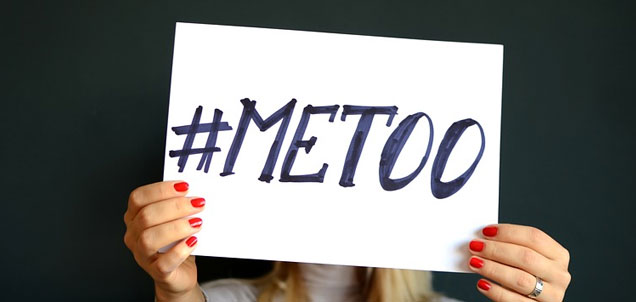
    The #MeToo campaign has shown the extent to which sexual harassment exists in Indian Media and Entertainment. We knew about a lot of it, but tended to ignore things.

    A colleague who has worked in the broadcast sector says that this is near-rampant in news television and often goes unchecked as there is no complaint filed. In advertising too, which has a largely informal environment, there are many cases of things going awry. Ditto elsewhere in M&E.

    For starters, it’s critical that journalist-turned-politician M J Akbar must go. Even if there is no proof, there are enough accounts to prove that he has had more than just a glad eye.

    If he doesn’t quit on his own, the Narendra Modi government must suspend the MoS External Affairs pending its own investigation if not sack him outright.

    A group of creative heads from across advertising and design agencies have come forward as a Collective to appeal to all to bring some order and safety to the business. Editors Guild, the Network of Women in Media, the Press Club Mumbai are some of those who’ve been proactive and come forward to help ease matters for the aggrieved.

    But we need industry associations to get aggressive on this. For instance, just as comedy group AIB lost its contract with Hotstar, it’s critical that organisations refusing to act should worry about losing business from advertisers who follow stringent ethical standards.

    Wish we could also refuse to pay takes to a government that doesn’t seem to be acting swiftly on the complaints against Akbar.


  • Ranjona Banerji: When editors get into party-mode

    By Ranjona Banerji


    MJ Akbar, respected and well-known journalist, joins the Bharatiya Janata Party. There is applause at one side of the political spectrum and disquiet at the other. Akbar, like anyone else, is free to do what he wants. This is not the first time he has taken to politics – he was with the Congress in Rajiv Gandhi’s time.


    The question to be asked is not about Akbar himself – because he is one of many – but about journalists leaning towards political parties or being members of political parties or being outright supporters of particular politicians. If objectivity is a cornerstone of journalism, then joining a political party means that you are immediately disqualified.  But there are subtle arguments that lurk about that deny such an extremist position.


    A reporter and a sub-editor for instance need to be objective. But editors and columnists? They are allowed a little leeway. For instance, an opinion writer can be politically left or right – without necessarily being part of or approving of political parties that follow a similar ideology. But it’s a fine line and where should one draw it?If an editor or a columnist – who is a journalist, not an academic or analyst and so on – is openly supporting a politician or a political party, what happens then? In India, unfortunately, media houses do not openly declare their political leanings. They all claim to be all things to all people but in fact overtly or covertly support one party or another. The odd thing is, they can declare their political leanings without any damage to credibility. Everyone knows what The Guardian or what Fox News stands for.


    The essence of journalism is to criticise everyone and perhaps we need to be more stringent about that. Also, when newspapers invite non-journalists as columnists, they need to make their political leanings clear.


    And finally, it ought to be understood that once you join a political party, you are no longer an independent-thinking journalist. At best, you can edit the mouthpiece of the party to which you belong.


    **


    Some of the bluster against media houses however remains from disgruntled supporters of some political party or agenda who feel they’re not getting fair treatment from every single media house. However, since one can easily count people who are on some side, these accusations are easily debunked. I am amused though by fellow journalists who stridently object to editors who are seen as favouring one side but have ample excuses for those who favour another side. Double standards of course are a human failing and perhaps even a sound survival device.


    **


    Rajdeep Sardesai of CNN-IBN has discussed media responsibility in his column for Hindustan Times. His argument is partly about attacks on the media and the difficulty in starting an independent media house in India. I must however disagree when he makes a case for owners, saying that it is unfair to tag them as evil when responsibility must end with the editor. That is true in an ideal world. What is true in today’s media is that owners do play a role in determining how a TV channel or newspaper or website responds to news. And the phenomenon of “paid news” is a deal struck by the managements of media houses, not by journalists. Yes, journalists are not innocent but that does not mean that owners are not guilty.


    http://www.hindustantimes.com/comment/rajdeepsardesai/time-for-media-to-turn-the-gaze-inwards/article1-1199548.aspx


    **


    I make this plea in vain to Star Sports India – for the umpteenth time. If it could please not bother to buy tennis tournaments that it does not want to show in their entirety. This week’s Miami Open coverage has been upstaged by football and motorcycles. Agreed, Star Sports is free to show what it wants. But tennis fans don’t really want to watch a tournament in between the requirements of other sports. So if your six channels are not enough and one channel is reserved for endless reruns of Jai Ho, leave tennis alone and let someone else show it. This dog in the manger attitude is winning you no fans.


    It might also be polite if whoever runs the @starsportsindia twitter handle would answer questions put to it now and then.


    This is not the first time I have discussed this and I am guessing it will not be the last…


  • Our battle is to out-think TOI: Meenal Baghel


    Meenal Baghel is the founder and Editor-in-Chief of Mirror, the nation’s most sprightly newspaper. Mumbai Mirror was launched seven years ago, and today the paper has editions in Pune, Bangalore and Ahmedabad. A part of the Times group, Mumbai Mirror boasts of a fantastic circulation of nearly 600,000 copies, and it’s become the city’s favourite compact paper.


    Meenal relives the journey with us, and speaks candidly about the many challenges she’s faced along the way. We also discuss her first book, ‘Death in Mumbai’, which received wide critical acclaim.


    I did a stint with Mumbai Mirror some years ago, and this gave me a chance to watch her in action. Meenal can be a demanding editor, she can be impatient, she can be tough. While these qualities don’t endear her to some, they have played a huge part in her success. I have to say she’s the most passionate editor I have worked with.


    By Anil Thakraney


    It’s been seven years editing Mirror. How’s the journey been? Tell me the highs and the lows.

    The high obviously has been to see the paper become an important part of Bombay. We have been successful in forging an emotional connect with the readers, which is very important. We get an enormous number of people calling in with stories. And we’ve routinely broken a lot of stories, so those are the big highs. The low is that the paper is still a bit inconsistent. You know, when we started the paper, it used to be called Mumbai Error. I wish we had a cleaner start in terms of the paper being more finished. But it’s been a sort of work in progress. We have learnt a number of journalistic lessons along the way because the market has changed, the reader has changed. For instance, when we were at Mid-Day, you could get away with a lot of things. But in this day and age, you can’t.


    Give me an example

    Like sometimes when, just to break the monotony, you put an entertainment story on the front page, there is a backlash. People now expect a more serious newspaper, it’s something different from what I had envisaged. But that’s also because there’s so much of entertainment everywhere that people don’t want more of it.


    One story you regret

    We ran the FIR of the TISS girl who was raped. That was a mistake. Because the details in the FIR were very graphic on what had transpired. And you realize that you may have ended up titillating. I regret that story, we got terrible feedback for it and we apologized for it.
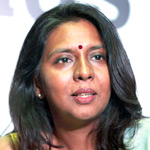
     

    “I don’t think journalism offers enough challenges to the really bright people any longer.”

    I still see a number of typos in Mirror. Is this an un-lickable problem?

    I think there is a very real problem with journalism today, and it’s not only limited to Mirror. The problem is that the deskies is a disappearing breed. And it’s going to be a big challenge over the next few years. Also, there are very real problems we are facing, and these are going to change the profession drastically. It’s so rare to find people who want to come into journalism because they want to be journalists. For example, when you ask people, ‘Who edited this copy?’. Invariably the response will be: ‘I looked at it/I glanced at it/I skimmed through it.’ Another thing is I don’t think journalism offers enough challenges to the really bright people any longer. There is an attrition problem across aboard. People want to try out various things. When you and I were growing up, it was about sticking to a profession, a career path, and that no longer holds true. People now have the advantage of taking breaks, taking gap years, studying, etc. The journalism hours don’t allow too much of a personal life. And I think HR, owners, publishers, editors need to take all these things into account.


    Is the passion for journalism diminishing in young India?

    I think the important thing now is personal growth and personal life. That has taken precedence over wanting to change the country.


    What was Vineet Jain’s brief to you when you signed up for Mirror?

    His brief was very clear. He said it should be a smart paper and that it should be different from the Times of India. And because it’s a compact size, there are elements of a tabloid that you can incorporate. In fact, when we started the paper, there were a lot of conflicting opinions, so I was a little tentative in the beginning. And then one day he called me and asked why was I so tentative. He said, “I have given you this brief, just stick to it. And don’t be apologetic about it.” So that was wonderful.


    You think this country is ready for a Brit style tabloid?

    No. Though it’s very interesting because everybody is trying to incorporate the tabloid elements, but you can’t be openly unabashed about it. We are not ready for it. For instance, look at the responses Dr Vatsa’s column gets.


    Guess it’s a tightrope walk. You want to be tabloidy, and still have to be aware the nation isn’t ready

    Yes. Sometimes in the newsroom we think we can do a story, but when we see the backlash the next day, we start being more careful by censoring ourselves.


    And the problem is if you play safe and cut down on controversy, you get dangerously close to the TOI

    Yes. So what we try and do is this: I always say our competition is the Times of India. Because we go with the TOI. Now the TOI has massive width, they do like sixty stories at an average. So our battle is to out-think the TOI, in the sense that ‘this is what they will do, so let’s do something different’. We can get away with some naughty things that they can’t.


    Lots of court cases?

    Actually they’ve come down, ever since we’ve become safer. (Smiles.) But there’s also a lot of frivolous litigation, which is easily dealt with.


    More editions in the offing?

    At the moment, no.


    And for Mumbai Mirror, are you still as hands-on as ever?

    See, I am out for lunch with you! (Laughs) But yes, I like being hands-on. There are times when I can breathe down people’s necks. But I am trying to back off a little now that we have a very competent senior team. I also realize that people should be given more space, but it’s difficult. (Laughs.)

     

    “The TOI has lots of products that come with it, but everyone doesn’t necessarily read all of them, right?”

    Meenal, the perception is that Mirror benefits a lot from being the TOI’s free paper. Without that advantage, your circulation would be nowhere close.

    I am lucky and I won’t question my luck. We have a great readership, thanks to the TOI. But then you have to capitalize on that luck, you still have to deliver a good product. The TOI has lots of products that come with it, but everyone doesn’t necessarily read all of them, right?


    If you were a standalone paper, how much circulation do you think you’d lose?

    I guess we’d retain 60%. Because Mirror has become a genuine commuter’s paper. You have to travel in the train to see how many people carry it. It started off as a guilty pleasure, which people didn’t want to acknowledge they were reading, but they were all reading. But over time it has also become a lively paper. And that can’t be said about too many other papers in town. And people like that.


    Would you say Mid-Day was your training ground?

    Absolutely. I had always worked with broadsheets before that – Pioneer, Asian Age and The Indian Express. So when I joined Mid-Day, for a while it was like, where the hell have I landed? This is not how journalism is done. For the first six months I had no idea what I was doing. But I was in a senior job and I was getting paid an X amount, and I must tell you I HATE giving up. And then one day I went for a walk and said to myself the paper won’t change because of me, there was a reason why this paper was so beloved in Bombay. And that was the Eureka moment for me. I decided to try and understand it rather than look down upon it. And that changed things. I must say I learnt a lot from Aakar Patel (the then editor of Mid-Day). I learnt a lot from what the paper did on Page 1 and on headlining.


    One Indian print editor you most admire.

    I owe everything I learnt in journalism to MJ Akbar. About writing, about making pages, about what not to do, etc.


    It’s been seven years at Mirror. Don’t you feel the itch? Isn’t it tiring to do the same thing day in and day out?

    I keep wondering why nobody else offers me a job! I am joking, of course. Which is why doing the book was wonderful for me. It gave me a chance to step back and follow a story that had been fascinating me. And it was extended journalism. I have always felt when the number of days you feel bad about what you do exceeds the number of days you feel good, you should quit. I haven’t reached there. And there’s always something exciting happening.


    Being a hard-edged journalist, how do you reconcile with something like Medianet?

    That’s easy, because we don’t have Medianet in Mirror.


    But it’s there in your group.

    It doesn’t affect my life, so I don’t care about it.


    You aren’t asked to carry plugs?

    No. And it’s one of the things that has pleasantly surprised me. They have maintained the Chinese wall from the start.


    They have left you alone?

    Yes. And there’s another reason. Mirror is a small paper in the group, so it’s not necessarily the focus. We are a small cog in comparison.


    Have you ever been asked to drop a story?

    (Pauses) Not drop a story. I think what one learns over a period of time is that you have to pick your battles. I’ll give you an example: If there’s an entertainment story which is coming right ahead of the Filmfare awards, where somebody is going to be performing, and I have a damaging story on that person, would I delay it by a few days? Yes, I would.


    There used to be intense rivalry between the Independent and the TOI. Is it the same with you?

    Not rivalry, but there is great competition. When the TOI does something, and we’ve missed it, I give my reporters hell. And I am sure JoJo (Jaideep Bose) does the same when we get something.


    “Mid-Day killed itself. And I feel really bad. I feel bad that what was such a robust paper is no longer that.”

    You’ve pretty much killed Mid-Day. Feels good?

    The paper killed itself. And I feel really bad. I feel bad that what was such a robust paper is no longer that. We all worked very hard out there. We worked our asses off at Mid-Day and we used to take great pride in the paper being so robust, that it was second only to the TOI.


    What would you do if you were editing Mid-Day today?

    I’ll bring in more energy. What’s going for Mirror despite the inconsistency is that it’s never dull. And dullness in journalism is a cardinal error. Especially if you are a tabloid.


    Let’s shift to your book, ‘Death in Mumbai’. Does Meenal think Maria Susairaj got away lightly?

    I must tell you I ended up liking her quite a bit. I feel that she is a manipulative woman and that she may be a tease. But that’s not a crime, there are a lot of women like that out there. Did she kill or abet the killing? I don’t think so. She was in love with Emile Jerome, she really wanted to marry him. But he wasn’t committing to her. When he killed this guy, it was, in her mind, like his commitment to her.


    When you started writing, was there something you had decided you won’t do in the book?

    The only thing I told myself is to not be judgmental. Because someone else’s idea of morality could be different from mine. Like, I started out with a certain view of Maria but it became something else.


    In fact, that was the only criticism I read about the book. As a journalist, readers expected you give us your own view. Perhaps as the epilogue.

    There were genuine difficulties. Something happened in a room where there were only three people. One guy is dead and two are in jail. There is only so much information I had. And I genuinely did not want to play judge.


    You have always kept a very low profile. Marketing the book must have been tough.

    (Laughs.) It was! It was terrible. The only time you would see me on television was on things that were related to the book. Otherwise I wouldn’t be caught dead going on TV.


    Any more books coming up?

    I would like to write more books, but I love this job too much. Ideally I’d like to do both. But I haven’t thought of another subject so far. Might be interesting to write fiction.


    Would you like to edit the TOI?

    No. I think it would be fun to edit a broadsheet, but I don’t think I am ready to edit the Times. It’s the biggest paper in the country, it requires a greater understanding of business, politics… and I don’t think I am ready for it. Also, it requires certain people skills which I perhaps don’t have.


    Don’t rate yourself high on people skills?

    I think I am very good. But I need to be more patient. I can be impatient and that’s a serious shortcoming.


    You are 43. Don’t want to marry?

    It’s too late now (Laughs).


    Is it important to be single to edit a high pressure daily? Is it a price one pays?

    Sure. It’s a price a lot of women, more than men, have to pay for any high pressure job. It’s unfortunate, but it’s a fact. I may have been married, but it would have been very difficult with children.


    Photographs: Fotocorp
     

  • Paritosh Joshi: So you want a job in the Media?

    By Paritosh Joshi


    MBA from a leading business school in the American Midwest, two years with a boutique investment bank in Boston and then this young man lands up for a chat about what he needs to do to get a job in the media.


    It is still easy to think there is a clear demarcation that sets the media apart from the rest of the world. Aamir, Ashton, Arnab and Aishwarya are in the Media. (They don’t even need surnames to identify them). Media people ‘need no introduction’. Us grunts have nothing worth introducing and thus, don’t need to be introduced.


    Or is it so simple?


    There were the Media people but they were few and readily identified as such. M J Akbar dazzled us with his insight in columns for a newspaper he edited. Rajat Sharma put people into the dock, quite literally, as he hosted a talk show. Derek O’Brien got all of us furiously scratching our heads even as he quizzed school kids. Madhuri Dixit sent testosterone levels into orbit merely by counting from 1 to 13. And Lalu had to invoke Sridevi’s cheeks in search of a universally comprehensible metaphor for Bihar’s roads.


    Then Tim Berners-Lee came along and changed everything, although for years after he thought up hypertext in an obscure corner of CERN, we would scarcely have known it.


    By the late 90s, regular blokes discovered that it was possible to find a wider audience for their periodic rants on WWW than they previously could muster around a water cooler or in a cafe. The web log, then portmanteau-ed to weblog and finally truncated to blog was born either in 1995 or 1997 (you can find an interesting history here).


    Then blogger came along in 1999, bang in the heady days of the Dotcom Boom and setting up a blog became Luddite-proof. From the very beginning, the blogging community had a wide range of interests and capability. The largest majority would create an account in an idle moment never to visit it ever again. A few would invest time and effort in their posts and endeavour to reach out to an audience with regular, engaging updates. Remember that these were people operating far away from the conventional notion, but what they were doing was indisputably publishing.


    Everyman had just stormed Fortress Media.


    It began with the written word. Soon enough, authors had found ways of adding pictures to their words. And the web was becoming more clever all the time. It was able to transport not just text but sound and video too. Also, devices to record audio and video had started to shrink in price and size even as they got massively more powerful, thus putting near professional quality sound and image acquisition within reach. Events unfolded at a rapid pace thereafter. Amazon pioneered a lightweight handheld device for reading digital publications. The Kindle was a runaway success and for the first time, books could be self-published by anyone with a good idea and capable penmanship without ever being imprinted onto the dead-tree medium. Soundcloud allowed wannabe speakers, singers and instrumentalists to distribute their art and craft without surrendering themselves to the crafty gnomes of the music industry. Youtube opened doors for every standup comic, ballerina, burlesque queen and cute kitten to show off its talents on glorious Technicolor video.


    But wait, we were talking about an investment banker contemplating a career in the media. So what’s with this long riff about what we now refer to, rather condescendingly I might add, as User Generated Content?


    Well, it wasn’t just individuals that got inspired to start using the all new powers of WWW to talk to their “Audience”. Businesses of every stripe saw the opportunity too. To be rather more honest, what they saw was consumers – happy and irate, sounding off about their brand experiences in these wide open spaces and were left with little choice but to deal, for better or worse, with what they were getting. Surely we’ve all heard the now almost apocryphal story of Coca Cola’s attempt to take down a fan page on Facebook that spectacularly backfired? To the point where they had to pretty much say ‘Let bygones be bygones and let’s be friends’? (Moral: Don’t clobber, co-opt).


    You see what’s happening here. Companies and brands were becoming broadcasters and publishers.


    At no time before in the history of our human civilization has communication across every conventional fence and barrier been so easy, inexpensive and by implication pervasive or ubiquitous. And barring the rare exception, individuals and entities find it more productive to be participants in this endless feast of reason and flow of soul than mere mute spectators. There’s even a taxonomy to describe different levels of involvement with media: Paid media are, as the name suggests, those that you have to buy access to. Earned media are where the media voluntarily carry news or content about you. Finally, owned media are, again as evidenced by the name, those that you own and control. Who doesn’t want earned and owned media?


    And what was it that we were talking about when we began this ramble? Ah, yes. A job in the media.


    I told the young man, he could stop looking. After all, every job- FMCG, Banking, Automobiles, Telecommunication, <insert randomly chosen industry name here> eventually, was going to be a job in the Media.


    Paritosh Joshi was until recently CEO, Star CJ. He has been a marketer, a mediaperson and a key officebearer on industry bodies. He is Strategic Advisor, Ormax Media. He can reached via his Twitter handle @paritoshZero