Tag: luxury brands

  • Into the printed world of luxury


    By Johnson Napier


    Be it a shopping mall or a supermarket, one cannot help but notice some loud and in-your-face visuals that crave the consumer’s indulgence. In fact this practice is not just limited to malls and large stores where consumers flock in droves – these humongous posters seem to greet us everywhere.


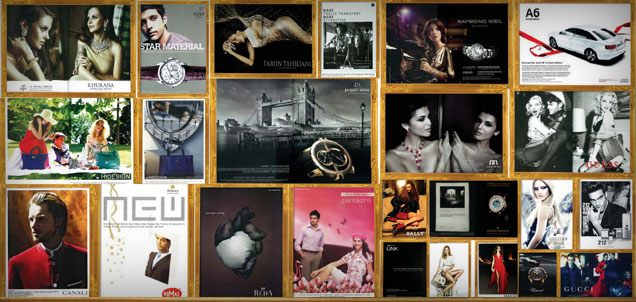
    And they are familiar sights – one sees them not just outdoors but within the pages of glossy magazines as well. Most of these larger-than-life posters are for luxury brands. While out-of-home is generally the medium of choice for brands, it still doesn’t compare to what the medium of print has been delivering as it continues to rule the course where advertising of niche and lifestyle-centric brands are concerned. At least that’s what can be inferred from a survey released by Cogito Consulting.


    In its report ‘An Analysis of Marketing Communication of Luxury Brands through the Lens of Luxury Magazines’, Cogito Consulting decided to do a deep dive into leading upmarket magazines carrying advertising for luxury brands to unearth key trends and semiotic codes of luxury advertising in India.


    The report is an analysis of some 511 advertisements in leading luxury magazines like Vogue, Verve, Time N Style, GQ, Harper’s Bazaar, MW and Cosmopolitan. All the ads were mapped quantitatively on various parameters and additionally, a qualitative analysis along with few expert interviews were done to arrive at some key learnings.


    Kinjal Medh

    Sharing his thoughts on the study, Kinjal Medh, COO, Cogito Consulting said, “The idea was to understand whether there were any patterns or codes that were common to most luxury brands. What we observed through our course of analysis over a six-month period is that a lot of luxury brands follow a similar pattern of advertising. We sampled over 500+ publications which typically feature advertising by luxury brands.” In fact according to Mr Medh, the unique trend that this study throws up is that “Luxury brands have grown perhaps more than the other brands in the market as they are not sensitive to economic conditions. As a result, people who can afford them can do so without being worried about what the economic climate in the country is. In fact my guess is that this sector will grow even faster and has a long way to go in India.”


    Composition of Ads

    According to the study, personal adornment brands feature the maximum number of ads in the magazines under study. On the other hand, products which do not directly enhance personality are advertised far lesser. For example: Apparel and watches which are a direct gateway to status elevation have the highest number of ads. While categories like real estate, home furnishing, hospitality etc. are relatively lesser.


    Affirms Mr Medh on the trend: “Where the composition of ads is concerned, it has remained somewhat the same. In fact it has not changed since the coming in of international brands in India. Before that there was not much of luxury brands who advertised; just a few jewellery brands. This was a trend prevalent almost about a decade ago. But that has now changed with the coming of international titles in India who brought with them the scope for luxury brands to associate with.”


    Another important trend that the study analyzed was the use or rather non-use of celebrities for luxury advertising. The study notes that only 12 percent of the ads studied, featured celebrities. Among the ads which featured celebrities, Watches, Jewellery, Perfumes and Apparel were the top categories using celebrities in their advertising. Further, of this 12 per cent, the majority (52 percent) were international celebrities while 48 percent featured Indian celebrities.


    Sharing his views on the trend, Mr Medh asserted, “One of the things happening in India is that there is a celebrity overplay. In fact there are instances where a same celebrity endorses high-end products and then also endorses hair oil, which is contrasting in a sense. As a result the level of exclusivity that luxury brands require is often not possible. This is not the case with international celebrities who are very selective in terms of the brands they accept to endorse.”


    Paradoxes of Luxury Advertising

    An important facet of the study or rather a paradox is the occurrence of luxury brands going increasingly local while mainstream Indian brands were going international. The study goes on to state that lot of Indian brands are trying to project an international imagery by using international models in the advertising. Approximately 14 percent of Indian brands advertised have used international models in their advertisements, it claims. “It is part of the experimentation that luxury brands do to discover new ways of marketing themselves. So while international brands tend to look inside India most Indian brands are looking outside to expand their base,” Mr Medh commented.


    Another interesting finding that the study highlights is that most of the brands advertised in the magazines have no body copy. About 60 percent of the ads analyzed did not have any copy, it noted. They featured only visuals and brand name. The ads project visuals which define the personality of the brand and along with visuals just the brand name. For those consumers well versed with the personality of the brand, only the name is enough and for the uninitiated, sharp visuals work in attracting them.


    Ironically, from the consumer’s point of view the financial investment in luxury brands is far higher than mass brands and the justification from the seller’s point of view is correspondingly far lesser. In other words, Mass brands’ advertising sell, Luxury brands’ advertising evoke Desire.


    The analysis revealed that primarily there are six key tenets that form the basis of most luxury brand advertising. These 6 codes include The Two Tone Code, The Exclusivity Code, The Sensuality Code, The Craftsmanship Code, The Origin Code and The Heritage Code. Of the whole lot, the study noted the Two Tones Code to be more effective. In its analysis of 511 ads, about 66% of brands that were advertised had black/white logo. On the other hand, in the case of mainstream Indian brands, logos do not necessarily follow a black and white pattern.


    Asserted Mr Medh about the popular Code, “I think that the Two Toned Code is the most interesting be it for its advertising or even the use of logo which mostly is black & white. I expect this trend to continue going forward as black and white tones do lend a certain amount of mystique and sophistication; unless certain brand advertising demands the use of colour I largely see two toned as the most popular form of advertising.”


    As for the Sensuality Code, the study observed that advertising for luxury brands is much more sensual than mass brands. Probably it is one of the ways to create a desirable personality and distance luxury brands from others brands. From perfumes to handbags to watches, sensuality is an integral part of luxury advertising, it noted.


    Where the Exclusivity Code was concerned, the study noted that luxury brands try and create an aura of uniqueness since it gives an assurance of being owned only by selected people. Over abundance and easy availability of a luxury brand can cause dilution of luxury character, hence many brands try to maintain the perception that the goods are scarce.


    Where the Craftsmanship Code is concerned, the study states that luxury brand advertising lays more emphasis on the craftsmanship and intricate mechanisms involved in the product. For example, an apparel ad shows the cut and fabric up close or a watch ad shows the mechanisms inside the watch.


    The study further notes that for the Origin Code, some luxury brands elucidate the luxury quotient of their brand by mentioning the country of origin of the brand. Going ahead, luxury marketers are taking a step further and using the city of origin and bringing in more credibility to the brand.


    As for the sixth code, the Heritage Code the study notes that the heritage of a brand builds an aura of several years of finesse and excellence in providing luxury products. It exemplifies the years of mastery or lineage to add a mystique to the brand. A mystique is generally built around the exceptional legendary founder character of the past, making up an integral part of the brand story and brand personality.


  • Global luxe brands woo first-timers with sales

    By Vijaya Rathore


    International luxury brands such as Chanel, Christian Dior and Burberry have started discount sales at their outlets in Delhi, Mumbai and other cities to woo first-time buyers as well as to clear inventory.


    “Sale is a good way to bring down the entry point for the first-time buyers,” said Roasie Ahluwalia, general manager (marketing), at Genesis Luxury that operates brands such as Giorgio Armani, Paul Smith, Bottega Veneta, Canali, Burberry and Jimmy Choo in India.


    She said this strategy is particularly effective in a nascent luxury market like India. “Many of those who buy these luxury products at a 40 per cent lower price end up becoming regulars,” she said.


    A CII-AT Kearney study recently observed: “End of season sales have played a good role in getting more and more Indians to get their first experience of luxury.”


    Even Chanel and Christian Dior, among the best-known luxury brands in the world, have put lower price tags on select products. Chanel offers 30 per cent sale on its ready-to-wear section twice a year while Dior offers discounts on items such as clutches and shoes.


    Marielou Phillips, spokesperson for Chanel in India, however, said the luxury brand uses the sales to reward its loyal customers rather than attract first time buyers. “Neither do we put up big signage at stores nor we give advertisements in newspapers. We simply put aside a few products and inform our regular buyers about the discounts,” she said.


    Industry experts say tempering sale of high-end goods in a slowing economy and limited circulation of products due to small number of stores in the country are forcing luxury brands to put the big labels on sale.


    “Brands go on sale in India because they have to get rid of last season’s products. In case of luxury brands, the seasonality factor is much higher. Most of their products are seasonal in nature,” said Dipak Agarwal, chief executive officer at DLF Brands, which co-operates Salvatore Ferragamo stores.


    Most international luxury brands do not operate more than five stores in India, making it necessary for them to flush out the old inventory. “A brand’s ability to leverage inventory across stores goes down when it has a limited number of stores in a country,” said Mr Agarwal.


    Dinaz Madhukar, president at DLF Emporio, a luxury shopping mall in South Delhi, says the number of shoppers increase 30 per cent during any sale. “Even brands that do not go on sale benefit from the increased footfall,” she added.


    An average two lakh people visit the DLF Emporio each month. The mall also does a lot of events like corporate tie-ups to invite potential customers for sale previews.


    However, there are a few brands like Hermes, Louis Vuitton, Cartier and Tom Ford that do not offer discounts. “We do not go on sale,” said a representative at a Louis Vuitton store.


    Experts say most of these brands follow their global policy of not bringing prices down.


    An executive associated with Tom Ford brand in India said: “Many brands also want to convey a message that each of their products is worth what a consumer is paying for. They do not want a customer who has paid more for the item to feel cheated when he finds that someone else has paid 30 per cent less.”


    Fair enough, but such brands might be losing out on a certain class of luxury customers in India who buy luxury only on sales.


    Abhay Gupta, founder promoter and CEO of Luxury Connect, which offers executive educational programmes on luxury business, said there are two kinds of luxury shoppers in the country. “There are people who are brand loyal and spend irrespective of the price tags and there are those who wait for six months for the sales to begin,” he said.


    Source: The Economic Times

    Copyright © 2012, Bennett, Coleman & Co. Ltd. All Rights Reserved


  • 5th Mint Luxury Conf to explore future of lux industry

    By A Correspondent


    The 5th edition of Mint Luxury Conference will take place in Mumbai on March 23 and 24. The theme for the conference is “Luxury inIndia: At the Tipping Point”


    Over the last few years,India’s luxury industry has witnessed significant transformation. The ever-growing Indian market has drawn a lot of attention from across the globe in recent years.Indiahas been a production outsourcing destination for a long time, but now due to a steadily growing economy and globalized businesses environment,Indiahas rapidly transformed into a large market for luxury goods.


    In view of the growing importance of the country in the global luxury industry, Mint, from the house of HT Media, has initiated a conference to bring together stakeholders to a common platform.


    The Mint Luxury Conference is the largest event of its kind in this sector. Industry experts, designers, marketers and owners of prestigious international luxury brands will come together for multiple sessions spread across 2 days of the conference.


    This year marks the fifth anniversary of the Mint Luxury Conference. Among the speakers this year are legendary designers Diane von Furstenberg and Christian Louboutin; Indian design star Manish Malhotra; expert in luxury retail, Michael Ward – MD Harrods; Michael Perschke, Head of Audi India and Anoop Prakash, MD of Harley-Davidson India. The sessions range from the intricacies of design and creativity to the minutiae of the luxury market inIndia. A much anticipated session is the very topical “The Impact of 100% FDI on Luxury” which will see Ajay Dua, former Secretary, DIPP, Ministry of Commerce and Industry, Peter Beckingham, Deputy British High Commissioner to India, and Armando Branchini, Executive Director, Fondazione Altagamma, butting heads on the issue of FDI.


  • The road ahead for Excluzen.com

    By Shubhangi Mehta


    The e-commerce boom has attracted a new player, Excluzen.com, a Delhi-based company offering luxury brands on the web. Launched in Jan 2012, the company aims to offer exclusive, tailor-made and personalized experiences to its members.


    The current size of the e-commerce industry is $11.2 billion with 8-10 million transactions a year. A lot of international luxury brands are providing their products and services in India through e-commerce channel. In November 2011 itself, 27.2 million online users in the age group of 15 and above accessed retail category from home. The fact that nearly 3 out of 5 internet users shop online speaks volumes about the impact and growth prospects of this industry.


    Excluzen not only provides premium brands but also lays emphasis on experiences that no other e-commerce portal offers, such as personalized charters, yachts, or group and individual coaching with pro golfers around the world. Also, some of the offers which are solely made for Excluzen members are not available under the respective brands.


    Urvashi Bahuguna Sahay, CEO & founder, Excluzen.com, said, “We don’t believe in the word ‘competition’. Excluzen is not a regular discounted portal. Even though online, it can customize and personalize services, right down to individual customers needs. The key target audience for us is HNIS, Corporate, SMEs, NRIs and Expats. Excluzen provides exquisite experiences for the customers.our major focus area is to position Excluzen as the finest brand and lifestyle experiences on the web. We have roped in Perfect Relations for our media relations and India Bulls for Digital ”


    The marketing and ad spend for the company is 30-35 per cent of its investment cost. They are also looking at magazine advertising. Excluzen has been doing below-the line activities like running a contest on its Facebook page. Online advertising is geared towards a user base outside India. They are targeting 50,000 transactions by end of next fiscal. The company is not following any advertising model but function on profit sharing with their partners where they charge 10-20 per cent of the product value as commission. They also have an ‘exclusive’ offering every month where a select partner can promote a limited edition product at a premium price and for this service, they charge higher margins.