
By Siddhartha Mukherjee
 I am passionate about our industry. I believe in its capability and its inherent strengths. More so, having seen the advertising Industry very closely, my belief and eagerness for our industry to get accepted as the Communications Emperor has led me to often critique its shortcomings. However, if I were to sum up 2017, I can comfortably say that the needle has started moving!
Below are some quick indicators of 2017 that makes me believe that very soon, the Paid Industry will have a tough time!
From an Overall Industry Point of View:
1. Talent:Â Endeavours are being made to create GOOD institutes that specifically cater to the needs of the Industry. While niche Institutes are cropping up, existing and established institutes are also trying to revamp their course curriculum and faculty.
2. Recognition outside the Industry: Still rare but our Industry’s acknowledgement at Cannes continues to be steady.
3. Recognition outside India: That India can lead and hoist its flag applies to our Swadesi Industry as well. Not just through campaign awards but even some of our Industry Captains got acknowledgedas Thought Leaders globally.
4. Global PR Forums Show Interest in India: This year, quite a few Global Forums like IABC, Page Society, CIPR, etc. have officially shown interest in creating ain India.
5. Growth Story: Despite a lull market, tightfisted spends and minimal agency fee hikes, this year, as per the PRCAI report, our Industry seems to have gathered a size of Rs. 1315 crore – a jump of 18% over last year!Digital and Social Media services were the star performers.
6. PR needs PR through Measurement: Industry has realised the role of Measurement and how it can showcase the value PR brings for the Brand Custodians. The discussions on this topic caught pace this year. Not just that, the small but effective role of neutral third party measurement partner fortifying the Client-PR Agency bond has been welcomed.
From a Client’s Point of View:
1. PR Monitoring Vs Measurement: Many Corporates and Agencies have started realising the difference between PR Monitoring and Measurement. Earlier, they would only feel the need for the former. This year, the preference has tilted towards maintaining Measurement and Analytics as well.
2. Shunning of Ad Value Equivalent: Many corporates this year gave up the use of Advertising Value Equivalent (AVE). Instead, they have resorted to showcasing their earned media efforts through exposure, engagement and conversion route.
3. Nonperformance led to change of Agency:Â 2017 showed many instances where Clients moved on from non-delivering agencies based on performance numbers and report cards.
4. Brand Exposure more through PR than Advertising: Given that our Industry is Product Launch dependent to maintain Client brand visibility, almost to the extent of 85%, we saw many sectors where Corporates used more of PR Exposures as compared to Advertising!Â
5. CorpComm working closer with Company Management: Saw two interesting developments this year. CorpComm desk being aligned to deliver results for both Business As Usual and Business Not As Usual. The concept of Media “Planning†created a space for itself. Second, some designation nomenclatures changing from the conventional Head of Corporate Communications to Head of Brand Communications. Indicates a positive shift!
From a PR Agency’s Point of View:
1. Boutique Agencies started getting noticed:Â Going by the various award platforms our industry enjoys, it seems that small agencies have started getting recognized as effective communicators and innovative brand builders.
2. More PR Agency Professionals Reporting for Meetings on Time: Yes, to me, this a great indicator. PR Agency teams have reported for client meetings pretty much on time! While the back benchers continue with their sub-standard approach, there have been quite a few front benchers who have positively moved this simple but effective hygiene average!
3. Willingness to create space for external measurement partners: Till recently, it was not normal for a PR Agency to proactively get an external measurement service provider to work for their client. This year, quite a few cases have come up where it was the Agency team which actually took the lead. 2017 showed good display of confidence, transparency and a tilt towards data and analytics!
4. Moving towards a One-Stop Solutions Desk: It is a no-brainer that if one were to offer all the value added services from a single desk, for a client, it really does matter whether an agency began as an advertising or public relations agency. This year, PR Agencies took quite a few initiatives towards hiring specialist in the forms of Digital Marketing Experts, Social Media Experts, Creative Experts, Event Management experts, etc.
5. Impetus on Training: This year, we saw agencies going all out to raise the confidence bar and diversity of their talent pool. Rigorous Training and Evaluation mechanisms have been rolled out by Agencies towards their employees – let us call them our Industry’s future Brand Ambassadors.
6. Sustenance of Lower Rung Employees becoming stable: As an outcome of the previous point,Agencies are required to spend relatively lesser time towards filling up vacancies due to rolling attrition.
The 2017 has started the ground work towards an explosive 2018! Good times to come for sure in the New Year!
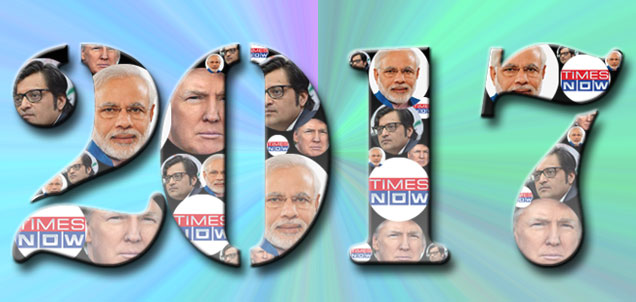
 The biggest news events of 2016 were Donald Trump and demonetisation. In 2017, we’ve had hangovers of both, if you forgive the allusion to what is going to happen to many of you in a few days.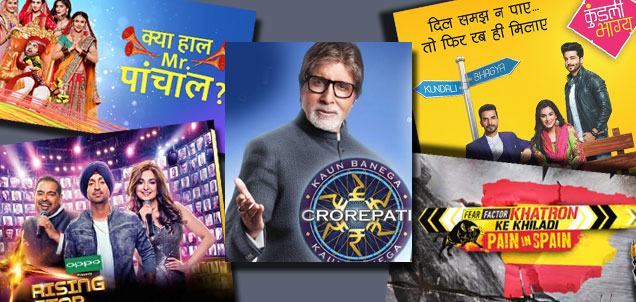
 Twenty-seventee has been a poor year for Hindi GECs by all accounts, especially because weekday fiction content, which has been the staple viewer diet for 17 years now, struggled through the year. In contrast, the year saw significantly higher traction for non-fiction content.
 Star Bharat’s August launch, and its slow but steady rise since then, has been pivoted around a genre that has been grossly neglected by Hindi television for years now: Comedy. Based on a seemingly farcical premise – a man is forced to marry five women because a divine intervention goes all wrong – Kya Haal Mr. Paanchal managed to combine two important focal areas for prime-time GEC viewing – Family & Entertainment. With a sharp week-on-week rise, the show is set for a good run in 2018.
 Rising Star has to be recognised simply for Colors’ brave attempt to play with technology and go for live content in prime time. In a country where even the biggest entertainment events are not aired live, going live twice a week for almost three months is no mean feat. The show brought freshness to an otherwise fatiguing singing reality genre. The second season is scheduled for early 2018, and should benefit from the first season’s visibility.
 In a year when new daily soap launches fell like nine pins, Zee TV’s KundaliBhagya proved to be an exception. The idea of extending the KumkumBhagya franchise was a smart one, but KundaliBhagya went beyond that within its first two weeks, to showcase characters that are fresh and young, compared to what we see on daily soaps in general. In a scenario where new shows fatigue out within six months, this Balaji show is still growing its viewer base in its six months.
 In a year headlined by non-fiction, the ‘Pain In Spain’ season of KhatronKeKhiladi was a rollicking success. Rohit Shetty was in even better form that his previous outing on the show, packing a punch and offering a perfectly balanced mix of comedy, action and a unique style of anchoring, where the equation he shared with the participants seamlessly transcended diverse areas like friendliness, respect and fear. The participants themselves were a solid lot, with diverse personalities and an ability to express themselves, making the 2017 season easily the best season of KhatronKeKhiladi so far.
 A hands-down winner, Kaun Banega Crorepati (KBC) turned out to be one of the biggest success stories, not just on the television screen but in the digital space too, with its integration with Jio via a play-along module. The makers stripped the show of unnecessary melodrama, focusing on game play and light-hearted entertainment. Social messaging and life lessons were there too, but they were delivered as a sprinkling, rather than being shoved down our throats, like one of the earlier seasons.
 By Indrani Sen