Tag: Lodestar

  • Marico back with Madison Media

    By A Correspondent

    Madison Media has  announced that it has won the Marico Media AOR in a competitive multi-agency pitch. Madison Media will be responsible for all media including Digital and will handle the account from April 1, 2019. It may be recalled Marico has been with Madison Media for 14 years from 2003. Then, in a pitch supervised by ATK, Madison Media had lost the account to Lodestar UM. This year the account went again on pitch.

    Said Vikram Sakhuja, Partner & Group CEO Madison Media & OOH: “We are absolutely delighted to win back the prestigious Marico account. We are confident that we will be their true business partner and substantially contribute to their growth story. We are happy that Marico evaluated our cutting edge Digital expertise and found us as the right fit”.

    Added Koshy George, Chief Marketing Officer, Marico Limited: “We look forward to this partnership with Madison Media. The agency brings in an expert team whose creative ideas and approach resonate with our ethos. It is critical to have a team combining creativity, expertise and execution excellence in today’s fragmented media landscape to drive value.”

  • Lodestar leads in Media Abby, inaugural Publisher Abby presented

    By A Correspondent


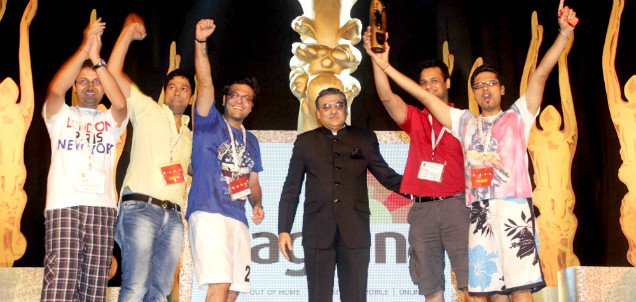
    Leading media and marketing services agency Lodestar UM bagged the maximum metails at this year’s Media Abby. The first day of Goafest 2014 saw the presentation of the coveted Media Abby and the inaugural Publisher Abby.


    While Lodestar bagged 2 Golds, 3 Silvers and 6 Bronzes, PHD India bagged the coveted Grand Prix plus 3 Golds and 1 Silver. Siblings Mindshare and Maxus bagged seven metals each, though Mindshare’s tally had 2 Golds while Maxus took away 6 Silvers.


    The Media Abby awards received 619 entries from 53 agencies. While the number of agencies participating increased by four, the number of entries decreased by 20-odd, informed the organising committee.


    At the Publisher Abby, 62 entries were received in seven categories and 20 awards were presented, of which 7 were Golds. Hindustan Media Ventures bagged 6 metals (2 Silvers, 4 Bronze), followed by Bennett Coleman winning 5 (3 Golds, 1 Silver, 1 Bronze)), Dainik Bhaskar (1G, 1S, 1B) and Chitralekha (1G, 2S) bagged 3 each and Amar Ujala (1S), Hindu (1G) and Forbes (1G) one each.


  • Making brand the hero with BPN


    Just when you thought that the media agency space is getting crowded in India comes the news of another agency setting up shop in India. Brand Connections that was present in 12 countries across the globe excluding India and the United States, will now be rechristened Brand Programming Network. In effect this will be the official launch of BPN in India. And simultaneous with the rest of the world. This will make the agency the third such offering from IPG Mediabrands in India. It already has two in the form of (Lodestar) UM and (Lintas) Initiative. BPN will work under the LMG umbrella.


    Says Lynn de Souza, Chairman and CEO of Lintas Media Group in a communique, “For media agencies thus far, the starting point has always been the advertiser. Consolidation, portfolio management, aggregation etc. are all client focused and to some extent consumer data driven. BPN will focus on the brand. The time has come to turn back several chapters and make the brand the hero of all communication effort, and BPN has developed processes to do just that.”


    BPN will take on the service mandate of clients like Jyothy-Henkel, Bajaj Auto, Samsonite, and several other clients of LMG to start up with a billing volume of over Rs. 1000 crores, in Mumbai, Delhi, Hyderabad, Kolkatta and Cochin.


    In India the agency will be led by Suresh Balakrishna, who has assumed charge as CEO of the agency. While BPN will be essentially a media agency, it will play the game differently by focusing on the brand. “Everything that we are recommending is going to be from a brand strategy direction,” assures Mr Balakrishna, as he gave MxMIndia a quick peek of what to expect from the agency in India, hours before it was unveiled.


    In conversation with Pradyuman Maheshwari and Johnson Napier, Mr Balakrishnan delves on how BPN will be different from the others, on the increased emphasis that will be laid on social media and digital and the new initiatives to look forward to from BPN in the coming few months. Excerpts:


    Is Brand Programming Network old wine in a new bottle?

    No, it is not. The usual answer that comes up about a third agency is that it is created due to a conflict of clients, allowing you to take on more of the similar clients. But with BPN, it is a thought-out strategic decision. If you look at India, there is no immediate conflict business (from network agencies) that is being parked in BPN. If you look at Mediabrands, for the last 10 years it has had a network called Brand Connections in other countries. But as markets have developed, especially a market like India, we find that there are enough businesses out here to have a third agency with a different character, a different way of thinking…and of course help handle conflict in the long run. So it’s not a knee-jerk old wine in a new bottle reaction from our end.


    The reason we ask you this question is that you have reallocated some of your existing businesses here. Does this also mean that Initiative and BPN could be in conflict with each other?

    It could be. In our system we can compete for businesses for the same pitch and may the best team win. Therefore we have a Lodestar UM, an Initiative and a BPN; we have three networks here in India and all three can compete for a business if necessary.  We do believe there is enough business out there and why leave some money on the table…


    What is it about BPN that differentiates it from others?

    A few things actually. Firstly, we are turning the clock back as an agency. We are going back a little in time and therefore the name Brand Programming Network. The whole idea is to focus on the brand. Earlier, media used to be in one house there used to be much more brand focus, even the media guys owned the brand. But over a period of time, media has become more professional, accountable, larger, etc but somewhere in the process we believe that brand connect has got lost. Therefore, BPN would be an agency that would focus on the brand; everything that we are recommending is going to be from a brand strategy direction. To give an example, in the last four months we have won over four-five businesses and in almost all the business pitches the client fed back to us saying is this a creative agency presentation or a media agency presentation? So you can imagine the extent to which we are spending time to analyse the brand, looking at brand strategy, looking at TG, etc. We are focusing on that aspect of the business and of course at the end of the day media is just a delivery vehicle.


    In fact Mr Shashi Sinha even hinted in an interview with us that we need to return to the full-service agency model. Are you in agreement with that statement?

    Half-way house, I would say. We are calling ourselves a full-service media agency in the sense that the touchpoints today have become all-pervading. For example, the touchpoint would be you ride on content. But who creates that content? You have an instance where the customer himself creates content in digital and then you have specialists who create content. So content itself has no owners and therefore reaching out to the customer has become that much more complex and you can only do it of you have the fabric of the brand and what it wants to convey.


    But the same thing could even be said by the creative agency bosses like, say, R Balki of Lowe, etc who feel that creative is alright but we also need to add some media to it. They could also be thinking on those lines…

    So what if they think the same, but I think at the end of the day to deliver media, you need a certain size… in fact many media heads today are CFOs; they are not media people. They have a commercial bent of mind and manage money.


    So are you saying that a media agency can be a full-service agency but a creative agency cannot be a full-service agency…?

    In today’s context yes, I believe you can say that.


    Sorry to be asking you this for for the third time in different ways, but getting back to BPN, in a sense it will be a brand agency…

    Yes, and across the world in the 13 other countries that we are present in apart from India, we have a lot of retail businesses and that is another area of growth that BPN is seeing. That seems to be the character of the agency globally – handling a lot of retail clients on a local basis.


    Will you only handle products and not brands in other sectors?

     There will be no category and geographical limitation. What the agency will bring to the table is brand perspective. In many cases, we have seen that clients do not want a brand perspective from a media agency. They get enough of it from a creative agency and want only the media bit from us. So I may not be the right pick. But being part of an agency like LMG I may bring along a necessary clout; I am big enough to matter and small enough to care. But that is not going to be my reason to be.


    In fact for BPN, one of the things being discussed is India as the analytics hub for BPN worldwide.


    Is it likely to happen soon?

    Yes, it is going to happen very soon.


    Wouldn’t analytics have done better as a separate unit like what the other networks offer?

    Maybe if it did well it could become a separate agency but to begin with it will be a part of the service that we are offering.


    Somewhere in your press release you have emphasised on laying adequate stress on social media. Is BPN going to be basically a digital or social media agency?

    No. But globally, and in India, I believe that digital and social media has much more mindspace than wallet space. So it really has a long way to go. Having said that, digital is growing very rapidly globally. One of the things that you will hear from us is a tie-up of sorts with a large platform about which you will hear soon.


    Will social media be the mainstay for BPN…?

    Not in India but worldwide, yes.


    So here you will be doing the traditional stuff plus digital and social…

    Absolutely.


    Could you delve a bit on the team that will drive the function for you in India?

    We have Premjeet Sodhi as the COO, Patrick Gomes would be the head in Mumbai, Mahesh Motwani would be head of Kolkata, Vidya Nanda Kumar will be head of Kochi…we have identified a head for Delhi and Hyderabad that we will announce very soon. We have a staff strength of about 70 and about 40 clients till now.


    Going forward, will BPN and Initiative be sitting together and pitching for a business?

    All the existing businesses in Delhi, Bangalore etc will belong to Initiative while Mumbai, Kolkata, Kochi etc will belong to BPN. We will be having separate offices which ever cities both of us are present.


    Any other plans on the anvil for BPN?

    Yes, we would be having a training and consultancy cell for media houses. The other thing will be branded content….


    Paid news?

    No (laughs). AFPs, in-film branding etc.


    You have always been a print man, do you still have a soft corner for the medium compared to television which is more popular of the two?

    Brands of course want television but I think print also works. Ours is the only country where print is still growing.


    But TV is growing a bit faster.

    Yes.


    What will the the revenue mix of BPN look like in future… if it’s 99 traditional and 1 digital?

    Going by your 99-1 yardstick, it will be 80 per cent traditional and 20 per cent from other mediums. Possibly even 75-25.


    If BPN has business worth Rs 1000 crore, how much will Initiative be?

    It would be the same. LMG as a group is Rs 2000 crore.  All the businesses in Delhi and Bengaluru belong to Initiative while Mumbai, Kolkata, Kochi are now part of BPN.


    In Indian corporates, there is a tendency to guard one’s fiefdom. Did Initiative feel bad you took away some of its businesses?

    They haven’t expressed anything as yet.


  • @Media Abby: Mindshare bags Grand Prix; MEC, Lodestar sparkle too

    The Grand Prix-winning Mindshare team with Jury Chair Ashish Bhasin


    By a Correspondent


    Having put an embargo on declaring the results of the Abby Awards before the event was to be staged, the Goafest Awards committee rewarded the patience of the media by calling in a press conference to declare the results much before it was made known to the audience at large. But the criterion to release it after 10pm remained -a diktat which was honoured wholeheartedly by all.


    In keeping with its attempt to play up the awards in as simple a way as possible, the committee was generous in stating that there was no big winner for the Media Abbys – a decision which was left for the media to decide. The reason was simple. For the first time the organisers had introduced a Grand Prix in the Media Abby awards and didn’t want that award to deter the attention from the other noteworthy winners. The points too were not awarded against individual metals, leaving it open for the media to decide the winner for the night.


    So if one went with Grand Prix as the criterion for the award, it was Mindshare that emerged as the No 1 agency having bagged the only single Grand Prix at the Media Abby. But then there were no points allotted for the individual metals leading to no clear winner at the top. The total count for Mindshare read: 1 GP, 1 Gold, 2 Silvers and 2 Bronzes (total metals 6).


    If one went by the gold count, it was MEC that emerged at the top, bagging 2 Golds, 1 Silver and 1 Bronze. Lodestar was next having bagged a total of 6 metals (the same as Mindshare) leading by 1 Gold, 2 Silvers, and 3 Bronzes. Madison Media Infinity was next as it bagged 1 Gold, 1 Silver and 1 Bronze followed by Starcom bagging just 1 Gold. Maxus follows with 2 Silvers and 3 Bronzes. (full table below)


    The Grand Prix was bagged by Mindshare for Surf Excel in the Best Use of Branded Content, which also won the gold in the same category. The GP was chosen from amongst the Gold winners. Other Gold winners include MEC that won two including one for Reliance 3G in Best Use of TV and the other for Best Use of Newspapers and Magazines. Lodestar UM won a Gold in Pro Bono Marketing for Bombay Psychiatric Society.


    Ashish Bhasin, chairperson of Media Abby said that the attempt this year was to reward the hard work put in by agencies, and therefore the Grand Prix. There were 16-17 per cent more entries from 31 agencies that were received this year, totalling 628 – last year the number was 530. It involved the efforts of more than 61 juries in putting this act together.


    Reacting on the agency’s win, Nandini Dias of Lodestar UM said: “I think we have performed very well this year. The total number of awards this year is only 27, which I guess is quite a small number. But within that we have won 6 awards, which is amongst the highest this year. So all in all, we are very pleased with our performance.”


    Also staged at the same night were awards from three verticals in the Creative Awards category including Design, Digital & Interactive and Direct. While the other categories would be announced on day 3, these three awards were awarded on day two itself. Ogilvy emerged the big winner as it won the Grand Prix for Fox Crime in the category – Online Integrated Campaign. DDB Mudra, BBDO, Leo Burnett were the other notable winners across the three categories.


    In all there are 101 awards that were given out in the Creative Abby awards on Friday night. An ecstatic Shashi Sinha said that the Creative Abbys were different this year as they received a record 4,250 entries as against 3,600-odd last year but what was remarkable was the participation of agencies from South Asia including Pakistan, Sri Lanka and Bangladesh. In fact the big winner tonight from South Asia was Grant McCann Erickson that won two Silvers across two separate categories.


    The awards were validated by research firm KPMG who have been doing it for two years now.


    Photograph: Shailesh Mule/Fotocorp


    Click here to view all Goafest 2012 stories
     

  • Anil Thakraney: Full service agencies must return

    By Anil Thakraney


    In my interview with Lodestar’s Shashi Sinha, we discussed how the advent of media buying global conglomerates has killed the media planner. Here’s a link to the interview, in case you missed it: http://www.mxmindia.com/2012/03/the-media-planner-has-become-a-zombie-shashi-sinha/


    What gives me heart is that Shashi believes integration is the best way to work, and that he will re-start that structure in Interface. Good luck to him. That discussion also brought back memories of my days in advertising. When the client servicing, the creative team and the media planner would work under one roof and operate as one unit. And how that bonding facilitated many opportunities to conceptualize and execute cool media innovations for clients. Having quit the ad world a long time ago, I personally cannot even imagine working in an ad agency where there’s no media planner I can discuss ideas with. And nag her into making my crazy creatives come to life in the media. I shall go to the extreme and say that I consider the cutting off of the media function to be like an amputation, the loss of a limb.


    In fact, so connected were we with the media planners back in my days as a young account exec at O&M (then called OBM), I vividly recall that one evening when the then fiery media chief, Rhoda Mehta, threw me out of her department, accusing me of spending too much time with the girls in the media. Yes, in those days the media department was packed with members of the fairer sex, and I must also confess it wasn’t just work that attracted many of us lads to that pretty department. So, Rhoda wasn’t exactly over-reacting, heheh.


    On a serious note, it’s obvious that one of the reasons the industry produces such few media innovations is the break-down of the full service ad agency. A way has to be found to reverse things, and bring people back under a single roof. I am not sure how that can happen in these days of independent media buying outfits, and, therefore, we must all keenly observe how Shashi goes about things at Interface.


    Like it happens in Karan Johar’s weepy flicks, the broken family must re-unite for the greater good.


    * * *


    PS: Blast from the past! One cannot even imagine that a marketer would run such an advert in these times of militant feminism. The brand would get skewered on the streets. And what if this ad appeared on March 8, International Women’s Day?


    The brand manager won’t live to tell his version of the story, haha.


  • The media planner has become a zombie: Shashi Sinha


    Shashi Sinha has done a lifetime in the business of advertising and media. It’s been an interesting journey for an engineer who went from selling booze to crunching complicated numbers. The CEO of Lodestar UM shares his views on many important issues, including media research, the demise of the full service agency, key challenges facing media buyers in today’s market and how he managed to restore some credibility in the creative awards. The 54-year-old, who’s usually soft-spoken and politically correct, candidly speaks his mind on this occasion. Media buyers and creative directors must pay close attention. He makes some very valid points.


    By Anil Thakraney


    You work for two companies?

    I work for the Draft FCB group where I handle Lodestar. And recently I have taken charge of a creative agency called Interface. But my primary responsibility is Lodestar.


    Whom do you report to?

    I have dual reporting. I report to the Draft FCB Global CEO, Laurence Boschetto. On the Universal McCann side, I report to a gentleman called Jim Hytner who’s based in London.


    Dual reporting is always a tricky thing…

    It is tricky. Since they are sister companies you have to keep both masters happy. One of my strengths is getting along with people and ensuring that their objectives are met. I have been doing this for five years now. As long as the combined operation is successful, things are okay.


    Cut to the past. What attracted you to advertising, when you were a sales manager with the UB group?

    I actually came into advertising for the wrong reasons. I grew reasonably fast in the UB group at a young age and I was in sales there. But I wanted to migrate to marketing and that would have been an effort. Then a friend said to me I should work in advertising as I would get to work on many brands at one shot. And so I joined the ad world in 1986 and stayed on.


    And you started out as an account planner in Ulka. How did media happen?

    In those days planning was an unknown concept. Bal Mundkur used to run the agency at the time, and he thought planning was an airy fairy function, that it had lost steam. He asked me to do some ‘real work’. So I started doing odd jobs like running the financial advertising cell, selling sponsored prorgammes, etc. Later I shifted to client servicing. Along the way my interest in media grew. When the FCB guys decided to make India the regional hub, Anil Kapoor said the time had come for me to fully move to the media function.


    Share an interesting memory of Bal Mundkur.

    He had balls. Today our revenues and profits are huge and yet I would not take a decision which Bal took in the late eighties. The servicing team handling a large multinational client was very unhappy, they said they were being treated like shit. Bal wrote a six-page hand-written letter to the client explaining why the agency would like to part ways with them. When he told me about it, I was horrified. I asked him to instead change the team on the account. But Bal said, “No, it is a matter of pride.” (After some prodding Shashi reveals the name of the client. It was Glaxo.)


    You are involved in many activities, you run the GoaFest awards, now you are heading the Ad Club as well.  You have excess time on hand?

    (Laughs.) I have enjoyed it for the last three years but it’s getting to me now. I believe when you take something on you must give it your best. I took on GoaFest last year because it was in a mess. So one had to get some credibility back, I had a point to prove.


    I guess next year you would not want to do it.

    I will definitely not run the awards next year.


    Why has the Bombay Ad Club gone dead in the last few years? I recall they used to hold many events in the past.

    You are right, it has ended up becoming an awards-only body. The regular interactions have reduced. The agenda for the future is to make it broad-based. The Delhi market has become very big and it’s a starved market. So we can collaborate and do things. As soon as GoaFest is over you will see a lot of action happening in the Ad Club.


    Do you miss the days of the full service ad agency?

    I do. In fact, I’ll let you in on a secret. I want to go back to the integration system with Interface, and the response I have got so far is very good. I genuinely believe that full service is the final solution. The best ideas come when you are sitting around the table.


    Shashi, after all these years of happily running a media buying agency you are suddenly talking of integration.

    One has been playing to a role. One is building the media agency, building one’s clients. But the best quality works happens in a full service agency.


    And the media buying market has become like a sabzi mandi. How much fun can that be for someone who comes from the old school?

    This is the unfortunate downside of globalization, global clients and global processes. Truth is that internationally advertising is not a hot profession any more, it comes way down the totem pole. Though in India it still has a pedigree, there’s some respect left. Ten years later it may not be there.


    One super media innovation you are most proud of having effected.

    It’s always teamwork so it’s embarrassing to say I did it. We have enabled many, but the one I am most proud of was for Nerolac Paints about five years ago. We took up a Mumbai local and deposited the shades onto the train. Nerolac deposited their paint on the outside of the train and made a shade card out of it. It was a wonderful idea.


    How many years do you give the print medium in this country?

    I can’t say about Bombay, Delhi and Bangalore, but as a country, print will be here for a very long time. The smaller towns are under-leveraged. Secondly, even if there’s internet access, there’s no power supply in these places. So how much can one use the computer, how much can one read on the mobile? If the time spent in Bombay on a newspaper is 15 minutes, for a town in UP it would be forty minutes. The entire family reads it.


    Key challenges the buyer faces in a highly fragmented media market.

    Everyone chases the rate game and how to buy it cheap. To me that’s stupid. For most of the organized media there are metrics in place to measure the media efficiencies. So in media terms how many consumers we’ve reached is all bull. The big challenge is to find whether that’s working for my brand or not. That, no one is able to answer.


    That’s the media planner’s job. And the industry has killed the planner.

    Correct. The problem is that the media business has become all about volumes, the business has become transactional. The planner today has become a zombie, a computer programmer.


    How can the industry improve media research in this nation? There are too many question marks on television audience measurement and print readership studies.

    Someone has to put money on the table, it’s as simple as that. The solutions are all known, I know very bright and talented people in research, what needs to be fixed is known. The problem is: No one is wiling to invest. Today, if television measurement costs Rs 20 crores, what if Rs 100 crores was spent on it? Or, for readership surveys, which cost Rs 4 cores today, what will happen if they had Rs 15 crores? So it’s nothing but lack of funds. Neither the newspapers nor the media agencies nor the clients want to put down that kind of money. And that’s the only problem.


    GoaFest will be a sub-continental event this year?

    This being a tough year, we’ll have to see how to bring Pakistan and Bangladesh in. We have to see how many of them will come, it’s early days yet so I don’t know the answers. We are also trying to get the clients in.


    On the awards, how did you lick the problems of self voting and media leaks?

    On the problem of self-voting, it was very simple, it didn’t need a very bright mind. We stopped the practice of raising hands during the judging, and they had to vote on a piece of paper. So if a judge voted for his own agency’s work, we would block that score.


    You must be very disappointed with the creative directors who were indulging in this.

    Yes, 110 percent. In the Effies, the majority of the judges are the clients. And they are not as desperate to win as the creative directors. Which is why the creative directors take short cuts. And as long as you allow short cuts to happen, people will get even more emboldened. As far as the issue of the leaks goes, we solved it from the media end, because it’s very difficult to nab the person who was doing it. I reached out to various people in the media and got a commitment from their senior leadership that they won’t do it. Also, the switch to secret voting format helped.


    And yet, Lowe refuses to take part. Which means you still haven’t been able to crack the core credibility issues.

    Balki has taken a position and his problems are beyond the purview of someone running the awards. I am just a process coordinator. If he says he does not like his peers judging his work, that he doesn’t respect them, I can’t do anything about it. I can only clean up the processes. But forget Balki, there are other people who have their own agendas for not entering the awards, they fire over the awards committee’s shoulders. Privately they’d say to me they don’t have a good enough body of work so they won’t take part. But their public posture would be very different.


    Can’t you change the composition of the jury? Does it have to consist of creative directors?

    I would definitely like to bring the clients on the jury. Perhaps 50 percent of the panel. But I have been told by creative directors that ‘these are our awards’. You must understand that one is running an industry association and there will be many voices. And so it’s like a democracy; I may have a point of view but there are nine other people voting.


    One rival media buying agency head you admire.

    Jasmin Sohrabji (Managing Director, OMD India). She is far younger than I am but I respect her for building something from the start. She’s built the company from scratch in the last five years, and she’s done a terrific job.


    What are the future goals you’ve set for yourself?

    I think there’s a huge opportunity in the content space. And one would like to do something that’s related to advertising. It could be digital or television content. We have taken some baby steps in that direction but haven’t been able to ignite it. In fact, I have told our global parents they should offer quasi-entrepreneurial opportunities to the team members. In the sense that people within the company are given pilot projects to run, in which they have some stake.


    One big life regret.

    It’s not a regret but sometimes I wonder if after completing my IIT I made the right decision to stay on in India. I had the opportunity to get a scholarship to do my MBA abroad, and I could have stayed on there.


    Why? Don’t like working in India?

    Nothing like that. But the scale of operations abroad is dramatically different. The quality of life is good out here, but one is a big fish in a small pond.


    Click here to view all Goafest 2012 stories