Tag: Lodestar Universal

  • The Half-Year That Was-II

    By Team MxM


    Continuing with the feature we carried on July 2 (Link: http://www.mxmindia.com/2012/07/the-half-year-that-was/), we bring in more views from the industry on the six months gone by. This half-yearly report card is again a mixed bag – while some have had an excellent run, others had few hitches on the way. Here’s bringing views from some leading players of the industry.


    Broadcasting:

    Rohit Gupta

    Rohit Gupta, President, Sony Entertainment Television

    So far, it’s been an excellent year for Sony network. And I’m sure it’s been same for the industry, at large. The industry is still growing and there have been no cuts in spends. People are still putting their money in the medium. I’m sure there is no gloom surrounding this industry. Even the 2008 slowdown didn’t affect us. So, there is nothing to worry about too.



    Sunil Lulla

    Sunil Lulla, MD and CEO, Times Television Network

    I would say, it has been testing six months for the broadcast industry. The biggest set-back has been the extension of the digitization implementation. The IBF ran a very good campaign for it but since MSOs couldn’t fulfill the requirements, unfortunately it has to be postponed. My advice to the ministry now would be to take strict actions and make sure the new deadline is met. It is important for the industry since it will shape the industry and help us understand it better too.


    By and large, important events in the broadcast industry like IPL, Indian Idol did well and a new show like Satyamev Jayate was launched. However, there is still a gap between how a show performs and what the viewers really want. Hence, I think TAM needs to be more clear and needs to increase its sample size too.


    But what really shocked the industry was the new adult timings and ‘A’ restrictions on television. What happened with Dirty Picture’s telecast was regrettable. Nevertheless, after the self regulation imposed by various channels – news and GECs – the quality of content has improved.


    As from the business point of view, from January till April, it was good; but May onwards the marketers have had a watchful attitude. It might not impact the industry at large, but a certain sections might get affected. Also, given the current economic climate, one will have to keep a very watchful eye for the near future.

     

    Prasana Krishnan

    Prasana Krishnan, COO, Neo Sports Broadcasting Pvt. Ltd

    The last six months have been eventful for the broadcast industry. First it was the whole discussion regarding digitization – from notifications to it finally getting delayed. Hopefully, the new deadline will be met as it is positive for the broadcast industry. Also, the new advertising guidelines set by TRAI will make sure that the market doesn’t get diluted.  Such moves will only benefit the industry and help it grow.


    However, there has been a slowdown in ad sales and revenue generation. Everyone knows what happened during an event like IPL. It is a slow phase right now, but the costs of purchasing rights are still high. So, it won’t be wrong to say that testing times are ahead.

     

    K Sriram

    K Sriram, GM, Vijay TV

    The last 6 months in the Tamil GEC space has seen a dramatic change in programming. KBC travelled into Tamil Nadu and with actor Suriya donning the role of anchor. The barrier between the big screen and television was truly breached for the first time. KBC Tamil ensured that prime time television in TN was redefined, as it not only cut across audiences, but also surged ahead of the power cuts and the IPL fever and eroded into SUN TV’s prime time shares. Vijay TV saw a growth of 41 per cent in the year in a market which was otherwise declining. Content came to the fore.


    Tamil television also saw the movie acquisition game being taken to another level with Nanban, the hit Tamil adaptation of 3 idiots, being screened within 100 Days on Vijay TV. Another path breaker given that A+ titles before were insulated for a year. Loud and clear in the Tamil GE space – the game just got bigger and in the last 6 months there was only one player playing the game. Competition is sure playing catch up.


    Marketers:

    Harkirat Singh

    Harkirat Singh, MD, Woodland

    The overall market in the branded retail segment has been seeing growth. The biggest change that one sees in this segment is that now the growth comes from smaller towns. In the earlier phase, the growth came from metros; and if one ventured into smaller towns in branded retail say a decade back, most likely, things would not fall in place. Now the risk factor in venturing into the smaller towns is much less and there are many players in branded retail who are turning towards these cities knowing that growth opportunity lies there.


    For Woodland, last six months have seen steady growth and we intend to open 60 stores this year, though the rider is to expand but be selective. The market, I would say, has been slow. But that is the trend I would say during a particular time of the year where each year business is slow and picks up only later. As for retail, I think the market is vibrant and the sector has been seeing activity and is slated to see increased activity with FDI in retail being relaxed.

     

    Vikas Jain

    Vikas Jain, Executive Director and Co-Founder, Micromax

    For the mobile phone industry there has been no concern about consumption, as the demand for new sets continues to be on rise. The change being that now the customers are well-educated on the mobile sets they want to buy and with change in technology there have been change in the preference on the type of mobile sets. The key, therefore, is to recognize and anticipate the product in demand and meet the needs of consumers. The players need to create a roadmap of the products to be launched rather than get carried away by technological changes. Keep an eye on the changing trends and tweak the launches accordingly.


    On the flip side, the devaluation of rupee has put pressure on the margins and Micromax being a player that vouches for being cost effective will not yield to increasing prices of the phone sets. As for following any trend on cost cutting on the marketing and communications front, we have not done any. We continue to be associated with Bollywood and Cricket and would associate if any good opportunity came to us.


    Media Agencies:


    PM Balakrishna

    PM Balakrishna, COO – Allied Media

    I think the months of April-May were on par but June was not so great. The feeling is that of a slowdown for sure. But an advertising perspective there is cause for worry. It’s a reflection of the economy not looking good in the past few months with petrol prices seeing a hike, inflation seeing a rise and other such factors. These factors play a part in the way media spends pan out.


    Where television is concerned there were some properties that did well like the Euro Cup recently and also the IPL before that, but then there are signs of slowdown with advertisers not being too keen to be associated with properties and also with the rates coming down. With Print, which sees ads from sectors like Real Estate and so on, there was a sudden upsurge that was seen in June with most property dealers advertising a lot in dailies and magazines. But that may be a sheer sign of desperation because transactions are not really happening or consumers are not really picking up stocks. There has not been a surge from other sectors as well and they are treading cautiously. So if one were to do a quarter to quarter analysis, one would see that there has been a decline in April-June this year compared to the same quarter last year.


    As for the revival, what I have observed recently is that clients have been drawing up plans which they might want to unveil soon, probably around the festival season. But I think overall, the growth will meander along in the next quarter also. Probably the last four months of this year may turn out to be good but whether it is enough to offset the slow-burn over the first six months – I am not too sure.

     

    Anamika Mehta

    Anamika Mehta, COO – Lodestar Universal

    Although we are six months into the year, I do not think the industry will record the original projections that were forecasted. We are just into the first quarter and therefore we cannot conclude much but overall some categories are seeing a slowdown. Sectors like real estate and finance have seen a slowdown in the spends but FMCG companies are yet to go slow. They are playing a cautious game though.


    Also, much of the growth is also the result of the current economic conditions which do not look good at the moment. But it will not be all gloom and doom as is being witnessed in Europe but it will also not be a great story as was being propounded forIndia. Also, one cannot predict the exact figure beyond a point but the approach is going to be that of caution.

     

    Sundeep Nagpal

    Sundeep Nagpal, MD, Stratagem Media

    I would say the media industry in India is already feeling the effects of the economic gloom that has been in the works for some time now. From what I have been given to understand the first quarter of this fiscal has been reasonably difficult. In fact nothing can be said about the trend that will emerge in the next six months as there is some amount of scepticism in the industry. Unfortunately, in our industry fluctuations are happening faster than what we have witnessed before – whether up or down. It takes a lot of deeper understanding and attention to details if one has to figure out what the current media scenario correlates to. Frankly, even I do not have an answer to that. It’s very easy to say that it is dependent on the overall global or Indian outlook but that is too macro a view to attribute to. If I was a media planner, I would be looking at ways to look out for the early signals and accordingly find out the relevant methods to adopt. Overall, the industry may just about see a decline in its growth numbers for 2012 than what was originally anticipated.


    Advertising:

     

    Arvind Sharma

    Arvind Sharma, Chairman, Indian Subcontinent, Leo Burnett

    As the GDP numbers have been showing a slowdown, one can see that it is getting reflected in the advertising spends too. While at peak the advertising industry was showing a growth of 25 per cent, it would be somewhere around 7 per cent in the first half of 2012. At individual agency level, while we have seen a growth on 40 per cent in 2010 and 25 per cent in 2011, in the first half of 2012 we would see a growth of around 15 per cent. But I think at an individual agency level we still can manage fairly good growth as India has close to Rs35,000 crore advertising expenditure hence the need of the hour is to get aggressive and lay claim to the bigger pie from that budget. This will happen from organic growth from current clients to acquiring new businesses. This growth will also come from making our offering robust.


    If one were to look at growth, then in our case, I would say that we have seen growth from our existing clients but growth from new clients or from new major initiatives have been significantly less. However, I would say that the mood currently is to be cautious.


    PR:
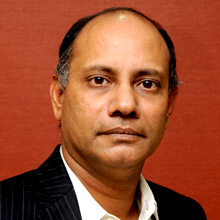
     

    NS Rajan

    NS Rajan, Managing Director, Ketchum Sampark

    While we have grown by about 20 per cent in the first half, we are witnessing headwinds gathering across various sectors which can in turn affect growth in these segments and consequently the PR business in the second half.


    Also margins could be under pressure in the coming months as the increased cost of servicing may not be compensated by incremental revenues unless the economic environment changes significantly which can lift up sentiment.


    [To be Concluded]


  • Where the economics stand for 4 key stakeholders post IPL’s fifth season

    By Ravi Teja Sharma


    Beyond the brawls and the bustups, there was cricket. And business, which became steadier and better. As millions continued to watch the cricket, IPL 5 strengthened the league’s business credentials.


    Franchises

    Their costs are mostly fixed and they are squeezing more out of each revenue stream. In the humdrum of IPL3, the operative word was ‘valuation’. The then-IPL chief Lalit Modi proudly announced two new franchises, Kochi at $333 million and Pune at $370 million.


    In other words, Pune’s owner, the Sahara group, was paying 3.3 times the priciest original franchise (Mumbai, $112 million), setting a new benchmark for valuing a team.


    More insanity followed: Modi was dismissed by a tweet, Kochi imploded, and Sahara had second thoughts about its $370 million investment. Sanity returned in season five. “Initially, it was more about valuations, not viability,” said Venky Mysore, CEO of the Kolkata team. More than any other season, IPL 5 has been about viability.


    Not of the surviving kind, but of the thriving kind. “For the first time, most of the franchises will be financially better off,” said IPL commissioner Rajeev Shukla.


    “Many have become profitable after IPL 5.” Like Kolkata. “We reduced our combined losses by about 50 per cent in IPL 4,” said Mr Mysore. “This year was equally good or better than last year…we should wipe out the remaining losses.” Chennai and Delhi say they have been profitable since season three, and that this year was better.


    The economics for a franchise are simple. Every franchise incurs two kinds of costs, and both are essentially of a fixed nature: the licence fee and player costs.


    For a metro franchise, the licence fee is around Rs35 crore a year, while the player cost is Rs55 crore. Add sundry expenses, and a franchise is looking at total costs of Rs100-120 crore. On the revenue side, there are essentially three revenue streams.


    The biggest revenue contributor is the ‘central pool’. All the money the BCCI raises by selling broadcasting rights and sponsorship goes into a common pool. The BCCI keeps part of this and distributes the rest among teams.


    With the BCCI negotiating hard with the broadcaster and sponsors, each franchise’s share of the central pool has steadily increased-from Rs29 crore in season one to Rs40 crore in season four.


    “The central payout will increase to Rs 50-60 crore this year,” said Mr Shukla. The franchises have no control over the central pool. They do have control over the other two main revenue streams: ticket sales and sponsorships, from where the good franchises raised, on an average, Rs30 crore and Rs30-40 crore, respectively.


    In both these areas, IPL-V saw the franchises, with one eye on growth and another on the bottom line, pushing new levers. Teams say they increased ticket prices and reduced the number of passes, and consequently made more.


    “Gate collections in season five would have doubled compared to earlier years,” said Rakesh Singh, joint president, India Cements, the South-based cement company that owns the team, without giving specific numbers.


    Amrit Mathur, CEO of the Delhi team, too declined to share numbers, but described ticket sales as “phenomenal”. “We limited passes only to our contractual agreements,” he said. What teams did more was to reach out to the paying fan.


    Kolkata, for example, had 10 cars going around the city and doubling up as ticket counters. The team also did corporate sales to fill up the 80,000-seater Eden Gardens.


    For next year, it is looking to convert some of those seats into hospitality boxes, whose revenue potential is 20 per cent more. Teams earned more from sponsors too by selling advertising on 10 designated spots on a player’s uniform.


    “We expect it (sponsorship revenues) to be 50-75 per cent higher than year one,” said Mr Mathur. Chennai’s strategy was to cut back on sponsors. “We wanted to clear the clutter and charge more instead,” said Mr Singh of the Chennai team, whose sponsors include Aircel, Gulf, LifeOK, Amrapali and Usha.


    Some other nascent revenue streams are gaining ground, like merchandising. “About 10-12 per cent of our revenues this year came from licensing and merchandising,” said Colonel Arvinder Singh, COO of the Punjab team. And the Delhi Daredevils is looking to lend its name to sports bars, the first of which has come up at the Delhi airport.


    For teams owned by corporates, in addition to a tangible payback, there’s also an intangible one for the main business. For example, all the branding on the Bangalore players is from the liquor and airline brands owned by team owner Vijay Mallya.


    “That has been our main priority,” said Russell Adams, vice president-commercial operations for the Bangalore team. Similarly, India Cements has used IPL to drive into markets other than the South.


    Besides the visibility from player jerseys, it has been wooing cement traders in cities in Gujarat, Madhya Pradesh and Rajasthan with a package of an IPL match in Chennai and a pilgrimage to Tirupati.


    “This was a masterstroke for us: to enter a market dominated by biggies like Ultratech,” said Mr Singh. It all contributed towards viability-of the long-term kind. And valuations, today, stand forgotten.


    Broadcaster

    Viewership addition tapered, but it’s still a critical mass watching. There’s pressure on two of the numbers that matter for SET Max. According to TAM, which tracks TV viewership, the number of people who tuned into IPL grew just 0.4 per cent this year, against 12.9-19.8 per cent in the previous ones. And they watched less.


    If they saw 4.5 per cent of all the minutes they could have in the first three years, they saw 3.5 per cent in 2012, the same as in 2011. Or, a TVR (television viewership rating) of 3.5 per cent. That said, even a TVR of 3.5 per cent is top draw, more so if it comes with a reach of 162.9 million.


    “No programme will give the pan-India reach that IPL does for two months,” said Nandini Dias, COO of media-buying house Lodestar Universal. It is why, she added, SET Max commands a 60-70 per cent premium in pricing over another programme with an identical TVR.


    This year, SET Max charged Rs5 lakh per 10 seconds, the same as in 2011 and 150 per cent more than in 2008. “Ratings fell, but we did not drop our price,” said Rohit Gupta, president of Multi Screen Media, which runs SET Max. Mr Gupta declined to disclose revenues, though he admits it is “lower than 2011”.


    A senior official from the channel, not wanting to be named, said revenues from IPL-IV crossed Rs1,000 crore, against Rs800 crore in IPL 3and Rs260 crore in IPL 1. SET Max’s original deal, struck in 2008, was for $1.02 billion (about Rs 4,000 crore) for 10 years.


    This was revised in 2009 to $1.64 billion (Rs 6,560 crore) for nine years. When the number of matches increased from 60 to 74, in 2010, this number increased further, said Mr Gupta, on a “pro-rata basis”. Back-of-the-envelope calculations show the current deal would be for about Rs 8,000 crore and that SET Max needs an average of Rs 1,050 crore a year over the remaining five years to break even.


    “IPL has become a brand that is big enough to sustain for many more years,” said Piyush Pandey, executive chairman of Ogilvy & Mather India. Added Ms Dias: “If IPL remains in the top five programmes through the coming year, it could still command its 60-70 per cent premium.”


    The other broadcaster, Times Internet, which owns the rights for international broadcast, Internet, mobile and valueadded services, and radio, expects to break even this year. According to CEO Rishi Khiani, Times Internet is paying Rs 67 crore a year to BCCI.


    It reached 26 million viewers this year-an increase of 55 per cent over 2011. “If you sell it right, there is an opportunity,” said Mr Khiani.


    Sponsors

    They got their bang, in different ways. For more, they will likely have to pay higher. IPL’s main sponsors only have good things to say about their pricey tie up. The established talk about reaching a wider audience.


    “We were well-known in the north, but now have spread awareness in other parts as well,” said Rajeev Talwar, group ED at DLF, which paid Rs 40 crore a year for the title sponsorship. The fledgling talk about IPL as the main piece of their brand strategy.


    Karbonn Mobiles started in 2009 and tied up with IPL in 2010. Sashin Devsare, ED, said IPL put Karbonn “in the consideration set of a mobile buyer.” Likewise, Volkswagen, which came to India in 2007.


    “We needed to raise brand awareness,” said Lutz Kothe, head of marketing and PR, Volkswagen Passenger Cars. “All these sponsors would have got five times worth exposure for every rupee spent,” said Hiren Pandit, managing partner with media-buying agency Group M.


    “But over a period of time, that exposure becomes a blind spot if there is no other engagement.” For example, Vodafone used ad campaigns to push specific business ideas: ‘happy to help’ in 2008, the Zoozoos in 2009 and 2010, 3G in 2011, and Internet services this year.


    In contrast, DLF was content being the title sponsor and having an on-ground presence. All sponsorship deals are due for renewal.


    “Most were done on an anticipated performance of the league,” said Basabdutta Chowdhury, CEO of Platinum Media, a unit of Madison World. “Now that it has a proven record, BCCI would be looking at higher value.” The season of BCCI hardball is beginning.


    Promoter

    BCCI’s golden goose is IPL and it is making it work overtime. Just how important the IPL is to the entity that runs cricket in India can be gauged from one statistic. In 2010-11, the IPL accounted for 48 per cent of the revenues of the Board of Control for Cricket in India (BCCI).


    Add revenues from the Champions League Twenty20, which owes its existence to the IPL, the figure shoots up to 60 per cent. IPL is BCCI’s golden goose, and the board is making it lay as many eggs as it can.


    This means birthing new revenues streams by adding more dates to a packed cricketing calendar or earning more from existing streams by negotiating hard with those who want a piece of the IPL. Both have yielded smart financial payoffs for the BCCI.


    Thus, in 2009, was born the Champions League, which essentially gives the BCCI and the top four IPL finishers a revenue kicker. The same year, BCCI renegotiated the TV deal with Set MAX and squeezed out 78 per cent more.


    In 2011, it added two teams to the IPL (one has since folded) at a valuation that was about thrice the maximum from the initial lot in 2008. Overall, the number of matches increased, which translated to higher TV and sponsorship revenues.


    The BCCI earned more. So did the franchisees, as the BCCI shares some part of its broadcast and sponsorship revenues with them. BCCI’s ‘surplus’-the equivalent of a corporate net profit-has increased from Rs 11.6 crore in 2008 to Rs 118.8 crore in 2010.


    Numbers for the last two years are not available, though the BCCI had forecast a surplus of Rs 209.9 crore for season four.


    “BCCI revenues have gone up,” is all that Rajeev Shukla, commissioner of IPL and vice-president of BCCI, is willing to disclose. Revenues could increase further as all sponsorship deals are due for renewal now. And even as it says it will address scheduling concerns, the BCCI has allowed all franchisees to play three T20 matches with teams from tier-II cricketing nations like Canada, the US, Netherlands and Ireland.


    “This will spread awareness about IPL and improve the league’s reach next season,” said Mr Shukla. And also improve the BCCI’s financial health.


    Source: The Economic Times
    Copyright © 2012, Bennett, Coleman & Co. Ltd. All Rights Reserved