Tag: Lockdown

  • Newspaper Industry in India after the Second Wave of the Pandemic


    By Indrani Sen


    Indrani SenThe Indian newspaper industry faced an unprecedented crisis last year after the National Lockdown was declared at a very short notice. Circulation fell drastically when many subscribers, particularly housing societies, shut their doors for the newspaper delivery persons for the fear of the contagious virus being carried by the newspapers or the delivery folk, leading to change is consumption pattern of newspapers. Lack of local transport also prevented the distributors and hawkers from reporting for work. This was followed by withdrawal of commercial advertising as advertisers were worried about a fall in circulation and readership and were themselves affected by choking of distribution pipelines and economic slowdown leading to loss in their sales. The FICCI EY Report on Indian M&E industry 2021 showed that ad revenue of Print came down from INR 206 billion in 2019 to INR 122 billion in 2020.


    After the National Lockdown was lifted in 2020, the newspaper industry tried its best to recover their lost grounds. As per the same FICCI EY report, it will take Print four to five years to regain the pre-Covid ad revenues level. However, the industry seemed to be recovering well during the first quarter of 2021 as TAM AdEx data for Jan-Mar 21 showed that 1350 new brands advertised on print during that period.  When compared with Jan-Mar 20, the quarter also showed 9% increase in ad space mostly from Hindi and other language newspapers. Similarly, April-May 2021 recorded better results compared to April-May 2020.


    As per TAM AdEx analysis in May 2021, when the second wave of the Covid-19 was at his peak, there was an average 58% growth in ad space per publication as compared to May 2020. However, all was not well as compared to February 2021 and March 2021, the ad space in Print saw a drop of 42% and 29% in April 2021 and May 2021 respectively. As the phased process of unlocking has begun, the newspaper publishers expect that both the ad volume and value would pick up by August 2021 and grow further during the festive season of 2021.


    It appears that newspapers were better prepared to handle the second wave of the pandemic in 2021 and the lockdowns imposed by various state governments across the country. Along with the process of gradual unlocking, the newspapers now are looking forward to recovering their lost grounds. The credibility of the printed word, the vaccination drive, revival of the corporate sector and good rain forecasts are the other factors which are expected to contribute to the overall growth of the newspaper industry in 2021. The Print industry has appealed to the government for a stimulus package and an increase in FDI in 2021. The government has not responded so far, but the industry is still hopeful of getting, some positive response though no relief was announced in terms of waiving the import duties on newsprint by the finance minister in her 2021 Union Budget.


    The newsprint prices, which saw a decline in the international market (below $300/metric tonne) in 2020, have started going up from the beginning of the calendar year 2021. The price was $670/tonne-$700/ tonne in April-May. The industry expects it to go up further. It appears that quite a few paper mills which used to export newsprint to India and other countries, either shut down their business or migrated to the businesses of producing brown papers and craft papers during last year when their business was hit due to the global pandemic.


    As India is far from being self-reliant in newsprint production, our newspaper industry, struggling to recover from the effects of the pandemic, has been hit further by this demand supply imbalance of newsprints in the international market. Many newspapers are increasing the use of indigenous newsprints to balance out their cost of productions.  However, most newspaper owners feel that this crisis of newsprint prices is not going to last for a long term and expect the international market to stabilise before our festive season in the third quarter of 2021.


    To sum up, the newspaper industry in India seems to be set on the path of recovery after a severe decline of both circulation revenue and advertising revenue in 2020. In recent times, during the second wave of the pandemic, the industry was not much affected and would have been in a better financial position if they were not hit by the crisis of newsprint prices. It is expected that by end of the calendar year 2021, their overall performance may be better than predicted earlier by media analysts.


  • Wouldn’t you want to Uncage your Books?


    By Sanjeev Kotnala

    Sanjeev KotnalaLockdown. Unlock. Partial lockdown. Night Curfew. You have experienced it all in the last year. And some of you are experiencing some form of it even now. You now know how it feels to be caged. Have you ever thought of the books caged neatly in the fancy cupboards, books racks and walls? An emotional testimony to your interest in a broad spectrum of subjects. Considering that they are not mere trophies on display. The books waiting for someone to take them out and help themselves to the knowledge that otherwise remained trapped inside. Many have never been referred to, and many will never have their pages flicked again. Some books have yellowed down with time. They silently cry and urge you to uncage the books.

    ANNUAL RITUAL

    Last week, I cleaned and dusted my bookracks. Checked the books I own. The books were spread all over and seemed like the old book bazaar of Daryaganj in New Delhi. And I realised it was time for my annual ritual:  UNCAGE THE BOOKS.

    Like every book lover, I love reading and keeping books. However, I know the books that I will never again refer to. They are just there in the book rack. I must help them find the new readers, who could be helped with the knowledge, smile, thoughts trapped within them. These books must be made to again feel wanted. I must UNCAGE THE BOOK. The books must be realise their potential instead of remaining buried in the open graveyard- the books rack and cupboards.

    Doctors, Lawyers and many other professionals are in a perpetual learning mode. They have many books they need to access with high frequency. New theories, processes and continued learning necessitate the need for new books and updated volumes. They cannot uncage the books.

    However, there are thousands of neglected books in other places. Books that have never been opened again. The pages that have not been flipped for ages. Books, with a negligible chance of ever being reread. Should they not be liberated- UNCAGED- so that someone else could benefit.

    Why not share them instead of keeping them caged? Why not pass them to people who may want to read them? Why not UNCAGE the books you no longer need?


    EVERYONE HAS BOOKS TO UNCAGE. 

    I am sure every house will find books that are waiting to be uncaged. Academic Books.

    Help books. Stories. Fiction. Non-fiction. Memories. Autobiographies. Thought leadership books. Professional books. Subject books Keys and kunjies. Exam preparatory books. Books that have served their purpose. Unless well maintained and kept like in a museum of pride, they will rot and one day- someday they will be discarded- may be sold to a raddiwaala.

    Why not just UNCAGE THE BOOKS, help someone, share the books. Extend their life. Share it with the person who wants it. Who is willing to pick it or pay at least for the delivery. Maybe for some needy people, you even pay for the delivery.

    MY EXPERIENCE TO UNCAGE THE BOOKS.

    I have been formally UNCAGING the books since 2016. The first time ever, it was challenging and emotionally draining. Now, I look forward to t. It is an annual ritual with me.

    At least more than 350 books of mine have found new readers and owners. When I uncage the book and send them on their journey to meet the new owner or reader, I take time to add a personalised message. I ask them to part of the chain. Request them not to cage the books they get from me, or they already have. I tell them to join the ‘UNCAGE THE BOOKS’ movement. Ask them too to uncage the books they no longer need. And to keep the book burial ground least populated.

    There is an added advantage. Uncaging the books is a cleansing ritual. While you select the books to uncage, you realise your interest and subjects that really interest and impress you. You create a gap, space, a void where books used to be. This acts as a push to go ahead and get more books. You become a lot more selective while picking new books.

    UNCAGE THE BOOKS 2021.

    This year too, I am uncaging more than 50 books. You can find the pictures of the books being uncaged in my weekly column ‘KotMartial’ on mmxindia.com and my social media accounts like Facebook, LinkedIn and Instagram.

    Some friends who know of the rituals have already blocked a few of the books. But a large number of books are open to the public.

    HOW TO GET THE BOOKS I UNCAGE.

    So, pick the book you want and let me know. Put a message on any of the social media account or this article. Please mention the books you would want along with your name and city. We will get to the address at a later date.

    I follow the ‘First Come First Served’ rule. But at times, I override it. As I wish to spread books and the UNCAGE THE BOOKS thought as wide as possible, I try giving away not more than four books to a person. This also helps to ensure these uncaged books are relay read and the purpose of Uncaging is served. YOU CAN FIND THE PICTURES OF BOOKS BEING UNCAGED IN 2021, ACROSS THIS ARTICLE.  All Chanakya books go to one place one reader – as I believe interested person should read them all.


    SPECIAL SET FOR ADVERTISING 

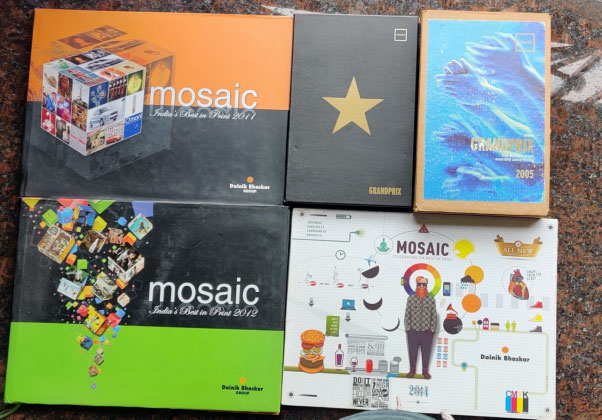
    Here is a particular set of books and CD. The three volumes of Mosaic that you see in the picture are a compilation of best print ads in and around 2008-1014. And the CD are the best TV ads making to Cannes in the early part of the century. I hope some agency, consultancy, and better, some institute will pick them. They go as a set, or they go to Raddi- the readers decide.

    And then there is this set of National Geographic  a and Traveller, which I think some library or resort should pick up.


    DON’T UNCAGE ALL BOOKS

    Keep the books you think you will refer to again. Check out the books that are dear to you and the ones you will not want to uncage. Don’t uncage the ones you plan to read again. I have my own set of books; I do not intend to UNCAGE.

    I understand the emotions people have with books and why they cannot come to terms with the concept of UNCAGE THE BOOKS. It is fine, I was like that before. Books shifted stations and house with me. Till 2014 when for the first time, I tried uncaging the books.

    DIFFERENT WAY TO UNCAGE.

    If you are a regular traveller, you could always carry the book you want to UNCAGE and leave it with a surprise note for the next passenger to find it. Come to think of it. You could be starting a chain reaction. Suddenly and surely, you will contribute to books finding more readers. I have in the past left books in the seat pockets of aircraft. I leave them with a cheeky note for the next passenger who may find it. Move on, share the books, un-cage them from their graveyard. However, in the current Covid-19 scare, one does not really suggest this pattern. In fact, my first book by Priya Kumar, I think I found in an Indigo flight.

    GIFTING IS NOT UNCAGING.

    Gifting books is a different game. There you consciously make a choice. You try matching the reader and the title or the message. I do that. I gift select books to people I believe will best benefit from them. I do that regularly. I find books a far better gift on occasions like birthdays, farewells, anniversaries etc.

    My favourite book to give away has moved and changed with time. Initially, the gift book would be THINK AND GROW RICH by Napoleon Hill, which later changed to TUESDAYS WITH MORRIE by Mitch Albom. For some time, I gifted  CATALYST by Chandramouli Venkatessan. I then moved to gifting his second book, GETTING BETTER AT GETTING BETTER. Then for some time, I gave the book SPRING- BOUNCING BACK FROM REJECTION by Ambi Parameswaran. My current favourite for gifting is ‘THE FIVE PEOPLE YOU MEET IN HEAVEN by Mitch Albom.

    IS THERE A START-UP IDEA IN ‘UNCAGE THE BOOKS’ 

    I have been trying to start a conversation. No, I have not really moved further on it. Last time, I did try to hint this to an industry association to encourages this sharing of knowledge. They have to make space available on their platform for people to share the books they want to uncage. Visitors could identify the book they want – know the delivery charges- pay them upfront, and get the book. Sounds silly. It could be a start-up idea. And if someone does see a possibility, I am willing to join hands and start it up.


  • Avik Chattopadhyay: A year-full of learnings!

    Avik ChattopadhyayBy Avik Chattopadhyay


    When the editor asked me to write on the first anniversary of the “Lockdown” I found it a very daunting task. There has been a lot written about it already, covering aspects like socio economics, science & technology, business & employment, politics and even cricket. What could I possibly write about that could be useful to the reader, not to pontificate but just stimulate thought?


    Then I came across two pieces of communication that provided the spark. One was a wonderful short video by my friend Gaurav Bhagat on the year gone by. Gaurav summed it up by saying, “Knocked down but not knocked out. Broke but not broken. Hurt but still fighting.” The other was a hilarious meme that I share here. Its in Hindi but I am sure you get the message.


    The last 12 months have been about revelations. I shall make it a point to check if Nostradamus had anything to say about 2020 in any of his “centuries”. We have seen contradictions and opposites co-existing, even stronger than before.


    The year has seen the good and the bad sides of human life in equal measure. There have been enough things to feel embarrassed about as well as pat ourselves on our backs. The pandemic and its world-wide disruption and devastation did not see any one side clearly winning. We have behaved, responded and pro-acted to the same situation and stimuli in different manners, driven by culture, belief, economic standing and provenance.


    And that to me is unique learning for any brand as it teaches me to take a clear stand rather than sit on the fence, observe and listen more than always speak and, have the patience for the long-term rather than immediate numbers.


    So, here are certain sets of opposites that have survived the pandemic together till now.


    Heroes and Heroics


    Across the world we got our new “avengers” in the form of scientists, doctors, healthcare workers, law enforcement forces, municipal teams and delivery people. They are the ones who have sustained in their selfless service.


    And then we had heroics in the form of banging vessels, lighting lamps, going to the beaches, and signing songs across balconies. Public frenzy has been stirred up to bizarre levels. And we have had almost every product protecting us from the virus up to 99.99%. Waiting for an automobile brand to make a similar claim soon!


    Democracy and Demagogy


    The US elections was a stellar example of the power of the electorate still the most potent tool in preserving the freedom to choose as well as reject. Money and fear could not be the only factors that would decide results.


    At the same time, we have seen unabated rise in demagogy. Selling fear and pandering to baser levels of entitlement and anxiety have worked quite well around us. Social divides have become deeper on lines of faith and class.


    Religion and Rationalism


    One of the world’s most profitable businesses has been used to the hilt across the world as a cure for the virus. None has held itself back from making claims on being superior to the others in protecting its faithful. Messengers of the almighty have continued to expose people to the virus, from churches to mosques, synagogues and temples, from congregations to holy dips.


    Thankfully, the rational counterforce came out with guns blazing. The occasion, unfortunately, was tailor-made for the rationalists to once again impress upon the world at large that scientific temper and blind faith are not part of the same ‘venn diagram’.


    Social and Hyper-personal


    Being engaged on social media platforms is what kept us engaged through the year, from the serious to the ridiculous. Information evangelists have done a stellar job of sharing useful documents, updates, insights and all forms of help. While the urban middle-class benefited from online links to movies and comic books, the migrant workers got to know details about trains and buses leaving for their hometowns. Proliferation of information also saw a positive trend of people verifying messages and forwards before sharing them. Services like Snopes and Alt News are part of the daily routine now.


    In tandem, going hyper-personal with solutions and services has become a near reality for many brands now that are primarily digital. Conversational AI has finally seen the light of day and the consumer has become a digital cocoon. We are actually comfortable allowing more people pry into our private lives and behaviour in the hope that it brings greater convenience and value.


    Protectionism and Universalism


    Nations have become more inward looking. Trade barriers have been built to protect one’s own turf. One is okay with foreign capital but not goods. There is a race to be self-sufficient, without much thought to how much of that is enough. In most cases, it is more of rhetoric than ground-level investments in education, health and research which form the foundation of a confident and credible nation. Somewhere, this and nationalism have been rolled into one dangerous form to create clones of the erstwhile Iron Curtain and current North Korea.


    Thankfully, just like the rationalists, the universalists have created a counterbalance and demonstrated that there needs to be greater collaboration and openness across nations once the pandemic normalises like influenza. Most of the vaccines have been created by cross-national teams. Countries making vaccines are shipping them across the world in an act of diplomatic bonhomie. Medical teams from one country have gone to others to support. Know-how and designs for critical care equipment have been shared free of cost. It goes to prove that no one nation has the solution to all of her problems by herself.


    Remotely Working and Remote Workers


    The white collar has entered a new work ethic now. The concept of work-life balance has been redefined. A complete industry has evolved to create the WFH eco-system. Hopefully it will be sustainable as we are already experiencing mild backlashes with people wanting to delink workspace from home. New remote workspace models will become established for those who do not an office to return to. Needs to be seen how non-metro and smaller towns take to this change.


    The blue and brown collars have become more vulnerable now. The ‘reformed’ labour laws and growing automation will impact them more adversely than we have calculated and provided for. The new jobs created will be qualitatively inferior to what most of them lost. This will be a people scarred for life for the administration shunned them when they were weakest. Their children will be a generation that will grow up with a grudge, just like when the jute and cotton mills of Bengal and Bombay [Mumbai] were shuttered.


    Anxiety and Activism


    According to Maria Cohut in Medical News Today, the average human being is fraught with increasing anxiety due to layoffs, job insecurity, imbalanced life, home-schooling and coping with a new way trying to make lives secure for oneself and the family. This will see new patterns of responses and behaviour. The same emotions will find different manifestations in consumption. The ever widening wealth gap and ever-growing clasp of big business are surely uncomfortable facts to grapple with.The mind is unsettled for most of us. We need release valves as well as calming corners.


    Thankfully, activism has taken on the task of a huge release valve for the world in these trying times. Across the world, movements like BLM in the US, anti-CAA & Farmers in India, pro-democracy in Russia, Ukraine, Turkey and Myanmar, electric mobility & green tech across the world have kept us awake. Sustainability has become a key touchstone for business. Transparency is being demanded in all aspects of nation building, from governance to non-government social orders. At constant clash with demagogy, one would have imagined that such movements would have taken a back seat. Luckily no!


    A couple of days back, in an interview with Alec Russell of FT Weekend, Yuval Noah Hahari commented that people will forget 2020 soon! Man does not like remembering ‘natural disasters’, though this one has had political overtones. There has been more written about World War 1 that took lesser lives than the Influenza Pandemic, though they were almost concurrent.


    I started off this piece by wondering what could I possibly write and now I have rambled on for 1400 words already. Tells you about the year gone by.


    I end with some stanzas from a beautiful Uriah Heep song called “Love in Silence”. Guess they sum up my feeling far better…


    This is our world, our future

    These are our times.

    I believe we have to see

    In silence there’s no mystery.


    The world is so busy talking

    What do they know?

    They’re missing out on being alive.

    Words are turning into lies.


    Love is the only direction

    That leads to truth.

    Knowing in your heart what’s right

    You’ll walk upon the sea of light.


    There’s something

    In love and silence,

    That you can find

    Know yourself and all around

    Listen to the only sound


  • One year of the Lockdown: Gov’s Biggest Failure was Media’s Biggest Failure


    By Ranjona Banerji


    Ranjona BanerjiFor the past week, we’ve had several reminisces on the beginning of the pandemic lockdown, across the world. Of course, we knew about the virus, later named Covid-19, earlier than this. But we didn’t take it seriously, because it was like so many warnings about dangerous viruses which hadn’t become pandemics.
    Until this one did.

    Today marks the date India was put into lockdown. And like all announcements made in today’s India, this one was full of dramas and promises: Very short notice, very severe conditions, large assurances that the virus would be “vanquished” in 21 days when the lockdown ended and most importantly, that the time we were indoors would be spent by the Government to augment health infrastructure.

    The lockdown was definitely necessary, and the Centre did not balk at this tough decision. Sadly, a mere lockdown was insufficient without the promised augmentation.

    But the biggest official failure of those early days was the lack of provision made for India’s neediest: daily wage labourers, street vendors and migrant labour. And what was the government’s biggest failure was also the media’s biggest failure. It took the mainstream media, particularly television which has the widest reach, far too long to accept and acknowledge the tragedy being played out on India’s streets. Thousands and thousands walked home in the increasing summer heat because they had no means to survive in the cities where they had moved to work. India’s invisible workers remained invisible even as they walked in plain sight.

    It took smaller, independent media voices, the digital media and the print media to bring the horror to public attention. Barkha Dutt and her Mojo Story as they walked with the migrants for 100 days was the most prominent and served as a wakeup call for some TV channels.

    https://www.youtube.com/channel/UCrdPiSPVW0rtRsI002BX8iw

    This analysis from Outlook, from end May 2020, looks at how India’s economic policies impact migrant labour.

    https://www.outlookindia.com/website/story/opinion-indias-migrant-workers-conundrum-is-not-just-about-economic-inequality-but-social-too/353682

    Most damning are the first three paragraphs of this exhaustive report by IndiaSpend underlines the severity of the crisis:

    “A day before the lockdown was announced on March 24, 2020, the government told parliament that “it is not feasible to keep record/data of migrant labour workforce” because migrant workers tend to move often in search of employment. But over the next 68 days of the lockdown, as an unprecedented migrant worker crisis unfurled in India, it became clear that reliable data were critical to developing an effective migrant worker policy.

    “Between March 25 and May 1, 2020, distressed migrant workers, stranded without jobs, savings, shelter, food, transport or any organised support system, began long treks back home with their families and sparse belongings. The homeward exodus of around 11.4 million migrant workers–more than the population of Uttarakhand–resulted in at least 971 non-COVID deaths, including 96 workers who died on trains.

    “Five months after they left the cities where they worked, migrants started returning because of the lack of employment opportunities in villages, showed a rapid assessment survey. However, the pandemic had caused an economic contraction by then, and the number of poor Indians (with incomes of $2 or less a day) rose by 75 million. In April 2020 alone, 122 million Indians lost their jobs, a 30% fall in employment over the previous year.”

    https://www.indiaspend.com/governance/migrant-workers-no-reliable-data-or-policy-737499

    This article from The Indian Express looks at a year of misery:

    https://indianexpress.com/article/opinion/columns/coornavirus-national-lockdown-impact-migrant-workers-exodus-women-7241944/

    And this report from the Hindustan Times highlights how the exploitation continues, a year on:

    https://www.hindustantimes.com/india-news/fare-deducted-from-pay-of-workers-who-flew-back-to-rejoin-work-j-khand-report-101616564702356-amp.html

    Yes, all these links are from long after the migrants walked home: two are from this week. If you do an internet search for the coverage of the migrant workers as it happened, you get more academic reports than TV coverage. That is a telling indictment of the failure of large sections of the Indian media.

    However, if you search for stories for how we clapped, banged our pots and pans and sang “Go Corona Go”, you will find many reports, gasping with excitement at our amazing response to Covid19.

    We all know the reasons why.

    Even today, we have journalists who cannot hold the authorities to account, in spite of the enormous mistakes made and the lies told.

    This, to me, was and is our biggest media failure for the pandemic.

    With numbers still rising, next week let’s look at the small band of health reporters who tried to walk the publicity minefield laid out by their colleagues to try and decode both the virus and the official response to it.

    Please mask up and get yourself vaccinated as soon as you can, if you are within the allowed categories.


    Ranjona Banerji is a senior journalist and commentator. She is also Consulting Editor, MxMIndia. Her views here are personal


  • MxM Live with Ajay Gupte


    By A Correspondent


    Wavemaker India celebrates its third anniversary on Monday, November 9, and we speak with Ajay Gupte, CEO – South Asia, Wavemaker, on the occasion.


    Gupte took charge in January 2020, and we know of the tumultuous times across the world after that. A coincidence of course. The marketing services business was badly hit given the events and advertising spends going south post that.


    But in this period, Wavemaker – part of WPP’s GroupM network – has managed to reinvent itself and forge ahead, says Gupte. There is a beefing up of the top deck. Some noteworthy work. And development of analytical tools that are now adopted within Wavemaker global framework.


    In a freewheeling interview with MxMIndia Founder and Editor-in-Chief Pradyuman Maheshwari, Ajay Gupte speaks on a cross-section of issues around the business, around Wavemaker, his settling back into the country, the job, Gurugram versus Mumbai, the rivalry with sibling Mindshare. And more.


    Watch. Enjoy. Like.


  • Godrej Professional on salons are now #hairforyou

    By A Correspondent


    Godrej Professional, a brand with products in hair colour, care, styling and keratin from Godrej Consumer Products Limited (GCPL), launched its #hairforyou campaign as an extension to the Suraksha Salon Programme, with the objective of helping the Indian salon industry get back on its feet and reinstate customer confidence to visit salons.


    Said Sunil Kataria CEO – India and SAARC, Godrej Consumer Products Limited (GCPL): “Godrej Professional always endeavours to support the Indian salon industry and with the imposition of the lockdown, the beauty establishments suffered with no business. Now, we wanted to communicate how salon establishments are ready to welcome customers once again with a revived importance of hygiene. Through this initiative, Godrej Professional aimed to show that hair care no longer needs to be neglected and that with the right safety measures in place, clients can have an immersive salon experience.”


  • Post-Covid Challenges: Hindi GECs will be Tested


    By Shailesh Kapoor


    The pandemic is still all around us. Fatigued from a long, early lockdown, and facing dire economic consequences, India has begun to open up slowly. But we are nowhere close to “normal”. Not even close to the “new normal”, an oft-bandied phrase that means different things to different people.
     

    The entertainment sector is preparing to take small steps towards normalcy. Shooting of TV serials has started in some markets, and others will follow in July perhaps. It will not be the usually bustling, chaotic shoots that we are so used to. With limited resources at hand, the frills and the overheads will be cut out. This may pave way for cost-saving ideas in the long run. But that’s another topic for another day.


    There’s a lot of talk of how post-Covid media consumption in India (and the world) will look like. I wrote about prevailing “lockdown myths” in May, expressing my view that fundamental change in habits is not as easy as many are suggesting. But much as habits won’t change, the lockdown has created a break in them, which allows for disruption, offering opportunities in particular for weaker TV channels to come back stronger than before, and challenge the leaders. Of course, that is easier said than done, especially in categories like Hindi GEC, which have their own share of problems.


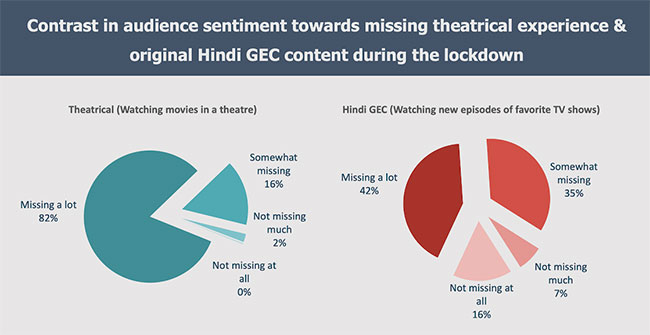
    When Ormax Media released the findings of its research (see chart above) stating that the Hindi GEC audience are missing original episodes of their favourite serials a lot less than they should, the reactions from those involved ranged from scepticism to outright denial. Unfortunately, one can’t even say the reactions were surprising.


    Using ratings to predict audience sentiment has been an age-old fallacy in the TV industry. We saw that back in 2006-2008, when the growing audience resentment towards the ‘K-serials’ was met with a standard “but they rate so well” response. It took the launch of Colors in 2008 to prove that a sentiment just needs a good catalyst to convert into behaviour.


    Even though news and movies have made inroads into primetime family viewing during the lockdown (as indeed over the last 3-4 years too), it is safe to say that GEC content will remain the staple primetime diet of a very large section of the universe. But what the chart above tells us is that a sizeable proportion of this large section is not giving the Hindi GEC category (the results will be different and significantly better for regional GEC categories) the love it should get. The relationship between Hindi GEC content and the viewer is now less emotional and more ephemeral in nature.


    Some say this could be simply a function of the times that we live in, where attention spans have gotten shorter, distractions have increased, and concepts like loyalty and appointment viewership are things of the past. But there are multiple reasons to disagree with that line of thinking. For one, the regional categories are faring much better. Secondly, if distraction and clutter was the driving force, it should have reflected in a geographic skew. But that’s not the case. The metros, the mini-metros and the small-towns all perform equally poorly on the question asked for the chart above.


    Will there be post-Covid viewership attrition for Hindi GECs? A drop of more than 5-10% compared to pre-Covid times is unlikely in the near future. But the ground cannot be more fertile for one of the top players to sow the seeds of long-pending category evolution.


    Streaming will not take away TV audience. But certain TV channels and genres have enough other competition on TV itself to contend with anyway.


  • Lockdown Stars: An Actor Who Acted, A Reporter Who Reported


    By Shailesh Kapoor


    Two-and-a-half months into the lockdown (or Unlock-something now, I have lost track of the nomenclature), the pandemic continues to loom large, especially here in the city of Mumbai. Yet, as if almost bored of having kept their hand on the pause button for far too long, the powers-that-be have decided that life must go on. The economy cannot afford any more damage, even though it can be argued that a large share of the damage already done was preventable in the first place.

    With no shootings, releases and promotions, celebrities across media have been locked up in their homes, waiting patiently (or impatiently) like all of us. Many of them have put up content on social media to engage with their fans. Karthik Aaryan has his own little talk show going, Salman Khan has released three music videos on last count. It’s difficult for film and TV stars to stay relevant in such times, and everyone is trying their best to not go out of sight and hence out of mind.

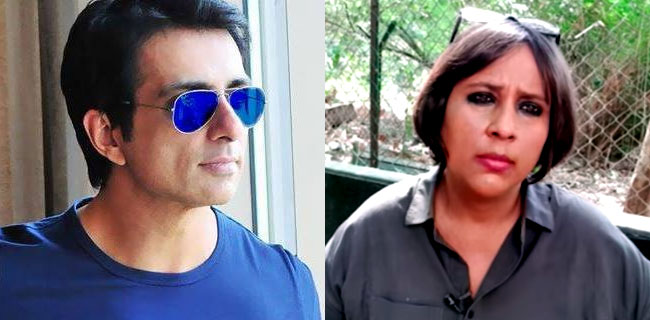
    But the real stars of the lockdown are not those on YouTube, Instagram or TikTok, but those on the ground. If I have to pick media personalities in India whose work from this period will be remembered much after the fun and the shot-from-home messages on social media are forgotten, there are just two names that stand out at a national level: Sonu Sood and Barkha Dutt.

    Sonu Sood, a reliable film actor seen playing supporting parts or the antagonist in big-budget Hindi and South films, took to contributing towards solving the migrants crisis. His method of solving, however, was not a donation or an awareness campaign. He actually got down to getting it done, hiring buses and even a flight, to transfer large number of migrants to their destination.

    It is well understood by now that the migrants crisis in India was grossly under-estimated when the lockdown was announced first in March. No one saw this problem coming up in the first place. But 75 days later, the migrants are still on the road, waiting for a bus or a train ride to take them back home. Ironically, it’s now time that we are “opening up”.

    Often, the administration’s failure requires citizens to step in. Sood’s efforts are a reassuring sign that some celebrities (however few) can go beyond thinking of their own self-image and its marketing. It is way too evident that Sood is not doing this for any publicity or perception building. His passion and honesty towards the mission to get numerous migrants back to their homes is palpable in his social media posts and his interviews. In an age of orchestrated media appearances and cultivated image building, Sood has shown a different way to think to many of his co-actors.

    Barkha Dutt has been on the ground, reporting on Covid-19, the migrants crisis and the healthcare infrastructure for more than 80 days now. It has been one relentless pursuit, one story after the other. Dutt’s penchant for field reporting has been well-known since her reports from the Kargil War in 1999. Even as ‘seasoned’ TV journalists (barring a couple) continue to report (and conduct inane debates) from the comfort of their studios, Dutt has shown them what true journalism in such times is. Many of them will hate to admit it publically, but even her harshest critics would have developed a newfound admiration for Dutt.

    Dutt has been slammed incessantly on social media for years for her liberal, anti-Right political leaning. Fighting that branding in an era of right-wing fueled nationalism, Dutt has done 80 days of strictly non-political reporting, each story more engaging the one before. This is some relentless, tireless pursuit of the truth. Dutt has shown her journalist counterparts the true power of their profession. Even if the old hats turn a blind eye, she would have inspired many young guns in the new crop of scribes coming up. After all, a much-maligned profession has found a new endorser.


  • Will OTT consumption trends last beyond the Lockdown?


    By Indrani Sen


    Starting March 25, Covid-19 imposed four phases of a lockdown over 68 days in India. We have seen many changes in our Media & Entertainment industry during this period. The rise of consumption of video streaming or OTT platforms is a major one among the various changes. As we enter the Phase 5 of lockdown with gradual unlocking of restrictions, the questions which are foremost among the various sectors of the M&E industry ‘will the gain made during the Lockdown last/ can the loss made during the Lockdown be reversed?’


    How long does it actually take to form a new habit? Maxwell Maltz, a plastic surgeon published his thoughts on behaviour changes in an audio book called Psycho-Cybernetics which was not only a blockbuster hit, but also influenced thinkers like Zig Ziglar, Brian Tracy, Tony Robbins etc. Maltz’s submission “it takes minimum 21 days to form a new habit” was shortened to “it takes 21 days to form a new habit” and the ‘21 days’ myth was born.


    There have been other scientific studies on the subject and a study by Phillippa Lally published in European Journal of Social Psychology found that on average, it takes minimum 66 days before a new behaviour becomes a habitual one. Though we have had 68 days’ of lockdown, the consumption of OTT platforms did not increase at one stroke at the beginning of Lockdown, but has increased gradually over this period. Still, it would be fair to assume that a large percentage of the viewers contributing to increased OTT consumption is on the verge of forming a new habit which is likely to last as we slowly emerge from the lockdown.


    From only nine in 2012, today the number of OTT platforms in India now stands at 35. The technique of personalisation of content for individual viewers has been helping them to increase their subscriber base which in turn has started attracting distribution of recent movies and other interesting contents. According to TAM AdEx data, the OTT platforms have been advertising aggressively during the Lockdown period on national and regional TV channels across different genres. Most of the platforms have been rewarded with growth of paid viewers and rise in viewing time.


    Apart from the above increases, what other trends we can expect to emerge in OTT viewing in India? As the consumption of OTT platforms increase both vertically and horizontally, the bandwidth required for delivery would continue to remain as an issue. The Cellular Operators’ Association of India has already asked OTT platforms to limit the quality and quantity of video to reduce the strain on the cellular network infrastructure.


    The shift of OTT viewing from small screen to large screen would be a trend to watch out for. As we would be living under the cloud of COVID 19 till an effective vaccine is discovered and is available globally at an affordable price, we will be accepting ‘new normal’ in various wakes of life including spending more time at home with family. The urge to view content together as well as the limitations of the broadband internet may lead to a shift of OTT viewing from the small screen of the mobile to the large screen of TV, a fact which was highlighted in the recent KPMG study.


    Another trend to watch out for would be a shift in prime time viewing of OTT platforms due to WFH and early return from work to home due to night curfew.  A recent article in Financial Times stated: “According to a recent survey by mobile marketing platform InMobi, 46% viewers are watching more content online. Another consumer survey conducted by Hammerkopf has found that OTT consumption primetime has moved to 7 pm onwards, as opposed to 10 pm-12 am before.” (https://www.financialexpress.com/brandwagon/how-is-coronavirus-impacting-the-streaming-platforms-with-an-increasing-appetite-of-viewers/1919916/).


    Various websites have recently carried articles on the ad spend on OTT platforms based on the TAM AdEx report of January to April 2020 showing that ad insertions doubled from 16000 in March to 33000  in April on this medium. An article on www.warc.com made an excellent analysis of the same ( https://www.warc.com/newsandopinion/news/adspend-on-ott-platforms-double-as-advertiser-mix-shifts-in-india/43633) pointing out that while some  categories/advertisers/ brands withdrew their advertising from OTT platforms, many new categories/ advertisers/ brands started advertising in their place. The churning of traditional to new advertisers would be the third trend that we can expect to see in near future on OTT platforms.


    Could there be a negative impact on the Lockdown on OTT business? If there is a further spike in Coronavirus cases after unlocking and the Government is forced to impose Lockdown again, then the economy may take a grievous down turn due to prolonged Lockdown resulting in a severe cash crunch and loss of employment. In such a situation, there may be de-growth in subscription of the video streaming platforms along with de-growth across M&E industry.


    The OTT platforms have restructured the content creation and distribution in the entertainment industry and it appears that the Lockdown would be acting as catalyst to accelerate the growth of this sector and the current consumption trends would last beyond the Lockdown period.


  • Lockdown Myths: Will Entertainment Habits Change Permanently?


    By Shailesh Kapoor


    The last two months have seen fundamental shifts in entertainment consumption trends worldwide, including India. The Lockdown has created more demand in terms of viewing minutes, and the absence of original entertainment content on television has led to large-scale disruption. Audience mood and priorities are also different, leading to significant alterations in the genre profile of the content being consumed, e.g. news showing 200% growth in consumption. OTT has found new takers, and some films planned for theatrical release are beginning to release via the OTT route.

    These shifts in consumptions have triggered off notions that entertainment consumption in India may have fundamentally changed forever. This is nothing more than a recency bias, whereby too much importance is attached to what’s happened in the immediate past.

    The truth is: Habits formed over years, even decades, don’t break in three months. As we open up and life begins to limp back to normalcy, despite a Covid threat looming large, old habits, needs and tastes will return.

    Here are four ‘myths’ about the future of entertainment consumption in India, that one should be highly sceptical about believing:


    1. Mythology is the next big thing on TV

    Mythological content has managed to generate talk value because of the roaring success of Ramayan and Mahabharat on Doordarshan during the lockdown period. But mythology has been big on GECs for many years now. It is a genre with the best success rate, with more than 60% shows being hits (vis-à-vis an industry average of less than 20%). The issue with mythology is that there are only so many relevant stories and characters around which such content can be created. Shows over the last decade have covered this entire gamut. In fact, there have been two, even three, shows on some of them.

    Mythology is highly suited for family viewing, and hence, will be highly relevant for years to come. But the search for new ideas is getting progressively difficult. The success of Ramayan and other reruns tells us that the genre has holding power. It’s for content creators to find interesting story opportunities. But to say that mythology is now “in” is fallacious, because mythology was never “out” in the first place. Much like family viewing, which is, bizarrely, being described as a “new trend” on television!


    2. Newspaper readers will shift to digital news

    Print readership has not been on the ascendancy. But over the last few years of digital penetration going up, the good old newspaper has managed to hold on to its constituency. During the Lockdown, disruption of printing and delivery in the supply chain has led to a temporary break in the habit. But it’s not a happy break for readers who love the feel (and the smell) of newsprint in their hands every morning. This lot is older-skewed, and the habit has been formed over several years. You can expect them to value their newspaper even more now than before.

    The larger threat to the print category is the aging of its core reader base. But that’s a long-running concern and a few weeks of lockdown would have done very little to worsen it.


    3. Nostalgia will be a big trend in the years ahead

    While the above two predicted “trends” can still be debated, I find the one about nostalgia particularly silly. This talk has been fuelled by Doordarshan’s move to bring back its old shows, and even launch a full-fledged channel called DD Retro. Prime Video’s recent show Panchayat was appreciated for its leisurely view at rural life, and was compared to the old style of storytelling we saw on Doordarshan in the late 80s.

    But to believe that this will continue to an idea to cherish once we are back to the routines of our lives is outlandish. Pace of life is fundamentally altered right now. Over the last few years, audiences complain about they have progressively lesser time available at hand with each passing year. The Lockdown breaks that pattern, and with the slowing down has come the opportunity to savor the past. But it will take just one day (yes, just a day) of return to the regular life for this mode to switch off. Anything else you hear on this is just wishful.


    4. Audience would rather watch films on OTT than visit theatres

    This idea is being propagated over the last two weeks, once the announcement that films like Gulabo Sitabo and Shakuntala Devi will skip their theatrical run and release directly on OTT (both on Prime Video). Unprecedented times may call for unprecedented measures, but once better times come, cinema will make a solid comeback. The need to visit theatres is less of a content consumption need and more of a social need. Many film fans, who look at theatres as only a way to watch cinema, miss this point. Much like shopping and eating out, going to the movies serves a purpose that cannot be replicated at home.

    Going to the movies may evolve. What kind of movies people go to may change. But six months of theatre closure won’t kill the habit to consume a medium that provides a unique, larger-than-life experience.


  • Scenarios beyond Covid-19: Rebound, Reboot, Reinvent


    This article courtesy Nielsen

    Governments around the world are edging toward plans to exit mass population lockdowns, albeit at different speeds and in different ways, but the persistent questions for business are around what the future holds and how it should be navigated.


    In response, Nielsen has identified three distinct time horizons for global market regeneration beyond the novel coronavirus (COVID-19) global health emergency and attached likely scenarios to each. The three-tiered framework identifies the conditions for businesses to Rebound, Reboot or Reinvent as they confront expected unprecedented recessionary conditions.


    With trillions being pumped into economic stimulus packages, yet thousands still dying of COVID-19 and some countries confronted by the prospect of ongoing population lockdowns, the question of how to reconfigure economies is significantly dependent on the behavioural changes taking place among the world’s consumers.


    Nielsen’s global intelligence team has undertaken an initiative that takes into account global macro conditions such as unemployment, bailout packages, and interest rates and ties them to ongoing FMCG sales and attitudinal inputs from consumers around the world. From there, the team examined common threads of consumer behaviour that tied to how the disease was being managed and the response of governments to support citizens through health and financial care.


    The findings led to three horizons being established that reveal significant new and adjusted consumer behaviours that will lead to different types of demand in terms of what, where and how consumers make purchases. They also point to a series of common characteristics likely to be exhibited by consumers over time. All of these are based on the conditions currently in play to manage the virus on a global basis.


    “Much has been made of comparisons to the 2008 global financial crisis, but this situation doesn’t make for accurate comparisons. The circumstances back then were fundamentally different,” said Scott McKenzie, Nielsen Global Intelligence Leader. “Thousands weren’t dying each day, millions weren’t locked in their homes indefinitely, businesses weren’t ordered to close their doors, kids were still in school. The impact of this will be profound and more far reaching than anything we’ve seen in our lifetimes. The pace of change is also extraordinary.”


    The new Nielsen framework extends a set of six consumer behaviour threshold levels that provided early signals of spending patterns during the first three months of the health crisis. It lays out three possible timelines for each of the scenarios:

    :: Rebound: An early return to normal living conditions (schools, workplaces, stores, restaurants etc re-open) at some point in the third quarter of 2020.

    :: Reboot: A medium-term scenario that is positioned in the fourth quarter of the year.

    :: Reinvent: A longer-term view that places the world in a general return to normal living conditions at some point in the first half of 2021.

    COVID Exit Scenarios

    “The world is fundamentally recalibrating right now. Consumer habits are changing at pace and understanding those changes, in the context of these scenarios, will be critical as businesses prioritise how they too recalibrate to meet the changed circumstances driven by COVID-19,” said McKenzie.


    The framework points to a series of behaviours and habits that will be accelerated in each of the scenarios. In some cases, changes that may have taken years to evolve could be in place in a matter of months.


    Already, this year, Nielsen has tracked significant changes to the ways people shop and the ways they think they’ll behave after the Covid-19 crisis comes to an end, particularly with regard to technology and the use of digital platforms.


    Taking advantage of Nielsen’s global footprint, the intelligence team was able to shape the new framework by also taking into account consumer sentiment, such as that measured in Europe, where many expect the impact of Covid-19 to be long lasting. And to test hypotheses using data out of markets such as China and South Korea that are further along in dealing with the disease and its impact.

    Regeneration Srategies

    In each horizon identified by Nielsen, a different set of factors and respective consumer behaviours can be identified.


    In horizon No. 1, “Rebound,” a series of health indicators, actions by governments and business, and market conditions point to a rebased “normal” that has some of the following as a societal response:

    Horizon 1: Rebound


    In horizon No. 2, “Reboot,” the societal response has a different set of focal points and positions the economy for meaningful regeneration toward the end of the year.


    Horizon 2: Reboot


    In horizon No. 3, “Reinvent,” as the name suggests, a complete reinvention is required and may not play out until the first half of 2021. The consumer behaviours and characteristics are sharply amplified compared to horizons No. 2 and No. 3:

    Horizon 3: Reinvent

    With each of these time scenarios, the baskets of shoppers will also change. The repertoire, pack sizes, brand choices, product origins and more will be reconfigured as shoppers adjust to changed economic circumstances and a sharper focus on their health and safety.


    Two clear sets of consumers will also emerge – those with insulated levels of spending, often those who have maintained employment and remain shielded from day-to-day economic impact and those who will be restrained in their spending habits due to unemployment, furloughing or other COVID-19-related challenges.


    This polarisation of spending is expected to drive new considerations for retailers and brands as they urgently examine the range of products being offered and the pricing dynamics within.


    This article originally appeared on Nielsen. 


  • Das ka Dum with Dr Bhaskar Das: Given the way people have not been practising social distancing, do you think there will be a Lockdown 5.0 too?

    Bhaskar Das

    Okay, we obviously didn’t expect BD to give a ‘sureshot’ answer given the uncertainties that lie ahead, but we asked him nevertheless. Without any further ado, here’s the May 18 edition of Das Ka Dum with Dr Bhaskar Das of course. Read on…


    If you wish to access the archives, please go to the Das Ka Dum tab on the website’s top navigation bar.


    Q. Lockdown 4.0 starts today. From the way things have been going – people not practising social distancing – do you think there will be a Lockdown 5.0 too?


    A. Whatever numerical versions we ascribe, I strongly feel that till a vaccine arrives on the scene, some form of Lockdown has to continue, albeit in a deaveraged format across the country, depending on the spread of Covid-19 in the red, orange and green zone. In the interest of life and livelihood, restricted conditions of living would be new route to freedom from the virus. We have to learn to peacefully coexist with an invisible enemy to mitigate its  visible impact.