Tag: Lloyd Mathias

  • Could Nestle have handled it better in a world of social media & 24×7 News TV?


    By Dyanne Coelho


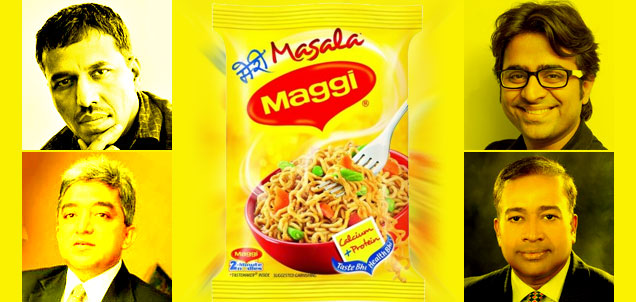
    The boycott, the pull-out of stocks and the subsequent bans have put the popular Maggi noodles in an avoidable mess. The brand has been brought under severe scrutiny for high content of lead; above the permissible limit as well as MSG; a taste enhancer. While at a press conference convened last Friday, Paul Bulcke, Global Chief Executive Nestle, defended the brand saying it is safe for consumption, regulators point out otherwise. The controversy has hit Nestle hard and communication with the consumers and others seems to have taken a backseat, causing distrust and confusion. MxMIndia spoke with senior marketing and media professionals (in alphabetical order of their last names) Manish Bhatt (Founder-Director, Scarecrow Communications), Harish Bijoor, Brand Advisor and Commentator, CEO, Harish Bijoor Consultants, Rajiv Dingra, Founder and CEO, WATConsult and Lloyd Mathias, Marketing Head, Hewlett-Packard India and requested them for some insights on what went wrong for Brand Maggi, how such a crisis ought to be handled in the age of the digital media and 24×7 news television and the role of celebrities as brand ambassadors.


    Would you say the controversy around Maggi has been badly handled in terms of the way the company has communicated with all stakeholders especially consumers?

    Manish Bhatt: No, I would not say that. I would say that this happens. There must have been something that went wrong. This is a decision between the company and the food and drug authority. It’s a very scientific matter. It’s a scientific and chemical lab kind of matter. Marketing and communication is an absolutely different thing. We can’t command authority and say whether they are right or wrong, especially with a reputed company whose products we have grown up with. Now communication is a completely different ball game and this can happen to anybody.

     

    Harish Bijoor: Most certainly yes. Each of the stakeholders need a different degree of communication. The regulator, the traditional media, social media and consumer communication needed to be quick, forever-on and active, more active than what was seen.



    Rajiv Dingra: The handling has been efficient but not effective. During crisis it’s not only important to clarify or state facts but it’s also important to come across empathetic and concerned for your consumers. Nestles responses have been defensive and at some point dismissive as well, which is why they have been ineffective even though they have been quick to react.



    Lloyd Mathias: I think Nestle could have been far more proactive when the issue first surfaced by directly communicating with stakeholders and clarifying issues.  Their initial silence – on both paid and unpaid media – has complicated matters and contributed to the issue spiralling out of control.


    Has the presence of a hyperactive news media – especially 24 x 7 news television and the social media make matters worse in handling crises?

    Manish Bhatt: Yes, but this can happen to the media also, some things can go wrong. Everyone wants information round the clock. Today news is not like a morning event, where the newspaper comes in the morning and you get your news. With social media, the news is not getting analysed by the right kind of people. It is done by anybody and everybody.


    Harish Bijoor: Absolutely. Today, brands cannot escape the scathe and scythe of television and social media.  If you are not agile, you need to pay the price. At times an unfair price of reputation erosion even. I do not believe Maggi deserves the kind of reputation-erosion it saw in the last week.


    Rajiv Dingra: The world has changed and the power is in consumers hands since the advent of social media. It only grows in their hands and brands need to embrace and not fight this reality.


    Lloyd Mathias: No. 24×7 news and social media is a reality and one must come to terms with it.  For corporations it means devising communication strategies and means to stay responsive to this medium. Consumers tend to air their grievances and concerns on social media and these need to be addressed effectively.


    Would you say that the social media and TV news media often becomes a mob and hence all consumer-facing organisations need to train themselves better to interact with both?

    Manish Bhatt: Today people get swayed by these things. But after sometime there will be more maturity and there will be more understanding and people won’t get affected by it. Today it becomes a mob and if any issue happens, people throng to social media, twitter, etc. It’s uninvited, but social media is at such a stage. But maybe after some time, it will mature and people will not get affected by these things. What happens on social media is really out of your hands. People also are 24×7 sitting at Ramlilamaidan, and if any issue happens they protest, it’s the same attitude on social media. It makes everybody nervous. I’ve worked with the present company, and they are pretty systematic and organised and very concerned and responsible. But what can one do in such a situation?


    Harish Bijoor: Absolutely. This is the new reality. No corporate and brand entity is perfect and infallible. You need to have the ability to manage the tender and weak-points of possibilities in this day and age.


    Rajiv Dingra: Mobs happen when you frustrate people by either not answering them or try to talk over them in a loud voice. People have busy lives no one wants to indulge in non-productive banter. But when products that concern them let them down they do speak up. Brands need to realise that consumers place their trust in them and hence when trust is broken there will be noise. Brands need to be more caring and humane in the era of social media.


    Lloyd Mathias: The viral effect of social media together with 24×7 news certainly tends to magnify issues – often unreasonably. Consumer facing organizations and indeed all businesses must devise strategies to address this. Keeping communication lines open, putting out clarifications, responding real time to social media posts, having spokespersons addressing live media – help considerably in crisis situations.


    Would you have advocated Nestle to be apologetic in their assertiveness about the safety standards as against being defensive and uncommunicative?

    Manish Bhatt: It is not right for us to comment on this. It is absolutely none of our business. As a consumer if it affects us, then yes, the sales would be affected, but I would not say that anybody is right or wrong right now. It’s like the law. You have to wait for the law to take its course now.


    Harish Bijoor: No. I do believe Nestle has handled that well. It has taken the high ground of quality and it has withdrawn packs occupying that high-ground.


    Rajiv Dingra: Maybe apologetic is too strong but certainly more empathetic and more concerned for consumer health. The war is not proving oneself right, it should be about ensuring consumer safety. A great way could have been to pause Maggi supply and redo packaging which reassured consumers and relaunch. They could also release videos on how Maggi is produced. Cadbury did that when worms were found years back. It showed commitment to consumers on ensuring they upped their safety and product standards.


    Lloyd Mathias: Being communicative always helps.  I think stating the facts clearly while highlighting safety standards the company adheres to both locally and globally would have helped.


    Do you think it is appropriate for celebrities endorsing brands to take the heat and while legally they may be protected, they must take the moral authority for the product’s attributes?

    Manish Bhatt: Whoever the celebrity may be, he/she is not a chemical engineer or anything. He can’t really check what is there in the product. Beyond a point, nobody can go into anything to that extent. You really can’t accuse them. They can’t check everything. This is the technical and moral responsibility of the company who produces it, or it is the duty of the governmental authorities to keep on checking things on time. You can’t accuse the endorsers.


    Harish Bijoor: No. Celebs are really indemnified. No celebrity can be 100% certain of everything about a brand.


    Rajiv Dingra: Consumers don’t think legally but logically. Logic is that if you endorse it and I eat it and I fall sick then I will hold you responsible.Consumers will always question celebrities on their actions because celebrities are there due to consumers love and fandom. Though it’s an opportunity for the celebrity brand too to take a higher moral ground and win more fans.


    Lloyd Mathias: I think celebrities must be selective and fair in their selection of products, as their endorsement often swings public opinion.  So, yes, they carry a moral responsibility. However, in specific instance of Maggi, I don’t think the brand ambassadors are to blame at all. Instant noodles are a relatively safe category and if the food safety authorities had cleared the product, the celebs would obviously believe them. Clearly the brand ambassadors can’t be expected to have independent labs checking on product safety beyond what food safety authorities do.


    And lastly: Do you think celebrities need to be more careful in their selection of products while signing up endorsement deals

    Manish Bhatt: They should have one more clause added in the agreement that says that they will not be responsible in such an event.


    Harish Bijoor: Yes, celebs need to be and will be more careful in the future.  And celebs will continue to take risks in the future as well. Let’s accept it. What one celeb refuses, another will pick with glee.


    Rajiv Dingra: Maggi is an iconic brand and no celebrity would be able to say no. What comes across from this incident though is that brand aside what’s the actual impact of products on consumer health is also to be considered. The future is one where the consumer is an evolving and educated being and his needs and reactions will be far more evolved than consumers of yesteryears. He will be more profound in his articulation of needs and wants and will also create more movements together due to social media. The powerful thinking and action oriented consumer is here. Brands need to be ready for him.


    Lloyd Mathias: Yes, they always need to be careful.  As I said above their endorsement is meant to swing public opinion, so they need to be very careful.


  • Lloyd Mathias joins HP as CMO

    By A Correspondent


    Lloyd Mathias

    He has headed the marketing and strategy functions at organisations as diverse like Tata Teleservices, Pepsico and Motorola, and now after a two-year entrepreneurial stint with Green Bean Ventures, Lloyd Mathias gets back to the corporate world at Hewlett-Packard India as Chief Marketing Officer.


    As HP’s CMO, Mr Mathias will lead the offensive for the highly promoted HP printers and personal computers. Mr Mathias, who was named among the Top 15 international marketers of the year by Internationallist magazine in 2007, was Chairman of the Media Research Users Council (MRUC) and Co-chairman of the Device Strategy Council of the CDMA Development Group.


  • More khushi when there’s gham


    By Shobhana Nair


    Advertising and marketing have always been in a happy state in India. It’s an emotion that combines joy and delight of consumers, thereby creating a happy environment for consumption.


    Lloyd Mathias

    Before going for a macho refrain, soft drink Thums Up had embraced its tagline of ‘Happy days are here again’ nearly four decades back. In fact as one brand manager told us, it’s an evergreen emotion and always works magic for a brand. “Happiness is a very positive emotion with most brands wanting to build messages around it as it is a primary emotion,” says Lloyd Mathias, director Green Bean Ventures who was head of marketing at Tata Docomo, Motorala and Pepsico India.


    Indeed it is. From Thums Up to Domino’s Pizza with Khushiyon ki Home Delivery and from Khushiyon ki Planning at Max Life Insurance to Khushiyon ki Chaabi for Tata Nano and Khushiyon ka Khazana wali Maggi for Maggi, it’s khushi-ness all over. In fact the same line – Khushiyon ki Diwali – was used in the ads of brands Airtel and Asus.


    The recent Coca-Cola campaign with Deepika Padukone and Farhan Akhtar talks about the little moments of happiness. The entire sequence of missing the bus, chasing it and boarding it. “It makes a lot of sense to be associated with a positive emotion. Products like beverages and food are consumed by people in a positive frame of mind,” reasons Mr Mathias. “Another commercial by Nestle about a family adopting a girl child and how the boy makes up with her over food is a good campaign. There’s a lot of joy in the food category.”


    K V Sridhar

    Khushi, when there’s Gham: Although happiness is an emotion that has been used by marketers for decades, in times of a slowdown and a liquidity crunch, it’s often the possible solution to keep buyers happy. Says K V ‘Pops’ Sridhar, Chief Creative Officer India subcontinent, Leo Burnett: “When society is depressed, it needs something which is optimistic or makes people happy. Unemployment, corruption, politicians, etc add to this state. Therefore, brands are showing optimism and presenting a picture that not everything is going wrong. Today, it has become important for big brands to not talk about the values their brands have, but the values that the brands will bring.”


    Santosh Padhi

    According to Santosh Padhi, Chief Creative Officer & Co-Founder, Taproot, happiness is an emotion that’s employed by most brands. “If I want to sell something, I would rather do it in a positive way. In general, brands talk positive unless it is a category like insurance where you need to make your point in a negative way where it gets hammered and more understood. Otherwise, life is all about positivity. Happiness is one part of it; humour is another. And then there is hope and simply being positive.”


    Happiness is of course not a phenomenon that works only in India. It’s a global sentiment. Adds Mr Padhi: “In China, Pepsi released a big campaign on Happiness. There’s a man who’s offering happiness to people who are in need like education, shelter, umbrella, spectacles. Pepsi is running it for the past 20 years in China. So when Coke came a few years back with ‘Open Happiness’ as part of a global mandate, Pepsi China didn’t stop. In a huge market like China, two competitors are ‘doing’ happiness.”


    The Coca-Cola brand launched the campaign internationally in 2009 – around the time of the slowdown – and the ongoing  Deepika-Akhtar commercial is a part of the five-year-old activity.


    Bobby Pawar

    Over-used concept: Says Bobby Pawar, Director and Chief Creative Officer, South Asia, Publicis Worldwide: “I think in tough times, brands want to hold out people to heart. Happiness has a gravitational point for that. But it is such a broad concept unless you try to find true meaning in it. ”


    Mr Pawar believes not all advertisers are doing it right. “Happiness as a term is getting over-used. Coke has nailed it internationally. They do create happiness with their world machines,. Only Coke has got it right. Rest of them are like whatever.”


    Anand Halve, brand consultant and a veteran ad professional and Co-Founder, Chlorophyll adds on to Pawar’s sentiment:  “Not only happiness, all emotions are being over-used. Brands have started to use this term that aapki zindagi badal jaayegi. Just look at the number of brands that use the word ‘life’. Brands should aim to do beyond just the functional thing. You have to be careful about not going overboard and sounding incredible.


    “Coke is doing really well through Coke Studio. Music makes people happy and that to me is genuine happiness. Just hanging a line at the end of an ad doesn’t mean anything… agar mujhe khush karna hai toh, take me out for dinner…don’t just send a voucher,” says Mr Halve.


    But Mr Mathias believes, happiness is here to stay. “It can never go out of style. It is a very basic emotion and in a typical day one has a lot of happy moments. It is very logical for brands to show people in a happy frame of mind especially categories like beverages or food which are driven by this. It is an important emotion to build your brand on.”


  • Dumping TAM is not the solution!


    Dumping a system does not solve the problem: CVL Srinivas
     

    While both AAAI and ISA have expressed their views on the controversy, we asked GroupM CEO South Asia CVL Srinivas, CEO South Asia, GroupM as head of the country’s largest media agency conglomerate for his views on the issue.

     

    As the country’s largest media agency conglomerate, what is Group M’s view on the current imbroglio – given that three broadcasters have stopped their subscriptions making charges?

    In our view it is an extremely ill-advised, ill-timed and regressive move. TAM is the rating system followed by the industry. Rating systems world over have evolved and keep evolving. To simply junk them altogether is not a solution. Issues if any need to be addressed jointly by all stakeholders as were done in the past. Both AAAI and ISA have already made their stand clear on this. As a responsible member of the industry we will work with our colleagues across industry bodies to help address the issue.


    You represent some of the biggest adspenders in India: are you happy with the data dished out by TAM week after week?

    In a dynamic market like ours which is seeing a lot of structural change (like digitization, increasing penetration of TV in smaller towns, more access to satellite channels etc) there is bound to be fluctuation every time the sample is refreshed or any other change is made. In addition, there are behavioural changes from a viewer perspective that keep happening. Nobody can deny the fact that consumption of content on digital platforms is growing at a rapid pace. TV ratings keep shifting and mirroring real life in a manner they best possibly can given the limitations of a sample survey.

    And your clients? Have they (especially big ones like Hindustan Unilever) raised issues about TAM’s and the data’s bonafides?

    Our clients continue to back TAM. They do not think that dumping a system solves the problem. Whatever questions keep coming up are always discussed openly with TAM and addressed.


    TV as a medium has shown robust growth despite a general slowdown. To a large extent this is because of the existing rating system. Given the magnitude of spends on TV, a rating system is a must. With no ratings a spot on one channel is the same as a spot on another channel. The lead channels in every genre will stand to lose the premium they command on rates.


    Does the fact that TAM is part-owned by your parent WPP put you under greater pressure from advertisers – since you obviously can’t be vociferously condemning TAM, if there was need for it?

    TAM is recognised as an industry system and has been in existence for many years. All clients, agencies and media owners have been using this data.


    Would you think that broadcasters have too much of ownership of the measurement exercise when actually it should be advertisers and media agencies since you’ll are the primary users of the data?

    While advertisers and agencies use the rating data to help plan and buy media, for broadcasters it is the currency that helps them sell their inventory. They are able to command a premium wherever ratings are high. They use ratings to market their programmes and channels.


    AGENCY+CLIENT VIEW
     

    Srinivasan K Swamy, CMD, RK Swamy BBDO and President, International Association of Advertisers (India Chapter)

     

    TV ratings have shown a downward trend after digitization of distribution. The decline is quite steep – as much of 20-25% in several instances. Such decline affects the revenue stream of broadcasters and hence it is natural for them to reject it. But it is like giving a dog (TAM) a bad name to hang it.


    Advertisers and agencies need ratings for advertising planning. It would be a retrograde step if the ratings had to be given a go-by, even for a short run. I am confident a solution will be found to continue the ratings even with Channels withdrawing their subscriptions.


    Lloyd Mathias, Lloyd Mathias, Director, Green Bean Ventures formerly with Tata Teleservices, Motorola and Pepsi and former Chairman, MRUC

    Basically media doesn’t like being measured by a third party. It happened in print with people raising objections to the NRS and later the IRS. In fact the Media Research Users Council (MRUC) which was set up by stakeholders faced a constant threat of boycott.


    The same lack of discomfort of being measured by a third party afflicts television too.


    However, in all fairness even advertisers have said that the number of Peoplemeters isn’t enough. I think the methodology has to be transparent, the Peoplemeter base has to increase and the system must factor in cross-consumption of media.

    ISA view: Advertiser cannot advertise without television ratings
     

    Statements issued by the Indian Society of Advertisers (ISA) and the Advertising Agencies Association of India (AAAI)

     

    The Indian Society of Advertisers (ISA) has read with concern recent reports that some broadcasters have decided to stop subscription to television measurement service. This is a matter of immense importance as the measurement system is integral to the health of the industry. The rating system needs to continue for the smooth functioning of the industry as it’s the very foundation of the commercial process, media planning and pricing. The ISA believes that any measurement system should appropriately reflect the viewership pattern and should not be judged on a short term basis.


    The best course of action is to engage in a constructive dialogue and pursue continuous improvement. While some broadcasters have stopped using the current rating system for measurement, as advertisers we support it and will continue using it till another credible measurement system is made available. Any action taken which is detrimental to the measurement system would be detrimental to the industry at large. “An industry-accepted rating system is the need of the hour and ISA is working with rest of the industry to ensure this is in place and any action to the contrary will have an adverse impact” – Hemant Bakshi, Chairman, Managing Committee, The ISA and Executive Director, Home and Personal Care – Hindustan Unilever Limited.


    AAAI view: TV could lose popularity with advertisers

    Advertising Agencies Association of India (AAAI) has expressed shock at the decision of some channels, supported by the Broadcasters’ Association, IBF to decide not to subscribe to the only TV Ratings service in the country – TAM. TV ratings provide the currency based on which thousands of crores worth of advertising time is bought by advertisers with confidence. Ratings also provide the basis on which media agencies do sophisticated analysis and arrive at sharply targeted plans for a brand’s target audience to minimize wasteful advertising and improve advertising effectiveness.


    An established rating system augurs well for the Advertising and Marketing Industry, because it enables advertisers to invest large sums of money in advertising with the confidence that they are reaching the right number of desirable audiences. It has been seen from experience in India and other markets that an established media research study on an ongoing basis leads to rapid increase in advertising spends in that medium. Those media which do not have such a system have not grown in India. Also, the current TV ratings system has thrown up real leaders in each of the genres based on the audiences they deliver and enables such leaders to command a premium price based on such ratings, rather than advertisers and agencies having to rely on perception. And very often perception is different from reality.


    AAAI will hold broadcasters responsible for deliveries as per signed agreements based on the TV Ratings System. Says Arvind Sharma, President AAAI, “The move by broadcasters to discontinue with ratings is ill-advised and not in the interest of advertisers, advertising agencies or broadcasters. It will lead to overpaying and underpaying of advertising time, both of which will lead to a collapse of TV as an advertising medium. The ratings from Broadcast Audience Research Council (BARC) are yet some time away and until they are released it is critical to continue with the current system. Most broadcasters all over the world have some issue with media measurement systems but that does not mean that the system must be abandoned. Instead it must be improved and identified gaps must be plugged”.


    Wtf! Why can’t all stakeholders sit together and clear the mess?
     

    By Pradyuman Maheshwari


    The media industry is captained by grown-ups, wise and mature men and women. We propound theories on ways the world should be run on our news channels and send social messages via our soaps and shows. But, wtf, why can’t broadcasters, advertisers, advertising agencies and measurement/ research firms sit together and clear the mess?


    With BARC having invited proposals by issuing a global RFP, a new system can be expected to be in place this time next year. However, since there is a year to go and much business to be sought, can we do the following:

    1. Get a third-party to study the problems and come up with a white paper superquick? A consulting firm like Ernst & Young could be asked to do it. Or KPMG. Or PwC. Or whoever can do it without getting influenced by any of the stakeholders. We could ask the folks at BARC to do it. Let the three stakeholders plus the government-owned Doordarshan commission this soon.


    2. Let each stakeholder appoint a representative to have a Measurement Steering Committee which will work in the interim. These could be from amongst people running BARC currently.


    3. Alter the method of funding research. Although no one was willing to come on record on this, there is a sentiment that the broadcasters have a dominating influence on BARC (and now TAM). This has got to change (the perception and if it is indeed a fact). Currently, since it’s advertising which drives the broadcast business, the ad agency and the advertisers are the primary users of the data.


    Hence, the stoppage of subscription revenues going to TAM (and later BARC) can derail the entire system. And have a significant impact on the TV trade. Perhaps the South African model of a small percentage of all advertising revenue going to fund research may work.


    These are three immediate measures that may work. There are various other minds at work… one hopes we will eventually see reason.


    Whatever be the way out of the mess, it’s clear that the industry can ill-afford a system without a measurement system. TAM, in this case. And it’s also important TAM understands the problems of broadcasters and corrects all the problem areas.


    That’s the only way to go.


  • When Deepika Warrier and Lloyd Mathias took on Josy Paul and Pratap Bose

    By Ananya Saha


    The third in the series of the International Advertising Association (IAA) India Chapter’s debates was hosted in Gurgaon on Monday, presented by the Dainik Bhaskar Group and powered by Campaign India. The topic for the IAA Debate was ‘Creative awards can also be given for differentiated one-off expressions’. Speaking ‘for’ the topic were Josy Paul, Chairman and Chief Creative Officer, BBDO India, and Pratap Bose, Chief Operating Officer, DDB Mudra Group. Speaking ‘against’ the topic were Deepika Warrier, Vice-President – Beverage Marketing, Pepsico India, and Lloyd Mathias, Director, Green Bean Ventures. The debate was moderated by Shafalika Saxena, CMO, Microsoft India.


    Ms Saxena opened the debate asking the panellists about how often is advertising aimed at greater good and how often is it the necessary evil; and how often the two can come together to combine market share and art. Mr Bose responded, “That is a no-brainer to me. When I think about it, the subject (of the debate) itself is condescending for creative folks like us. The subject says to me, ‘please re-consider 10 of 14 Grand Prix’. If you had this debate in 1927, it was ok but not today. If I have a creative idea, I will forward it to my friends, post it on social media, I would share and broadcast it. For a one-off expression like the Kumbh mela chapatis (a Lifebuoy creative) would spark something like two million conversations.”


    Pratap Bose

    Mr Bose opined that creative people just create ideas, and as a creative person one thinks of creative expressions all the times. “Gangnam style and Kolaveri Di are differentiated one-off expressions. The Silent Anthem three years ago was a one-off expression. And so was Volkwagen’s Talking Paper initiative. Creativity or grand idea is not defined by media budgets or scale or motives alone. That said, creative idea once conceived cannot possibly be curbed, and should be respected.”


    Lloyd Mathias

    Mr Mathias, speaking against the motion, pointed out that the core proposition of advertising is to build brands. “It cannot be art for art’s sake. Why brands advertise is to sell their products. The concept of one-off ads has also given rise to scam ads.” According to him, there is an increased need for creative awards as it helps them to showcase agency’s work. “Once you start getting one-off ideas, it becomes a short cut to getting awards. Advertising is purely a commercial proposition. It is important to strike a balance between building brands and art,” he said.


    Josy Paul

    Mr Paul said that though he was a non-believer in the concept, “one-offs have started springing surprises”. He gave the example of Apple’s 1984 campaign, Dove’s Real Beauty to insist that one-offs have potential. He said, “We may award or not award the one-off differentiated campaigns but we should not ignore them.” He also mentioned that he would treat every one-off as an R&D.


    Taking the debate to the next level, Ms Warrier said, “While it is important to recognise great work and so are the awards. The question is what exactly should be recognised. We, as advertising and marketing fraternity, need to understand that we need to recognise work that delivers sustainable value. Advertising in not only supposed to create one-offs to shock and awe the consumer or deliver passive message.”


    While maintaining that brands are not against creative ideas, Mr Mathias insisted that the creatives and creative agencies need to deliver long-term value. He said, “The need to fill up showcases and work towards bonuses is encouraging shortcuts.” Concurring, Ms Warrier said that creating art for the sole purpose of winning award is self-indulgent. Responding, Mr Bose said, “Nobody comes to work to win awards. At the end of the day, creative people come to work to create something.” However, on being questioned about the role of young creative people in the agency who think of an award as a stepping stone, Mr Bose said, “There are two types of young people in the agency: one that believes that awards are a step to success, and results in controversy that occurred at Goafest (referring to the Ford Figo ad), and then there is the other lot that is inspired by Piyush Pandeys of the world.”


    Mr Mathias also cautioned that the big guns and agency gods also need to change their mindset “even as we see mid-and-junior-creative guys running after the awards.” He also said that he is not pushing for all rationality in advertising, since he did not think that rationality and creativity were mutually exclusive. Ms Warrier quipped, “If it is an on-off ad, it cannot be driving long-term equity for the brand. And while they deliver short-term benefits, there are a several other things that can be done to deliver short-term benefits. If the client is investing, it needs results that stay on for a long time.”


    The debate was interspersed with quips and comments from the very participating audience and the moderator. However, the debate ended without announcing the winning team!


  • Is Delhi upstaging Mumbai in A&M?


    By Ananya Saha


    Chalo Dilli, as Ad Club drops Bombay


    Jaldi 5 with Shashi Sinha: “The idea is not to emerge as the only Ad Club in India”


    Anil Thakraney: Delhi ad guys less cynical than Mumbai frat


    At first it may not sound like a big deal. What’s in a name? And what’s in just the shedding of a part of the name? A lot, we think. For, in the context of the Advertising Club Bombay dropping the Bombay from the name, it’s indicative of the changing times.


    The attempt  to be more all-inclusive is a welcome sign no doubt. But as the Club’s president told MxMIndia: “Delhi is a key market for the advertising industry with big agencies being housed there and also some big clients too based there. This is definitely one of the main reasons for us bringing Delhi under our purview.”


    So is this move a firm indicator that Delhi is emerging as a more challenging player than Mumbai in Advertising and Marketing?


    Rahul Kishore

    According to Rahul Kishore, Senior VP – Priority Projects at Mogae Media, does not believe in this creative demarcation and would rather see Delhi (“Gurgaon actually”) and Mumbai sharing an equal pedestal.


    Mr Kishore said, “I am totally against this Delhi v/s Bombay tussle that keeps happening on and off. It should just be The Advertising Club. As I said there are agencies that are present all across the country but just because a few are headquartered in Mumbai it doesn’t give Bombay to be the leader of sorts. I don’t think that’s a true representation; I think there’s a lot more business that happens out of North India. I can tell you that in North India.”


    Satbir Singh

    Satbir Singh, Managing Partner & Chief Creative Officer: Euro RSCG India, echoes this view. He believes that Delhi has an edge over Mumbai especially when it comes to clients. He said, “The rate of growth that Delhi has had over Mumbai has been phenomenal, especially over the last four-five years. Delhi has largest spenders: whether it is auto sector, telecom or large scale FMCGs like Reckitt Benckiser, Dabur, Pepsi, Coke etc.”


    “Mumbai still scores with financial sector and the fact that large-spending media clients like GECs are based out of Mumbai. One spender that can perhaps tip scales in favour of Mumbai is Hindustan Lever since it equals the large spenders that Delhi has,” Mr Singh added.  “But that apart, the sheer number and concentration of large spenders is very heavy in Delhi and this will continue for a long time. Earlier, most of the senior people were based out of Mumbai. But increasingly we see more senior people either based out of Delhi or flying to the capital for meetings and decisions.”


    Delhi has the edge, no doubt. Mumbai, though, still has a dominant edge when it comes to creativity – in areas like advertising films etc thanks to the presence of Bollywood and the best post production facilities – but here too the gap is narrowing.


    Lloyd Mathias

    Lloyd Mathias, Director, GreenBean Ventures, Former President & CMO, Tata Teleservices is originally from Mumbai, but has worked extensively in Delhi and for a bit in recent years in Mumbai too. “I would not say dominant, but Delhi is rapidly moving to equal Mumbai in the advertising and marketing space,” he said. “In certain sectors, such as mobile phones, consumer durables and automobiles, Delhi has already pulled ahead of Mumbai. Given Mumbai’s historical dominance as India’s commercial centre it had the edge with a more professional approach to work; but the with the emergence of MNC’s over the last decade in the Gurgaon/Delhi/NCR region , the gap has narrowed down to a large extent,”  he added.


    An industry analyst with a leading consulting firm who did not wish to be named, said, “There has been a massive increase in Delhi , definitely. Delhi team is more efficient at negotiation, is the finding. The Delhi team thinks bigger. They do not approach clients as space-vendors; rather they go as concept-sellers and are able to get higher rates from advertiser.”


    Sathyamurthy NP

    What has possibly helped Delhi is the increasing professionalism and an improved work ethic. The industry analyst further said, “What has become a norm is that the foreigners come and set up base in Delhi. An MNC set-up brings in systems and processes of evolved advertising markets to Delhi . When you sell to those guys, you sell fancier ideas. All that gets a premium. Advertisers in Delhi are savvy, wherein Mumbai guys are more focused on bottom lines and rates. That is why we also think of servicing a client out of Delhi , for the Delhi team can present better concepts and thus, crack better deals.”


    Prathap Suthan

    Sathyamurthy NP, President & Head – DDB MudraMax reasoned that we should not be making too much of the move by the Advertising Club. “Though Mumbai will continue to be the advertising hub of India, it’s time we hear the voice of Delhi too,” he told MxMIndia, adding:  “When it comes to being professional, Delhi is as good as Mumbai.”


    The move by the Advertising Club to be more inclusive is decidedly in the right direction. But will it help the industry to keep politics aside and show more participation, only time can tell. Meanwhile, the Mumbai v/s Delhi debate is endless. And, as veteran adman Prathap Suthan told MxMIndia, “intercity rivalry is healthy, positive and must be sustained”.

    with inputs from Tuhina Anand and Johnson Napier


  • Dream start for Satyamev Jayate


    By Meghna Sharma


    On World Laughter Day, Aamir Khan was able to achieve just the opposite – make Indians wake up to the social evils we only talk about in hushed tones and cry while consuming  the harsh reality we all run away from. The much-awaited Satyamev Jayate premiered yesterday (Sunday, May 6) morning after a well-orchestrated marketing campaign. As expected, the show was a hit among the masses and media personalities. MxMIndia spoke to a cross-section of mediapersons and experts for their reactions to the show – and to know if the show will be able to sustain the hype and curiosity it has generated.


    Anita Nayyar

    TRPs, no problem

    Most media planners are happy with the show – personally as well as professionally. They feel that the show was able to generate enough curiosity by making people switch on their television sets on a Sunday morning and will continue to do so.


    “The show had a huge amount of emotional quotient, but the way the issue was dealt in the episode will be able to impact people and many of them will wait for the next episodes too. The way everyone is talking about it, I’m sure that the channel will be able to get its TRPs. Apart from the Aamir factor, the issues being discussed on the mass-reach channel will also help it,” said Anita Nayyar, director (customer strategy), BCCL.


    Mediaah! Thank you, Star Plus. Thank you, Aamir Khan

    Anil Thakraney: Oprah Khan

    Agreeing with Ms Nayyar, another senior media planner felt that that the show has the potential of becoming the highest TRP generator in the morning slot. “It’s an episodic show, so a lot depends on how each episode is produced. The show, though a little over dramatic at certain portions, will catch people’s attention,” said the media planner, requesting anonymity.


    The show was telecast on nine channels – of Star the network, Doordarshan and ETV Telugu  and was also dubbed and had subtitles to reach out to various parts of the country.


    Chandradeep Mitra, managing partner, Anvention and who is now based in Kolkata, liked the show and felt that even though it is not pure entertainment and deals with uncomfortable topic, it will be a hit among the masses. “The show was telecast with subtitles in Bengali on Star Jalsa, which helped it retain its genuineness. People here are comfortable with Hindi, so language won’t be a problem. After the initial hype, a lot will depend on how it is written and talked about on the social and mass media. Also, the topics will show how the show will do in the future. For instance, the first episode would have an impact on the Hindi-speaking belt,” he said.


    Anil Sathiraju

    Another media planner who saw the show on Star Plus and a regional channel, Star Vijay, felt that only Aamir Khan will be able to catch people’s attention down south. “It might not catch people’s attention as everyone is expecting, but it’s unpredictable.  Although, one look at the show and one can see that the actor and his team have done their homework well,” said Anil Sathiraju, head – south, Mudra Max Media.


    Many also felt that it’s a bold step by an entertainment channel to deal with such a topic and to such an extent. The money spent on the show is no secret. “Aamir is a popular actor, but I don’t think the show will be able to garner the same kind of popularity and following like other weekday prime time shows on similar channels. But hats off to the channel and the actor for taking up such a bold step and deal with social issues no one wants to talk about,” said Sundeep Nagpal, founder director, Stratagem Media.


    Marketers’ paradise?

    The 10-second advertisement slots for the show were said to have been sold at thrice the usual rates. The main sponsors have already paid a huge sum to be associated with the show. According to the marketers, the tear-jerker has the mass-appeal and the pull.


    Lloyd Mathias

    The show has been ‘trending’ on Twitter the whole of Sunday and has an ever-increasing number of followers on Facebook too. So, on the popularity front, the show has been able to reach out to its target audience. At least the socially networked intelligentsia for sure.


    Former CMO, Tata Teleservices, Lloyd Mathias said that the show is a huge marketing property. “The hype created before and after the show, is a clear signal about the impact it has created. Apart from the Aamir Khan factor, even the issues bieng dealt with have created uniqueness and curiosity.  So, every marketer will be glad to be associated with the show.”


    Sanjay Tripathy

    Even Sanjay Tripathy, executive vice president – Marketing & Direct Channels, HDFC Life, felt that marketers would be glad to jump onto the bandwagon: “Every show has a certain TG and marketers advertise with them according to their TG. Satyamev Jayate is a show which has appeal across sections – class, age, region and religion. So, even though the show is not at a prime time slot and not a pure entertainer, people will watch it. So, why wouldn’t any advertiser want to be part of it?


    More than a tear-jerker

    The first episode dealt with the issue of female foeticide – not something people aren’t aware of. Sociologist, human right activists and media commentators are glad that someone is talking about such taboo topics on such a platform. And since, an actor of certain credibility and reputation is bringing it to the masses, there might be some change in the society.


    “The portrayal of the issue was sensible and the personal experiences of the three women on the show were heart wrenching. Till now, such topics were only debated by academicians and activists. But now it’s in the public domain. And it has shaken up the people. However, now the concern is, will it be able to find a solution for such highly-prevalent evils of our society? A follow-up is needed so that the show doesn’t just become another tear-jerker,” said Sarla Bijapurkar, sociologist.


    Ranjona Banerji
    Ayaz Memon

    Ranjona Banerji, senior journalist and contributing editor, MxMIndia, felt that sustainability is a challenge now. “A lot of times, after a hard-hitting start, many shows tend to bend towards populist themes. So, I hope the show doesn’t do that or run behind TRPs. The show will have the similar constituency of followers like Anna Hazare. Thus, change in a society might happen, but a lot will depend on how the show progresses from here.”


    Agreeing with her is Ayaz Memon, veteran journalist and editor, who too believes that sustainability is a challenge the show will face if it wants to be different: “Very rarely do people want to watch ‘reality’, but the show was able to catch almost everyone’s attention on Sunday. Apart from sustainability, another challenge the show will have to overcome is how quickly it is able to capture the youth’s attention, because one doesn’t know what will happen after three weeks.”


    If that’s not enough, Teesta Setalvad, journalist and activist feels that the show was great, but there were loopholes in it too. “For instance, in the show Aamir Khan said that he will write a letter to the CM, but in reality he can’t do much about it. It’s the chief justice who can make a difference and take action. Also it didn’t tell people where to go when such issues happen, no matter how weak the organization might be. Apart from that, the show was excellent and a good start in creating awareness.”


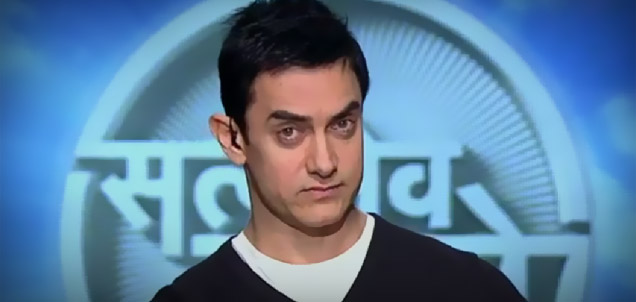
    Photograph: Video grab from SatyamevJayate.in


    > The Importance of Being Aamir Khan

    > Why SJ will rule weekends; Stratagem analysis: Weekday Show #23 > Weekend Show #1

    > SJ is Aamir’s baby, completely: Satyajit Bhatkal (director of the show)

    > High EQ at Aamir Khan talk show Satyameva Jayate

    > Airtel slashes SMS rates for Satyamev Jayate

    > Anil Thakraney: Aamir wants to play God