
By Prabhakar Mundkur
Â
Thou know’st ’tis common; all that lives must die,
Passing through nature to eternity.
— Hamlet, William Shakespeare
Â
 When I first met Alyque back in 1976, I felt so exhilarated after meeting him for a musical part in “Man of la Mancha†(the screen version had Peter O’Toole and Sophia Loren )  that I regretted having declined his offer for a part in Jesus Christ Superstar a few years before.  But graduate studies had taken precedence. He was tall and towering physically, just like his personality and reputation. A slight hunch made him look distinctive. It was the kind of hunch that tall people develop when they are young, when they want to compensate for their height and want to appear a little shorter, to make other people more comfortable.
I was immediately taken up by this enormous personality and talent. But talent alone can’t take you places. Alyque was extremely committed to whatever he was doing and for a creative person surprisingly organised. For example, he would be constantly be making notes during our rehearsals with a small pad that was parked in the small of his back. Whenever he thought of something, he would pull out that note pad and make some furious notes, which he would recall in detail later.
Like most stars, Alyque created volumes of folklore around him, typical of great personalities.  Even if you never worked in Lintas, any advertising person who worked during that time, would regale you with stories of God (as Alyque was affectionately and appropriately known) and Pope (his secretary whose real name was Jenny Pope). They were all very funny and you couldn’t help a guffaw after hearing the punchline in the end.
But it was not just people who worked with him that looked upon him with great respect. I worked at a competitive ad agency and although Alyque was the main competition, I daresay we were all overawed by him. Seeing him at a pitch, for example made me terribly nervous. Because in many ways, it was not just his advertising talent and creativity that had to be overcome but his personality and his showmanship. Clients were equally awed by him. Somehow, I could imagine clients just eating out of his hands while we would go through several iterations of a creative idea until it was too dumb to produce.  I don’t think anyone would dare to argue with his advertising judgment. In fact, I was often asked by clients a rather uncomfortable question, “Who is the equivalent of Alyque in your agency?†I did not have a ready answer in spite of having painstaking pondered over it. In an era when suits became CEOs, after plodding for several years, Alyque proved that it was easy for a creative person to head an agency, something that is more fashionable today. What struck me most about him was that he was a perfectionist. He was never happy with anything less than the best. Every imperfection made him angry and sometimes it was followed by string of expletives.
He created many famous campaigns but perhaps some stood out more than others in public memory. For example, the entire Liril campaign became the most talked about in the 80s and so did the Lalitaji campaign for Surf. Also, the first campaign for Kama Sutra condoms, which made a few waves in an India that was just coming out of the closet at that time and of course Cherry Blossom, Hamara Bajaj and many others.  He once grudgingly admitted that Lalitaji was inspired by his own mother who has a building named after her called Kulsum Terraces, the family home on Walton Road, a sleepy little lane in Colaba. This was also where we rehearsed most of Alyque’s plays for the Theatre Group in the 70s.
Alyque belonged truly to the Bombay of yore, so vastly different from the Mumbai we know now. When he spoke about the past, he would recall going to Olympia on Colaba Causeway for a ‘chai’ with Sylvester DaCunha because he was stressed out about something. It somehow brought back images of an old Bombay flooding to your mind, with a young Alyque and a young Sylvester.
About ten years ago we met at a party. He was doing readings from Shakespeare then. So, I couldn’t but help mention that Shakespeare wrote in Iambic Pentametre which is the same metre that the ‘blues’ is written in. He wouldn’t believe me. So, I had to tell him that it was not my theory, but I had picked it up from none other than Leonard Bernstein, the famous American composer and musician in his speech on the “History of Jazzâ€. Forever curious, Alyque invited me to his home for a demonstration of how Shakespeare could be sung to the blues. He found it remarkable and immediately ended his Shakespeare shows with a famous soliloquy sung to the blues, roping me in to accompany him on the guitar.
Alyque was not just a star. He was an icon both for the advertising and the theatre industry. And he showed us all that true creativity and leadership was multi-dimensional. Most people were shattered when they heard the news of his passing away on Saturday. Somehow, he had lulled all of us into thinking he was immortal.

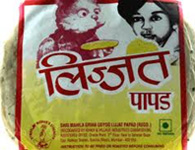 #1 “Hein hein hein … hein hein hein…†Remember the head-bobbing rabbit from the Lijjat Papad commercial of yesteryear? That had to be the most memorable of the lot for me.
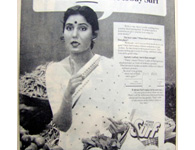 #2 “Surf ki kharidaari mein hi samajhdaari hai…†Lalitaji is probably the most iconic symbol of Indian advertising. She stood for the discerning middle-class woman who made smart decisions for her home and boldly presented her case. Unforgettable.
 #3 “Doodh ki safedi Nirma se aaye…†The girl in white swaying to the ultimate melodious jingle was such a success that even after all these years the client can’t seem to let go of the tune in any of their communication. It’s obviously their trademark. Nirma was synonymous with the happy, hummable jingle.
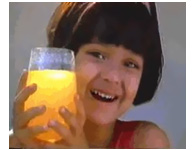 #4 “I love you Rasna…†Rasna came up with an idea of showing the mother-child relationship through their product. This gave birth to the very famous commercial featuring the Rasna Girl (Ankita Zaveri). The ad was revolutionary in more than one sense. Not only did it position Rasna as a family product, but also introduced the tagline “I Love You Rasnaâ€, which became immensely popular among the masses. Rasna kept this tagline for many years to come.
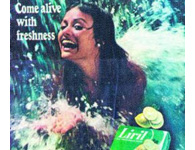 #5 “La la la la, la la la la la…†Sing it aloud. It’s truly refreshing.
 #6 “Jab main chhota ladka tha, badi sharaarat karta tha, meri chori pakdi jaati…†Roshni ki duniya ka sartaj Bajaj. A most endearing film and a truly enjoyable one too. I can still watch it and enjoy it.
 #7 A boy and his dog. They were an icon for the “wherever you go our network follows†line. Vodafone , in those days “Hutchâ€, launched with this amazingly simple campaign and showed no phone in a commercial that communicated network. A big hit.
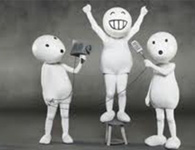 #8 The Zoozoos were the IPL season 1 superstars. They stood for innovation and a great media tool with the release of one ad a day through the IPL series. They blew the minds of millions, giving Vodafone a huge edge in the advertising of their value added services. Very fresh and very cool too.