Tag: Lintas Media Group

  • Lodestar UM appoints Anita Mookerjeeto head South India ops

    By A Correspondent


    Lodestar UM has announced the appointment of Anita Devraj Mookerjee as Head South.


    Mookerjee will lead the entire South India operations of LUM, including the agency’s Bengaluru, Chennai and Kochi operations. Mookerjee will lead the agency’s continued focus on strategic media planning, technology, data, content and ROI driven solutions.


    Prior to joining Lodestar UM, Mookerjee was Managing Director of Mediacom Indonesia.


    “Our success as a network has been driven by the strength of our people, product and leadership. A comprehensive search for the right leader, led us to Anita, who is the perfect candidate to spearhead the next phase of development in these critical markets,” said Nandini Dias, CEO, Lodestar UM.


    Talking about her new role, Mookerjee said: “I spent my formative years in media in Lintas Media Group (now Initiative) where I used to handle ITC. So this is a homecoming for me.Lodestar UM as an agency has always focussed extensively on its product and people. I am excited and looking forward to reflecting on all my learnings and experiences in India and South East Asia. And of course collaborating with some of the sharpest minds in the business is an added privilege.”


  • Airtel calls for media agency pitch

    By Pritha Dasgupta


    Bharti Airtel, India’s largest mobile carrier by revenue and subscribers, has called for a media agency pitch. It is touted as one of the biggest advertising pitches of 2014.


    The company has just finished the process of sending out invites to leading media agencies including the Sam Balsara-led Madison World, which has been handling the account for the past 11 years. According to people in the know, other agencies in the fray include one of GroupM agencies, Lodestar, Dentsu Aegis Network, OMD and ZenithOptimedia.


    “Airtel has made all the media agencies sign a non-disclosure agreement barring them from talking about the pitch process,” said an executive with knowledge of the matter.


    Airtel has been calling for media pitches once every five years and the last time it reviewed the account was in early 2010, he said.


    Airtel didn’t respond an email seeking comment. A top executive at the New Delhi-based company said it “is just a part of the evolution process” as it periodically reviews the contract. “This time too we want to see who’s offering what and at what price,“ he said.Globally, Airtel is the fourth largest mobile telecommunications company by subscribers, with more than 300 million subscribers across 20 countries as of end-September. It is the largest cellular service provider in India, with over 200 million subscribers.


    During the last pitch process, Madison had faced stiff competition from agencies like TME, Starcom MediaVest, Percept, Mediaedge:cia (MEC) and Lintas Media Group. This year, it will be up against the mighty GroupM ­ the biggest media agency of the country.


    Interestingly, GroupM already has four telecom companies in its portfolio ­ Vodafone, Tata Docomo, Idea Cellular and Reliance Communications. “GroupM has five media agencies and four telecom clients. So they can still look at adding one more telecom business to its kitty,“ said a top industry executive in the know.When Madison retained the account in 2010, it was also given the outdoor duties of Airtel which were initially handled by Portland, a unit of GroupM.


    Later, Madison set up a dedicated outdoor team to handle the Airtel account.


    Source:The Economic Times

    Copyright © 2014, Bennett, Coleman & Co. Ltd. All Rights Reserved

    Licensed to republish


  • INMA 2012: ‘Industry needs currency that measures across platforms’


    By Shruti Pushkarna


    Basant Rathore
    If you are having trouble in viewing this video, see link

    Like Day 1, Day 2 of the 6th INMA annual South Asia conference also witnessed some interesting panel discussions pertaining to issues facing the news industry today.


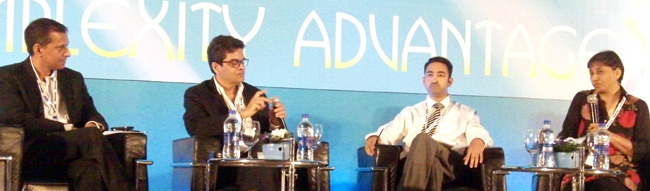
    The first half witnessed an engaging session on, ‘Increased Circulation, Dwindling Readership: Is It Time to Measure “Access”?’ The session was moderated by Lynn de Souza, Chairman & CEO, Lintas Media Group. The panelists included Paritosh Joshi, Independent Media Professional & Board Member of MRUC; LV Krishnan, CEO, TAM Media Research Pvt Ltd; and Basant Rathore, Vice President-Strategy, Brand and BD, Jagran Prakashan Ltd.


    The panel debated the need for new matrices of measurement which can complement the conventional audience measurement matrices, as today the audiences are increasingly becoming platform-agnostic.


    Ms de Souza said: “People seem to be very attached to these numbers. But while numbers are important, we need a currency that goes across platforms. We need to be able to measure new forms of readership. From circulation and readership, we need to change our metric to media access.”


    Lynn de Souza
    If you are having trouble in viewing this video, see link

    Mr Paritosh Joshi shared a similar view on the need to look beyond the primary level numbers which he felt are out of date. He said that there are two sorts of media consumption today, structured and unstructured. It is equally important to be able to measure and take into account unstructured media consumption. Just as there are enough screens available today and not just the traditional TV box, he said, the newspaper is not just in the traditional paper form, it is available in other forms across platforms.


    Mr L V Krishnan talked of two news aspects coming out in the digital world: “One is the increasing access which is changing things dramatically. The other is multiplicity of brands transiting between different mediums. For instance, a Bombay Times with Zoom or an ET Now with The Economic Times. The nature of one medium declining and the other growing will depend on what the creator of the brand wants to deliver via a particular medium.”


    While there was agreement on the importance of numbers and currency, the panelists also highlighted the need to move beyond the existing currency.


    Mr Basant Rathore of Jagran said: “Digitization has blurred not just geographical boundaries but also boundaries between mediums. Today we don’t have a clue of numbers in digital media, but they are definitely going to grow. If these can’t be measured, monetization becomes a problem. The advertisers know that the game is moving beyond the existing currency. The research we had till date was about currency but the advertisers are now talking about engagement.”


    Mr Joshi added: “The existing measurement systems are accused of fudging numbers. With the new IRS, even real time tracking of interviews is possible. It will be a like a core end satellite model and this will enable us to respond to changes that are happening in the environment. Earlier we looked at data in a cross-sectional slice but what’s of interest to an advertiser is what happens to a consumer through the day. With the new measurement matrices, we are thinking of capturing all digital research to get a horizontal longitudinal view of a consumer’s media movements.”


    The panel also agreed on the need for industry to be willing to adopt new matrices of measurement and to support measurement that looks beyond primary access numbers. Mr Rathore concluded: “Numbers will continue to be important because that’s the benchmark for trade to happen. But if you need to grow, it’s important to leverage the media brand across media platforms and so we need to know what’s happening across platforms. And that’s why we need to be open to the measurement of other metrics.”


  • Mindshare continues to be India’s #1 media agency, Madison is at #2: RECMA billings report

    By A Correspndent


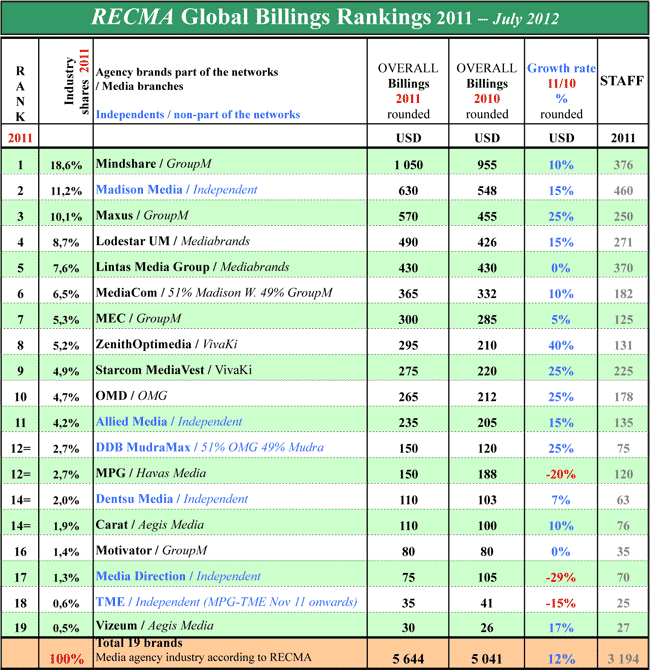
    The much-regarded billings report for India has been released by RECMA. The Indian media agency business grew 12 percent in 2011 with a total billings of US$ 5644 million.


    Group M’s Mindshare media agency tops RECMA’s India billings report for 2011 with US$ 1055million, growing 10 percent over its 2010 billings. Madison Media is second 630mn, growing 15 percent. Maxus, Loderstar UM and Lintas Media Group are rank third, fourth and fifth respectively.


    ZenithOptimedia saw the highest growth with 40 percent over the previous year, as per the RECMA report. At least three agencies saw a degrowth. Media Direction went down 29 percent, MPG down 20 percent and TME dropped 15 percent.


    The combined billings of Dentsu and Aegis agencies Carat and Vizeum would put the new entity at #11 with US$ 250 million.


    Last week, MxMIndia had reported RECMA’s global billings data and rankings (see Link: http://www.mxmindia.com/2012/07/starcom-tops-recmas-global-billings-rankings-omd-is-2/).


  • The Best of Print Ads – 2011


    By A Correspondent


    You may have seen only a few of them and probably even forgotten the underlying message that the campaigns had to tell. But now you could make a dash to have a hard copy of MOSAIC, a compilation of the Best in Print (campaigns) to have hit India n shores in 2011. The compilation has been put together by 23 creative agencies who have submitted their best pieces of work for the category in 2011. Conceptualised by Sanjeev Kotnala and team from the Dainik Bhaskar Group, the initiative has been made special through the “insights” and “personal favourite” sections that have been provided by Media agency bosses. These include Lynn de Souza of Lintas Media Group, Mallikarjun CR, CEO, Starcom MediaVest Group, PM Balakrishna, Chief Operating Ofiicer, Allied Media and Punitha Arumugam, Director – Agency Business, Google India.


    Lynn de Souza, Chairman and CEO, Lintas Media Group, Chairman, Aaren Initiative and Director, Karishma Initiative

    “An excellent idea to recreate interest and remind all about the power and impact of the print medium. My only reservation is that there were too many submissions of ‘pretty pictures-pithy headlines’ work that may or may not have been published and did not appear to fully grasp how the medium must be used effectively.”


    TOP 5 Choices:


    Click on the picture for larger view

    1) DNA – ISKCON (Scarecrow India)

    Reasons for choosing: The intelligent use of the cigarette-turned-food visual immediately targets the smoker and invites him/her to contribute in a very simple way to a cause that benefits both beneficiary and the giver – something not easy to achieve. I like the simple, clean look of the ad and the directness of the headline and copy.


    Click on the picture for larger view

    2) Flying machine “What an Ass” (Lowe)

    Reasons for choosing: This is my idea of perfect ad! One that has used all the elements of the print medium – headline, visual, copy to present a bold, modern attitude through a perfectly harmonised contribution of all three. It’s an unmissable ad whether you are a guy or a gal.


    Click on the picture for larger view

    3) Parker – Ramnath Goenka Excellence in Journalism Awards (Lowe)

    Reasons for choosing: A stark headline supported by the simple bottle of ink that says it all. An attention grabbing reminder of the power of the pen to influence the world. Perfect synergy for the subject – Journalism awards and the ‘always memorable’ image of a gold Parker fountain pen.


    Click on the picture for larger view

    4) The Times of India – A day in the Life of India (Taproot India)

    Reasons for choosing: Fantastic art direction – great visual appeal that hooks you into reading the whole ad. The contemporary feel, using India n kitsch, with attention to detail, is riveting. (Check out the dog lifting his leg to pee on the bed of nails!) Bright, colourful, crowded yet not messy. I could read it again and again!


    Click on the picture for larger view

    5) Vaseline ‘Dear Mr. Vaughan’ (BBH India)

    Reasons for choosing: The kind of ad that every Creative Director who woke up to it that morning would have said: “I wish I had written this”. There are some things you can do impactfully in a topical yet ‘permanent’ medium like print that you can’t do anywhere else, and this ad fits the bill. Nose-thumbingly outstanding!


    Mallikarjun CR, CEO, Starcom MediaVest Group

    “This is a fantastic initiative. As media agency professionals, our lenses to view the world are different. However, what comes across is that great creative work is universal. Really enjoyed it.”


    TOP 5 Choices:


    Click on the picture for larger view

    1) Audi – World Cup (Creativeland Asia)

    Reasons for choosing: Great connect with the Champion’s Trophy ’85 win. Most of the target audience that can buy an Audi will connect immediately with that moment. For a lot of us India ns, that was the first moment of connect with Audi.


    Click on the picture for larger view

    2) DNA ISKCON Food Relief Foundation (Scarecrow)

    Reasons for choosing: A nice calculus linking smoking to food relief. Very innovative, eye catching visuals.


    Click on the picture for larger view

    3) Indigo Campaign (Weiden+Kennedy)

    Reasons for choosing: Stark, consistent visuals. The colours, space everything reflects the qualities of the airlines. Nice word play that grabs your attention and makes you read the copy. The reference to price is as value and not cheap.


    Click on the picture for larger view

    4) Nissan Micra (TBWA\ India)

    Reasons for choosing: Simple stark visuals. Driving home the relevance of a small car without talking price, affordability etc. Great, understated use of a celebrity.


    Click on the picture for larger view

    Reasons for choosing: Great expedient use of Michael Vaughan’s comment. Superb cut through and great visuals.


    PM Balakrishna, Chief Operating Ofiicer, Allied Media

    “I think this is a wonderful initiative and exposes the fantastic creativity. It is a very different platform as it is more an appreciation of great work rather than a competition as I believe each creative is great on its own.”


    TOP 5 Choices:


    Click on the picture for larger view

    1) Bajaj Fans (Leo Burnett)

    Reasons for choosing: The best part of this creative is the way it has integrated everyday common issues and weaved them into the core communication of the product. The creative is also very well crafted visually using the very cause of the product making it very effective.


    Click on the picture for larger view

    2) Birla Cellulose (Salt Brand Solutions)

    Reasons for choosing: The sheer aesthetic treatment to the communication draws you and I like the beautiful and colourful way the creative has used nature and the human body (woman). It brings out the environmental friendly nature of the product in a very soft and appealing manner.


    Click on the picture for larger view

    3)Fuji(Grey)

    Reasons for choosing: Colour and background are intrinsic material for any great creative and nothing better than drawing inspiration from Mother Nature and wildlife. The beautiful use of the animals brings the message home effectively and creatively and connects with any photographer or photo enthusiast.


    Click on the picture for larger view

    4)NipponPaints (JWT)

    Reasons for choosing: They say a great picture is worth a thousand words and the effect is breathtaking when it is beautifully woven into the message making the communication very compelling and effective. In this case the product USP, a central factor in the category has been brought home very beautifully for correct impact.


    Click on the picture for larger view

    5) Zee 24 Taas (Draftfcb Ulka)

    Reasons for choosing: Ganpati Bappa has a significant connect with the India n diaspora and especially with Maharashtrians who revere the elephant God. I like the way the creative has beautifully engaged the viewers in an innovative and personal manner and makes it unique and different.


    Punitha Arumugam, Director – Agency Business, Google India


    “This initiative continues the long tradition of Dainik Bhaskar – breaking boundaries and setting new trends in the industry.”


    TOP 5 Choices:


    Click on the picture for larger view

    1) DNA Mumbai Marathon (Scarecrow)

    Reasons for choosing: The power of long copy. It brings back memories of the old era, which was marked by a great headline and the power of long copy. It inspires and bonds with its audience.


    Click on the picture for larger view

    2) Murphy Richards epilators (Contract)

    Reasons for choosing: The power of a picture. The visual intrigues, makes you pause, demonstrates the benefit and brings a smile – all this without a single word.


    Click on the picture for larger view

    3) MTR Spicy Pickle (Ogilvy)

    Reasons for choosing: The power of insight. A true South India n like me will see this ad and can only say “How true!” Equating spicy with ‘tears’, the way the ad captures the cultural nuances – awesome!


    Click on the picture for larger view

    4) Parker – Ramnath Goenka Excellence in Journalism Awards (Lowe)

    Reasons for choosing: The power of words. While most entries used the power of the picture, this ad stands out because it uses print for what it does best – leverage the power of words and intriguing headlines.


    Click on the picture for larger view

    5) Saffola Healthy Heart (McCann)

    Reasons for choosing: The power of an innovation. A great collaboration between the creative agency, the brand team, the media agency and the publication to convey the brand message interestingly and inclusively so as to trigger an action from the reader.

    Best of Print in Dainik Bhaskar Group’s MOSAIC
     

    Some may see India’s performance of bagging just four Press Lions at Cannes out of the 30 that were shortlisted as a drab effort, but then there are some who would like to think of it as being otherwise. After all, Press Lions as a category managed to get India its largest tally of four metals versus any other category at the awards – a valiant effort considering that India finished 2012 with just 14 metals in its kitty.


    While the category may have received its fair share of fame at the pinnacle of creative awards, many would agree that Indian adland has failed to laud the finesse that stems out from Print creatives over the years. While such is not the case in some large international markets where creative works across categories gets noticed and rewarded that gesture seems to be missing when it comes to India. Luckily for the creative frat in India, an opportunity to showcase their best works – besides the awards shows – were given a fillip by the Dainik Bhaskar Group that released the first of its kind creative compilation of the finest works produced in Print in the form of MOSAIC 2011.


    Elaborating on the initiative, Sanjeev Kotnala, VP & National Head, Dainik Bhaskar Group said, “This has been a first year for MOSAIC, which is a rich collection of 150 creative units part of 77 campaigns that have been submitted by 23 agencies.” The creative showcase has been made special through some individual comments and insights that have been posted by creative leaders of individual agencies.


    Elaborating on the thought process behind the compilation, Mr Kotnala said: “As a group, we believe that the Indian creative across mediums and media is of international standards, in its thinking, relevance and in its execution. Unfortunately there has been no single reference point for the same. MOSAIC bridges this gap and we would want it to be referred by the creative, clients, media and trade.”


    As for the method that was adopted in getting the agencies to submit their campaigns, Mr Kotnala said that it began with Dainik Bhaskar requesting the creative heads at the agency to send their best Print work. “They know better than us – as by placing it in MOSAIC affirms it to be their best work. Though we did have constraints on the number of campaigns we could place in Mosaic from a single agency. This has all been a by-invitation. On the other side, there were few agencies that sent lesser number of creative units as they felt others were not up to the standard to feature in such a compilation. So it was created and evaluated by the creative teams themselves.”


    On how print has evolved over the years as a medium, Mr Kotnala said: “Today print ads are working on all fronts of communication. They are not just for the purpose of awareness building or as a source of providing tactical information; they engage and involve the readers and are very result-oriented in their approach. We always held that the idea is more important than the medium. And it will automatically find its right medium for better efficiencies and effectively delivery of the message.”


    In fact, the compilation has been made special with the involvement of four media agency heads who’ve provided their assessment of the campaigns. They include Lynn De Souza, Chairman and CEO, Lintas Media Group, Chairman, Aaaren Inititative and Director, Karshma Initiative; Mallikarjun CR, CEO, Starcom Mediavest Group; PM Balkrishna, Chief Operating Officer, Allied Media and Punitha Arumugam, Director- Agency Business, Google India.


    With the first edition already finding appreciation within the industry, the Dainik Bhaskar group have their task cut out for the next year too. On his plans for a sequel, Mr Kotnala said, “We would want to see more regional and language work in the collection – and they still should meet the standards set. We would and could try getting clients and media owners also picking their favourites and definitely may wish to incorporate a section on media innovations. Though we have taken the task and brought out the book, in our mind it is an industry level initiative and we would want to keep it that way.”


    Mosaic 2011 can be accessed and downloaded at http://i10.dainikbhaskar.com /dainikbhaskar2010/books/ Final_Book.PDF


  • India@Cannes: Leo Burnett, Cheil lead race for Media Lions


    By A Correspondent


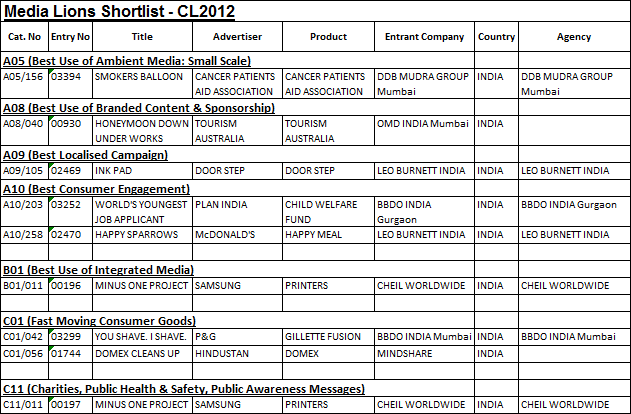
    The biggest year by far in terms of the number of entries sent,Indiamanaged to line up an unprecedented 130 entries in Media Lions 2012 compared to 103 entries that it had sent last year. But this number is distant from what the other countries have nominated from their shores:USA- 411,Germany- 272,Brazil- 252 andAustralia- 138. A total of 3,247 entries have been sent from 74 countries compared to 2,895 entries last year – an increase of 12 per cent.


    Having widened its scope with the sheer number of entries,Indiashould look at gaining more than 2 wins in this category, a figure which it achieved last year. But whether it will cross 8 metals, which it did in 2009, will be something to be seen at the awards function which will be held on Tuesday evening.


    Instituted in 1999 to honour excellence in media strategy, planning and execution and give key players in the media industry an annual meeting point, the jury will be looking not just for brilliant ideas, but moreover, ideas that work. RepresentingIndiaat the Media Lions Jury is Premjeet Sodhi, Chief Operating Officer, Lintas Media Group.


    Leo Burnett Mumbai leads the tally with two shortlists including ‘Ink Pad’ forDoorStepSchoolunder the Best Localised Campaign and ‘Happy Sparrows’ for McDonald’s under Best Consumer Engagement. Also having two shortlists is Cheil Worldwide for ‘Minus One Project’ for Samsung under the Best Use of Integrated Media. The entry is also nominated under the Charities, Public Health & Safety, Public Awareness Messages category. The other entries include DDB Mudra’s ‘Smokers Balloon’ for CPAA in the Best Use of Ambient Media and OMD India’s ‘Honeymoon Down Under Works Wonders’ for TourismAustraliain the Best Use of Branded Content & Sponsorship.


  • Making brand the hero with BPN


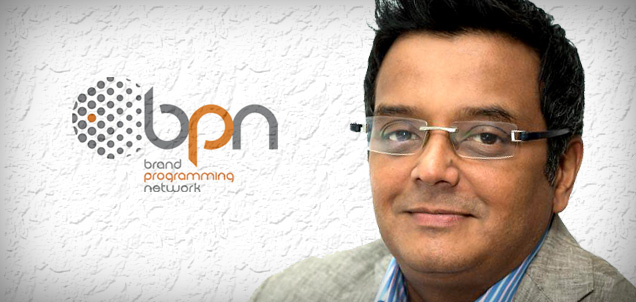
    Just when you thought that the media agency space is getting crowded in India comes the news of another agency setting up shop in India. Brand Connections that was present in 12 countries across the globe excluding India and the United States, will now be rechristened Brand Programming Network. In effect this will be the official launch of BPN in India. And simultaneous with the rest of the world. This will make the agency the third such offering from IPG Mediabrands in India. It already has two in the form of (Lodestar) UM and (Lintas) Initiative. BPN will work under the LMG umbrella.


    Says Lynn de Souza, Chairman and CEO of Lintas Media Group in a communique, “For media agencies thus far, the starting point has always been the advertiser. Consolidation, portfolio management, aggregation etc. are all client focused and to some extent consumer data driven. BPN will focus on the brand. The time has come to turn back several chapters and make the brand the hero of all communication effort, and BPN has developed processes to do just that.”


    BPN will take on the service mandate of clients like Jyothy-Henkel, Bajaj Auto, Samsonite, and several other clients of LMG to start up with a billing volume of over Rs. 1000 crores, in Mumbai, Delhi, Hyderabad, Kolkatta and Cochin.


    In India the agency will be led by Suresh Balakrishna, who has assumed charge as CEO of the agency. While BPN will be essentially a media agency, it will play the game differently by focusing on the brand. “Everything that we are recommending is going to be from a brand strategy direction,” assures Mr Balakrishna, as he gave MxMIndia a quick peek of what to expect from the agency in India, hours before it was unveiled.


    In conversation with Pradyuman Maheshwari and Johnson Napier, Mr Balakrishnan delves on how BPN will be different from the others, on the increased emphasis that will be laid on social media and digital and the new initiatives to look forward to from BPN in the coming few months. Excerpts:


    Is Brand Programming Network old wine in a new bottle?

    No, it is not. The usual answer that comes up about a third agency is that it is created due to a conflict of clients, allowing you to take on more of the similar clients. But with BPN, it is a thought-out strategic decision. If you look at India, there is no immediate conflict business (from network agencies) that is being parked in BPN. If you look at Mediabrands, for the last 10 years it has had a network called Brand Connections in other countries. But as markets have developed, especially a market like India, we find that there are enough businesses out here to have a third agency with a different character, a different way of thinking…and of course help handle conflict in the long run. So it’s not a knee-jerk old wine in a new bottle reaction from our end.


    The reason we ask you this question is that you have reallocated some of your existing businesses here. Does this also mean that Initiative and BPN could be in conflict with each other?

    It could be. In our system we can compete for businesses for the same pitch and may the best team win. Therefore we have a Lodestar UM, an Initiative and a BPN; we have three networks here in India and all three can compete for a business if necessary.  We do believe there is enough business out there and why leave some money on the table…


    What is it about BPN that differentiates it from others?

    A few things actually. Firstly, we are turning the clock back as an agency. We are going back a little in time and therefore the name Brand Programming Network. The whole idea is to focus on the brand. Earlier, media used to be in one house there used to be much more brand focus, even the media guys owned the brand. But over a period of time, media has become more professional, accountable, larger, etc but somewhere in the process we believe that brand connect has got lost. Therefore, BPN would be an agency that would focus on the brand; everything that we are recommending is going to be from a brand strategy direction. To give an example, in the last four months we have won over four-five businesses and in almost all the business pitches the client fed back to us saying is this a creative agency presentation or a media agency presentation? So you can imagine the extent to which we are spending time to analyse the brand, looking at brand strategy, looking at TG, etc. We are focusing on that aspect of the business and of course at the end of the day media is just a delivery vehicle.


    In fact Mr Shashi Sinha even hinted in an interview with us that we need to return to the full-service agency model. Are you in agreement with that statement?

    Half-way house, I would say. We are calling ourselves a full-service media agency in the sense that the touchpoints today have become all-pervading. For example, the touchpoint would be you ride on content. But who creates that content? You have an instance where the customer himself creates content in digital and then you have specialists who create content. So content itself has no owners and therefore reaching out to the customer has become that much more complex and you can only do it of you have the fabric of the brand and what it wants to convey.


    But the same thing could even be said by the creative agency bosses like, say, R Balki of Lowe, etc who feel that creative is alright but we also need to add some media to it. They could also be thinking on those lines…

    So what if they think the same, but I think at the end of the day to deliver media, you need a certain size… in fact many media heads today are CFOs; they are not media people. They have a commercial bent of mind and manage money.


    So are you saying that a media agency can be a full-service agency but a creative agency cannot be a full-service agency…?

    In today’s context yes, I believe you can say that.


    Sorry to be asking you this for for the third time in different ways, but getting back to BPN, in a sense it will be a brand agency…

    Yes, and across the world in the 13 other countries that we are present in apart from India, we have a lot of retail businesses and that is another area of growth that BPN is seeing. That seems to be the character of the agency globally – handling a lot of retail clients on a local basis.


    Will you only handle products and not brands in other sectors?

     There will be no category and geographical limitation. What the agency will bring to the table is brand perspective. In many cases, we have seen that clients do not want a brand perspective from a media agency. They get enough of it from a creative agency and want only the media bit from us. So I may not be the right pick. But being part of an agency like LMG I may bring along a necessary clout; I am big enough to matter and small enough to care. But that is not going to be my reason to be.


    In fact for BPN, one of the things being discussed is India as the analytics hub for BPN worldwide.


    Is it likely to happen soon?

    Yes, it is going to happen very soon.


    Wouldn’t analytics have done better as a separate unit like what the other networks offer?

    Maybe if it did well it could become a separate agency but to begin with it will be a part of the service that we are offering.


    Somewhere in your press release you have emphasised on laying adequate stress on social media. Is BPN going to be basically a digital or social media agency?

    No. But globally, and in India, I believe that digital and social media has much more mindspace than wallet space. So it really has a long way to go. Having said that, digital is growing very rapidly globally. One of the things that you will hear from us is a tie-up of sorts with a large platform about which you will hear soon.


    Will social media be the mainstay for BPN…?

    Not in India but worldwide, yes.


    So here you will be doing the traditional stuff plus digital and social…

    Absolutely.


    Could you delve a bit on the team that will drive the function for you in India?

    We have Premjeet Sodhi as the COO, Patrick Gomes would be the head in Mumbai, Mahesh Motwani would be head of Kolkata, Vidya Nanda Kumar will be head of Kochi…we have identified a head for Delhi and Hyderabad that we will announce very soon. We have a staff strength of about 70 and about 40 clients till now.


    Going forward, will BPN and Initiative be sitting together and pitching for a business?

    All the existing businesses in Delhi, Bangalore etc will belong to Initiative while Mumbai, Kolkata, Kochi etc will belong to BPN. We will be having separate offices which ever cities both of us are present.


    Any other plans on the anvil for BPN?

    Yes, we would be having a training and consultancy cell for media houses. The other thing will be branded content….


    Paid news?

    No (laughs). AFPs, in-film branding etc.


    You have always been a print man, do you still have a soft corner for the medium compared to television which is more popular of the two?

    Brands of course want television but I think print also works. Ours is the only country where print is still growing.


    But TV is growing a bit faster.

    Yes.


    What will the the revenue mix of BPN look like in future… if it’s 99 traditional and 1 digital?

    Going by your 99-1 yardstick, it will be 80 per cent traditional and 20 per cent from other mediums. Possibly even 75-25.


    If BPN has business worth Rs 1000 crore, how much will Initiative be?

    It would be the same. LMG as a group is Rs 2000 crore.  All the businesses in Delhi and Bengaluru belong to Initiative while Mumbai, Kolkata, Kochi are now part of BPN.


    In Indian corporates, there is a tendency to guard one’s fiefdom. Did Initiative feel bad you took away some of its businesses?

    They haven’t expressed anything as yet.
     

  • LMG bags Yepme’s media duties

    By A Correspondent


    Online fashion brand Yepme has awarded its media planning and buying duties to Lintas Media Group. Yepme already has a line of men’s fashion wear and accessories and is launching the women’s wear line on May 30. The brand has signed leading Bollywood actress Kangana Ranaut as its style ambassador. Yepme has over 1.1 million fans on Facebook, making it the largest fan base amongst Indian e-commerce sites.


    The task for Lintas is not only to build saliency for the brand but also to encourage a change in shopping habits for apparel and accessories. As Vivek Gaur, CEO at Yepme said: “Yepme is creating a category for itself. Unlike most other brands that are using the online route, Yepme has a non-metro focus and is creating a network of clients across the country. The role of media for such a challenge is extremely critical and requires a fine balance between mass reach and narrow targeting. We are glad to have Lintas Media Group partner us and give us very strong support in media as we nurture the brand further”.


    Suresh Balakrishna of Lintas Media Group was very enthusiastic about the addition of this new age business: “Yepme will go a long way in adding a young and futuristic character to the portfolio of brands that we work with. Fashion and e-tailing are both growth areas of the future and their media needs are extremely dynamic. We are very glad that the management of Yepme recognized our strengths and decided to partner with us for their future growth”. The account size is estimated at Rs30 Crores annually. This win comes soon after the recent wins at Lintas Media Group of Henkel,EdenCityand OCL.


  • Need to monetize radio-social media connect (+Vdo)

    By Robin Thomas (Videos: Insiyah Rangwala)


    Social media has, more or less, become a necessity for every organization today because the consumers are out there and no brand can afford to not be interacting with them. Moreover, social media can also help  brands know their consumers’ thoughts, behaviour, likes and dislikes. It also allows brands to have a two-way communication with their consumers, and thus provides high level of interaction and engagement. And it is not just brands but other media like radio stations which are coming out with innovative ways to connect with their listeners through social media.


    At the sidelines of the India Radio Forum (IRF) 2012 industry veterans from the advertising fraternity discussed the importance of social media for radio.


    Mr Premjeet Sodhi, COO, Lintas Media Group said: “Social media is certainly important for not only the radio industry today, but also for every other medium. In the long run we will see more integration taking place between social media and radio.”


    Mr Raj Nayak, CEO, Colors- Viacom 18 explained: “Social media is growing by the day. Today almost 65 per cent of the people in India are below the age of 35 and 50 per cent are below 25 years of age. I believe this is the fastest growing medium, therefore, it is a very important medium and those that have not got onto social media, must get on before it is too late.”


    Mr Suman Srivastava, Founder and Innovation Artist, Marketing Unplugged said: “Social media is important for radio at two levels. One is to connect with the listeners and therefore, get much larger engagement which might even result in an increase in the reach. On the other hand, it is a fantastic medium for radio channels to build their own brands as well as the brands of their advertisers. In the future, I believe, we will see a lot more advertisers using radio and social media together along with, perhaps, ground activations to create events which could have a multiplier effect for those advertisers.”


    Speaking on the need for radio to partner with clients, Mr Vinay Bhatia, Customer Care Associate and Senior VP- Marketing, Shoppers Stop said: “The real big partnership for radio and their clients is in the digital space. Digital and radio have to come together and ally in such a way that they deliver joint value to the client, and I don’t think any of this is happening today. Radio is an out of home medium and we are increasingly seeing out of home consumption for digital. I think these two medium can go very well together and brands like ours which have large Facebook pages need content, we need engagement and I think radio channels that provide us that.”


    Mr Harshad Jain, Business Head – Radio and Entertainment, HT Media said: “Radio is a medium which is free of cost, it is the cheapest form of entertainment in the country, and if there are issues that can be interlinked with social media, it could call for a good integration. Having said that, it is still early days because radio as a medium still has to catch up big time before it starts integrating with social media.”


    While there are calls for integration between radio and social media, the radio industry must also find ways to monetize the radio-social media connect. Mr Sodhi pointed out that while social media can make radio activations richer, it is vital for radio stations to find newer ways to monetize this activation.


    Agreeing with Mr Sodhi, Mr Raj Nayak said that no business will work if there is no monetization. He added: “One of the biggest disservice broadcasters have done is that they have not woken up to the digital media.”


    So while radio and social media will see more integration in the long run, there is also another school of thought that believes that radio is still at a nascent stage and has a long way to go before it can get into integration with social media. However, monetization is the key for survival of any business and radio stations must find ways to monetize its social media activations.


  • Takeaways from IRF 2012 (+Vdo)

    By A Correspondent


    The seventh edition of Indian Radio Forum (IRF) discussed quite a lot of issues on the strength and opportunities of radio, the road ahead for the medium, especially with FM Phase III expansion, how to maximize radio’s assets and how to gain share of market spend; the use of social media and monetizing it and much more. MxMIndia spoke to couple of industry veterans on their takeaways from the IRF 2012.


    Mr Premjeet Sodhi, COO, Lintas Media Group:

    One major takeaway with which I am going back is that while there are issues on how radio is performing commercially, there are certainly people who are passionate about the medium, and therefore, there are a lot of possibilities on how to do well on radio.


    The second major takeaway is the use of social media and radio, we had never thought of a subject as such. Radio has a lot of potential to work along with social media and be commercially successful as well.


    Third, I don’t think we are doing enough for radio, overall as an industry. There is, however, a lot of scope for improvement in this area.


    Mr B Surender, Senior Vice President, and National Sales Head, Red FM:

    I think the RAB (Radio Advertising Bureau) style of evangalising the medium is needed because UK’s RAB is so active in not only the developed markets like the UK, but it is also quite active in developing markets like South Africa.


    InIndia, probably, this kind of promotional activity is required for radio as a medium, because in India FM radio started very late and it did not get enough time before social media and the online or digital media arrived. Therefore, I believe there is a different need for a RAB kind of body which promotes radio.


    Mr Vinay Bhatia, Customer Care Associate and Senior Vice President – Marketing, Shoppers Stop:

    I think each industry within radio should develop its own tools, and this is really important in judging the input-output in efficacy because I am not chasing radio just for reach, OTS or number of impressions. Radio, as a channel, is a response medium and so it must deliver much beyond intermediary variables, it must deliver final business variables and I think radio can do that. However, it depends on how well a radio channel partners with a client, wherein the client is also willing to share some amount of data and information and a radio channel is also willing to partner it and jointly experimenting which works for all of us.


  • LMG Cal wins OCL & Eden City biz

    By A Correspondent


    The Kolkata office of LMG has been appointed to handle the media planning and buying business of OCL and Eden City Group. Both the businesses amount to a cumulative billing of over Rs12 crore.


    OCL India Limited, manufacturers of Konark Cement, is the flagship company of Dalmia Group and is one of the largest cement manufacturers in the country. Konark brand is a market leader in state of Odisha. Commenting on this win, SG Kedia, Dy Executive Director, Cement Marketing of OCL said: “We were looking at a credible partner to help us in our pursuit to reach out to our consumers, but in a very targeted and planned manner. We were looking at multimedia capabilities and brand centric thoughts from our partners and Lintas Media Group demonstrated both the things well. We look forward to work closely with them and help our brand reach success.”


    Eden City Maheshtala is one of the largest housing projects in South Kolkata. Commenting on assigning the business to Lintas Media Group, Mr. Biswadeep Gupta, GM of Eden City Group said: “We liked the category understanding demonstrated by LMG, and also found their media recommendations practical and innovative.”


    Suresh Balakrishnan, of Lintas Media Group expressed his appreciation for the team at Kolkata and the professional reputation that they have built in the market. Mahesh Motwani, Executive Vice President who heads the Kolkata Office said: “Kolkata is a market which is on the path of growth and we are very happy to associate with these reputed brands in the city. We value long term relationships and our growth comes from the continued growth of our clients.”


    These wins make LMG Kolkata a dominant player in the Kolkata market. Lintas Media Group at Kolkata already handles the media mandate for prestigious clients in the market such as Amul Hosiery, Eveready, PC Chandra, Tidewater, Khadims, Srei,  La Opala besides others.


  • The plan is to keep rolling out & expanding our analytics expertise: Sue Moseley


    It’s been a few weeks since IPG Mediabrands made its formal entry into one of the most promising markets – India, but it is clear on the traits that would drive clients to engage in solutions of the future. Led largely by data and analytics, the company expects market dynamics to hit a high note once it finds favour with clients across a broad range of sectors. Sue Moseley, Worldwide Director, Research & Futures, Mediabrands IQ Creation on her maiden Indian trip reiterated the company’s global promise of making data an integral part of a client’s growth strategy, especially in a media environment that’s been evolving over the years.


    In conversation with Johnson Napier of MxM India, Ms Moseley outlines the many advantages that an analytics division provides to foster growth plans of clients, on how clients have been queuing up to secure research & analytics services of the company, on how social media would alter advertising options for clients, and the company’s global plans to expand operations in emerging markets. Excerpts:


    Q: You’ve just about taken off in India while you have been around in the other markets for a few years now. Could you elaborate on how Mediabrands has progressed as a sought-after media solutions provider, especially in the realm of research, data and analytics?

    Mediabrands is all about our media assets, with the main agencies being Lodestar UM and Lintas Media Group (Initiative) and around that we have a lot of different companies that bring different expertise to the table. So it is a group of expert and specialist companies engaging in media services. The big advantage that we have found is that by bringing collaboration within the group is that one, there is no duplication taking place and therefore you are able to reinvest in research and development for the good of the company. That’s been very effective with our media agencies where we have come across situations where they both are looking at similar offerings such as research panels and stuff like that – there is no point in both of them doing it separately. Also, Mediabrands has organized its companies into one-to-one marketing, one-to-some marketing and one-to-many marketing companies. So they have companies to effectively deliver on that front. My role in that is handling Mediabrands IQ which is about data, tools and analytics. So it is about making sure that all of the media companies around the world have access to the very best. So it is a combination of delivering global tools and helping the local markets as well. Also, it enables us to learn what the local markets have to tell us, build that into our global tools and then using those global tools to work with global industry tools.


    What the global teams can bring is the experience from other markets such as where we have being doing a lot of analytics where digital and social media is very well established. So we have made the mistakes of learning everywhere else so that we can apply the best practice here. The best example that can be quoted here is our team that we have at Mediabrands with shopper marketing expertise. With the limited interaction I have managed to have with the team here in India, modern retail will see an overhaul with the coming in big retail giants like Tesco, Wal-Mart, etc. And so we have created research tools which looks at the consumer (shopper) and work back the other way round. So we have been sharing the techniques which can be adopted very easily in this market so that they can have a leading edge over everybody else in terms of shopper marketing.


    Q: Do clients of today understand the criticality and importance that an analytics and research division serves towards achieving an imperious objective?

    The demand from our clients running analytics is growing exponentially. The minute they see the power of what we can do they just want to have more and more. So typically, we find that when we start with the client to do a market mix modelling project, which is really to understand what is driving sales and all the different aspects like what is the impact on pricing, promotion, distribution etc and by deconstructing that you can build a better solution going forward. And the intent of this is to help clients save 10-15 per cent of their marketing budget which is the same levels of sales because now you have this science and fact-based behind your planning. We are finding this particularly useful in fast developing markets where you want experimentation and you want to learn about new things but you do not want to damage any new and existing trends. So by doing market mix modelling you can have a 10 per cent budget that you can deploy into testing and understanding newer media, social and techniques which then can be measured and can be used to spiral continuous improvement for our clients.


    Q: How can research and analytics be applied uniformly across the mediums of television, print, radio, etc? What is unique about the way Mediabrands goes about offering solutions to each of these mediums?

    The market mix model we use will tell you the contribution of every single medium – it will tell you how different mediums like television, radio, outdoor, etc are performing. I think where we are different to other companies is that we do that analysis and are able to activate it because the team that built our Econometrics software also built our Planning software. So the planners here that are looking at future activity have software that helps them select channels and optimize effectiveness. Traditionally that would mean just looking at reach and frequency which is the best we’ve got but if we have done one of our big analytics project we automatically load that data into software. So rather than say what is the forecast of this plan in terms of reach and frequency they can then say what is this plan delivering in terms of sales. So we are now shifting from talking about reach to business outcomes in terms of our activities across all possible channels.


    Q: Has it got to do with the recent worldwide shift carried out internally at Mediabrands that saw you progress towards a pay-per-performance model?

    What is happening at Mediabrands is that we are moving towards pay-for-performance compensation model. The reason we feel confident in doing that is because we can take all of this data and analytics and have a good understanding of what is possible, what we can achieve and most importantly, how to achieve that outcome. Our CEO Matt Seiler is passionate about this model and he has the right to feel so – the minute your company is focused very much on your clients profitability it makes the whole culture change that’s much more focussed on that business and that is going to have a much more positive impact on the clients.


    Q: Could you share a few examples of clients who have been exposed and are content with your service offerings?

    We do a lot of modelling work for Chrysler, Hyundai etc in the automotive sector; we do a lot of work for J&J in the FMCG sector; we do analytics for Tesco etc. So we do analytics across a very broad range of sectors. I think the power of putting clever mathematicians in these hubs that we have set up around the world is that they actually like to be challenged. You give them a challenge and they’ll provide a mathematical outcome at the earliest.


    Q: Could you quantify the global growth in client numbers witnessed by Mediabrands over the years?

    The growth has been phenomenal. We started in North America and then we rolled out to Europe and now we are rolling out around the world. From year one where we had 20 clients that number today is in excess of 150 clients. The speed at which this takes root is quite scary. I think this is because it appeals very much to the CEOs and CFOs across companies and is helping them cut marketing budgets during recession because now they have evidence and hard facts around the contribution that communications is making to their sales.


    We have about 150-odd clients now and we expect by the end of the year that figure should go up by at least another 100. And this will come from all our key markets across the globe.


    Q: As you move across borders and from the West to the East, what are the key trends that one gets to observe that are changing the market dynamics where the domain of research and analytics is concerned?

    A market like US is certainly ahead in terms of digital and social media analytics. The big trend that I foresee is in the social media space. I think consumer research has been such a life-blood for our business and I think there is going to be a big switch from consumer research to really deeply mining the social media space.


    Q: There has been a rise in the number of clients who are opening up to the concept of real-time data. How do you view this trend as an analytics expert?

    Real-time requires analysis; what we are doing is trying to get a balance between getting data fast and some of the fast data streams we get are actually from social. So if we can understand and use social to track effectiveness — like say for the automotive industry, website visits and things like the use of car configurator on the site is a very good indicator of subsequent sales. So we can use that data to make much faster decisions because we understand their relationship with sales. But across your total marketing mix, unique things take time to take roots -it isn’t real real-time. I think real-time really means that time span needs to collapse and also it has a big impact in the way the clients work when they set their annual budgets – they now need to rethink maybe to have a more flexible and minimum budget and then do a 20-25 per cent more flexible budget. You cannot make a difference if you have your budget already set at the start of the year. So it’s going to mean big organisational changes within clients and the way they currently work around real-time.


    Q: What are the challenges that real-time technology throws up to research agencies like Mediabrands IQ?

    The biggest challenge we face right now is making sense of the data. It’s now about ‘x’ bytes of data and making sure that we get access to it. Also the computing technology world is progressing rapidly and we now have managers and heads talk about how we are in the clouds with our data storage. It’s a space race to be the first and we are investing very heavily in making sure that we have got the right tools to understand social media to really understand the consumer’s pathway. At the moment there is a risk within the digital space in the sense that the last click you did was search or the last thing you did before you went click and bought something…so all the effectiveness is attributed to the last thing that happened before you made your purchase but it could actually be the other thing including the video that you saw, the blog that you read or the conversation that you were a part of… So we are investing real heavily to do some real analysis to say which of these component parts of the digital stream are adding value etc. So it’s constantly finding new techniques to unravel the data so that we get the real answers. So that’s the real challenge at the moment but it is fun.


    Q: It is said that the future belongs to Asia and Asia is not just about India and China. Where do you see the next big global stories arising from the APAC market?

    Our planning tools are in all of our markets. So we have North America, which is US and Canada then we have the G-14 markets and then we have the World Markets. The G-14 markets are like-minded in their approach so as to bring together the management under one regional manager because as I said, they are like-minded, progressive, most moving forward and that’s where the demands from those markets are different from the world markets. So the G14 markets comprise of Australia, Brazil, China, France, Germany, India, Ireland, Italy, Japan, Mexico, Netherlands, Russia, Spain and UK and World Markets include all other markets from Europe, Middle East and Africa; Latin America; and Asia-Pacific.


    It was only in the middle of last year that we became a G-14 market and I think it’s a challenge in some of our markets – like our Thailand market is extremely progressive and I can imagine because of that and the work that they are doing therefore makes sense potentially for them to make way into the G-14 umbrella and further expand that number.


    Q: As you move forward, and given the economic gloom prevailing around, what is the roadmap you have drawn up to achieve commendable growth for your division?

    The roadmap is certainly about rolling out and expanding our analytics expertise – we are recruiting heavily to build up talent. So rolling out more into shopper marketing and sports analytics would be our core agenda. Also we have set up consumer panels which are now in 51 markets covering 41 million consumers worldwide – we are building on tools so that we are able to extract data and bring it in context to that of the rest of the global market. Also, the other big thing is that we are doing more mining into social media and looking at the sentiment which I think it is really dabbling around the edges because sentiment isn’t the right thing to look at; it is much better to understand strands of conversation, what those topics mean and that is where we are really building our tools around.