Tag: Limca

  • Limca ropes in Kiara Advani as brand ambassador

    By A Correspondent


    Coca-Cola India has roped in Kiara Advani as the new face for Limca. The company will soon roll out a new ad campaign featuring Kiara.


    Said Shrenik Dasani, Vice President, Sparkling Category at Coca-Cola India and South West Asia: “Limca has always been India’s favourite thirst quencher, loved for its unique ‘lemoni’ bite and sharp fizz. At the same time, Kiara has a uniquely refreshing personality and is immensely loved by her fans. This makes her the perfect fit for Limca, and we are so pleased to welcome Kiara to the Limca family.”


  • Limca does a freshness take in new TVC

    By A Correspondent


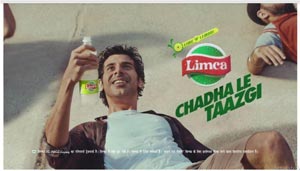
    Coca-Cola India has announced the launch of a new campaign for Limca. The new campaign ‘Chadha Le Taazgi’ is aimed at elevating the brand’s positioning as the ultimate thirst quencher that offers freshness and rejuvenates people.


    Commenting on the launch of the new campaign, Abhijit Datta, Director – Flavours, Coca-Cola India said: “With its light-hearted and relatable campaigns across the years, Limca has always touched our hearts. The brand and the product have a deep-rooted connection to India and it is widely acclaimed for its unparalleled ability to extinguish thirst, and leave you feeling fresh. We are continuously evolving our storytelling with consumers and inspiring them to enjoy themselves with our refreshing and great tasting portfolio beverages. The new TVC is being aired both on television and digital platforms”.


    Added Amit Nandwani, Executive Creative Director, Leo Burnett on the TVC: “With the new Limca campaign, we’ve tried to bring the playfulness, romance and signature splash back to the brand. Set to a modern rendition of a Bollywood classic, the film seeks to bring alive Limca’s promise of water-like freshness in a fun and engaging manner.”


  • Limca adds new ad in ‘Phir Ho Ja Shuru’ Campaign

    By A Correspondent


    Soft drink brand Limca launched its new commercial as part of the ‘Phir Ho Ja Shuru’ creative campaign.


    Explaining the thought behind the campaign, Abhijit Datta, Director- Flavours, Coca-Cola India, said: “Limca is a great thirst quencher and refreshes you to take on new challenges in the everyday tournament of life. We often encounter detours and obstacles in our daily lives that can lead to physical and emotional exertion. The ad is a take on daily challenges. It is these moments of our everyday that Limca inspires us to reframe and just keep moving on. The new film will be launched on-air on the 1st of June and will also feature on digital.”


    Added RajDeepak Das, Chief Creative Officer, Leo Burnett: “Phir ho ja Shuru is about not giving up, and starting all over again after a physically exhausting task. Apt for a brand like Limca, which is known to rejuvenate and recharge by quenching your thirst. Our new commercial is quirky and uses relatable humour to drive home the message. The film is high on energy and has a peppy Punjabi track, besides a twist in the end that will surely bring a smile on the viewer’s face.”


  • Limca out with a sequel to ‘Phir Ho Ja Shuru’ ad campaign

    By A Correspondent


    Building on the Chor-Police “Phir Ho Ja Shuru” campaign, Limca has further extended its campaign by introducing another TVC under the same tagline. The new ad campaign focuses on the spirit of not giving up and starting all over again after a physically exhausting task. Taking consumer engagement to the next phase, the TVC also introduces its promotion ‘Limca jahaan, recharge wahaan’. Open to individuals residing across India (except in the state of Tamil Nadu), the offer allows 10 lucky winners to win mobile recharge up to INR 1000.


    Emphasizing on the spirit of being game enough to start all over again, the campaign revolves around the rejuvenation of a physically exhausted individual with Limca and getting a free mobile recharge, thus highlighting Limca’s act as a saviour on both counts. The TVC showcases a young traveler trying to locate a guesthouse in a remote hill station and as he is about to receive directions to the guesthouse he runs out of balance in his phone. The exhausted traveler with a heavy luggage reaches to a hill top. The Limca in his bag then comes to his rescue by providing refreshment along with a recharge of INR 1000.


    Conceptualized by Leo Burnett, the film has been directed by Nitin Parmar and produced by the production house – Equinox Films.


  • Leo Burnett leans on ‘Bhaag Bittoo Bhaag’ for Limca

    By A Correspondent


    Leo Burnett has launched a brand new campaign for Limca in a bid to establish the drink as the ultimate thirst quencher and gain market share in India’s highly competitive soft drink market. The campaign will also help the brand strengthen its popular Lime N Lemoni credential.


    Based on humour that is deeply rooted in an Indian cultural context, the new Limca campaign ‘Bhaag Bittoo Bhaag’ succeeds in creating a new language for the brand.


    The campaign looks at a scenario where the boy’s family has come to see the girl. The film juxtaposes the mother’s voice raving about dishes cooked by her daughter with the shots of her son running around to buy the same from the market. His journey from one shop to another and back home gives rise to an extreme thirst that can only be quenched by Limca.


    Raj Deepak Das

    Raj Deepak Das, Chief Creative Officer, Leo Burnett India, said, “Limca has always been part of India’s quirks and traditions. With this campaign, we wanted to maintain that and take the communication to another level. The campaign – Bhaag Bittoo Bhaag – is special because it talks about the brand promise of ‘quenching thirst’ by using a strong local insight we all can relate to being Indians. In a situation of extreme physical stress and having to run from one place to the other in search for food, the protagonist finds his answer to thirst in Limca. The whole narrative is quirky, humourous and insanely Indian. It is a kind of film you would enjoy watching repeatedly; a great way to achieve a higher level of brand recall amongst the Indian consumers.”


    Amit Nandwani

    Amit Nandwani, Executive Creative Director, Leo Burnett India, added, “When faced with situations of extreme heat and tiredness, nothing quenches your thirst like Limca. The new Limca campaign essentially conveys this point while integrating quirks rooted in Indian culture. The plot is not only relatable but also drives home the point in a light-hearted manner.” Limca plans to take its new campaign to consumers through digital and traditional media platforms to intensify the brand experience.


  • It’s wrong for us to say that India is slowing down: Muhtar Kent, Coca-Cola

    Muhtar Kent

    By A Correspondent


    Unfazed by the economic slowdown and talks of policy paralysis, Muhtar Kent, global chairman and CEO of beverage maker Coca-Cola, on Tuesday announced a fresh investment of $3 billion (approx Rs17,000 crore) over an  eight-year period for expanding its bottling, cooling, and distribution operations as well as accelerating its pace of growth in India.


    “Whether or not the government makes policy changes, we continue to announce investments in India,” Mr Kent said, adding that the company’s focus would be on ‘continuing to be flexible, and work with more speed than ever before’.


    “Yes, there are some issues in the world economy. But it’s wrong for us to say that India, or China, or Brazil or any emerging market is slowing down. As you go up, the oxygen gets thinner. What’s being created today at 6-7 per cent GDP is incrementally much higher than it was some years back… what’s more important is sustainable growth and not growth that can’t be controlled, ” he added.


    The $3-billion investment is over and above the $2 billion, the maker of Thums Up cola and Kinley water had announced last November. The company has invested $2billion in India since 1993, when it-entered the country.


    Mr Kent said he expects India to be among its top 5 markets soon’, up from its current No 7 ranking. “This is a realistic goal. India’s demographic, economic and social trends are all huge drivers of growth. Six years ago, we were not strong here, not at all… but India has been a remarkable turnaround story,” he said.


    The CEO, who got a pay package of $21.2 million last year, up 10 per cent from the previous year, flew down in his private jet with close family and friends on what is his first India visit as Chairman on Monday night. During his three-day India stay, he is visiting the Taj Mahal in Agra, making a flying visit to Amritsar to meet a handful of key bottlers and attending a Coke Studio concert in Delhi. Thrown in between is a town hall meeting with Coca-Cola employees, a few market visits and a visit to the beverage giant’s headquarters in Gurgaon. Unlike rival PepsiCo’s Chennai-born global CEO and Chairman Indra Nooyi who’s a frequent visitor to India – a key growth bastion for both cola majors – Turkish American Kent had not visited India since he took over the corner office at Coca-Cola’s headquarters in Atlanta in 2008.


    Coca-Cola’s portfolio in India includes aerated drinks Coke, Thums Up, Fanta, Sprite and Limca, Kinley water and Minute Maid juices. Even after two decades of being here, the beverage maker’s top-selling drink here remains Thums Up, which it acquired from Ramesh Chauhan-owned Parle Bisleri.


    But Mr Kent said the choice depended on ‘the consumer’. “We remain “constructively discontent and we believe we are just getting started. We need to make sure we provide choices to consumers… responsible choices. And help create solutions for over-nutrition and under-nutrition,” he said.


    Like most food and beverage firms worldwide, Coca-Cola too is trying to transform itself as a ‘health and nutrition-focused company’. But over three-fourths of Coca-Cola’s revenues continue to come from sugary aerated drinks . “We let the consumer decide what he wants…. and we label our products responsibly.” said Mr Kent.


    Like its American rival PepsiCo, Coca-Cola too, has been depending on India for driving double digit growth. For fiscal 2011, for example, Coca-Cola said its global volume grew 5 per cent, aided by key emerging markets such as Latin America, India and China. A consistent growth performer, Coke’s India business has been growing for the last 23 quarters, of which 17 were in double digits.


    Source: The Economic Times

    Copyright © 2012, Bennett, Coleman & Co. Ltd. All Rights Reserved


  • Debrief: Limca: Freshness badhao, not pyaas!

    By Anil Thakraney


    Limca has changed its positioning statement this summer. Earlier they used to promise freshness. Now they are selling the drink as a thirst quencher. ‘Pyaas Badhao’ is the new message. And they have punned on the word ‘pyaas’. Thirst for a drink, and thirst for success.


    Kareena Kapoor is the new brand ambassador. In the commercial, Bebo encourages a young, budding cricketer to sweat and toil so that he can become a successful player. Of course, lots of Limca drinking shots happen along the way. Totally unhappening stuff, I say.


    I think makers of Limca have blundered big-time on this one. For one, Bebo is over-used in advertising so she adds little to brand recall. Waste of money. Cricket has been flogged to death in advertising, so that’s a waste of time. But the biggest mistake is giving up ‘freshness’ and opting for a needlessly loaded story. Yes, I am aware ‘freshness’ is a generic concept for cold drinks, but that’s where the challenge for creative people lies. On how to lift a regular thought by creating wow executions. Stunning renditions should have been tried on ‘taazgi’. The new ad tries very hard to establish the ‘pyaas’ of doing well in life. Worse, Bebo demands adequate footage too… what’s the point of using her otherwise? And in all this crowded mess, the brand gets lost.


    Not working, people. Go back to ‘taazgi’ and go back to the drawing board. And hurry, the summer shan’t last forever!


    Rating: (On a scale of 1 to 5): 1. Strategy shift bombs.


  • AdStrat: Limca ‘Pyaas Badhao’

    KV Sridhar, NCD, Leo Burnett


    1. Name of the Campaign: Limca ‘Pyaas Badhao’


    2. The Brief:

    Limca has been a long-standing brand with great equity among consumers, especially in markets like Punjab, Delhi, West U.P., Chennai and Andhra Pradesh.


    The ambition was to create a positive discontinuity for Limca that would build off the strong thirst-quenching & freshness credentials- while laddering upto a strong point of view as a brand philosophy.


    3. Research insights:

    While thirst quenching is the central attribute for the product, the brand needed to have a ‘larger than life’ emotional role in its story telling. With the feedback from the consumers, we had a well-researched and sharper take on what ‘freshness’ meant for the consumers. So we picked up this specific insight and created a communication interpreting thirst for a larger audience – the thirst to make it big.


    4. The thought process behind the creative:

    Limca’s took up the task of encouraging everyday ordinary people to aim higher and strive to reach their dreams – Where Limca quenches the physical thirst that one gets when one sets out to achieve more each time. And we encapsulated the thought in the call to action – ‘Pyaas Badhao’.


    5. Media vehicles chosen:

    We chose various mediums like TV, Outdoors, Print and Point of Sales to reach more and more people.


    6. Key issues kept in mind while executing the ad:

    It was important for us to strike the right balance between sincere efforts put in by the guy and the light-hearted ones. Also Kareena Kapoor’s tone and mannerisms were consciously kept towards the lighter side so that we don’t come across as preachy. The effort guy puts in the commercial also needed to capture the physical exhaustion he goes through to justify the well deserved and much needed bottle of Limca he gets in the end.


    7. Does the treatment do justice to the brief?

    Yes! The creative assigned a clear role to Limca – the previously unanswered question, Why should I have a Limca? – now stands resolved. Limca is about the physical thirst that one works up while chasing his emotional thirst (of his dreams)


    8. What according to you is the differentiating factor about the ad?

    Everyday people set goals for themselves and they go through a lot of hard work and perseverance in order to achieve it. With the powerful, real life message we as a brand have tried to talk to each one of those people inIndiawho thirst to achieve more and more.


    9. Market and client feedback:

    Early reaction is very positive from the market.


  • Will Coke’s 200ml pack price cut cannibalise Thums Up?

    By Preethi Chamikutty


    Summer is still a few weeks away, but cola brands have already started feeling the heat. While most brands are closely guarding their marketing secrets for the season, Coca-Cola surprised pundits when it dropped the price for the 200 ml returnable glass bottle (RGB) by Rs2 to Rs8.


    That may not seem unusual – after all in the past, Coke has cut price. However, most of those reductions were across all brands in the portfolio, from flagship Thums Up and Sprite to Limca and Fanta. This time, however, the exercise applies only to Coca-Cola.


    Independent marketers are not convinced about the strategy as they feel that in the urge to close in on arch-rival Pepsi, Coke runs the risk of cannibalising Thums Up, its top cola brand and the country’s largest selling carbonated drink.


    So why is one of the world’s most valuable brands discounting itself in India? The official response from Coca-Cola is that the “special promotional price” will “fuel growth of the cola category. As the 200 ml pack is the entry point into the category, it will recruit new consumers into the cola segment since it is a very attractive price point,” said a company spokesperson.


    The promotional offer is being rolled out in phases across select markets; 70 per cent of markets will have the Rs8 price. Those familiar with the promotion say that this is a pilot project for three months, with an option to extend it.


    Clearly, Coke has trained its sights on Pepsi – which has yet to react to the price cut – and hopes to inch closer to it. Still, market observers wonder whether the drop in price is aimed at Pepsi or at Coke’s own brand, Thums Up, which is the leader in the cola category as well as in carbonated drinks.


    Latest market share figures are unavailable – both cola majors will not part with them – but those familiar with recent numbers point out that Thums Up has a share of roughly 42 per cent of the Rs4,000 crore pure cola market. Pepsi follows with 36 per cent, and Coca follows with a share of just under a fifth (a few regional brands account for the rest).


    An official at a beverage marketer says that Thums Up also leads the approximately Rs10,000 crore carbonated soft drinks market with a 15 per cent share. If marketers do not approve of Coke’s move, it’s with good reason. “Unless this is a global diktat, this strategy is flawed from Thums Up’s point of view,” reckoned Nobby Gupta, founder & CEO, Nobby Brand Architects.


    “In countries wherever Coke is present, it always has to be the market leader and all other brands have to follow; if that is the aim for India as well then this strategy falls in place,” he added. But he also goes on to say that this strategy will have a negative impact on the combined share of both Coke and Thums Up.


    Me Gupta’s logic is simple: Lowering the price of Coke will not put pressure on just Pepsi, it will also cannibalise the market share of Thums Up. “And if Pepsi drops price too, which is likely, there is a chance of it eating into both Coke and Thums Up,” added Mr Gupta.


    Then there are those who feel that dropping prices for short-term gain is dangerous. “Because when you go back to old prices consumers may well say: ‘Thank you very much for the discount, now I will go back to Thums Up,” said Anand Halve, co-founder of Chlorophyll Brand & Communications Consultancy. “Momentary bribing does not ensure long-term consumer loyalty,” he added.


    For a generation of Indians, Thums Up, with its relatively stronger taste, is synonymous with cola. “The preference for a strong cola continued even as new cola brands entered and are now expanding the category. Over all these years, Thums Up’s communication has remained consistent,” said Devendra Chawla, president, food & FMCG, Future Group, who is a former Coke associate.


    To be sure Thums Up has assumed almost cult brand status over the past two decades with commercials like ‘Taste The Thunder’ and ‘Toofani Thanda’ that had an international look and feel to them. Ashok Kurien, advertising guru and former chairman Publicis India, who was involved in the launch of Thums Up said: “Thums Up managed to crack the soul of Indian consumers through advertising and reached out at a deeper level. It was about struggles in life, the anxiety and determination to survive and succeed. This was probably the strongest concept in Indian advertising that connected to the young Indian male. And it still connects today.” When Coca-Cola acquired Thums Up, Kurien advised the Atlanta-headquartered company to only pit Coke against Pepsi and not touch Thums Up – as it already had an 85 per cent market share. “But Coke introduced both Coca-Cola and Thums Up in 300 ml bottle and people lapped up Thums Up, with Pepsi taking the second spot.”


    The battle between Coke and Pepsi continues, although Coke officials deny the attempt to spark off a cola war; they just want to step up per capita consumption by Indians, they say. “Indians consume only 12 200 ml bottles of beverages per year compared to 675 bottles by Mexicans – the highest consumers of Coca-Cola globally,” pointed out a Coke official.


    Source: The Economic Times

    Copyright © 2012, Bennett, Coleman & Co. Ltd. All Rights Reserved
     

  • Eye on volumes, Coca-Cola to revive Citra after 19 years

    By Ratna Bhushan


    Coca-Cola will revive Citra, a clear-lime drink it bought from Ramesh Chauhan two decades ago but junked in favour of Sprite, in a move that analysts believe is more to target price-sensitive consumer segments than to unlock the brand’s heritage value.


    A person familiar with the top beverages maker’s plans said Citra will be priced about 20 per cent cheaper than existing lime-lemon drinks such as its own brands Sprite and Limca as well as PepsiCo’s Mountain Dew and 7 Up, to target a wider audience and take on smaller brands.


    A Coca-Cola spokesman confirmed the company is introducing Citra in “a few towns in Maharashtra and Gujarat” on a pilot basis. This will be followed by a staggered launch across other metros and bigger cities.


    The move has surprised industry watchers because Coca-Cola’s Sprite, the second-largest soft drink brand in the country after Thums Up, leads the lime-lemon drinks segment, which is the fastest-growing soft drink category in India’s Rs13,000-crore fizzy drinks market.


    Among those surprised is Ramesh Chauhan, who created brand Citra and made it popular in the late 1980s and early 1990s.


    “After keeping the brand in cold storage for so many years, it’s strange they want to re-introduce it now, especially when they have a strong presence in the clear-lime segment,” Chauhan said. “If they are looking for retention and heritage value, then logically even Gold Spot should be revived.”


    When Coca-Cola re-entered India in 1993, it bought out all Parle brands except Bisleri from Chauhan.


    Move aimed at mopping up volumes

    While Citra and Gold Spot were phased out to make way for Coca-Cola’s global brands Sprite and Fanta, respectively, Thums Up, Limca and Maaza were retained. Shashi Kalathil, CEO of management advisory firm Y-factor and partner at private equity fund Exponentia Capital, said the move may be aimed at mopping up volumes. “Coca-Cola probably doesn’t want Citra’s pricing to impact its larger brands. So this could be more of a pricing game and about treating Citra more as a trademark than a brand,” he said.


    Parle brand again

    It’s history that the US major sidelined Parle’s cola brand Thums Up to promote its own brand Coca-Cola for years before waking up to the potential of the Indian brand and backing it.


    Now it seems like deja vu for Coca-Cola as it is banking on a Parle brand once again to push market share in the lime segment. The Coca-Cola spokesman said Citra would not cannibalise its existing lemon drinks because there is ample room for multiple brands in a developing segment like sparkling fizzy drink in a high-potential market such as India.


    Devendra Chawla, president of food & FMCG segments at the country’s largest retailer Future Group, said the move will aid the growth of the clear-lime category, which is already seeing heightened brand activity. “To grow carbonated soft drinks’ per capita in India, apart from growing colas, it’s critical to activate flavours which have natural acceptance from Indian consumers such as lime and mango,” said Chawla, who formerly worked with Coca-Cola.


    India’s per capita consumption of carbonated drinks is just 11 litres a year compared to 34 litres in China and 675 litres in Mexico.


    The lime-lemon category in India has been growing 16-17 per cent a year, ahead of colas at about 11-12 per cent and orange drinks at 8-9 per cent. Apart from being a familiar flavour that Indians consume at home (in the form of nimbu paani), lime-lemon drinks are considered ideal thirst quenchers.


    Both Coca-Cola and PepsiCo have been promoting their brands aggressively in this segment. PepsiCo has Bollywood star Salman Khan endorsing Mountain Dew and actor Sharman Joshi for 7 Up, while Coca-Cola pushes clear-lime drink Sprite and cloudy lemon drink Limca on the irreverent and freshness platforms, respectively.


    Source:The Economic Times

    Copyright © 2012, Bennett, Coleman & Co. Ltd. All Rights Reserved