

Tag: Lifebuoy

  • MullenLowe aces at Jay Chiat 2021

    By Our Staff


    MullenLowe Lintas Group picked up two Golds and an honourable mention for its work on Lifebuoy and Wheel, respectively at 4A’s Jay Chiat Awards,. It is the only agency from India to win at 4A’s Jay Chiat Awards this year held as a virtual event on September 13, 2021.


    Virat Tandon
    Virat Tandon

    Said Virat Tandon, Group CEO, MullenLowe Lintas Group said: “4A’s Jay Chiat finds global acclaim and is possibly the toughest strategy award to win. It is a privilege for MullenLowe Lintas Group, India to have won it six times, something very few agencies in the world can boast of. The twin Gold wins for Lifebuoy this year is a great endorsement for the purpose-led work we believe in driving for our brands. A big thank you to our clients at Unilever for wholeheartedly partnering us in our vision for the brand. Kudos also to our colleagues at MullenLowe Singapore, MullenLowe Salt and Weber Shandwick for supporting the ‘H is for Handwashing’ campaign. An honourable mention for another of our strong purpose-led work, the “Ghar se career” project for Wheel is also very encouraging and spurs us to do better.”


    Added Sagar Kapoor and Prateek Bhardwaj, CCOs, Lowe Lintas added: “As Lintas, we have always been a passionate practitioner of purpose-led brand-building. While one campaign is of a global scale and the other focuses on the local insights, both have an element of purpose at their core, that has resulted in success for the brands in the marketplace as well as with the audience. Both these brands are super active in their ‘brand do’ and shall continue to do so regardless of awards and rewards.”


  • Zee’s ‘Indian Pro Music League’ onboards many sponsors

    By Our Staff


    There is much excitement at Zee Entertainment Enterprises Ltd with the success of its Indian Pro Music League (IPML), airing on Zee TV and Zee5.


    Speaking about the positive response from advertisers, Ashish Sehgal, Chief Growth Officer – Advertisement Revenue, ZEEL said: “The rise of the ‘anytime’ consumer has fuelled the need for creating content that is platform-agnostic and that can be consumed by the audience any time of the day. Our objective has always been to maximize our content presence by being platform agnostic and thereby providing holistic solutions to our advertisers. Our aim of bringing India’s first-ever music league on both, linear and digital platforms, was to amalgamate the enthusiasm generated by a league with the emotion evoking power of music. We are pleased to see the overwhelming response received from our partners and we are confident that the novel concept of the show along with the star-studded line-up will attract audiences across platforms to make the show a resounding success.”


    Among the many sponsors, IPML has:  Maruti-Suzuki and Lifebuoy as Co-Presenting sponsors, Parle G and Whisper as Co-Powered sponsors, Balaji Wafers as Special Partner and Nilkamal Industries’ Nilkamal Mattrezzz, Asian Paints Limited’s Ultima Protek and Life Insurance Corporation (LIC) as Associate Sponsors. Phew!


  • Lifebuoy unveils series of initiatives in fight against Covid-19

    By A Correspondent


    Taking the cause of preserving health and preventing the further spread of Covid-19, Lifebuoy has launched a nationwide public awareness campaign educating people on the importance of and steps to hand sanitization, urging citizens to use any soap at their disposal.


    The campaign kicked off across print, television and digital platforms with a message that placed emphasis on the importance of handwashing while also boldly naming its competitors and urging consumers to use any soap that is available to them.


    Commenting on the public awareness campaign, Srirup Mitra, Vice President, Skin Cleansing, Hindustan Unilever said: “Until a cure is found, a simple act of handwashing, when done correctly, can effectively contribute towards reducing the spread of this deadly virus. We at HUL have ramped our production capacities to ensure that Lifebuoy hygiene products are available to consumers and continue our commitment to support the nation and its citizens in this fight against corona virus.”


  • Slice of Death Advertising


    By Sanjeev Kotnala

    The only sure thing in life is death. Rest is just a probability.

    We appreciated ‘Slice of life’ (SOL) advertising, however, we rarely see brands leveraging ‘Slice of Death’ (SOD) imagery and references.

    Death is all around us.

    Death is all around us. It is there in the newspapers, in the TV news and serials, in social media, and is an integral dominant theme in video games. However, the use of death in advertising remain taboo.

    Grief-exploitation is not my interest or focus of this piece. I am not referring to a few brands trying to get into a conversation during tragedy, calamities or death of a celebrity.

    Death Beyond Insurance And Social Messaging.

    Insurance brands flirt with death. Some social cause advertising like ‘drunk driving’, ‘Anti-smoking’ have  also explored the unchartered arena of death. But what about brand and services not directly liked with death. Do they leverage this certainty of life in their communication.

    Can death trigger the right context for brand/product/ service usage?

    Death is a simple phenomenon but a complex emotion. A certainty that we don’t want to acknowledge. Its relevance as a shock and clutter breaker cannot be disputed. Unfortunately, it evokes  strong negative emotions, and hence, brands fear to associate with it.

    Death is hardly aspirational. No one want’s to die. Even on our birthdays, we celebrate the end of another fruitful year on planet earth. But, we hate if someone reminds us we have walked another year closer to the end.

    Death Exploitation Can Be Misinterpreted By Audience.

    The ads by McDonald’s ( Child Grief- the kid being told of dead father’s liking for Filet-O-Fish ) and Nation-Wide ( Super Bowl-drowning kid- prevention of childhood accidents) in the US have faced adverse consumer reaction. If you carefully analyse, there was nothing wrong in them.


    We know the consumers’ purchase decision is more based on emotions than on information and features. We know death is a powerful stage and triggers extreme emotions. Yet, it remains an area of a no-go.

    Humour In Death.

    We have seen some of the brands cautiously using death to their advantage. Most of the time, it has been used as a scare but to make a point humorously. Remember the M-SEAL ad, where a drop of dripping water changes the will.

    Here I must share the fantastic ANTI-SMOKING communication featuring Sunny Leone and titled Eleven Minutes. A beautiful way of delivering the message to its TG.

    Even radio brand MIRCHI used the Ruddali concept and their engagement with death so powerfully.

    On the other hand, the Lifebuoy soap hinted at young under-five mortality rate and how death can be avoided in its communication. Here death is central to the theme but has a brief reference that does not raise high adverse reaction.

    Insurance Can’t Avoid Death

    On the insurance side, death is unavoidable. However, the way death can be used, dramatised and contextualised is the key to effective communication. Here are two examples.

    Max Life Insurance used the fear of death in its communication. My mother hated this communication as the protagonist name is my name. I am not sure if the brand used the most prevalent regional nicknames in their language dubs. But this one worked.


    Policy bazar has been flirting with death and eventuality of it, to push people to pick term insurance early. They have a dead man coming back to life for that short time and talk of term insurance or Yamraj getting angry at the person for not taking the term plan when he/she had the time.


    BEAUTIFUL DEATH

    There is no definitive answer to some of the basic questions. And as there is subjectivity and personal bias, there are no clear directions. Should a brand use death and its effect? Does shockvertising works? What is the right way to leverage death? Can death be the clutter-breaker?

    Here is an example of flirting with death. This short digital film was not produced by the brand and its agency but is highly associated with its theme ‘KEEP WALKING’. A simple story of two brothers visiting the places of common interest and togetherness for one last time.

    And maybe this is incomplete without sharing yet another communication developed by the same team that did the ‘Keep Walking’ film. ‘ABC of Death’ is about being alive. And the reference is death. Life and death- after all are two sides of the same coin.

    Metro Melbourne for their rail safety did what is now known as the most delightful horrible creation- a song telling people there are more similar almost as dumb ways to die as losing one’s life by being unsafe near train tracks. Any time I discuss this particular creative, I am reminded of daily deaths in Mumbai Local. I am not sure why such a beautiful message has not been localised or inspired some such release in India.

    DEATH IS NOT SO BAD.

    Few research reports do suggest that elderly people react more adversely to the use of death in communication than youth. However, none of them tells us as to what is an appropriate way to reflect and contextualise?

    And in this era of APP for everything, there is WeCroak. It is a simple app that reminds you of death five times a day. You download it from any of the play stores and make a payment to subscribe. Then it will message to remind you of death. And expect that such messages will help you to better contemplate life.

    In our Brand-I workshop, we take on exercises where we consciously focus on the possibility and certainty of death as an integral part of life. We talk of death as a motivator for the delegates to realise how much time you have to achieve the long list of wishes you may have.

    Death As Curative.

    Death is such a strong negative that even the terminally ill patients and their families don’t encourage discussion on the subject. As if ignoring it can push the inevitable. Last Laugh or Last Word for ‘Indian Association Of Palliative Care’ has taken death head-on and in the process raised awareness of Palliative care.

    And here is a wonderful example where the elderly person fakes his own death to get the family together. Here is a perfect example of using such a potentially negative emotion during the festive period but leverage it contextually for a beautiful, powerful emotional takeaway.

    So when you can and do celebrate life- why give death a step-brotherly treatment. It may give rise to strong emotions but rightly contextualised it can still be used by brands.


    PS: I would like to know of some brand communication (other than Insurance and social messages) where the brand has flirted with death and its vignettes. Most cases I have seen, its primarily the male who dies, has some Indian brand used the death of the female in its communication? Do share at Facebook sanjeevkotnala and twitter S_kotnala

     

  • Lifebuoy promotes public awareness on hygienic living at Kumbh Mela 2019

    By A Correspondent


    Lifebuoy has been acknowledged as ‘Swasthya Sehbhagi’ at Kumbh Mela 2019. The mela authorities have recognised the efforts of Lifebuoy to encourage people to adopt the healthy habit of hand-washing through a series of highly innovative initiatives.


    Appreciating Lifebuoy’s efforts at the Kumbh Mela, ACMO Dr. VK Mishra, Nodal Officer – Sanitation Kumbh Mela Prayagraj said: “We appreciate the role played by Lifebuoy as ‘Swasthya Sehbhagi’ (Hygiene Partner) in this grand event to spread the message of hygiene and sanitation. We are hopeful that these initiatives will help drive a behavioral change among the masses.”


    Shedding light on the recognition and thought process behind the interventions, Harman Dhillon, the General Manager of Skin Cleansing at HUL shared: “It is matter of great honour to be recognised by the Kumbh authority for our efforts as ‘Swasthya Sehbhagi’. Recognitions like these reaffirm our belief and serve as motivation to keep innovating with our approach to encourage more and more people to adopt handwashing before eating and after using the toilet as a habit.”


  • DDB Mudra & PHD work for Inorbit Mall & HUL’s Lifebuoy shortlisted for Warc Innovation Awards

    By A Correspondent


    Twenty brands from around the world have been shortlisted for the Warc Innovation Awards. And among these are two that are from India. Home-run to home-bound for Inorbit, created by the DDB Mudra Group for Inorbit Malls and Chamki – story of an unborn child for Hindustan Lever’s Lifebuoy with PHD India being the agency.


    The 25-member judging panel, chaired by Dana Anderson, SVP and Chief Marketing Officer of global snacks company Mondelēz International, have shortlisted a diverse selection of campaigns from a wide range of territories including Australia, Egypt, India, Lebanon, Slovenia, Taiwan, Thailand, United Arab Emirates, United Kingdom and USA.


    The brands and organisations shortlisted this year are AbsorbPlate, Axe, Baheya Cancer Hospital, Bodyform, Bou Khalil Supermarché, BT Sport, CNCO, Currys PC World, Dyson, Emirates NBD, HELPMET, Inorbit Malls, Lifebuoy, MasterCard, NHI – Daman, Penguin Random House, Vision Australia, Spar Interspar, Toyota and Whirlpool.


    The aim of the Warc Innovation Awards, now in their fifth year, is to recognise innovative thinking that delivers tangible results. The top entries will be awarded Gold, Silver and Bronze awards. The Grand Prix for the best overall paper will receive $5,000 and five $1,000 Special Awards recognising specific areas of excellence will be awarded at the judges’ discretion for: innovation in a product or service, channel innovation, category innovation, co-created innovation and innovation in a not-profit-campaign.


  • Lifebuoy’s ‘Jump Pump’ activity casts positive impact on schoolkids

    By a correspondent


    It is a startling fact, that more than 2 million children lose their lives to diarrhoea every year. It is even more alarming, that a major contributor to this number is India. Washing hands with soap at key occasions during the day has been proven to be the most cost-effective and scalable solution to prevent the spread of deadly infections likes pneumonia and diarrhoea. This simple act has the potential to save millions of lives.
     

    Over the years, Lifebuoy has implemented several innovative programs to create habit change for hand washing amongst children as well as to raise awareness about the five critical hand washing occasions in a day. Of these five, one of the most important is washing hands with soap before eating.


    In April 2014, Lifebuoy chose the occasion of the mid-day meal to convey this message. India’s mid-day meal scheme feeds over 120 million children a day, making it the perfect opportunity to address the maximum number of children across schools, at the actual moment of truth.


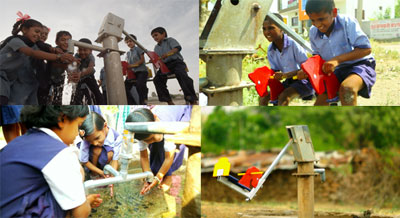
    Across many rural schools, it was found that children were not washing hands before having lunch, despite the availability of soap. The fact was that the old and heavy hand-operated pumps are the only way to access water in these schools. Young children find it difficult and tiresome to operate these pumps and hence would simply not bother coming near them. The focus was thus shortlisted towards this key barrier.


    Vipul Salvi, National Creative Director / Geometry Global India said: “We need to keep pushing the limits of creativity to help solve basic problems like poor hygiene… the great thing about the Jump Pump is that it worked like a charm with kids while being cost-effective and easy to implement.”


    Rahul Saigal, President / Geometry Global, India added: “Sometimes the best way to teach kids an important lesson is to distract them into learning. You can’t engage children by mere preaching; you need to talk to them in a language they understand: the language of play!”


    What Lifebuoy did was install a specially crafted rocking horse, made from a combination of wood and metal with a simple screw-on mechanism, on to the handles of these hand pumps in schools – transforming them into “Jump-Pumps”.


    At lunchtime, when children headed out of class for their meal, they were taken by surprise by this colourful addition to their school premises. Promoters explained the concept and the proper technique of washing hands with soap along with putting up posters at prominent spots in the school to explain the “Jump Pump” game. Apart from this, Lifebuoy soap was also provided to ensure soap availability throughout the activation period.


    Currently, about 1500 rural schools across UP and Maharashtra are being impacted with this activity between April-May 2014.


    George Koshy, General Manager (Skin Cleansing), HUL said:” Lifebuoy has a proud history of being a brand that stands for saving lives. It is indeed our mission to ensure that hand washing with soap becomes a habit for children, as a step to reducing diarrheal mortality. The ‘Jump Pump’ activation is an innovative approach, appealing to children in a manner that is fun and enjoyable.”


  • The soap that saves lives, and other marketing stories


    By Meghna Sharma


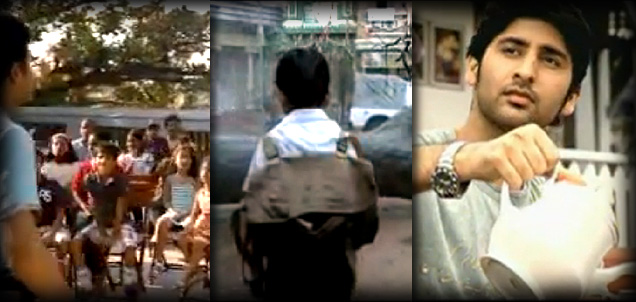
    The latest campaign by Lifebuoy shows a man walking on his hands from his house to the village temple as people follow him because his son turned five. ‘What’s so special about it?’ is the first thought which comes to mind, and this is echoed by the tourist who witnesses it at the end of the advertisement. The answer is the fact that two million children the world over still die before the age of five due to preventable infections like diarrhoea and pneumonia.


    The advertisement is nothing but taking forward the commitment of Unilever’s health soap, Lifebuoy, of teaching children healthy hand washing habits. The three-minute film seeks to inspire action from viewers to pledge support for Lifebuoy’s handwashing programmes on the ground.


    Saving Lives

    Samir Singh, Global Brand VP, Lifebuoy says, “Our goal is to change the handwashing behaviours of a billion people by 2015. We wanted to tell the world the Lifebuoy story in a deeply emotional way. Our brief was to translate the statistics into something real, personal and powerful. And through this film, that’s just what’s been done.”


    The campaign is created by Lowe Lintas. On the film, R Balki, Chairman and Chief Creative Officer of Lowe Lintas, comments, “A small act like washing hands with Lifebuoy can save a child’s life. This message needs to reach far and wide. So, we created this campaign that can open one’s mind to this amazing message. A campaign that moves people to the extent that they care to share it with others”.


    The campaign aims to share the brand’s purpose. And since, social media and technology play an important role in connecting like-minded people who are eager to do something to make this world a better place. The brand wants to tap into this new community of people to inspire them to spread this message of saving lives.


    “This is not just about an ad, but about creating an act. It’s an act that will make a real difference. An act that allows individuals, professionals and organizations to come together and collaborate around the common goal of eliminating child deaths due to diarrhoea and pneumonia. This film is the beginning of that journey and a clarion call to all to join this purpose,” adds HUL’s spokesperson.


    Roti Alert!

    At the beginning of this year, the brand launched another unique campaign – Roti Reminder.


    The Maha Kumbh Mela which sees almost 100 million people descending upon the city of Allahabad turns into a temporary city in itself. And since the infrastructure available is often unable to service the sanitation and health needs of all attendees, infections tend to occur and spread far more easily through transmission of germs, which happens most commonly through infected hands. Hence, Lifebuoy hoped to aid the patrons and attendees by reminding them about the importance of washing hands and protecting oneself from germs. Lifebuoy not only spread the message at key junctures throughout the city through street hoardings and banners. But reminded people to wash their hands before having food through the food itself!


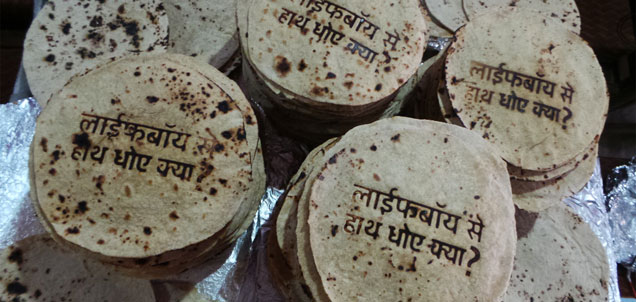
    Lifebuoy created a special heat stamp with the message, ‘Did you wash your hands with Lifebuoy?’ and then hired 100 promoters to stand in 100 kitchens spread across the Maha Kumbh Mela and imprint fresh rotis with the Lifebuoy message.


    Speaking about the genesis of the idea, Sudhir Sitapati, General Manager – Skin Cleansing, HUL says,” The idea came from the insight that hand washing with soap before eating can prevent transmission of many disease causing germs, but people often ignore or forget to do this simple act. A reminder at the right time can go a long way to ensure this habit is followed. This was the starting thought from which we developed a unique intervention – the Roti Reminder.”


    The activation was for a period of one month and started from February 1, 2013. Lifebuoy also provided free soap to attendees at the Kumbh Mela.


    The idea helped Lifebuoy reach out to a massive audience, at a fraction of the cost.


    The on-going commitment

    Over the years Hindustan Unilever has targeted its memorable campaigns towards achieving its aim, and Lifebuoy’s social mission has been to bring safety, security and health to people through the active promotion of hand washing with soap.


    In 2002, Lifebuoy started a campaign known as Lifebuoy Swasthya Chetna, to promote good health practices by actively encouraging people to inculcate good hygiene practices, such as washing hands with soap at least five times a day. From 2002 to 2010, the project touched more than 120 million Indians.


    Lifebuoy reached out to nearly 30 million people in rural India over 2010 and 2011 through a multi-brand rural outreach programme called Khushiyon Ki Doli (KKD) or “Caravan of happiness”.


    Over the past 10 years, Lifebuoy has taken its hand washing behaviour change programmes to millions of people across the world, and now through its latest campaign it is aiming to change the hand washing behaviour of a whole village in central India – Thesgora, a village with one of the highest rates of diarrhoea. The initiative supports Unilever’s goal to deliver on one of its commitment under its Sustainable Living Plan – to help more than one billion people take action to improve their health and well-being.


    By 2015, Lifebuoy aims to change the hygiene behaviour of 1 billion people across Asia, Africa and Latin America by promoting the benefits of hand washing with soap at key times.


  • HUL sells Lifebuoy by stamping rotis at Kumbh Mela

    By Sagar Malviya


    At Kumbh Mela, the largest congregation on earth where all big marketers are vying to sell their wares and boost their brands, one promotion that stands out is Hindustan Unilever’s ‘Roti Reminder’ for its Lifebuoy soap brand.
     

    The country’s largest consumer products firm, along with creative agency Ogilvy, has partnered more than 100 dhabas and hotels at the mela site to serve rotis that are stamped with “Lifebuoy se haath dhoye kya?” (Have you washed your hand with Lifebuoy?) “The ‘Roti Reminder’ gets a consumer’s attention at the exact time when hand washing is critical,” Sudhir Sitapati, general manager, skin cleansing, at HUL, says. That is, right when she sits down to eat roti with her hand.


    The company has made special heat stamps to make an impression of its message on rotis and hired 100 promoters to stand in 100 kitchens across the mela. The campaign started on February 1 and will run for 30 days. The company hopes to put the hand wash reminder on 2.5 million rotis.


    “The Maha Kumbh provides a unique opportunity to communicate this message to a large, predominantly small-town and rural population,” Sitapati says. “In effect, this simple, clutter-breaking idea will help us reach out to a massive audience, at a fraction of the cost.”


    Source:The Economic Times

    Copyright © 2013, Bennett, Coleman & Co. Ltd. All Rights Reserved


  • Lowe & Lifebuoy win India’s first Global Effie

    By A Correspondent


    Lowe Lintas and Partners India’s campaign for ‘Lifebuoy Super-Fast Handwash’ was declared the 2012 Global Effies Bronze winner at New York on Wednesday. Earlier this year, Global Effies had called for entries of globally effective campaigns across the world. Lifebuoy was shortlisted earlier in the month along with brands like Nike, Google and X- box.


    Said Saji Abraham, Global Planning Director, Lifebuoy and Virat Tandon, Global Business Director, Lifebuoy: “Lifebuoy Superfast Hand-wash is a liquid handwash formulation that kills 99.9% germs in 10 seconds. We responded to this fantastic innovation with a simple but insightful and persuasive idea – that children are in a hurry when it comes to hand-washing; and so if your handwash cannot keep pace with them, germs on their hands will just not go. This campaign won because we were bold, competitive and consumer focused at the same time.”


    Joseph George, CEO, Lowe Lintas and Partners, said: “As an agency, we take the Effies seriously. And so winning, not just the Lowe & Partners Worldwide Network’s but also India’s first ever Global Effies is hugely satisfying and encouraging.”


    See also:

    http://www.effie.org/winners/showcase/category/43 Grand Effie winners

    http://www.effie.org/winners/showcase/2012/6695 Information on Lifebuoy ad and credits

    http://www.effie.org/winners/showcase/2012/6695 The Lifebuoy presentation


  • Winning consumers, dil se


    By Shubhangi Mehta


    ‘Advertising’ generally relates to a 30-60 second commercial which is, in some way, a break from whatever has grabbed our attention on the TV. It is, at times, packed with humour or creativity which manages to engage audiences and pay attention to the product being endorsed. But these days, brands are thinking beyond short term goals such as increasing sales to a long term goal of maintaining goodwill for the brand.


    For a while now, a lot of advertisements are not just based on a self-centred motive to sell the product but the brands and creatives are becoming more and more altruistic and trying to engage the audiences by including them in the commercial.


    Whether it is Coca-Cola “spreading happiness” or Tata Tea asking the consumer to “Jaago Re”, almost every brand is trying to step ahead and be an element revolutionising society.


    [youtube width=”400″ height=”250″]http://www.youtube.com/watch?v=M5ECJrnqPcI[/youtube]

    R Balki, Chairman and CCO, Lowe Lintas India, said, “There needs to be a connect of the message with the product. Brands just cannot jump onto the bandwagon by saying something which isn’t connected with the product. Even before Tata Tea or Lead India, it was Lifebuoy that came up with ‘koi dar nahi’, which encouraged kids to walk out and clean the streets. Hence, there is a definite need of product association with the message. Even in the Tata Tea campaign, tea is always associated with awakening and, with a name like Tata attached to it, we took it a step ahead and correlated it with awakening against corrupt politicians and so on. The thought was based on being optimistic and not cynical.”


    As a matter of fact if we are to recall, such advertisements are also the ones that manage stay in our minds the longest. Be it ‘Jaago Re’ ‘Lead India’ ‘Hum Mein Hai Hero’, ‘Idea’ commercials or the latest Stayfree campaigns.


    [youtube width=”400″ height=”250″]http://www.youtube.com/watch?v=A0M0EZ8T5J8[/youtube]

    “Every businessman today realises that just a transactional relationship with a client does not work these days, there is a very important need for emotional connect with the consumers, and brands like Coca Cola are realising the same. The trend has been there for a while, but its gaining momentum as every brand wants to be in the good books of the consumer. This is a worldwide trend where the society needs to know what exactly we are giving them back,” explained Prasoon Joshi.


    The problem lies when rather than being engaging, these commercials become preachy. The idea should be that it sermonises in such a creative way that it manages to engage a consumer, who considers an advertisement a break from a nail biting cricket/football match, or a soap opera that he /she is watching


    KV Sridhar, NCD, Leo Burnett, India, said, “More and more brand are realising these days that whatever we do is replicable. All the uniqueness and benefits get blurred after a while. Be it the uniqueness of an iPhone which is replicated by Chinese and Korean companies or the uniqueness of a brand communication. The other thing that marketers have understood is that ‘honesty’ and ‘selflessness’ are the keys to attract audiences. The Brand now tries to tell the audience that your ideas and my ideas are the same and this has become the solution to connect with the masses.”


    It won’t be wrong to say that Indian society gives utmost importance to values when compared to any other society. Hence, it helps a brand to come across as socially responsible.


    [youtube width=”400″ height=”250″]http://www.youtube.com/watch?v=6DkS7wfPMdQ[/youtube]

    Rahul Kansal, CMO, Bennett, Coleman and Co, said: “When it comes to using a social message to promote one’s brand, it has to have certain connection with the product. Sometime back, we saw Aircel’s campaign to Save the Tigers. Despite being a good concept, the campaign did not leave a mark, as it didn’t really help the brand because the cause wasn’t really connected with the brand. On the other hand, if we talk about Tata Tea’s Jaago Re campaign, it is a beautiful example of laddering up by a brand since tea is always associated with awakening and here the brand communication took it a step further by making it an awakening of the society towards the corrupt system. The Coke ad is also an example of going ahead with a thought of a drink which is meant to quench thirst, stepping ahead and becoming a brand to spread happiness. Times ofIndia’s ‘Lead India’ and ‘TeachIndia’ are also an example of laddering up by using a social message.”


    One might wonder, is creativity becoming a follower rather than a creator? One can also speculate that creative thought is the slave of trend, where one does something exceptional and others follow, as that becomes what the audiences want. The fact that such campaigns manage to capture the consumers’ eye is evidence. This practice had been seen in the past as well, but more and more brands have been adopting the concept lately. Will it continue, and how well can creativity present it? The fact remains that any product endorsing itself on such messages, even if remotely, needs to be connected with the communication at a certain level.