Tag: LGBT

  • UrbanClap launches ‘LGBT’ campaign

    By A Correspondent


    UrbanClap has announced the launch of its ‘LGBT’ campaign, championing their cause for the greater good of the community as well as the society. Known for its stance on social issues like women empowerment and education, UrbanClap strongly felt the need to come out in support of the LGBT community in India, promoting their right to love anyone they want – irrespective of Caste, Creed, Religion, or Gender. With this campaign, UrbanClap supports the right to love anyone you choose.


    As part of this campaign, UrbanClap has tied up with a Delhi-based startup agency called Ufaan, which has worked on a number of social films in the past. Together, they have launched a short film titled ‘Show your Love with Pride’, which portrays a father’s struggle to accept his daughter’s relationship with another woman. With her supportive mother, the daughter proves to her father that her love is genuine, via a photoshoot organized by UrbanClap. The photos of his daughter makes him realize the dynamics of modern day relationships and reminds him of the barriers he had to counter in his interfaith marriage. This realization leads him to believe that love has no boundaries and finally accepts his daughter’s relationship.


    Commenting on this empowering initiative, Abhiraj Bhal, Co-founder, UrbanClap said, “We at UrbanClap are a simple bunch of people. We believe that everyone should have the right to love whoever they want to as it’s the most basic human right. We firmly stand with the LGBT community in India as they fight for their equal rights in the eyes of law, or society. Our past efforts with the NAZ foundation, and this film, are very small gestures towards furthering the cause of the LGBT community.”


    The social film is an attempt to make people realize that love has no boundaries and should be accepted without judgment.


    To further the impact of this campaign, UrbanClap is offering to sponsor 5 photoshoots across the country for any same sex couple who wish to opt for this service. They can easily reach out to the team at UrbanClap through its Facebook or Twitter channels. UrbanClap promises to maintain all confidentiality if that is what the participants wish for.


  • Reviewing the Reviews: Mostly raves for Dedh Ishqiya

    By Deepa Gahlot


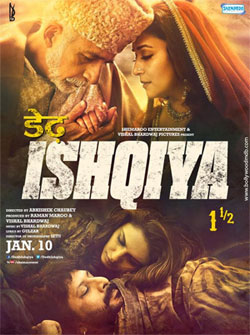
    Dedh Ishqiya

    Director: Abhishek Chaubey

    Starring: Naseeruddin Shah, Madhuri Dixit, Arshad Warsi, others


    The first major release of the year, Abhishek Chaubey’s Dedh Ishqiya, wins mostly raves and ratings that range from 2.5 to apt, probably leaving readers befuddled.


    The film got its media hook in the form of a comeback for Madhuri Dixit, and she seems to have got a mixed welcome. The language, milieu, style of the film belongs to a bygone era, though it is set in the present, and has an ending that would please the LGBT activists, especially when they need support.


    Aniruddha Guha of Time Out Mumbai commented, “Right from when the first trailer of the film released – the one about the seven stages of love - Dedh Ishqiya has been a movie to feverishly look forward to, and it more than meets expectations. After Rajkumar Hirani’s two Munnabhai films, each of which stood out for their individual brilliance, it’s the two Ishqiya films that achieve the feat (incidentally, Warsi has acted in all four). It’s dark, sardonic and funny. Don’t miss 2014’s first great Hindi film.”


    Shubhra Gupta of Indian Express was not all that impressed. “‘Ishqiya’ gave us a couple of lovable rogues with a lilting Bhopali brogue, and a tricky leading lady in the wickedest ‘cheent ka blouse’ and a startling line in ‘gaalis’. Director Abhishek Choubey’s debut film had an arresting swagger and a distinct voice, and characters—full-blooded, full-bodied- that stayed with you much after the film was over. The sequel has the same two losers, a little worn and weathered, trying their luck in another town, and two new ladies, holding out the promise of one-and-half-times the fun. Fun it is for some time, and then it starts to slide. This one should have been a humdinger, but it falls short.”


    Saibal Chatterjee of NDTV.com gave it a glowing review too, “In fact,Dedh Ishqiya is in many respects appreciably more enthralling than Ishqiya. Thematically, the follow-up casts its net far wider and comes up with striking insights into the flaws and foibles of people who haven’t lost their flair for the flashy despite their lives having hitting the skids. The screenplay is laced with acidic wit, the comic touches are subtly sly, and the on-screen performances are marvellously modulated. Dedh Ishqiya entertains, but does so in a manner that does not trifle with the intelligence of the audience. In other words, here is an exceptional film that does not have to negotiate the kind of facile crowd-pleasing narrative formulations that most Bollywood flicks must necessarily wade through in order to get to the Rs 200-crore mark. Dedh Ishqiya might not get there, but it is a triumph of measured craftsmanship and storytelling finesse.”


    Vinayak Chakravorthy of India Today wrote, “Ishqiya started off with an advantage this sequel will not get. Like all first films, it had concept novelty on its side. You had a couple of brazen rustic conmen with hearts that flutter at the tiniest tease, thrown into a mix of dark wit, crime and amoral amour. In a broad sense, Dedh Ishqiya is basically reloading that winning formula, if only at a royal scale its decadent Nawaabi backdrop allows. In a finer sense, the film is not blindly peddling what worked once. You spot a thought process that tries taking the existing formula to a new level. The effect is alluring.”


    Sanjukta Sharma of Mint heartily commended the film. “Writer and director Abhishek Chaubey follows up his rompy revenge caper Ishqiya (2010) with a sequel, Dedh Ishqiya, a terrific entertainer about friendships and the ways in which human beings form bonds for solace and dreams. When I am m by the crassly sexist ethos that governs Hindi films today, Ishqiya is one of the films I like to think of. Here too, like in the first, Chaubey keeps his light, humorous touch intact without failing to smuggle in the class and gender politics crucial to the story.”


    But the five-star rave comes from Rediff’s Raja Sen. “Rarely is a Hindi film as mischievously besotted with wordplay, but one look at Chaubey’s co-conspirators confirms that no syllable has been picked accidentally. In this sleight-of-hand tale where gangsters point with iambic-meter before pointing with guns, Chaubey has master wordsmiths Vishal Bhardwaj and Gulzar alongside him, making for a script that balances words as deftly — and, crucially, with as much nervous energy — as a knife-juggler with a case of the hiccups. It’s a marvel.”


  • LGBT as TG: For pride and prosperity


    Shielding themselves from social stigma, India’s gay people lived double lives – one for the world and one in which they were true to themselves – for the longest time. Today, thanks to aggressive activism, growing awareness and an increasing number of LGBT people coming out of the closet, a new world has opened up for them. They are now carving out their space as niche consumers, giving marketers a new target group.


    Smart marketers are taking note of this newly empowered community. A report on Business.com said that gays and lesbians spend more than $600 billion every year across the world. They’re a business owner’s dream because they are:


    » Affluent: The average annual income for a gay household is $61,000, 20.4% higher than a heterosexual household’s, said the website


    » Educated: About 83% of gays and lesbians have either attended or graduated from college


    » Loyal: Approximately 89% of gays and lesbians are brand-affiliated and are highly likely to seek out brands that advertise to them


    Jaldi 5 with Ashraf Engineer: ‘LGBT community in India is making its presence felt in various ways’

    By Johnson Napier


    ‘Out of the Closet and into the Marketplace: The Birth of India’s Pink Economy’ report released by MSL Group India, has thrown up some stark realities about a community that for long has been a subject of neglect by many. That marketers chose to stay away from them for long is something that this report terms as surprising but suggests that there are opportunities galore for brands if they want to tap into this community.


    Ashraf Engineer, until recently Senior Associate Editor, The Hindustan Times – Mumbai and now Content Head, MSL India answers a few queries posed by MxMIndia on the report and the immense scope it presents to the marketers.


    01. The Pink Economy report has brought to the fore many facets concerning the LGBT community. What are some of the noteworthy observations from the report that you would like to highlight upfront?

    The biggest insight that we received is that even after the decriminalisation of consensual homosexuality I think the LGBT community is making its presence felt in various ways. Among that, one of those ways is economic manners where they are expressing their consumerist desires etc where we are seeing the first steps towards them becoming an important consumer group. I would be wary of stating that an economic boom or revolution is happening but the report takes the pains to say that is not the case. What the report makes very clear is that we are seeing the first signs of the pink economy emerging in India.


    It’s interesting to see a few businesses already taking advantage of this trend like apparels and accessories, travel and also events. These three have already recognised the opportunity and are working towards catering to this community.


    02. Why conduct a study/research towards a community towards whom the society is least concerned about?

    Through this study, we’ve looked at what is happening in the market, spoken to experts and then have come up with insights that are transpiring within this community. You could rather term it as being a business insight report. As for the need, any business-related organisation like ours where it is our job to support various businesses and communication strategies – it is our job to spot a trend early. We believed that it is going to be an important segment in the days to come and therefore felt the need to do the report.


    03. How have the marketers taken to the findings from this report? Do you see them more eager now to reach out to this section of the population?

    The response so far has been very positive. They also seem to understand that there could be an opportunity in time to come. In fact we have received a good response from the Media too. But this segment is not as evolved as it is in the West where marketers in various sectors specifically draw up business strategies and launch products centered towards this community. In fact apart from apparels and travel, even the BFSI industry abroad has been coming out with customised solutions that are aimed towards this community.


    04. Do you foresee obstacles regarding marketing or brands reaching out to this community, especially in a socially conscious market like India?

    In India, brands who are open and brash about this community may be a bit withheld for the moment but I think somewhere down the line they will understand that they need to continue drawing up plans for this community. As a consumer segment, for this community to attain full potential will take some time.


    How would you segregate this population basis their socio-economic classification? Does it throw up any interesting trend?

    The fact is that we only have international data to fall back on but in India there is no such study that tells us what the SEC standing is or for the matter even what the population base of this community is. If one were to go by the international pattern observed, the LGBT community is said to have more discretionary income. They have large incomes as they do not tend to have children; that trend is only now picking up. So as a consumer segment they are really very powerful.


    05. According to you, what are some of the learnings that Indian marketers can pick up from foreign counterparts when catering to this segment?

    Marketers first need to understand that this group does exist as a consumer segment and that there is an immense opportunity there. We already know of apparels and travel as potential segments but even lifestyle products in general need to wake up to them. Going forward, just like you have several banks abroad that offer solutions tailored towards their needs I think the BFSI industry in India needs to consider doing something similar.


    Know the market

    The LGBT market is different because it is many layered and poorly researched. It is crucial, therefore, for companies to study the market and understand which cross-section to target. This will help in getting maximum return on investments.


    Surveys conducted by various agencies indicate that gays and lesbians look at more magazines and newspapers and watch more TV than heterosexual consumers. They are also more driven by marketing campaigns to make purchases.


    One of the biggest strengths of the community is its resilience and its tendency to bond closely. When they come together for events, festivals or concerts, the energy is unparalleled. For marketers, this is a tailormade platform.


    Jerry Johnson, a marketing professional and TEDx speaker, said: “It is important for marketers to understand that the LGBT community is not just about sexual orientation. Our identities can also be identified with our interests. For any campaign to appeal to us, it should stay away from stereotypes and clichés. It would be best to keep it normal and inclusive. The Benetton ‘Unhate’ campaign was a great one as it had a simple message and yet had a strong impact. It conveyed that it is OK to be different. GAP too had a campaign that had two men wearing one shirt. These are big brands that are trying to be inclusive and we appreciate that.” Marketers have also identified that the LGBT community as an opportunity for gadget makers.


    Marketers are reaching out to them through social media, smart phones and other new media. Gay web portals are a great marketplace and have a captive audience. “Social media is the biggest tool; we are very active online. There are several online groups, websites and social forums that attract huge traffic,” said Johnson. “The internet gives customers the luxury of privacy. The best way to reach us is through our mediums.


    We become very loyal to corporations that advertise on our mediums and we also become their advocacy customers.”

    Apple, for instance, has several apps that help the community connect with a wide network. Apple’s DowneLink provides a space “for Downe (LGBT) people and their friends to exchange ideas, build friendships, and utilise local and nationwide services”. The app offers features such as social networking, blogs, e-mails, bulletins, forums, video/audio chat and instant messaging. It also has ‘365gay News’, which provides a space for LGBT people to stay abreast of current news and happenings in the world.


    The keys to success

    » Understand the segment:

    In Johnson’s estimate, there are 70 million gay people in India – many of them urban professionals with great purchasing power. “This is a huge segment and marketers are taking note of it. Mumbai, for instance, has three to four gay-related events every week. While they may not openly advertise them as so, community members spread the word and join the party,” he said.


    » Make business sustainable:

    In India, there are several challenges before pink businesses. The community is not very visible and, while there are many who are openly gay, there are millions still unwilling to come out in the open. For businesses, it is therefore best to cast the net wide than have explicit marketing campaigns. It isn’t wise to start an exclusive store as many still don’t like to be branded as gay and would shy away from visiting them.


    » Social media engagement and mobile marketing:

    Telecom and internet are two of the biggest opportunities in the LGBT space. Johnson explained that the gay people are eager to reach out and connect to others like them. “We spend a lot of time on the internet, on long-distance phone calls and BlackBerry Messenger groups. Domestic travel is another strong market. We love to travel and meet other members of the community,” he said. Since many gay couples have no children to support, their disposable income is high – something the automobile industry also recognises. Furnishings and home décor are important segments too.


    » Be sensitive and inclusive:

    Being flashy does not always grab eyeballs. It is the approach and attitude of marketers that can make or break a business when it comes to a niche market. “Gay-friendly businesses don’t need to spell that out. It is in the attitude. For instance, at hotels and restaurants, it is important that the staff are trained and sensitised. They need to treat customers with respect. Owners and managers realise that, at the end of the day, it is a business transaction and that they need to give customers the best possible service,” said Johnson. Jaideep Shergill, CEO, MSL India added: “The only tip I would give marketers is to treat them like other consumers. The more differently they are treated, the more the stigma is likely to remain.”


    Success stories

    While undoubtedly nascent, India’s pink economy has already tasted success. There is no market study, but entrepreneurs and observers have said that sectors such as tourism and apparel are catching on.


    A journey of a thousand miles…

    The pink rupee is finding its way into the bank accounts of travel companies catering to a gay clientele. Firms like Indjapink, Le Passage to India and Bangkok-based Purple Dragon are leading the race. The tours cover everything, from honeymoon packages and candle-lit dinners to wildlife safaris and spiritual retreats. Some tour companies have even conducted weddings with traditional rites for gay couples.


    The packages are mid-range to luxury and most of the clientele comes from the US and Australia. Though most agencies cater to only men, there are indications that lesbians in North America are interested in the country too.


    “India is high on the wishlist of many customers. The big attractions are history, culture, cuisine, shopping… We are happy about the Delhi High Court ruling and this might put some of our prospective India customers at ease,” Douglas Thompson, MD, Purple Dragon, told ‘The Indian Express’. Purple Dragon sends 200 to 250 customers to India every year.


    Delhi-based Indjapink specialises in gay tourism. “We create tours for the gay community, offering them outstanding personalised service and make them experience India in a discrimination-free atmosphere,” founder Sanjay Malhotra said. He felt that the reading down of Section 377 had liberated the community from discrimination and abuse.


    Malhotra told Reuters that his firm started off with 20 gay customers, but now has more than 100. “They feel they can breathe easy, live the life they want to. After the court order, we started getting more inquiries from gay men, both in India and abroad,” he added.


    Arjun Sharma, who founded Le Passage to India in Delhi, said: “It’s a $3 billion industry worldwide. Gay tourists are wealthy and have expensive hobbies like arts and fashion.”


    The Indian gay travel industry got a boost when the International Gay and Lesbian Travel Association listed the country as a destination site for gay travellers, with 11 gay-friendly or exclusively gay travel agents as partner businesses. “The gay community had so many apprehensions travelling to India,” Malhotra told Reuters. “Now, they look at the option of travelling to India without acting heterosexual.”


    India seems to be following the lead of Nepal, which became the first South Asian country to decriminalise homosexuality and legalise same-sex marriages three years ago and has since been actively courting the gay tourism market. American Thomas Roth, who runs an LGBT community market research firm in San Francisco, is among those hooked to India.


    Thirty years ago, when he first visited the country, he would evade questions about his wife and children. “Like most gays in India at the time, I was basically invisible,” he told Reuters. Today, he said, “With Gay Pride events, film festivals and parties, gay visitors can have it all.” A survey conducted by Roth’s firm last year ranked India as the second most desired cultural or adventure destination, just behind Thailand.


    When clothes set you free

    ‘The most powerful politics is the politics of economics,’ read the sign on the door of Azaad Bazaar, a clothes store that catered to the gay community in the Mumbai suburb of Bandra. Set up in 2009 in a garage, AzBaz – as it was popularly known – was the brainchild of Simran and Sabina (they both go by their first names only), strong voices in Mumbai’s gay rights movement. Their commitment to the cause was reflected in the way the store was designed – it doubled up as a coffee shop, where gay people hung out, sipped tea and chatted. It was as much a community house as a retail store.


    “A lot of people came in with their parents, and they usually come up to us with an awkward ‘hello’ but often end up in conversations ranging from the polite (‘So, how is the store doing?’) to the personal, about how they felt when their child came out to them,” Sabina told the ‘DNA’ newspaper. The store – which has now moved to Goa – also hosted book readings, film screenings and community meetings. “When we were younger, the community was not so accessible,” Sabina added.


    Sabina and Simran started AzBaz by retailing their own ‘Jailbird’ brand of T-shirts, which they marketed largely by word of mouth. It was a humble beginning, so imagine their surprise when several local shoppers started to walk in. “Once we explained the concept of the store to them, we got a variety of reactions that ranged from the evolved (‘You mean there is only one store like this in India?’) to the very excited (‘Oh, I have to tell my gay best friend about this!’),” Sabina told ‘DNA’. “This is not just about retail – it’s about understanding the concept of the store.”


    “The gay community is a targeted consumer and it’s growing now,” Simran told ‘The Indian Express’ newspaper.


    Excerpted with permission from ‘Out Of The Closet And Into The Marketplace – The birth of India’s ‘Pink Economy’ an MSLGroup India publication. If you wish to have a PDF copy of the report, write to editor@mxmindia.com with subject ‘Pink Economy Report’


    Image: LGBT community at the Bengaluru Pride and Karnataka Queer Habba 2011. Image by Fotocorp
     

  • LGBT market gets a voice

    By A Correspondent


    MSLGroup India, Publicis Groupe’s public relations and social media network, has released its executive report ‘Out of the Closet and Into the Marketplace: The Birth of India’s Pink Economy’.


    ‘Out of the Closet and Into the Marketplace: The Birth of India’s Pink Economy’ shares insights about the Lesbian Gay Bisexual and Transgender (LGBT) movement in India, its evolution, and the community’s potential as a consumer segment. The report details the opportunities and challenges before marketers, as well as the sectors that have tapped this market. It also examines the lessons this holds for other businesses.


    It chronicles the fight for LGBT rights in India over the years, the economic potential unleashed by the decriminalization of homosexuality and how businesses can benefit from it. It analyzes the ‘pink’ market that now encompasses several services and products, from apparel to travel.


    The report offers insights into the sectors that have recognised the LGBT market’s potential and have made the first inroads into it. It also details how marketers can tap this potential and how they can use new-age tools such as social media.


    In this report, MSLGroup India has focused on the following opportunities:

    The size of the market: Estimated to be anywhere between 2 million and 130 million people, with a potential of several billion dollars, this is not a market that can be ignored. Many traditional businesses – such as banks – are launching LGBT-specific services and products.


    Spending power: The LGBT community tends to be educated and big on discretionary spending.


    The social imperative: LGBT-friendly businesses are better accepted and tend to be more successful.


    Among the things to keep in mind while marketing to the LGBT community are:

    * Not all LGBT people are out of the closet. You need to understand their sensibilities before you can market to them.

    * Social media and the mobile phone are the best tools to reach out to this community.


    Jaideep Shergill

    Commenting on the report, Jaideep Shergill, CEO, MSL India, said, “The LGBT community in India is making its presence felt in the societal and political contexts. Naturally, it is asserting its consumerist aspirations and unleashing its economic potential too. ‘Out of the Closet and Into the Marketplace: The Birth of India’s Pink Economy’ analyzes the birth of India’s ‘pink economy’ and the opportunity it holds for marketers.”


  • Newswatch: Covering the queer spectrum

    By Nitin Karani


    There’s little to be happy about the state of journalism today, but this piece will try to remain upbeat and offer constructive comments on coverage of LGBT (or queer issues). The focus is mainly on the English-language media. First, a pat on the back for doing by and large a good job, especially in the editorials department! A lot of the reportage is either by queer and queer-friendly journalists themselves or driven by them.

    These journalists are also the most innovative in their approach to queer issues and in touch with the pulse of queer communities despite not being on an ‘official queer beat’— another sign to management why they need diversity and inclusion in their organisation. Having people in your media house from different communities helps you understand them, reach out to the communities and broaden and strengthen your coverage. One editor deserves a special mention here. Aditya Sinha, currently with DNA, launched a weekly ‘Sexualities’ page (it was mainly about queer issues) back in April 2008 when he was with The New Indian Express. The practice continues at DNA, which has a monthly page. Quality may be ultimately important but for marginalised identities this is great exposure in the short run.

    This is not to say that there is no homophobia in the media. Of course there is sensational and sleazy reporting (TV9’s “sting” op in Hyderabad; “Central Park a Gay Paradise”: Mid-Day); insensitive, even biased writing (“A baby for gay, deaf, mute couple? It’s cruel”: Deccan Chronicle) and totally muddled, pseudo-scientific horrors as well (“Lesbian? Not quite, say psychiatrists” and “Trapped In Bad-Girl Taboo”: The Times of India). Then, there is the let’s-not-talk-about-it attitude, which is probably true of quite a few publications, but probably nowhere as ingrained as at the Reader’s Digest. However, change is inevitable and so is a debate on queer issues.

    What the media needs to do most is to go beyond the superficial, else both reader and writer will be bored! And which reader would like to start their day with a humdrum piece on a Pride parade when there are so many other colourful diversions? There are many interesting queer stories waiting to be told yet. If mainstream newspapers and channels won’t tell these, then the competition will (for instance online news magazines such as FirstPost.com). The White House has a new LGBT liaison but how many people know he is of Indian origin: Gautam Raghavan. Usually, the press goes gaga over desi achievers, even those who want to deny their Indian origins. So isn’t the Gautam Raghavan story worth an interview or at least some column inches? Let’s start with the basic issue though.

    The terminology: Admitted it can get confusing, especially with the never-ending acronyms (LGBTQI… – even The International Lesbian and Gay Association named its 2002 Mumbai regional conference ‘A-Z: The Other Asia’). However, journalists are supposed to know. Or find out! The latest NGO abbreviation is “MTH”, or men-who-have-sex-with-men, transgender and hijra. Label with care! Most people use ‘TG’ and ‘hijra’ interchangeably with eunuch. But hey, it’s all about letting people be themselves and choosing their own labels instead of imposing. Also, note that not only is the word ‘eunuch’ outmoded, but also a lot of queer people object to it as a derogatory term. Dictionaries can’t seem to keep up with these changes, so cultivate your go-to experts for advice on such matters. Ultimately, of course, people are more complex than labels.

    Pride marches: It’s been more than a decade since this annual event became a regular feature on the queer calendar in Kolkata, and every year new Indian cities are added to the list. However, in terms of visuals at least, our photographer colleagues give it the same hackneyed treatment – the usual close-ups of a hijra/transgender or of two transgenders kissing each other. The focus is always on the most garish. If they would only look more closely, and not get blinded by all the colour and pageantry, they will perhaps capture new stories of the gay couple with kid in tow, the gay bankers network, the lesbian elders who have been together longer than you have been a journalist and so on, instead of dismissing the rest of the crowd as ‘boring, normal-looking’ LGBs (lesbians, gays and bisexuals).

    TV debates/‘balance’: Twenty years of sat TV and all we have to show for it is a handful of coming-out stories and the same old discussion on every Oprah copycat show. These shows do face limitations because not many people are willing to out themselves on TV yet (even when given the honourable way out by hosts such as Simi Garewal). It’s a challenge that needs to be taken up, though, and tackled with ingenuity. Only ‘reality’ TV is pushing the boundary here, not the news channels. Although the distinction seems to be blurring!

    Meanwhile, newsroom discussions have the mandatory religious figure (to the point that it has become predictable which talking head will be on air and what they will say) even when the discussion on decriminalisation of homosexuality has nothing to do with any religion, especially Christianity. Politicians and ministers, who fight shy of the issue in public regardless of which side of the debate they are on, are never pinned down, unless they are also small-time politicians with a religious minority connection. Besides Tamil Nadu parties, which have shown some initiative on TG issues, no political organisation has been made to speak up on queer issues, although politicians are difficult to shut up on any other subject. When some of them do open their mouths to speak utter rubbish, like Ghulam Nabi Azad and Farooq Abdullah did, the media allows them to get away with it.

    On the other hand, sometimes journalists defend insensitive writing on specious grounds. In the name of religious celebration, it is common for people to dance on the streets of Mumbai to Sheela, Munni and Shakira numbers, and no one blinks an eye. What then would you say to a journalist specifically seeking out people who could have moral issues with Mumbai Pride week celebrations in suburban Bandra – just so that there is “balanced coverage” of the celebrations! That too in the midst of the Pride week, when some off-balance zealot might get provoked by irrational fears of children “getting into wrong things” expressed in the piece.

    The business of gay icons: Most stories about showbiz are created by PR people and so a new ‘gay icon’ emerges every few weeks. Often the actors too are fooled into believing their ‘iconic’ status by their producers. The rare actor does try to live up to the status with a sensible head on his shoulders and some genuine concern for gay equality. Seriously though, gay men have very diverse tastes, and rarely is an actor put on a pedestal by them. So most of the talk about someone being a gay icon, and asking every other actor what they think about being called one is, well, a con. Sure, let’s ask what actors think about playing gay on screen (though most will give you hypocritical answers as directors such as Onir will testify because they fight shy of doing such roles). But let’s also ask them the tougher questions, such as why they play the stereotypes and caricatures when they apparently root for gay equality.

    Staying with icons, how come we don’t read about lesbian icons in showbiz? Is it because it’s a male-dominated industry in a patriarchal society that still represses women’s sexuality? So the straight men will continue to enjoy the thought of girl-on-girl action but are unlikely to toast an actress as a lesbian icon anytime soon. The serious journalist would find enough genuine queer icons if they only looked.

    Reactive, not proactive: Most of what we read on the subject tends to be event-driven—a film festival, the launch of a business catering to the queer community, and so on—rather than being driven by the journalist’s imagination. With so much happening anyway (and so many press releases being dumped into the mailbox, not to mention the noise on social media), it may seem reasonable to forget about queer issues. However, bear in mind that the queer community works with limited resources (even if a certain set seems to party hard), can rarely afford to employ PR professionals and most community organisations are dealing with one crisis after another (such as suicides, threats from families, HIV-positive people falling seriously ill suddenly, hate crimes, ministers shooting their mouths off, big question marks over police permissions for public events and funders not releasing money on time). In such a scenario, the journalist needs to chase the well-networked individuals from the queer community for stories too.

    Outing, crime: Gossip is cheap but sometimes true. When it comes to a person being allegedly queer, the juice is passed around but rarely gets into print. Affairs of Bollywood stars and celebrities get written about endlessly, and not just in filmy magazines. Now even sports stars and politicians are making headlines for amorous achievements off the field. Only as long as it’s all heterosexual. Contrast this with the very polite treatment of gay rumours. Once in a while, a Shah Rukh or a Karan Johar will be asked about the enduring goss (okay, Karan, it wasn’t polite that one time). A Milind Soman will even admit that the silliest rumour he has ever heard about himself is that he had an affair with a man no less than Ratan Tata. However, even a quotable quote will remain buried, never receiving the same threadbare treatment of a hetero affair. Like Milind Soman telling Stardust years ago that had he not been in love with Madhu Sapre, he would have been in love with a man. No controversy there apparently, but great controversy about the Tuff in the buff ad!

    That is not to say that every silly rumour should be chased and every quote blown up into a headline. However, why the unequal treatment? The privacy argument should apply equally to queer and hetero individuals. Frankly, the privacy argument is bogus and just a convenient excuse to cover up. No one’s interested (okay, some may be) in who does what with whom in bed. How is privacy invaded though by just saying that you are gay, bisexual, transgender, asexual, intersexual, or whatever? In fact, unwillingness to answer that question, especially when you don’t tire speaking about every other mundane aspect of your life, can only mean one thing. If a person claims to be an environmentalist or feminist but runs a polluting industry or is a doormat wife of a bigamist, wouldn’t you point out the double standards at least? So if a closeted gay politician does anything to harm the queer community or a filmmaker produces a film with gay stereotypes or caricatures, shouldn’t such people be outed? Those are the questions that stare journalists in the face today.

    Once, in my journalism class, there was a group discussion where we students were given a hypothetical scenario. A cinema known for its gay porn gets burnt down and several male patrons lose their lives as a result. Among them are well-known, closed members of society. The newspapers have a choice to report the names of the dead, or hide them to spare the families of the dead person the stigma. Predictably, quite a few of my classmates recommended the newspapers should not publish the names. Many queer people would also agree, on the ground of ‘privacy’. However, not publishing the names, especially when that is the publication’s usual practice in case of such accidents, suggests and reinforces the sentiment that being gay is shameful. The dead person is not around to be affected by the ‘outing’, and we don’t even know what their choice would have been had they been alive: whether to come out, or not.

    As a matter of routine these days the police just hands out the names of queer murder victims whenever they think there is a ‘gay angle’ – sometimes one even wonders if they aren’t being overzealous about discovering a  sexual slant. The names get published, which is not problematic per se. What should bother us is whether any journalist even pauses for a minute and questions the police’s version of events in their minds.

    Dead people may be unaffected by the outing but it could be hell for closeted gay men abused, called names and forced to give out their names and contact details to the police simply for being at a party. If this isn’t torturous enough, they are put on display before an unquestioning, servile, insensitive media which has been ‘tipped off’ so that the pictures can be beamed to the world and played in an endless loop.

    How come no one argues for privacy when the cops ‘bust’ a private gay party? Who takes responsibility if one of the guys kills himself or gets beaten black and blue by his family? Even as the US President tells Manmohan Singh and the rest of the UN to protect their queer citizens, the Mumbai police won’t even let gay people party.


    Nitin Karani edits equity research for a living when he is not trawling the web for media reports on queer issues. He also blogs infrequently at queerindia.blogspot.com, and writes for Bombay Dost magazine.