
By Avik Chattopadhyay
 As we enter into ‘Azadi ka Amrit Mahotsav’ to celebrate 75 years of our independence, we also enter the 75th year of our tryst with ‘democracy’. When the British got tired of looting their jewel in their crown and got shafted in the Second World War, we graciously took over an impoverished conglomerate of 550+ princely states and their 300 million people. While we talk a lot about the flag, emblem, and national anthem that we adopted, we also adopted democracy as the medium of governance of the fledgling union. The Constitution came a good 15-odd months later.
Democracy was a new concept to an agglomeration of peoples of different cultures, languages and faiths who had experienced monarchies or aristocracies for more than 2300 years. Since the 16 Mahajanapadas during 600-400 BC that boasted of thriving republics like the Sakyas of Kapilavastu and the Lichchavis of Vaishali, this entire geographical subcontinent had never experienced any inch of land where the commoner could decide who would govern.
Suddenly the traditionally servile ‘Indian’ was given the power to choose someone into power once we were finally on our own. Though elections were held under British rule to elect local/ regional governments, the subjugated Indian saw it as a strategic tool in the freedom struggle more against the British than a means of self-determination.
After 2347 years, we suddenly became the ‘world’s largest democracy’! It has been just 75 years since our experimentation with this method. We continue to be the largest as the population has multiplied by more than four times since then. Has it been long enough to ensure we have a mature democracy that has its fundamentals deeply entrenched in our psyche? Or is it too early to pass any judgment on how well we have accepted and adopted it for a nation as diverse as ours?
Democracy is a brand. A brand of governance. It has its core purpose, its promise, its values, and its personality. Wikipedia defines it as “a form of government in which the people have the authority to deliberate and decide legislation (“direct democracy”), or to choose governing officials to do so (“representative democracy”). Who is considered part of “the people” and how authority is shared among or delegated by the people has changed over time and at different rates in different countries, but over time more and more of a democratic country’s inhabitants have generally been included. Cornerstones of democracy include freedom of assembly and speech, inclusiveness and equality, membership, consent, voting, right to life and minority rights.”
Typically, the constitution or people’s charter of a country describes the type of democracy it has chosen to live by. We decided to be a democracy and then the Constituent Assembly went about describing it in all its myriad aspects. The core purpose, promise and values of democracy does not change from nation to nation, or even through the ages. The manifestation in the form of its personality does surely change across cultures and time.
The biggest aspect of democracy that can go through drastic changes is the way it delivers its promise to its primary stakeholder, the citizens. The delivery of democracy, like in any other brand, determines its health and sustainability. In this context I raise five issues on the delivery of Indian democracy that need healthy introspection and discussion to decide whether we are cut out for this system at all or was it a utopian imposition that must be overturned.
Not just quantity, but quality.
Just numbers cannot define the health of a governing system. It cannot be confined to the number of eligible voters, number of constituencies and number of legislators across state assemblies and the parliament. The legislature wants to keep it that way as that does not question the qualitative aspect.
A report released in August 2021 by Association for Democratic Reforms shows that a total of 67 MPs and 296 MLAs have declared criminal cases against them! Voices have been raised on ‘cleaning’ the corridors of power but just like the jamming of the Women’s Representation Bill, such issues are stymied by both the current legislators and aspiring ones as then they are out of a job!
We need electoral reforms in the way we define a “majority” too. Right now, it is not an absolute majority and need not be representative of the larger part of the country. A party strong in the North can come into power garnering 75% of the seats without cutting any ice in the south. There is a move to increase the number of constituencies based on population which openly goes against the national objective of population control. Any party forming the central government must get a minimum percentage of votes in every part of the country along with having an absolute majority that qualifies it as truly representative of all the nation.
Not just voting but participating.
Every five years, we celebrate the ‘dance of democracy’, as a nation or a state. And then we go back to the feudal system of operation that we are more comfortable with. The culture of “mai baap” persists for centuries. So, the ritual of casting a vote and chest-thumping as to how thriving a democracy we are is a convenient concoction of the legislature. Even Russia and China have elections, don’t they?
Of the cornerstones of democracy, voting is just one. Freedom of assembly and speech, inclusiveness and equality, membership, consent, right to life and minority rights are the others that must be practised in every corner of the nation to qualify as a healthy democracy. The citizen stakeholders need to participate actively in each cornerstone to qualify as a healthy participative democracy.
Not just studying but knowing.
For the common man and woman to participate one needs to study the concept of democracy, our constitution, and the cornerstones. Learning “Civics” till secondary school is not enough.
Every Indian has to know the ethos of our Constitution by studying it right through school and college, whatever be the individual stream. Unless each citizen is aware of the purpose, promise, values and operating principles of democracy, one will never realise the value of continuously protecting and periodically cleansing the governing system. There needs to be a level of constructive activism that does not turn away from the farmers’ protest while objecting to malls being closed.
Not just rights but duties too.
It is not only our right to protest but also our duty to protest.
It is not only our right to be included but also out duty to include.
It is not only our right to equality but also our duty to be equitable.
It is not only our right to belong but also our duty to invite.
It is not only our right to life but also our duty to preserve lives.
Our years of servility have made us an accepting and docile race. Decades of keeping ourselves poor has made us numb to what rightfully belongs to us. Netaji had said, “Freedom is not given, it is taken.” Better knowledge of what we are entitled to by constitution will allow us to take them as they are never willingly given. There need to be citizen councils in every constituency that hold representatives accountable to their promises. It is a bit like a direct democratic system applying checks and balances on the representative democratic superstructure.
Not just institutions but credible ones.
There is a saying that democracy is an animal on four feet – the legislature, the judiciary, the executive, and the media. There have been times in independent India when all institutions have been controlled and compromised leading to a democratic system become autocratic. On occasions the transition has been drastic and in your face. On others, it has been subtle, protracted, and veiled.
I remember L K Advani’s chastising the Indian media in 1975 saying: “You are asked only to bend but you crawled.” Today the voices of dissent are instantly drowned out by institutionalised trolls on all forms of media, but the fundamental remark holds true!
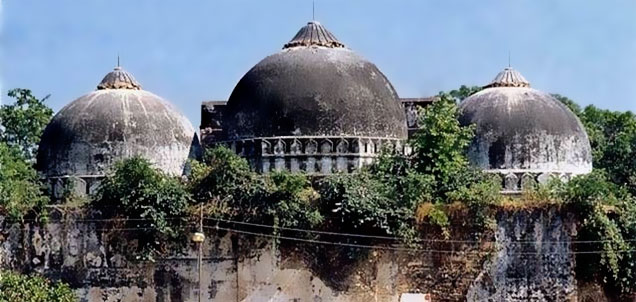
When the chief of judiciary of a secular nation instructs the government to build a specific place of worship on disputed land instead of suggesting a hospital or place of education, you know it is time to demand better. When key media people deliberately dish out fake and divisive news knowing that thousands following them might get instigated into action, you know it is time to question better. When your chosen representatives fall back on their promise of a better life for you time and again and indulge in dismantling the cornerstones, you know it is time to choose better.
That is when the near death of democracy is avoided by one more dance.
But is that enough?
Avik Chattopadhyay is a senior brand and strategy consultant based in Gurugram. He writes on MxMIndia mostly on alternate Thursdays, but sometimes on other days as well. His views here are personal
 By Ranjona Banerji