Tag: Kyoorius Designyatra

  • Open Strategy maxes at Kyoorius Design Awards…


    By A Correspondent


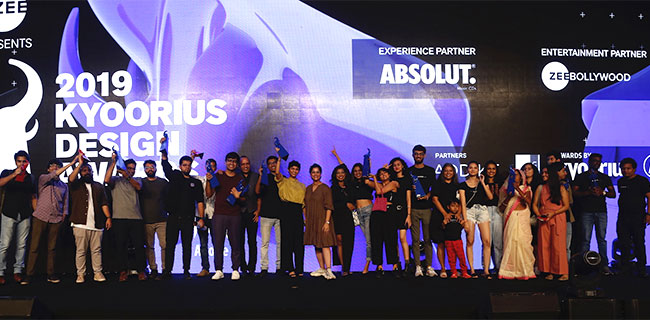
    As the fourteenth edition of Kyoorius Designyatra drew to a close, the fraternity gathered to applaud and recognise the best design work of the year.


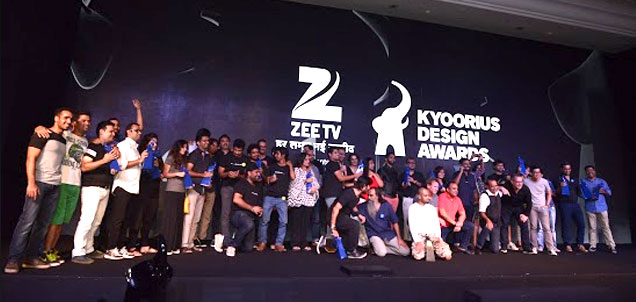
    Over 20 Blue Elephants were awarded this year for outstanding and innovative work in design and visual communication. Apart from these, Kyoorius also awarded upcoming creative stars with the Kyoorius Young Blood Awards that showcase and encourage young professionals to ideate and innovate in creative and design fields.


    At the Kyoorius Design Awards, Open Strategy & Design won four Blue Elephants for work spanning 14 disciplines. Ananya Khaitan and Ogilvy won three Blue Elephants each, while several designers, studios, agencies and companies took home Blue Elephants including Ather Energy, Itu Chaudhuri Design, Studio Lotus, Kahani, Cracker & Rush, Famous Innovations, Shaze Luxury Retail, Jaipur Rugs, and more.


    The Blue Elephant is awarded to work that fulfills all the three judging criteria for the Kyoorius Awards, namely: – an original and inspiring idea – well-executed – relevant to its context Kyoorius received over 400 entries for Kyoorius Design Awards, out of which 69 were InBook winners. All In-Book winners take home Baby Elephants and are featured in the Kyoorius Awards Annual.


    Accoridng to a communique, the jury decided not to award any Black Elephant, or Best Of Show this year.


    Meanwhile, Four Red Elephants were awarded to young professionals for work that was an answer to real briefs. These briefs were provided by Dailyhunt, who tasked the Young Bloods to create a new identity for the brand; YONO by SBI, who tasked the Young Bloods to create marketing communication that helps change the perception of the BFSI app; Nestaway and Lopez Design, who tasked the Young Bloods with a game design challenge that would help their ‘Nestie’ community bond; and Hindustan Unilever’s Fair & Lovely, that asked the Young Bloods to help put plastic back in its place.


    The Red Elephant winners receive a trip to the 2020 London Design Festival. All the winners and the in-book nominees also get an opportunity to have their work published in the Kyoorius Awards Annual. The Kyoorius Young Blood Awards received over 400 entries this year, with 26 entries winning an In-Book nomination across the five briefs. These entries will be featured in the Kyoorius Awards Annual. The Kyoorius Design Awards and the Kyoorius Young Blood Awards aim to honour good design, designers and design oriented companies in India. The Kyoorius Design Awards are brought to you in association with The One Club of Creativity, organisers of the ADC Awards, with a common aim – to create a truly neutral and transparent platform to reward the best in Indian advertising, media and digital creativity.


    Meanwhile, at the Kyoorius Designyatra, the event was kicked off architect and Founding Partner of Space & X, Nikoline Dyrup Carlsen who introduced the delegates at #KDY to concepts and ideas such as “Dumbfidance” and “Disruplomacy”. The highlight of the day were sessions by the legendary David Carson and American illustrator and muralist Timothy Goodman. Carson closed the first day of with a retrospective of his impressive career. Carson’s boundary-breaking typography in the 1990s, in Ray Gun magazine and other pop-cult books, broke the traditional sensibilities of what type on print demanded from a reader, and left the 1,050+ delegates inspired with his journey. Goodman’s session left the audience spellbound as he narrated his journey and perspectives. Interactive designer Kelli Anderson explored how design can harness invisible forces in the world. Kelli wowed the delegates with several examples of contrarian thought. The first day of Kyoorius Designyatra 2019 also saw Indian designer Ayaz Basrai, who took the delegates through the various works and ideas from his design studio, The Busride.


    Then there was filmmaker Anna Ginsburg’s session on celebrating individual beauty and sexuality, iconic and influential graphic designer Paul Sahre’s talk about his career, and his design process, on Day 2. Sustainability was a key theme in KDY2019 though talks by award-winning inventory and solar designer Marjan van Aubel, artist and designer Ada Sokol, Indian furniture designer Aakriti Kumar (Differniture) and more. Talks on design craft by illustrator James Jirat Patradoon, graphic artist, print maker and designer Anthony Burrill, and designer, technologist and innovator Orlando Mathias gave delegates insights and inspiration to help improve their skills and sensibilities.


    Young stalwarts such as the 18-year-old tech innovator Madhav Lavakare and 24-year-old typographer and graphic designer Stefan Hürlemann presenting their contrarian work.


  • ‘If everyone profits, there will be no fatigue’


    Rajesh Kejriwal isn’t your typical advertising industry maven. He says he is a businessman first, but interesting in adding value to the fraternity’s lives. While he is a popular face in the trade thanks to his advertising awards and ZeeMelt conference, what earned him much respect and fame was the Kyoorius Designyatra, the annual design fest that he has been conducting for over a decade (14 years!). We caught up with him a few days before this year’s edition which starts today (Thursday, September 19) in Goa. Read on… 


    How’s this year Kyoorius Designyatra different the ones you’ve had thus far? 

    In terms of the curation and speakers, not much difference. It is the same as every year. We we research a diverse mix of speakers and we get them. The number of speakers is the same as earlier. But having seen the ground reality or the so-called sentiment or recession or market bloodbath as it is happening, we decided we will take two steps forward and see if we can save the delegates some money. So instead of starting in the morning at 9:30 as we do every day and every year, we are starting the first day at 5 pm, which reduces the cost of one day’s stay for people and saves them one working day. So, we start at 5 but the number of speakers are still the same … 23-24 or whatever we have every year. We end the first day late in the evening at 9 and then there is dinner etc. for everybody. And other than that, if you ask me what the difference is: well, we have a little less registrations than every year because every corporate has come back with lesser numbers than last year. The design community is the same, the student community is the same, the young blood community is the same. We filled those gaps but the corporate community number has dipped.


    So blame it on Narendra Modi?

    Ha Ha… Whatever


    But one thought the design folk wouldn’t be as impacted by the slowdown as, say, the advertisngwallahs,right?

    Design unlike advertising is more long term, so  there may be no short-term impact in design. Whatever is planned is planned for a longer term. So, impact-wise I don’t think designers lose too much of business. They may lose a bit of revenue because of the client bargaining a little more and cuts in budget. But I think real estate has been a bit of a dampener for the design community. Because, there was a huge amount of work happening out of real estate where they were paying a lot of money. That’s completely vanished.


    How many of the people you get at Designyatra are repeats? 

    Yes, about 50% of 12-1300.


    Has that changed at all?

    Quite a bit. For the first six years, we had 80-90% repeat. From 2011 till 2015 we had about 50%. Now it’s come down to about 30% repeat.


    Oh 

    Yes, 70% new.


    Does that indicate anything at all? 

    Well, I think there are two or three reasons. If you see every year we sponsor 300 students or subsidise 300 students heavily. The student community keeps changing so there is no repeat there. Most of the students are in their final year and after they graduate their company many not sponsor them. Also, earlier about 400-450 were from corporates, this year that number has fallen by 250. Only 200 are coming.


    No event organiser talks so openly about the downers. But you are pretty open about it?

    I don’t think it is negative news. It is market relevant. It’s relevant to the market today. I have never said I have 1000 people, I have never said I have 1500 people. If I have 1000,  I have that number. So be it. And if I’ve got less this time, I’ve got less. Big deal! It’s relevant to the context of today’s market scenario. The sentiments.


    Is that going to impact your bottomline significantly?

    Of course, the costs are the same. There is no change in our costs.


    So, reducing the time to half day hasn’t helped you very much?

    Has not helped me one bit in terms of costing. It’s the same number of speakers, same number of nights, same number of lunches, same number of dinners. No change.


    Interestingly, while in the rest of the A&M domain, there has been some fatigue in terms of attendance in conferences, this hasn’t impacted Kyoorius Designyatra. What do you think is the reason for this?

    I don’t think it is right to say there is a fatigue in media conferences. I think the fatigue is there where the events are not curated well, not researched well, not made relevant to the changing scenario every year. If you go back and see Designyatra…. Way back when we started, we just looked for legends globally and we brought the legends here. With the internet opening up, the legends were not that relevant as much as the people who were doing new work. Today if you see, we are getting some inventors who have at the age of 17 have done great work. There is one Indian at age 17 has invented two or three things which are truly groundbreaking. So, if you research well, curate well, have a diverse set of speakers and ensure that the people go back from the conference and have profited from being there year on year, I don’t think fatigue will set in. You look at it this way, there have to be three profits that event organiser has to look at. Most event organisers look at their own profit. But unless they look at profit for the organiser, which is correct….profit for the delegates, and profit for the speaker, there is no overall profit. You ensure that the speaker gets something out of coming to the event. Delegates come to Design Yatra and get profited by being there and the event organisers obviously profits from both revenue perspective and satisfaction perspective then I don’t think fatigue will set in anytime.


    There is a definite difference in the kind of audience which comes in  for Zee Melt.. there is hardly any one standing outside in the Designyatra

    There is a difference between Melt and Designyatra. Designyatra is a very linear conference… just one hall and every speaker speaks in that hall. There’s nowhere else for anybody to go. Also, the destination, it’s in Goa. So people have left whichever city they are in and they have come into there. There’s nothing much to do and they are there. And unless there is a speaker who is totally not relevant to them or etc, they may walk out but other than that there is nothing that’s not happening there that is not relevant to them. In Melt there are many disciplines… Designyatra addresses only design. And there are only people there who are interested in design. There is no grey area for anybody. But if you look at Melt there could be a big name speaker but speaking on measurement and measurement is not interesting for more than 100 people. Or there could be something on Ad Fraud. So there are multiple halls…multiple sessions on diversity etc etc…and there are some sessions which are relevant for only a few. I seriously believe that the world of advertising and marketing cannot have a linear conference. And all advertising and marketing conferences that are still being linear will face fatigue.


    And with Design Yatra it is a linear conference… although even design has changed considerably 

    Correct!


    So are you at any point of time looking at changing that also?

    Maybe. We are exploring how can we make it more experiential. We are not changing from linear to something else but we are looking at how can we make it more experiential. So, can I take another hall and do something more … there is one hall where the speaker comes and talks which also great for the students…. But can I take another hall and so something more for the students…. Can I take another hall and do something more for the young professionals between 23-28, whose learning curve is something different from that of the student. Likewise can I take another hall and do something for the age group of 35-45  who think they know it all but don’t know it all because they are not so used to technology as the youngsters are…. So they need to learn. There are 45 year old designers who don’t know what Instagram is. So there is something that I can do to help that curve. So these 3 buckets is something that we may change over the next 2 years.


    And do you follow the same rules that you don’t repeat people for 7 years.

    Yes. At least five years.


    And, how much time does the curation of Designyatra take?

    One full year. We have five speakers confirmed for next year. The work for the next year has already started. The dates for next year are already frozen. And you can’t….if you do that in two months time it can never happen.


    But it will be Goa? You want to stick to Goa?

    Next year is our 15th year so we are exploring different locations.


    You’ve done Jaipur in the past.

    I think Jaipur was not a wrong choice. Jaipur worked because Jaipur as a city has character and that’s great for designers.


  • Kyoorius Designyatra is back in Goa


    Kyoorius Designyatra will return to Goa with its 12th edition this year, with the theme: “Optimism”. The event will be held over a period of three days – October 12 to October 14, 2017 (note: the Ad Club’s Envies Awards are scheduled for October 13 in Mumbai).


    This year the line-up of speakers includes: Andy Chen, Partner, Isometric Studio; Cheryl Heller, Chair, MFA Design for Social Innovation at SVA; Graham Fink, Chief Creative Officer, Ogilvy & Mather, China; Stephen Burks, Principal, Stephen Burks Man Made; Waqas Jawaid, Partner, Isometric Studio; Lord Christopher Laverty,, Author, Clothes on Film; Leeroy New, Artist and Designer, Lab New; Jackson Tan, Creative Director and Co-Founder, BLACK and PHUNK; Prasanna Sankhé, Founder & Creative Head, HYPHEN; Lizzie Mary Cullen, Pen and ink Illustrator and Writer, Lizzie Mary Cullen; Jon Noorlander, Executive Creative Director, Method Studios; Madhav Raman, Partner, Anagram Architects; Morag Myerscough, Founder & Designer, Studio Myerscough; Thomas Widdhershoven, Director and Designer, Thonik; Noriaki Onoe, Creative Director, Dentsu Inc.


    Said Rajesh Kejriwal, Founder CEO of Kyoorius in a statement: “The 12th edition of Kyoorius Designyatra is aimed at reflecting the hope people have imbibed in today’s gloomy environment. It is acting as a platform where creativity and design will signify new hope and a better tomorrow. As a platform, Designyatra allows the participants to not only discuss the latest trends in creativity, brand, design and digital but also creates a unique pool of varied creative minds from across the world. The stimulating lectures and workshops encourage the participants to not only think innovatively but also not to be bound by the barriers of age, experience and backgrounds.”


  • Kahani Designworks and Ek Type win Black Elephant at Kyoorius Design Awards

    By A Correspondent


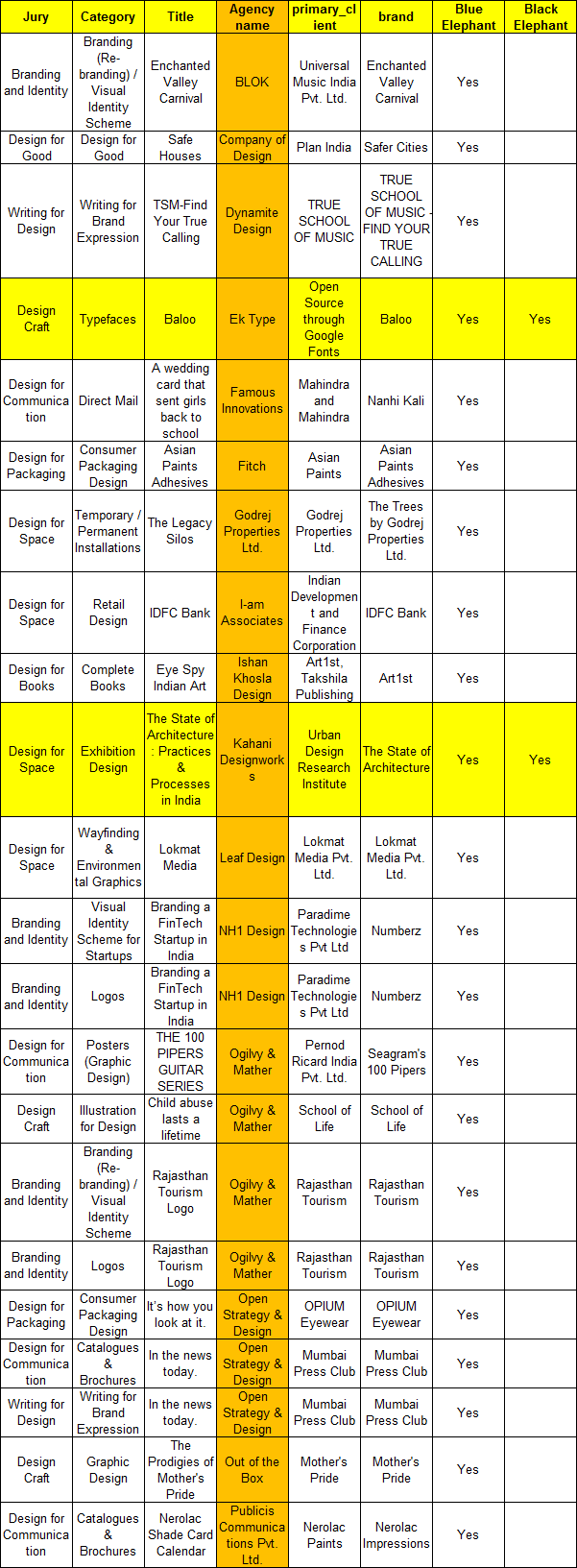
    Two Black Elephants and 22 Blue Elephants were awarded for outstanding work in design and visual communication at the Kyoorius Design Awards on Saturday in Jaipur. Mumbai-based Kahani Designworks and Ek Type were the Black Elephant winners for their campaigns for The State of Architecture and Baloo respectively. Kyoorius also awarded some of the future creative stars with the Kyoorius Young Blood Awards encourages young Indian talent in the visual communication space.


    Black Elephants are reserved for the work that is the best amongst the best, work that involves high risk and high dedication and that has a long time impact on the industry. Kyoorius received a total of 468 entries this year for the Kyoorius Design Awards out of which 43 were the In-Book winners.


    The Kyoorius Young Blood Awards received a total of 353 entries with 14 Red Elephants being rewarded and 27 In-Book winners.


    The awards were a culmination of the three-day event on creativity and design that sparked fresh and new ideas among the attendees.  The final day of Kyoorius Designyatra 2016 had an incredible speaker line-up that included Jon Marshall, Co-Founder & Creative Director, MAP, Singgih Kartono, Founder & Designer, Magno Design, Alex Daly, Founder, Vann Alexandra, Ronald van Schaik, Founder, Kaliber Interactive, Ayappa KM, Co-Founder, Early Man Film, Tap Kruavanichkit, Creative Director, Farmgroup, Ruchita Madhok, Principal, Kahani Designworks, Sameer Kulavoor, Founder, Bombay Duck Design and Sarang Kulkarni, Founder WhiteCrow. The speaker sessions ended with an interactive discussion with the legendary Michael Wolff, Founder, Michael Wolff & Co.


    Said Rajesh Kejriwal, Founder CEO of Kyoorius: “This year at Kyoorius Designyatra we aimed to bring together a group of divergent thinkers to encourage interactions and creativity. We hope people will go back inspired and with a new passion and vigour towards why they are a part of this ever-growing industry”.


    Speaking about the awards he added, “The Kyoorius Design Awards have fast become something of an aspiration for a lot of people within the industry and we see first-hand proof in the kind of entries we have received. The young talent within the industry has also become more innovative in terms of their campaigns, creativity and innovation and some of the ideas surpass even our expectations.”

  • 10 Takeaways from Kyoorius Designyatra 2016


    By Naresh Gupta


    1. After 10 years, you can reinvent a very successful conference.  New theme, new anchor and new energy; things that Kyoorius achieved with great aplomb.


    2. Over a 1000 professionals and budding design professionals who attended the Yatra ensured that every speaker was in schedule. This is a massive achievement. Being on time is almost the culture for KDY.


    3. The crowd was extremely well-dressed. It was great to see boys and girls dressed impeccably. One look at the crowd and you knew you are at a swish design conference.


    4. From Tony Davidson of W+K to Michael Wolff, from Singgih Kartno to Yuko Shimuzu, they all stressed on how culture matters and how culture shaped their craft.


    5. Collaboration is the new word I learnt. It was amazing how these gifted craftsmen and craftswomen collaborated with professionals of different skills to offer a better solution to their clients.


    6. Design can be used for good. It can be used to raise funds, it can be used to fight a rare disease, it can be used to drive potential students to a university. Design can be used to raise public awareness about a complex disease like Cystic Fibrosis using an extremely sharp but simple insight. Therein lies the power of good design.


    7. ‘The client is supreme’. There wasn’t one speaker who did not focus on this one aspect. There is a lesson that lies in this singular statement for all of us in the industry we work in.


    8. Yuko Shumuzu left everyone with a simple advise, work for money, and if you do decide to work for free, then you work for yourself and not for a client. If there is no money in a project, then there is no reason to be left out.


    9. The moment of the three-day conference was when three mothers took to stage to speak about their sons. The lessons from home and the influence of culture were there for all to see. This was a very cleverly planned session, made even more memorable by Vincent, the new MC.


    10. The brands use the wider design community for creating campaigns; I wonder why the mainline advertising agencies do not attend KDY in much larger numbers. There are lessons that mainline agencies have to learn from the wider design community and the brands’ desire to leverage design for communication solutions.


    Naresh Gupta is Chief Strategy Officer and Managing Partner, Bang in the Middle


  • It’s Kyoorius Designyatra. It’s where the crowds & colours are…


    By A Correspondent


    Jaipur isn’t Goa. It’s a great, fun place. But there’s no sea.  But this is Kyoorius Designyatra. The destination for all the design folk, especially those in the visual arts.


    Every year, for the last 11 years, Rajesh Kejriwal has been conducting the event. Pouring in top $$$s on content, and making it a classy affair.


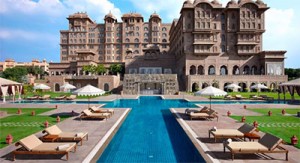
    The eleventh edition of Kyoorius Designyatra moved to Jaipur this year, with the theme: “Why am I here?” The event started today at the Fairmont Hotel on the outskirts of the Pink City and is spread over a period of three days – September 29 to October 1. The theme will explore facets of creativity – whether we are chasing our passions or just doing mundane work; be it in designing, writing, shooting or exploring multiple avenues for creativity.


    This year, some 1300 delegates are registered to participate in the various workshops, discussion sessions and portfolio reviews providing the audience a platform for interactions.  Plus a host of speakers:

    Alex Daly, Founder, Vann Alexandra

    Greg Quinton, Executive Creative Director, The Partners

    Handsome Frank, Founder, Handsome Frank

    Michael Wolff, Founder, Michael Wolff & Co.

    Jon Marshall, Co-Founder & Creative Director, MAP

    Kate Dawkins, Founder & Director, Kate Dawkins Studio

    Michael Johnson, Founder, Johnson Banks

    NB Studio, Creative Partners, NB Studio

    Paul Austin, Founding Partner and Creative Director, Made Thought

    Tony Davidson, Global Partner, Wieden + Kennedy

    Yuko Shimizu, Illustrator, yukoart.com


    Read a report on Kyoorius Designyatra on MxMIndia tomorrow and on Monday, October 3

  • Kyoorius Designyatra 2016 moves to Jaipur

    By A Correspondent


    The eleventh edition of premier design conference Kyoorius Designyatra moves to Jaipur this year, with the theme: “Why am I here?” The event will be held at the Pink City’s Fairmont Hotel and spread over a period of three days – September 29 to October 1. The theme will explore facets of creativity – whether we are chasing our passions or just doing mundane work; be it in designing, writing, shooting or exploring multiple avenues for creativity.


    This year, over 1200 delegates are expected to be present over the three days participating in various workshops, discussion sessions and portfolio reviews  The event will culminate with the presentation of the D&AD-backed Kyoorius Design Awards.


    Rajesh Kejriwal

    Said Rajesh Kejriwal, Founder CEO of Kyoorius: “The team and all its supporting partners have worked hard to ensure that Designyatra is different but grander than ever and we look forward to seeing everyone from students, young professionals and seniors, come together at this annual celebration of creativity at Jaipur.”


    Kay Khoo, Co-founder & Creative Director at Kyoorius explains, “With the latest edition of Designyatra, as much as we want this to continue to be the coolest design conference in the world, we also want to reflect on why we are here. We want every participant to ponder and be pushed to do more relevant and meaningful things for India, and be inspired. To celebrate design as a whole.”


  • Tihar Jail & Save Aarey creatives win big at KDY15


    By A Correspondent


    If you thought a conference in Goa would just be an excuse to celebrate, then Kyoorius Designyatra (KDY) was the wrong place to be. For, it’s certainly not an event where people go to spend time in the lobby, drink away at the bar or head to the beach. Designers, creatives and a mix of marketers and brand practitioners, flock here for their annual dose of gyaan and stand-out creative thinking.


    In-book: Work that stands out above the rest and meets the three judging criteria, ie 1) An original and inspiring idea, 2) Well-executed, and 3) Relevant to its context. Among the best pieces of work in the year, In-book winners are the nominees for Blue Elephants.


    Blue Elephant: Checks off all three criteria and reaches the Kyoorius Awards benchmark of creative excellence. Recognised as a symbol of the very highest creative achievement.


    Black Elephant: Best of Show. The ultimate prize. Work that is truly ground-breaking among all the judged work.


    For ad industry honchos Ravi Deshpande (Whyness) and Anil Nair (L&K Saatchi & Saatchi), a visit to Designyatra is like an annual pilgrimage. Well, almost. Both underscore the great attention paid to the content of the conference. And what they may not say in so many words is that the stuff dished out elsewhere doesn’t raise the bar and that perhaps a comparison of KDY with Goafest is incorrect given that that their target groups are different, even though both celebrated their 10th anniversary this year.


    The interesting news for Indian adland is that its constituents have done rather well at the third D&AD-governed Kyoorius Design Awards. Of the 29 Blue Elephants and two Black Elephants awarded, eight were won by Ogilvy, and three each by JWT and Alok Nanda Company. But the biggest awards of the night – the Black Elephants, and there were two of them awarded – were bagged by TBWA\India and the Delhi-based Guerilla Art & Design.


    A total of 488 entries were submitted across 10 categories: Branding & Identity, Design for Packaging, Design for Communication, Design for Space, Design for Books, Design for Editorial, Design Craft, Writing for Design, Product Design and Design for Good. The 29 Blue Elephant winners included Thought Blurb, Out of the Box, Sisterconcern, Open Strategy and Design, J. Walter Thompson, Ogilvy & Mather, Landor, MuseLab, Studio Lotus, TBWA/India, TenArt Private Limited, Star India Pvt. Ltd, Godrej Properties, Open Strategy and Design, Guerilla Art and Design and Ek Type.


    Guerilla Art and Design’s Black Elephant-winning work ‘Tihar Jail’ had the design firm working with local sign painters to illustrate an emotional poem written by one of the inmates, on the four walls of the prison.


    TBWA/India was awarded a Black Elephant for ‘Rakhis from Aarey’, where the agency created letters on behalf of the trees and rakhis made from discarded material of the same trees, which were sent out to 2,000 influencers.


    Said Rajesh Kejriwal, Founder CEO of Kyoorius, on the awards: “Our winners can confidently stand up against some of the best international work, thanks to the rigorous standards and judging criteria laid down by D&AD and Kyoorius. We are committed to nurturing and stimulating Indian creative talent through the awards, which help to fund our educational initiatives.”


    About the three-day conference, Kejriwal was ecstatic. “We were blown away by the creativity, passion and dedication on display,” he said. In a session entitled ‘10 Years of Designyatra, 10 years of Design’, that followed, Designyatra regular Harsh Purohit of Cognito, did a survey of 10 years touching on the things that have changed and those that have stayed the same.


    There were several speakers who were standout on the three days. Nick Law of R/GA, Lydia Winters (Mojang/Minecraft), Satya Raghavan (YouTube) and John McHale (SapientNitro) on Day 1; Jon Wilkins (Karmarama and, earlier, Naked), Morihiro Harano (Mori), Dave Trott (Author), Armin Vit (Underconsideration) and Max Weisel (innovator) on Day 2, and Jessica Walsh (Sagmeister & Walsh, who has done the new Frooti identity) and Neville Brody (Brody Associates) on the last day.


    Meanwhile, work has already begun on the 11th edition of KDY. Planning ahead and with uncompromising rigour with regard to curating content, are the key to Kejriwal’s success with Designyatra. Indeed.


    A shorter version of this report first appeared in dna of brands dated September 14, 2015


  • Digital is focus on Day 1 of Kyoorius fest

    By A Correspondent


    The three-day Kyoorius Designyatra started in Goa with the first day dedicated to digital with the IAA Kyoorius Digiyatra.


    The third edition of the special focus on digital brought together leading influentials to showcase the future of digital and explore this year’s theme, ‘What pumps your heart’.


    Moderated by Laura Jordan Bambach (of the agency Mr President) and Kevin Finn (from TheSumOf), the day of talks explored the immense and untapped possibilities in the digital space, and many of the speakers touched on ways in which it can touch people’s lives and make them a little easier. Nick Law, Global Chief Creative Officer, R/GA, started the day, explaining R/GA’s model of combining narratives with systematic thinking, or data and story to create impactful campaigns. Daan Lucas and Mike Pelletier (both of Random Studio) caught the audience’s attention with beautiful imagery and installations created for brands that combine art, technology and design. Bambach followed with her philosophy on how to keep work interesting rather than following the norms. She touched on Mr President’s take on social media through the Bacardi campaign.


    Satya Raghavan (Head of Content Operations, YouTube India) had the delegates entertained post-lunch with his insights into what people are really watching online. Next up, in a special session titled “What can digital do?”, MukeshJha and Janardan Prasad, co-founders of Autowale, had the spotlight on an app that can provide a sustainable income to rickshaw drivers. Nishant Patni, founder of CultureAlley talked about his app, Hello English, which is teaching millions of Indians how to speak English by localising the experience for different languages and contexts. Lydia Winters from Mojang, makers of the incredibly successful game, Minecraft, talked about how the game is building communities online and effecting change in real life, through their collaboration with UN Habitat, Block by Block.


    The last speaker of the day, John McHale, who heads the Experience Design Practive at digital media major SapientNitro, took the audience through his journey from college football to band member to designer and the four pillars that keep him inspired.


    Rajesh Kejriwal, Founder CEO of Kyoorius,said that some 1650 delegates were in attendance on the three days of the event with 31 speakers. What gives Kejriwal satisfaction is the presence of over 400 delegates from amongst corporate and advertisers. “Delegates will hopefully leave today with many ideas and insights on how to make the most of digital, and one of the themes today was the need to humanise it and bring it into the physical world. I’m looking forward to the next two days ahead,” he said.


    The three-day Kyoorius Designyatra ends on Saturday, September 12, with the British art and advertising body D&AD-backed awards for design.


  • Kyoorius with Kejriwal


    It’s tough interviewing someone who is always consistent in his views. For, Rajesh Kejriwal, Founder CEO of Kyoorius, is very sure of what he wants to achieve as he speaks to Pradyuman Maheshwari. The tenth edition of Kyoorius Designyatra will only get better, with marquee speakers and a varied mix of delegates, he says.


    So it’s 10 years of Designyatra. How is this year going to be different from every other?

    I don’t think the conference should change just because it’s in its tenth year. We’ve been changing things every year anyway, depending on audience feedback and our own perception. This year, too, there is an inspiring line-up of speakers. We are doing a few surprise things – not because it’s our tenth year — but because we’ve learnt a few things at Melt. For instance, we’re trying to incorporate more experience zones than expo stalls.


    In terms of speakers, what’s special this year?

    From the perspective of content, the speakers are all good. In terms of ‘famous’ speakers, we have Jessica Walls, John Wilkins and such. This year, we have a lot of speakers who are not that well-known but have done awesome work.


    And Indian speakers?

    I think there are a few like Autowale, so we’ve not got from the fraternity but people who’ve used design knowingly or unknowingly to solve some problems.


    Given that digital is all over, is there a need for a separate IAA Digiyatra, which is in its third year?

    Digiyatra, it’s in the third year.  In a sense, digital has evolved considerably, digital has changed considerably.


    Yes, digital has become all encompassing. There is nothing which is not digital. We are killing it next year. At Designyatra, all our speakers use the digital medium. Today, you can’t get a conference in communication which does not use digital. So how can there be a separate focus on Digiyatra?!


    At Designyatra, ones see a lot of paper. Guess the fact that you are a paper company, you can’t wish it away. But today it is all about tablets and smartphones!

    It’s a lame attempt at me trying to keep my business alive! (laughs).


    Jokes apart, the paper is still the focus around design in India (and Designyatra), right?

    Paper still has its nuances. There are things that you cannot do without the medium being paper. There are things that are evolving for which digital makes more sense. From the paper perspective, if you see in 2000, 80-85% of our business was stationery. Today, stationery composes of may be 1% of my business. We are more into brochures, catalogues, then came your wedding invites which all of a sudden started becoming very expensive and very different. So, the medium has changed. The needs have changed. But paper is still used. I’m not sure how long, how much technology will take away paper but I feel if technology comes in, it also needs paper to promote itself. So, there is obviously going to be use of paper all the time. Yes, it’s coming down. What’s not coming down in terms of usage, China is bringing it down in terms of making it a commodity.


    One of the highlights of Designyatra in large formatted writing board etc. Are you going to be switching to an app that we can just stick out there, I pads.. You still want people to put pen to paper?

    Of course, as designers people do love because I don’t think designers can make do without doodling. We are talking about the graphic community which irrelevantly even if they are sitting in a restaurant they take a napkin and start doodling. So, pen and paper can never be segregated from this community of designers.


    Do you see a change in the kind of the audience structure, the delegate structure?

    Of course, over the 10 years immensely.


    About the constitution of delegates, last year one saw a lot of clients attending. Do you expect it to be the same?

    It’s increased. Ten years ago, our focus was purely on graphic design and 80 per cent of the speakers had it as their background. Then came digital, and design started being looked upon more as a tool than an aesthetic way of doing things. Today, graphic designers are only 20 per cent of the speakers. Similarly, the audience has moved from pure designers to advertising and digital guys, to clients who come to Designyatra to check out trends and see how they can use design in different ways to communicate.


    But there are still some design companies who do not attend. It’s the same with some old-time designers some of whom come, while others don’t. Is there a specific reason?

    I don’t know. [With design companies] I think it’s a matter of trying to see if it helps their business. If some design studio does not want to grow beyond its comfort level, it may not come. [With old design hands] I think it’s more to do with their personal comfort level about which areas they want or don’t want to go into. The marketing communications industry has changed because of the internet; not all skill-sets have kept up.


    Is it also because you are very rigid and particular about not calling the big dads. At most conferences, you always call them to speak or give away an award or felicitate, etc. You don’t do that to people.

    It’s not about giving importance. Whether it is young or old designers, I will always call them if they’ve something which is content-worthy. If they don’t have what I think is content worthy for the audience, then I won’t call them. My focus is the audience out there and I’ve try and make sure that every speaker who comes on stage keeps that  audience occupied. If a speaker is not able to hold the attention of the audience for any reason, I’m not talking about maybe a small group of 100 designers or 100 people in the audience may not like a particular speaker because he or she comes from a different field altogether though they could take inputs from that field as an inspiration for something that they do. But it’s a larger quantity that should be occupied, should feel inspired being there, should feel that they’ve profited from being there.


    Are you happy with the way your D&AD-backed awards have happened?

    Very happy, and I think this year, the work has been far better than the last. The jury, and even the D&AD president, mentioned there has been a lot of good work here which could’ve won a D&AD. I think there is a lot of Indian work that could win globally.


    I did hear one jury member say the work was not all that great…

    Must be an Indian. If you [compare the entries from last year to this year’s] there’s a context, and you are able to see whether there has been any good work this year. In advertising, there wasn’t as much good work this year compared to the last. Next year, you’ll see much better advertising.


    More importantly, does it attract the best work done in the country?

    Fairly, yes. We’ve got a lot of new studios, though some of the old studios did not participate. But that always happens. We had a fair amount of work that was awesome, and one of them – the winner of the Black Elephant — was really good.


    So, you have a Black Elephant winner this year.

    Yeah.


    You normally never tell who is..

    I don’t.


    So, one or two?

    I don’t know, I don’t think even the jury members know. But I’ll tell you one more thing about the awards which I found very surprising. There are a fair number of design studios which have won but there are a larger number of advertising agencies which have also won. I’m not sure where the industry is headed.


    Are clients also sending in entries directly?

    Yes. I have a client who submitted an entry and won an award. Many clients have submitted entries, but this one, won.


    When Designyatra first started, many of us didn’t attend because we thought you are a paper merchant who is doing this essentially to attract designers so that they buy your product…

    It started off that way, as a purely promotional exercise for me. As a paper merchant, I wanted to be closer to the community; a friend rather than a vendor. In some ways, it was also about giving back to society. But after the first year, you could see the passion and the hunger that this built in the audience. And after 2007, it also became a passion for me, and had nothing to do with paper.


    So are you selling more paper because of this?

    I don’t think so. No.


    And you still you are a businessman?

    Yes, I am (laughs) but this is something that my family is not very happy about.


    I remember you once said that you were a not-for-profit thing and have converted yourself into not-for-loss…

    Yes. We are now at that stage where Designyatra is breaking even.


    Which is a bigger success, Designyatra or Melt?

    Melt, obviously. It’s going to become a bigger festival, overall, which has nothing to do with design or advertising. That industry size is bigger than [our] industry size.


    At Designyatra, you have people stuck in the hall, while that wasn’t the case with Melt. Is this a comment on the kind of crowd which attends?

    No, partly it has to do with the fact that we could’ve done things better at Melt. But it was the first year. You’ll see a lot of changes happening next year because we’ve learnt that a conference like Designyatra is good with content-rich speakers who keep the audience occupied. But [at Melt] there are advertising, media, marketing, digital and social media attendees and the knowledge they want to gain is specific. So while the main hall of Melt was not full, the breakaway sessions — of which 15 were happening at any given point — were always packed.


    While you parallel tracks at Melt, at Designyatra, there’s just a single track.

    No, we are doing some things in the evenings, like workshops, because we feel they are required to enhance learning. We can’t do workshops for 1,400 people but we can do them for 400 people. So we are incorporating workshops this year in Designyatra. Day time will be restricted to the conference. But we are taking some side sessions, like The Critic. This year, we are having intense, get-your-hands-dirty kind of workshops.


    Has the interest in design changed over the last 10 years?

    Of course. From design being looked upon as an aesthetic skillset, it is now seen as a tool to be used in business/ product/ communication and as a strategy as well. You look at example of a company like Apple, which has become hugely successful because of design. There are companies taking design more seriously now than before.


    As for Designyatra, when did you realise you were on to a good thing that could also become the mainstay of your business?

    For the first three years, it was about getting the best out of Designyatra, even for my paper business. After 2009, the year we moved to Mumbai, it was no longer about paper as much as it was about a passion for doing something. I was driven by passion, but also by the fact that this will help fuel a design movement in India. I’ve seen that happening, and even though I’m not the cause of it, [I know] we’ve played a small role in helping that evolution happen.


    When did you think it would become so big?

    I realised that it has become big when we were voted among the Top 3 conferences in the world.


    Given that digital is taking over the creative business, don’t you think you should now start evangelising paper?

    I don’t know. I would probably try to figure out how I can do a business in digital rather than in paper now. Off the track from Designyatra, we are into specialty papers, not commodity papers. The specialty paper business globally is declining rapidly, and the biggest specialty paper merchants have closed shop. The larger paper mills have all gone bankrupt in Europe and the US. I’m not sure how big this industry will remain. But India is at a very low base, so there is still ample growth possibility. But is it a business that will become a focus point for us? I don’t think so.


    In the last 10 years, were there any lows that you would rather forget?

    I did a design award in 2007 which was very shoddy. But I learnt from it, closed it down and only brought it back when I was able to professionalise it with the D&AD partnership. The winners [of 2007] might have loved it. I regret that I made it happen without doing much research.


    Then you brought it back in 2013. Anything else in the conference?

    In the conference, in the early years, I did not research the presentation quality of speakers. Some were good names but not great presenters. That was a low. In 2008, we decided we are going to see the speakers first, and also curate the talk that’s happening on stage. So we asked for the presentations ahead. Now we write to speakers telling them what we’d like them to speak on.


    Why is that you are able to do it so well in Designyatra, but not for the advertising folks?

    This year, Melt was done in too much of a hurry, put together in two months, which was a disaster. We were not able to have a dialogue with the speakers because of the time constraint, which was a loss for us. This year, we are already in discussions with speakers we want for [the next] Melt.


    Last year, you mentioned that you are looking at doing some other design conferences like interiors. Is that still on track?

    We are trying to do that and will probably launch it in November of 2016 or 2017. I don’t want to do two festivals and not do either well. I want to get Melt to the quality and level that I personally would like it to be, perhaps of the standard of Kyoorius. Once we’ve achieved that, I’ll move on to the next, but not before that.


    A shorter version of this interview appeared in dna of brands on September 7, 2015
     

  • Storytelling in the age of Digital


    This interview ought to have appeared a couple of months back. Gaston Legorburu, Executive Director and Worldwide Chief Creative Officer, Sapient Nitro was a star speaker at the Kyoorius Designyatra in September. We met him there. Since this interview was not a very newsy one, we held it back for a few weeks back. And then came rumours and finally the confirmation of the Publicis-Sapient Nitro deal. We also read Mr Legorburu’s quote in some of the stories. So we held it back a little more. Realising of course that we were doing grave injustice to him and to you, dear reader.


    So here’ s the interview from one of digital media’s most happening creative gurus. Read on…


    While digital media is progressing in India, the pace of growth is very slow. Is this how it happened in the Web or are we seeing a trend that’s special only to India?

    I think it’s happened in the West and a few other markets. There are some markets that behave slightly different in India. I’ll start with the similarities. I think that marketers have muscle memory. Any new and emerging medium has slow adoption and there’s always a period of time because the value is under estimated. I think there’s a lag in adoption of digital media that happened in the US, in Europe, not so much in Latin America. The challenge that’s unique to India has to do with large numbers. When marketers and brands, especially multinationals look, they say, it’s billions. They look at that and there’s a direct co-relation to mass media. If we sold all these people soap, how much can we…


    Hey, you are talking of multinationals who are possibly more discerning than the homegrown players, or so we think!

    Multinationals have blinders around understanding the Indian markets because the country is so diverse and because so large. But if you just dissect that, if you look at the total online population of North America and of India, it’s a little over 75 percent. So the size of the opportunity is just about what it is of all of the United States. If you’re a brand and you haven’t done business in the United States and you say that digital opportunity is just about identical, you’ll get much more excited than people have been about the Indian market. If you further deconstruct the idea and you say that the size of that population is almost as big as the United States, what does it look like? Well, it’s younger, growing more from an affluent standpoint, much more tech savvy and they actively participate. When you just look at that particular audience and then you have to think about certain products, services and brands that appeal today and will appeal to that audience, you have to get crazily excited! The opportunity is eclipsed by the billion people opportunity.


    Could it also be because our creative agencies are not doing enough work on the digital media? The big bucks are in TV Commercials and hence the monies are much more there?

    It’s a little bit of the chicken or the egg. At the end of the day, change lies with the clients. We give agencies too much credit. Agencies chase RFPs. I think we give too much credit there. It takes the CMO that is more digital native that sees the opportunities or it takes a few successes where somebody says, if I give you this much money, you give me these many clients and it’s more predictable. I’ll do a bit more of that. Personally from a career standpoint, I started really early in the digital space. I came from a traditional background. Being in the boardroom, fighting for the longest time, until it was just the tipping point.


    And then there’s search.

    Yeah, it’s like I buy this keyword and I get this much business. So it’s always the search guy or the email lady that were sitting on the second floor, not with the main marketing theme but they were kind-of doing something over there and they were just peeling away budget little by little and eventually somebody is like, wait a second, she’s got more money than I do.


    With search, you can hardly get creative.

    I see that as the challenge. The entry, where you start peeling away the dollars and the budgets, you start getting more and more shift of the overall market budget moving, tend to be more on a performance marketing stuff, first. In India too you see lots of little digital shops popping up, it’s not visible work. It’s not visible as a big re-branding or a TVC, but it starts doing the blocking and tackling of driving business. And then you end up hitting the wall.


    Do you think all the tech jargon is a challenge in the process of storytelling?

    I think you can’t build a brand on a spreadsheet. That is a silly idea and unfortunately, I was at a conference not too long ago and a CEO of a big company said that we don’t need more mad men, we need more ‘math’ men. I thought that’s the dumbest thing I ever heard. I think we need, both. There’s art and science. Going back to storytelling, I think it will and still remains the single, most powerful tool we have as marketers to connect brands to consumers. Everything is driven by emotion, all the other stuff rationalises what you want and feel.


    I’m a big believer in the art of storytelling and being able to make emotional connections. That said, I feel, the power story lies with you, not me. I could sit here and talk forever, you might forget most but if there’s something that connects with you, something you want to talk to with your friends, over dinner, then I’ve done my job. If I represent a brand, that should be my canvas, not a 30-second spot or a banner ad. It should be your story. And I think we quickly forget about that and focus so much on the creative product without recognising that the objective at the end of the day is to change perceptions or shift behaviours. It’s not just about telling a compelling story. It’s telling a compelling story that shifts perceptions or drives behaviors.


    That’s traditionally been the objective of storytelling, to change perceptions and/or to persuade people to buy or consume.

    We could step back to speak at that level since it makes a lot of sense. Think about stories and think about you and what stories have helped evolve who you are, versus stories that simply entertain or are pass time. When you look at all of the different story structures and everything we know about storytelling, there are some stories that are much more likely for you to see yourself in, for you to learn a lesson from, for you to take something away than others. If you think about Indian or American culture, what are stories passed from generation to generation? You look at Disney Films. What’s the structure most likely to get passed on in an oral society as opposed to a broadcast media world? This is a little bit of ‘Back to the Future’.


    What according to you has changed from traditional to digital advertising? Any one thing you’d like to highlight.

    There’s been something that’s been constant, but we have lost sight of it for a period of time because of broadcast media as it is. That’s storytelling. Stories are as old as time. It is the way we make sense of the world. Such a big part of just being human. Clearly, if you want to persuade or connect people, that’s the most powerful story. It was before television from the traditional storyteller’s time. It’s always been a big part of commerce, of persuasion. But what changed with broadcast media is that stories became less participatory. They became less about interpretation and passing on of the story. You now could sit back and just suck it up. You could sit down and watch a movie and it just entertains you. It doesn’t change your view of the world. In some cases it’s just profound stuff. This idea that if you can see yourself in the story, you’re much more likely to remember it and connect with.


    What we’ve seen here in India is that the emphasis on an emotional connect in digital advertising. Is that specific only to India?

    I think there are two things that are not specific to India. People are people. I said to you something funny or interesting and then you say it to a bunch of people. Think about what makes stories get passed on? If I look at your Facebook or Twitter, most of the stuff is either things about you or something you found interesting that you want to share with your friends, you want to be associated with. Funny, entertaining stuff. We always do that. A lot of it going through those social pipes is people wanting to share their story.


    It’s all about me, me, me, me, me. There are stories that people see themselves in. Those are stories better suited for advertising, marketing, for connecting people to brands. Forget about digital, just look at television. Just a 30-second piece of a film. When it really connects with you emotionally, there are two things. You think that’s hilarious, that’s based on an insight, I remember that ad, that ad was really great and then you forget what brand it was from. There are those and then there are those others where you are like, man! They value the same things I value, I should feel good about being associated with that brand. I just had this experience, I need to share this with somebody.


  • Digital isn’t about technology. It’s about Ideas & Imagingation: Ajaz Ahmad


    At 21, Ajaz Ahmed founded AKQA to help clients create the future. The firm employs 1600 people in 13 offices, including an office in India. Clients include Red Bull and Nike. A recognized pioneer, Ajaz Ahmed co-authored Velocity, a bestselling book alongside Nike’s head of digital support, Stefan Olander. MxMIndia caught up with Mr Ahmed soon after he spoke to a packed hall at the Kyoorius Designyatra earlier this month


    You are one of the pioneers of digital media advertising. Since you embarked on the journey to what is the scene now, what do you think is the most significant difference in the attitudes of the people around in the rest of the advertising and media landscape?

    It’s difficult to believe now but when I was 21 and we talked about how we felt digital technology would transform the world… people didn’t believe us and those were people in the industry. A lot of organizations didn’t believe us, so, over time, that prediction we had that technology would change people’s lives and transform industry has come through and we’ve played a small role in that as well, by creating services, applications, ideas for some of the greatest brands and as we’ve done that, it’s provided inspiration to the industry. I think a lot of people love innovating, they love creating and digital expands the canvas. That’s really what it meant for people, it gives creative people a new canvas where they can try new things and experiment.


    A fair amount of what is happening in digital is technology-driven. Do you think digital media is more about technology or is it more about creativity?

    We’ve always felt that digital isn’t about technologies, it’s about ideas and that’s why we say the most powerful force in the universe isn’t technology, it’s imagination. Because it’s only through our imagination that we can create ideas that have resonance. You’ll get gizmos and flavours of the month and the focus should be on creating something that will contribute usefully to people’s lives.


    Lemme ask this differently. If you look at the last three years, Search Advertising, HTML5, the explosion of the social media… all these have been technology-led and the creative fraternity and people like yourself have embraced it well and used it optimally. So what comes first? Technology or ideas? Are you always dependent on technologists to dream up something new?

    I can talk from an AKQA and our clients’ perspective. AKQA is imaginative application of art and science to create beautiful ideas, products and services. That’s why we exist. When an organization produces a technology that we feel has an incredible application, that can be true to one of our clients mission, their authenticity, that helps them articulate a brand in a way that’s extraordinarily resonant with many people… we embrace that. With the examples that you’ve selected, you mentioned social, search, you mentioned HTML5, there’s also mobile, wearable devices, the canvas… it gets richer and richer and the tools that creative people get to be creative have improved. There was a generation of creatives that got excited about the airbrush when the airbrush technology happened and a generation when radio was invented. Why shouldn’t we get excited when there are amazing tablets, when there’s new wearable devices like the I-watch, when we can use technology in a much more engaging, fulfilling, creative and rich way? The test of a creative is how technology is applied in a non-obvious way to create something that has a sense of magic to it


    In a typical creative agency, you have creative folk who think of the lines and situations and there are radio/print/television production folk who get into the execution. In the case of digital media, there is integrated functioning. So how does a digital media agency get structured in terms of talent? Do you have more people who are into creative execution or you have people keeping tabs on the way that technology is doing and what more you can develop?

    A third of our business is people who are designing and in creative, a third are people in technology and about a third is those who are in project management and strategy. For everyone it’s about being creative. We’re organized like a collection of start-ups. We don’t have any bureaucracy. We don’t have anything holding us back to achieve what we need to on behalf of our clients.


    How familiar are you with the Indian digital media creative scenario?

    You can familiarize me.


    Well, the digital media scenario hasn’t taken off in a big way. Many creative campaigns are take-offs on the cult film Sholay or antics of a megastar like Rajnikant. In terms of usage of digital media, brands and marketers haven’t really grown like they should have. That’s why digital promotions haven’t taken off.

    That’s why we need your publication to champion creativity and excellence. You can really help educate leaders to embrace digital media.


    What I want to know is how did it move in the Western world? The big TVCs are essentially made for television. Here, not many dollars are spent on creative work in digital media. How does the transition happen and how do you think it could move?

    You need to see how people are changing, the equity of smartphones, the population is changing from being couch potatoes who sat in front of their television to people who’re doing many other activities and they’re using their device to empower them. Every generation uses technology in a more interesting and evolutionary way. We’re going through that evolution now.


    A little about AKQA in India…

    We’ve got a humble beginning, we’re under 50 people. We’re working with a number of clients and our focus is quality, we’re happy to take the long-term view and produce the best work we can with the best clients we can and if we focus in quality, the scale will come.


    In India the WPP group is very large.

    WPP has amazing authenticity in India. It has a real depth and it’s really invested in the market.


    Sir Martin Sorrell is here almost every six months, sometimes more often. In India a lot of digital agencies have been invested into or gobbled up by the large networks. Does it help being part of a large agency or is it better to have more independence and creative journalism bloom

    Where it has helped take AKQA is, where we want to set up in a new market such as Canada and we can get WPP’s help with the back-office and administration and the legal requirements to help us fast forward the presence… so we can be quickly on the ground to help our clients. That’s where we’ve been able to really benefit from WPP’s ecosystem of relationships all over the world.


    They’ve also invested in Indian digital enteprises. Will there be any synergies there?

    AKQA is now more independent than it’s ever been. We’re focused on keeping that independent, creative, entrepreneurial spirit. Certain culture, values and a certain DNA. WPP gives us freedom and independence so we could achieve the best work for our clients.