Tag: KitKat

  • KitKat, Netflix come together for campaign

    Entourage Films, the Mumbai-based film production company, has launched a new ad campaign with KitKat and Netflix. This script showcases KitKat’s distinctive concept of “breaks” within the engaging world of Netflix.

    Said Garima Arora, Executive Producer at Entourage Films: “Working with KitKat, Netflix and Ayushmann Khurrana was a fantastic experience. The set was full of laughter and chocolates, it definitely felt like a big family gathering. Sharat and I were thrilled to be part of this project and we look forward to more collaborations.”

  • No KitKat break. Zenith retains massive Nestle media biz

    By Our Staff


    There are some who would’ve hoped that Nestlé  India would practise what the adline of its bestselling brand Kit Kat preaches: ‘Life Hai. Kit Kat break banta hai’. But no such break in its Media AOR relationship. The Publicis Groupe-owned media agency Zenith India has been retained as Nestle’s agency of record. The business, notes a communique, was won in a highly competitive multi-agency pitch which began in April this year.


    Zenith has been handling Nestlé’s media planning and buying business, across all segments since all of 17 years. It was appointed as the packaged goods company’s AoR back in 2005. The mandate includes the full range of duties – that’s offline media, online media, commerce, SEO and analytics.


    Said Jai Lala, CEO of Zenith India: “We are delighted that Nestlé has once again chosen us as their media partner and it’s a clear endorsement of our strong ROI approach and ability to deliver marketing excellence and innovation. The retention is testament to the rock-solid working relationship we share with Nestlé and indeed we are proud of the industry-leading work we’ve produced for them over the course of many years. Zenith has deep and inherent understanding of Nestlé’s business needs and the strategic direction of its brands. Our teams were able to demonstrate unique insights, integrated approaches and data-driven decision -making. We look forward to harnessing the best of our capabilities, talent, technology and partnerships and helping Nestlé build even more powerful consumer connections.”


  • New KitKat campaign stars Ayushmann Khurrana

    By A Correspondent


    Nestle’s KitKat chocolates has unveiled a new brand campaign titled ‘Life Hai, KitKat break banta hai’.


    Commenting on the launch of the campaign, Nikhil Chand, Director – Foods and Confectionery, Nestlé India said, “Over the last 25 years, KitKat, with its positioning of ‘Have a Break, Have a KitKat ‘ has made millions of Indian consumers have enjoyable breaks with delicious, crispy KitKat fingers. Our new campaign ‘Life Hai, KitKat break banta hai’ celebrates the resilience and adaptability the Indian youth have been displaying. The campaign highlights how, when at times, ‘the new normal’ may get ambiguous and stressful for the youth, all it takes is a meaningful pause with the deliciousness of a KitKat break to gain a fresh perspective on situations that they may be faced with. The film encourages the youth to take a short break and come back with a smile and renewed positivity to effectively deal with the unsaid conflict the new normal brings to their lives.”


  • Nestle replaces Maggi ads with Nescafe & KitKat commercials, to lose about Rs 10 crore

    By Pritha Mitra Dasgupta & Shramana Ganguly


    Nestle India stands to lose advertising inventory of about  Rs 10 crore due to Maggi recall despite its move to air commercials of Nescafe or KitKat in all advertisement slots booked for the instant noodles brand, broadcasters and media planners say.


    “The channels have been told to subtly replace Maggi ads with Nescafe and KitKat commercials,” a senior media planner said. “But despite this attempt to recover as much inventory possible, Nestle will have to let go of advertising inventory worth  Rs 8-10 crore,” the person said on the condition of anonymity.


    On Saturday, Nestle notified broadcasters and other media houses in India to stop publishing Maggi ads from Sunday. While the Swiss company has stopped digital advertising for the brand as well, it is using various social media platforms liberally to sell its side of the story to Indian consumers.


    A Nestle India spokesperson said that while the firm has taken action to stop Maggi ads, “you may see a few since changing the programming pipeline could take a little longer”.


    Nestle is one of the biggest advertisers in India, spending over  Rs 400 crore on advertising a year. Its ad spend on Maggi brand alone is estimated at over Rs 150 crore, according to industry insiders.


    Publicis Worldwide is Maggi’s creative agency, while Zenith-Optimedia handles the brand’s media buying and selling activities. The digital mandate of Maggi is handled by GroupM’s Maxus. Sources in these agencies said that Nestle stopped airing Maggi Oat Masala noodle commercial featuring actor Madhuri Dixit right after the scandal broke.


    In February, Maggi had launched a campaign, ‘Khushiyon Ki Recipe’, which was on air till Saturday despite Food Safety and Standards Authority of India (FSSAI) dismissal of Nestle’s defence about the brand embroiled in controversy over excessive lead content and mislabelling on MSG.


    Nestle has now instructed channels to take these commercials off air.


    Meanwhile, Ahmedabad-based Consumer Education Research Centre (CERC) is contemplating legal action to push Nestle to do corrective advertising across print and television space.


    “Considering Nestle advertisements have been misleading the consumers, they ought to engage in corrective advertising to tell the consumer in as many words about what is factually correct,” said Pritee Shah, chief general manager at CERC and a member of an inter-ministerial monitoring committee for misleading advertisements under the ministry of consumer affairs.


    G Gurucharan, additional secretary (consumer affairs), too, had recently stated that Nestle could be asked to put out corrective advertisements.


    Shah said that considering Nestle has been misleading the consumer about the health aspect of Maggi, it should redo its commercials. In addition to lead and MSG, the firm needs to clarify that one helping of Maggi is not equivalent to three chapatis as claimed by one of its ads, he said.


    Source:The Economic Times

    Copyright © 2015, Bennett, Coleman & Co. Ltd. All Rights Reserved

    Licensed to republish


  • Do looooong ads work for brands?


    By Priyanka Nair & Mukta Lad


    3.33. 3.53. 4.40. 7.16. Before you shut this paper and run a mile, we will have you know that this isn’t a complicated math problem coming your way, but the durations of some of the ads you’ve been seeing of late. With our daily dose of listicles masquerading as news for our seriously short attention spans, one would think quick and easy fixes are the way to go.


    The world of advertising begs to differ, though, offering a paradox. A spate of really long ads are the not-so-new kids on the block, where brands are taking the liberty to take as long as seven minutes to narrate their mostly heartwarming stories, The year is seeing a lot of the films that take their time to tell the tale, both internationally and back home.


    Pepsi’s ‘Ghar wali Diwali’
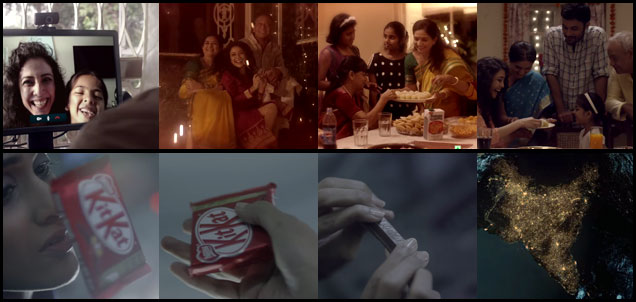
    KitKat’s Diwali
    Kissan’s ‘Joy of Togetherness’
    Fortune Oil’s ‘Ghar ka Khaana’
    Google’s ‘Reunion’
    Tata Sky’s ‘PrisonBreak’

    Most recently, KitKat and Pepsi jumped on the Diwali bandwagon, and two much talked about long-format films were born. They are usually released online, making it an inexpensive medium to tell powerful stories. But with such ads clearly becoming a regular trend, we have to ask; are brands really justifying the length of their communication with stories that are compelling enough? And do they work?


    Piyush Pandey executive chairman and creative director, Ogilvy & Mather India and South Asia, the man behind Fortune Oil’s emotive four-minute ‘Ghar ka khaana’ ad, believes, “With long-format, your single responsibility is to the viewer. It’s like people who make movies. A viewer of a long-format ad has made the effort to click on your film. It’s not like he was sitting around watching something else and the ad came on. It’s your responsibility to make sure he feels rewarded after the time spent and says ‘I must share this with my friends.’ I am assuming as professionals we know that we have a responsibility to the brand.”


    For T Gangadhar, MD, MEC India, it was the advertising during FIFA that has lingered on in his mind, especially the riveting spots by Nike and Adidas. “The episodic treatment, the fleshing out of the idea, the execution was such that there would have been no other way to create them except through the medium of long-format,” he says, admitting that he really didn’t notice the amount of time he was investing in watching them.


    Globally, too, brands have asked their agencies to deep dive into this particular style of creative build up for some time now. From Johnnie Walker to Dove and many in between, several brands have tried and tested using this narrative style for some years now.


    Apart from Fortune Oil, KitKat, Pepsi, Google’s ‘Reunion’ and #PledgeToVote, Tata Sky+’s ‘Prison Break’ and Kissan’s ‘Joy of Togetherness’ are some of the Indian ads that went much beyond the proverbial 30 seconds.


    Narayan Devanathan, EVP and national planning director, Dentsu India Group thinks of this trend as a fad, though. “To me, this seems like the work of diva creative directors who want to cash in on lack of extra mediabuying costs, the freedom the internet offers as a medium and the fact that they might be able to wiggle out a few favours from the directors in the same budget,” he says bluntly.


    Perhaps brand managers are looking at creating these epics as a feather in their cap. But Devanathan and Gangadhar would rather brands didn’t make long-format ads a fashion statement, please. It is best if the idea defines how much time it needs to unfold, instead of the other way around. But is there a formula as to who should or shouldn’t leverage this medium? “Boring brands have gone ahead to create some interesting long format ads, while some interesting brands have put out some boring ones,” says Gautam Kiyawat, CEO, Madison Media, implying that anyone with a good story should go ahead. But what makes marketers give a green signal to agencies?


    Mayur Bhargav, general manager (Chocolate and Confectionery), Nestlé India mentions that his digital centre noticed that India’s successful Mars mission was generating a lot of positive discussions on social media. They went ahead to create the KitKat Diwali film, knowing that its topical nature rated it high on the shareable scale.


    Gangadhar, however, wasn’t too convinced by the film. “If the video is going to be longer than 30 seconds, then it needs to become more content and less ‘advertising’, especially for the internet, where brands aim at making content people would want to share. The KitKat Diwali film, to me, was quite ‘addy’ in that sense.”


    Senthil Kumar, JWT India’s NCD and Suresh Eriyat, director, Eeksaurus, the men who made the KitKat film, believe that there making these spots can be a challenge. “It’s easier to hide the imperfections in 30 seconds, but the long format tests almost every limit that creative guys know of,” Kumar reveals. Eriyat elaborates, “Unlike short format ads, the biggest challenge in a long format ad is losing objectivity.


    Another danger is that it can end up becoming boring and monotonous. I am of the opinion that if one sees the KitKat campaign out of the context of Diwali, it may seem irrelevant.” At the end of the day, what do consumers feel about these ads, really? Devanathan, donning his planner’s hat, mentions, “The Pepsi ‘Ghar wali Diwali’ film, to me, lacked Pepsi’s youthfulness and Kurkure’s wackiness.”


    But advertising and planning be damned, he says, considering consumers didn’t really care about the ad’s length or whether it had the brand’s values at the core. They were touched by the emotion and shared the ad nevertheless, making it a viral success.


    The long and short of storytelling on digital is that the canvas is yet to reach its creative tipping point, as brands are taking their own sweet time exploring the medium.


    Source:The Economic Times

    Copyright © 2014, Bennett, Coleman & Co. Ltd. All Rights Reserved

    Licensed to republish