With apologies to none at all
By Vikas Mehta
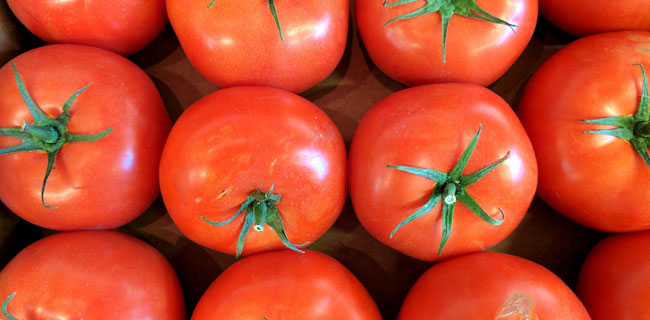
 We Indians have suddenly discovered a new food ingredient. Tomato Puree’ is now the talk of town of the urban and even semi urban Indian. Price of tomatoes is passe’. I actually joked with my vegetable vendor while asking him the price of tomatoes, that will he charge me for just asking the price. The fact is that at the price of a kilogram of tomatoes one could buy 4 kgs of Langda mango in Doon. (Last enquiry showed the price of tomatoes as Rs 250 per kg in my neighbourhood). The big issue today at retail outlets and on ecommerce sites is the availability of Tomato Puree’. I am told that in Mumbai there is already a blackmarket of the exalted product. Retailers are claiming that the demand has gone up by 6-8 times for the puree’.
Now, I am no cook or an expert in food ingredients. But I was intrigued. Price of basic tomatoes was going through the roof. Every Tom, Dick and Harry worth their salt were asking people to use tomato puree’. The demand for the product had soared. Puree’ was being touted as the next best thing to fresh tomatoes and yet, wasn’t it processed food? Didn’t it have any other additive? And if tomato is costly, anything being made out of tomato should also see a price hike. Old stocks notwithstanding.
Let me also confess that having worked on food brands, I do have some basic idea about Tomato Sauce and Tomato Paste. But Puree’ for me is a new one. So, I turned to my wife first for some information. I recollect that when we were in Egypt, tomato paste was a common ingredient found in local kitchens and it was used as a base for cooking of many a vegetable dishes. My wife informed me that puree’ is a much thinner version of the paste. It is more natural, less processed and closer to the actual flavour of tomato.
Next, I looked up the web and found the following descriptors for puree’ and paste.
Tomato puree is a product made from fresh, ripe tomatoes that are cooked, then blended into a thick liquid just slightly thicker than a typical tomato sauce. However, unlike tomato sauce which can be chunky, tomato puree is smooth and uniform. An acid (like lemon juice) and salt is usually added giving tomato puree a bright flavour.
Tomato paste is a concentrated form of cooked tomatoes, where tomatoes are cooked, strained and recooked until most of the liquid has evaporated and the tomatoes reach a thick, pasty texture similar to toothpaste. Because tomato paste is cooked for a longer period of time, it has a deep red hue and sweet flavour thanks to the natural sugars present in the tomatoes. Like tomato puree, store-bought tomato paste may contain added acid and salt.
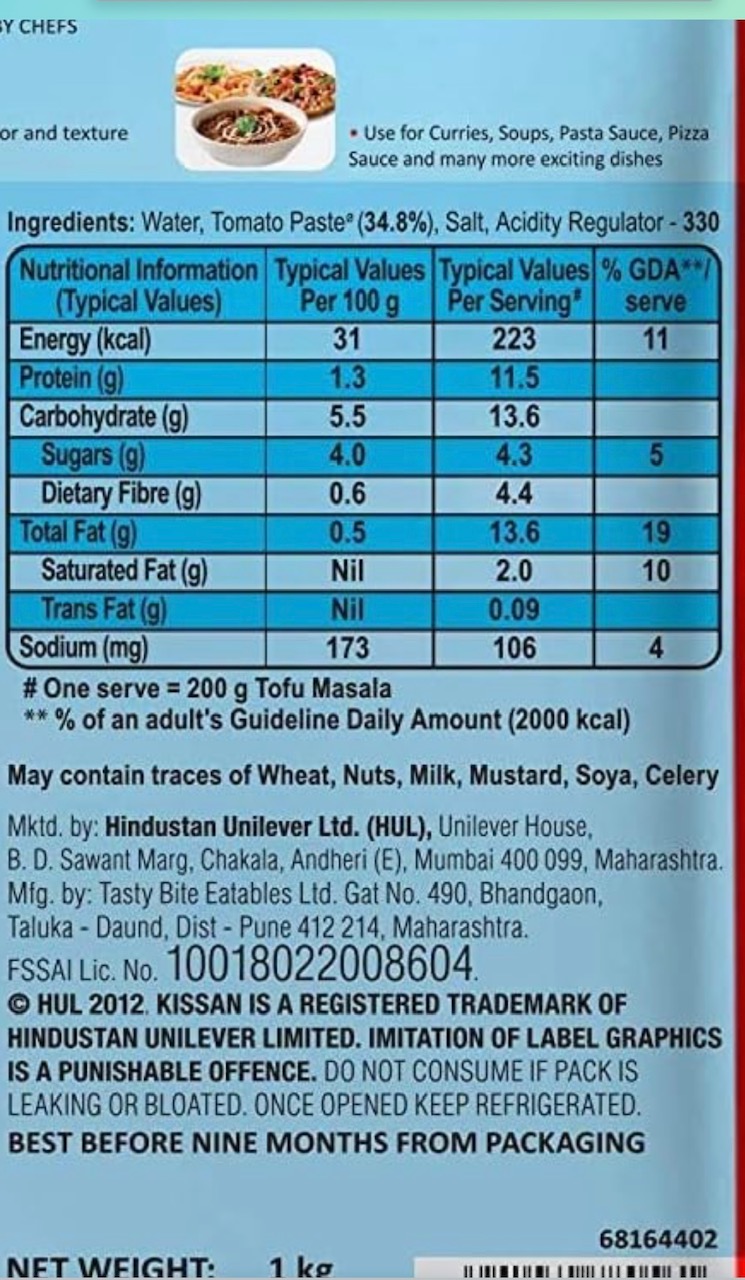
Having armed myself with some basic knowledge I searched for actual products. The first brand I came across was Kissan puree’. And the ingredient information shocked me. It said water, tomato paste, salt and acidity regulator. Tomato paste? Not from tomato itself? And only 34.8% was tomato paste. So, what was the rest? Water, salt and acidity regulator. How could this therefore be a substitute for natural tomatoes. The rule when one writes ingredients on the pack is that the ingredients will come in a descending order of total composition. So, Kissan tomato puree’ is actually water mixed with tomato paste, salt and acidity regulator. The good thing was that the brand was being honest but the brainwashing on puree’ does not prepare one for these facts. I mean how can something, read paste, which by definition is cooked twice so that it is devoid of water be used to make another product, read puree’ which is more liquidy? By adding water. So, we are being charged for adding water to paste?
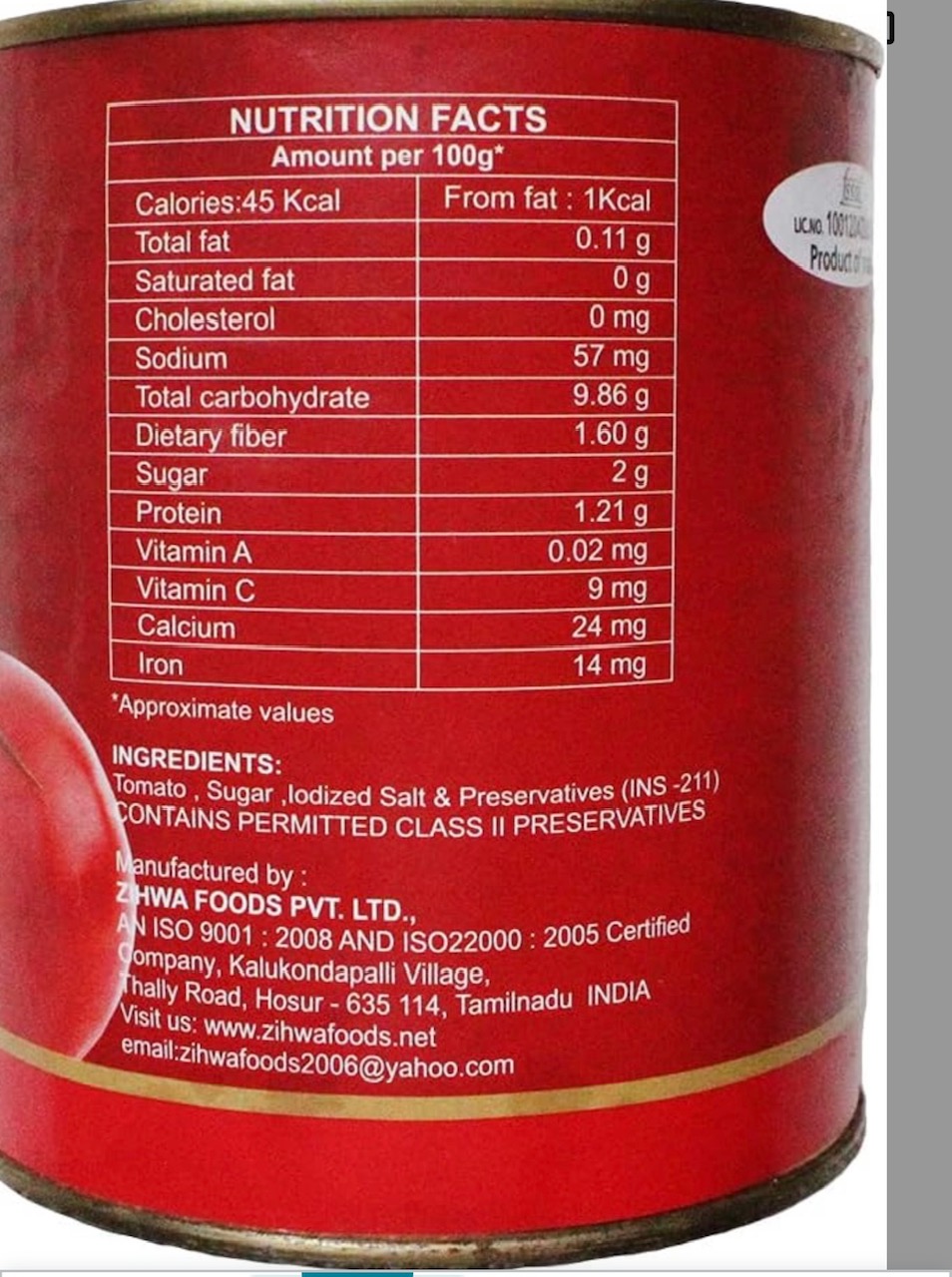
The next brand I encountered was Topps puree’. In ingredient information it said tomato, sugar, iodised salt and preservative. Now, look at the inconsistency in the ingredient information. No mention of what amount of tomato or salt or preservative. Just by its absence it can be presumed that all is not healthy. Though tomato written as the first ingredient means that the brand has more of tomato.
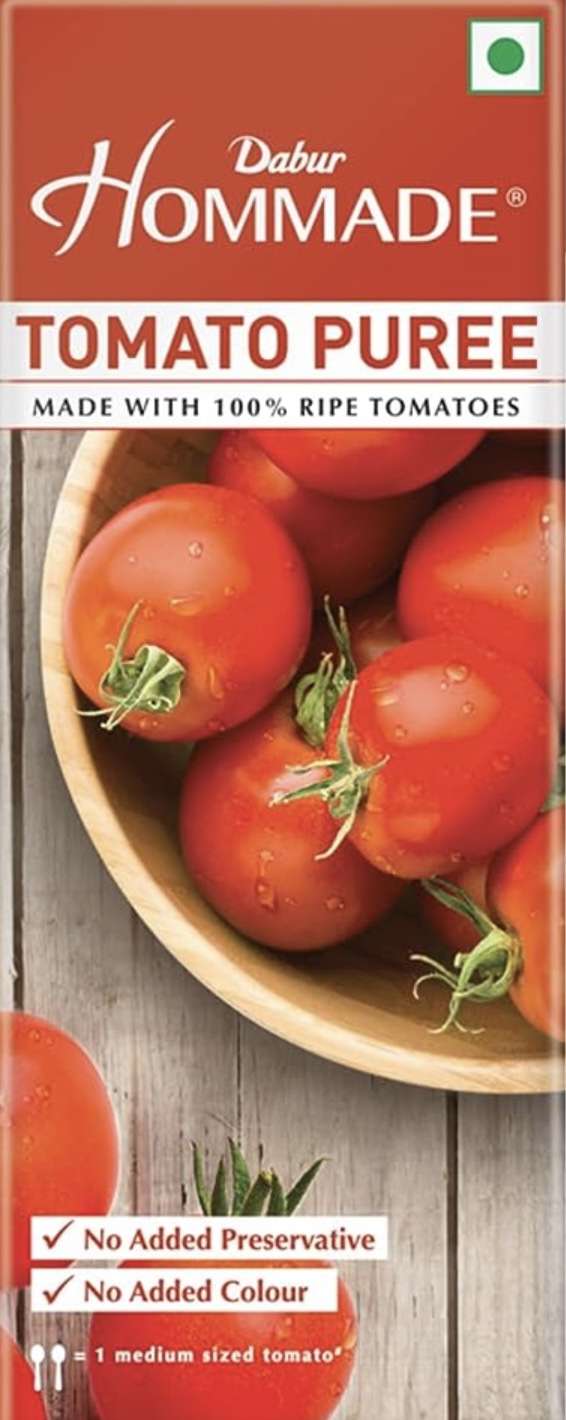
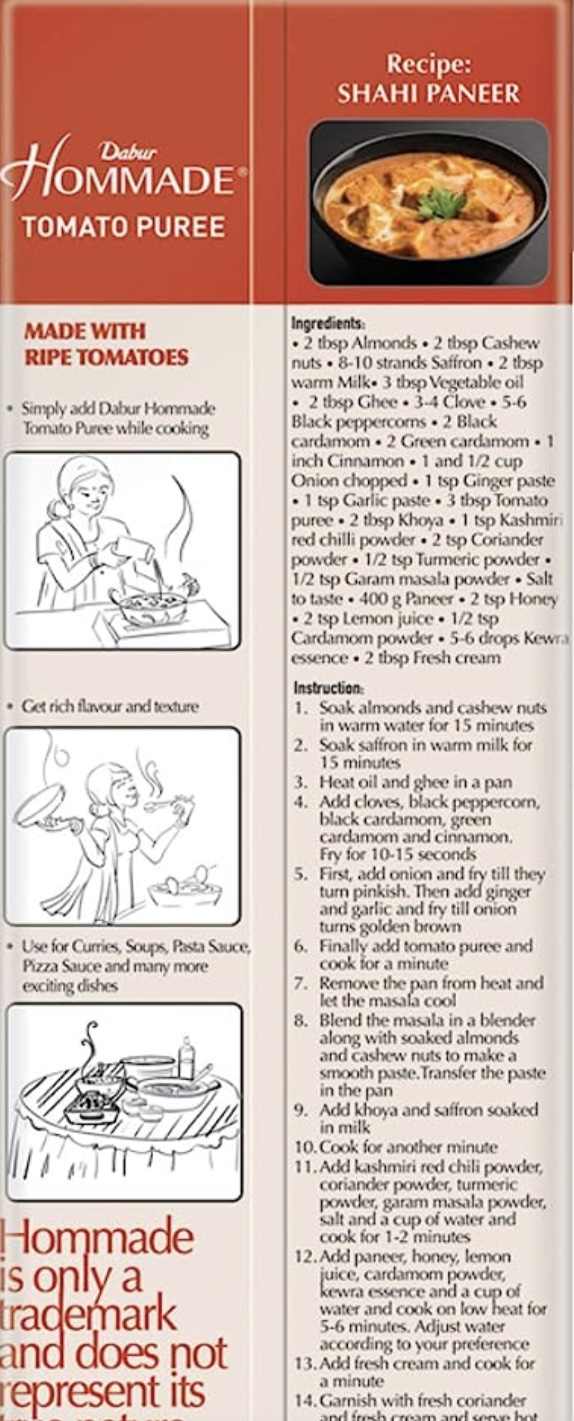
But the real surprise about how rules regarding packaging, ingredient information and even branding are vague and open to interpretation happened when I came across Dabur Hommade Puree’. Sounded too good to be true. And it was. As behind the pack is a disclaimer which says “Hommade is only a trademark and does not represent its true nature.” Seriously? Hommade is a Dabur brand which is quite misleading but that’s another story. The pack says made from 100% ripe tomatoes. And yet if one looks at the ingredient story it is almost the same as Kissan. Water, Tomato paste (37%), acidity regulator and anti oxidant. Tomato paste? So, what’s this about made from 100% ripe tomatoes. Misleading? To a lay consumer like me, definitely.
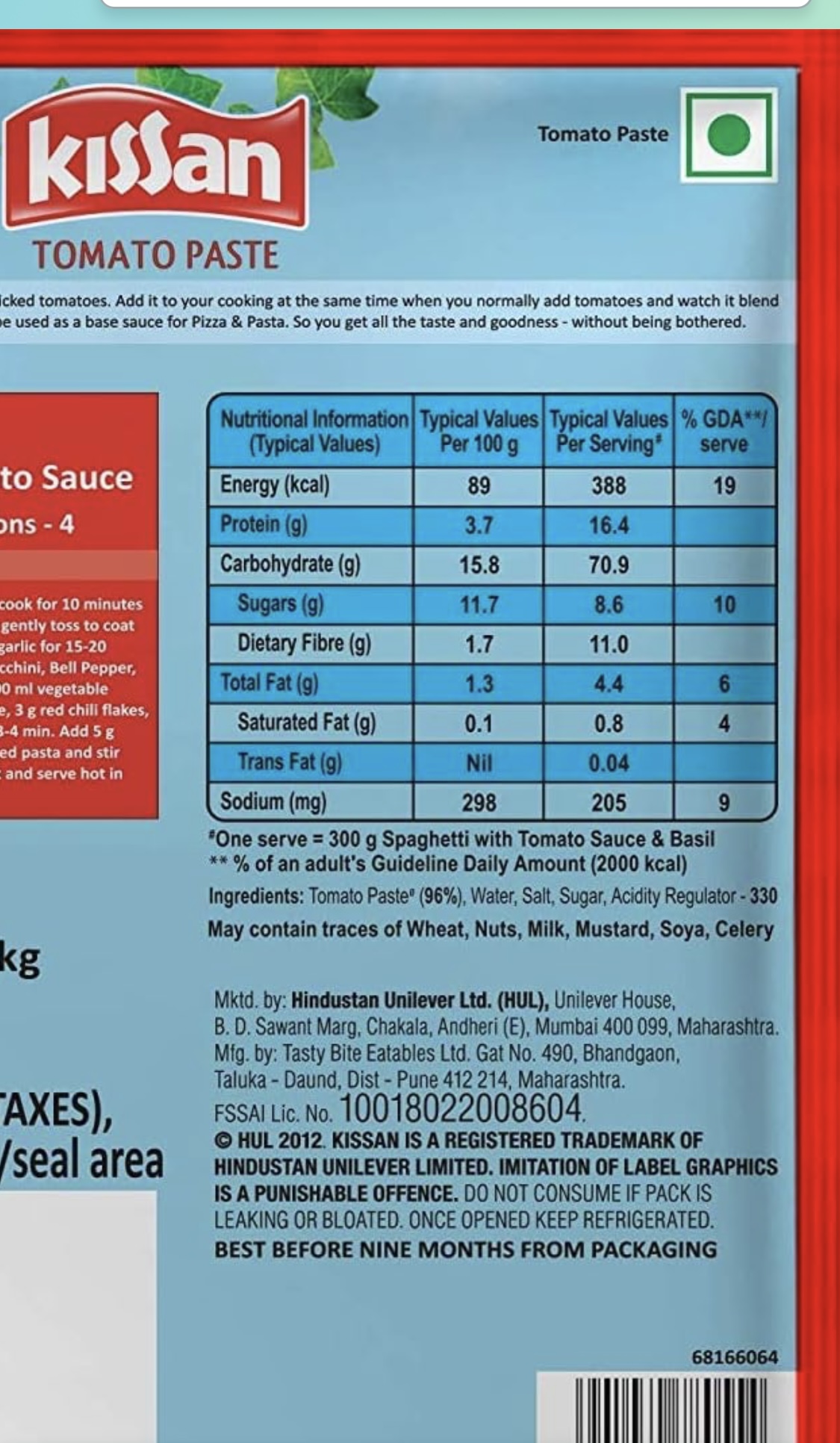
I did look up Kissan Tomato paste also. Its ingredient story had Tomato paste (96%) as the first ingredient, followed by water, salt, sugar and and acidity regulator.
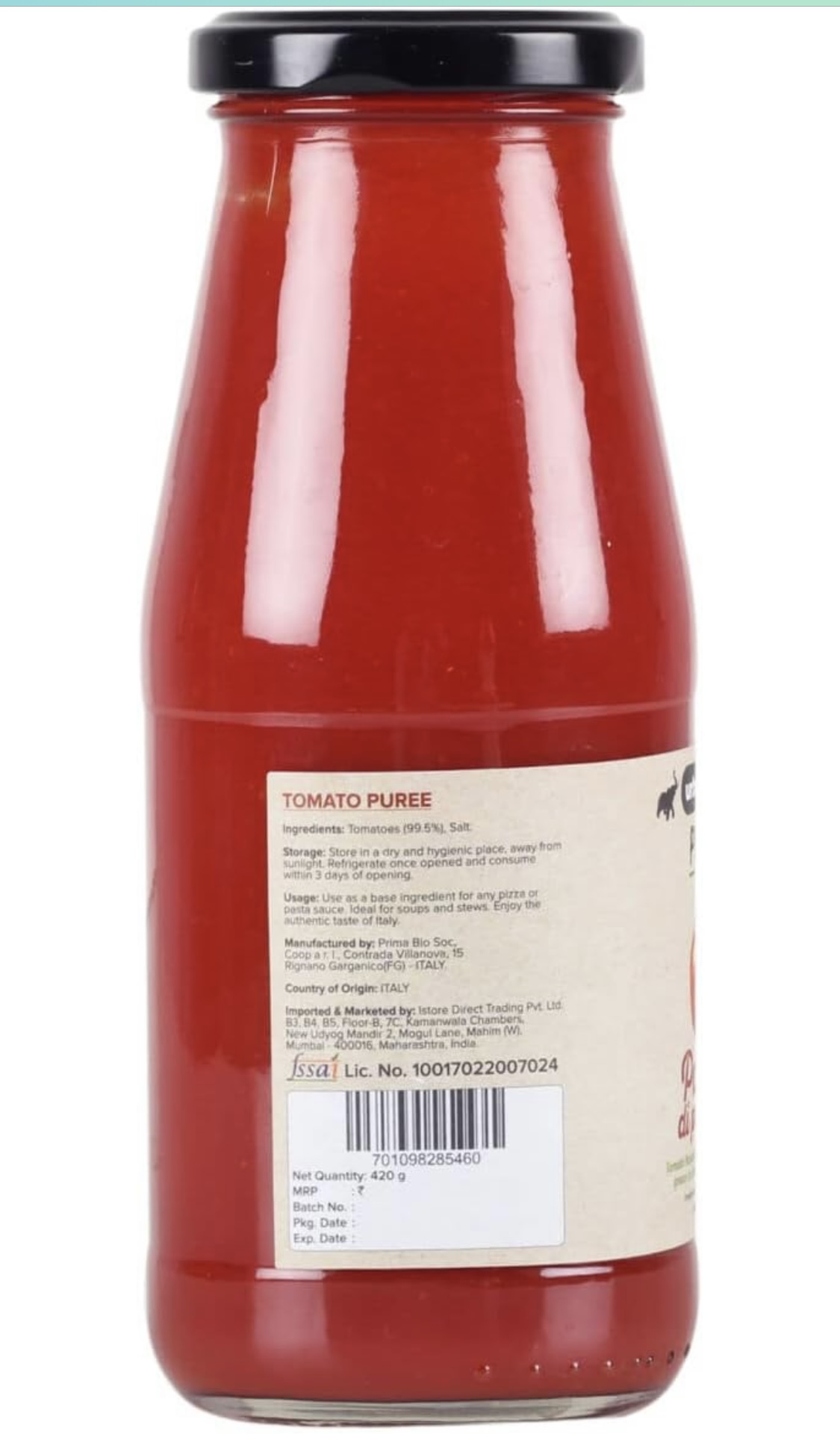
And I also came across some imported Italian brands which had 96% tomatoes and salt as the only two ingredients in puree’.
This is what I had written about in my last blog. We consumers are being taken for a ride. The packaging rules are not clear. Ingredient story is incomplete and sometimes not consistent with the claims. Phrases are being used as brand names which have to be defended within the packaging but in an obscure fashion. So called influencers who obviously are being paid then drive the gullible us to use products which are not exactly what they are supposed to be.
I am sure that the legal departments of these companies will have arguments to counter all this. But, why do they need legal to justify a product?
Looks like the Tomato story is not just about the price.
Vikas Mehta is a Dehradun-based business strategy and marketing consultant and educator. He writes on MxMIndia every other Monday. His views here are personal.