Tag: Kinetic India

  • Kinetic launches OOH planning tool IOM

    By A Correspondent


    Out-Of-Home major Kinetic Worldwide has announced the launch of India On The Move (IOM), a proprietary tool developed fully in-house to help understand audience traffic patterns.


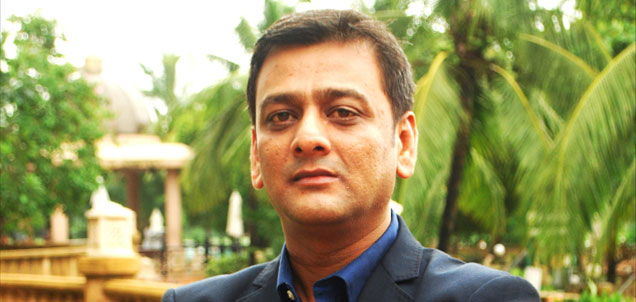
    Ajay Mehta

    Speaking on the development, Ajay Mehta, Managing Director of Kinetic India said, “The current situation is a revolutionary trendsetter for the way media is consumed across the globe, breaking all the pre-existing norms. For the OOH industry the key lies in mapping the current consumer behaviour with what brands have to offer and chalking out a plan, post lockdown in the new normal. Analytics is expected to play a key role in optimizing investments for OOH. With the launch of IOM, we intend to offer a tool that leverages real time inputs to maximise campaign impact across geographies and mobility opportunities acknowledging the greater demand for transparency and ROI.”


    Arijit Chakrabarti

    Added Arijit Chakrabarti, Head of Strategy at Kinetic India: “Despite having the second largest reach as per Target Group Index, OOH is considered as being data dark – with planning based more on gut-feel rather than on-ground facts and science. IOM is an online proprietary tool bringing science into planning.  It leverages multiple visualizations that help showcase underlying data and build relevant insights. The system accounts for differentiated audience mobility patterns on a real-time basis and offers customised mapping solution with outline of audience aggregation across geographies.”


  • Kinetic India executes outdoor campaign for Tata Cliq

    By A Correspondent


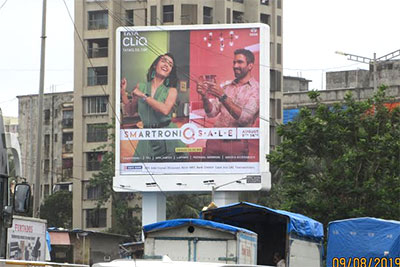
    Understanding the need to increase awareness of Tata Cliq with the objective to strengthen its connect in the market, Kinetic India adopted a simple communication approach that created good visibility for the brand. It installed super-large billboards at high traffic junctions in Mumbai and Gurgaon that created a huge impact.
     

    Said Kishore Mardikar, Chief Marketing Officer, Tata Cliq: “The smart / connected homes industry is witnessing a rapid growth in the Indian market. IT hubs and HNWIs were the initial adapters of this change however, today almost every household in metro cities has at least two-three smart appliances. However, majority of Tier 1 and 2 cities feel that converting their home into smart home will be an expensive affair. Being the first e-commerce website in India to have introduced Connected Homes as a category, our endeavour is to create awareness amongst our patrons on the connected home concept and ways to convert their home into smart homes at affordable prices and with least amount of time spent.”


    Added Nandini Nayyar, Regional Head-West, Kinetic: “From being stringent about shopping at a store to moving towards shopping online, the consumer purchase journey has indeed come a long way. With the rapidly increasing competition in the online and digital space, ensuring that your brand has an edge is vital. Thus, mobile marketing combined by smartly positioned OOH helps yield higher results on campaigns.”


  • Xaxis measures DOOH exposure among individuals for Manyavar

    By A Correspondent


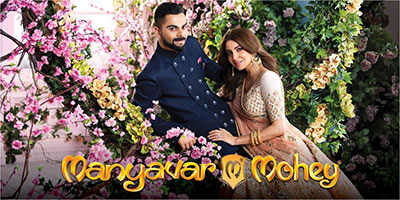
    Xaxis announced the results of a recent campaign for retail brand Manyavar, that tracked individuals from digital outdoor exposure to retail store visits. Implemented on mobile and digital out of home (DOOH) advertising, the campaign was tracked attribution from individual OOH exposure against subsequent consumer behaviour.



     

    The campaign attribution study was designed to help Manyavar evaluate cross-media frequency management between DOOH and mobile. Xaxis used geo-fencing technology to measure DOOH exposure among individuals, then against mobile ads delivered to the same locations. Results revealed that store footfall increased by 198 per cent among groups exposed to both outdoor and mobile ads, meaning those who had been engaged by outdoor and mobile sequentially visited Manyavar stores three times as often as those who had not. In addition, users who had seen the OOH ads interacted more with the mobile ad compared to users who had not.


    Said Abhijeet Dhar, Marketing Gead, Manyavar: “The Xaxis and Kinetic team deserves high praise. Not only did their innovation and out-of-the-box thinking help us identify a new approach to measuring attribution, but the unique consumer insights we gained from this campaign were a game-changer. They truly understood our business goals and tailor-made a strategy that delivered results beyond our expectations.”


    Added Rachana Lokhande, Co-CEO, Kinetic India: “OOH has always been under the lens for not having measured results, but not anymore. Our client Manyavar was open to the idea of measuring the outcome of the campaign and analysing the audience using OOH + Mobile. Xaxis and Kinetic worked in collaboration to showcase the potential of driving incremental reach using mobile as an extension of OOH and then measuring audience behaviour. The data and insights are a clear indication of great synergies between both these medium.”


  • Kinetic appoints new leadership team in India

    By A Correspondent


    Rachana Lokhande
    Charanjeet Singh Arora

    Kinetic India announced that it has promoted two of its leaders, Rachana Lokhande and Charanjeet Singh Arora to the role of Co-CEO. They replace Suresh Balakrishna who resigned earlier this month. Before the announcement, Lokhande was serving as VP Trading and Operations of Kinetic India. Previously she worked for IPG and R K Swamy BBDO.


    Arora has been with Kinetic India since Nov 2017 as Senior VP for clients.Prior to joining Kinetic India, he worked for Posterscope, IPG and Reliance Broadcast.


    Said Marc-Antoine de Roys, Kinetic’s Global CEO: “I want to thank Suresh for his great work at Kinetic. It is because of his leadership and succession planning that we are in a position to have consistency as he transitions out of the organization. Rachana and CJ are proven leaders at our company who have earned the trust and respect of our employees, vendors and clients. Their service, history, and accomplishments made this an easy decision.”


  • Kinetic welcomes Ford Mustang in India with outdoor innovation

    By A Correspondent


    Kinetic India was recently appointed by Ford India ahead of introducing Ford Mustang in India. Ford Mustang is an automotive legend and is one of the most followed nameplates across the globe. Since the Mustang first went on sale in 1964, Ford has sold more than 9 million vehicles around the world.


    To capture imagination and create intrigue the audience ahead of the car’s introduction, Kinetic worked on creating an immersive, sensory experience at two of the country’s busiest airports – Delhi and Mumbai.


    In the first out of home (OOH) solution, Kinetic laid out the red carpets for customers arriving at the Delhi and Mumbai airports which were equipped with motion sensing technology and connected to a life-sized billboard. To grip an onlooker’s attention, a passerby who stepped on the carpet was welcomed with a gush of air and an evocative growl that the Ford Mustang is identified with. The billboard on the side played interesting visuals of the Ford Mustang and by the time a walker was off the carpet it switched to an enticing line – ‘The legend makes its way’ – with smoke coming off from either sides.


    “Ford Mustang stands for freedom of expression and embodies the passion and fun-of-driving inherent in all Ford vehicles. The arrival of Ford Mustang in India needed to stand-out and leave a lasting impression on everyone who experienced our touch-points. We wanted create an experience that personifies all that this iconic car stands for by innovatively demonstrating its fun-of-driving, legendary engine growl and raw power,” said Kaushik Prasad, general manager for consumer marketing at Ford India said.


    The second OOH display was strategically placed at the high traffic Delhi-Noida Expressway to attract significant eyeballs. The hoarding featured the side profile of the Ford Mustang, depicting a high-intensity drift to demonstrate power and a furiously rotating rear tyre emitting continuous smoke.


  • Kinetic India announces change in top deck

    By A Correspondent


    Raju Markandeya

    Kinetic India has announced changes in senior management of the company. Raju Markandeya has been elevated as COO – Kinetic India from the current role of Head –Trading and Buying which will now be taken care by Rachana Lokhande, a recent appointment. For last seven years in Kinetic, Raju has handled the Finance and Trading function and brings with him a rare combination of a deep understanding of finance and processes and a keen knowledge of the nitty gritty of the OOH business. In this new role, all the Department heads will report into Raju M.


    Suresh Balakrishna

    Speaking on his new role, Raju Markandeya mentioned, “I am excited about the new role. I got full support during my tenure of excellent team at Kinetic India.   Kinetic India is like a big family and enjoyed working during the last 6+ years.  Kinetic being the leading agency believes in transparent way of managing the business and add the value to the client spends.  We are aiming to set higher standards for the industry under the dynamic leadership of Suresh Balakrishna. I take this opportunity to thank all our media partners who extended full support to Kinetic.”


    Adil Khan takes over as Head, North Region. Adil Khan has been with Kinetic for 9 years and showcases a wealth of knowledge and great client relationships in Delhi Market. In his new role Adil will be overseeing all the North Markets except for UP.


    Commenting on same, Adil Khan said, “So far the journey with Kinetic has been commendable and with this new role I look forward to strengthen the team and region even more under the leadership and guidance of Suresh Balakrishna”


    Adding to above, Suresh Balakrishna expressed, “Both Raju and Adil have been pillars of Kinetic over the last few years. These are extremely well deserved elevations for both of them, and I am sure that Kinetic will grow from strength to strength under their leadership.”


  • Kinetic India appoints Rachana Lokhande as Director – Trading and Operations

    By A Correspondent


    Kinetic India has announced the appointment of Rachana Lokhande as Director – Trading and Operations and will have all India buying, trading and operations team reporting to her at Kinetic. With her spirited personality and active leadership, she will oversee the trading, operations and buying functions of the company. Rachana has spent over 12 years in OOH Industry and diligently built Unilever and Amazon brands in Out of home space during her last assignment in Rapport, the OOH arm of Mediabrands.


    Commenting on same, Suresh Balakrishna, CEO – South Asia & Middle East, Kinetic said, “I have worked with Rachana in my previous assignment and know her to be a committed and driven professional. She brings with her the experience of handling very large and demanding clients like Amazon and HUL. I am delighted that she has joined Kinetic, this will only strengthen our hold on the Indian market”.


    Rachana, a mass communication graduate and a mechanical engineer, started her career with Ensure Outdoor as Planner and Buyer and later took up new and progressive roles at RK Swamy BBDO, Aaren Initiative and Rapport prior to Kinetic Worldwide with total experience of 15 years.


    Speaking on her new role, Mrs. Rachana Lokhande said, “I am thrilled and excited about my new role at Kinetic and look forward to working with its dynamic team to drive its accelerated growth story”.


  • Suresh Balakrishna quits IPG, to join WPP’s Kinetic

    By A Correspondent


    Suresh Balakrishna, CEO of the IPG Mediabrands agency BPN (short for Brand Programming Network) who also led media agency Initiative’s non-global accounts as well as Rapport, the out-of-home agency of the group, has resigned. He is set to join WPP’s out-of-home agency Kinetic India as CEO South Asia and Middle East in January 2016. For Balakrishna, although it’s a shift from a manifaceted CEO of a media agency to an essentially outdoorsy company, the regional role is definitely a huge plus. Plus his reporting will be directly to Global CEO Mauricio Sabogal who was incidentally Global CEO of BPN before getting into Kinetic.


    Confirming the development, Shashi Sinha, CEO – India, IPG Mediabrands said: “I am sorry to see Suresh go. He’s been a great asset to the company and an excellent professional.”


    Said Balakrishna: “I have had four very exciting and fulfilling years here. Having said that I am looking forward to my new role. WPP is the world’s largest advertising group and Kinetic is India’s largest OOH company, so taking an established company to greater heights in the South Asia and Middle East region will be a challenge which I am looking forward to.”


    Balakrishna who has donned many hats in media and advertising has been with IPG since January 2012.He will be with IPG till December 31.


  • OOH in the times of Digital


    We may skip the occasional YouTube ad and attend to some chores while the television commercial is on, but Out-Of-Home advertising is one form of promotional activity we cannot avoid. It is right there whether we are on our way to work, out for a party or even when we are driving away for a holiday. In this interview at the Outdoor Advertising Convention 2015 last month, Amit Sarkar, Chief Operating Officer, Kinetic India talks about the growth of OOH in India and what lies ahead.


    Can you give us a broad idea of how OOH has been growing over the years in India especially at a time when there’s so much buzz about digital.

    Anything that is new will always have a buzz. So digital has been growing at a larger pace because it is a new evolution of media format. And a large part of digital is growing because you look at the age groups which are digitised, they are our larger consumers today. If you look at the larger shifts from consumer-centric age groups, young people are more prone to digital. OOH has been growing at a logical pace, 5 percent, 4.5 percent, except for last year towards the end of the second quarter when elections happened and we saw a lot of money in OOH. I think that’s an interim situation which actually took the pie to about 10-12 percent growth last year. But, if you have to keep that out of the event of normal spending pattern, I think we grew about 4.5-5 percent.


    So would you say that this digital buzz has stolen the thunder of OOH and other mediums as well?

    I really don’t buy that story, because when digital was not there, OOH still grew at the same pace. Which means OOH has its own independent challenges of growth and decline. Digital is something that is new, so obviously there is a perception that that is pulling out more monies. I can tell you with assurance that digital has pulled money out from television and they would be having the same sort of concern which OOH may have. I think OOH’s problem is independent of whether digital or mobile advertising is going out or not. And these are very uniquely positioned over the last one decade that we have been seen in OOH as a business. It’s very independent. I mean OOH doesn’t grow because of larger logical reasons like we have become pretty format-driven, we have regulation problems, different cities and different municipal corporations and revenues from OOH is different. While there is tremendous opportunity, but a slow pace of growth is largely to be blamed in the way media has been consumed, and also position perception. If you look at it, it’s more of positioning.


    What is the difference in the growth of OOH in a metro like Mumbai versus a Tier 2 or a Tier 3 city?

    If you look at it, about 75-80 percent of consumption today is all in the urban cities. While Tier2, Tier3 is extremely growing and that’s because of any other reasons of all businesses.
    If you see telecom as a category, these are pockets that are growing too. If you look at FMCG as a category, these are pockets that are growing too. New acquisitions have been drying up in our own cities. So OOH thereis more an evolved format, better environment, but if we look at core OOH in terms of visibility perspective, Tier2, Tier3 and Tier4 towns are the ones which provide us business. Because more as we progress, when you look at rural India where there is a lot of purchasing ability for people who are just farmers in the context of it. Gradually when their behavioural pattern changes in the way they consume something from a media format perspective, OOH in those markets will evolve, but need wise, there is tremendous potential. I have seen double digit growth inside that 5 percent, coming only from Tier 2 and Tier 3 towns.


    Does that have anything to do with the fact that internet penetration is also slightly lower in a Tier 2, Tier 3 city compared with a metro?

    I think they are two independent points, but all independent points from a consumer’s perspective have a correlation, which means more internet penetration, more exposure, therefor more knowledge clearly, more aptitude towards media. So similarly, just take an example I would say, if you would have looked at a city like Mysore about 10 years back, till the time Infosys actually made a game-changer there and all of us know that Mysore is great for Mysore palace. Today if you look at a lot of people who have migrated to Mysore, from Bangalore and other large cities, your consumption pattern of that particular city has changed. Your real estate prices have gone up. Almost everything around it is a newer ecosystem. That proves ability and OOH would actually work with it.


    Measurement in OOH, unlike digital and other mediums, it still a weak point. In your opinion what is the best way to tackle this?

    Every media format has its own challenges. Not to say digital for clicks could be measureable, because clicking and getting absolute time to consume an advertisement are two different things. Just because of clicks, it doesn’t mean that your attention towards an advertisement in digital is great. OOH has challenges of currency and ROI. But the reason for it is also that it is more difficult to measure OOH because of the nature of the business, the geographical spread, the immense amount of unorganized formats across different markets. If you look at television, you would actually take a smaller sample size to determine what will be your viewership pattern. In OOH every market works differently, vendors are different, formats are different, cultures, languages are different. Just to give you an example, in Karnataka if you ever do OOH, you have to actually put a sign of the creative in the local language. Without that you will not be able to display. The same thing is not really applicable in Delhi. So it has perennial challenges, however to build a currency, it has to have industry initiative and investments have to come in. So that’s the larger challenge. There’s no trial. There has been trial for the last 10 years that I know of, but everytime you progressed. So I’m hopeful it will happen sometime tomorrow, and it has to happen, otherwise the trade matrix will die. I mean our margins are shrinking, investments are not coming in, regulations are a challenge. You have to have a modelling of ROI which will move you fast. In closed environments like the airports and malls, it’s still addressable, because you can assure walk ins, profile a TG, it’s a closed environment you know how things are. It becomes very difficult on roadsides, on larger platforms.


    In this perspective do you think it’s good to have competition between mediums, or do you think that all need to work in synchronisation to ensure sales for the brand?

    OOH all of us realise has become more environment-driven. So whether it is an experience to be combined with digital, social, or anything to do with word-of-mouth as well, which amplifies it to a larger extent is OOH. So, just because digital and OOH can combine together to give a larger proliferation, it may not be a right story, all forms of media, together form an OOH ecosystem today. And that’s where the importance and the opportunity lies.


    From the perspective of your clients, what are the spends on OOH versus other mediums?

    On an average 5-6 percent. Some categories actually would be more spendthrift. So telecom is high spendthrift in OOH, FMCG to an extent yes, but largely on an average it is about 5-6 percent.


    So according to you is that fine, or should clients allocate a larger portion of the budget to OOH?

    OOH is the most seen medium according to TGI consistently for years together. But if you look at commitments of budgets, it’s still very vague, because at the end of the day everyone needs to understand what is an ROI. I’m not debating the fact that every media ROI is absolutely correct, but it is the time we have a matrix and if we keep on selling OOH in the way it is positioned today, there are challenges. So from the way I look at it, OOH has to shift from its current positioning. So that proposition becomes robust and therefore currency will still matter, but what will matter more is experience with consumers. And that will actually drive it.