Tag: Khushwant Singh

  • Tributes on Twitter: Manmohan Singh, Narendra Modi, SRK, others

    And this is how some well-knowns tweeted on Khushwant Singh


    Gursharan joins me in conveying all members of the family our sincerest and heartfelt condolences. We pray for peace for the departed soul.


    PM condoles the passing away of Mr Khushwant Singh: “A gifted author, candid commentator and a dear friend. He lived a truly creative life.”

    — Dr Manmohan Singh (@PMOIndia) March 20, 2014

    Oh no Khushwant Singh is no more. He made our lives so much richer by his literary contributions. “With Malice towards one and all” RIP

    — SHAH RUKH KHAN (@iamsrk) March 20, 2014


    so khushwant singh goes,like we all must. what a life led! a 100 would have been excellent but he gave us 99 & we must be thankful for that

    — Harsha Bhogle (@bhogleharsha) March 20, 2014

    My condolences on the passing away of noted author & journalist Khushwant Singh. May his soul rest in peace.

    — Narendra Modi (@narendramodi) March 20, 2014


    I most fondly remember playing tennis with Mr Kushwant Singh.And his hearty laughter over certain shots! He played to enjoy and not compete!

    — Kiran Bedi (@thekiranbedi) March 20, 2014

    Truth, Love & A Little Malice. An apt title for a book & for a life! A rare man with a rare capacity to look inwards. RIP, Khushwant Singh.

    — Madhur Bhandarkar (@mbhandarkar268) March 20, 2014


    Saddened by the news of passing away of noted author Khushwant Singh, my condolences to the family. An era comes to an end.

    — ShivrajSingh Chouhan (@ChouhanShivraj) March 20, 2014

    Khushwant Singh. End of an era. Only KS could say ‘There’s no condom for a pen.” And prove it!

    — Shobhaa De (@DeShobhaa) March 20, 2014


    Very sad to hear of the death of Khushwant Singh – great historian, novelist, editor, columnist, and a wonderfully kind, generous man. RIP.

    — Amitav Ghosh (@GhoshAmitav) March 20, 2014

    Saddened by the demise of Sh. Khushwant Singh. Literary world has lost a shining jewel. Condolence to his family.

    — Vasundhara Raje (@VasundharaBJP) March 20, 2014

  • Tributes & Toons from the papers, Web

    What is it like being the son of Khushwant Singh: Rahul Singh

    http://scroll.in/article/what-is-it-like-being-the-son-of-khushwant-singh?id=659119


    My father walked with kings yet had the common touch: Rahul Singh

    http://timesofindia.indiatimes.com/india/My-father-walked-with-kings-yet-had-the- common-touch-Khushwants-son-Rahul-says/articleshow/32391855.cms


    King of the Columnists and prince of hosts: A tribute in verse to Khushwant Singh by Vikram Seth (Hindustan Times)

    http://www.hindustantimes.com/india-news/a-tribute-in-verse-to-khushwant-singh/ article1-1198072.aspx


    A very nice man to know: Shobhaa De (The Economic Times)

    http://economictimes.indiatimes.com/news/news-by-industry/et-cetera/khushwant -singh-a-very-nice-man-to-know/articleshow/32386019.cms


    We celebrate a great life, not his passing away: BG Verghese (DNA)

    http://www.dnaindia.com/india/column-khushwant-singh-1915-2014-1970934


    “Questions can’t be impertinent, only answers can.” 10 interviews (Outlookindia.com)

    http://blogs.outlookindia.com/default.aspx?ddm=10&pid=3204&eid=31


    He never worked at being editor, he just glided through the job: Raju Bharatan & others (mid-day)

    http://www.mid-day.com/articles/tribute-the-craft-of-being-khushwant-singh/ 15173103#sthash.giEjYnih.dpuf


    ‘Work is worship,’ he said, ‘but worship is not work: Jaishree Mishra (The Times of India)

    http://timesofindia.indiatimes.com/india/Khushwant-was-a-very-nice-man-to-know -Writer-Jaishree-Misra/articleshow/32379609.cms


    With Malice Towards One and All: Best of Khushwant’s columns (HindustanTimes.com)

    http://www.hindustantimes.com/india-news/with-malice-towards-one-and-all-best- of-khushwant-singh-s-columns/article1-1197650.aspx


    Hemant Morparia in Mumbai Mirror: http://epaper.timesofindia.com/Default/Scripting/ArticleWin.asp? From=Archive&Source=Page&Skin=MIRRORNEW&BaseHref=MMIR/2014/03/21& PageLabel=4&ForceGif=true&EntityId=Ar00402&ViewMode=HTML


    Sudhir Tailang in Asian Age: http://www.asianage.com/sites/default/files/images/21cart.preview.jpg


    Manjul in DNA: http://epaper.dnaindia.com/story.aspx?id=61577&boxid=32020&ed _date=2014-03-21&ed_code=820009&ed_page=3


  • A man the likes of whom we will not see again: Prime Minister Manmohan Singh

    A message from Prime Minister Dr Manmohan Singh on the passing away of Khushwant Singh:


    “I am deeply saddened to learn that my dear friend, Sardar Khushwant Singh, is no more.


    Throughout his life, Khushwant Singh worked hard to make it easier for the rest of us to understand and come to terms with the major social, economic and political changes that our country and the world witnessed. His writings, whether as a journalist, editor, historian, author or provocative raconteur, never failed to shed light on the human condition. That he did this unfailingly and candidly for more than half a century, while also managing to be humourous and witty, reflects on the enormous talent that he had for holding up a mirror to society. There was hardly an aspect of public life that escaped his attention and none that was not the better for it.


    Khushwant’s passing marks the end of an era and while I join you and countless others around the world in mourning his loss, I am sure that he himself would want us also to celebrate – to celebrate a rich and full life that was devoted to the pursuit of truth and justice. Indeed, Khushwant was a man the likes of whom we will not see again.

  • What young journos can learn from Khushwant Singh


    By Ranjona Banerji


    Khushwant Singh personified that one thing that all journalists ought to have: irreverence. Add to that a refusal to take oneself too seriously and you have a winning combination. And like the contradictions in journalism, these are lessons from a man who did not start life as a journalist. He was already a renowned author when he took over editorship of The Illustrated Weekly in 1969.


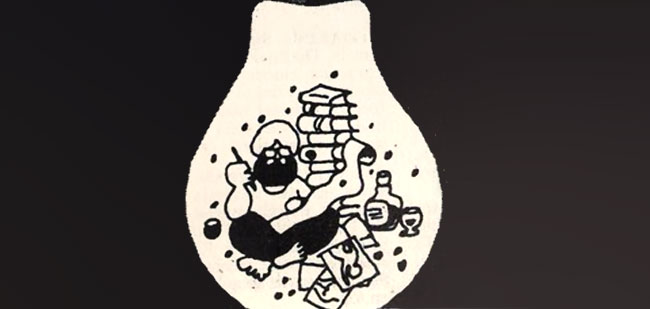
    Is it an exaggeration to say he defined or redefined what journalism and editorship has meant to us ever since? People may not always realise this, but the Khushwant Singh effect is still with us. He took a fuddy-duddy publication and gave it lightness and life and humour, which should not be mistaken for fluff. He encased himself in a light bulb – or was sentenced to it by cartoonist Mario Miranda – but by doing so he freed journalists from boring strangleholds of dead habit.


    Certainly, Singh increased sexy content in the Weekly and his witty but risqué jokes were looked forward to. He understood the influence of cricket and films on the Indian psyche – so I guess we can blame him for so much of the bilge that passes for journalism today? Kidding! But such was his hold over the reader that for decades after he left the Weekly his columns had to be carried in newspapers because of public demand. All those editors who dreamed of themselves captured for perpetuity in a light bulb had to bow down to the allure of Kushwant Singh and his wit. I know several people for whom he was still India’s foremost columnist long after his prime.


    Many of today’s young journalists (ah yes, here comes the old person’s lecture) would do well to emulate Singh. He was not afraid of taking on the high and mighty, he was not afraid of admitting his mistakes and he was not afraid of being contemptuous of hypocrisy. Indeed, he thrived on the last! His admiration of Sanjay Gandhi and the Emergency he would deeply regret but he did not hide it. One might argue that those who acknowledge their errors and transgressions are far more admirable than those who refuse to accept they ever made them. He objected to Operation Bluestar and made his objections public but he was no fan of Sikh extremism either.


    Singh was also a serious historian especially when it came to Sikh history and India’s Partition. His Train to Pakistan remains a seminal work on that painful subject. Singh was always intensely secular as well – regardless of how insulting that term is to rightwing India. He spared no punches when it came to communal elements either. His many novels are varying in excellence and his sex writing was somewhat tedious. But his autobiography and his books about himself and his writings though are must-reads for every young journalist and excellent examples of honest, scathing and witty writing. I would also suggest them for all our older journalists as well – especially those dripping with self-importance.


    Singh’s life in journalism leaves behind a rich legacy. We can immediately pick up that if you get too close to any political dispensation, you will pay the price for it or regret it or both – as happened with Singh and the Gandhis. And you cannot under any circumstances take yourself and any passing pomposities too seriously. What a lot of balloons to puncture when you look at all the fat-headed pundits around.


    I suppose the third lesson is that journalists who make plenty of jokes and drink a little single malt everyday live long and fulfilling lives? Khushwant Singh lived a life to be celebrated and we need to raise a glass to that!


    **


    Understandably, today’s newspapers have devoted pages to the Grand Old Man. Bachi Karkaria’s piece in The Times of India speaks from the heart and personal experience – she and Singh joined The Illustrated Weekly the same year; indeed she is one of Singh’s many protégés.  TOI also had Rahul Singh, son and journalist himself, writing on his father. TOI’s institutional memory remains dominant, whatever other criticisms can be chucked its way. Vikram Seth’s poem in Hindustan Times – written some years ago – is apt. Though one wishes Hindustan Times had collected all the Singh recollections on one page rather than scattering them around. Indian Express got LK Advani to talk about him – a change from all the seat woes for the political veteran. Mid-Day pulled out relevant extracts from Singh’s writings about Mumbai people like Dom Moraes and Protima Bedi. DNA had photographs and recollections. Economic Times went with Shobhaa De.


    Fitting tributes all. But none more so than Singh’s own epitaph for himself:

    “Here lies one who spared neither man nor God

    Waste not your tears on him, he was a sod

    Writing nasty things he regarded as great fun

    Thank the lord he is dead, this son of a gun.”

    Unlikely though that too many will agree with that last line.

    We need to raise a glass to that!


  • The Khushwant Singh pre-obituary by Dhiren Bhagat

    Khushwant Singh once said that he didn’t agree with the idea that one had to be nice to the dead in obituaries. If the man was nasty, I would write it in the obituary, he told Karan Thapar in a BBC interview in 1999. The caustic comments by Singh in an obituary on Congress leader Rajni Patel drew widespread criticism from friends and journalists in the early 1980s. It was perhaps that obit and Singh’s strong defence that got Dhiren Bhagat, then a controversial and popular journalist, to pen this ‘pre-obituary’ on Khushwant Singh in the Vinod Mehta-editor Sunday Observer issue dated February 13, 1983. Read on…


    I was saddened to read that Khushwant Singh passed away in his sleep last week. What a quiet end for so loud a man. How the gods mock the mocking.


    Contradictions surrounded Khushwant at every stage of his life. He strove to give the impression that he was a drunken slob yet he was one of the most hard-working and punctual men I knew. He professed agnosticism and yet enjoyed kirtan as only few can and do. He was known nationally as a celebrated lecher but for the past thirty years at least it was a hot-water-bottle that warmed his bed. He devoted his last years in the service of a woman who decisively spurned him in the end. He made a profession of living off his friends’ important names and yet worked single-handedly to diminish that very importance. Empty vessels make the most noise but Khushwant was always full of the Scotch he had cadged off others.


    He was a much misunderstood man. So before the limp eulogies start pouring in (how Khushwant would have hated them!) let me set the record straight. As Khushwant once said, the obituary is the best place to tell the truth for dead men file no libel suits. (An agnostic to the end he didn’t believe in the Resurrection.)


    Khushwant was born in 1915 in a rich but not particularly educated home. They were Khuranas from Sargodha who made good in Delhi.  His father, Sir Sobha Singh, was the contractor who built the city of New Delhi and who in consequence received a knighthood. In ’47 it used to be said (somewhat inaccurately it must be admitted) that ninety-nine per cent of New Delhi was owned by the Government and one per cent by Sir Sobha Singh.


    After his initial education Khushwant was sent to England to appear for the ICS. He didn’t make it. Later he would tell a story of how he had made it to the Merit List but how that year there was a reserved place for a non-Jat from Phulkian state (later PEPSU) and how some- one with less marks than him filled that place. But Khushwant was always a great raconteur so it is difficult to know what to believe.


    Once bitten, twice shy. Khushwant didn’t try for the ICS again but instead enrolled himself at the London School of Economics from where in the course of things he acquired a BA. The examiners decided to place him in the Third Class. After his degree Khushwant read for the Bar where he was equally successful. (His brother Daljit, now a businessman, was always the better scholar of the two.)


    When Khushwant came back after six years in England a family friend asked his father: ‘Kaka valaiton kee kar ke aayaa hai?  (What has the boy done in England?) Sir Sobha Singh replied ‘Time pass kar ke aaya hai jee.’ (He has been marking time.) It is unlikely the canny con- tractor was joking.


    After the Partition Khushwant joined the Indian Foreign Service and this phase of his career took him to London, Ottawa and Paris. In this period he began publishing short stories on rustic themes. In ’55 he shot to fame when a novel of his won a large cash award set by an American publishing house in order to attract manuscripts. It was a mediocre Partition quickie called Mano Majra (later published as Train to Pakistan).


    Years passed. Khushwant kept writing books, on the Jupji, on the Sikhs, on India, stories, translations: many of them provocatively titled and indicative of his deepest desires, “I Shall Rape the Nightingale”, “I Take This Woman” etc. Some of these attempts were successful.


    But success and cosmopolitan living did not spoil the earthiness of the robust Jat. He continued to down his Scotch with a ferocity that made his hosts nervous. He continued to tell stories that revealed his deep obsession with the anal. He had a theory that all anger was a result of an upset stomach and instructed his son to ask his mother if her stomach walls troubling her whenever she scolded him. In his more smug moments he attributed his own iconoclastic calm to the severe constipation from which he had suffered since childhood.


    In 1969 Khushwant took over the Illustrated Weekly and embarked on the most controversial phase of his career. On the editor’s page Mario drew a bulb and Khushwant sat in it, along with his Scotch and dirty pictures. Sitting in that cross-legged position Khushwant took the ailing magazine from success to success, all along illuminating millions of readers on the more outre aspects of the world’s brothels. Once in a while he tore into a friend’s reputation. So great was our prurience that he became a household name in a short while.


    Fame he had, honour he sought. In the early seventies an eminent Muslim journalist friend of Khushwant’s approached Rajni Patel. Could Rajnibhai fix Khushwant with a Padma Bhushan? If the honour didn’t come his way soon Sardarji would have a heart attack. Patel flew to Delhi twice and fixed it. Later Khushwant showed his gratitude in strange ways.


    Then came the Emergency. Khushwant’s friends and admirers were very troubled by his stand: Mrs Gandhi was Durga incarnate, Sanjay the New Messiah and the highways of the land were clogged with smoothly running Marutis. Many explanations have been offered for his position but I believe I am the only person to know the right one. (Khushwant in an unguarded whisky-sodden moment once opened up to me and told all.) And since it is only in obituaries that it is proper to disclose the little-known details of a man’s personal life I shall come out with it now.


    Impotence had claimed Khushwant back in the fifties. At first he had been sorely troubled by this condition (most Jats are) and had tried sev- eral remedies, mostly indigenous. This accounted for his immense knowledge of jaree-bootees and his disillusionment with quacks. When he had finally given up all hope of lighting the wick he had turned to other pleasures with a vengeance. (Exposing his friends’ affairs was a favourite pleasure: it was envy compounded with righteousness.)


    It must be remembered that Khushwant’s lechery was of the mildest order: he as a voyeur, he could do nothing. Scotch was a palliative, but in the end even that failed to make up the loss.  It was Sanjay’s power that finally did the trick. So great was the vicarious pleasure the ageing Sardar felt that it went to his head. And after Sanjay’s death Khushwant lost his vitality, his vigour. He grew listless.


    And then the quiet end. A lively man all in all. Even as I write this I am sure Khushwant is busy looking up the angels’ skirts. And since angels are constitutionally condemned to celibacy that should suit Khushwant fine.


    Courtesy:  This has been reproduced on OutlookIndia.com at http://www.outlookindia.com/article.aspx?289872