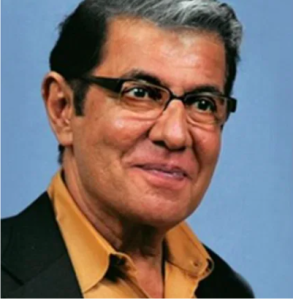
Tag: Kersy Katrak

  • Noshir was always the ever-smiling jovial human being: Tribute by Ajay Chandwani

    By Ajay Chandwani

    Noshir Desai was in Lintas the go-to person to while away your client stress and agency blues. In the ninetees I was one of the Lintas Mancom colleagues of Noshir who used to navigate the agency.

    Noshir used to wear a few hats quite comfortably. From heading the media department of an agency. Before media got unbundled, Noshir used to deal with a bunch of achievers in planning, buying and rural activation. From Helen Anchan to Sainath Iyer, from Meenakshi Madhvani to Lynn D’souza there was always a delicate task which a generalist like Noshir played with much aplomb. Media in Lintas was the domain of the thirteenth floor of Express Towers which the honchos in management rarely visited and was often called the floor that actually worked and brought the money!.

    The television industry was getting revolutionised with the onset of Satellite TV and the end of the domination of Doordarshan. Noshir led the Lintas charge in this with media associations and breaking the press stereotype  role that most media heads played in those days. The focus had shifted from Pradeep Guha in print to Peter Mukerjea in Star TV and Rupert Murdoch. Noshir started handing over the media reigns to the specialists in planning and buying and rural activation.

    Noshir then played a mancom coordinator of Regional Offices of Lintas . This meant he had to interface between regional heads of Lintas and keep Alyque Padamsee and Prem Mehta abreast of the growth of regional offices. The mancom had illustrious heads in regions like Asit Mehra and Ashish Bhasin in Chennai, Fali Vakeel in Bengaluru, Nures Sayeed in Kolkata, Preet Bedi in Delhi. Of these the Kolkata office which recently completed 50 years in 2020 had  been managed by such luminary stalwarts as Stanley Pinto, Ajay Shrikhande, Pranesh Misra.
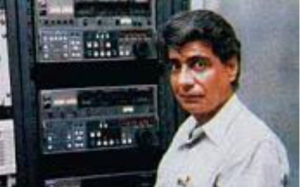
    Noshir Desai in his younger days

    Noshir built amazing relationships with regional clients like Tata and Titan, Brooke Bond and Lipton in Bengaluru, ITC and Philips in Kolkata, Kitply and Polar in Kolkata, Modi Xerox in Delhi.

    Noshir’s stint in MCM had made him understand how the creative output could radically improve in an agency. Kersy Katrak with Arun Kolhatkar and Kiran Nagarkar had set a pathbreaking trail in MCM and the likes of Christopher  Rozario, Viru Hiremath, Alok Nanda, Vikas Gaitonde, Kamlesh Pandey were making Trikaya and Rediffusion rock.

    Kersy’s advent in Lintas got Noshir excited to give shape to the dreams of Karishma the conflict agency of the Lintas Group. Kersy had broken down structures and formed art and copy partners using the MCM success model. In Lintas, Josy Paul and Neville D’Souza in special projects , Ryan Menezes and Sanjay Sippy in Lintas Bom 4. Agnello Dias and Mahendra Bhagat and Kiran Khalap  in Lintas Bom 3, and Adi Pocha in Bom 2 etc spurred Noshir to get in Quentin Coelho and make Karishma a creative boutique to target entrepreneurs and start-up businesses.

    Just round the time Noshir was consolidating Karishma, I had set up SSC&B Lintas at Lower Parel Phoenix which Alyque had fondly called Upper Worli to manage the drastic change from Express Towers in Nariman Point. At some point In the growth and development of Karishma, we had together found that the conflict management was the motivation.

    For, a second or third agency in the group was not being met. Noshir and I used to discuss this subject with great interest and depth with examples of Contract and HTA and Interface and FCB Ulka. Noshir loved the hyper-creative structure that  SSC&B Lintas had achieved with numerous International awards including India’s first ever Gold Lion at Cannes.

    Clients like Tata Safari, Sierra, Mercedes Benz, Smirnoff, Marico’s Parachute and later HUL’s Nihar, Kwality Walls Max made Noshir want to borrow a thing or two from the second agency culture.

    Noshir was the eternal optimist in all client relationships. He was the warm confiding friend or a patient problem-solver to others. He was passionate about building relationships most of which lasted a long time with many clients.

    His only mantra of management was to spread happiness and laughter round. Most meetings Noshir would gravitate  to end at the bar so that decisions could be taken! Noshir belonged to a breed of ad folks who have virtually vanished today though client pressures may have mounted up to more staggering levels.

    Keep smiling Noshir… you will always be fondly remembered in our hearts.


    Ajay Chandwani is a veteran strategic brand consultant. He was earlier Director on Lintas Mancom and President SSC&B Lintas



  • Why Cag has stopped awarding seniors


    By A Correspondent


    (with generous inputs from a speech by Gangadharan Menon)


    Those who’ve been part of the ad and media fraternity for less than a decade may be wondering why the Big Story today is on the Cag Awards. In fact the only CAG in their lives is perhaps the Comptroller and Auditor General, better known for unearthing scams and irregularities so very frequently.


    The reason why most of our youth is unaware of what Cag is has perhaps got to do with the decay that has set into the way ad awards were being conducted. Communication Arts Guild, or Cag (written in upper-lower as against all caps) as is popularly known as in advertising circles, was founded in 1950. The sole purpose then, and now, is to spot, nurture and reward talent in the field of creative communications. Initially it started off specifically for commercial artists, but over the years it expanded to include all forms of creative communications. And in fact, the name too changed from Commercial Artists Guild to Communication Arts Guild to reflect this change.


    The highlight every year was the Annual Cag Awards in various communication categories, culminating in the Art Director of the Year and the Cag Hall of Fame. The following year would see the release of the Cag Annual that would feature the previous year’s awardwinning work.


    Somewhere in the mid-90s, the much-coveted Cag Awards were discontinued. Reason: the unchecked and uncontrolled proliferation of what came to be known as scam advertising. Meaning, advertising that was never released in mass media, but was created only for the purpose of winning awards. The client was fictitious (or perhaps that cobbler or panwallah down the road who never needed any advertising), the brief was non-existent and the media was unaware of their existence. When 90 per cent of the entries started belonging to this obnoxious category, Cag called it quits. And with it stopped the highly sought-after Cag Awards, and thereby dried up Cag’s only source of funding. But the very next year, Cag started the Young Cag Awards, to spot, nurture and reward the young creative talents in the various art colleges across the city. And for a dozen years, it has been feeding the advertising and allied applied arts industries with a steady stream of young talent.


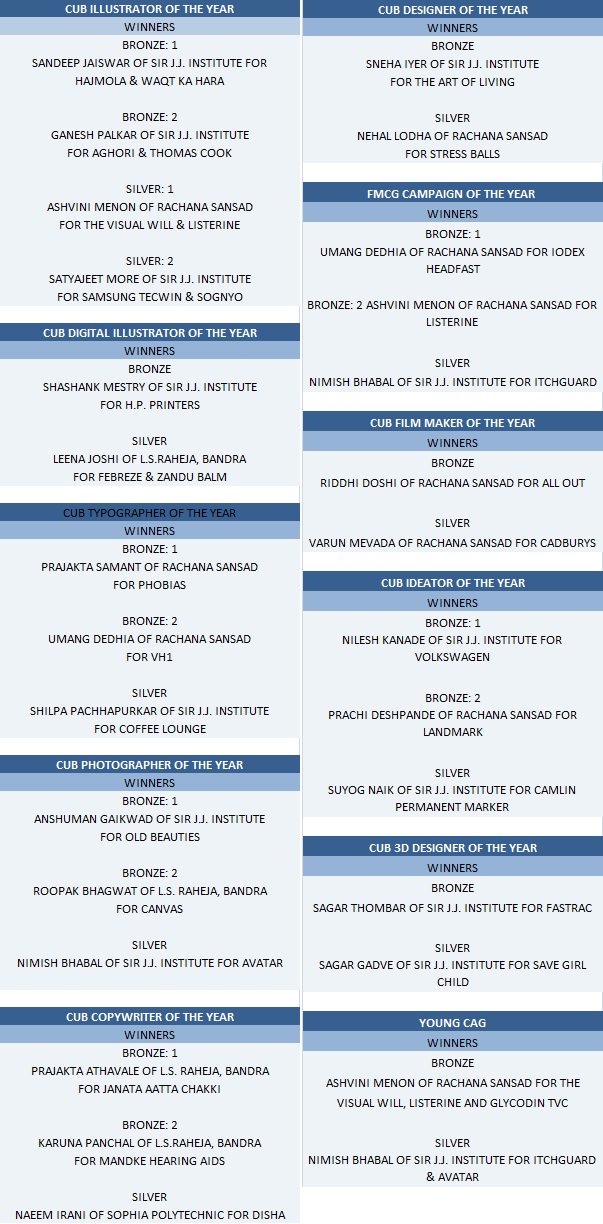
    Over the academic year, Cag holds various workshops by practising professionals, and at the end of the year conducts a meticulous talent hunt across all art colleges. Starting this year, the hunt has been extended to art colleges across the country. This culminates in various awards given across categories: Cub Illustrator, Cub Photographer, Cub Copywriter, Cub Typographer, Cub Designer, Cub Ideator and Cub Art Director of the Year. An exhibition of this awardwinning work is held every year after the awards function to inspire younger students to excel in the creative communications field.


    These awards are purely funded by the interest earned from the earlier kitty generated by the Cag Awards for Professionals. There is no fresh source of funding as Cag doesn’t believe in charging award entry fees to students. The people who work for Cag do it pro bono, merely giving back to an industry that gave them fame and fortune.


    In the year 2010, Cag took a decision to go digital. And it digitised around 36 Cag Annuals and put them on its website. This is a treasure-trove of advertisements that appeared between 1950 and 1995; and is the only source for students, academicians and professionals who want to understand the creative evolution of Indian Advertising.


    One of the recognitions that continued uninterrupted is the prestigious Cag Hall of Fame. A citation and award that recognises and acknowledges an individual’s seminal contribution in the field of creative communications, spanning a few decades. This illustrious Hall has already inducted various luminaries into its hallowed precincts: Kersy Katrak, Panna Jain, Ravi Gupta, Frank Simoes, Gerson da Cunha, Avinash Godbole, Arun Kale and Arun Kolhatkar.


    This year, Kiran Nagarkar was inducted into the Cag Hall of Fame. For his outstanding contribution in pioneering some of the finest campaigns in Indian advertising and for his versatile talent in other fields of creative writing: as a playwright, screenplay writer and an award-winning novelist.


    Nagarkar made a plea to the audience to not let Cag to die and made a clarion call to young creative professionals to shun scam advertising.

    # #


    What would you expect creative boys and girls to be doing on a Saturday morning? Majorly hung over, getting off their beds a little before noon? Guess we’ve got it all wrong. On Saturday, April 7, right in the middle of the looong Good Friday weekend, Cag held its 63rd annual awards function. At the Ravindra Natya Mandir at Prabhadevi. Since most of the award-winners were students, it was a packed house. Except for the front rows since the ad fraternity and some of the other leading lights among ‘communication artists’ don’t appear to quite care about being present. “It’s perhaps because Cag is now essentially a students’ show with just one veteran being awarded,” said one senior art director.


    The Cag committee comprises veteran professionals like Samir Khanzode, Gangadharan Menon, Sunil Mahadik, Gopi Kukde, Brendan Pereira, Ranjan Joshi and Sachin Puthran. Cag, according to vice president Gangadhar Menon is clear it doesn’t want to revive the awards for seniors. Unfortunate, because surely there ought to be a way in which one should be able to eliminate scam ads. Or at least minimise them. Cag comprises and celebrates creativity. It must now find a creative (and effective) solution to the problem.