
Tag: Kantar Worldpanel

  • The Importance of Penetration in a Brand’s Success


    At last Consumer Connections 2016 conference, organised by IMRB, Josep Montserrat, Global CEO at Kantar Worldpanel and K Ramakrishnan, General Manager and Country Head – Household Panel at IMRB Kantar Worldpanel spoke with Anuka Roy about how the importance of penetration for a brand to succeed. Excerpts from the discussion:


    About Brand Footprint and Penetration

    Josep Montserrat (JM): Penetration is basically about how many people are buying your brand. The metric that we analyse here is how many interactions the consumer has with your brand, and how many times has your brand has been bought by a consumer. It is a matter of penetration: How many people and how often are they buying it? When we analyse that, we see the brands that have raised the number of times buyers have bought them. The top leaders, and the brands that have grown more in terms of consumer reach points, have done so because of increased penetration. Considering the size of the population that we are measuring, which is a billion households, one per cent penetration translates into 10 million people.

    K Ramakrishnan (KR): The basis on which Brand Footprint works is Penetration. It looks at the population size you are trying to reach and the penetration the brand has — at least what percentage of them has had access to your product in the last year, and also how often they have used them. So, to that extent, there is no other ranking which tries to take these into account. They may take some other brand parameters into account, but this one specifically considers the extent to which a brand has penetrated a household. That becomes the biggest point on which it is based, and also the things that makes it different.


    On Penetration as a yardstick

    JM: I would say it is much more relevant in India than any other country because here, consumer backgrounds and hence choices, differ depending on geographies. What are the drivers and initiatives that you can put in place in India to win penetration, is different in other markets. Considering penetration of the products and the brand and the population can afford is a key driver for the success of the brand. There is an increasing trend of marketers to rate penetration as one of the key metrics in their scorecards in a way of measuring success in terms of the initiatives they have put in place and more we have clients at the local level and global level, that they put the penetrating and go to the CEOs to see the brand performance.

    KR: Loyalty is important and penetration is important. But if you consider growth of brands, the brands that have grown, what have they improved on? Have they improved on penetration or have they improved on loyalty? At this point, it is clearly established that penetration is what is leading to growth. In that sense, there is really no clash. Therefore it is not a competition. The relevance in India for something like a Brand Footprint is very clear; the new measure or the new metric by which brands are getting assessed is actually penetration, which means the number of new customers they have, the extent to which you are able to reach. If that is the case, and if this is becoming a metric globally — and in India many brands are taking it on — then there is clearly no other metric which can tell them well enough about their standing, apart from Brand Footprint.


    On Penetration and Mass Media Advertising

    JM: There is no general rule to see how much mass media advertising has impacted penetration. Of course, we have services and solutions that allow the marketers to understand that by investing in advertising — either digital or offline — what is the effect in purchase behaviours. Not only in terms of sale, but also growth due to new people engagement by the brand, or an increase in buying frequency. Advertising is important because you need to be in the mind of the consumer.

    KR: If anything, it has only added to it. Brand salience already exists because of the brand’s presence in media. Then the presence of these brands on the digital media. Third, the discussion about these brands on social media. If you add all these things together, it is only about building salience, in my view.


    First appeared in dna of brands on July 18
     

  • It’s all about the consumer for IMRB


    By Anuka Roy


    The weather was very unpredictable in Mumbai. But the interesting conference by IMRB International did not let it affect the moods of the people who attended it. K Ramakrishnan or Ramki as he is popularly known,General Manager and Country Head – Household Panel at IMRB Kantar World Panel and the host for the day, welcomed the audience to ‘Consumer Connections 2016’.


    To explain the agenda in brief and to give the audiences a head start about what to expect from the conference this year, Ramakrishnan invited on stage Preeti Reddy, ‎CEO at Kantar Consumer Insights, South Asia, Kantar and Josep Montserrat, Global CEO at Kantar Worldpanel. They explained how useful this research will be for brands to reach out to consumers in a better way. Montserrat also focused on the work they have done and the potential that India has. For making the session a little fun, the host subjected the two experts to a quick round of rapid questions, which both answered quite rapidly as well as wittily. An example, when Reddy was asked what comes to her mind when she hears about research in India? Pat came her reply, “Over worked and under paid.”


    This was followed by the presentations about consumer trends to look forward to. Rashmi Nair, Group Business Director, IMRB Kantar Worldpanel presented about ‘What lies ahead for urban India in 2016’. Her presenting was engaging from the word go and she very intelligently incorporated many popular Bollywood movie dialogues to explain her topic. She gave example of Patanjali- the brand which doubled its sales in just one year. This shows the trend of demand for local brands. She also explained how more focus is now given on the aspirations and lifestyle of the rural people.


    Next presenter Prafull Babar, Group Business Director, IMRB Kantar Worldpanel was an instant hit with the audience because he gave chocolates as a prize whoever gave a close enough answer to his questions. His topic was ‘Penetration Rules’. He explained the five key principles of buying behaviour, which were as follows:

    :: Brands grow fastest by attracting more buyers, not by getting buyers to buy more often

    :: Plenty of penetration headroom, no matter how big you are already

    :: Most of your buyers only buy you once in a year

    :: Your buyer base is in constant churn – over a third will not buy next year

    :: When buyers come, frequency will follow – no need to chase


    ‘New products Benchmarks’ was explained by VinayKhamkar, Business Director, IMRB Kantar Worldpanel. He explained that one key way to gain newer buyers is launching new products. The fact that consumers can set norms for successful launch of products was clear through his presentation. One of the key learning from this presentation was that new variants do better than new brands. He further explained about how the norms have been calculated and the research that has gone behind this study.


    Consumer Mix Model (CMM) evaluates how consumers respond to different media campaigns by analysing their impact on purchasing behaviour. This was presented by Devika Satam, Insights Director, IMRB Kantar Worldpanel. She explained that the consumer is at the heart of every marketing strategy. CMM evaluates the impact of media. It helps brands to understand the consumers’ response, optimize the media mix for better returns and calculate ROI (Return On Investment) based on actual purchase behaviour.


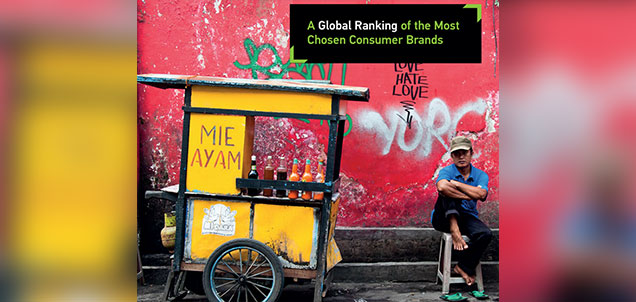
    Andy Parkinson, Global Markets Director, Kantar Worldpanel spoke about the book Brand Footprint on global ranking of the most chosen consumer brands by Kantar Worldpanel. Parkinson said Coca Cola remains the number one chosen brand of 2016 and the rise of Sunsilk has been consistent and very surprising. He also explained the entry of Indomie noodles, an Indonesian noodle brand in the global list. The reason behind local brands succeeding was the main focus of his presentation and one of the key reasons was identified as the affordability of the brand. On the other hand, Henry Swann, Global Solutions Director, Kantar Worldpanel gave an overview of the World Panel Online. It is an online data and analysis tool which gives global access to insights anytime and anywhere.


    Hemant Mehta, Senior VP, Media and Retail, IMRB concluded the conference by giving a summary of the presentations. He also gave an insight of what they are working on currently, which were Data Management Platform (DMP), data integration and behaviour based segmentation to power activation.


  • Kantar partners with Facebook to expand advertising measurement service

    By A Correspondent


    Kantar Worldpanel has formed a global partnership with Facebook that brings Facebook mobile ad exposure data into Kantar Worldpanel’s Consumer Mix Model (CMM) service. The enhanced CMM tool combines Facebook’s mobile ad exposure data (in addition to desktop) with Kantar Worldpanel’s continuous consumer packaged goods (CPG) purchase data to provide brands with an accurate assessment of the effectiveness of their cross-media advertising campaigns.


    The advertising landscape has witnessed rapid change in recent years as brands increasingly turn to digital formats. In April Facebook announced that its advertising revenue had grown by 57 percent to $5.2 billion in the first quarter of 2016 alone, with advertisers drawn to its increasingly large user base.


    The tool allows brands and advertisers to understand the real impact of individual advertising campaigns on actual sales and the contribution Facebook and other media have on their return on investment.This in turn will help them to optimise their media planning and ultimately improve the efficiency of their media investment.


    Josep Montserrat, chief executive of Kantar Worldpanel, comments: “The partnership allows our experts to build a solid understanding of how advertising works and the role that Facebook plays in a wider campaign context.  Working with Facebook will allow us to inspire even better decisions to optimise advertising budgets and maximise advertisers’ return on investment.”


    Patrick Harris, director of Global Agency Development at Facebook, said: “We believe that strong partnerships with our agency partners are key to providing advertisers with the tools they need to measure true business value on Facebook.  We are excited to help inform Kantar Worldpanel’s Consumer Mix Model solution by bringing in our mobile ad exposure data in a privacy-safe way.”


    Kantar Worldpanel’s continuous CPG purchase panels are already widely used by the advertising community worldwide to understand the effect of cross-media advertising.  Its measures take into account in-store promotions and consumer loyalty to determine the full picture behind consumer purchase behaviour.


    Kantar Worldpanel’s new service is now available in the UK, France, Spain, Portugal, Brazil, India, South Korea and Taiwan, with additional Asia Pacific and Latin American countries to follow throughout 2016.