Tag: Kantar IMRB

  • Tarun Abhichandani joins Zirca

    By Our Staff


    Zirca Digital Solutions has appointed Tarun Abhichandani as Head of Products & Solutions. In his role, Abhichandani will be responsible in bringing company’s product-centric development and services at the forefront and work with the board to lead new business agenda in India and global markets.


    Before joining Zirca, Abhichandani was with Kantar/IMRB. He led the growth in research/insights business in the domain of digital media and technology. In leading this growth, he delivered large-scale research projects for Digital, Media and Telecommunication companies.


    Welcoming Abhichandani, Neena Dasgupta (CEO and Director, Zirca) said: “We are excited to have Tarun’s experience and leadership as the Head of Products and Solutions. His expertise will drive our new and existing products, transforming businesses as part of our vision at Zirca.”


    Added Abhichandani: “Zirca offers 360-degree digital solutions and has a bouquet of products which are unique. I am confident to deliver the best to our clients with the support of our team.”


  • Internet usage in India > half a billion people: Kantar IMRB


    By A Correspondent


    Kantar IMRB has released its ICube 2018 report on digital adoption and usage trends in India. The annual tracking study, considered as the currency for digital adoption in the country, gauges the changing digital ecosystem in India, measuring Internet usage by demographic, activity and device segments.


    Said Preeti Reddy, CEO, Kantar South Asia:  “The Internet is transforming the way consumers and marketers interact with each other in today’s digital world. Kantar IMRB’s ICube; which has tracked the digital evolution in India for last 20 years, provides key measurement metrics necessary for planning any digital marketing or communication initiative. ICube continues to provide government, policy makers, digital businesses, marketers and communication specialists the intelligence necessary to stay on top of the developments across different facets of digital platforms and services.”


    Key findings include:

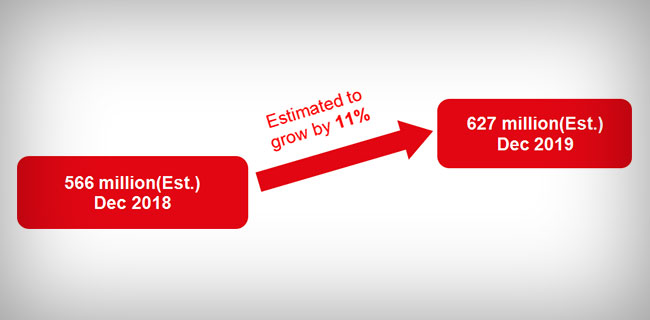
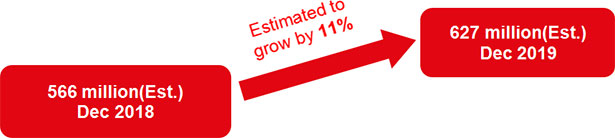
    :: The number of Internet users in India has registered an annual growth of 18% and is estimated at 566 million as of December 2018 – 40% of overall internet penetration.

    :: The report also projects double digit growth for 2019 and estimates that the number of internet users will reach 627 million by the end of this year.


    :: Of the total user base, 88 percent, or 493 million Indians, are defined as regular users, having accessed internet in last 30 days. 293 million active internet users reside in urban India, while there are 200 million active users in rural India.

    :: Unsurprisingly, the 97% of users use mobile phone as one of the devices to access Internet


    Rural India’s Digital Frenzy

    While internet users grew by 7% in urban India, reaching 315 million users in 2018, digital adoption is now being propelled by rural India – registering a 35% growth in internet users over the past year. It is now estimated that there are 251 million internet users in rural India, and this is expected to reach 290 million by the end of 2019.

    Increased availability of bandwidth, cheap data plans and increased awareness driven by government programmes seem to have rapidly bridged the digital gap between urban and rural India. Consequently, the penetration in Rural India has increased from 9% in 2015 to 25% in 2018

    :: Bihar shows the highest growth in new Internet user addition

    With one of the highest growth rates in the state GDP, it is no wonder that Bihar registered the highest growth in Internet users across both urban and rural areas; registering a growth of 35% over last year. This is closely followed by Orissa.


    Internet is now more gender balanced than ever before

    The gender digital divide is now closing. Kantar ICUBE 2018 reports that women today comprise 42% of total Internet users. Besides their sheer presence in the digital universe, women are also equally engaged and active in the digital world – spending as much time on the Internet as men.


    Added Hemant Mehta, Managing Director, Media and Digital, Kantar IMRB: “The latest edition of Kantar IMRB ICubeTM report shows that today the digital base in India is growing by over 75 million users each year – as much as the entire population of Germany! It is fascinating to note that the digital revolution is now sweeping small towns and villages perhaps driven by increased accessibility at affordable data costs. What is also particularly interesting, is the increase in the usage of digital in Rural India, where more than two-thirds of active internet users are now accessing the internet daily to meet their entertainment and communication needs. Marketers have a big opportunity today where they can use digital to reach their consumers – both in urban and rural India.”


  • Predictions for Businesses & Brands


    By A Correspondent


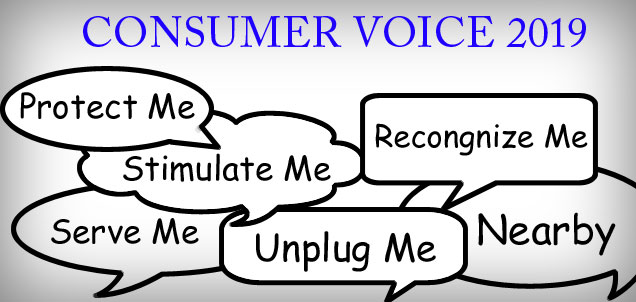
    Kantar IMRB has presents a report on predictions for 2019 using data and reference from across business units within Kantar and syndicated studies such as- Target Group Index –Kantar IMRB, Global Monitor 2018- Kantar Consulting, Kantar Worldpanel, eMarketPulse- Kantar IMRB. The report offers insights to brands on what to expect from the market and solutions to reach out to the consumers in the most effective manner.

    Notes the report summary: “The outlook for India has never been so uncertain. With national elections looming a few months from now, the voter / consumer has much to consider. The resultant instability, compounded by a fast-changing technology, financial and business landscape has created a deep sense of insecurity in Indian consumers. Their overriding response would be to seek stability.”

    Said Preeti Reddy, CEO, South Asia, Kantar Insights Division: “At Kantar, we recognise that it is imperative to achieve a balance of human insight and data-enabled decisions in both the business world and our personal worlds. While data might give us the confidence to believe, our personal experience and foresight give us the guidance to act differently and courageously. In identifying the key trends and how they may manifest over the coming year, we have attempted to exhibit that spirit of digging deep and finding stability “


    So here are the key predictions:

    RECOGNIZE ME

    Consumer Truth

    68 % of Indians agree that they are free to shape their identities and transform themselves in whatever way they want. The percentage has increased sharply from 57% in 2017. As every micro-segment of India’s population demonstrates a hunger for recognition, they are no longer inspired by a few role models, but by achievers they see around themselves. They reject collective labelling as the emergent middle class, small town resident, aspirational homemaker, and would like brands to meet their unique needs and help fulfil their dreams. The defining characteristic about this duality is an expectation to be recognized for both selves:

    Market View

    Brands and categories which recognize the consumer for who they are and where they are will flourish. Expect identity and location data to be more precious than ever. For online retailers, a small-town push would be a no-brainer. Overall e-commerce spends by non-metro shoppers have quadrupled in 2018, while e-tail spends by metro shoppers have grown by 3X. The recognition of diversity and inclusion is inexorably making its mark in the consumer’s consciousness. A focus on regional language support – driven by technology use in local languages, has seen Google announce the addition of Marathi for its popular Google Assistant, with plans afoot for seven more Indian languages, including Tamil, Bengali, Gujarati, Telugu, Urdu, Kannada and Malayalam.

    User-generated content will grow by leaps and bounds as people of all shades and intent seek to be recognized. How marketers can understand human motivations and their diverse origins will pave the path for the fulfilment of their needs. There will be an explosion of agents of change. This will cause an evolution from coaching centres and middlemen, to enablers who are able to spot the potential and facilitate transformation, with technology playing the dual role of connector and showcase.

    PROTECT ME

    Consumer Truth

    47% of Indians say that they feel stressed these days. The percentage has increased from 39% in 2017; and more women than men feel this way. In 2018, Kantar brought to fore that consumers are in a state of perpetual anxiety. That feeling has magnified, with young Indians feeling even more anxious than ever – according to Kantar IMRB’s TGI study, 64% of 15-19-year old worry about crime and violence around them,

    Market View

    Protector products are expected to see a sharp uptick as we go forward into 2019. Hand sanitizers, for example, have grown by a massive 59% in the previous year, Chyawanprash – the traditional Ayurvedic immunity booster, by 26%.

    #Metoo has spurred women to find ways of defending themselves. Smart jewelry brand Leaf Wearables embeds a device called Safer Pro – priced at only Rs 1899, which sends out an alarm signal and the user’s location to predetermined contacts. The smart device recently picked up the $1 million Xprize for Women’s Safety. Expect more such devices, especially for young children, to hit the market soon.

    Implications

    With technology and social media giving birth to new forms of threat such as online trolling. Brands will have to create a stable, positive environment and enable support groups to change the discourse of negativity. At the same time, the entertainment industry – where portrayal of women as victims hitherto pandered to the male gaze and fantasy – will be compelled to change their storytelling and bring in more powerful women’s voices.

    STIMULATE ME

    Consumer Truth

    76% of Indians say that they’re looking for new experiences and sensations that will liven up their everyday activities. The percentage has increased from 64% in 2017. Indians are most likely to look for experiences that allow them to help and connect with others, are memorable and make them feel recharged. Mobile gaming has taken off and with 250 million gamers, India is one of the top 5 gaming countries in the world. The desire for new experiences and stimulation is not limited to young people. For many seniors, laughing clubs are passé – they are running marathons, and pushing the boundaries of their physical capability and flexibility, like taking up dance after 60. The penchant for celebration, which has been magnified by the Great Indian Wedding, is now a regular occurrence.

    Market View

    The momentum driving India’s Experience Economy will only increase in 2019. Over the last three years, the demand for adventure activities and local experiences grew by 178%, with the percentage of people above 50 years rising from 8% to 11%. According to beauty doyenne Shahnaz Hussain, over 700 spas are expected to open doors in the next two years. It’s an industry that is growing at 40% annually. Some travel agents are also reporting young inbound tourists paying anywhere between $150-250 to attend and experience the sensory overload of an Indian wedding. The multi-player game Player Unknown’s Battleground (PUBG) really took off after the launch of a mobile version in March. The ability to chat with other players adds significantly to its attraction.

    Implications

    Going forward into the next year, we expect that many more brands will leverage the power of senses to attract consumers. This will provide a more engaging user experience, even as new technologies such as AR/VR offer immersion and superimposition of imagined worlds for the consumer.  With gaming no more a niche experience, it presents a fantastic opportunity for brands to both be involved in the game ecosystem and to gamify their user experience.

    SERVE ME NEARBY

    Consumer Truth

    149% more traffic congestion than comparable cities around Asia – that’s what Indian metro dwellers have to deal with. Traffic congestion in Mumbai leads to commuters spending 135 per cent more time in road travel than any other Asian city; commuters in Kolkata take 171 per cent more time than the average to travel during peak hours, the figure for Delhi is 162 per cent. With the changing contours of Indian cities, neighborhoods will become more significant than the city itself. The consumer’s expectation is that all the services will be delivered at the doorstep.

    While the benefit of proximity in terms of convenience is obvious, the opportunity for service providers is enormous. We are witnessing a reskilling of this workforce, particularly in the form of leveraging technology and improvement in customer service. The familiar warm relationship between the neighborhood grocer, chemist or barber will be increasingly enabled by technology.

    Market View

    91% of the people surveyed by Cashkaro.com said that they will spend more money on e-commerce sites in 2019. A massive part of that growth is expected to come from services, with specialized platforms gaining popularity over marketplaces. At-home service platforms like HouseJoy and UrbanClap have witnessed exponential growth in customers and service providers alike. The latter reported 2.5 million registered users, with 75% repeat users and average transaction value between Rs 1200-1500. The home chef business is pegged at Rs 408,040 crore in 2018; It is estimated that there are as many as 2 lakh beauty professionals across India, with nearly one-fourth of them being freelancers. Online curated beauty services platform Vanity Cube, which services between 150-200 bookings a day, expects that demand to grow 15X within a year.


    Implications

    There’s a massive B2B opportunity for food, beverage and grooming brands to fulfil the unique needs of the service providers – in the form of new products and new ideas. Brands need to work out how to engage with them and convert them into advocates. Content marketing will become the norm – and it will be vital to help them create interesting content using the entire gamut of options from Instagram to TikTok. Simplifying the transaction through payment gateways will become as important soon, as rewarding customers and users for their loyalty.

    UNPLUG ME

    Consumer Truth

    53% of Indians (amongst those who use the internet) say that they wish social media had less of an influence in their lives. Even as technology engagement grows by leaps and bounds – the 18% growth in the number of smartphone users in 2018 is the highest in the world – a growing section of the population is reducing their screen time and seeking ways to reconnect physically with the world. Astronomy buffs in Mumbai head out to far-flung villages over the weekend; travel experience platform Unhotel offers walks in the Himalayas along with book readings and guided bird-watching. Mainstream newspapers like The Times of India propagate the joys of a Slow Life unhindered by technology. Even the Maharashtra government steps in to declare one day in a week as a ‘No Mobile’ day.

    Market View

    Digital detox is emerging as a big business, starting at the very top of the heap. Tech platforms such as Android and the iPhone track and report all our screen time; Android labels it under the ‘digital wellbeing’ banner. The SHUT (Service for Healthy Usage of Technology) clinic in Bangalore has seen as steady rise in the number of patients seeking help for tech deaddiction ever since it opened four years ago; As more people embrace physical activity ranging from the new-age Zumba to traditional yoga to long-distance running and cycling, the athleisure market has exploded, growing by nearly 14%. Some 35000 people of all ages were at the starting line of the Delhi Marathon, each having paid Rs 1900 to participate. It is no small wonder that there are now over 1000 marathons organized in cities big and small across India. On a more sedentary note, even book reading clubs. Litfests have mushroomed across cities, from Pondicherry and Chandigarh to Pune, Jaipur and Allahabad, some reporting a threefold increase in visitors over the last 2 years.

    Implications

    The travel and leisure industry has much to feel optimistic about as more Indians seek physical and social in-person experiences. In the face of uncertainty and pessimism, this kind of reconnection and exploration provides platforms for stability. In 2019, we expect even more brands and industries to find opportunity in addressing the growing realization of the perils of technology engagement, particularly at a young age. Others will rekindle the nostalgia of relationships, memories and places that allow us to rediscover ourselves.
  • MMA, Kantar IMRB unveil ‘The Power of Mobile Gaming in India’

    By A Correspondent


    The Mobile Marketing Association (MMA), with Kantar IMRB have released a report titled ‘The Power of Mobile Gaming in India’, offering the latest data and insights on mobile gaming trends in the country. With India’s mobile app market growing at breakneck speed, mobile gaming platforms are increasingly commanding a substantial share of the advertising pie. The report was released in association with POKKT, a smart phone advertising platform for mobile games.


    According to the report, three out of four Indian gamers play mobile games at least a twice a day, for an average of 60+ minutes, each day. Mobile gaming is also quite prevalent in Tier 2 and Tier 3 cities, with similar amounts of time spent on gaming by users in these regions. With over 250 million mobile gamers, India has emerged as one of the Top 5 gaming countries, globally. With so much time spent on mobile devices, there lies a huge opportunity for marketers to tap into the space.


    “While it is common to assume that gamers tend come from a younger generation, this research has proven otherwise, and removes the stereotypes of a typical gamer. By changing their perception of what a “gamer” is, marketers can tap into a relatively untouched space and reach out to a sea of customers. Furthermore, since 55% of gamers perceive ads to be more personalised on gaming platforms, there is a much higher level of acceptance,” said Rohit Dadwal, Managing Director of MMA in Asia Pacific.


    “The Indian market is already known to be a mobile-first economy. The fact that mobile gamers are on their devices twice a day or more, there is ample opportunity for marketers to get creative in the way they run their marketing strategy. Whether it’s through partnerships or simply putting in an algorithm to retarget customers, the potential for monetisation is huge,” added Moneka Khurana, Country Head, MMA India.


    Said Hemant Mehta, Managing Director, Kantar IMRB and Chief Strategy Officer, Kantar South Asia: “Consumers have taken to mobile gaming in a big way, yet it still remains a relatively untapped advertising channel in India. Our study shows that mobile gaming is truly mainstream today, attracting a wide range of audiences. Besides being a highly sticky medium, it offers high engagement levels akin to OTT platforms. Personally, one of the most interesting findings was the low resistance to in-game advertising, as compared to other channels. This is a golden opportunity for marketers to communicate with their consumers, especially since mobile gamers perceive in-game ads to be more personalized and relevant than traditional media,”.


    Added Rohit Sharma, CEO & Co-founder, POKKT: “POKKT has today more than 140 million monthly users who are average spending more than 60 minutes every day playing mobile games on average. On top of this we have built huge machine learning and data capabilities to do better targeting for advertisers. Brands can certainly benefit from advertising on mobile gaming platforms due to the longer attention span given to mobile games, agreeing with the fact that mobile games is a huge platform for mobile advertising in India.”


  • Ipsos hires Sreyoshi Maitra as ED

    By A Correspondent


    Sreyoshi Maitra

    Ipsos has hired Sreyoshi Maitra in a senior leadership position, as part of its Delhi cluster. Designated Executive Director, she will also lead the Shopper Practice for Ipsos India and will report to Krishnendu Dutta who leads the Delhi cluster for Ipsos.


    Maitra moves from MRSS and has previously held senior level positions with Nielsen, Kantar IMRB and Kantar Milward Brown.  Her expertise covers a vast number of areas in both Consumer and Shopper behaviour, and also ROI on Channel spends.


    Her remit is for key Ipsos clients in Delhi and NCR, though for Shopper Practice her repertoire of clients would extend across geographies of India.


    Krishnendu Dutta

    Said Krishnendu Dutta, Delhi Cluster Lead for Ipsos:“With her wealth of domain expertise and experience, Sreyoshi will play a key role in deepening our relationship with clients, further bolstering our position in the market.”


  • Virat Kohli & Puma wants Indians to #ComeOutandPlay

    By A Correspondent


    #ComeOutandPlay is Puma|One8’s first promotional content since its launch event in November 2017. The campaign has been crafted on the basis of insights derived from a pan-India research study by Kantar IMRB, commissioned by the brand’s co-promoters Virat Kohli and Puma India, on physical activity and sports adoption in India.


    Speaking on the campaign, Debosmita Majumder, Head of Marketing, Puma India said: “Sports has been replaced by digital entertainment and games, especially amongst the millennial. We have also seen a decline in people playing sports as they grow older. Puma and Virat have come together to encourage people to play sport, not only to stay fit or to pursue it professionally but just for the love of it. Through this campaign, we are looking at bringing back the joy of playing sport and making India a more active nation.”


    Said Vishnu Srivastav, Creative Head, DDB Mudra South: “The brief was straightforward – make India play more. The campaign was created to specifically tackle that. We wanted to use Virat in a new light, where he provokes the audience to start looking at sports and play with far greater interest. The reason we didn’t go with conventional media, and opted to do contextual videos was to interrupt the virtual lives our audiences are so caught up in, and tell them that there is a world outside that is exciting and fun.”


  • 15- to 34-yr-olds captive for multiplexes & theaters: Interactive TV report


    By A Correspondent


    As cinema advertising gains momentum in the media mix, Interactive TV, the cinema advertising unit of GroupM India has released a report to track the urban cinema-going audience. The report, called ‘At a Theatre Near You’, is in collaboration with Kantar IMRB, also a part of the WPP group.


    ‘In a Theatre Near You’, notes a communiuqe, studies the urban cinema consumer and correlates their lifestyle and purchase habits with their film viewing habits. The report looks at audiences across eight cities in India, and buckets them into heavy, medium and light cinema goers.


    Speaking in the launch of the report, Ajay Mehta, Head, Interactive TV said, “The cinema medium had a lack of scientific data for planners and marketers. Being the leaders of cinema advertising in India, we are trying to make cinema advertising more transparent and accountable. This report is Interactive TV’s most ambitious initiative with the aim to down some measurement parameters for the medium and help brands understand and exploit the potential of this medium.”


    The report states that 57 per cent of the audience base watches a movie in the theatre at least once in six months, and of these 71 per cent are between the ages of 15 and 24. The gender gap is also decreasing with the urban cinema audience, as 53 per cent are women. Going to a movie in the theatre continues to be a social phenomenon as it ranks high as a family and social activity.


    Even though cinema advertising is a small part of the advertising expenditure in India, over the last few years it has been tremendous growth of over 20 per cent. Brands and marketers are realising the potential of the medium and its ability to work well with other media. 76 per cent of urban cinema goers own a smart phone and 45 per cent have the latest apps installed. This is a huge opportunity for marketers to creatively synchronise digital and in-cinema campaigns to maximize effectiveness of the both media.


    Another important point from an advertiser point of view is that 50 per cent of this audience is open and willing to consume advertisements before the start of the movie and during the intermission. Moreover, average consumers reach the movie hall 15 minutes before the show time, which allows enough and more branding opportunities for advertisers.


    At A Theatre Near You Summary


  • Kantar IMRB unveils KidScan, its annual syndicated study

    By A Correspondent


    In an attempt to delve deep into the Indian kid’s market and understand their interaction with their environment, Kantar IMRB has unveiled its annual property KidScan.


    The study draws up a holistic report on how kids consume brands – with a special focus on food, beverages and related categories. A segment on how media is consumed – with a special focus on television and emerging media also forms an integral part of the study. It also unearths the level of peer influence and its implications on the kids’ purchase and consumption, their ambitions, key drivers and barriers to choice, lifestyle, the amount of pester power they yield, parental pressure and much more. In a nutshell KidScan serves the purpose of a handbook for marketers relevant to the space.


    The quantitative study combines innovative approaches utilising both face-to-face and self-filling questionnaires. The findings are derived from a robust sample size of 2500 kids in the age group of 5 years- 14 years and an equal number of parents, belonging to New SEC A, B & C households, spread across 14 cities in the country.


    The study also highlights the real time record of kid’s regular activities and analyses the communication conundrum to get the brand message across. This study shows that kids act as brand consultant for categories that are targeted to them as well as for big ticket brands operating in categories like consumer electronics, automobiles, etc.


    To better understand the kids’ views on the outlook for retail industry, this study shares some insights like 69 per cent of the kids thinks it is important to wear latest fashion. It also breaks the clutter in the market which helps brands to deliver the target message across.


    The study also seeks to understand the product trends of different industries. Advertising also plays a huge role to shape kids’ preferences and influence them to buy brands. 36 per cent of the kids claim to definitely go and buy the product because they felt that the ad was nice. Same goes for the digital and television categories, where 62 per cent of the kids feel that TV is not only for entertainment but also a source of information. For example, 63 per cent of the kids watch English channels to improve their English. The study found that in digital category, 17 per cent of the kids who use internet, have accounts on Facebook and they mostly use Facebook for Chatting and 55 per cent of internet users feel internet is a close ‘buddy’.


    Key highlights: 

    – Wearing latest fashion is important for 69 per cent of the kids

    – Deciding what to wear evokes a feeling of confusion in 41 per cent of the kids

    – 62 per cent of the kids feel that TV is not only for entertainment but also a source of information

    – 77 per cent of the kids feel that it is important to save money for the future

    – 1 in 2 kids access Internet without anyone’s help

    – 4 in 10 kids watch serials even when their mother is not watching

    – 63 per cent of the kids watch English channels to improve their English

    – Kids spend 48 minutes on an average school day and 60 minutes on a holiday using a mobile phone/tablet

    – 63 per cent of the kids spend their pocket money on biscuits

    – 36 per cent of the kids claim to definitely go and buy the product because they felt that the ad was nice


  • Budget News ensures big high for mobile platforms


    By A Correspondent


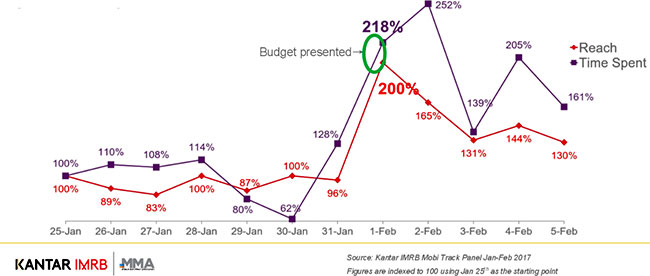
    Coming in the wake of demonetisation, news platforms saw a surge in traction driven in large part by the Budget 2017-related narratives, as per a study conducted jointly by market insights major Kantar IMRB and the Mobile Marketing Association (MMA India). the A steady diet of budget forecasts contributed to an increase in overall time-spent in the days leading up to the Budget presentation. This was followed by a massive spike in engagement on February 1, the day of the Budget speech.


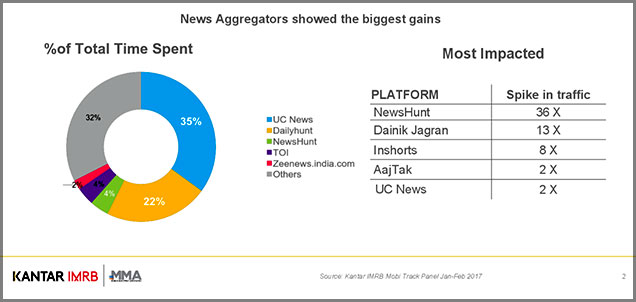
    A second spike in traction was witnessed over the weekend following the Budget as readers caught up on in-depth analyses and the long-term implications of the Budget announcements.  News aggregators drew the lion’s share of engagement among smartphone users—the top two aggregators accounted for almost 60% of total time-spent on news related content. The Times of India was the most popular of the standalone platforms with twice the traction of its nearest competitor Zee News. Platforms like Dainik Jagran, Inshorts, and AajTak saw the highest gains in traffic during this time, notes the study.


    Kantar IMRB’s Mobi Track smartphone usage panel was used to analyse consumption of budget related content in the weeks leading upto and during the Budget 2017 presentation.


    “Looking at the data from Kantar IMRB’s MobiTrak smartphone usage panel—the surge in budget-related news consumption confirms people’s attention and interest in the event. Engagement levels were expectedly highest among the digital generation i.e. 20-24 year olds —they accounted for the highest Reach and Time Spent  across all demographics. The desire for multiple points-of view was evident in the strong preference for news aggregators, a stark contrast to the behaviour of offline-readers who tend to limit their reading to a handful of print publications”, said Hemant Mehta, Managing Director, Media – Digital and Chief Strategy Officer, Kantar IMRB.


    Added Preeti Desai, Country Manager India, MMA: “News consumption is undergoing two fundamental shifts across the globe including India. One is the rise in news audiences accessing news via their mobile devices, the other is the increase in people who read or watch news through social platforms. Mobile will continue to grow leaps and bounds as one of the primary mediums that Indians will access ‘News’ and the multiple spikes during 2017 budget showcases how fast Indians have adopted reading news not just in English but also in multiple languages (15+). It is important to note the second spike – post-Budget Day – the time spend is actually higher during the weekend and indicates that apart from short news Indians also reached out to various mobile news sources for longer in-depth analysis post the budget day. With rapid changes in the mobile landscape, it is important to keep a continuous pulse on the way consumers interact and these passive probes and insights on mobile usage in India by MMA and Kantar IMRB are of critical importance to the modern day marketers as they acknowledge mobile as the third largest advertising medium in India, after TV and Print. Mobile Ad spends are expected to grow to Rs10,000 crore in 2018 [Source: Mobile Ecosystem and Ad-Sizing Report India 2016].”


  • Indians spend more time on cellphones than TV


    The Mobile Marketing Association (MMA) in association with Kantar IMRB has released a report on Smartphones and Feature Phones Usage and Behaviour 2016-17 in India. The report studies the evolving nature of the Indian mobile consumers, and provides insights and behaviors individually on smartphones and feature phones.


    KEY FINDINGS ON SMARTPHONES

    I. Time spent on mobile surpasses any other media

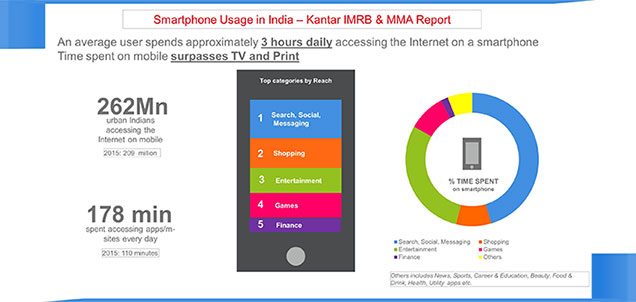
    An average consumer spends 3 hours per day on their smartphones (an increase of 55% from 2015), which surpasses time spent on TV or any other media. Social media and messaging apps were the clear leaders accounting for almost 50% of all time spent on smartphones.

    II. Women more engaged than Men

    The study shows that Women spend 2x more time on their smartphones compared to Men – on YouTube and games. They also spent 80% more time on Facebook than their male counterparts.

    III. Online shopping gains in leaps and bounds


    Another finding revealed the rise of online shopping category, which now has 15% higher reach than the entertainment – making it the second most popular category in terms of reach.


    KEY FINDINGS ON FEATURE PHONES

    I. Prime users are from upper SECs

    The study shows a whopping 75% of feature phone users were from the upper SECs, while only 25% of respondents were from SEC C, D and E (NCCS).

    II. Feature phone users don’t intend to switch

    A big revelation has been that almost 85% feature phone users do not intend to switch to smartphones on their next purchase indicating that the functional benefits of feature phones combined with their durability, battery life and ease of repair were highly coveted by these users.

    III. Feature phones users spend more on mobile plans


    Feature phone users spend more money on their mobile plans. The ARPUs was almost 20% higher compared to the national average.


    Said D Shivakumar, Chairman and CEO, PepsiCo India Holdings and Chairman of the Mobile Marketing Association: “With over 85% mobile penetration, we are today one of the largest mobile markets globally and insights on mobile usage in India are of critical importance to the modern day marketer. We are in an age now where we need to seriously think about marketing measurement and attribution, giving marketers better measurements, tools and confidence in connecting marketing to business outcomes.  A thorough understanding of the differential usage and consumer segments that are using smartphones and feature phones will only help marketers use their monies more efficiently. While most designing and applications are being targeted at smartphones, this report is a wake-up call. Today, the mobile is undeniably the closest we can get to our consumers, and it is this that will help marketers seek to understand – and leverage – a consumer’s path to purchase”.


    Added  Preeti Desai, Country Manager, Mobile Marketing Association India: “Mobile is clearly the third largest mass medium in terms of Ad spends in India today, with estimated spends in 2016 amounting to ₹.4,200 Cr. Hence it becomes very important for the industry to have credible research and measurement guidelines and reports, to help fully understand and leverage mobile’s ability to drive the future growth of business. With this in mind, MMA India has collaborated with Kantar IMRB to deep-dive into the dynamics implications and impact of smart phones and feature phones India focusing on each category separately and giving each their due focus. The insights of this study will be published in a series of industry reports that will go a long way in helping marketers use the medium effectively and efficiently. It is a great data set for marketers to reassess and optimize their spending with the most impactful allocations in their marketing mix, while leveraging mobile with double digit spend.”


    Hemant Mehta, Senior Vice President, media and retail, Kantar IMRB, said, “Mobile has had an outsized influence on the way consumers interact with each other, make decisions, transact and shop. This has significantly impacted the way companies and brands connect with their consumers and do business. But we’ve only seen the tip of the iceberg. With the advent of 4G, reduced data costs and free voice and SMS, we expect to see even more rapid changes in the mobile landscape. It is, therefore, important to keep a continuous pulse on the way consumers interact with and use their mobile phones. Along with MMA, we at Kantar IMRB have embarked on a journey to help marketers understand the impact of these changes and to identify emerging trends. The Smartphone and Feature phone reports are a step in this direction – providing an unbiased and insightful view on the evolution of mobile usage in India.”


    The report enables all members of the ecosystem to stay updated with consumer mobile trends and media consumption habits. Also at the same time, it elaborates the role of mobile as an influencer in the consumer path-to-purchase.


  • Kantar IMRB appoints Paru Minocha as the Head of Qualitative Business

    By A Correspondent


    Kantar IMRB announced the appointment of Paru Minocha as the Head of Qualitative Business Unit. She has taken over from Rohini Abraham. Paru joined Kantar IMRB in Sept 2015 and is based in Mumbai. She will play a key role in leading the company’s go to market services and drive the growth of the qualitative business pan India.


    Armed with over 20 years of experience in Market Research, Paru started her career as a qualitative researcher in MARG and went on to set up and head Synovate in Delhi. Having done this successfully, she moved to Mumbai to head Synovate pan India and subsequently, as Head of Innovation in IPSOS.


    Paru boasts a well-rounded experience in market research, a mix of both qualitative and quantitative research. She has expertise in several sectors including Social, FMCG, Tobacco and Automotive.


    Commenting on the appointment Preeti Reddy, CEO, Kantar Insights, South Asia said, ‘’Paru’s experience in both Qualitative and Quantitative will prove to be an asset. She brings in a deep understanding of research, complex business environments and client needs. Paru’s cross sector experience will certainly aid IMRB Qualitative to rise to greater heights under her stewardship”.


    Speaking on her appointment, Paru Minocha said, “I’m thrilled to be leading this role when the core Qualitative research is being redefined. I look forward to leveraging technology, social media data and marrying them with the primary survey data. This new approach is also reflected in how as a company we are organized and the investments that we are making in technology and digital. As Kantar IMRB, we have unique access to social data, proprietary syndicated data as well as strong partnerships with third party data owners. I strongly believe that qualitative research would form an integral part in decoding and making sense of the big data


  • Kantar unveils new corporate identity & management structure

    By A Correspondent


    WPP-owned data, insights and consultancy network Kantar has announced the launch of a new corporate identity- for the parent brand and its 12-strong family of operating brands- designed to create a unified look-and-feel across the whole business. Operating brands not previously Kantar-branded will now take a Kantar prefix and a new, common typeface.  For example: Millward Brown, IMRB, and TNS will now become Kantar Millward Brown, Kantar IMRB, and Kantar TNS.


    Kantar’s new identity reflects and externalises an on-going change programme that started in January. The programme includes greater collaboration between operating brands and the creation of a new insights group through much closer alignment of the company’s custom brands. In addition, global operations capabilities have been brought together into a single entity and the company is moving towards more aligned shared services in HR, finance and IT. The company will shortly be adding to the portfolio of expert brands with the launch of Kantar Public, uniting its global expertise in governmental and public policy work; and Kantar Consulting, which will draw expertise from several of our brands to provide a full and broader range of marketing and sales consulting solutions and capabilities to our clients.


    Commented Kantar CEO Eric Salama: “The rebranding is a tangible, visible expression of our desire to present clients with more easily-navigable and connected solutions that bring together the best of Kantar’s expertise,” adding: “We believe our clients and partners have started to experience the benefit of this approach – in more rounded, detailed and holistic research and recommendations. And it is helpful that for the first time we really look like a single family of brands serving a common purpose.”


    Along with the rebranding, Kantar is introducing a new tagline, “Inspiration for an extraordinary world”, drawn from its new corporate purpose statement, “To inspire our clients, our people and society to create and flourish in an extraordinary world.”


    Said Preeti Reddy, CEO, South Asia – Insights, on the rebranding: “Clients have consistently asked us to be more collaborative in the way we work with them; faster and more agile at a local and global level. They want the ‘best of Kantar’ on a consistent basis, not just on occasions. Earlier this year, we put in place a whole new way of working to remove siloed thinking and barriers between the Kantar companies to collaboration for client benefits. In South Asia, we will be able to bring together the thought leadership of three powerful brands and harness the power for our clients. This combination brings with it an ability to converge thoughts when required to solve a problem as well as an ability to diverge solutions when clients need choice. That is a unique mix and in, my view, will make Kantar an even more dominant force in South Asia.


    The new identity, developed by WPP branding firm The Partners, will be rolled out across all external and internal communications channels in the coming months.