Tag: Justice Katju

  • Corporate ownership of media is an inescapable reality as is surrogate political ownership: Manish Tewari

    (Text has been edited for style at some places. Some bold formatting and capitalizing of text has been retained)


    Honourable Vice President of India Hamid Ansari Sahib, Chairperson of the Press Council of India Justice Katju, Secretary I&B Shri Bimal Julka, Ladies and Gentleman.


    Allow me to commence by congratulating the Media fraternity on this auspicious occasion. The National Press Day always provides a unique opportunity to reflect on the state and the role of media in the current milieu.


    In the last two decades the media landscape has undergone an exponential transformation. This epochal change has been facilitated by the emergence of the World Wide Web. Starting life in the Defense Advanced Projects Laboratory of the Pentagon it has truly revolutionized the way we live and conduct our interactions.


    As I have stated on numerous earlier occasions:

    a) The internet is the largest experiment involving anarchy in history-and it has succeeded. (The last four words are mine).

    b) It represents the largest ungoverned space on planet earth.

    c) Never before in history have so many people from so many places had so much power on their fingertips.

    d) Every two days more digital content is created than from the dawn of civilization until 2003.

    e) What is evolving is a tale of two civilizations; one physical that has evolved over the millennia and one virtual that is still very much in formation.

    f) The New Media rides on the back of this World Wide Web.


    What still has not been analyzed in depth and detail is-how this democratization of news creation, aggregation and dissemination a bottoms up process – sans editorialization is impacting both print and broadcasting newsrooms in addition to transforming the contours of the media space.


    There are some other pertinent questions that the first generation of the digital age should address with some measure of dispatch to ensure that the process of defining agreed global rules of engagement commences in right earnest in the virtual civilization, for example – at what point does a personal “tweet” essentially a digital freedom of expression – turn into a “mass broadcast” – a telecommunications business, in effect one that has to be held to certain standards of accountability?


    Allow me to turn to the other hard question of our times and the subject of our deliberations today, i.e. media and public interest.


    Public interest has but myriad subjective connotations. It can and may mean various things to various people but what public interest certainly cannot mean is the promotion propagation and proclamation of private Interest in any area of human endeavor.


    Speaking in the Rajya Sabha in 1974, Late Shri R K Mishra an eminent journalist himself, made an incisive though a very blunt and some may term even a provocative observation about the Media and Private interest. An articulation that raises hackles in certain very influential quarters in our country whenever it is reiterated. He stated and with your permission quote;


    Now where is the freedom of the Press? What do we have? In India we have the freedom of the newspaper owner; In India we have the freedom of the newspaper proprietor and in some cases the delegated freedom which is enjoyed by the newspaper managers ……and the working journalists will continue to be paid employees doing whatever the newspaper proprietor wants him to do.”


    Pungent but profound words that have proven to be almost prophetic in their import. Though obviously this adage does not have universal application even in the Indian context but a few would seriously contest that selectively it is a non-sequitur. Rather than react with the usual display of indignation perhaps the media industry would be better served if stakeholders were to calmly and dispassionately consider evolving the means and measures of putting Chinese walls cast in concrete between commercial considerations and editorial autonomy. Recently in influential publications very eminent editors have voluntarily relinquished their managerial responsibilities. This is indeed laudable and an example that inspires emulation by one and all.


    On the occasion of the National Press Day we must rededicate ourselves to the cause of empowering the working journalist as well as creating the necessary wherewithal that supports truly Independent Media initiatives.

    Corporate ownership of the Media is an inescapable reality as is surrogate political ownership as well as government ownership in the public broadcaster format. While one can possibly argue about the pros and cons of each of these paradigms but life is circumscribed by the given reality and not the utopia of Shangri-las. The moot point being that there are diverse interests always at play in the media space. The challenge therefore is to always try and find the elusive golden mean so that Public Interest does not become a permanent casualty at the altar of competing and contradictory private interests. In the UK this dilemma was articulated cogently in 1995 by the then Conservative government’s White Paper on media ownership: The paper stated and I quote-


    A free and diverse media are an indispensable part of the democratic process. They provide the multiplicity of voices and opinions that informs the public, influences opinion, and engenders political debate. They promote the culture of dissent which any healthy democracy must have…. If one voice becomes too powerful, this process is placed in jeopardy and democracy is damaged.”

    That is perhaps why post The Lord Leveson enquiry the British government with broad Multi Partisan support promulgated the Royal Charter on Media Regulation recently despite opposition by powerful interests in the British Media Industry. Unfortunately this development has not found resonance in the otherwise vacuous realm of public polemics in our country.


    In both the Indian and even the global context certain structural paradoxes have emerged which require the focus of concerned, conscientious and committed stakeholders of the public discourse.


    THESE ARE:

    (a) PARADOX OF THE SHORT FUSE-INCREASED INFORMATION DISSEMINATION MECHANISMS QUA INCREASED INTOLERANCE OF THE OTHERS POINT OF VIEW.

    (b) PARADOX OF FLAWED REVENUE MODELS QUA QUESTIONABLE REVENUE GENERATION PRACTICES

    (c) PARADOX OF TRPsS QUA THE TRUTH

    (d) SENSATIONAL MEDIA TRIALS QUA A FAIR JUDICIAL TRAIL GUARANTEED BY ARTICLE 21 OF THE CONSTITUTION.

    (e) ANONYMITY MASQUERADING AS PRIVACY IN THE NEW MEDIA SPACE-THE SPECTRE OF THE ‘HIDDEN’ PEOPLE AND THE DARK NET.

    (f) NON EMERGENCE OF GLOBAL RULES OF ENGAGEMENT IN THE VIRTUAL CIVILIZATION.

    (g) LAST MILE NEUTRALITY AMONG CARRIGE PROVIDERS SO THAT CONTENT PROVIDERS GET A LEVEL PLAYING FIELD AND ARE ABLE TO REAP THE BENEFITS OF CONVERGENCE.

    AND THE QUINTESSENTIAL DILEMMA

    (h) SELF-REGULATION QUA A STATUTORY REMIT.


    If I were to liberate my thoughts from the seemingly vexed issues that bedevil the media remit and ask a very simple question as to what is the Fundamental Public Interest of our times? The answer can perhaps be articulated in one simple sentence- upholding the constitutional values which define the very idea of India. As we go about our everyday chores dark clouds of fascism loom ominously over the horizon- a great evil stalks our land. The first casualty of this specter would be the constriction of liberal spaces, curtailment of creativity and circumscribing the right to challenge the conventional and think off the beaten path. If the alleged expose about state sponsored stalking is correct I would be worried not as a woman but as a civil libertarian about the Orwellian state that some “esteemed” gentleman seek to construct.


    William Shakespeare in his epic Julius Caesar wrote

    “There is a tide in the affairs of men

    Which taken at the flood leads to fortune
    Omitted, all the voyage of their life
    Is bound in shallows and in Miseries
    On such a full sea are we now afloat
    And we must take the current when it serves
    Or lose our ventures.”


    History bears testimony to the harsh reality that evil has always triumphed when good men have chosen to keep quiet and do nothing. When the immediate has taken precedence over imperative! When like Lord Neville Chamberlain we have been naive enough to believe that compromising with the forces of fascism, right reaction and national subversion can buy us the peace of our times.


    At such a crossroads ladies and gentlemen do we today stand!

     

  • Do journalists need to be qualified?


    By Ananya Saha and Meghna Sharma


    Press Council Chairman Justice Markandey Katju recently issued a press note that said, “Since the media has an important influence on the lives of the people, the time has now come when some qualification should be prescribed by law”. Justice Katju announced a committee mandated to “consider all aspects of the matter” and submit a report to him “suggesting the qualifications a person should have before he can be allowed to enter the profession of journalism”.


    The committee constituted by him, in addition to its mandate of recommending qualifications for journalists, will also recommend in what manner the Press Council can supervise and regulate the functioning of the institutions and departments of journalism in India so that high standards of imparting knowledge in journalism are maintained.


    MxMIndia spoke to senior journalists, academics and industry observers for their views on this (in alphabetical order of their last names).


    Prof Chandan Chatterjee, Director, Symbiosis Institute of Media & Communication

    The role of education in building a foundation for thinking as well as building an worldview is well-accepted. More so for professions that have an ability to shape the thinking and beliefs of a society


    Journalists are the scribes and opinion leaders of modern society and culture which can impact a nation’s destiny, or the adoption of a new way of doing things. Hence, journalists ought to have capabilities and skills of recording facts and events and also analyse and interpret their observations.


    The role of upgrading curriculum of post-graduate Journalism courses, to reflect the current trends and thinking becomes equally important. And, like most other professions, journalists too need to be re-skilled and upgraded in their specific areas, periodically.


    After all, every point of view has two sides. It takes a balanced and educated mind to get the breadth and depth of issues involved. Else, we will have to learn with just one point of view!


    Deepa Gahlot, Film Critic

    To be a journalist or a film critic one needs to have certain attributes – ability to write and passion for the medium. If one has aptitude for it then qualification only adds to it. Therefore, both training and education go hand-in-hand.


    Today, a lot of newspapers carry articles written by people who have nothing to do with journalism too. Having said that, I do believe that a degree will only help the person. Also, it depends on an organization, what are they looking for – someone with good skills but no degree or someone with a degree and good skills.


    I won’t say that Katju’s recommendations are harsh because even if one is passionate about law but he/she still can’t practice without a law degree, why not for journalism?


    Arati Jerath, Senior Journalist

    I think journalists need qualifications, which are not necessarily taught in journalism school. A good journalist should have the nose for news especially in a war or terrorist situation, extract right information, should be a sensitive human being when reporting on a rape case or terrorist attack. It cannot be taught in any institution. These are the values that they imbibe from their parents, schools, colleagues, mentors.


    Most media houses are very professional and hire talent based on their requirements. If the new hire does not perform, irrespective of their qualification, they are let go. A journalist needs to be a good reader, researcher but mostly, they learn on the job outside of the formalized structure.


    The Press Council’s role is of being an ombudsman and a watchdog in case media oversteps. Frankly, the council is trying to impose professional qualification on a person who wants to become a journalist.


    Chandramohan Puppala, Senior Journalist

    This is debatable. Yes, the basic qualification is necessary but not necessarily in journalism; it could be any basic qualification that would equip a person to make them capable of understanding situations or aspects. In my career, I have hired many new people as journalists who are far more knowledgeable and equipped than journalists who have spent years in journalism or have earned degrees in journalism. It is important, however, that a crime-beat reporter has orientation towards the subject. A reporter who covers economy will be more equipped if he has a degree in economics but it is not necessary that if they have a degree, they will turn out to be a good journalists!


    There are, in any case, very few specialized beats; journalists are all-rounders, and that happens over a period of time: during school, on field, the right sources, and is not dependent on a single qualification.


    Prof Dr Kiran Thakur, Journalist-turned media teacher
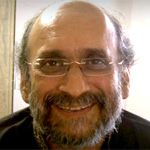
    Justice Markandey Katju’s plan to prescribe qualifications for journalists is absurd and Utopian. By his logic, politicians should be qualified in political science and NGO founders should be trained in social work. If he wants legal beat reporters to be law graduates, war correspondents will have to be trained in military science if not in warfare, health reporters in medicine, farm journalists in agriculture and so on.


    He will do well to realize that qualifications for reporters and sub-editors alone would not suffice. The owners of media houses, print and electronic, should also possess qualifications. The owners should be trained particularly in media ethics and their social responsibility. Justice Katju should recall the fate of the report of the Press Council committee on paid news. The representatives of owners in the Council opposed the committee and its recommendations.


    I do not understand why the PCI should be burdened with responsibilities to supervise and regulate media schools. There are bodies in the university system to look into these aspects. Let them discharge these responsibilities with efficiency. In the meantime, Justice Katju should find ways how the PCI can function effectively.


    Paranjoy Guha Thakurta, Independent Journalist and Educator
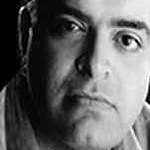
    The idea is ridiculous. It is like saying that if you want to become a politician, one must have a BA or a MA degree. The issue of lowering standards of journalism, values or journalism ethics becoming less important or declining quality is very separate. Mr Vinod Mehta himself said that he flunked his graduation exam, and look at him today. Pritish Nandy flunked his exams, and they were not even studying journalism, and look at them today. There is no dearth of examples of journalists who have succeeded without degrees much as journalists with degrees such as Dr Chandan Mitra. The ability to communicate, write or express articulately is nothing to do with a qualification in journalism.


    The Press Council should be concerned much more about its own role and duties than all of this.


  • Anil Thakraney: Wanted: Justice Katju Unplugged!

    By Anil Thakraney


    I like Justice Markandey Katju. Not necessarily as the chief of the Press Council, but as an ever-green television personality. He is like a breath of fresh air on the news channels that otherwise saddle us viewers with the same bunch of bores and jokers. Katju won my heart when he famously declared that 90 percent of Indians are fools. Though I would have loved him even more if he had pegged that figure at 99 percent. That would be a more accurate description.


    That apart, Justice Katju is a highly entertaining man. He speaks his mind ferociously, doesn’t shy away from television pow-wows, and revels in controversial situations. Although the man denies he makes such sensational remarks to court controversies, I am quite certain Katju enjoys being on prime time. It’s perhaps an unfulfilled desire being satisfied. This explains why he frequently provokes powerful people/groups, and gets into television skirmishes. His more recent targets of ire were BJP’s Arun Jaitley and Narendra Modi. Previously, he’s taken on the media, movie stars, cricketers, Mamata Banerji, Pakistan… the list is long. Shri Katju has an opinion on everything under the sun and the moon, and his kickass views are always captivating. When he’s not invited to the TV studios, our man lets off steam on his Twitter page.


    And this gave me an idea: Why doesn’t a smart TV news channel offer Justice Katju his very own daily show? A ‘Justice Katju Unplugged’ sort of a thingy. For half an hour every evening, our all-round expert vents on national television, gifting us with his gems for the day in his inimitable style. That Katju is totally entertaining we already know, but having served as a judge, he carries enormous credibility (which is why Suhel Seth and Shobhaa De, who too have an opinion on everything, don’t qualify). I think the show will score heavy on the TRP charts. And it will be a welcome break from the same dull bores we watch on television debates every evening.


    So here’s hoping one of our TV honchos makes this offer. I am quite positive Justice Katju will lap it up. Even though the first target of his vitriolic attack could be that very channel, you can never rule anything out with His Honour. See, that’s why the man is such a hit.  🙂


    ***


    PS: Haha. Any ad person will tell you these posters are an agency creative’s nightmare. A couple of Irish designers have turned the worst comments from clients into hilarious posters. They are funny, provided you read them after a few large pegs.


    Link: http://www.demilked.com/sharp-suits-posters/


  • [MJR] In which Justice Katju tells it like it is. Again

    By Ranjona Banerji


    Press Council of Indian chairman Markandey Katju has been one of the most vocal holders of this post, losing no opportunity to stand up for the media when required and to castigate it at other times. The trivialization of news remains a key issue with him and he has questioned once again whether our obsession with Sachin Tendulkar’s 100th century was justified. Interestingly, Tendulkar himself questioned it, pointing out that in the four matches when he got his 99th 100, no one mentioned it at all!


    Katju, speaking at the convocation ceremony of the Bharatiya Vidya Bhavan in New Delhi (“over the weekend” says The Hindu in Monday’s paper) however saved his best for last, taking on Anna Hazare and his methods. While making it clear that corruption is a mega issue and that is why Hazare’s movement gained so much support, he questioned Hazare’s methods. “What is the rationale of the thinking of Anna Hazare? With due respect, I could not find any scientific ideas. These shoutings will not do anything.”


    Katju is a man who calls a spade a spade. Much as he rubbed most of the media the wrong way, there is perhaps some merit in taking some of his criticisms seriously. Is Aishwarya Rai’s pregnancy really front page news? Did the world end with Rahul Dravid’s retirement from cricket? There’s no point getting defensive here and saying, “The media has every right to choose its own stories”. Quite right it does. But does that mean that the media never makes mistakes? Or indeed, can one deny the dumbing down of the media in terms of choice of stories and understanding of news?


    **


    Talking about getting defensive, the editor in chief of this site Pradyuman Maheshwari faced some defensive posturing on the media’s role in the Norway-Bhattacharya child custody case on NDTV “over the weekend”. The anchor Sunetra Chaudhury, journalist Rashmi Saxena and former diplomat MK Bhadhrakumar staunchly held that the media had done no wrong. It was only when Maheshwari pointed out that no fact-checking had been done by the media and that the other side of the story was not presented – “a basic trait in journalism” – that the bluster of the others died down a bit and it was accepted that the media could have done more.


    Arrogance is all very well, but stupidity is just that.


    **


    This lack of perspective in the television media, especially when it comes to the armed forces, is equally appalling. It has the narrow-focused ability to only see every problem from the side of the armed forces. Yet surely we have seen, more so in recent times, highly ranked officers involved in the most reprehensible acts of corruption. In the current allegations made by chief of army staff VK Singh that he was offered a bribe by a former Lt-general, surely it would be better to get a few more facts on the case before having hissy fits in favour of every soldier ever accused of anything at prime time? At the very least it would be interesting to see if TV can seriously question what seems to be an obsession with attention as far as VK Singh is concerned. Also, at the risk of facing a firing squad at dawn, I would suggest that the media would be better served if it stopped treating the armed forces like a collection of overly-principled martyrs eschewing payment for their cause and just treat them with customary scepticism.


    **


    In an aside, how about TV channels hire some people with better spelling skills for their written portions? All morning on Monday I read about a “defemation vase” filed by Arun Jaitley against somebody. Of course, there are no bigger teasers than those little ticker tape thingies that run across the screen which promise so much and deliver so little.


    Twitter: @ranjona


  • Newswatch: Kalpana Sharma on the falling standards in newspapers

    By Kalpana Sharma


    When the new chair of the Press Council of India, Justice Markandey Katju held forth on the competence, or rather incompetence and lack of learning of journalists, we were outraged. How dare a person from outside the media cast aspersions on our competence? Has he any idea how difficult it is to produce readable newspapers and magazines and watchable TV shows?


    Yet what was considered inexcusable only a few decades ago now passes without anyone being hauled over the coals. By this I mean the bloomers one can find almost every day, particularly in print. On TV we now know that there probably are as many mistakes as in print. It took the former chair of the Press Council, Justice PB Sawant to catch one such “inadvertent” mistake and to ensure that it was never forgotten. But in print, the errors jump out at you every day – wrong photographs, captions, erroneous headlines, inaccurate data. Are all these inadvertent or do they reflect a lowering of standards in the media – where the rush to print has introduced carelessness that can sometimes prove costly?


    Earlier, nothing you wrote could find its way into print without passing through several filters, including people who were clued in on the law. Headline writers generally read the whole story before giving a headline. Even these would be checked before the page was passed. Much of this still exists but there is an obvious slackening of rigour. If there is a ‘post-mortem’ the next morning, and many media organisations have dispensed with this altogether, heads probably don’t roll if there is a mistake unless it provokes a legal notice.


    Take just one day in the life of newspapers in Mumbai. On November 28, three newspapers that I read carried stories on the efforts of two NGOs to have a car-free day in South Mumbai. The divergence in the numbers quoted in the reports tells its own story.


    On page 5, The Times of India had the following headline: “8,000 ditch vehicles to celebrate car-free SoBo”. (For the uninformed, SoBo is the fashionable name for south Mumbai.) But while the headline was unambiguous about 8,000 people participating, the first paragraph of the report read:


    “An initiative to reclaim south Mumbai for pedestrians and cyclists got off to a great start on Sunday morning, with around 800 Mumbaikars ditching their vehicles to participate in a walkathon and a bike-a-thon.”


    So who is right? The headline writer or the reporter?


    If you thought reading another paper might yield more accurate information, you would be mistaken. Hindustan Times, on the same day, had a six column headline on page 5 stating, “SoBo’s Car Free Day fails to gather steam” and below that: “Poor response: Only 150 people turn up for event, participants complain of poor arrangements.”


    How did HT spot only 150 people when TOI counted 800? Or 8,000?


    In frustration, I then turned to Express Newsline of Indian Express. It echoed HT’s headline: “Lukewarm turnout, but walkers and cycling enthusiasts have free run”. But unlike the 150 number of HT, Express quoted an organiser claiming that 150 cyclists and 200 pedestrians had participated. So that adds up to 350. So in the end were there 8,000, 800, 350 or 150?


    For those outside the media, this might sound like nitpicking. What does it matter? In any case, people only read one newspaper – that is if they read anything except the entertainment supplement.


    Yet, the fact that a simple report like this could show such variance actually points to a very basic problem in journalism today. The golden rule about statistics and numbers is: if in doubt, leave out. The structure of newspapers is supposed to provide the checks so that inaccuracies are caught. Journalists are supposed to be trained to be especially careful with numbers. And to double- check everything, even the most trivial detail. When something so basic begins to break down, then you are laying the ground for the kind of mistakes that bring in lawsuits.


    So even if Justice Katju’s remarks were sweeping generalisations, I would suggest that they were not entirely off the mark.


    Kalpana Sharma is an independent journalist and columnist.

  • Newswatch: Katju, a harmless Rip Van Winkle

    By Parsa Venkateshwar Rao Jr


    Justice Markandey Katju, the chairman of the Press Council of India, has written a long-winded piece in The Hindu of November 5, expressing his views on the state of Indian society, economy, media and what to do with it all. It is a meandering argument with usual college textbook learning thrown in, with quotes from Firaq Gorakhpuri, Tulsidas, Shakespeare, some kind of socialist critique, some talk of a transition from the feudal age to an industrial age.


    The basic premise of the good judge is that India is in the age of 18th-century Europe, and what Voltaire, Diderot and Rousseau did then should now be done by the Indian media; fight the establishment, fight feudalism, fight superstition and worry about the plight of the poor people and the suicides of farmers as does P Sainath in The Hindu (Katju mentions Sainath by name). That is, fight the evil windmills.


    Then he talks of the need to regulate the media, especially the electronic media, which have programmes on astrology, devote more newstime to Lady Gaga and Kareena Kapoor’s wax image at Madame Tussaud’s than to the health and educational problems of the country.


    It is clear that Katju is a confused man. He has a bird’s-eye view of the situation, and he seems to miss both the woods and the trees. The judge is gravely mistaken in saying that India is passing from the feudal to the industrial age. There is no feudalism except in the minds of Marxist historians. The rural social set-up we find today, including the rightly hated caste panchayats, is not an example of good old feudalism but of an undeveloped rural bourgeoisie, with false sense of honour and tradition, with enough money and little wit. To think this is feudalism is reading the situation wrong with the help of dated textbooks, especially banal liberalism of the HAL Fisher-type A History of Europe, which is a silly book in retrospect or the CPI-type NCERT history textbooks in India.


    Katju is worried as to what will happen to displaced farmers moving to cities and not finding jobs because steel and automobile companies are producing more with less workforce. This is a perennial problem that has been with us for the last 60 years and more.  Farmers will pick up new skills as time goes along. All migrations involve changing lifestyles and working conditions.


    Then he makes the futile observation that more than 90 per cent of Indians are migrants, excepting the pre-Dravidian tribal populations. Now that statement is neither true nor false in any meaningful sense of the term.


    So, why was the media, especially the electronic media, getting angry with Katju? He uttered the word ‘regulation’ and said that no freedom is absolute. In themselves there is nothing wrong with the two ideas. Regulation if translated to transparent and fair rules is indeed the basis of any institution or sector. And even ardent liberals would accept that no freedom is absolute. We do not have radical liberals who argue for absolute freedom of speech, including hate speech. Our liberals are timid and politically correct.


    The real red rag in Katju’s long homily is that he wants to set himself as the watchdog of the media, which is what the Press Council is supposed to be. Either there should be no Press Council, or if there is one it has to be watching over the media. The only effective way of refuting Katju is to dissolve the Press Council. If the council is allowed to exist, then this Katju-type of exhortation – vain and in vain – will have a place in the public sphere. It will be interesting to pick holes in it. And it can even be ignored.


    Katju’s attitude does hint of paternalist socialism, the kind favoured by the Congress in its unconscious mind, where the government wants to tell people what is good for the people. Katju is no Stalinist – he would be horrified to know that there are intimations of Stalinism in his pompous obiter dicta – but he sounds very much a schoolmaster. It is, perhaps, nice to hear a schoolmaster once in a while, especially when you do not have to fall in line which is the case with Katju and the Press Council. But the truth is that Katju is a harmless intellectual Rip Van Winkle, speaking in the dead debating terms of a bygone era.


    The media should not have gone into a frenzy over what he said. As always, the media was looking for a good bone of contention and Katju provided one. The media should be grateful that Katju chose to be provocative in his own outdated manner.


    The writer works with the DNA newspaper at its Delhi office.

  • Hard Knocks: Sadly, Mr Katju may have a point

    By Anil Thakraney


    The Chairman of the Press Council of India, Justice Markandey Katju, is determined to sort the Indian media out. Some days back I expressed skepticism on whether he’ll succeed in his noble endeavours. Here’s the link to that piece.

    http://www.mxmindia.com/2011/10/hard-knocks-katju%e2%80%99s-unreal-expectations/

    It appears Mr Katju read my post (hehe), and perhaps out of frustration, has lashed out at the Indian media. He’s basically questioning our skills, integrity and competency levels. Naturally, there’s collective outrage in the media frat, and an angry desi media is a dangerous beast, you don’t mess with it. I would be quite surprised if Katju remains for very long in his chair.

    Having said that, and having been sufficiently offended, we need to once again take a hard look and check if what the man says is entirely wrong. Some soul-searching would actually do us good, and perhaps we’ll hire better personnel in the media. So let’s examine Katju’s critique and his three key problems.

    He says the Indian media divides people on religious lines and is anti-people. A sweeping generalization, no doubt. But there IS a section of the media that caters to specific communities and their respective communal biases. A section is even aligned with political parties. And this ideological bias comes to the fore during riots and elections. So what Katju says isn’t entirely wrong.

    He says TV channels focus on cricket and other celebrities. And Katju doesn’t like that very much. Well, that’s true. We do pay too much attention to entertainment and celebs, and I am guilty of that too. And often hard news gets buried somewhere. Yes, we do need to worry about excessive flooze in the media, for sure. But I don’t know how this will ever get sorted out. Because the truth is: Advertisers are more interested in Katrina Kaif’s fashion mantra rather than the survival plans of the family members of that RTI activist who got killed. That’s the sad commercial reality.

    He believes journalists have not studied economics, politics, literature and philosophy. Is he entirely wrong? Switch on the news channels and you’ll notice the general knowledge skills of most anchors and reporters. Yes, it needs a lot of beefing up, we have to admit that. Most journalists are too busy chasing celebs to find time to read Shakespeare, that’s another fact of media life.

    Bottom line: It’s easy to get offended by Shri Katju’s crazy generalizations. And dismiss them as outbursts of an angsty uncle. Still, it will serve us well to pay attention. He isn’t entirely inaccurate.


    ***


    PS: Watch this show as Barkha Dutt interviews a Google chief. You’ll notice what a struggle it is for her to have a meaningful conversation with a new media specialist. It’s not her fault, really. Most of us old-world journos would find it tough going. A glaring example of the schism between the old media and the new media. Also, hope Mr Katju didn’t watch this one. Else he’ll accuse us of being zero on media, apart from literature and philosophy!


    Link: http://www.ndtv.com/video/player/news/in-the-google-of-things/215082

  • Hard Knocks: Katju’s unreal expectations

    By Anil Thakraney


    The Chairman of the Press Council of India, Justice Markandey Katju, reminds me of a very strict uncle. You don’t mess with the guy. You quietly listen to him and obey his orders. Or else get ready for some nice punishments. Katju thinks the Indian media tends to be irresponsible, that it’s not doing its job, which is to serve the people. That there’s too much of celebrity journalism. And yes, he gets really riled on the issue of paid news. And yes, he wants to change things around. By carrot or by stick… whatever it takes.


    Of course the man’s heart is in the right place, and he means well. And good luck to him in his mission to clean up the desi media houses. But am afraid it’s not going to work. This issue is too complex and layered to be solved by Katju’s simplicity and good intent. And even threats of punishment won’t work. Here’s why.


    Broadly speaking, the Indian media is run by proprietors and not by editors. Let’s be clear about that. So however honest and diligent the editor might be, the control room is really run by the owner of the publication or the TV channel. And these people are businessmen. They don’t worry about public service, they are focussed on return on investment. They are not in the game to make India a better place, they are here to liven up their own balance sheets. They are not saints, they are suits. In this scenario, dodgy practices is a sad but logical outcome. Because there is too much competition in the mass media. Hundreds of channels and thousands of print brands are chasing the same ad pie. In how many ways can you divide one cake? Mouths have to be fed, no? This then results in excessive celebrity coverage. What to do, everyone wants a piece of SRK! And irresponsible journalism. How can you get eyeballs by following boring rules in the news room? And yes, paid journalism. If the advertisers aren’t gonna entertain me, I have to find other revenue channels, thank you very much.


    Anyway, good luck to Mr Katju. He deserves no less than a Nobel if he can clean things up out here.


    ***


    PS: It’s common sense to me, but I don’t understand why the TV chiefs don’t get it. The ONLY reason some goons hurl chappals and rain punches on important people is to get noticed, to get their 15 minutes of fame. And beaming their actions on screen is playing right into their hands. Just don’t feature these incidents, simply report them. Is that so difficult to understand? There are other ways to get TRPs. Try SRK!