Tag: Journalists

  • Amith Prabhu: The PR professional-Journalist changing equation

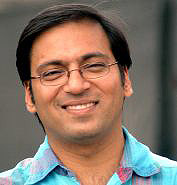
    By Amith Prabhu

    Public relations evolved as a profession in the aftermath of the world war when several propaganda specialists were jobless after the huge event and realized they could apply their minds to help brands that would utilize their talents in the ’40s and ’50s to sell more. In the last 60 years, PR has come a long way from being a profession that deals with media to enhance a brands visibility through editorial engagement and stunts to offering advice on reputation management, community relations, corporate governance, crisis counsel, internal communications and much more. In this ever evolving world, how the PR professional of 2014 makes the most of an important stakeholder – the journalist.

    I have seen how the animosity between two important groups of professions has increased over the last ten years I have formally been in the profession and I don’t think it is about a blame game or one-upmanship that makes this topic interesting. It is what we can do as two groups to make things easier. Remember, a newspaper can have 30 journalists covering a wide range of topics and now imagine each of them gets an average of 25 press releases a week or five a day or perhaps fewer on Mondays and Fridays and many more between Tuesday and Thursday.

    How do journalists begin to respect the PR professionals they have a disdain for? How to PR professionals get together to engage with journalists better and do not come across as people to keep away from? How do both these groups that from time to time depend on each other make things work better given the flux of brands, organisations and people getting into the ecosystem?

    I do not have a magic recipe. I would like this to be a starting ground to find some practical solutions. I hope a day comes when one doesn’t bad mouth the other.

    Ten things that PR professionals focusing on media relations can do to make things better –

    a)      Learn more about the journalist you want to engage with by following him or her on Twitter and understanding their style

    b)      Read their articles, watch them on TV in order to get a better sense of what they cover

    c)       Know their style and temperament and never call them on their mobile phones unless they have given you permission to do so or they happen to be friends

    d)      Never spam inboxes with press releases and attachments for obvious reasons

    e)      Create smart media lists that are updated every two weeks

    f)       Meet journalists to mutually know each other better and not just to push client news

    g)      Treat them as equals and never as superior or inferior in order to share mutual respect

    h)      Be professional by making appointments, being punctual and sending well-drafted emails

    i)        Read and be prepared about your organization or that of your client’s. Ill-informed communicators are a disaster in waiting.

    j)        Lastly, to never mix the personal with the professional. There is nothing really off the record.

    This is not an exhaustive list. I invite you to send in your suggestions to add to this. May there be more harmony between journalists and PR professionals.

     

  • Ranjona Banerji: Any more skilling and I’m killing myself!

    Ranjona Banerji

    By Ranjona Banerji


    The Oxford English Dictionary, the last word on lexicography to many, has included many new “Indian” words in it. These are words that are peculiarly Indian like “prepone” or “airdash”, plus “crore” and “lakh”. So bring out the tricolour and let’s have a round of “Jana Gana Mana” to celebrate.


    Journalists across the country, please take a bow. Airdash is definitely a journo word and every Indian newspaper uses lakh and crore. Except, of course, the pink papers who want to be international and so prefer million. As we all know the international community of bankers and investors are falling over themselves to read Indian pink papers. I lie. I sometimes doubt whether bankers and investors can read at all, whatever their national origins. I would also give a journalistic nod to “chargesheet” and “undertrial” since newspapers use both all the time, though presumably, so do the police and the legal fraternity.


    Prepone and airdash are not so bad if you think about it: Both make sense. Though to be honest it’s not often that meetings in India start before the appointed time. And more curiously, airdash was coined when the only Indian airline was Indian Airlines and no would describe the experience of flying with them “dashing”. And, fact is, the words have become a little cliched and jaded and we’ve laughed at them for years.


    Years ago senior subs would tell their young ones to avoid used airdash since it had become a joke. And grammar purists of yore (now called grammar nazis by the Twitter generation who can neither spell nor understand syntax construction) would shudder at prepone.


    But tolerance can only go so far. I now await with horror the day that the Indian use of “lesser” becomes acceptable. For some reason, we don’t like to use the simple “less” when it comes to quantitative measures. Some things just cost less money. No need to make it lesser money. Lesser money would imply that the money itself was devalued. Like what’s happened to the rupee against the dollar. You could at a stretch say that because you used the rupee instead of the dollar to pay your bills, you used lesser money (all right, off with my head). Lesser is a qualitative description.


    But that’s my permanent language bugbear. You might have your own.


    Right now though, I’m worried about the management jargon that enters the mainstream by the “backside” (okay, a cheap joke, but backside usually refers to the human posterior end in common usage rather than the back of some inanimate object which is how it is all too often used). I read a headline in the Economic Times the other day – written by some management type – which asked for more “skilling”. Now this is not an Olympic sport. It is part of an ongoing management trend – led, it seems, by Americans – to make nouns into verbs. So if you want to increase or hone skills, then that presumably is skilling. The great management skill it seems is to kill language.


    Incidentally, Microsoft Word does not seem to like airdash or prepone but that could be because mine is an old version. But what the IT community has done to language is a whole other grouse. The only good news is that Word doesn’t accept skilling either. Yet.


  • Ranjona Banerji: Foreign media is only credible observer of Indian politics

    By Ranjona Banerji


    There is now only one credible observer of Indian politics – the foreign media in India. We cannot fully assess if a politician is good or bad until a foreign journalist pops by, talks to a few taxi drivers and Indian journalists and then writes a complimentary (good) or scathing (bad) comment piece.


    Now, you’re thinking, aha, sour grapes but far from it. It is all a question of perspective. Indian journalists, especially in Delhi, are too close to the centres of power. They are so familiar with what’s going on and party to so many secrets that they now spend more time discussing whether the blue in Manmohan Singh’s turban has changed in the last eight years. (Some say yes, some say no and the rest are fence-sitters.)


    The foreign media however comes in from far away and has no clue about all this inner stuff. They attend a few parties (these are vital sources of information and political analysis, as those who read through the diplomatic cables made public by Wikileaks will know), meet a few Indian print journalists (bluer, paler, maybe both), they may meet a few TV journalists but that’s for entertainment since they have no political perspective, although I hear they throw really good dinner parties. And, obviously, the few taxi drivers. This is imperative as every traveller knows – one taxi driver can be equal to at least five other potential interviewees.


    Yesterday, I met a cabbie in Mumbai who told me that Indian politics turns on Uttar Pradesh. Now I know. If these foreign political commentators are really smart however, they will never even leave whichever country they come from (usually the USA or the UK). How else have I become a world renowned expert on Barack Obama and David Cameron? (Actually, by watching Comedy Central and Graham Norton.)


    Therefore we now know that Prime Minister Manmohan Singh is a poodle, useless, confused and steeped in doom and gloom. Everyone has said it from Time to the Economist to The New York Times to the Independent.


    The poodle reference can be translated in Indian terms to a puppet. Yes I know, Indian commentators have been saying that for years. But what do they know, eh? (On the other hand, their view has now been authenticated!) Meanwhile I must be off to watch a few more skits on Comedy Central so I can hone my analytical skills.


  • Much ado as Sen does a Katju

    By Ranjona Banerji


    Amartya Sen has done a Markandey Katju on the Indian media, but unlike the outspoken Press Council chief, the Nobel Prize winning economist has piled on some flattery first – free, fair, objective, pillar of democracy and so on.


    (http://www.thehindu.com/opinion/op-ed/article2781128.ece?homepage=true)


    But his basic grouses are lack of grievance redressal protocols and a somewhat ambivalent approach towards accuracy. Do these problems sound a bit like from someone who has been at the receiving end? Well, yes. He explains his personal problems in great detail anyway, mainly to do with being misquoted.


    The other issue is one of having some sort of ombudsman (person?). Not too many newspapers bother and I am not sure of what happens in the world of TV.


    But what was intriguing was the whining and moaning by journalists on social media sites. No one ever talks about consumers, said one (the implication being that readers are to blame for the rubbish that goes into papers and on TV) or that Sen was just saying the same old thing. The comments under the article, of course, praised it wholesale – media bashing is such fun!


    Like Katju, Sen also pointed out that the media largely ignores the concerns of Unfortunate India, while concentrating on celebs, moneybags, film stars and the middle class.


    Still, one would imagine that journalists, being so used to dishing it out, should also learn to suck it up. Sen is not the Press Council chairman telling us what to do with a toothless threat hanging over our heads nor does he harp on about our inability to quote Ghalib couplets at the drop of a hat. It’s just a point of view.


    * * *


    Katju has come to the defence of Bigg Boss occupant (I think the latest edition is over) and porn actress Sunny Leone, saying that she’s not done any of those not-yet-respectable things in India so no one should target her. It’s an interesting way of getting round our moral policing hounds. Will it work for Salman Rushdie too, do you think?


    * * *


    Arnab Goswami tried to hold a discussion on the Deoband request to deny a visa to writer Salman Rushdie. However the guests were such that it would never have made for a fair or even constructive debate – Asaduddin Owaisi, MP, All India Majlis-e-Ittihad al-Muslimin; Alka Raghuvanshi, curator, India Habitat Centre; Sheebha Aslam Fehmi, Islamic feminist writer  and journalist and Zafaryab Jilani, Convener, Babri Masjid Action Committee. Jilani looked tired (been there, done that), Raghuvanshi hardly managed to say anything, Fehmi put up a lone defence for the liberal voice and Owaise shouted louder than everything else. Goswami pointed out that he could not single-handedly solve the problems of the nation, on being baited by Owaisi.


    * * *


    Now that Tuesday morning’s papers have told us that some prospective medical students were caught cheating in an entrance exam, there is hysteria in TV land over the fact that merit is being murdered. Please.

  • Journo-authors: Telling a story, both ways


    By Archita Wagle


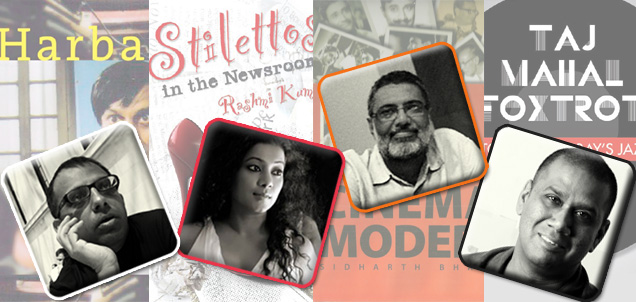
    “Modern journalism, which is about 100 years old, has a tradition of journalists going on to write books,” feels Naresh Fernandes, Editor, Time Out and author of Taj Mahal Foxtrot: The Story of Bombay’s Jazz Age, which was launched recently at the Goa Literary Festival.


    And probably that is the reason that so many take the plunge from writing a story to writing a book. So then in spite of having a day job, why does a journalist, whether a reporter or one of the editing team, take the time and trouble to write a book.


    Sometimes it is just the desire to share the experiences that the person has gone through like Rashmi Kumar, Features Editor, Deccan Herald, whose first book, Stilettos in the Newsroom is an effort to chronicle her experiences in the newsroom. “I felt that I was a misfit in the newsroom, I was not well-connected or aggressive or as street smart as others. I still am not. But I was always sure that I wanted to write,” she said.


    Sometimes it is a personal passion that translates into a book, as with Arunava Sinha, Head, ibnlive.com and cricketnext.com, who translates Bengali classics and contemporary literature. Mr Sinha said that he has been translating for a long time but he started publishing only five years ago.


    There is a story waiting to be told in every subject, so how does a journalist decide on the topic to base his/her book on? Is it something that they are passionate about, or something that they want to explore in depth? Mr Fernandes’ Taj Mahal Foxtrot was an idea that took root when he was doing an article on jazz for Man’s World. “While doing the article I realized that there was a story in there aboutBombay’s cosmopolitanism. I decided to explore the idea in-depth in a book.”


    For Siddharth Bhatia, author of The Navketan Story Cinema Modern and consulting editor, Asian Age, the book was something he had toyed with for years. “I was fascinated by films made in the 50s and 60s, especially those made by Navketan. I would have written this book much earlier but it was only recently that Devsaab agreed to give time for the book.”


    Writing a book while continuing with the day job of being a journalist isn’t an easy task. Sitting up late at night, working on weekends, fitting time around a busy schedule become a part of a journalist-author’s life. There are times when they suffer from the classic writers’ block. They go away, keep the book aside, take sojourns, or sometimes just keep hacking away. But they don’t give up. And if they do, the publishers are always there to remind them. “I pitched the idea to the publishing house and they accepted. After that I just kept it aside, it was they who reminded me that I had a book to write,” said Ms Kumar.


    If one were to look at the books that have been written by journalists over the years, one notices that there is a mix of fiction and non-fiction. Though almost all journalists agree that non-fiction is easier to write as it deals in facts, something that is a “natural progression from being a journalist” as Mr Fernandes says, but he is also quick to point out that writing non-fiction is tougher than fiction as “we have to construct the narrative out of facts, we can’t let our imagination take over when we hit a blank spot”.


    Writing is a book is never easy but what after the book is written or even halfway complete, how easy or difficult it is to get it published. Do the journalists pitch their proposals to the publishing houses or vice versa?


    Priya Kapoor, director, Roli Books explained the process of publishing a non-fiction book. The publishers have a commissioning program. Sometimes there might be an event of interest like the IPL controversy. They then research on what has been written about the topic, who has been covering it, how has the person covered the topic and then approach the person they feel is best suited for writing the book.


    “When we commission non-fiction books, 70 percent of the time, we approach them. Sometimes it is because the person has been covering the subject for a long time or because they have access and contact required to do the book or if writing about the topic excites them,” she added.


    She illustrated her point by citing an example: After 26/11, Roli decided to come out with a compilation of articles and perspectives on the terror attack in a book. Everyone was working around the clock. It was here that the journalistic discipline of sticking to deadlines came useful. The book was on the stands in January the following year.


    That makes it sound as if it is easy for the journalists to get their books published. But that is not the case all the time. “It is not very easy for journalists either to pitch for getting a book published. We might get an extra point for our ability to adhere to deadlines, but that is all that we get as an advantage,” feels Mr Bhatia. He is the first one to point out that he isn’t an authority on films, but when he approached the publisher, Harper Collins, something did click and the rest has been published as Cinema Modern, a look at Navketan, cinema in the 50s and 60s and India’s history along the way.


    But not all journalists stick to writing non-fiction. Some like Sidin Vadukut, Sonia Faleiro and Rashmi Kumar also venture into fiction. “I would not say it is all fiction. My book is part fiction and part autobiography. I have left it to the reader to figure out which is fact and what is fiction,” explained Ms Kumar, whose book Stilettos tracks the journey of Radhika Kanetkar’s slow raise in the world of newspaper and finally her wedding.


    Some even venture into other territories like translating. Arunava Sinha has already translated works like My Kind of Girl by Buddhadeva Bose, considered to be one of Bengal’s foremost writers of the 20th century, Harbart by Nabarun Bhattacharya and Three Women by Rabindranath Tagore. Mr Sinha would love to give up his day job but agrees that he doesn’t get paid enough to pursue his passion full time. “It is not a profession, but a passion. Money is not my primary consideration,” he stated.


    After the book is complete, it goes to the editor to be edited. How easy is it for a journalist to give up something that s/he has toiled for to another person who will very critically edit it? Most reporters say that they are used to the fact that their ‘copies’ would be ruthlessly edited. As Mr Bhatia very succinctly puts it, “The book editors have a particular way of editing. They look at continuity, the flow of the book, contradictions in chapters and so on. I was fortunate to work with one of the best editors of Harper Collins. He pointed out several things that I would have never noticed as I was too close to the subject.”


    Even Ms Kapoor agrees, “It is not as if journalists interfere more with the editing process than any other writer. But sometimes looking at a particular subject we might give them some leeway, with respect to their sources and contacts.”


    But Ms Kumar begs to differ, being from the editing side of the business. “I never had a problem with the way my story was edited. But I also edit copies and that is something that is now internalised. I made sure that the material I submitted was clear and concise,” she said.


    Mr Fernandes took nearly eight years to complete his book, working around his job. Bhatia could only focus full time on the book after he quit his job. Mr Sinha makes it a point to sit at night and focus on his translations. Ms Kumar is now ready with her second “tongue-in-cheek” book on a 30-something girl’s matrimonial adventure search. But they are not ready to quit. “After all one day I will retire from my day job, but I can continue to write as long as I want,” says Mr Bhatia. Indeed aptly summed.


    Coming attractions


    After the release of Mumbai Mirror editor Meenal Baghel’s debut novel Death in Mumbai, which Priya Kapoor, Director, Roli Books describes as a “well written and well researched book which makes the effort to get inside each character, 2012 will see the release of S Husain Zaidi’s book “From Dongri to Dubai” on Mumbai’s underworld and the history of gangsters.


    Mr Zaidi, resident editor of Asian Age/ Deccan Chronicle, already has two books on the underworld connection to his credit, Black Friday (which was made into a film) and Mumbai Queens, which chronicles the tales of Mumbai’s female gangsters.


    He took four years to complete the book according to Priya Kapoor. If there are no further developments or twists, the book is set to be released in the first quarter of 2012.


  • No discretionary quotas for journalists please

    By Ranjona Banerji


    The story of the day, on Tuesday, January 3, as far as the media is concerned is the front page expose by The Indian Express, headlined: “Meant for ‘distressed’, Orissa plot quota goes to babus, judges, journalists”. The strap below reads: “Row leads to CM scrapping discretionary land or house allotments last month”.


    The upshot is that a system of patronage was established in 1985 by the JB Patnaik government to allot houses or land for “the dependent of a person who has made a supreme sacrifice for the nation, but has not been properly rehabilitated so far; member of a family who has been a victim of unforeseen circumstances (terrorist attack, earthquake, flood etc); physically handicapped person…” The categories go on to include police, military, paramilitary and government employees permanently disabled on duty, the families of those who lost their lives in abnormal circumstances as well as eminent professionals, sportspeople, artists, literary figures and women of “high achievement in distress’ and individual cases of extreme hardship.


    After this, the beneficiaries appear to have been ministers, bureaucrats, judges and journalists. A scandal where a minister okayed the allotment of two houses to the family of another led Naveen Patnaik to abolish this discretionary quota.


    The story, does not tell us how many distressed, disabled people in extreme hardship actually got any land or houses, but it does list the journalists who benefited.

    http://www.indianexpress.com/news/meant-for-distressed-orissa-plot-quota-goes-to-babus-judges-journalists/895060/


    This raises a very serious question for journalists everywhere, many of whom have profited under similar schemes elsewhere in the country. The Express story, while naming benefiting politicians and so on has broken the covenant of silence on journalistic transgressions by printing the names of the lucky journalists and the minister under whose discretion they got so lucky. The names belong to several media houses and some are familiar.


    One journalist has defended his allotment, pointing out that when he got his plot in 1997, the scheme was legal. He also said that other journalists had lied that they had no other properties – a requirement of this lucky dip system.


    The question here is of something else. To what extent can journalists be objective in their reporting/covering/editing/commenting on government affairs if they benefit from government schemes and awards? Does acceptance of such largesse come under the tag of corruption or just luck? Is objecting to such acceptance an expression of self-righteousness or sour grapes?


    The profession of journalism has been under the scanner recently for a number of not very salubrious reasons. This is one more criticism which ought to stick. Paid news campaigns as orchestrated by media houses is totally reprehensible. But so is the custom of individual journalists accepting what cannot be called gifts but will have to be seen as bribes which compromise not only their integrity but that of all their fellows.


    The Indian Express has done the profession a great service by printing the names of journalists who are beneficiaries. If we are to fight both media corruption and paid news, then the only way is for us to become each other’s watchdogs. We cannot be sanctimonious about everyone else but ignore our own transgressions.


    The way The Hindu exposed the Hindustan Times on its story on infant gender changes in Indore or The Guardian has been relentlessly attacking News of the World and others on phone-hacking, is it time for Indian journalists to stop applying the discretionary quota to each other?

  • [PR Channel] What journalists want: The 10 commandments for PR folks

    By Ashraf Engineer


    Whom do journalists love to hate? Public relations (PR) professionals probably wouldn’t top the list, but they’d come pretty close. The irony, of course, is that the journalist-PR executive relationship is deeply symbiotic – one can hardly do without the other.


    But before I say anything else, you should know that I empathize. I know journalists can’t wait to get you off their back – unless they need you. In which case, you need to respond, like, yesterday.


    How many times have you thought after an I-need-a-response-now ultimatum, ‘What do journalists really want?’


    Here are a few commandments. Live by these and, who knows, the rocky relationship might just get smoother.


    Thou shall be clear and concise

    Most journalists work to a deadline and don’t have the time for rambling, rah-rah press releases. Say what you have to without taking up too many words. You’re working to a deadline too, so this should work to your advantage. A well-written yet short press release has far more value than a tsunami of words that has at the core just one paragraph of usable information.


    Thou shall not promise what you can’t deliver

    Years ago, when I worked for one of Mumbai’s leading newspapers, Nobel-winning mathematician John Nash visited the city. The PR agency managing the visit promised us an exclusive interview, with other newspapers getting access to Nash only the next day. Turned out the agency promised every newspaper the same thing. Imagine our shock when we saw Nash’s interviews everywhere. My newspaper stopped dealing with the agency altogether. The CEO had to come over and apologize, but things were never the same again – we kept the agency at arm’s length and treated every communication from it with suspicion.


    Thou shall not peddle rubbish masquerading as news

    Journalists have had it with ‘news’ that isn’t really, well, news. And surveys that are little more than a few colleagues being asked their opinion. Good journalists are discerning; they won’t let something like that get through. The bad journalists, you should have no use for – they won’t last and will never be in a position to help you or your clients.


    Thou shall respect deadlines

    This might seem obvious, but you’d be surprised how often it is ignored. Nothing gets a journalist’s goat more than information/reactions not arriving on time. Your tardiness could slam the door shut on potential coverage. It could also destroy the goodwill that you and your firm might have with the newspaper concerned. Why risk it? Get it right.


    Thou shall make clients, facts available

    Journalists want people featured in the press release to be available, and also the facts and figures. There’s no point in pushing a story if its basic building blocks are out of reach. So, if your client has a new CEO, it’s not enough to just say it. The CEO must be on hand to articulate his vision and his plan. Unless you do that, a journalist would see no value attached to the story. Journalists aren’t carrier pigeons – they aren’t satisfied with only the information you give them. They may see a storyline you don’t, and would need support accordingly.


    Another sticking point is case studies. Wherever relevant, make sure you have good ones. Journalists love them because they make the story come alive. Make sure they support the larger story, make sure they’re well written.


    Thou shall know your target newspaper

    When I was working for a lifestyle newspaper, I was often flooded with press releases that weren’t relevant to me – from a new type of spark plug to a stent that made heart surgery cheaper.

    What were those PR executives thinking? We covered society events, fashion, cinema and television. Spark plugs? Really?

    Don’t carpet-bomb the media with releases. That’ll only result in a lot of dead trees and no stories to show for it. Read newspapers, know what they cover. Most good newspapers don’t simply run a press release; they use it to spark off an idea.


    Thou shall stay away from jargon

    Using jargon only creates an illusion that you know more than you actually do. And, like an illusion, it’ll shatter at the first challenge. Besides, it turns journalists off.

    So, the next time you’re tempted to say ‘ponzi scheme’, just say ‘a fraudulent investment operation that pays returns to investors not from any actual profit, but from money paid by subsequent investors’.


    Thou shall address releases to the right people

    Have an UPDATED list of journalists and the newspapers they’re working for. My last job involved handling news specials for a leading daily. Yet, I was bombarded with companies’ financial results. On the irritation scale, it ranked only below being addressed as ‘Mrs Ashraf Engineer’ (and that happened too!).

    A newspaper I worked for even received releases for a journalist who had passed away!

    Send your releases to the right people, make sure you address them properly and – for God’s sake – make sure they’re alive. Otherwise, guess where they end up. It’s no wonder they say ‘delete’ is the journalist’s favourite key.


    Thou shall be well informed

    I’ve lost count of the number of times the PR professional at the other end of the line didn’t have even basic information about his/her client – size, location, turnover, etc. Apart from seriously harming your own and your agency’s reputation, it creates a poor impression about your client.

    Wait, weren’t you hired to do the exact opposite?


    Thou shall know this – a newspaper is not just a print product any more

    Every newspaper now has a website. The traditional press release format was developed over 100 years ago for print journalists. But they’ve changed. Most people get their news from the web first. This has sent tremors through newsrooms and altered them forever. In the process, the PR professional’s job has been altered too.

    Help the journalists do their jobs by providing graphics – and, where required, multimedia – that are relevant and on time.

    It doesn’t end there. Journalists might require quotes from experts and client executives. Your story may never see the light of day unless you travel this extra mile. So, help journalists help you.


    Ashraf Engineer is Head – Content at Hanmer MSL. After a 16-year career in journalism, he now heads the high-value content operation of the agency. He can be contacted at ashraf.engineer@hanmermsl.com.