Tag: Jonathan Barnard

  • Video ent brands in India will spend 19% more in 2022: Zenith

    By A Correspondent


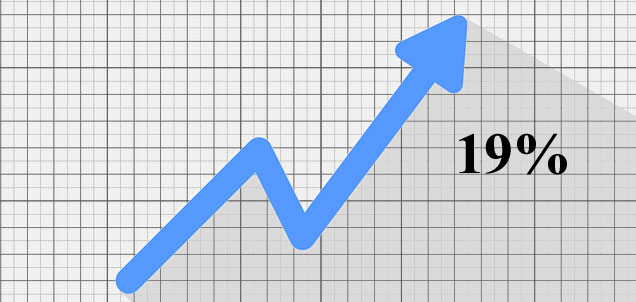
    Media agency network Zenith forecasts that in 2022, video entertainment brands are forecast to spend 19% more in India. Yes, that’s two years from now. Video entertainment advertising will shrink by just 0.2% in 2020 across ten key markets this year*, according to its Business Intelligence – Video Entertainment report, published today (Monday). Video entertainment adspend will far outperform the ad market as a whole, which will drop by 8.7% across these same markets.


    Spain and India to lead growth in video entertainment adspend

    The stable headline figures for growth hide considerable variation between the 10 markets. In 2022, video entertainment brands are forecast to spend 27% more than in 2019 in Spain, and 19% more in India, as mentioned earlier. Meanwhile, spending is expected to decline by 5% in the US and 7% in Australia over the same period.


    Spain and India both have fast-growing appetites for video-on-demand, especially on smartphones in India. India’s television ad market also enjoys rapid long-term growth – unlike in most Western countries – and should bounce back quickly in 2021.


    The US is the only market where video entertainment adspend is expected to continue to decline after 2020, as rising online revenues fail to compensate for the ongoing declines in TV advertising and pay-TV subscriptions, reducing available ad budgets. The video industry is healthier in Australia, but here the ad market as a whole is retrenching after the sudden halt to Australia’s 29 years of unbroken economic growth, so video brands can maintain share of voice without raising budgets.


    Said Jonathan Barnard, Zenith’s Head of Forecasting: “Consumers are currently benefiting from a generous supply of video content from brands vying for their loyalty. This competition is providing a large boost to video entertainment adspend this year. But this level of investment in both content and advertising will prove difficult to sustain for the long-term, and we forecast very little growth in 2021 and 2022.”


    The remarkable resilience of video entertainment adspend in this year of a global pandemic and subsequent recession is the result of increased demand from consumers, increased supply of content, and intense competition among video brands for viewers.


    Faced with spending much more time at home, consumers turned to video content to keep themselves informed and entertained. In France, for example, TV viewing time was 30% higher year-on-year in April, and was still 11% higher in August. Meanwhile online video platforms have invested huge sums in creating content to attract new viewers, forcing traditional broadcasters to up their game.


    Adspend by online video brands has far outpaced traditional television recently. In the US, online video brands increased their ad budgets by 142% in 2019, while television brands increased their spending by 15%. In the UK, adspend by online video platforms increased by 79%, while adspend by traditional television grew 34%. In both markets, television broadcasters and pay-TV platforms pushed up spending temporarily in response to their new competition, but this will prove unsustainable in the face of ongoing decline in their revenues, both COVID-19-related and structural. Meanwhile online video platforms have continued to raise their budgets as they seek to exploit the current window of opportunity to build a loyal customer base. Each platform is spending heavily to ensure that they are top of mind while consumers consider which ones to commit to for the long term.


    “Consumers are now faced with a vast and confusing array of programmes and films vying for their attention,” said Christian Lee, Global Managing Director, Zenith. “Video brands need to cut through this complexity and give consumers entertainment that matches their personal preferences with minimum fuss. Brands that provide compelling experiences and act as more than just repositories of content will be best positioned for growth in the long term.”


    Lockdown has made digital even more vital to video brands

    Video entertainment brands spend more on digital advertising, out-of-home and cinema than the average brand. Their reliance on out-of-home and cinema has posed a particular challenge this year, as they have been forced to compensate for lost audiences from empty cities and closed cinemas. This means even more digital spending, which is forecast to rise from 53% of total video entertainment spend in 2019 to 57% in 2020.


    Video entertainment adspend to exceed 2019 peak by 1.2% in 2022

    While video entertainment is expected to substantially outperform the market in 2020, Zenith forecasts it to underperform over the next two years, with no growth in 2021 and 1.3% growth in 2022. Online video platforms will have less capacity to raise budgets after spending heavily in 2020, and traditional TV broadcasters will be weighed down by shrinking revenues from TV advertising and pay-TV subscriptions. Nevertheless, Zenith expects video entertainment adspend to be 1.2% higher in 2022 than it was in 2019, while overall advertising will still be 0.6% below its 2019 peak.


    * Video entertainment refers to long-form video content, supplied either by conventional television or online, including free TV, pay-TV and online video-on-demand platforms. The markets included in this survey are Australia, Canada, Germany, India, Italy, Russia, Spain, Switzerland, the UK and US, which collectively account for 57% of all global adspend.


  • 65% of digital media to be programmatic in 2019


    By A Correspondent


    Sixty-five per cent of all money spent on advertising in digital media in 2019 will be traded programmatically, according to Zenith’s Programmatic Marketing Forecasts, published today. Advertisers will spend US$84bn programmatically next year, up from US$70bn this year, which represents 62% of digital media expenditure. We predict that in 2020 advertisers will spend US$98bn on programmatic advertising, representing 68% of their expenditure on digital media advertising. By digital media we mean all forms of paid-for advertising within online content, including online video and social media, but excluding paid search and classified advertising.


    The breadth of ad formats available through programmatic trading is improving, with more mobile, video and audio formats coming online all the time, though brands and agencies need to do more to push publishers to improve the quality of their inventory, which needs at minimum to be safe and viewable.


    Growth in programmatic advertising is slowing as it cements its position as the most important method of digital trading. We estimate that programmatic adspend will grow 24% in 2018, down from 32% growth in 2017, and forecast 19% growth in 2019, followed by 17% growth in 2020.


    In dollar terms, the biggest programmatic market is the US, where we expect US$40.6bn to be spent programmatically in 2018 – 58% of the total. China is in a distant second place, spending US$7.9bn on programmatic advertising this year, followed by the UK, with US$5.6bn of programmatic adspend.


    The US is also the market that has most embraced programmatic advertising, trading 83% of all digital media programmatically this year. Canada is in second place, trading 82% of digital media programmatically, followed by the UK, with 76%, and Denmark, with 75%. By 2020, programmatic advertising will account for more than 80% of digital media in all four markets. Canada will have almost completed the transition to pure programmatic trading, spending 99% of digital media programmatically that year.


    We expect all markets to follow Canada and use programmatic trading for all digital media transactions eventually. Indeed, it’s only a matter of time before programmatic trading becomes the default method of trading for all media. However, the transition is taking slightly longer than we expected – last year we forecast that 64% of digital media would be programmatic in 2018, and 67% would be programmatic in 2019, so we have pulled back both forecasts by two percentage points. The introduction of privacy legislation such as the EU’s GDPR has had some chilling effect by making certain data previously used in programmatic transactions unavailable, and making other data more costly to process. But we think the main reason for the slowdown in spending on programmatic media is that advertisers are investing more in infrastructure and data to make their programmatic activity more effective.


    To make the most of their programmatic campaigns, advertisers have to reorganise internally to give programmatic trading the high-level support and understanding it needs. Agencies can only extract maximum effectiveness from their programmatic strategy in a proper partnership with their clients. And a programmatic strategy can only ever be as effective as the data used to execute it.


    “Programmatic trading improves efficiency and effectiveness, and is gaining a dominant share of digital media transactions,” said Benoit Cacheux, Zenith’s Global Head of Digital and Innovation. “The scale of operational restructuring to make the most of it is both extensive and expensive, though, and advertisers are spending more carefully while they invest in infrastructure and data and review the quality of media. All programmatic advertisers need a strategy for acquiring the best and most comprehensive data available, and to treat this data as a vital corporate asset.”


    The most valuable data is first-party data, either explicitly provided by consumers or gained by tracking their activity on owned websites. It is also becoming more common to use second-party data, by forming data sharing partnerships, between – for example – brands and online retailers. Third-party data is widely available but does not give advertisers a competitive advantages, since all advertising can use it to target the same segments. Advertisers should continually vet and interrogate third-party data to ensure they are truly adding incremental reach. By combining all this data with their own CRM systems, advertisers can model consumer behaviour, and the more advanced are using machine learning to predict it. Data and new technology is enabling brands to move from tracking cookies to communicating with individuals.


    “Technology is making programmatic advertising work harder for brands,” said Jonathan Barnard, Zenith’s Head of Forecasting and Director of Global Intelligence. “Artificial intelligence promises to unlock new understanding of customers as people, as well as improving the optimisation of the trading process.”


  • Online video viewing in India to leapfrog to 52mins/day in 2018


    By A Correspondent


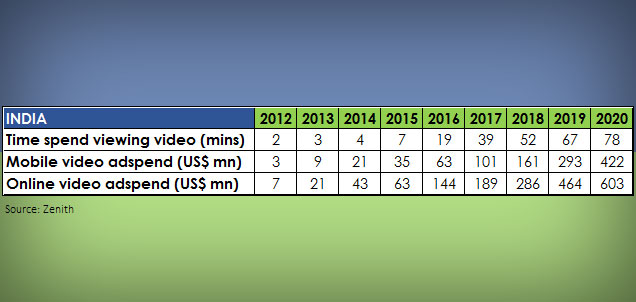
    Online video viewing will leapfrog to 52mins a day in 2018 from a lowly 39 minutes in 2017, report media agency network Zenith.Global consumers will spend an average of 67 minutes a day watching online video this year, up from 56 minutes last year, according to Zenith’s Online Video Forecasts 2018, published today. By 2020 the average person will be spending 84 minutes a day watching videos online. In that year, China will have the keenest viewers, with the average person spending 105 minutes a day watching online video, followed by Russia (102 minutes) and the UK (101 minutes). This rapid rise in consumption is leading to a shift in the way brands plan campaigns across both television and online video. India-specific numbers are in the table above.


    This is the fourth edition of Zenith’s annual Online Video Forecasts report. It contains historical data and forecasts of online video consumption and advertising, together with commentaries on the development of individual markets by local experts. This year’s edition covers 59 key markets. By online video we mean all video content viewed over an internet connection, including broadcaster-owned platforms such as Hulu, ‘over-the-top’ subscription services like Netflix, video-sharing sites, e.g. YouTube, and videos viewed on social media.


    Global online video consumption grew by 11 minutes a day in 2017, and we expect it to grow by an average of 9 minutes a day each year to 2020. It accounts for almost all the growth in total internet use, and is growing faster than media consumption overall, so it is taking consumption time from traditional media. Although some of this extra viewing is going to non-commercial platforms such as Amazon Prime and Netflix, plenty of it is going to commercial platforms, so the supply of commercial audiences is rising rapidly.


    Zenith estimates that online video adspend grew 20% in 2017, to reach US$27bn. Growth peaked at 36% in 2014 and has fallen steadily since then, but still remains very high. “We forecast 19% growth in 2018, and an average of 17% annual growth to 2020, when online video adspend will reach US$43bn. Video’s share of online display advertising is rising steadily: it accounted for 27% of display adspend in 2017, and we expect it to account for 30% in 2020,” the report notes.


    More from the report:

    The supply of online video audiences has been growing ahead of demand in recent years: online video viewing grew 91% between 2015 and 2017, while adspend grew 52%. The cost of online video advertising has therefore come down substantially. As the growth of video consumption grows we expect prices to stabilise, with mild increases from 2019 onwards.


    Online video advertising is still only a fraction of the size of television advertising, but because television is stuck at 0% to 2% annual growth, this fraction is rising rapidly. The online video ad market was 10% of the size of the television ad market in 2015, and 14% in 2017. By 2020 we expect online video adspend to be 23% of the size of television adspend.


    Online video and television complement each other well, with most brands initially using online video to add incremental reach to their existing television campaigns. But with the rapid growth of online viewing we are now seeing more brands plan television and online video together to optimise frequency.By cutting out television spots that lead to very frequent exposure among heavy television viewers, andusing online video to target – and retarget – light television viewers, brands are using television and online video together to cut out both overexposure and underexposure within the target audience, maximising recall at a reduced price.


    Online video advertising began by emulating television advertising, with most ads appearing within other video content that the viewers were really interested in as interruptive ‘in-stream’ ads. But over the past few years ‘out-stream’ ads have become common. These are stand-alone video ads that appear within text or images, or within a social news feed. Thanks mainly to the rapid adoption of video content and advertising by social media platforms, out-stream video is rapidly becoming the dominant form of online video advertising. In the UK, for example, it overtook in-stream advertising to account for 56% of online video adspend in 2017. This is changing the structure of online video creative. Because a viewer can simply scroll past them, out-stream ads need to grab the viewer’s attention from the very first second, either with an arresting image or with a celebrity with a dedicated following. They do not have the narrative leeway available to interruptive ads.


    “Online video is driving growth in global media consumption, as smartphones with high-speed data connections make high-quality video available to people on the move, and smart TV sets give viewers unparalleled choice in the living room,” said Jonathan Barnard, Zenith’s Head of Forecasting and Director of Global Intelligence. “The rapid rise in video viewing makes online video the world fastest-growing advertising format, creating new strategic and creative opportunities. Brands that do not currently have a strategy for online video need to think about getting one.”


  • Mobile internet to reach 28% of media use in 2020: Zenith

    By  A Correspondent


    The spread of mobile devices and rapid mobile data networks has transformed global media consumption in recent years. As much as 24% of all media consumption across the world will be mobile this year, up from just 5% in 2011, according to Zenith’s Media Consumption Forecasts 2018, published today (May 30). “By 2020 we expect this proportion to reach 28% as the mobile internet takes share from almost all other media. The rise of mobile is also forcing brands to transform the way they plan their communications across media, focusing less on channels and more on consumer mind-set as the distinctions between channels are eroded,” the report adds.


    This is the fourth annual edition of the Media Consumption Forecasts, which surveys changing patterns of media consumption since 2011, and forecasts how the amount of time people allocate to different media will change between 2018 and 2020, in 63 countries across the world.


    The rise of mobile

    Mobile internet use has eroded the consumption of almost all other media. Newspapers and magazines have lost the most. Zenith estimates that between 2011 and 2018 time spent reading them has fallen by 45% for newspapers and 56% for magazines. However, this refers only to time spent reading printed publications. Time spent reading newspapers and magazines online is included in the internet total, and for many publications the time they have gained online more than makes up for the time they have lost from print.


    Television channels and radio stations have gained audiences online but they have faced stiff competition from native digital platforms such as YouTube and Spotify.


    From channel to mind-set

    The rise of mobile has blurred the boundaries between different channels: it can be used for entertainment, news, information, research, socialising and communication. For brands it can play the role of building awareness, creating direct responses, allowing one-to-one communication, or generating earned content, depending on how the consumer is using the device, and in particular their mind-set while using it.


    A consumer who is actively searching for specific information is in a very different mind-set from one who is sharing holiday photos with friends, or leaning back and enjoying a video. Brands need to understand the signals a consumer’s activity provides about their mind-set, and therefore what forms of communication are appropriate.


    Focusing on mindset also dissolves the distinction between traditional and digital media: it’s more important that a consumer is reading news, than whether they are doing so using a printed newspaper or newspaper websites. People who are watching video content on television sets, laptops or smartphones have much in common, though people watching long-form entertainment can have quite different mind-sets from people scrolling short-form content on social media. Brands need to decide the role each platform plays in their communications strategies,however the consumer happens to access it.


    Media consumption continues to grow

    The rapid expansion of mobile internet use has increased the amount of time the average individual spends consuming media, by giving people access to essentially unlimited content almost everywhere, and at any time of the day. “We estimate that the average person will spend 479 minutes a day consuming media this year, 12% more than in 2011. We forecast the total to reach 492 minutes a day in 2020,”  the report adds.


    Time spent at the cinema actually increased 3% between 2011 and 2018 as cinema owners have invested in more screens and a better experience for visitors, while studios have marketed their films more effectively at international audiences.On average, though, people spend much less time at the cinema than they do with any other medium – just 1.7 minutes a day in 2018. We expect this to rise to 1.9 minutes in 2020.


    “Under traditional definitions, all other media are losing out to the mobile internet,” said Jonathan Barnard, Zenith’s Head of Forecasting and Director of Global Intelligence. “But the truth is that the distinctions between media are becoming less important, and mobile technology offers publishers and brands more opportunities to reach consumers than ever.”


    Added Tanmay Mohanty, Group CEO, Zenith India: “The mobile medium continues to accelerate in India and across the world, blurring lines on channels and delivering sharp ROI for brands. The mobile handset is powerful, personal and immersive and India holds steadfast as one of the top smartphone markets. The media consumption forecast reveals that brands have huge opportunities that they can leverage across mediums and the mobile phone is in many ways, a facilitator. Smart targeting is possible through artificial intelligence (AI), data and ad technology, mapping the consumer effectively across media touch-points. Brands can benefit from visible, tangible returns, once they understand the consumer mind-set and journey and their place in it.”