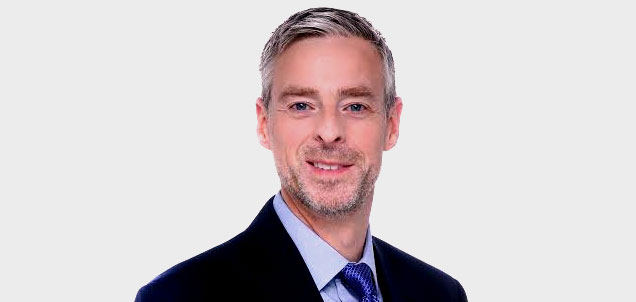
Tag: Jason Harrison

  • Smart, not Big Data: Jason Harrison


    In April this year, marketing services conglomerate WPP set up Gain Theory in India with an attempt to offer data analytics, technology solutions and consumer insight capabilities.  Gain Theory founding CEO Jason Harrison was in India recently where Pradyuman Maheshwari met him for an interview. Excerpts from the conversation:


    It’s been a couple of months since Gain Theory launched in India. How has it been so far?

    It’s been very exciting. We’ve had tons of interest and energy inside of WPP, which we’re a part of, as well as outside, from potential and existing clients, competitors, other parts of the industry and such. So far, it’s been really interesting and fun and busy.


    WPP is a large marketing services agency with loads of clients. But you’re obviously going beyond the WPP clients…

    Correct. While we have a few categories and clients that we’re targeting, we’ll work with any company that has the kind of marketing questions that we’re good at answering. Because we sit inside WPP, we have a few rules that we play by, so we try not to compete with our partners. Our preference is to collaborate wherever possible, and become very good at reaching out and putting together horizontal solutions across WPP, to be able to bring those to clients.


    But they’re already doing a fair bit of what is your core activity…

    Yes, that’s right. Gain Theory was set up inside of WPP’s media holding company, GroupM and we were set up as an independent data and analytics offering that would sit side by side with the GroupM media agencies. The point of doing that is so that we can be an independent analytics offering for clients who prefer separation between analytics and performance evaluation, and the actual planning and buying of media. We have existing clients for whom that’s an issue. So we only do the analytics and they work with a different media agency that may or may not be GroupM.


    You could also have a situation where a GroupM client is being serviced for analytics by the same agency. In a sense, then, you are competing with each other.

    We’re set up to not compete with each other. We try to not work on each other’s clients. Unless we agree in advance and work with one of our agency partners who has a client who has a unique problem that needs solving, they might bring us in on that. But in general, the focus and the emphasis is to work on separate clients.


    What’s the appetite for analytics? Would you say it has grown over the years?

    It’s strong and getting stronger. The marketplace is accelerating for a variety of reasons. There is increasing pressure on companies to better understand RoI in marketing, and there’s a variety of analytical players to help clients solve that problem. We’re seeing an inflection point in the industry that’s brought out by the availability of data. What we have now is an availability of measurement capability and just data points across the marking ecosystem that will make it easier for us to measure consumer response, the effect of campaigns and to use that foundation to use advanced analytics in a way that really hasn’t been possible until now.


    FMCG majors like Unilever or Procter & Gamble have always been doing a fair amount of analytics. But the real growth for you would happen when you have home-grown players who also get into that, right?

    Our source of growth will be both. We actually work for Unilever across 20 countries and do marketing, mixed modelling, data collection and advanced analytics for them in multiple categories across 20 markets. We’ll see growth from those types of clients. We’ll continue to work with Unilever and others like them. We’ll also want to work with anybody that is trying to solve the kinds of problems we’re good at solving, from any market where we’ve got a presence. The India market has tremendous potential and opportunity. Things are changing fast and there’s an appetite to try new things along with lots of innovation. Having a footprint in Bengaluru in the way that we do is tremendously exciting because we can potentially export some of the things that we’ve learned to work into other products and markets around the world.


    In the case of data analytics there’s a lot of confidentiality, so companies may not want to share that with you.

    I can’t speak for others but it hasn’t been a problem for us. We have data safe cards and privacy protections in place, and clients definitely put us under scrutiny on requirements around data security and privacy. And we’ve been able to measure up. We’re part of WPP, which is a world-class organisation that deals with the data of a variety of companies, sectors like e-commerce, banking and financial services, retail. We’ve been able to show successfully across WPP over a period of time, that we are good stewards of data. In order to get value out of the analytics that we do, we have to have sales data. If clients want the outcome of the analysis to help them answer questions, they’ll share the data with us.


    Marketing data, people don’t mind sharing, but, sales data is something that…

    We get sales data from clients every day. That hasn’t been an issue.


    Are there success stories you can share about the marked difference that you’ve brought to a media campaign?

    We have a bunch, actually! The work we’ve done for Unilever stands out as something that defines the way in which analytics can help a complex organisation address and answer questions around marketing tactics, pricing etc. Although Gain Theory has been [in India for] only five weeks old, we’ve been around for a while in the UK and US. We’ve combined around 50 years of having done this. There’s lots of history, maturity, capability that’s locked up in the company and under the Gain Theory banner.


    What about talent? Are you able to attract top quality talent?

    Certainly talent is a critical success factor for our business. Real good talent is real hard to come by. I think, this market is full of really good talent. So, we have some amazing super smart people in the India market and my hope would be actually, for us to continue to acquire…


    Lastly, what are your targets and plans for growth?

    Our plan is to grow, knowing the marketplace and the energy and the number of clients out there trying to solve those problems. Our hope is that our story will resonate and we will get involved in lots of client conversations. We have a good pipeline right now and hopefully, in some time, we’ll have gotten bigger.


    First appeared in dna of brands on June 22, 2015


  • #ZeeMelt15: Multiple screens, many needs

    By Labonita Ghosh


    Digital is mainstream

    Adam Ostrow, Chief Strategy Officer, Mashable

    “In 2015, digital culture is the mainstream culture,” says Ostrow. Statistics show that the size of the online market has quadrupled in the last couple of years, he points out. Among other curious findings is the fact that about 38 per cent of two-year-olds now use mobile devices. However, while ad revenues for TV and broadcast are rapidly shrinking, as per research by Google, about 56 per cent of digital ads are never seen. Ostrow points out a few key trends in the media and advertising space. Social media has become primarily a mobile activity, he says. People are turning to social platforms for news and entertainment. “To succeed in 2015, you have to be relevant in your feed, you have to be able to draw attention in seconds,” he says. Nowadays, on a social media page, posts from advertisers and any corporate house are competing with posts from friends and family. You have to find a way to stand out of the crowd, he says emphatically, adding: “In a world where everyone is a content creator, data provides your competitive edge.”


    Content no longer king 

    Joshua Black, CEO, GroupM

    “If you believe that content is king, you’re probably still stuck in the 80s,” says Black. “Content is not king. The days of capturing a mass audience through television are over. If you’re not in the right place, distributing your content to audiences where they are, when they want it and how they want it, you’ve failed.” Today, the consumer is in control; people no longer have to sit before their TV waiting for their favourite show. “People are also always on the go,” says Black. “They don’t live in their houses any more. They live in offices, in coffee shops or even outdoors.” So content has to reach them wherever they are. Consumers want content in a specific way too. Studies in the US have shown that large numbers of people report binge-viewing their favourite TV shows, sometimes for six or eight hours straight. Clearly, consumers want control over this sort of consumption. “Producing great content is not a strategy,” says Black. “It’s only a part of the strategy.” The bigger, more critical part is delivering it, in a custom-made manner.


    Too many screens

    Tom Goodwin, SVP Strategy and Innovation, Havas Media

    There was a time when the TV was the most important screen in people’s lives. Then came the laptop. Now there are tablets, mobile phones and digital watches. A host of screens are competing for our attention. So what is a marketer to do? The answer, says Goodwin, is not to make ads smaller; but to “reimagine advertising for the future not by the size of the screen, but by the richness of data all around us.” Indeed, marketers will also have to keep some other things in mind. While the phone has become a gateway to everything, it will continue to become a thinner, more personal web experience. Moreover, the debate is no longer about digital versus traditional marketing; it’s just the modern world one has to cater to. Similarly, it’s no longer TV versus video; it’s just about video being viewed on multiple and different screens. “A whole generation of people will grow up with no concept of what it is to go offline,” says Goodwin.


    TV is a second screen

    Huib van Bockel, Marketing and (Social) Media Expert, The Social Brand

    Just as there is a whole generation that might never know what it’s like to be offline, there is likely to be a whole generation that will never know what a TV commercial is. Huib van Bockel has actually glimpsed such a future. On a recent vacation, van Bockel sat his kids in front of a TV to keep them occupied. After some time, his six-year-old daughter came rushing to him to say the ‘film’ they were watching was bad one because it had a man who was only talking about toothpaste. van Bockel explains that children today (his included) are so used to TiVo, provisions like TVadblocker or ad-less channels like Netflix that a whole generation might grow up never seeing a TV commercial. And that will pose a new challenge to traditional marketing. “Online has already or will soon pass TV,” says van Bockel. “Unlike an earlier time, the television is now your second screen. Your mobile phone is your first. There is no longer an ‘audience’ waiting for your message.” Consumers will decide, with just one swipe of their mobile screen, if they like or dislike a product. So brands have literally one second to grab their attention.


    It’s all about the moments

    Parminder Singh, Managing Director for SEA, India & MENA, Twitter

    Singh feels the important thing that marketers need to worry about today are the changing rules of customer engagement. After all, the mobile phone is less of a voice device today and more of both a content provider and a content creator (even when you take a selfie and upload it, it counts as content). According to Singh, in 2015, there are eight million connected devices. By 2020, this figure is estimated to grow to 50 billion. “We are in an age of digital Darwinism,” says Singh. “Only those who are adaptable to change, will survive.” Singh does provide solutions, too. He says there are at least two ways to improve engagement. First, to find the relevant moments, and then to create great content around those moments. “Brands don’t just have target markets any more, they have target moments,” he says. As a Twitter study shows, people tweet a lot during the Oscars or the World Cup, but they also tweet about special “moments” during their day, like the sunrise or a special meal.


    Mobile is the future

    Tomi Ahonen, Author and consultant

    The average smartphone owner looks at his or her phone at least 221 times a day, says Ahonen. He should know; among other things this long-time observer of the mobile industry has written 12 books on the subject exploring practically every aspect. “The mobile industry is worth 1.6 trillion dollars [as of 2014],” says Ahonen. “It is as big as the FM radio, internet, personal computers, and television and landline business combined. And its only 35 years’ old. While all of the other media continue growing, mobile is the future.” Indeed, there will be a ‘grand convergence’ of other industries with mobile, says Ahonen. “We all know that media is merging with the internet, which in turn is merging with advertising, which is then merging with mobile,” he says. “In all, some 17 industries will eventually land in the mobile space.” That is, they will find ways to do business on the mobile platform. “And the golden age of the mobile is only now starting,” says Ahonen. So what should marketers do? Jump on the mobile bandwagon, of course, with creativity and imagination. “But don’t spam and don’t spy,” says Ahonen. “Opt in to serve your customers better.”


    Navigate well through fragmentation

    Martin Sorrell, CEO, WPP Plc

    Sir Martin has no doubt that mobile phones and mobile content will become increasingly more important. At the same time, so will data (“Big Data is just a sexy term that trips lightly off the tongue”). So what can agencies do to keep pace? “We’re doing a lot to stimulate creativity and programming to various kinds, including lot of native advertising and sponsored content for mobile,” says Sorrell of WPP’s initiatives. But this will only get more challenging, he cautions. Digital today comprises about 10 per cent of the market. But as it grows, the market will get more fragmented. The role agencies will then have to play is to integrate the various kinds of media and lead their clients safely through the fragmentation jungle in a safe and coordinated way. Shouldn’t be too difficult for Indian agencies, however. Sir Martin believes India has the best talent in the world in the A&M sector, and that this will always be the case.


    Need ‘wide’ data, not Big

    Jason Harrison, Worldwide CEO, Gain Theory

    In this session about what keeps marketers up at night, Harrison said he found a few common ‘pain points’ in this group. They often find themselves swamped by data, which can be confounding; They work in a field which is replete with jargon and terminology, whereas it needs to be less so and more simplified; They often have to deal with inconsistent answers that they receive to questions and findings, and – the worst one – everything is about speed. That is, everyone feels the need to get faster and smarter insights. The last point, in particular, can be most challenging, says Harrison. “The reality of data is that it has created expectations among marketers that we should all be able to make decisions more quickly and effectively to grow our brand,” says Harrison. The fact, however, is that Big Data – that magical thing that everyone is talking about – is a misnomer, according to Harrison. “What we need to solve a problem is ‘wide’ data,” adds Harrison.


    Humanise the data

    Pele Cortizo-Burgess, Chief Media Strategist, MEC

    Cortizo-Burgess is a man with a mission. He wants to change what he believes is a globally-prevalent idea, that when it comes to various aspects of marketing, media people are always given the last 10 minutes of a meeting. In other words, the least important place in the discussion. “Media is treated as a backroom practice,” says Cortizo-Burgess. “[Brands feel] we need to create the idea first, and then we will invite the media people to come and take it forward.” Whereas the media function is extremely important because “the role of the media is to insert the brand and its products into the moments when people really need an ally,” says Cortizo-Burgess. But to be effective, the media team must be able to humanise data points; they must create insights that can ‘incite’ a change in thought or behaviour and keep connecting and reconnecting the dots till they have a better understanding of the market. “Don’t ask what’s the digital strategy,” says Cortizo-Burgess, in a refreshing change from the current preoccupation of marketers to create content for smaller and more multiple screens. “It’s all about storytelling.”


    (with inputs from Dyanne Coelho)