With apologies to none at all
By Vikas Mehta
 I call my column with apologies to none. But this time, I begin with an apology. This column is actually a mish mash of many things. State of the economy, inflation, urban Bharat consumer, children as consumers… you get the picture.
What prompted me to write this blog was two trips that I have made in the past 2-3 weeks, between Dehradun and Delhi & back. By road in a bus and by train.
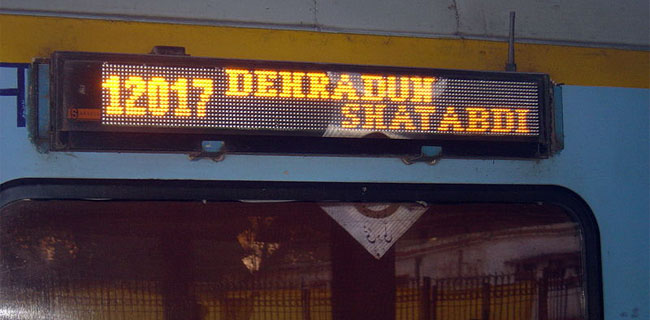
I have always believed that marketers must travel by train to understand the Indian consumer and this could not have been more true than in the recent trips of mine. I travelled in a Volvo, in Shatabdi and in Jan Shatabdi too. So, let’s dive in.
While travelling in the comfort of a Volvo which does Delhi to Dehradun, a distance of around 250 kms in 4-4:30 hours non-stop, thanks to expressways and toll roads, I entered into a conversation with an economics student who was in his final year. He had bought some packaged namkeen and was pretty sore about the price increase of these in the past year. Being a economics student he was throwing around the word inflation like free popcorn. I couldn’t stop myself from asking him the reason for inflation. He immediately threw demand supply curve at me saying how supply has been constrained due to lockdown and shortage of raw materials and oil due to the Russia Ukraine war.
But, India has actually benefited by the war in terms of crude oil prices. We are buying record quantity from Russia almost about 10% of our need, compared to less than 1% pre war. That’s why fuel prices in India have remained constant for almost a year now. I countered.
That left him stumped. Like a typical Indian student who understood his theory, the practical aspect of his understanding was not upto the mark.
And what about the demand, I asked him. After all those lock downs and production sector taking a hit, rise in unemployment in sectors like tourism and hospitality, now also in IT, how has the demand increased, I enquired.
By now, he was totally confused. But to give credit to him, he wanted to know. I patiently explained to him how subsidies and dole outs that governments all over the world, including India, gave out, left people with unexpected money which they could not spend, then. So, when the pandemic subsided all that money created an unprecedented demand which the lockdown induced supply constraints, specially in China, could not meet upto. In India it was not just the food subsidies that was given to almost 80 crore people, which still continues to be given, but also sectors like government employees, who had no pay cuts, IT, who did brisk business and more, that were laden with money, which then resulted into a booming demand. Imagine, even a daily wage earner, if he was spending 2000 rupees a month on food, he was now spending only about 20% of that. Rest, even he splurged in his own little way.
And this point was proven in my Jan Shatabdi train trip. I was sitting in the ordinary chair car (ok, I confess. I did want AC but it was not available), and a family of four travelling from Ghaziabad to Meerut was buying popcorn, chips, peanut packs with abandon. I got into conversation with them. The man was not too keen to talk about what he does but suffice to say that he had no fixed job and the family was recipient of government food largesse. And he was not alone. From what I could see, the IRCTC vendors were making hay. Except tea and soft drinks, almost nothing was available for less than Rs 50, yet the vendors were selling like crazy. I spoke to a vendor during the journey and he said that the revenue from selling packaged food has definitely gone up from pre Covid days. Inspite of price hike, everyone was buying more according to him.
I spoke to the family at length. The wife seemed very upset with food prices. Edible oil, masalas, dals, flour, milk, bread, even vegetables she argued were getting more expensive. Hearing her rant two three more people joined in. They were all sailing in the same boat and were very thankful for the subsidised ration they were getting. It was very clear why the government is reluctant to roll back the subsidies. Specially now, with inflation at its peak and elections due in 9 state assemblies.
But how can they afford to buy packaged food like chips etc was my natural query. It’s part of the household budget, I was informed. I refused to accept or believe it. But they were adamant. 3-4 chip packets (local, cheaper ones) a week, Kurkure or namkeen bhujiya, or cheeselings etc was part of buying pattern. And it was children that drove it. Pester power at play. The children in turn were under peer pressure. It was a buying behaviour cycle which seem to have burdened the lower income strata too.
I asked questions about health and insurance too. The belief was simple. If all these packaged goods were unhealthy, they would have been banned. Why are Americans also eating them if these are unhealthy, chirped a father with a toddler in his arms. Everyone nodded sagely and I quickly moved onto the question of medical costs and insurance.
All prefer to go to government hospitals as they are cheap, even if it meant having to take a day off from work as these places are crowded. More crowded than before, I was told, as private doctors have raised their fees by more than 50-60%. And they had no insurance because they saw it as one, a regular payment which they were not sure of and two, a waste of money if nothing happened to them. I was relieved when one disputed the second point saying it was not a waste but safety as chances of ill fate was high (exact words translated into English). But he too was worried if he can afford to pay regularly as required.
This was a very different view than what I encountered while talking to a “businessman” in Shatabdi. He had bought not just LIC policy but had also bought a family health policy from his LIC agent for United India Mediclaim. 5 lakhs for a family of four he told me proudly. “We were lucky that Covid did not impact my family” he said. “But I have seen what happened to some families and I have learnt a lesson.” This guy was from NCR region and I could see the Urban India and Urban Bharat divide here.
On all the trips I was not surprised at seeing kids, from four years and above, engrossed with games on mobiles. The parents were not bothered and in fact were relieved that the children were not being a nuisance. Unfortunately, it looked like that snack food and mobile phones had taken up child rearing duties even in the lower strata household. Almost all children had realised that tantrum and pester power could get them either the mobile phone or their favourite snack.
But what was definitely a revelation to me was the smartphone ownership. The wife’s smart phone was usually shared by the children. Even on the journeys all children using the mobiles were using the mother’s smart phone. The father was busy with his own. Gender discrimination?
The economics student had been very bullish about the stock market. And he had mentioned to me that he will be investing in the Adani Enterprises FPO. Unfortunately, that conversation was more than two weeks ago. And a lot has changed in the two weeks. Maybe, I need another road/train trip to understand what’s the Urban Bharat take on all this Adani vs Hindenburg issue. The Urban India take we see on social media. So, anyone game to join me?