Tag: James Murdoch

  • What’s the future of Rupert Murdoch’s media empire?

    By Naomi Cahn and Reid Kress Weisbord

    Conservative media titan Rupert Murdoch is making news again – this time, with a secretive effort to change an irrevocable trust. That trust has important ownership interests in both Fox Corp. and News Corp., so it affects broadcast news as well as The Wall Street Journal and other publications.

    Under the current terms of the trust, upon Murdoch’s death, his four oldest children – Lachlan, James, Elisabeth and Prudence – will have “an equal voice” in determining the future of the news empire.

    But as The New York Times recently reported, the 93-year-old Murdoch has been trying to alter the trust to ensure his oldest son, Lachlan, stays in charge of his media properties. The legal dispute played out behind closed doors for months, and it might have stayed there if the Times hadn’t obtained a sealed court document shedding light on the conflict.

    Murdoch is calling his efforts to change the terms Project Harmony, reportedly out of the belief that doing so would head off any intrafamily wrangling.

    The effort to change the trust is so secretive that a spokesperson for the Nevada probate court where the proceedings are occurring stated that all information related to the case is confidential, based on a court order.

    As law professors who teach trusts and estates, we are intrigued by the publicity surrounding a somewhat obscure method for holding property. Trusts are private documents that don’t get filed in court unless there’s a dispute.


    All about trusts

    Trusts are an estate planning technique for giving away property. In our law classes on trusts and estates, we explain how they can be useful for minimising estate taxes, protecting assets, making charitable contributions, avoiding probate and, in certain circumstances, qualifying for government benefits.

    Unlike making an outright gift and transferring full ownership to someone else, the donor of a trust – called a “settlor” – transfers legal control of the gifted property into the trust.

    The people who hold the legal title to the property in the trust are called “trustees.” They manage the property and make decisions about how and when to distribute funds to the beneficiaries, who are the actual recipients of trust property.

    Trustees are fiduciaries, which means they are under strict legal requirements to manage the property in the sole interests of the beneficiaries. If the property in a trust includes shares in a business, then trustees have the power to exercise any voting rights for those shares.

    Trusts allow donors to prolong their control over their property by appointing trustees to carry out their objectives after they die or become incapacitated. Trusts are useful when giving away complex business interests that require extensive supervision and sophisticated decision-making, all of which can be administered by trustees according to the settlor’s preferences stated in the trust.


    The view from Nevada

    In Nevada, where the Murdoch case is playing out, a settlor can’t unilaterally change any trust’s terms unless the trust itself specifically reserves the right to do so. In other words, trusts are presumed to be irrevocable, or irreversible.

    But even when a trust is irrevocable, there are still ways to change its terms.

    In any state, including Nevada, irrevocable trusts can be altered by court order if the settlor and all beneficiaries agree to the modification. In some cases, trusts can also be modified without court approval through a process known as “trust decanting,” which can be performed by the trustee without the consent of settlors or beneficiaries.

    Nevada is unusually permissive in allowing settlors to maintain secrecy about the trust, even with respect to trust beneficiaries. In most states, trust beneficiaries have much broader rights to receive financial information about the trust.

    Nevada also explicitly protects confidentiality in trust proceedings by law, even without a court order. Indeed, having reviewed thousands of trust cases from courts around the country, we find Nevada to be especially protective of the donor’s interests. That may be one reason the Murdoch Family Trust is located there.


    The stakes of the dispute

    The Murdoch Family Trust holds a variety of types of property, including a family farm in Melbourne, Australia; the Murdoch art collection; and shares in Disney, News Corp. and Fox. The property in the trust is managed by a corporate trustee, Cruden Financial Services.

    The trust terms at the center of this dispute appear to stem from Murdoch’s 1999 divorce from his second wife, Anna. She negotiated an agreement to ensure that their three joint children – Lachlan, James and Elisabeth – along with Prudence, Murdoch’s daughter from an earlier marriage, would inherit News Corp.

    The trust document sets out what will happen to ownership of the media assets upon Murdoch’s death: His voting share will be transferred to the four oldest children. That could lead to a scenario in which the children are fighting over the future of the media assets. Fear of that outcome seems to have motivated Rupert Murdoch to seek this change to the trust.

    Although Lachlan is now the chair of News Corp. and executive chair and CEO of Fox Corporation, the children have already aired some of their disagreements over the political direction of the media companies. For example, James and his wife have criticized Fox’s move to the right. Murdoch may well see this as a threat to the company’s business model, which caters to a conservative audience.

    Even though Murdoch’s trust is irrevocable, it reportedly “contains a narrow provision allowing for changes done in good faith and with the sole purpose of benefiting all of its members.” Rupert Murdoch’s argument is that by taking away governance rights from James, Elisabeth and Prudence, Lachlan will be able to manage the family business more profitably, thereby increasing the value of trust assets for all beneficiaries.

    Because some of Murdoch’s children object to his proposed governance changes, Murdoch appears to be relying on the power he retained as settlor to modify the trust in good faith for the beneficiaries’ benefit.

    A court will decide later this year whether the changes really are in good faith; If so, then Murdoch will be able to change the trust as he would like so that Lachlan can continue to control the family business.

    The saga shows the ways that trusts can protect a family business. But when the next generation lacks a shared vision for the future of that business, even irrevocable trusts can’t ensure family harmony.The Conversation


    Naomi Cahn, Professor of Law, University of Virginia and Reid Kress Weisbord, Distinguished Professor of Law and Judge Norma Shapiro Scholar, Rutgers University – Newark. This article is republished from The Conversation under a Creative Commons license. Read the original article.
  • So will Viacom18 be the New Star?


    By Our Staff


    1,35,00,00,00,000.


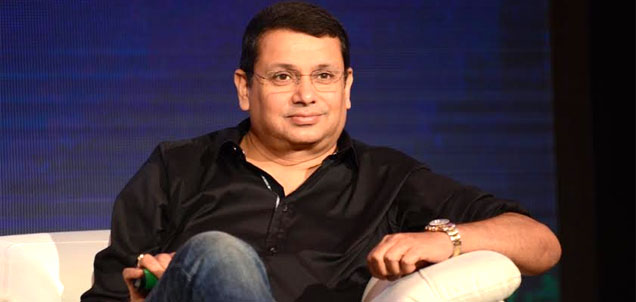
    Phew that’s the number representing the investment that James Murdoch and Uday Shankar are making in Viacom18.


    The contours of the deal aren’t known at the time of writing. We don’t know what is the exact stake each party will hold, but Rs 13.5kcr is no small number.


    So is Viacom18 likely to be the new star, as veteran mediaperson and MxMIndia’s Das ka Dum mentor-columnist put it in the answer to our question of today (See Link)?


    It’s clear that the days of linear television are numbered. At least not in the form it is right now. Viewership of even regular entertainment, news and sports now happens via broadband. Yes, cable/DTH aren’t dead yet, but streaming is clearly where it’s all headed.


    And if there’s one person who can take some really bold decisions in the space it’s Uday Shankar, the former Disney and Star boss.


    So, as our report of last evening said: Reliance and Viacom18 have announced a strategic partnership with Bodhi Tree Systems, which is a platform of  Murdoch’s Lupa Systems and Uday Shankar, to form one of the largest TV and digital streaming companies in India.


    Bodhi Tree Systems is leading a fund raise with a consortium of investors to invest Rs 13,500 crore in Viacom18, to jointly build India’s leading entertainment platform and pioneer the Indian media landscape’s transformation to a “streaming-first” approach. Viacom18 owns and operates the suite of Colors TV channels and OTT platform, Voot.

     

    Reliance Projects & Property Management Services Limited, a wholly-owned subsidiary of Reliance Industries which has significant presence in television, OTT, distribution, content creation, and production services, will invest Rs 1,645 crore. In addition, the popular JioCinema OTT app will be transferred to Viacom18. Paramount Global (formerly known as ViacomCBS), a leading global media and entertainment company which owns CBS, Showtime Networks, Paramount Pictures, Nickelodeon, MTV, Comedy Central, BET, Paramount+ and Pluto TV will continue as a shareholder of Viacom18 and will continue to supply Viacom18 its premium global content.


    This is interesting as there is an additional investment from Reliance in the form of Rs 1645 crore and the JioCinema OTT app


    Bodhi Tree Systems, a newly formed company formed by Lupa Systems Founder and CEO James Murdoch and Uday Shankar, the former president of The Walt Disney Company Asia Pacific and former Chairman of Star and Disney India, will leverage the partners’ shared track record of building iconic businesses and shaping the media landscape in India and globally. Qatar Investment Authority (QIA), the sovereign wealth fund of the State of Qatar, is an investor in Bodhi Tree Systems. The finer details of the transaction is likely to close later the year (six months and is subject to necessary government approvals.

     

    Meanwhile, in the offices of Viacom18 in Mumbai, there is, as one staffer put it, cautious optimism. Optimism as it’s clear that the move will energise the organisation in more ways than one, and caution because the new Big(g) Bosses are no newbies to the business. They’ll be surely having a view on how things will be done.


    But first they need to know what the investment would mean for the company and the various businesses that it runs.


    For now, we could well see the rise (uday) of a new star!


  • He’s back! Uday Shankar teams up with James Murdoch to invest Rs 13.5kcr in Viacom18

    By Our Staff


    It’s official. Reliance and Viacom18 have announced a strategic partnership with Bodhi Tree Systems, which is a platform of James Murdoch’s Lupa Systems and Uday Shankar, to form one of the largest TV and digital streaming companies in India.

    Bodhi Tree Systems is leading a fund raise with a consortium of investors to invest Rs 13,500 crore in Viacom18, to jointly build India’s leading entertainment platform and pioneer the Indian media landscape’s transformation to a “streaming-first” approach. Viacom18 owns and operates the suite of Colors TV channels and OTT platform, Voot.

    Reliance Projects & Property Management Services Limited, a wholly-owned subsidiary of Reliance Industries which has significant presence in television, OTT, distribution, content creation, and production services, will invest Rs 1,645 crore. In addition, the popular JioCinema OTT app will be transferred to Viacom18. Paramount Global (formerly known as ViacomCBS), a leading global media and entertainment company which owns CBS, Showtime Networks, Paramount Pictures, Nickelodeon, MTV, Comedy Central, BET, Paramount+ and Pluto TV will continue as a shareholder of Viacom18 and will continue to supply Viacom18 its premium global content.

    Bodhi Tree Systems, a newly formed platform between Lupa Systems Founder and CEO James Murdoch and Uday Shankar, the former president of The Walt Disney Company Asia Pacific and former Chairman of Star and Disney India, will leverage the partners’ shared track record of building iconic businesses and shaping the media landscape in India and globally. Qatar Investment Authority (QIA), the sovereign wealth fund of the State of Qatar, is an investor in Bodhi Tree Systems.

    Speaking about the partnership, Mukesh D Ambani, Chairman & Managing Director of Reliance Industries, said, “James and Uday’s track record is unmatched. For over two decades, they have played an undeniable role in shaping the media ecosystem in India, Asia, and around the world. We are very excited to partner with Bodhi Tree and lead India’s transition to a streaming-first media market. We are committed to bringing the best media and entertainment services for Indian customers through this partnership.”
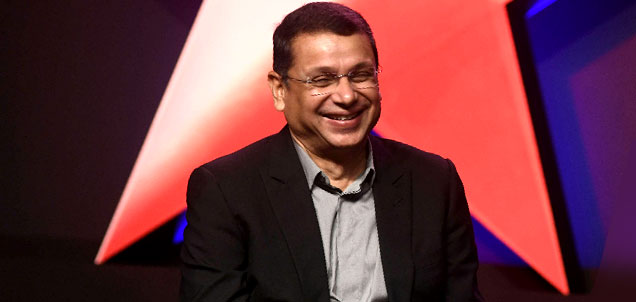

    Added Murdoch and Shankar: “We could not be more pleased to announce our new partnership. Our ambition is to leverage technology advances, particularly in mobile, to provide meaningful solutions to meet everyday media and entertainment needs at scale. We seek to reshape the entertainment experience across more than 1 billion screens.”

    The transaction is expected to close within six months and is subject to closing conditions and requisite approvals.

    Cyril Amarchand Mangaldas and Khaitan & Co provided legal advisory and documentation support to RPPMSL and Viacom18. PWC and BDO provided independent valuation of the Jio Cinema business and Viacom18; Citi and HSBC acted as financial advisors to TV18 and RPPMSL respectively. AZB & Partners was the legal advisor to Bodhi Tree while EY provided diligence services to Bodhi Tree. JSA was the legal advisor to Paramount Global.


  • Sweet news on Sankranti. Uday Shankar joins James Murdoch to grow Lupa Systems

    By Our Staff


    So where’s Uday Shankar going? That was the question everyone seemed to ask when he announced his decision to move from Star/Disney last year? But the two big rumours were him joining former Star India owners – the Murdochs and Mukesh Ambani’s Jio.

    Some meetings with the Jio bosses are said to have happened, but we know we haven’t heard the last on this from the Reliance Industries headquarters.

    In the meantime, Shankar took charge as the FICCI big boss, and we do know that he wouldn’t have assumed that position without something major that we was going to be doing.

    So here’s News #1:

    CEO James Murdoch and and the former Chairman and CEO of Star India and President of Walt Disney Asia Pacific, have announced that they are forming a new venture to explore technology and media opportunities in emerging markets.

    The new partnership reunites Murdoch and Shankar, who worked together building Star India into the region’s largest media company, prior to its sale as part of the merger of 21st Century Fox and The Walt Disney Company.  Star now reaches 600m+ viewers every week and operates Hotstar, Asia’s leading OTT platform.

    Said Murdoch in a statement: “After two decades of working in India and the region, at Star and more recently at Lupa Systems, it’s great to be entering into a renewed partnership with Uday.  Our collaborations over the years have been immensely rewarding for consumers, our various shareholders, and our colleagues. I’m very pleased to be renewing that partnership now.  As connectivity continues to accelerate and expand across South Asia and the whole region, new opportunities for innovation, across consumer sectors, will multiply.”

    And this is what Shankar said: “James and I enjoyed a great partnership at Star and I am enormously excited to be in partnership with him again.  At Star, we had the great benefit of working with the best and brightest Indian talent, combined with global vision and a desire to disrupt the old order. Digital Technology promises to transform the lives of many millions of people in this part of the world and I have every confidence that we can harness technology, enterprise, and tremendous talent to create a great business that is also great for society.”

    The communique misspelt Shankar’s name as Shakar, which perhaps is appropriate. Shakar is Sugar in Hindi, and this is a sweet piece of news for media watchers in India.

    “Lupa Systems set up its India presence less than two years ago and has already created a promising portfolio of technology investments. Partnering with Uday, to build ambitiously for the long term, will take us to another level,” said Nitin Kukreja, Managing Director of Lupa Systems India. Kukreja, if one remembers, was with Star India/Disney and was the boss of Star Sports.

    What’s News #2. Like you, we too are waiting.


  • Stars shine on Uday Shankar. To helm 21st Century Fox Asia


    By A Correspondent


    It’s a piece of news that every Indian media and entertainment industry person will be proud of. Or envious of. 21st Century Fox, the parent company of Star India, and Rupert Murdoch’s entertainment empire has announced the elevation of Star India Chairman and CEO Uday Shankar to President, 21st Century Fox, Asia. It is effective immediately. Shankar will continue to lead Star India. This, it may be noted, is an additional responsibility.


    It is interesting that the news comes even as discussions with Disney have reached a fairly advanced level for the sale 21CF (as 21st Century Fox is better known). In fact, according to some observers, the deal with Disney could well be inked before the year ends.


    But there is more reason then this ‘Mere Bharatiya Mahaan’ sentiment. Shankar has possibly none of the makings of one of India’s Top 5 media conglomerates. He is an MPhil graduate from the Jawaharlal Nehru University (JNU). He started out as a political journalist, worked in the print media for a bit and finally helming the editorial team at AajTak and Headlines Today. He was later appointed CEO and Editor of Media Content and Communications Services, the holding company of Star News (now ABP News).


    And then, in a move that surprised many, except those who knew him very well, he was appointed CEO of Star India. The network was doing well, but staring at competition from existing networks and with two of its top executives launching general entertainment channels.


    Shankar has been at the helm of Star India since October 2007 and has guided the transformation of Star into a diversified media company, leading initiatives in distribution through Media Pro, movies through Fox Studio, regional television through Asianet, and sports, following 21CF’s (then News Corp) acquisition of its joint venture with ESPN in 2012. His tenure has been marked by persistent leadership in television through innovative programming and investments in leading technologies, both of which have set the benchmark for the industry. So notes a 21CF communique. But we don’t need to be told that. The fact is that in the last decade-odd, Uday Shankar stands tallest amongst M&E professional captains and has led the organisation with entrepreneurial zeal.


    He has also led industry associations and has ensured that it follows the path of professionalism. He has taken on the government and TRAI when he has needed to and been a strong ally of successive governments in its various programmes.


    In his new role, Shankar will lead 21st Century Fox’s (21CF) video businesses across all of Asia, including Star India and Fox Networks Group, and work closely with 21CF leadership on key strategic initiatives in the region. He will continue to serve as Chairman and CEO for Star India, a key driver of 21CF’s growth and one of India’s largest media and entertainment companies, comprising 60-plus channels across entertainment and sports and eight languages, as well as leading digital video platform Hotstar.


    Said 21st Century Fox Executive Chairman Lachlan Murdoch and CEO James Murdoch: “Uday’s new role will enhance our strategic focus across all of Asia and enable us to further capture opportunities, building on the transformation Star India has driven in our most important growth market. Under Uday’s leadership, our India business has firmly established itself as a world-class asset with durable businesses across entertainment, sports, satellite distribution and OTT. His strategic vision has put 21CF at the forefront of content and distribution in one of the world’s fastest growing economies, and we are very fortunate to benefit from Uday’s expanded leadership at a global level.”


    Zubin Gandevia, President of Fox Networks Group Asia (who old timers will remember for the cable business he ran in Mumbai), will continue to oversee video brands across 14 markets and now report to Shankar under this realigned regional structure. 21CF’s film business in Asia will continue to report directly to Stacey Snider, Chairman and CEO of 20th Century Fox Film.


    Meanwhile, for journalists across the country, whether they are from Patna or Pune, Mumbai or Meerut, the rise and rise of Uday Shankar speaks a lot for how hard (and smart) work always works. Even in the big, big world of media and entertainment.

    A previous version of this story had an incorrect headline. Dunno how it happened, but it did. VIBGYOR-faced 🙁


  • Murdoch inquiry: the murky side of media highlighted

    By Ranjona Banerji


    The questioning of Rupert and James Murdoch in the Leveson inquiry into media ethics in the UK was undoubtedly the highlight of this news week. Both the BBC and CNN showed major portions of the inquiry live and it was fascinating to watch these two very powerful men being closely questioned on their closeness to British politicians as well as on the way they ran their business.


    James Murdoch followed the line he had had at the earlier Parliamentary inquiry after the phone-hacking scandal broke which led to the closure of The News of The World: he remembered nothing. This is, even though he had been the recipient of a chain of emails which explained what was going on. Murdoch the younger claimed he had not read any of the emails.


    Two days were devoted to Rupert Murdoch who seemed far sharper than he had been during the Parliamentary inquiry. However, he also claimed to remember nothing, in spite of there being sufficient documentary evidence to prove his various meetings with various British prime ministers. Murdoch claimed that politicians always wanted to meet editors and proprietors but that did not mean that he wielded any influence.


    However, by the end of the second day of questioning, Murdoch admitted that there had been a cover-up of the practice of phone-hacking in his newspapers, which went at least up to the editor and beyond. He apologised and called it a failure.


    The venerable and respected Harold Evans, the one editor of the Times who Murdoch sacked, was scathing in his criticism of Murdoch’s testimony and his supposed inability to remember anything significant at all, in his piece in the Guardian on Thursday.


    In the backdrop of this questioning were the revelations that a close aide of British culture secretary Jeremy Hunt had been leaking secret information to the Murdoch organisations about the BSkyB deal, which has since been scuttled. But with both sides of the political spectrum in Britain being in the pockets of the Murdochs, finger-pointing is going to be a little difficult. In Prime Minister David Cameron’s favour is the fact that he commissioned this judicial inquiry.


    The parallels with India are fascinating, if at the least because media tycoons here remain shady figures, lurking in the background, pulling strings and manipulating policies. Also, despicable as phone-hacking was, it is hard to remember the last time any newspaper really spent any effort on news-gathering. We, in India, follow the other Murdoch model – use PR agencies to get everything done.


    Needless to say, Indian TV was not much taken with the Murdoch case, although newspapers gave it the mandatory space on their international pages.


    * * *


    The one story which got almost no space in the Indian media, in spite of the verdict being shown live on the BBC and CNN on Thursday, competing with Murdoch, was the trial of Charles Taylor. The former Liberian president was charged with war crimes for his role in the brutal and bloody war for power in the neighbouring Sierra Leone. Although the film Blood Diamonds got considerable media attention in India, the man who was part of that horror story, was obviously not worthy of too much space. For example, The Times of India had nothing, the Hindustan Times, a brief and The Indian Express a story on the international pages.


    * * *


    Instead the Indian media had absolute hysterics about Sachin Tendulkar accepting a nomination to the Rajya Sabha. One would imagine this was the first time anyone had ever accepted a Rajya Sabha nomination (12 distinguished persons are appointed every term) for all the hot air expended on TV. Newspapers also saw this as headline news.


    So far of course no one knows whether Tendulkar will be a good, bad or indifferent Parliamentarian. Therefore, tedious before-the-fact discussions and camera-inspired rage are pointless. Much time was spent on why Tendulkar was joining politics. It occurred to no one that being nominated to the Rajya Sabha is not “joining politics”. That would be when Tendulkar fights an election. Many nominated members gone back to their distinguished lives after their terms finished.


    The only benefit of such discussions is that you see just how stupid some people are.


    * * *

    Sometimes I find myself in full agreement with Press Council chairman Markandey Katju that 90 per cent of Indians are fools. And most of those fools find their way to TV studios.


  • Freaking News: Mamata Banerjee, media’s favourite whipping girl

    By Ranjona Banerji


    This was an unexpected find: I had assumed (and from past experience) that the Hindustan Times would be strongest in local coverage amongst the national dailies in the national capital, given that New Delhi is (or was) its stronghold. But while HT does score on nitty-gritty local happenings, its biggest rival, The Times of India, is still going strong as far as blanket coverage of all news is concerned.


    This should be troubling for Hindustan Times because although it has the advantages of first choice as far as old-timers are concerned and its long history with the capital, its rival appears to be hitting where it hurts the most – with content. TOI and HT have been running neck and neck in Delhi for years, with both claiming ownership of the city at different times but conventional wisdom usually gave HT the edge. Now, I wonder.


    * * *


    James Murdoch has had to step down from the chairmanship of News International UK and is now being called a “shadow man with no role in the empire” (Sydney Morning Herald). This is of course the outcome of the phone-hacking scandal involving not just the defunct News of the World but other titles in the Murdoch stable of newspapers. Whether Junior’s moving aside is going to change company policy is another matter. Just as paid news and Medianet and its variations remain giant ogres for the Indian media to deal with, the dodgy practices of News Corp’s newspapers and journalists are the core problems. Removing James may not therefore be enough. As we have seen over the past year, the connections between the Murdoch empire and subsequent governments in the UK run deep and the favour system appears to have corrupted everyone, even the once highly-admired Scotland Yard.


    * * *


    The Mamata Banerjee government in West Bengal finds itself under greater media scrutiny with every passing day. The tendency of the chief minister to blame every event on the previous Left government and turn every criticism into a conspiracy theory has only made matters worse. Perhaps she needs some better media advisers and spin doctors? Right now, she’s the media’s favourite whipping boy (girl) and unfortunately for her, she, her ministers and her party only make matters worse every time they open their mouths!


  • Peter Mukerjea: Rupert & Son

    By Peter Mukerjea


    So, it’s finally happened that James, or JRM as he is known within the company, has stepped down. I’d said that he should (see Firstpost.com article) and for whatever it’s worth, I’m glad that he has.


    Enough has been written and no doubt more will be written about the rights and wrongs of the people involved in the entire phone hacking case and we will never know who will finally go to jail for the crimes that are alleged to have been committed.


    But that would be looking back and surely it’s much more fun looking forward and trying to gauge what’s about to happen next. If Rupert is true to his word, JRM will now be spending more time on international operations and on the TV business at large . Now that leads me to suggest that he should for Newscorp’s sake spend at least 75% of his time in India looking at new business opportunities that exist in the country. STAR experienced it’s highest ever growth in it’s business under JRM’s watch when he was the CEO in Asia. That’s not a coincidence, I can assure you. Conversely, STAR experienced it’s lowest growth when JRM left the Asia region and handed it over to pixies in Hong Kong who had no clue about India. For example, the lady who was given the baton by JRM had never visited India ever in her life. Strange decision, it has to be said.


    JRM, on the other hand, was a respected executive and was seen as a path-breaking scion of his father. And the fact that not everyone loved him was simply par for the course and to be expected. He was effective in reshaping STAR’s fortunes and turning a loss making company into a profitable one.


    Incidentally I continue to believe that none of the new channels that popped up in 2007/8 would have happened if Rupert had not taken his eye off Asia but he moved JRM to London to run SKY and with that opened up the gates for newcomers. Some channels failed to make the grade – 9X & Imagine for example, and others did well – Colors & 9XM for instance, but none of these should ever have been allowed to get started given the complete dominance that STAR had on the market. And all the people that went to run these channels, including myself , were almost all from STAR.


    Since then STAR has held up well, although after a wobbly start. Credit for which should be given wholly to JRM for giving autonomy to the current leadership in managing their business and most importantly cutting them loose from the Hong Kong intermediary, which was rightly cut to size.


    JRM’s big opportunity is now to push ahead with developing a range of new TV and other media products for the India market and enable it to grow speedily to create a very clear leadership position with plenty of blue sky space between the No1 and the rest. And only he can make that happen by physically being there and making the big decisions which would otherwise be lost in power point presentations between numerous layers of management.


    This would in turn spur ZEE and Sony and MTV and the rest to do the same and compete with each other and with the pace that STAR would have set for them. This will then collectively turbo-charge and accelerate the industry as a whole and taking full advantage of the economic growth that the country is experiencing. The next 10 years for the media business in India will be huge and despite the slowdown in the global economy the pace of growth will be better than almost anywhere else in the world.


    JRM once said “let’s make the best use of a crisis” or words to that effect and I think this is a crisis that has presented itself for just that opportunity. He has moved to New York from London but may be he should have a home in Mumbai too and really shake up the market. There’s tons to do with a very exciting future for a 40-year-old – like JRM, which regular or even above average executives will simply not be able to take full advantage of. They can at best take limited risk, if at all – but JRM can and he should.


    Will he or won’t he? Or will he slip in and out of the country quietly, once very few months and leave the big opportunity to the pixies once again? If he ends up doing that he will have missed a great opportunity to grow the business and also to get himself back up and be recognised as being one of the best TV executives in the world. After all, he is the son of Rupert.


    Although it started as a fortnightly column, Peter Mukerjea’s Media Mullings will now appear regularly on MxMIndia, but with no definite frequency.