Tag: Jaisurya Das

  • Jaisurya Das: Way to go…

    By Jaisurya Das


    Can’t fathom how a year went by since it was launched. There is so much to say about this journey that one really can’t encapsulate all this and take up the precious space of all our esteemed columnists… ahem ahem! Incidentally there is one such columnist who learnt that it’s probably the best thing that one can do with one’s life, working on a mentor column…


    I can’t but thank Pradyuman for giving me a unforgettable one year with ‘Dear MxM’ – our little column that has connected with students, professionals and media aspirants week after week.


    A journey of emotion, a journey of bonding and a feeling of living each of those lives that looked to us for a warm shoulder.


    From queries on tackling tough bosses to appraisals, to careers and shifts to new cities, we were at the receiving end of mail after mail from every corner of the country… actually, the globe!


    ‘Dear MxM’ – our little column has connected with students, professionals and media aspirants week after week.

    As is the MxMIndia belief, I shall not blow our own trumpet but only be a humble part of the team that created the country’s unique, razor-sharp, squeaky clean site for media and marketing.


    May Team MxM always be part of the hearts and lives of the media and marketing fraternity. Time for the bubbly now. Cut the crap and uncork, team! Heartiest congratulations, MxM!!!


    Jaisurya Das is Contributing Editor, MxMIndia. When we started, he led Xanadu Consulting Group as Chief Mentor and CEO, and later joined the Sakal Media Group as Chief Operating Office. He writes a weekly ‘Dear MxM’ column which is currently on its second seasonal break.


  • Jobs Not OK Please!


    By Johnson Napier


    If you’re among those contemplating switching jobs given growth constraints at your current place of work or just the sheer temptation to move on to a job more thrilling, you better think twice. Going by the reactions drawn from the Indian media and entertainment marketplace and from consultancy firms dealing with manpower issues, companies are in no mood to go on a recruitment drive, unless of course, there is a dire need for the same.


    With 2012 starting off on a sluggish note and with the crisis making a fresh comeback, the growth forecast for the media and entertainment sector is being questioned unabatedly by all and sundry: will media will touch the 12% ballpark growth figure that was estimated for year 2012. This in turn will dictate whether there are enough opportunities for brands and clients to go talent hunting or whether they’ll have to make-do with internal makeshift arrangements to handle extra responsibilities.


    But the prevailing sentiments definitely don’t appear inspiring on the jobs front, be it for clients looking to source great talent at the senior level or for those wanting to explore opportunities beyond their current realm. Explaining the current sentiment in the marketplace, Abha Kapoor, Executive Director, K&J Search Consultants that specialises in placement services for media executives reckons that after 2008-09, the M&E sector has become a lot more conservative in terms of both headcount and pricing. She observed, “The trend being observed currently is that mid-level people are being involved to do high-level jobs. There is also lack of funds coming in from P/E, venture capitalist firms into the sector. For example, our firm K&J is used to working for three start-ups simultaneously including mid- to CEO level. We’ve always had a television start-up, a radio start-up, an internet start-up but that’s because the money was coming into the sector. Right now that is not the case.”


    According to Ms Kapoor, this trend has led to a shift in paradigm. “First there was lot of chasing that was done for talent, and salaries too were high, but right now there is lot of talent that is available but the headcount is not that high,” she reasons. According to her, there are no new jobs being created and there are also not enough replacement requirements.


    Agreeing with Ms Kapoor’s observations is Pankaj Raj, Managing Partner, Search Value, a firm specialising in placement services for senior media execs. “Earlier, people were not willing to accommodate new talent due to financial constraints but right now they are saying, do not go overboard with the hiring; do so only if extremely critical or make-do with internal replacements only,” he said. “So the current trends suggest internal movements as the in-thing and also, salaries are not being hiked to the levels that it was done earlier.”


    Reasoning the recurrence of the slump, Sarabjit Sachar, Founder and CEO of Aspirations said, “My reading is that it is a consolidation phase; it’s not going to go away easily. If you assess the media in the recent past, there were several takeovers that took effect like that of Nai Dunia being taken over by Jagran Group etc. This led to many senior people looking out for options at other places. Many organisations felt that they could either absorb them or give them roles as per the necessity. But what happens in a takeover is that the roles are not that enriching. Secondly, there is a lot of realignment that is taking place where the whole organisation’s business is being realigned into certain other businesses or products. Here the trend is that they want to retain the same resource and not hire anybody from outside. Thirdly, it is also about consolidation where most units are facing shutdown due to larger plans by parent groups. So while the falling value of rupee, hike in petrol prices etc have played some role more than that it is solely about consolidation.”


    According to Mr Sachar, it is due to consolidation that there is a shortage of senior positions in organisations. “Due to this, senior executives will find themselves in two situations, one is where the role is not enriching and therefore they would want to leave, or they would not be left with a choice and therefore would leave the organisation.” According to the response that his firm has been eliciting, there has been a big drop in senior positions within organisations. “There are a lot of candidates at the top level who are not able to shift jobs due to lack of decent availability. I think the figure is somewhat in the range of 30-40 per cent. Even amongst the media companies, what they would’ve hired at the top level is down by 25-30 per cent this year.”


    Industry in caution mode

    On the strains being felt across domains, Mr Raj opined: “Sector-wise if analysed, radio isn’t hiring anyone right now, print is on a business-as-usual kind of hiring while television is almost zero. That said, digital is the best performing of the lot and is seeing hiring taking place in full swing. Overall the mood is of caution and being sensible.”


    Providing an insight on the trend being felt in the broadcast space, Yannick Colaco, COO, Nimbus said, “From what I understand, the MIB has recently issued licences for new channels and more channels means more jobs. Also, with the digitization drive in full swing that should act as a boost for the industry as it will increase monetization abilities of all broadcasters. All these factors will lead the industry to its next phase of explosive growth. Today, everything is a function of demand. If you have more number of channels coming up it will only have a more positive impact on the overall growth of the industry.”


    Throwing light on the trend at his organisation, Colaco said, “There are specific functions in the company for which we are hiring people. For example, World Series Hockey that was taken up by us was a new project and we went ahead and hired a whole bunch of people for the job. So as business grows, we will obviously need more talent. The thing is that when you have explosive double digit growth one year and when you move to single-digit growth in the next, it is considered to be a bad thing. So even if the growth is not what was expected from the medium, it is still a good single digit growth and that is what should be considered by the industry.”


    The status at the Discovery Network is also not gloomy. Said Discovery Network, Rahul Johri, Senior Vice President and General Manager (South Asia): “Discovery continues to expand its business in India. We have a robust portfolio of eight distinct brands satisfying curiosity of millions in India. We recently announced our foray in the kids genre with the launch of Discovery Kids that offers entertainment embedded with learning. Discovery is committed to the Indian market and will continue to invest here.”


    Jaisurya Das, COO, Sakal Media Group expressed concern with the current situation as he said that the print sector was indeed experiencing rough weather. This had to do with the rise in oil prices, fall in value of the rupee and global uncertainty. But that didn’t have to do anything with his organisation which has been recruiting people as and when the need arises. But things are not that rosy for the sector, going by what Alok Sanwal, Project Head & Editor, iNext had to say. He said: “From what I have heard it is not an extremely upbeat mood where recruitment is concerned. As far as new recruitment drives are concerned, they would be faced with a challenge but then again I haven’t come across organisations that’re on retrenchment mode or anything like that. So the jobs scenario too is on a cautious and alert note, so to speak.”


    The tide is not as bad for media agencies, it seems. Lara Balsara, Managing Director, Madison Media said that they were recruiting people for replacements and new positions because they had won some new businesses. Similarly, Sujay Ghosh, Senior Vice President, DDBMudra South said, “We are still recruiting as per our plan, because we don’t see any major dip in our revenues. Also, our involvements with clients have gone up significantly, so we can’t afford not to hire. But I have heard that in some industries, hiring freeze has started.”


    A similar sentiment was felt by radio players like Red FM who prefer to see an upside to the whole issue. B Surender, Senior Vice President and National Sales Head, Red FM seemed confident as he said: “The job scenario is still very good within the radio industry and it is not facing any extreme situation. In fact, radio tends to retain quite a lot of talent and it is handling the current situation quite well compared to other mediums and thus is better prepared to handle the slowdown than any other medium.” Echoing his thoughts, Prashant Panday, CEO, Radio Mirchi said: “At Mirchi, we continue to attract the best in the industry. We recruit our senior management cadre from FMCG, telecom, durables, auto and allied industries. We have no problems in hiring excellent quality talent…”


    So while caution is the name of the game, recruitment will be an exercise that the industry will engage only if essential. Those seeking an exponential growth in salaries and designations in the shortest possible timeframe may have to hold on to their wishes, unless, of course they bring exceptional value to a company. For the others, it is about waiting for the right moment to take the leap.


    With inputs by Robin Thomas

     

  • Jaisurya Das and Shailesh Amonkar to return to Sakal group as COO & CMO

    By A Correspondent


    The winds of change are blowing across the media. MxMIndia learns that senior industrypersons Jaisurya Das and Shailesh Amonkar are returning to the Sakal group from next week. The news was confirmed by a spokesperson of the group.


    While Mr Das, who has earlier been a consultant to the Pune-based Sakal group, will be Chief Operating Officer, Mr Amonkar will be Chief Marketing Officer and head the sales and marketing functions. Mr Amonkar was with Sakal from 2003-06 and held the portfolio of Director-Sales. He moved on to be an entrepreneur and set up Kemistry Media in Pune.


    Mr Das, who has had a successful run with The Times of India group having launched the edition in Pune, also turned entrepreneur and set up Xanadu Consulting, a media and human resources advisory firm (Disclosure: Mr Jaisurya Das is also Contributing Editor, MxMIndia and writes the very popular ‘Dear MxM’ column).


  • Dog days for pet mags

    By Archita Wagle


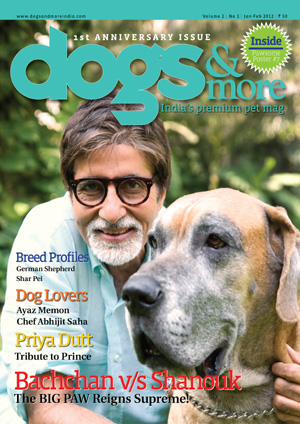
    From the Queen of England downwards, celebrities and their equally famous dogs are almost a cliche. Paris Hilton is frequently seen carrying her pet chihuahua Tinkerbell, who has a book called The Tinkerbell Hilton Diaries: My Life Tailing Paris Hilton to her credit. Closer home Gul Panag’s beagle Milo has a Twitter account. Amitabh Bachchan posed with his Piranna Dane, Shanouk, for the cover of Dogs & More anniversary issue, which was launched recently.


    It’s not just celebs, though, even ordinary people are increasingly getting pets to be a part of their families and participating in their activities. It should logically follow that these owners would be in need of news, views and information resources for their four-legged friends.


    But the pet magazine market is, albeit niche, also extremely small, especially when compared with the growing interest in pet parenting.


    As Shivani Darshan, publisher-editor of the now defunct Furs, Fins and Feathers said, “The pet industry is still a mom & pop kind of industry in India. Abroad, the industry has seen a growth of around 30-40 percent, but in India it is still at a very nascent stage.”


    Veteran journalist and dog lover Ayaz Memon concurs: “The idea of having a pet magazine in India is not fully fleshed out. Even the idea of having pets is not familiar inIndia, it is just growing.”

     

    The pet industry, though not very big, is dominated by dogs, as can be seen from the fact that most of the magazines in the market are predominantly for dog owners.


    Shweta Khurana, editor of Dogs & Pups said, “When we conducted our survey before launching our dog magazine, we found that dogs constituted the maximum number of pets. Also I am a dog lover; the magazine was just a way of turning my passion into a profession.”


    Dogs & More was started by Farzana Contractor, who is also the editor of the magazine. The idea for launching Dogs & More came to Ms Contractor when she realised that dogs teach us a lot about loyalty, patience and ability to love without question. Ms Contractor’s love affair with dogs started seven years ago. “I adopted a dog seven years ago, after a friend suggested it to me as a solution for the depression I was experiencing after losing my husband 10 years ago. I adopted a furry little black Lhasa Apso, and my life changed.”


    Magazines such as Dogs & More or the Delhi-based Dogs & Pups are effort to influence the people to get pets. These magazines, mostly bi-monthly, are reasonably priced and offered at a monthly subscription to the readers. But even then the concept is not taking off. “Considering the expenses related to taking care of a dog, this subscription fee is pretty reasonable. The content is nicely balanced,” said Ms Contractor.


    But a common grouse is that the revenues being generated are not enough. “Unlike a Cosmopolitan, which gets plenty of advertisers, we don’t get so many advertisers. The content is not a challenge but getting revenues is… that’s why we are still a bi-monthly. The content is not a problem,” said Ms Khurana.
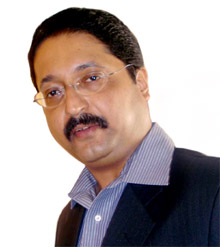
     

    But Jaisurya Das, media professional and dog lover, disagrees: “The marketing strategy adopted by the pet magazines is not right. First, their advertising is not done right. They tend to approach only those connected to the pet businesses like vets, groomers, trainers and so on for advertising in the magazines. What is stopping them from advertising FMCG products? The reader who picks up a dog magazine will also consume the FMCG product. They should think of the end audience while going for advertisements, not the advertiser.”


    Ms Darshan however has a different point: “The industry we function in is still very unorganised, the advertisers we approached want free ads. I was bearing most of the cost of printing and distribution. In the end, we had to take a call and decided to stop printing the magazine.” The anniversary issue of Furs, Fins and Feathers on March 2011, which featured Paris Hilton and Tinkerbell on the cover, was the last one.


    Mr Das also points out that one more reason for bare minimum survival of the dog magazines in India is the visibility factor. “The pet lovers are not going to go out and seek out dog or pet magazines. These magazines should be available at the vets, pet shops, dog groomers and so on. The magazines should have tie-up offers with dog products to hook in the readers. Right now, they are surviving mostly on subscription.”


    Mr Memon agrees: “The information given in these magazines is very basic. It is good for those who have just got their first pet. If I need more in-depth information it is readily available on the internet. I feel that there is a lot of scope for dog magazines to grow.”


  • The Anchor: 6 tips to be productive working out of home

    Freelancing or working from home can be pretty tough and often not productive enough. On the other hand, it doesn’t make sense in investing in office space and infrastructure if your work doesn’t involve the need for a full fledged office… especially in the media space.


    Here are 6 tips on how to make the most of it and get good work done in the comfort of your home.


    1. Make a clear schedule with work hours and rest/ household chores times set in advance

    Most often the issue is that one doesn’t delineate time bands for all this and eventually it’s all rolled into one. This is the most important step, hence if it’s 10am-12noon for work in the first half, then only work happens, no matter what…


    2. Learn to concentrate and make the quietest space your work place

    Let not the home phone, the door bell  and so on intrude into your work time, whatever be the time you have allocated . Keep yourself armed with what you need before your start, even if it’s that flask for your coffee. This seems flippant but each time you get up to make a cup, you might just end up involving yourself in other stuff.


    3. Do not overload yourself and make everything around you a priority!

    The common problem with most of us is that even before we realize it, everything is a priority on the list!  Take what you can handle in a given time frame, given your flexible schedule. Personal work must be slotted on a separate list so that it doesn’t clash with your work list. Don’t forget, time management is in your hands and hence you can slot it accordingly.


    4. Discuss your schedule with the family /housemates

    Unless you make it clear that this is what you have planned, there will always be a thin dividing line. It’s important for the others to understand that you work from home but it’s just the same as working from office. The difference being that you monitor yourself and hence it’s actually tougher! They will come to terms with it and, without doubt, support your plan of action.


    5. Avoid distractions, even if you think you can manage

    Would you have the TV or Radio on while you work at office? If not, then don’t bring them near you, when you are working from home. It’s easy to say it’s a non-intrusive medium, but the fact remains, it’s not always easy to concentrate while listening to a RJ butting in every few minutes, just when you are working at your best.


    6. Time is money and your work space is sacred

    Not an old school thought. A reality. One needs to understand that your work takes time and effort and the sacred space, since it brings you the satisfaction of seeing your efforts pay off. Hence do not take the liberty of lying in bed and typing on your laptop when at work. Sit at a table and work just like you would at your office. No to quick beers, or a smoke too many either. It’s your office, remember!


    Jaisurya Das is Director & Chief Mentor, Xanadu Consulting Group Pvt Ltd. He is Contributing Editor, MxMIndia and mentors readers @ DearMxM.


  • New English daily in Pune from Aaj ka Anand group

    By Akash Raha


    Pune is all set to welcome a new English daily. The 40-year-old Aaj ka Anand group is set to bring out the newspaper in a joint venture with  content firm Media Next Private Limited .  Aaj ka Anand publishes a Hindi morning daily, Aaj ka Anand and a Marathi eveninger, Sandhya Anand and has interests in real estate and also runs a budget hotel in the city.


    Media Next is a multimedia content service provider whose Chairman is senior Pune-based journalist Mr Anand Agashe. The managing editor of the newspaper will be Mr Agashe, and Ms Vinita Deshmukh, also a veteran Pune journalist and RTI activist, has been appointed as the editor.


    Speaking on this development Mr Agashe said, “Pune is becoming a cosmopolitan city and its demographics are changing, with the rise of middle class and upper middle class, whose preferred language for communication is English. The Aaj ka Anand group thought it was necessary to have a English daily which would complement its Hindi and Marathi newspapers.”


    While Aaj ka Anand will own the newspaper, the content will belong to Media Next. The application for the newspaper is currently being processed and the name of the English daily is hence still under wraps. According to Mr Agashe, the English newspaper is all set to be launched in the next two to three months.


    While Marathi dailies are the dominant players, Pune is already crowded with several established players like The Times of India, Indian Express, DNA and Sakaal Times in the English space. Mid-Day too has a Pune edition. The entire print revenue generated in Pune is said to be between Rs 500-525 crore.


    Speaking on this development, Jaisurya Das, Managing Director of Xanadu Consulting Group and a veteran on the Pune market said, “I admire their guts to come out with a English daily, because to get a product differentiated is going to be very difficult and they are not known as market leaders. Aaj ka Anand is a fairly low profile group, which has been active only in the Hindi and Marathi market catering to a B1, B2 or C1, C2 kind of an audience.”


    Mr Das feels that there are a couple of issue the group has to work on. “The first thing is, it is not a marketing savvy group, unless they are going to bring a whiz kid. The second is that they have to come up with excellent and differentiated content. I am not saying that there is no room in the Pune market for a newspaper. If you bring in a daily with highly localized local content, it might work. It’s a tough call and unless the group delivers differentiated content and comes up with an aggressive marketing strategy, there is going to be a lot of bloodshed ,” he added.