Tag: iYogi

  • Out with a Bang! Prathap Suthan, Naresh Gupta etc launch new agency

    By A Correspondent


    Prathap Suthan
    Naresh Gupta
    Viral Pandya
    Manoj Deb
    Sabu Paul

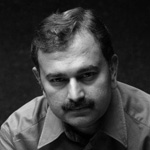
    It was one of the biggest news to have hit adland in March 2011 when Cheil Worldwide’s NCD Prathap Suthan quit his agency to join lesser-known direct-to-consumer remote tech support company iYogi as its Chief Creative Officer. It was seen as an unexpected move by the creative maverick who was responsible for creating some startling work for Cheil Worldwide in India. But after lying low-profile with its activities and having stayed away from the advertising glitz and glam for most part, Suthan (or Pat, as he is affectionately called) made an interesting announcement on Monday when he announced branching out from iYogi to float ‘Bang in the Middle’ as an independent agency.


    Started in early 2011, the division headed by Prathap Suthan was set up as the in-house branding, advertising and communication team at iYogi. The unit managed campaigns for the company, primarily leveraging digital media across North America, the United Kingdom, Middle East and Australia. After 12 months, and over 20 campaigns later, iYogi’s in-house agency is ready to step out and offer its services to a wider set of brands. The agency will now offer expertise in brand advisory, communication design and advertising to Indian and global corporations.


    To be based out of Gurgaon, the team line-up includes some of the best names in the business including Prathap Suthan, Naresh Gupta, Viral Pandya, Manoj Deb, and Sabu Paul. Speaking about the team, Naresh Gupta, Managing Partner, Bang in the Middle, said: “All the existing employees who worked in the branding department of iYogi are the founding members of BITM. Prathap is a creative leader of outstanding pedigree. I, myself, have worked for a spectrum of clients. Viral Pandya is a celebrated designer who has won every possible international accolade and Manoj Deb is a celebrated art director. Between the four of us we have over 100 years of experience across geographies. The team we have right now is the best that is in the business.”


    When asked on the funding pattern being adopted by the company, Gupta said: “There is an external investor who is helping us make the unit operate independently. Our approach is to marry the strengths of new media with the traditional roles of mass media. We have an industry tested model of working and we have real life experience of making it work for the brands.”


    In a statement to MxM India, Prathap Suthan, Managing Partner, Bang in the Middle, said: “Despite an overcrowded communication services market, India needs a new kind of communication agency. India is booming with opportunity. Increasingly Indian brands are spreading their wings to global opportunities and new age businesses are coming up all over the country bustling with enterprise, ambition and opportunity. There is an increasingly younger nation out there with global ambitions and enterprises are demanding better communication solutions.”


    On his decision to branch out from iYogi, he said: “Organized advertising is getting weaker and getting scattered across many areas, giving rise to independent agencies. We believe that Bang in the Middle comes with the right experience to exploit that opportunity.”


    The agency’s services span across brand advisory and campaign design and advertising across platforms and customer touch-points. Bang in the Middle will assist brands in establishing a deeper engagement with customers by creating an ecosystem from visual language to design guidelines and interaction across mediums. It will also assist brands create holistic communications approaches that will reduce dependency on traditional media and leverage digital to gain market share.


    As of now, the company just has a single client to boast of but are said to be in advanced talks with a few clients already. But that really may not be an issue for BITM, who have some experienced team that have bagged big clients in the past. What will now matter for the agency is to be seen as a new and small creative force to be reckoned with. Asserts Gupta: “We believe the age of independents is here. The biggest thing going for them is flat structure, focused delivery and hands-on experience of senior people.”

     

    That seems to be an assurance high on confidence and competency too. Given the run that small independents are having at the awards, a new addition will only make life for other agencies, especially the biggies, a tad more challenging. Only time will tell if BITM has it in them to challenge leadership norm and emerge a superior agency in the future.


  • Power of +ve campaigning: Why SP won & BSP, Cong lost

    By Rajiv Singh


    Political pundits talk about caste factor, anti-incumbency, development, corruption and so on to explain Tuesday’s assembly election results, but some advertising experts give a completely different explanation – negative advertising failed and positive campaigning clicked.


    It’s open to debate if people vote on the basis of advertisements or not, but look at some campaigns:

    “Utho, jaago aur badlo” (Rise, awaken and change) and “Jawab hum denge” (We will give a befitting reply) – the taglines used by the Congress to woo voters in Uttar Pradesh flopped.


    Power of Positive Campaigning

    Jeeta and Jaggi – the toon characters used by the Congress to connect with the people in Punjab by poking fun at the Badal government – too failed.


    “Na hatya, na phiroti, na balatkaar, hum denge saaf suthri sarkaar” (No murder, extortion or rape, we would give you a clean government) – the BJP’s election plank in Uttar Pradesh didn’t revive the fortunes of the party.


    Now, look at what worked: “Umeed ki cycle” (Bicycle of hope), the tagline of Samajwadi Party’s successful campaign in Uttar Pradesh.


    “While Mayawati’s BSP and Rahul Gandhi-led Congress were busy fighting each other, the SP talked about problems faced by the aam aadmi,” said veteran adman KV Sridhar.


    “That’s why their campaign clicked; it didn’t take a potshot or dig at the rival parties,” added the national creative director of Leo Burnett.


    One of the TV commercials made by Arkash Entertainment – the Mumbai-based production house in charge of Samajwadi Party’s campaign – shows a cycle racing past an elephant.


    “We wanted to say something without saying anything,” said Arjun Sablok, the creative head of Arkash Entertainment, who made his debut in political advertising with this campaign.


    “Our campaign focused on positives and avoided mudslinging,” added the 45-year-old adman and filmmaker who first met Akhilesh Yadav three years ago in a UP village. Saurabh Uboweja, director of brand consulting firm Brands of Desire, said this approach worked because the voter is not in a negative mindset.


    “Voters have seen growth recently as a general positive economic environment reverberates in the nation. When one has a positive mindset in general, positive campaigning linked to higher growth will tend to prove more beneficial than dragging voters into the past,” he said.


    Mr Sablok – who has made a film with Hrithik Roshan and a music video with Lata Mangeshkar besides several commercials with leading Bollywood actors – said he started preparations for his first political campaign a good nine months before the elections. An outsider in Uttar Pradesh, he travelled extensively to know about the ground realities there. And he used real-life situations and people.


    In one of the television commercials, for example, Raju, a rickshaw puller, talks about his problem of working everyday to pay back the loan and then a voiceover says the Samajwadi Party will implement an insurance programme for rickshaw pullers. Other such characters used in the campaign include Buddhiram, a farmer lamenting about lack of electricity, and Neetu, a housewife whose husband works in another state because of lack of jobs in Uttar Pradesh.


    Mr Sridhar of Leo Burnett said this smart and straightforward campaign worked at a time when Mayawati and Rahul Gandhi were busy blaming each other.

    So, in his mind, Rahul Gandhi’s relentless campaigning failed to revive the Congress in the country’s most populous state partly because the party’s advertisements failed to connect with people.

    The Congress campaign in UP, created by Percept/H, talked about the misrule of the Mayawati government and asked people to give Congress a chance. “The campaign had no insight into people’s lives,” said Mr Sridhar. Negative campaigning proved disastrous for the Congress in Punjab too, a state that had never before voted the ruling party back to power.

    The opposition party’s campaign, created by Delhi-based advertising agency Crayons, featured toon characters Jeeta and Jaggi who talked about corruption and other problems under the ruling Shiromani Akali Dal-BJP government.

    This failed to pull down the Badal government.

    The Akalis’ campaign, handled by New Delhi-based agency Brand Curry, highlighted the development work done by the government.

    “Over the past few years, there has been a demographic and psychographic change in the profile of voters. In terms of demographic change, young voters have emerged, who abhor negative campaigning,” said Brand Curry MD Subrata Chakraborty. “In fact, even the old voters have no appetite for advertisements that look down upon others,” he added.

    The BJP, which rose to national prominence in early 1990s with its Ram Janmabhoomi movement centred on Ayodhya in Uttar Pradesh, lost the plot in the state not only in terms of negative slogans but also due to lack of synergy between its print and television campaigns. “The TV campaign was not in sync with the print campaign,” said a BJP leader in the state.

    One of the TV commercials showed famine-like situation in the state and starving people, he said, requesting anonymity. “But this is not the ground reality. This election was not fought on starvation and malnutrition…This left the people cold.”

    Sushil Pandit, owner of Hive Communications, the ad agency that handled the print campaign for the BJP in UP, said the party highlighted too many issues without a clear focus. “There was no consistency in approach,” he added.

    But experts say it’s up to the agencies to help political parties with a nice strategy.

    “Political advertising is driven by politicians, and not the ad agency, but the strategy should come from agency,” said Prathap Suthan, the creative mind behind the ‘India Shining’ and ‘Incredible India’ campaigns and chief creative officer of tech support firm iYogi.

    Source: The Economic Times

    Copyright © 2012, Bennett, Coleman & Co. Ltd. All Rights Reserved