Tag: Ivan Arthur

  • Air India Maharajah: An Anachronism or Timeless?


    By Prabhakar Mundkur

     

    Prabhakar MundkurThe tirade against the Maharajah is almost as old as that against the airline itself. The Air India top management, the aviation ministry and their new advertising agencies have been wanting to do away with the Maharajah for almost 30 years now. The agency HTA* that created him and nurtured him, even lost the Air India business after handling it for over half a century, maybe because they were the creators of the Maharajah.


    It is really a wonder he has survived this long. He doesn’t look the same, he doesn’t speak the same language that he spoke years ago when I handled the business, he has lost his unique sense of humour and wit, he is completely out of touch with current affairs, in fact he is a mere shadow of his former self and he might as well have been executed than allowed to linger like this on a ventilator. He was born on the corner of a letterhead, and he has gone back to being there, making me wonder if he might also be buried there.
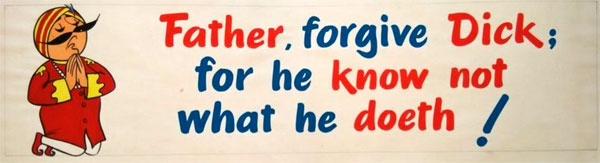
     

    On Richard Nixon during Watergate


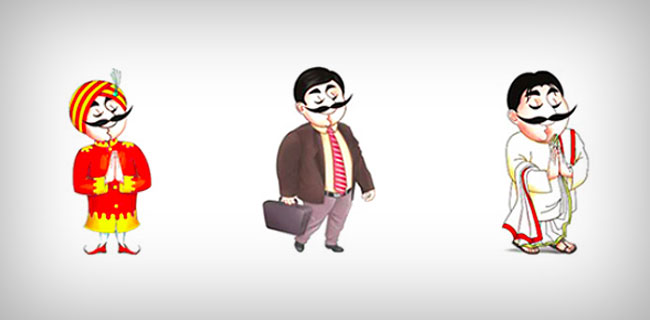
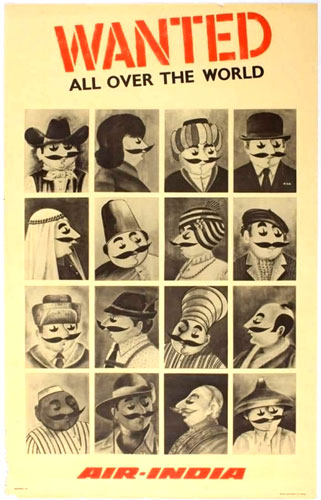
    Most people who have this point of view don’t understand that he is not just a Maharajah. He is a mascot who embodies the soul of Air India. Only his garb is that of an Indian prince. When he was conceived, he was meant to stand for everything that Air India stood for. Just like well-travelled Indian royalty that could speak authoritatively to both India and the world. Also, the Maharajah was not just the Maharajah. He took many shapes and forms disguised for the country he was meant to represent.
     

    Sawant, one of the Creative Directors at HTA who could draw the Maharajah in 15 seconds. was so inspiring that HTA once created a film, by making Sawant draw the Maharajah in real time, with a camera following his talented hands.


    K ‘Bobby’ Kooka, the Commercial Director of Air India, is once known to have said: “We call him a Maharajah for want of a better description. But his blood isn’t blue. He may look like royalty, but he isn’t royal.” Famous for having conceived the Maharajah along with Umesh Murdeshwar Rao of JWT in 1946, the Maharajah is one of the oldest mascots in the world. Kooka was later Chairman of Hindustan Thomspon Associates*) and watched the Maharajah and Air India advertising grow in stature and popularity.


    Ivan Arthur, earlier National Creative Director of JWT, and now educator and author, when asked about the Air India advertising, said: “Conceived as a letterhead design, the Maharajah broke the fetters of the line drawing and became flesh with a personality and DNA of his own: the double helix of gracious exotica. That DNA did not permit him to stand in the street corners of conventional media and tout his destinations like a cheap ticket salesman. His famous romps on those hoardings were not advertising. They were non-advertising: parlour talk, one-liner points of view, camaraderie, provocation and good humour, all of which did not ask you to buy an Air India ticket. In fact, in many of the hoardings, he refused to have the Air India logo as sign-off. He was the sign-off. He was no commercial mascot. He became a national figure. Much loved and respected.


    The Maharajah dies a 100 deaths
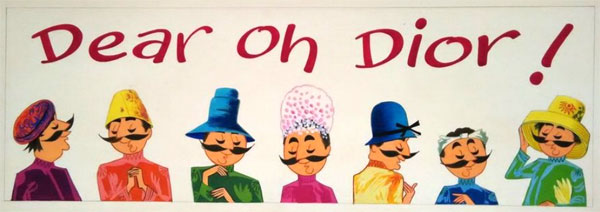
     

    Come the ’80s, however, frequent changes to the Chairman of Air India position resulted in the Maharajah dying a 100 deaths. Air India chiefs were keen to kill the Maharajah in lieu of something new and more contemporary. One such case was when in the late ’80s one Air India chief hired Landor, the well-known design firm, to redesign the logo of Air India in 1989. An airline identity change is one of the most expensive identity changes for any industry because it involves repainting all the aircraft, the livery, the ground vehicles and every signage in every country. But Air India went through all that bravely, eager to dump both the Centaur, which was their logo for the longest time and the Maharajah who was accused of not being in tune with the times. Rajan Jetley, then Managing Director of Air India, had said in defence of the new logo: “It is a public statement of change and a product exercise in the classic marketing sense.”

     

    Air India’s new identity created by Landor


    This was painted on the tail of the aircraft and the Boeing 747 Rajendra Chola became the first aircraft to carry the new logo and the livery. This facelift is known to have cost Air India $35 million back in 1989. But the public started questioning the change, immediately missing their familiar brand Air India. Questions were also raised in Parliament about the change of identity. But in spite of the identity change, the Maharajah seemed reluctant to leave the brand and its advertising. For every one person who didn’t want him, there was a loyal fan who wanted him back.
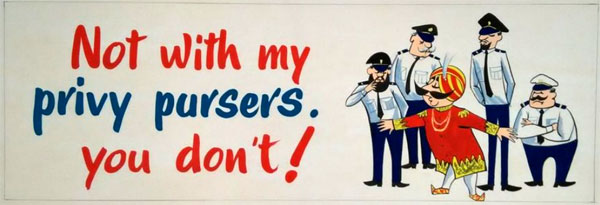
     

    Abolition of privy purses 1971


    Changing a brand’s identity is not an easy task. It is easy to say the Maharajah is an anachronism for those who don’t understand the Maharajah and the brand. Colonel Sanders who died in 1980 is still a part of the KFC logo. The Marlboro cowboy first made his appearance in 1954 while the cowboy era ended in 1885 at the end of the American Civil Revolution. They are not anachronisms. They are timeless just like the Maharajah. As Piyush Pandey, Chairman of Ogilvy is known to have said to Economic Times last week: “The Air India Maharaja stands for India. For any brand, any mascot, any logo, any identity is as meaningful as what they do with it.”


    With the Air India brand firmly with the Tatas, one wonders what the future of the Maharajah might be? Considering that the Maharajah is a crucial part of Air India’s brand equity and having worked on the brand, I can only hope that he will be re-incarnated.


    *now Wunderman Thompson
  • Brilliant Storytelling…


    By Sanjeev Kotnala


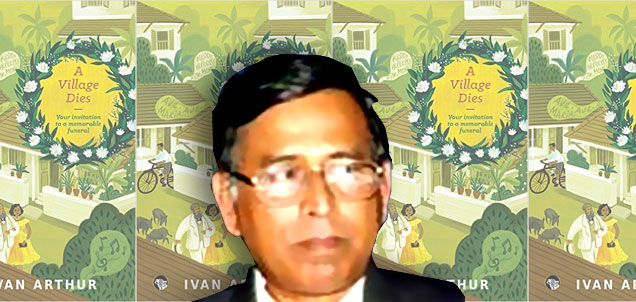
    After a long time, I read a book that is an example of brilliant storytelling. ‘A Village Dies – your invitation to a memorable funeral’ by Ivan Arthur. Published by ‘Speaking Tiger’.

    It is a story in convenient flashbacks. TVD, is a story of two villages Kevni and Amboli, in erstwhile Bombay. A mixed community of East Indian, Anglo-Indian, Goan and Mangalorean live there. Through ages, the genes naturally get mixed. The attitude and approach to life changed just that bit. However, the village slowly dies.

    Ivan Arthur captures this through the prism of the tomboy Kitty. She is attending the funeral of simpleton gravedigger Hanging Gardens and is remembering the life of the village she knows so well.

    There are stories within stories. I liked that. Rather I really enjoyed it. They are intrinsic interwoven episodes of life. Every character alive to the real life around them. The thoughts, beliefs and eccentricity are all evident and amplified in the simple narration.

    Sharing a paragraph from ‘The Village Dies’ (from Page 81): “On her subsequent visits to Byculla, she persuaded him to bring his guitar along. They would sit on two separate chairs across the room, she singing from those little pop songbooks that the Furtados had made popular, he improvising his own chords by ear. This discreet live stereophony (the concept had not yet caught on in Bombay) didn’t last long. The two chairs across the room were given up for the couch. They sat at the two ends of it—singer and accompanist—till songbook, and daylight was consumed. In time, the distance between singer and accompanist had shrunk until strings ad voice had merged into one indiscreet live monopoly.

    A craftsman playing with short sweet sentences. Ivan Arthur makes it so easy on mind. He captures your attention from Page 1 and pulls you through the rest of 223 pages. Like an Indian movie, he does slacken the grip, a wee bit around the 200th page mark. There he speeds through ‘The Gulf of Kevni and Amboli’ and you tend to get upset with sudden introduction of pace in otherwise silent waters. However, right at the next corner, with ‘The Sultan’s Man’, he catches you back in the web.

    I am surprisingly reminded of R K Narayan’s style of storytelling. There are loving families, changing attitudes, unsaid love and polarised reactions captured within compact paragraphs with easy, flowing narration. Ivan Arthur style of narration is a bit more complicated compared to simplicity of RKN, but it still has the same DNA.

    ‘The Village Dies’ is a compulsive reading. Too tough to put down. The village comes alive. You know each of the frames and turns. Though there are no visual references, nevertheless, you get a clear picture of every house and roads taking you there. You are with the characters. You are part of their lives, just over their shoulder. You fall in love with them and hate others. You feel their emotions. And that for me is great storytelling.

    Here is another pick from ‘The Village Dies’ (from Page 184): “The story does that one of the younger ladies from these hutments had struck up a tender relationship with a bachelor from the East Indian home she was working in. What started with affectionate words and furtitive caresses swelled into a cataract of uncontrollable passion. Their affair didn’t go unnoticed. She overheard his mother to tell him not to be an idiot. The woman working in the neighboring home called her aside and said, ‘Be sensible. These Christians will beat you up, and so will your husband’s people. Stop this foolishness’.

    Every chapter is a complete story in itself. It is isolated. It is like steps on a ladder. You can halt at any one of them to take rest. Each step ultimately taking you that closer to a logical conclusion.

    ‘A Village Dies’ will have a place of respect and honour in my collection. I am sure it is not going to be uncaged for long unless I find a right reader to present it.

    I have not read Ivan Arthur’s earlier works. Four of his books are: ‘Pavement Prayers’, ‘Once More upon a Time’, ‘Jossie’ or ‘The Fourteen Stations’. I think I read the fifth book ‘Brands under Fire’ but am unsure. However, with ‘The Village Dies’ I am hugely tempted to get my hands on them.

    Ivan Arthur is former national creative director of JWT India (then Hindustan Thompson Associates or HTA). He spent 38 years in advertising before retiring in 2002. A Village Dies – Your invitation to a memorable funeral is available on Amazon.in at Rs 239. Sanjeev Kotnala, well-known marketer, columnist, management consultant and a voracious reader, writes for MxMIndia every Wednesday

  • Ivan Arthur on Mike Khanna. Wizard without a wand

    By Ivan Arthur


    The business world will toss numbers; will talk of the magical growth he showed in the time he led Hindustan Thompson, now JWT; first as head of the Delhi office, which bobbed up from No.7 in that city to No.1 in just one year of his taking over; he did the same with the Bombay office and finally as CEO of HTA, India, he walked the agency up a steep climb to the pinnacle; success following him like a poodle.


    And those who do not know him will have visions of a man like some others with similar achievements, men who draw attention to their success with big flourishes of the corporate wand and the abracadabra of individual style.


    With Mike there were no flourishes; no conjurer’s patter, no abracadabra showmanship. He almost seemed like a novice with a pack of cards, slowly dealing them out, stopping to spit-wet his fingers when suddenly you would notice: he has dealt you an ace. And then another and another. You looked in awe. And there he was, unimpressed with his own magic, intent on just dealing you those aces.


    But the aces we are talking about are not those numbers; of billings, growth, profit or industry ranking; facts and figures that even then placed him on the throne of the advertising industry. Oh there is much to be said about all that and the business world can talk about it at length. What ‘Thompsonites’ will talk about are other aces, their own personal ones, for which they will remember him most. From secretaries, studio artists and accountants to members of the executive committee, all have poignant stories to establish their personal relationship with Mike: of how on a bad day, he sat them down, got to the heart of the problem and sent them away with a new spring in their step; of how they came to him with clenched fists over an issue with a colleague and how a cuppa tea with him would end in handshakes all round. A creative director will tell you how, on the occasion of the global CEO’s visit, her presentation was delayed by an hour, and how Mike went up to her, put his hand on her shoulder and said, “Relax. This is not the end of the world.” “I could have kissed him then,” she said. “But I went about getting the job done.” An office manager narrates how on his wife’s birthday, he had invited Mike home for dinner, at which he demonstrated the five-finger-and-palm bhangra clap.


    His manner was calming. He broke down difficult and high tension situations with his quiet, unbeatable logic to resolve both business and even creative crises. his intuitive feel for the moment, touched with humaneness, his ability to get down to the root of the matter at hand to help you with a problem and above all, his sense of fairness were among the aces up his sleeve. These were the aces he dealt around.


    Early this morning, on the 7th of June, the mobile phones of those who worked with Mike were clogged with messages, all of them saying that they were still holding in their hand the aces that Mike had personally dealt them: the ‘can do’ spirit. The freedom to try and fail. A strong sense of self-worth. Fairness. Integrity. Leadership. Challenge. A sense of fun. Aces that they hold close to their chest. Aces that have led them to where they are today. Many are now happily retired and a good number are CEOs, chairmen of companies and leaders in their fields. They are all of them echoing one line,”I am what I am today because of Mike.”


    Ivan Arthur is former national creative director of JWT India where he spent 38 years in before retiring in 2002.He blogs at Excalibu (http://arthurivannoel.blogspot.in). Republished with permission from the writer. First posted at https://www.facebook.com/MikeKhannaTribute


  • The 3-D Art Director. Ivan Arthur on Sudhir Deokar

    Ivan Arthur, former National Creative Director of Hindustan Thompson Associates (what’s now called JWT), pays tribute to Sudhir Deokar, his soulmate and creative chief of HTA’s hyperactive Mumbai office. Mr Deokar passed away last week.


    By Ivan Arthur


    The early 60s. I was a cub writer then, Sudhir a young tiger. Every day I watched him roar, bold and resonant on his easel. And I cowered behind my table wondering what I was doing in a place like this? Tentatively I handed him a line for an Esso advertisement, expecting a growl of disapproval. He looked at it for a moment and with the salivary articulation of well-chewed paan, he said: “Tomorrow.” The next morning I glanced at his easel and grew a hundred feet tall. There was my line on his layout, for sure, but barely recognizable even to me.  Sudhir had made it resonate beyond the thesaurus.


    He did this always. He took lines and gave them roundness, movement, dimension, resulting in halos for copywriters, account directors, clients and their brands. He freed the Air-India Maharaja from the croquill’s ruthless line and caressed him with that soft roundness. He poured sex appeal into Haryana Breweries’ beer barrels, played mid-wife to both DCM and Wipro Data Products and placed Hamdard on the medical pedestal it deserved. Name any Thompson brand from the early sixties to the Millenium year; Sudhir has gilded it with his brush. He retired as Creative Chief of the Mumbai office of HTA.


    He worked his magic with 6-B pencil, croquill, Rotring, Indian ink, water-colours and his sable hair wand; conjuring up caricatures, cartoons, stylized drawings and life-like water colours; his 20-minute layouts often used as artwork. Artwork became works of art, clients having them framed and put up in their offices. His visualisation of human situations or tabletop was photographically perfect. When the final picture was taken in the studio, you might not be able to tell the difference between the photographed picture and the 20-minute wash drawing. Mitter Bedi, Obi, Salian and so many others would marvel at the lens that was Sudhir’s eye.


    For close to three decades he gave my work the visual sanctification of his brush, and I feel blessed. I know that many who came before and after me will echo my feelings. He had the bigness and breadth to work with most anyone – from trainee to guru. Many of his trainees are gurus now. I look with awe today at a generation that thrives on the digital evacuation of ideas, but I still thrill to the memory of those visual insights shaped by hand and eye by artists like Sudhir. He was loved by all – from the most cussed of executives to the most difficult of clients.


    Besides being my creative soulmate, Sudhir became a friend of the family. His passing is a deep gash that my soul will have to bear for ever.