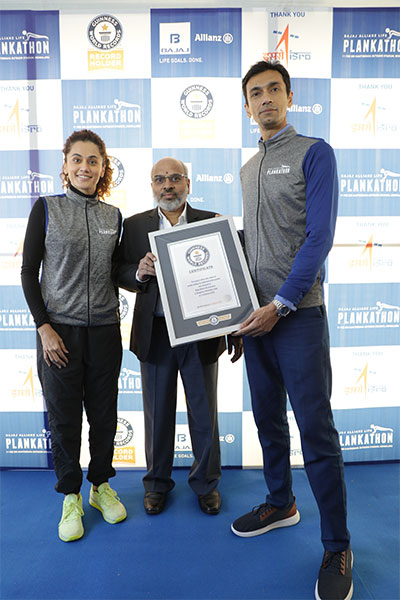
Bajaj Allianz Life organised the fourth edition of #Plankathon in Bengaluru’s Sri Kanteerava Outdoor Stadium to celebrate the Indian Space Research Organisation’s (ISRO) achievements with Chandrayaan and the Solar Mission, Aditya L1.
Addressing those present at Bajaj Allianz Life Insurance’s Plankathon 2024, N Sudheer Kumar, Director, Capacity Building and Public Outreach, Indian Space Research Organisation HQ, said: “This is indeed an extraordinary event that showcases the collective Indian spirit. With the initiative like #PlankForAces, Bajaj Allianz Life has brought together several thousands by igniting their passion for their country, as well as their motivation to stay fit and healthy. We appreciate and thank everyone who have participated for their efforts. Your wishes will further fuel our endeavor to make India proud, as we set our focus on the new frontiers within space research.”
Commenting on the success of #PlankForAces and setting a new world record for the Company, Chandramohan Mehra, Chief Marketing Officer, Bajaj Allianz Life Insurance, added: “Bajaj Allianz Life Plankathon has evolved to be more than India’s flagship fitness initiative, that captures the sentiment of India. We are thankful to tens of thousands of participants who planked offline and online to express their admiration towards ISRO’s outstanding accomplishments that makes us all immensely proud. Anything less than the world-record breaking feat would have been inadequate to the applause ISRO deserves.”
PM witnessing successful landing of Chandrayaan 3 via video conferencing. Picture (edited) source: Press Information Bureau
By Ranjona Banerji
India made history on August 23, when the Vikram Lander made a successful soft landing close to the South Pole of the Moon. No other space-exploring nation has managed this. It was a thrilling moment, when the graphic of the rover touched down on the moon’s surface and the control room burst into applause and cheers.
A great triumph for India’s space programme, for the Indian Space Research Organisation (ISRO) and all the scientists involved.
Of course, this is India. Therefore, the Indian media – most of it anyway – and the ISRO feed itself, had focused as much on the face of Prime Minister Narendra Modi as he watched the landing as it did on the landing itself. And then, before we heard anything about the landing, we had to hear the Prime Minister speak from South Africa. There was no connection between the two events, that is the Prime Minister and the moon-landing. But like I said, this is India. Politicians rule.
The result of this was no science and all congratulatory hysteria. TV channels showed endless images of the moon-landing. All of these were computer generated, but it appears they forgot to tell their viewers. Or maybe the anchors themselves did not know. Who did they think took these images of the landing?
Later ISRO released the first photos of the moon’s surface, one of which showed the leg of the lander.
In all the coverage, very little was discussed about why we have undertaken this mission and what we expect to learn from it. You often hear people moaning about India’s lack of scientific temperament. Well, this is why. Our public science outreach is pathetic, science journalism is not encouraged and the result is ignorance. And when ignorance is coupled with jingoism, all you get is a general pall of stupidity.
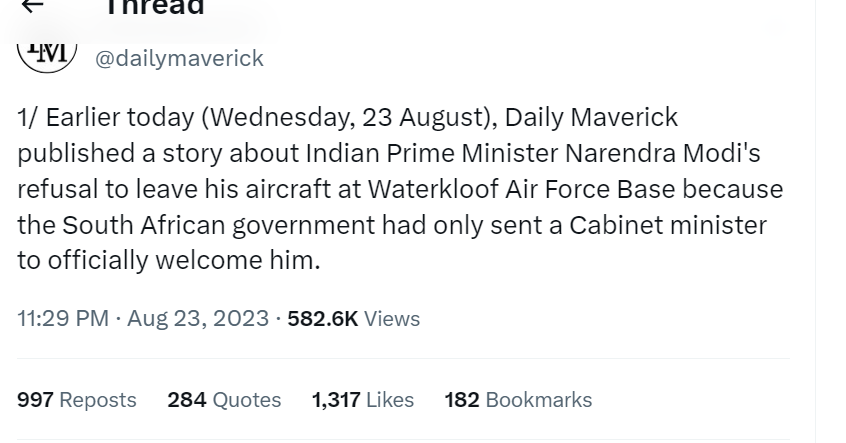
While on the Prime Minister and South Africa, the Daily Maverick, a South African online news publication with a weekly newspaper, put out an intriguing story, also on August 23. It stated that the Indian Prime Minister landed in South Africa for the BRICS summit and then refused to get off his plane at Waterkloof Air Force Base, because only a Cabinet minister had come to receive him. The headline called it a “tantrum”.
This is of course a South African publication which owes no allegiance to the Indian government or the BJP. Shocking!
The day before, President Cyril Ramaphosa had received the Chinese President Xi Jianping, who was on a state visit. PM Modi was not on a state visit.
According to the Daily Maverick, Ramaphosa then had to despatch his deputy, who was busy with summit preparations, to receive Modi.
So why have I not posted the original report from Daily Maverick?
That story is as intriguing.
It took the official system – and I include the BJP IT Cell here – time to respond to this story. Mind you, no Indian media had carried reports any such incident. Instead, they spun the usual tale of NRIs dancing for Modi.
But people who went to the Daily Maverick site in a couple of hours, found they were blocked.
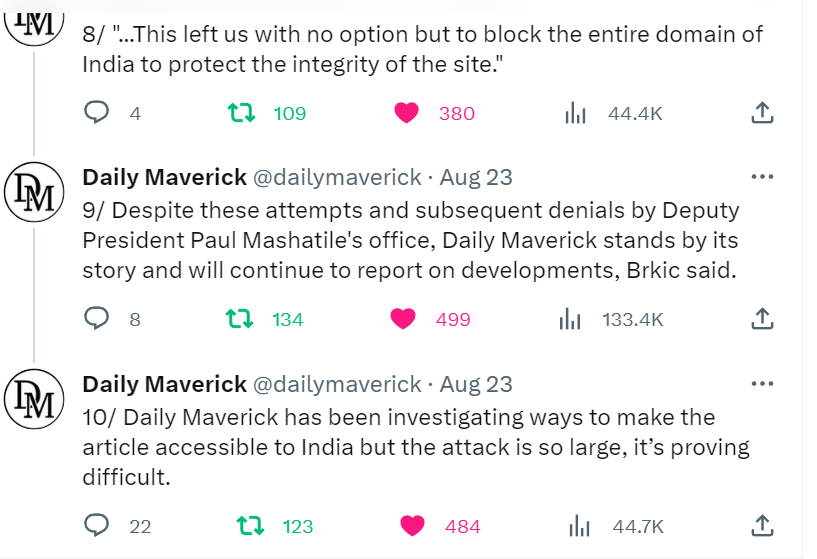
According a series of tweets or Xs or posts on X by the Daily Maverick, they were forced to bar India from accessing their site because of a massive cyberattack from India, attempting to take down their site.
Later, the South African government denied the Daily Maverick claim, while the Daily Maverick stuck to its story (screenshots attached).
Even now, most Indian media houses have found it difficult to report on this. The Free Press Journal was the first however to show its calibre and courage. And others like The Telegraph, the Newsminute, Wire followed. But for our “godi” or lapdog media, cue in the outrage at a foreign publication daring to report unfavourably on Modi.
While on the Newsminute, here’s an excellent report, in a fine series, from Manipur. You know, the place not as far as the moon or South Africa, which PM Modi barely acknowledges exists. Almost four months of anarchy, civil unrest, death and destruction there now.
We made it. Once again. The Indian “Space Programme”, since it kicked off with the setting up of INCOSPAR [now ISRO] under Dr Vikram Sarabhai in 1962, has been one of the best ambassadors of Brand India. It has embodied the true Indian spirit of inquiry, ingenuity and innovation. The age-old scientific temper of one of the world’s oldest civilisations comes alive not merely in the number of engineers and doctors that go abroad to work but in those that consciously choose to stay back to create institutions and ecosystems which are global benchmarks. As someone quipped in a WhatsApp group, “The Chandrayaan 3 mission cost less than the budget to make the movie Aadipurush”.
While a large part of the nation was glued to the news updates for 30 full minutes, what I find fascinating is the genres and variety of memes and messages that took off as soon as Mr Somnath announced: “India is on the moon.”
This piece is about the unique ecosystem of communication that is created around key milestones, good or bad. The fact that the memes I share here landed on my phone within minutes of the milestone show that there are hundreds amongst us who have invested time in preparing them well in advance, both as individuals as well as organisations or corporates.
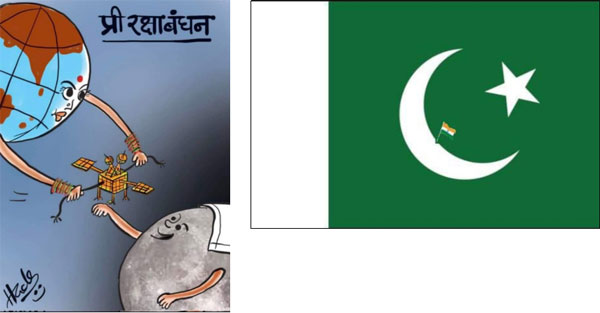
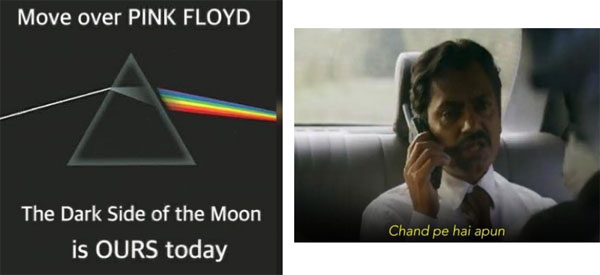
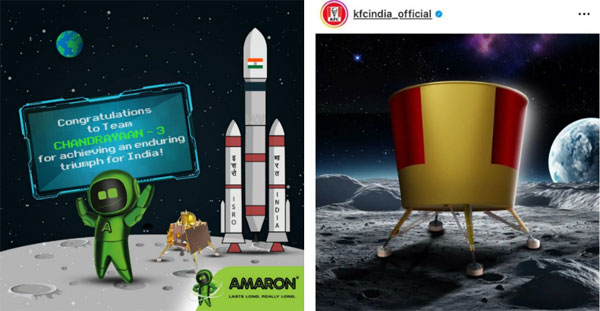
I picked 17 specific memes from the close to a hundred I received across groups and individual contacts. The different levels of creativity are a wonderful sight to behold for they stand for the sentiment of the people at large. They can be classified as [a] celebratory, [b] topical and [c] corporate.
The celebratory ones I share here range from the typical play of words to expected images to the excellent use of humour in the one on the right, shared below..
Then we have the topical memes. With Raksha Bandhan coming up on the 30th of this month, there had to be one on that theme which was one of the more popular ones doing the rounds. Going by our obsession with Pakistan, there had to be one with a jibe at our neighbours too. It was however pleasant to learn of many from across the border wishing the mission all the very best on social media. I found the one about Pakistan very subtle as if implying that there is always a part of India in Pakistan.
There are two memes which I loved. Not to be understood by most but those that did, enjoyed both of them. One was with Pink Floyd’s iconic music album “The Dark Side of the Moon”. Given that Vikram landed on the southern and dark side of the moon lent itself to this meme. Given it happens to be the album’s 50th anniversary, there could not been a better coincidental tribute, especially for a fan like me. And then there was this wickedly corny take on Nawazuddin Siddiqui’s character in “Sacred Games”. Both deserve to be archived.
Then we have the corporates who wanted to encash on this achievement and show solidarity with the mission.
The one by Amaron was ‘cute’ while the one by KFC was surely over the top but does bring a smile, something more apt in an issue of Mad.
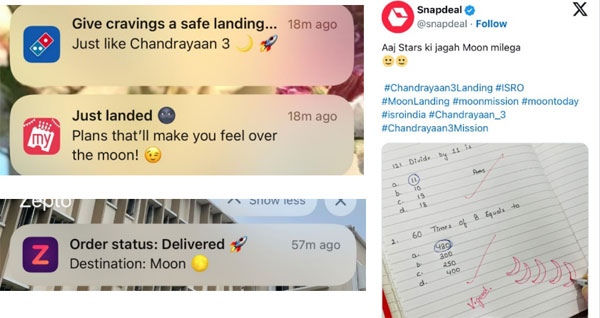
Then there were posts by the e-commerce guys which were absolutely pedestrian and so predictable. If you do not have a really powerful thought, you might as well not communicate. But the fear of not being seen doing something on such a momentous occasion gets the better of you. When the Chandrayaan had taken off, Ixigo had come up with a brilliant little film which spread like wild fire [maybe not the most appropriate term to use right now].
Here is the YouTube link to the simply loveable Ixigo video.
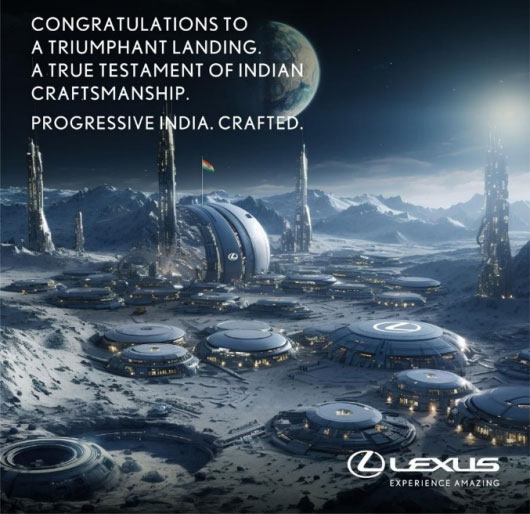
And then there was this really esoteric one by Lexus. Obviously, it is the moonscape of the future with a Lexus branded building and a launchpad…hopefully. I really did not get it. Hope the Lexus owners have.
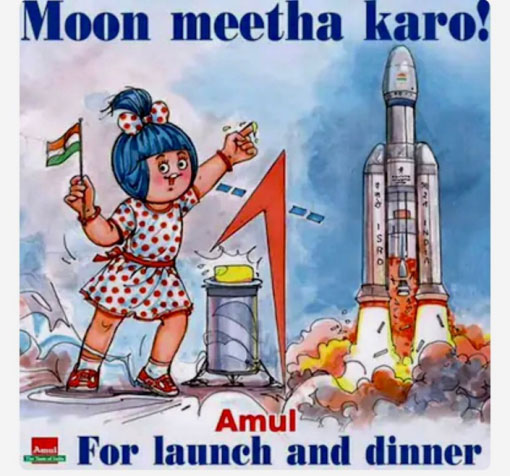
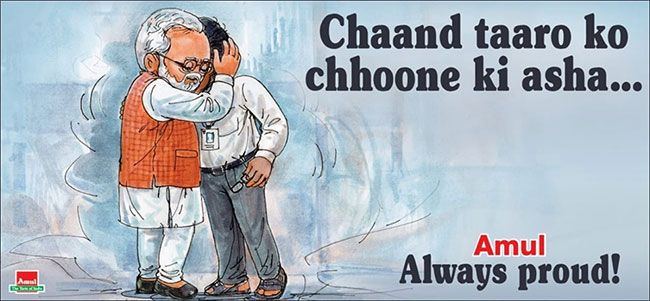
How can corporates messaging be discussed without sharing what Amul did. True to its DNA, it came up with yet another little masterpiece using their unmatched play with words. Very correctly, the true taste of India and the occasion.
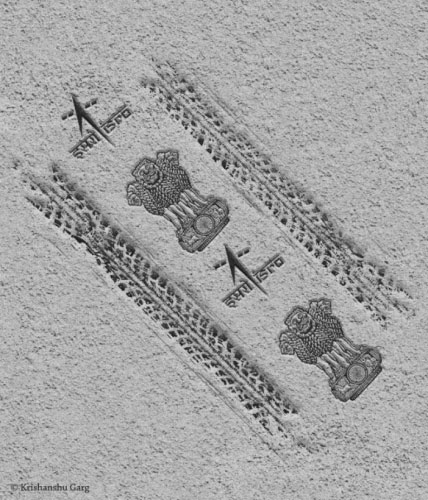
My last two mentions span from the ridiculous to the sublime. The former is a meme created by one Mr Krishanshu Garg about the supposed permanent imprint the Pragyan rover has left on the moon’s surface. Much before landing happened. Yet people, in the sheer enthusiasm and enormity of the situation, shared this as yet another “moment of pride”. Tells you that creativity can go seriously overboard at times.
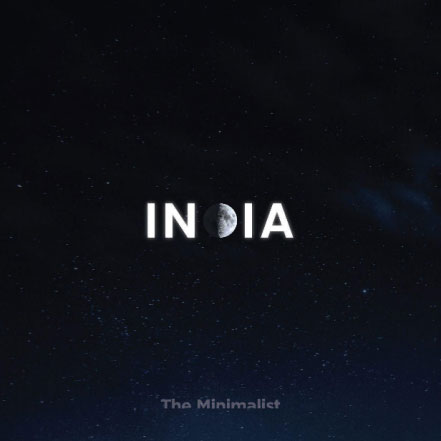
I finish with the one I would preserve as the image I would retain for life if asked to choose just one. Created by The Minimalist, it is indeed simple and sublime. Possibly the best tribute to all our fellow citizens who have given us this rare moment of celebration and pride! Jai Hind.
Late night last Friday, the nation was hooked to watching the Chandrayaan 2 landing on the South pole of the moon. In the wee hours of Saturday morning, when it became evident that the lander Vikram has deviated from its trajectory and gone incommunicado, the nation gasped together. The next day, the now-famous image of the Prime Minister consoling the ISO chief Kailasavadivoo Sivan was the subject of many front pages, social media posts and memes.
Outside sport and war, there has been no event in recent memory that has managed to generate a collective interest from across the country to this extent. Live telecast from ISRO across news channels and GECs took the mission to the masses, fueling discussions in real time that night, rather than the next morning. This, perhaps, was the most important difference in this case, vis-à-vis several other space and nuclear missions India has undertaken in the past. ‘Seeing is believing’, it is said. And the live images from ISRO, including the presence of the Prime Minister there, made the entire mission come across as a lot more ‘real’ and palpable than it would have been otherwise.
The events of Friday and Saturday were intriguing, to say the least. The disappointment was soon overtaken by a sense of pride at having attempted the mission the first place. There was widespread support, cutting across the political and ideology spectrum, and in general, there seemed to be a sense that India has achieved something significant, despite the lander missing its course in the final phase. There were the jokes too, all in good taste.
Does a country of so many people care about its space programme? How does it affect their lives in any way? Last weekend, most Indians were not thinking on those lines. What we saw can be termed as ‘pop patriotism’, whereby a nation comes together through an event that becomes a popular symbol of its strength, and through poster boys (the ISRO chief and the Prime Minister in this case) who are helming the event.
In the day and age of social media, this could be the new normal. Patriotism and national pride may be easier to evoke through audio-visual stimulus, such as the live telecast and the follow-up conversations here, than through well-researched essays on history, science or humanities. It is almost certain that a vast proportion of those who watched the telecast live Friday night wouldn’t know anything about Chandrayaan (except the obvious reference to the moon in its name) before the day. It is highly doubtful that they would know much after the day either. But when there’s a collective, social energy at work, knowledge can, and perhaps should, take a backseat.
There has been aggressive nationalism on display, especially in the electronic media, in the recent years via the surgical strikes and the air strikes that followed the Uri and the Pulwama attacks respectively. Finally, with Chandrayaan 2, the media found a non-Pakistan topic to celebrate the pride of our nation.
Pop patriotism may sound like a bad word, but it’s in, nevertheless. And it will be the new kind of patriotism that the old school has to get used to.
For the last one week the nation has been obsessed with the moon, and for the right reasons. After all, a bunch of unsung people who have dedicated their lives to true scientific research were about to perform a feat that brings adulation and accolades for the nation from all corners of the world. There would be no divided opinion, no detractors and no sceptics for this. This was pure ingenuity combined with dedication and determination, ably supported by a frugal budget, out to once again prove that the “Indian” can and is above caste, politics, isms and polarisation.
ISRO is a unique brand, in a brand called India.
It is unique in its very history and legacy…right from being set up by a man who understood what scientific temper would mean for future generations, supported by a Prime Minister much maligned and ridiculed now, to inducting people purely on merit and passion, to constantly punching above its weight in the missions it takes up.
ISRO is what the public sector undertaking was envisaged as by the ridiculed PM when he called the PSU the ‘temple of modern India’. It is all that a newly independent country’s aspiration was… building world-class institutions, filling them with the best talent from within and the world and then giving them the freedom to go ahead and achieve…for collective benefit and progress. That is the model of true nation building.
There are no ‘reservations’ in ISRO. There are no quotas. Politicians do not recommend appointments. There are no hidden agendas to cater to. At the same time, it is very un-private enterprise like too. It works on shoe-string budgets for “launches”. It typically shuns the limelight. It believes in nurturing its employees for life, and it has 16,000+ of them. And it does not make investor pitches or shareholder presentations.
In this context Chandrayaan 2 has been a curious exercise, for me as an observer. Never before has there been so much hype generated for any Indian space mission.
This looked like an event manager’s delight with an omni-channel overdose of “space science”. The social media was alive and clicking with all types of messages and memes. Television programmes were created with otherwise boundary-line jesters at cricket matches being flung at us. There was even one ex-NASA astronaut who was roped in for one such circus. Poems were written. T-shirts were made. News channels found a reason enough to fill in 24 hours of content, day after day.
And then the marketing wunderkids from the government flew in onto this entire jamboree being conjured. Their MBA schools had taught them about focused communication. And that had to be the moment Pragyaan would imprint the Indian national symbol and ISRO’s logo on the lunar south pole! So, the entire Chandrayaan 2 mission came out to be that single defining moment when we Indians would leave our imprint on the moon. Just like we do on historical monuments! “Ravi loves Archana” kind of stuff, literally. The entire focus was on Vikram and Pragyaan. “Fifteen minutes of terror” as the national lapped up. This was “national pride” re-defined. Thankfully the Pakistanis have had nothing to do with space or we would have had another occasion to bash them up digitally.
Someone, just someone, had to step back and tell these spinmeisters to back off and give the entire mission the proper perspective it deserves. The Prime Minister sitting with the scientists there and texting away to the nation is not camaraderie. That comes from increasing the mission budgets and allowing the team to truly flex its muscles without constraints. Frugality is not a virtue expected from a space mission. It very much is from government spending on MPs’ salaries. And there is no need to have every moment of the Prime Minister’s sojourn recorded for the “wow” moments to be beamed up to the world. Some events need their correct dose of gravity and sterile distance. They need to be accorded that level of respect. Not everything is to be instagrammed or tweeted upon. Not every event is a photo opportunity until the mission is complete. Wish the same level of collective national excitement could be built on the 1st day of the harvesting season.
A milestone space mission is not a ‘Mata ki chowki’.
And for the Prime Minister to conclude his pep-talk with “Bharat mata ki jai”…completely off the mark and inappropriate.
Obviously, the scientists at Bengaluru know their jobs and have already dusted off this little trespass!
Avik Chattopadhyay is a senior marketer and strategy consultant. This column appears on MxMIndia every Thursday. His views here are personal
India will be carving a place for itself among the world’s space faring nations with ISRO’s Chandrayaan 2 landing as it attempts to become the fourth country to land on the moon after the former Soviet Union, US and China. The Star India channels National Geographic, Star Plus, Star Bharat and Hotstar have come together to telecast the Chandrayaan 2 landing to viewers across 100+ countries. The telecast will start from 11.30pm today (Friday, Sep 6)
“This event will be a historic and immensely proud moment for India. What ISRO and the team of scientists have achieved is nothing short of spectacular. The Star network believes in inspiring its viewers with path breaking content and we are delighted to provide our audience with the chance to witness the historic moment live,” said Sanjay Gupta,Country Manager- Star & Disney India.
To state the obvious, for The Cable Television Networks (Regulation) Amendment Act, 2011 to kick in the mandatory switchover of the existing analogue cable TV networks to Digital Addressable System (DAS) in the four metros of Delhi, Mumbai, Kolkata and Chennai, the government must survive.
Even if that’s a given, the minister Mrs Ambika Soni mustn’t be allowed to meander into party work. If she does, a new minister will take his or her own to time settle down, and pernicious lobbies for a status quo will have an upper hand.
2. Ambika Soni and her babus get three states into action
Though Shastri Bhavan bears the mantle of implementing the Act, the ministry of information and broadcasting (MIB) has no boots on the ground. So, unless Maharashtra, Tamil Nadu andBengalsee the DAS in their own interest, Mrs Soni, Uday Varma and Rajeev Takru, her two key satraps, won’t make progress beyond impotent bluster.
3. There’s deeper monitoring and a few scalps on the lamp post
Albeit coming late, TRAI regulations on Tariff & Interconnection would have had enough time since April 30 to sink in. The Quality of Service Regulations and the Consumer Complaint Redressal Regulations would have existed since May 14, requiring every Broadcaster and MSO to publish its Reference Interconnect Offer within 30 days of issue of the regulation, and the stipulated 30 days for negotiations between Broadcasters and MSOs, and thereafter, the MSOs and LCOs to arrive at agreements for us ordinary Joes would have been exhausted many times over. No one could then cite lack of time for fuzziness over the terms and conditions for installing Set Top Boxes and the prices of channels on an a-la-carte as well as on a bouquet basis. Also, every MSO or its linked Cable Operator would have no excuse for failing to put a Consumer Complaint Redressal System consisting of a complaint centre with toll free consumer care number, web based complaint monitoring system, as well as appoint or designate one or more nodal officers and publish consumer’s charter for DAS.
Thus Verma and Takru have their tasks cut out. Implementation is their dharma, the concerned states their believers.
4. ISRO delivers the promised launch
For any stick that Takru and Varma may hold, the cable operator is wily enough to dodge them. What she can’t is if Indian Space Research Organisation’s much-delayed GSAT-7 multi-band satellite, carrying payloads in UHF [ultra-high frequency], S-band, C-band and Ku-band, leaves the ground and starts doing some work. It would then be left to Doordarshan’s Tripurari Sharan to show his mettle and put together a free-to-air DTH platform of 200+ channels on GSAT-7. If Sharan can swing that, the cablewalla will embrace DAS with a measure of fear if not conviction.
5. The DTH Gorilla Begins to Maraud
These folks have sat on their backsides sleeping over the opportunity that “DAS Confusion” presents to them. If only they can get cable operators to become LMOs and leverage some Rs6,000crore residing in their war chests, the pure-play cablewalla will see more in digitization than what the long-arm of the regulation can ever achieve by scaring him.
Rohit Bansal is CEO & Co-Founder, Hammurabi & Solomon Consulting
 Bajaj Allianz Life organised the fourth edition of #Plankathon in Bengaluru’s Sri Kanteerava Outdoor Stadium to celebrate the Indian Space Research Organisation’s (ISRO) achievements with Chandrayaan and the Solar Mission, Aditya L1.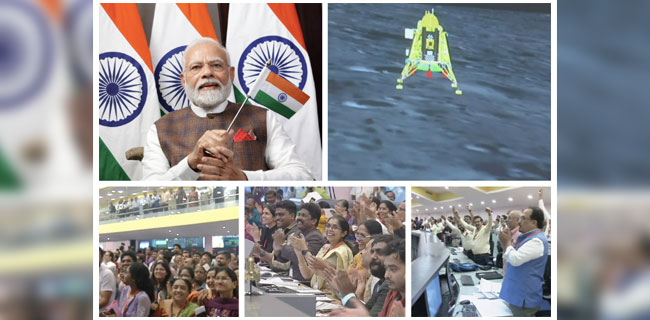
 India made history on August 23, when the Vikram Lander made a successful soft landing close to the South Pole of the Moon. No other space-exploring nation has managed this. It was a thrilling moment, when the graphic of the rover touched down on the moon’s surface and the control room burst into applause and cheers.
 While on the Prime Minister and South Africa, the Daily Maverick, a South African online news publication with a weekly newspaper, put out an intriguing story, also on August 23. It stated that the Indian Prime Minister landed in South Africa for the BRICS summit and then refused to get off his plane at Waterkloof Air Force Base, because only a Cabinet minister had come to receive him. The headline called it a “tantrum”.
 This is of course a South African publication which owes no allegiance to the Indian government or the BJP. Shocking!
 It took the official system – and I include the BJP IT Cell here – time to respond to this story. Mind you, no Indian media had carried reports any such incident. Instead, they spun the usual tale of NRIs dancing for Modi.
 We made it. Once again. The Indian “Space Programme”, since it kicked off with the setting up of INCOSPAR [now ISRO] under Dr Vikram Sarabhai in 1962, has been one of the best ambassadors of Brand India. It has embodied the true Indian spirit of inquiry, ingenuity and innovation. The age-old scientific temper of one of the world’s oldest civilisations comes alive not merely in the number of engineers and doctors that go abroad to work but in those that consciously choose to stay back to create institutions and ecosystems which are global benchmarks. As someone quipped in a WhatsApp group, “The Chandrayaan 3 mission cost less than the budget to make the movie Aadipurush”.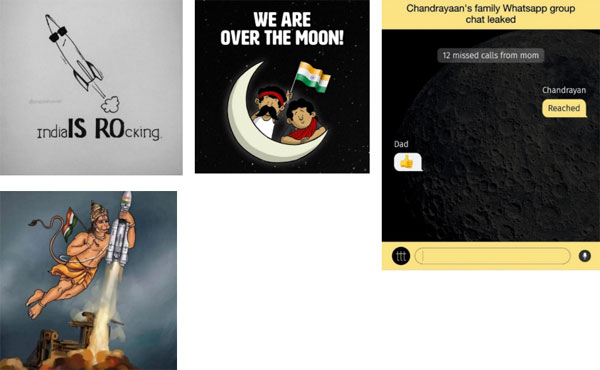
 Late night last Friday, the nation was hooked to watching the Chandrayaan 2 landing on the South pole of the moon. In the wee hours of Saturday morning, when it became evident that the lander Vikram has deviated from its trajectory and gone incommunicado, the nation gasped together. The next day, the now-famous image of the Prime Minister consoling the ISO chief Kailasavadivoo Sivan was the subject of many front pages, social media posts and memes.
 By Rohit Bansal