By A Correspondent
Seventy-eight per cent urban Indians said they trust people they know personally, as the most reliable source of news, ahead of all forms of formal media sources! According to a survey conducted by research firm Ipsos titled Trust in Media, media sources trusted most in the pecking order were newspapers and magazines (77%), followed by television and radio (71%), and online news websites and platforms (66%) – online platforms were found to have some bit of trust deficit, with at least 3 in 10 Indians (32%) doubting the efficacy of news. Trust was found to be the lowest as a new source, for People-known-predominantly-through-the-internet (53%). 4 in 10 Indians were mistrusting of this news source.
Most relevant News Sources: Newspapers and magazines have been rated best for providing most relevant news and information, by majority of Indians (82%); personal relationships come next as a relevant news source (79%); followed by Television and radio (75%), online news websites and platforms (72%) and people known via the internet (62%). Said Parijat Chakraborty, Country Service Line Leader, Ipsos Public Affairs, Corporate Reputation and Customer Experience: “We tend to trust people we are close to, most. It now extends to even news and information, displacing all forms of media, relegating them below personal relationships. Newspapers and magazines fortunately redeem their position, as the best news source for relevant news, “says
Has the Trust in Media increased or diminished in the last 5 years?: India, Saudi Arabia, South Africa, Malaysia and China, buck the global trend of increasing distrust in Media, in the last five years.
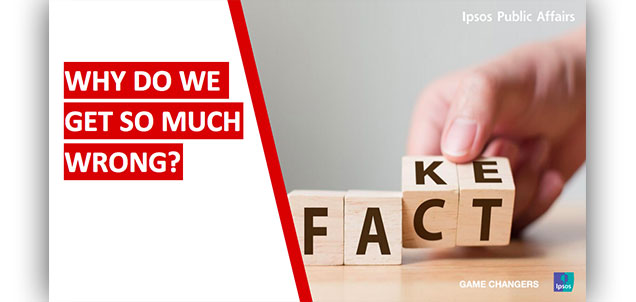
Fake News : Fake News exists and Indians as well as global citizens believe that there is fair bit of Fake News across all media outlets. 67% Indians believe that there is prevalence of fake news in news and information of Online News Websites and Platforms; next, 63% Indians feel that people they know predominantly through the internet are the purveyors of fake news in the news and information they share; 59% Indians feel Television and Radio have fake news in their content; 55% Indians feel Newspapers and Magazines have prevalence of fake news in their news and 51% Indians feel people known personally also provide fake news in the information they share.
“Keeping in view the highly detrimental impact of Fake News, regulatory action is necessary,” reasons Chakraborty.
New Sources and Intentions: News Source perceived to be with the best intentions? Personal Relationships have been rated the news source with the best intentions by a whopping 80% of urban Indians, followed by newspapers and magazines (79%), Television and radio (72%), Online news websites and platforms (69%) and People known via the internet (63%).
All news sources are perceived to be of good intentions by majority of urban Indians, polled.
Public Broadcaster Versus Private Broadcaster: Indians display more trust in public broadcasters vis-à-vis private broadcasters. Public TV and radio broadcast are perceived to be a necessary service by majority of Indians (65%), polled.
‘Public broadcasters (TV & radio) are controlled by the government, so they are trusted more for authentic news and for government announcements and policy changes, making them an intrinsic part of our lives,” added Chakraborty.
Methodology: These are the findings of Ipsos’ Global Advisor survey, an online survey conducted between January 25 and February 8, 2019. The survey instrument is conducted monthly in 27 countries around the world, via the Ipsos Online Panel system. The countries reporting in this release are Argentina, Australia, Belgium, Brazil, Canada, Chile, China, France, Germany, Great Britain, Hungary, India, Italy, Japan, Malaysia, Mexico, Peru, Poland, Russia, Saudi Arabia, Serbia, South Africa, South Korea, Spain, Sweden, Turkey, and the United States.
The results are comprised of an international sample of 19,541 adults ages 16-74 in most countries, ages 18-74 in Canada, South Africa, Turkey, and the United States, and ages 19-74 in South Korea. Approximately 1000+ individuals participated on a country by country basis via the Ipsos Online Panel, except for Argentina, Belgium, Hungary, India, Mexico, Poland, Russia, Saudi Arabi, South Africa, South Korea, Sweden, Turkey, Malaysia, Chile, Peru and Serbia, where each have a sample of approximately 500+.