Tag: internet radio

  • Rise of internet radio: What do traditional FM players think?

    By Robin Thomas


    The internet today has become the fastest growing medium in the country, and mobile has more or less become a necessity. So influential is the internet and mobile today that every medium is harping onto the digital bandwagon. The rise of internet and mobile has compelled even FM radio to spread their wings online. Radio Maska which plays 24×7 Hindi music claims to be India’s first Bollywood internet radio station, catering to Indian and NRI listeners.


    Besides, Timbre Media, a multi platform and multi genre radio company will soon be launching an internet radio station; VentureNet Partners, a Bengaluru based internet radio company will also launch Radiowalla, a premium model internet audio service that promises a variety of special interest internet radio channels. Realizing the potential of internet, even traditional FM radio stations have extended their reach online. Radio Mirchi for instance launched two internet radio stations- Meethi Mirchi, (plays contemporary melodies) and Purani Jeans (plays Hindi retro). Nearly 3.5 years ago, Radio City launched its music portal, PlanetRadiocity.com and only recently the music portal announced the launch of its new web radio genre, IndiPop Radio.

     

    Rachna Kanwar

    Rachna Kanwar – VP and Business Head, Digital Media and New Business, Radio City was of the view that the rise in internet radio stations is a reflection of people’s media consumption and the rising internet penetration in India and around the world. “More and more people are consuming music on the internet and therefore it is but natural that the potential has been tapped by players. While music has always been available illegally, today the whole process is getting legalized. Even music companies are realizing the potential of the digital platform and its demand and looking at the platform differently. This is the future of consumption and serious players realize they cannot ignore the phenomenon.”

     

    Prashant Panday

    For those complaining about lack of differentiation in FM radio, internet radio may have come as a huge relief as it promises variety in both music and non-music content. However, once FM phase III is rolled out, FM stations hope to witness more innovations along with differentiation in content. So, is there a scope for the two to co-exist or do traditional radio stations need to press the panic button? According to Prashant Panday, CEO Radio Mirchi, “No one needs to be worried about anything if they can adjust to the new realities. If an FM broadcaster prefers to remain only an FM broadcaster, it will be in trouble. But if it can seamlessly migrate to the internet platform, it will be able to maximize the combination of the two formats. So no….there is no need to worry.”

     

    Rabe T Iyer

    Rabe T Iyer, Business Head, BIG FM was of the opinion that online radio stations traditional FM stations need not worry about online radio and although there are limitations, online radio is an extension of traditional radio stations.


    Internationally, online radio stations augment terrestrial radio listening rather than substitute it. It’s augmented by users logging in from work and homes via the net and accessing their favourite stations. Yes, Online music with its niche music genre will fill the gap which traditional radio is unable to experiment with due to commercial consideration however traditional FM stations will not worry about growth of online radio.”


    In an earlier interaction with MxMIndia, M Sebastian, Co- founder and CEO, Timbre Media had said, “There is sufficient space for everyone to co-exist and grow. Rather than worrying, we need to identify areas of partnerships that lead to mutual benefit and faster growth and work towards realizing the full potential of the audio medium.”


    The listeners of internet radio stations are said to be those that are dissatisfied with the traditional FM radio stations however the market for internet radio is still small and currently caters to only specific or niche audience. Ashish Pherwani, Associate Director, Advisory Services, Ernst & Young believes that terrestrial FM radio stations will not have to worry about their internet radio counterparts at least for the next five years. He is also of the view that as a business there are many similarities as both internet radio and traditional FM radio stations are in the business of disseminating music.


    Speaking about the advantages and disadvantages of the internet radio and traditional radio stations, Mr Pherwani said, “As far as listening to radio is concerned, FM radio stations is absolutely free and this is where traditional radio has an upper hand over the internet radio. The disadvantage however is the fact that FM radio licenses are very expensive as a result many companies undergoing loses.”


    Unlike the traditional radio stations which do not charge listeners for listening to radio and is mainly advertising led, the business model of most internet radio stations are either subscription or advertising led or both depending on their radio channels. Like their traditional radio counterparts, internet radio stations too have to pay music royalty costs i.e. a minimum royalty and revenue sharing model. When asked to share his views on internet radio and the benefits it may have on the music companies, Rakesh Nigam, CEO, IPRS (The Indian Performing Right Society Limited) said, “Digital music in India is only picking up, with 3G and 4G services entering the market, internet radio stations will only grow. As a result the sale of music CD’s will only further decline as they will be heard online rather than be purchased. Thus there is potential for internet radio and as a result it will be a win-win situation for all including the music companies.”


    Although internet radio has been around for a while, it is still at a nascent stage in India and perhaps for many it is still a new format of radio station hence it needs to first spread awareness about its existence and features. Traditional FM players on the other hand have established themselves in the market and realizing the potential of the internet some of them have already taken their station online. Most of these FM players therefore find no reason to worry about the rising number of internet radio stations. They are of the opinion that differentiation and innovation in FM radio will further increase with phase III rollout and besides it will further increase the reach of traditional FM radio which the internet radio stations may find hard to match, at least initially.
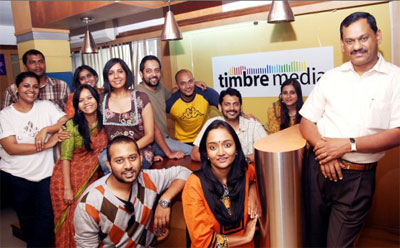
     

  • Continuing the WorldSpace legacy @ Timbre

    By A Correspondent


    The year 2012 has already begun with a series of announcements of radio on the web and other digital platforms. PlanetRadiocity.com for instance has launched a new genre – IndiPop Radio on their Web Radio station in March, 2012, and a Bengaluru based internet radio company- Venturenet Partners will be launching a premium model internet audio service- Radiowalla in April 2012. Formed in 2010 by former employees of WorldSpace India, Timbre Media is also slated to announce its internet radio station – Timbre Radio. All these players not only aim to provide innovative but, differentiated content and world class radio programming to their listeners, all through the power of audio.


    Besides the internet, Timbre Media plans to exploit the potential of the audio medium across digital platforms including mobile and DTH Television. On the mobile front, the Bengaluru based Timbre Media has already aligned with Vodafone India to offer listeners multiple music genre radio stations across the country. Listeners will have to pay Rs. 30 per month for 300 minutes of free usage. However this mobile radio service is not available in Andra Pradesh, Gujarat, Himachal Pradesh and Kolkata. Saregama India Pvt Ltd. which has acquired 10 per cent stake in Timbre Media provides the company (Timbre Media) with access to their music database.


    Timbre Media offers customised radio content for multiple broadcast platforms. It has four studios in Bengaluru and two studios in Mumbai among other studios in different parts of the country. In conversation with MxMIndia, M Sebastian, Co- founder and CEO, Timbre Media spoke about business model of Timbre Media, his break-even plan, the trends to watch out for, on traditional FM radio and much more.


    Q: Can you share with us how Timbre Media was formed? And what was the thought process behind the launch?

    Timbre Media was formed in 2010 by the erstwhile employees of WorldSpace India, to continue the legacy of world class radio programming that we provided through WorldSpace to our listeners.


    Q: What is the team size? Timbre Media is currently headquartered in Bangalore… Will you be setting up offices in other parts of the country too? When?

    We are a team of around 80 people, spread across different Indian cities.


    Q: Timbre Media specializes in programming radio contents for corporate entities, FM stations etc… Can you throw some light on the USP of Timbre Media? Also are you in talks with any FM station for radio content?

    Timbre Media has the unique advantage of a talent pool that introduced subscription based radio service in India and popularized the concept of genre based radio programming in our country. Our content is different, rich and compelling. We have learnt a lot about the expectations and aspirations of our target customers in the last 10 years of our association with WorldSpace Satellite Radio and its elite customers who valued quality and variety.

    We are in discussions with potential customers in every vertical that we are operating in.


    Q: What is the business model of Timbre Media? Is it advertising-led or a subscription model?

    Our business model is based on our philosophy that is to provide customized content that is different, rich and compelling and monetize the same in the best possible manner. It could be advertisement- or subscription-based depending on the vertical and the ecosystem we are operating in.


    Q: How many channels are in the offing? Which genres will you be offering? Will news also be part of it?

    We can’t say at this moment how many and what types of channels we will be offering. As I said, it is a function of the vertical and the prevailing ecosystem. We are focusing on providing customized content solutions to various customers and it could vary from one to the other. We are not averse to a particular type of programming or platform.


    Q: When are these channels scheduled to launch? Will it be only through mobile or will one be able to access them on the internet and DTH as well?

    We are not averse to any programming or platform. We are interested in utilizing our experience and expertise to meet the aspirations of the end user by using every available opportunity and monetizing the same to ensure the growth of Timbre Media.


    Q: Whom do you consider as competition?

    As such I do not think there is anyone who has the same experience and expertise that we have, and provide the same products and services that we offer.


    Q: How has 2012 welcomed Timbre Media? What are your growth plans?

    We have made considerable progress in the last two years. Thank God and the committed and passionate team that Timbre have, we have done extremely well compared to most of the start-up enterprises. We want to be a unique media enterprise that touches every customer who values quality audio content through all possible platforms and devices in the next 5 years.


    Q: Any specific trends you see in the Indian radio industry, particularly in the internet and mobile space?

    Radio industry is growing, and listeners are appreciating quality content for which they are willing to pay. The technology and platforms are enhancing the ecosystem every day and enabling the consumer to get what he wants, in the way he wants at the time he wants.


    Q: Also, should traditional radio begin to worry with your entry?

    There is sufficient space for everyone to co-exist and grow. Rather than worrying, we need to identify areas of partnerships that lead to mutual benefit and faster growth and work towards realizing the full potential of the audio medium.


  • PlanetRadiocity launches new genre on Web Radio

    By A Correspondent


    PlanetRadiocity.com has formally launched its new web radio genre, IndiPop Radio, which plays back-to-back IndiPop hits 24×7. The newly launched web radio station will feature popular IndiPop music from all over the world, the segment will also feature popular music of artistes like Lucky Ali, Mohit Chauhan, Kailasa, Strings, Junoon, Apache Indian, Sukhbir and so on.


    The launch of the IndiPop stream (a new genre on PlanetRadiocity Web Radio) is said to be an effort to expand the offerings of PlanetRadiocity Web Radio. Web Radio which offers 24 hours of streaming internet radio was launched in March 2010 by PlanetRadiocity.com.


    Indian rapper Baba Sehgal also launched his new single and video ‘Praji Kunjam Kunjam Control’ exclusively on PlanetRadiocity Web Radio. Listeners will have to visit IndiPop Radio on PlanetRadiocity.com’s Web Radio to listen to the song.

     

    A little more than three years since its launch, PlanetRadiocity.com, the music portal from Radio City, is set to undergo a revamp. Its Web Radio, after ‘Live Radio’ and ‘IndiPop’ will very soon launch more genres such as Devotional and Independent music to name a few. In conversation with MxMIndia, Ms Rachna Kanwar, Head – Digital Media and New Business, Radio City the brain behind PlanetRadiocity.com spoke about the future trends of online radio, mobile plans for PlanetRadiocity, on the revamp plans and much more.


    Q: Can you throw some light on the new web radio station – IndiPop? 

    Last year we started ‘Web Radio’, which is a separate entity and not the same as the terrestrial radio. Web Radio has been created keeping in mind our TG which is the internet audience and now we have launched IndiPop Radio which was formally launched on Tuesday, March 20, 2012. We believe there is a huge space that is yet to be filled by the non-film music. Today most people are focusing only on Bollywood music, which of course is very popular and we too play and endorse it.


    However there are also other genres or type of music which are very popular and have a lot of audience and hence needs to be played. In fact most of the popular Bollywood singers have emerged from this genre (IndiPop) whether they are Kailash Kher, Mohit Chauhan, Shaan etc. So if Bollywood is dipping into this creative pool then why not create space for the IndiPop genre itself. This year in fact is in a way seen as a comeback of the IndiPop genre because a whole lot of artists of this genre are announcing their albums whether it Lucky Ali, Indus Creed or Baba Sehgal himself.


    Q: Now, once an artist launches his/her album, take for example the Baba Sehgal album… How does PlanetRadiocity promote it or take it forward?

    What we plan to do is take a 360 degree marketing approach by promoting it through our terrestrial radio station, online we will be using the social media, search engine marketing, mailers, promos etc. and then create events around it.


    Q: On Web Radio, (launched in 2010) you have Live Radio and now IndiPop Radio. How has the response been for web radio? What are new genres that you would explore soon?

    Very soon we will be launching devotional music and independent music which is very different from Indipop and many more. Our TG is completely the internet audience i.e. anybody and everybody who is interested in listening to music but, our web radio are consumed heavily in offices and by college students. Apart from them, we have a whole lot of audience listening from home as well and a large chunk of them are the NRI’s. We have received huge response from audience on our Web Radio. We have about 1.6 million listeners from across the world including UK, US and Pakistan etc.


    Q: Is there a market for web radio in India? What is the audience profile that visit PlanetRadiocity’s web radio? Do Radio City listeners also visit the website?

    Frankly, people have just begun to understand digital music in India, people are becoming quite aware of music online and therefore you have more websites targeting music lovers online. So there is a market for web radio in India and we have been quite successful with web radio.


    Radio listenership to a certain extent has been moving to the digital platform and while we do realize that radio has its loyal listeners, there are listeners particularly the younger ones who are moving to digital. We already have headway in engaging this audience, we have a full-fledged digital team and music website.


    Q: The business model for web radio (and PlanetRadiocity) is ad sales led, isn’t it? Is there any other revenue source?

    Web Radio is also dependent on banner advertising and ad sales etc. The advantage being that within the stream also one can sell air time and which is a huge advantage for us because our sales team know how to sell air time.


    Q: It’s been nearly 3.5 years since the launch of PlanetRadiocity.com. You have the web radio now and more genres to come. Any plans to revamp the website or give a new look to the web radio section?

    Yes, very soon we will be revamping the website. We would also be including new features in it which should happen in about a month time or so.


    Q: How are you leveraging mobile? Any mobile specific plans? Will mobile internet users also be able to listen to PlanetRadiocity web users?

    We are in the process of creating mobile apps for the website. Once these apps are created we will also have mobile internet users also visiting our website.


    Q: How has 2012 welcomed PlanetRadiocity? What can we expect from you this year and say a few years from now?

    The year 2012 looks extremely positive and encouraging because we will be launching a new look, we would be launching a lot of music streams, new web radio genres etc. which will attract new audience. As far as our growth target is concerned we have been able to meet them.


  • [MxM Radiol]: 5 reasons why internet radio scores over traditional radio

    By Anil Srivatsa


    1. Internet radio offers more room:

    The main difference that triggers all other differences between Internet radio and FM radio is the platform itself. The Internet lends more room for flexibility, cost saving and personalization.


    2. Internet Radio offers a variety of choices in comparison to FM radio:

    This is true, particularly in the Indian context. FM stations tend to follow the beaten path for a variety of reasons, but to the consumer it just spells ‘boredom and monotony’. Radio can be classified broadly into mass radio and niche radio.


    InIndia, mass radio is pretty much the order of the day, but it leaves a lot of content-hungry people dissatisfied. Niche radio does not justify the investment from a business point of view, but presents a vibrant opportunity to internet radio operators, who for a lot less money can create and serve these niche content seekers with better quality content in a variety of genres.


    3. Content on Internet radio is more personalized; FM radio caters to collective choices of masses:

    Internet radio is more amenable to personalization at a micro-listener level, with the choice of content being delivered with accuracy according to the taste of the consumer, while FM radio is not as hospitable.


    Of course, Internet radio is a loosely used term that could mean content delivered via the Internet in a linear fashion (non-interactive just like FM) or as an on-demand service (interactive). Linear Internet radio makes available several choices of content differentiation in one place while FM radio is devoid of choice and is, within a specific urban or semi-urban dwelling, limited to the number of frequencies in that region. This makes Internet radio more interesting choice.


    4. The ability to influence opinion on topics and issues on a wider scale:

    FM inIndiagenerally reaches out to the least common denominator while throwing up some specific content catering to special interest. This generally happens when the channel is omni-present in that geographical location, which makes Internet radio look even more obscure. But in reality, Internet radio’s reach is well beyond what a single FM station can do with one channel, giving the flavour of programming more room to breathe and giving it the possibility of more substance and depth.


    However, nothing can compete with FM for super localization en masse …even if one can create and distribute a super local internet radio station.


    5. Internet radio offers broader spectrum of artists and more room to showcase talent:

    Historically NAB, who was then the lobby for AM radio operators, perceived FM radio to be a huge business threat. Today they have embraced it (FM) and are now perceiving the same threat coming from internet radio. Traditionally, on either side of theAtlantic, FM radio is in cahoots with the music labels where there is a carefully orchestrated promotion plan for the labels, sidelining air play for the unsigned bands leaving FM playing the same 20 top of the hour.


    InIndia, too, things are not very different. Large market-leading labels restrict FM radio to play more of their music to ensure constant promotion in exchange for favourable licensing terms resulting in the same disenfranchisement on un-signed quality content. This goes against free speech and violates the anti-competitive spirit of equal opportunity to succeed in business. So, both, from a business and talent perspective, Internet radio is totally unrestricted, allowing small label artists to showcase their talent in all kinds of music and non-music content and without gate keepers.


    Labels today see Internet radio as a threat but in reality it’s an opportunity to discover new talent, promote unconditionally and widen their repertoire. Given the right environment, FM radio would rebroadcast on the Internet in a heartbeat and this in itself tells the whole story.


    Mr Anil Srivatsa is the Co-Founder, CEO Venturenet Partners Pvt. Ltd. (promoters of Spot Radio and Radiowalla)


  • The Anchor: 5 reasons online radio will grow in India

    By Prashant Panday


    #1 Variety in Music Programming

    As internet radio grows it will offer much more variety in music programming. The internet is the future of everything, and radio happens to be part of it. Radio is currently hamstrung by the music royalty license issue, but we hope that it will get sorted out soon. Once that happens, all Indian radio stations will be available online.


    #2 No Geographical Boundaries

    Geographical boundaries that exist today will be demolished. What will happen is that a listener in Mumbai will be able to hear a Delhi radio station and vice- versa, or a New York station in Mumbai etc.


    #3 Higher Interactivity

    There will be far higher interactivity. For example, if I like a song, I will be able to download it instantaneously. In fact, download speed will further increase as 4G services will be available; and as broadband internet penetration increases, it will bring more users on board.


    #4 It Will be Wonderful for Artists

    As online radio grows strong it will help artists make a mark in the music industry merely on the back of great content; whereas today, a whole lot of marketing support is required.


    #5 New Challenges and New Opportunities

    For broadcasters it will bring new challenges because there will be much more competition, it will also offer new opportunities because then the whole world will be our oyster.


    Prashant Panday is CEO, Radio Mirchi.