By Avik Chattopadhyay
 This is my second in a series of thoughts on ‘India@75’. The first was to do with the very concept of ‘democracy’ in India as we enter our 75th year. This one is to do with the last stages of one of the oldest brands of this country that has important lessons for all of us in the world of brand strategy and management.
The Indian National Congress was established on December 28, 1885 at the Gokuldas Tejpal Sanskrit College in Mumbai with 72 delegates responding to a call by retired Indian Civil Service officer Allan Octavian Hume of creating a platform for educated Indians to discuss and debate civil and political issues. In a letter to select alumni of Calcutta Presidency in 1883, Hume implored, “Every nation secures precisely as good a government as it merits. If you, the picked men, the most highly educated of the nation, cannot, scorning personal ease and selfish objects, make a resolute struggle to secure greater freedom for yourselves and your country, a more impartial administration, a larger share in the management of your own affairs, then we, your friends, are wrong and our adversaries right…and India truly neither desires nor deserves any better government than she enjoys.”
The Congress was the ‘bridge’ between the ruler and the ruled. Its task was perfectly cut out in relaying the ruler’s orders and diktats in the required tone and language to the ruled while also carrying the requests and entreaties of the ruled up to the ruler. The elite members of society who made up the Congress were expected to coerce the ruler into becoming a bit more empathetic towards the subjects and have a softer approach to administration while looting the land.
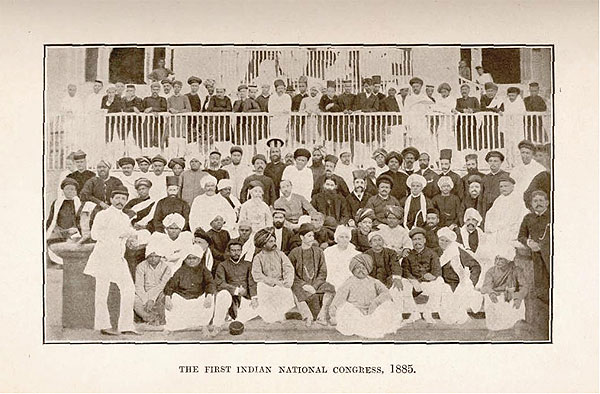
The plot took a twist with a man returning home from South Africa in 1915. The initial years were as per the norm with the points of inflection being the agitations in Champaran and Kheda. In 1920, Mohandas Gandhi took over the leadership of the Congress at it become more agitational in nature leading to the declaration of independence on 26th January 1930. The bridge had been drawn. It took numerous failed negotiations and betrayed assurances over the next twelve years to reach break point with ‘Quit India’. The Congress had firmly established itself as the only alternative to the Queen as ruler of India. A jilted and jealous Muslim League took away portions from the west and east but once the tricolour was raised atop Red Fort on 15th August 1947 the die was cast.
The nature and structure of the rule remained more or less the same. The colour and language of the “my baap” had changed. And the fact that all that was now being done was for an independent India and ourselves. The nation had finally secured precisely as good a government as it merited, true to Hume’s words.
The British ruled basically through agents and representatives who were given licences by the Queen / King to conduct business or trade in India on behalf of large British organisations. Independent individuals, mostly erstwhile officers of the East India Company, got multiple operating licences through bribery and nepotism and were called “managing agents”. Important names were Andrew Yule, Balmer & Lawrie, Burn & Currie and Martin & Co. who evolved over the years into not just managing various businesses through commissions but also into limited liability companies in areas like tea, real estate, engineering, paper, timber and manufacturing. At the core, the managing agents were as they were called…agents who protected the interests of the crown at any cost through managing all stakeholders using whatever means necessary.
Though India got independent in 1947, their operating licences continued well into the 1960s. records show that in 1954-55 there were close to 3.944 managing agents who handled 5,055 joint stock companies. Once the licences expired, most of the agencies were either nationalised or conveniently handed over to ‘friends’ of the Congress. This was the beginning of the long chain of nepotism and ‘licence raj’ in the country.
The new ruler became the de facto “managing agency” of an independent India. It operated just as one, with no enemies, no burning bridges and no ‘outcastes’ in the system. Everyone was welcome to the party, pun intended. This was a political movement that rallied a subjugated people around itself to demand freedom. In 1947 it was expected to govern a heterogenous conglomerate of 500+ kingdoms and 300 million people!
The 1950s and 1960s were spent in a mix of utopia and resolve to build the nation. Some of the country’s most enduring institutions and ideas were born, built, and established. The largely impoverished but dreamy-eyed 300 million looked at the ‘Temples of Modern India’ with pride and aspiration. Some of the best brains in the world came to the world’s largest democracy to both teach and learn. Here was a nation crafted out of non-violence, a flagbearer of an ideal new world that every colony could take inspiration from.
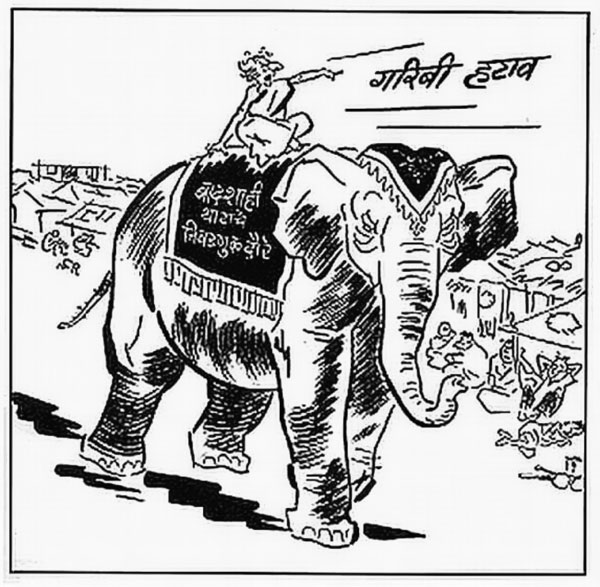 Cartoon on Indira Gandhi’s “Garibi Hatao” campaign, 1971
The 1970s was the decade of rude realisation that the promises of 1947 were not being met. Nepotism, in-fighting and corruption had become the norm. Disillusionment had set in. And the “angry young man” was born…brooding, bruised and brash, out to challenge the establishment and question the status quo.
The political organisation was not cut out for governance after all. Regional parties were anyway in power in a few places, but the continental plate shifted when the Congress was dethroned. The feet of clay were finally exposed, and the first cracks had appeared in its imposing superstructure.
It has taken another 50 years for the Congress as an organisation to stare at the possibility of folding up even before it celebrates its 150th anniversary in 2035. Over this period the “brand” Congress has slowly but surely lost relevance in the India of today and tomorrow. Its current situation is not an outcome of the last seven years. The decline surely has accelerated since 2014 but the cracks just kept widening since 1975. Intermittent electoral victories in the centre and various states could not repair the cracks. The end is inevitable. The brand is in a lifecycle stage of “Fatigue” hurtling towards fatality.
The 1950s were about Fascination.
The 1960s were about Familiarity.
The 1970s saw the onset of Frustration.
The 2000s evolved into Fatigue.

This is the lifecycle of a brand, as defined by me. Every brand has to go through this inevitable cycle. The successful ones stretch stage “B” as much as they can to ensure longevity by keeping their purpose and promise relevant and constantly refreshed. Stage “C” is the one where disruptive transformation is required to ensure the brand holds itself back from reaching Fatigue. This stage is where a Netflix switches from renting DVDs to creating OTT content. This is where Ford decides to go electric. This is where the brand purpose, promise and personality need to be recast, addressing a new consumer / recipient.
The Congress did not change any of its brand parameters since the 1950s. At the stroke of the midnight hour, it had promised the new nation peace, progress, and prosperity. It had promised the 300 million to take them out of poverty. It had promised safety, security, and stability. It had promised opportunity based on merit and performance. While its demonstration of the promises has left a lot to be desired, there are some aspects of its purpose that has not evolved, as if we are still a just-independent nation, all at sea with the world around us. The aspects of its brand promise that it continues to talk about have lost relevance in the current context.
Many aspects of the Congress’s promise have been usurped by other political entities. The BJP has taken aspects of national identity, progress, and world-recognition. The Trinamool has taken secularism and inclusiveness. The DMK is about regional identity and stability. The CPI-M is about socialism and collective development. The AAP and BJD are about transparent governance. What is equally important is that each of them has ably demonstrated bits of their promise in the states / regions they govern.
The Congress continues to believe that its core voter is still the dreamy-eyed poverty-stricken villager. The villager continues to be poverty-stricken but does not believe in old-world dreams anymore. The aspirations have changed over the decades and there are new elements of religious identity, revival and divisions thrown in to divert focus from rising unemployment, rising cost of living and diminishing civic facilities. The Congress did not wake up to this changing narrative, born out of years of apathetic and corrupt governance.
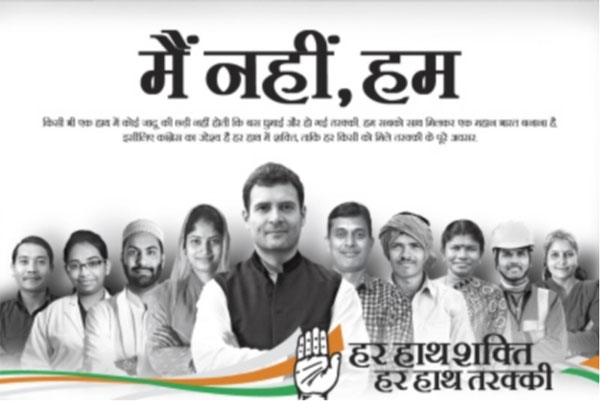
The average Indian is willing to support an inept government against a corrupt one, patient enough to put up with stumbles, blunders, and greater hardships than unending favouritism, nepotism and siphoning of public funds. Promises like safety, security and unity are not relevant anymore to this Indian for this India is not united but carved out into castes and regions out to secure their own livelihoods at the cost of others.
To top it all, the insistence not to change the leadership is very Orwellian. The current leadership is obviously happy to see the sand totally slip out of its hand but not hand over power to others and call it a day. Possibly the ugly fact that an entire army of termites depend on one family for their existence push this oddity to eternity. the biggest internal disruption and upheaval would have come about with that one single move of abdication by the family. The Fatigue would have been arrested and yet another attempt at stretching Stage “D” in the lifecycle would have been elongated. Or maybe the leadership does actually want the end to come…fast and final.
The Congress of 2021 can be equated to Nokia in 2011, completely irrelevant and outfoxed by competition only because it refused to recognise the change around it and evolve accordingly, instead resting on its laurels and misplaced confidence in its own capabilities and on the loyalty of its supporters.
The British left in 1947.
The last managing agency is preparing to leave now!
Avik Chattopadhyay is a senior brand strategist and commentator. His column will now appear every other Tuesday. The next part in this series will appear on Tuesday, October 26 with a focus on Democracy as a Brand