Tag: Indian Broadcasting Foundation

  • IBF institutes regulatory council

    By Our Staff


    The Indian Broadcasting Foundation (IBF), which is soon going to be rechristened Indian Broadcasting & Digital Foundation (IBDF), the apex body of broadcasters and OTT operators, has announced the appointment of Justice (Retd) Vikramjit Sen as Chairman, along with six other eminent industry members for the newly formed Digital Media Content Regulatory Council (DMCRC). The Council constitutes prominent personalities from the Media & Entertainment industry and Online Curated Content Providers (OCCPs), with experience in IPR, programming and content creation.


    The Council includes national award-winning filmmaker Nikkhil Advani; Deepak Dhar, CEO and founder, Banijay Group; prominent artist, filmmaker and writer Ashwiny Iyer Tiwari; and creative writer and innovative director, Tigmanshu Dhulia. The other two members from the OCCPs include Ashok Nambisan, General Counsel, Sony Pictures and Mihir Rale, Chief Regional Counsel, Star and Disney India.


    Speaking on the appointment of the committee, K. Madhavan, President, IBF said, “I am delighted that so many experts from the media and entertainment industry have come forward and accepted the invitation of IBDF to be part of the proposed self-regulatory body. I look forward to working with the Council whose mandate is to ensure freedom of expression of the Indian creative industry as well as help the discerning audience of the OTT platforms to have unhindered access to world-class and differentiated content.  This is a historical and win-win moment for all the stakeholders i.e. the M&E industry, the policymakers and the subscribers of the OTT platforms.”


  • IBF embraces digital, will now be IBDF

    By Our Staff


    The Indian Broadcasting Foundation (IBF), the apex body of broadcasters, is being renamed as Indian Broadcasting and Digital Foundation (IBDF), as it expands its purview to cover digital platforms to bring all digital (OTT) players under one roof. IBDF is in the process of forming a new wholly-owned subsidiary to handle all matters pertaining to digital media.


    IBDF will also form a Self-Regulatory Body (SRB), as per the Information Technology (Intermediary Guidelines and Digital Media Ethics Code) Rules, 2021 as notified by the Government of India on 25th February 2021.


    This industry-led SRB called Digital Media Content Regulatory Council (DMCRC) for digital OTT platforms, which is a second-tier mechanism at the appellate level is similar to Broadcast Content Complaint Council (BCCC), which IBF had successfully implemented for the linear broadcasting sector way back in 2011.


    Speaking on the development, K. Madhavan, President – IBF said, “We are pleased to extend our commitment of fostering an environment that is culturally adept, socially responsible and governance-bound to the fast-growing digital medium. The diversification will empower the Foundation to pursue growth opportunities for its members who run OTT services in the country, while ensuring they present a strong collective voice, both in the broadcast and digital sector under the combined body. We will continue to work arduously to create new benchmarks in line with the industry’s growth aspirations.”


  • IBF seeks relief package for the broadcast sector

    By A Correspondent


    The Indian Broadcasting Foundation (IBF), has sought the government’s support to deal with the economic crises in the television broadcast sector as a fallout of the Covid-19 outbreak in the country.


    In its letter to Prakash Javadekar, Minister for Information and Broadcasting, IBF has made the following requests:


    1. Regulatory moratorium for the sector for at least next 18 months.

    2. Phased resumption of production activities.

    3. Extension of moratorium period for GST payment.

    4. Mandating digital payments of subscription and advertising dues to broadcasters.

    5. Advisory to DPOs in respect of release of payment of subscription fees for the period up to February 29, 2020

    6. Waiver of processing fee and temporary live up-linking fee for live sporting events for a period of one year from the resumption of normal business activities.

    7. Increase in time period of one to two years for operationalisation of new channels which have been granted permission.

    8. Suspension of requirement of Performance Bank Guarantees in respect of channels sought to be launched for a period of one year.

    9. Waiver of carriage fee due to Prasar Bharati for three months (April, May and June) for FTA channels on Prasar Bharati’s Free Dish Platform.

    10. Deferment of payment due to Prasar Bharati for Free Dish carriage by 31 March 2020 be deferred until July 2020.

    11. All pending refunds even exceeding Rs. 5 Lacs should be urgently processed.

    12. The first instalment of advance tax (due on 15 June 2020) should be done away with and taxpayers be allowed to pay the 2nd instalment (due on 15 September 2020) directly without any interest liability

    13. The due date for deposit of TDS for the months of March and April 2020 should be extended to 31 May 2020 without any interest liability.

    14. Extension /waiver of permission for FX payments for foreign satellite transponder hiring.

    15. Lower rate of TDS from 10 to 2 per cent on subscription revenues

    16. Payment of stamp duty on agreements should be deferred upto expiry of ninety (90) days’ from the date of lifting of nationwide lockdown.

    17. Allow discharge of GST reverse charge obligation through GST input credit rather than paying in cash.

    18. Extend all existing stay of income tax demand for next 6 months without any new hearing.


    Said N P Singh, President, IBF: “The outbreak of the pandemic and the subsequent lockdown have posed several challenges for the television broadcast sector.  With complete cessation of  production  of  television  shows,  cancellations  of  live  sporting  events  and  scheduled advertisements, advertisement  bookings  nosediving  by ~50 per cent;  delays  in  payments  by advertising agencies/advertisers and distribution platform operators, the Broadcast sector is facing the brunt of the slowdown,” adding: “Moreover,  while  we  welcome  the  compliance  and  statutory  relaxations  granted  by  the Government in its latest notification of Apri 15l, the broadcast sector is seeking a stimulus package from the Government in the form of economic relief and regulatory flexibility so that all Broadcasters especially the smaller businesses can be helped to get back on track. IBF has also requested the Government for reduction in GST rate on Digital services (B2C), automatic  refund  of  input  credit  and  immediate  processing  and  issuance  of  lower withholding order (LTDS)”.


  • IBF expresses concern on Opposition’s call to boycott government ads on TV

    By A Correspondent


    The Indian Broadcasting Foundation (IBF) has expressed its displeasure with Congress Interim President Sonia Gandhi’s call to the Prime Minister to put an end to all advertisements by various state governments and Public Sector Enterprises for a period of two years.


    In a statement, IBF note: “Under such a scenario, we will resist any such move by the government to undercut revenue for government advertising as many of our member channels will lose substantial revenues and will be compelled to shut down resulting in massive job losses. At this critical moment when the nation stands united to deal with the aftermath of Covid-19 outbreak, we request all parties to give a thought for the media sector which is known for its neutrality and objectivity.  A lot of Government ads relate to social messages concerning health, education, etc.  TV still remains the primary mode of disseminating these messages to the citizens of India and stopping these ads is not in public interest.”


  • Broadcasters move Bombay HC against TRAI on NTO 2

    By A Correspondent


    The Indian Broadcasting Foundation (IBF), the apex body of television broadcasters, and a few broadcasters have petitioned the Bombay High Court on Monday, opposing the newest changes to tariffs as imposed by the Telecom Regulatory Authority of India (TRAI). The tariff (referred to as NTO2) was announced on January 1 and will be effective February 1, 2020.


    Last week, captains of leading broadcasters came together to speak to the media and express reasons for their opposition to the tariff order.


    According to a report, the petition is expected to come up for hearing today (Jan 14) before a division bench of Justices S C Dharmadhikari and R I Chagla.


  • IBF not pleased with new NTO issued by TRAI

    By A Correspondent


    The broadcast sector has expressed its dismay with the latest notification from TRAI issued on January 1, 2020, amending the new tariff order (NTO) and interconnection regulations. As per the new amendments, TRAI has reduced the cap on the MRP of individual channels, which can form part of any bouquet, to Rs 12 per month, from the earlier cap of Rs 19. The regulator has also sought to impose twin conditions for bouquet formation, effectively introducing a cap on bouquet pricing which was left untouched in the NTO.


    Notes a communique: “Coming barely a few months after TRAI notified the NTO effecting a disruptive change of the distribution ecosystem, these amendments will severely impair broadcasters’ ability to compete with other unregulated platforms and adversely affect the viability of the pay TV industry.


    “In the last 15 years of regulating the broadcast sector TRAI has issued more than 36 tariff orders and ancillary regulations in an attempt to micro manage what is arguably the cheapest form of news and entertainment in the world. This goes contrary to the Government’s stated position of ensuring the ease of doing business. Also, this change will only benefit the DPO’s as they have been allowed to charge as much as ₹160 for the channels that are supposed to be free.”


    Expressing its disappointment on the development, Indian Broadcasting Foundation (IBF), the apex body of broadcasters in the country, has conveyed that these changes will have very significant and industry growth hampering ramifications for the broadcast sector. At a time when the economic environment is tough, this tariff order will force a lot of channels to shut down and will lead to unemployment in the sector. While the government is looking at ramping up growth, these changes will have the opposite effect for the Broadcast sector just recovering from the twin shocks of NTO in the first half of 2019 and the ad slowdown business.


  • IBF welcomes Delhi HC order on DAS-III implementation

    By A Correspondent


    The Indian Broadcasting Foundation (IBF) has welcomed the order passed by the Delhi High Court on November 3, 2016 dismissing the nine petitions dealing with the time extension for implementing digital addressable system (DAS) in certain areas of Karnataka, Kerala, Andhra Pradesh and Telangana and Uttar Pradesh under Phase-III, the deadline for which had expired on December 31, 2015. With the dismissal of these petitions, the stay granted by various High Courts in areas covered by the nine cases stands vacated and will no longer apply.


    The Delhi High Court, while dismissing these nine petitions, has also directed the petitioners to switchover to digital addressable systems within three weeks – that’s November 24 and inform the subscribers by running a scroll on their networks about the digital switchover deadline.


    The High Courts in various parts of the country had earlier granted stay in certain matters on DAS Phase III deadline. The stay orders had stalled the implementation of DAS Phase III in those areas. This prompted the MIB to move the Honourable Supreme Court to get all the cases transferred to the Apex Court.


    The IBF has advised its member broadcasters to apprise all its affiliate Multi System Operators and local cable operators about the said switchover deadline of November 24 in these Phase–III areas and make it clear that after the said date the channels can be received only through a digital Set Top Box.  The subscribers in these areas are advised to immediately contact their respective Local Cable Operators/Multi System Operators to ensure the installation of STBs before the expiry of the above-mentioned deadline of 24 November 2016.​


    There is no change in DAS Phase IV deadline, which continues to be December 31, 2016.


  • IBF appoints Shailesh Shah as secretary general

    By A Correspondent


    Indian Broadcasting Foundation (IBF) has announced the appointment of Shailesh Shah as its secretary general. With over 28 years of experience in a variety of industries, Mr Shah will augment IBF’s efforts in building a robust and profitable broadcasting industry in India.


    In a career spanning three decades, Mr Shah has worked with The Hay Group, PriceWaterHouse Coopers, Watson Wyatt, Satyam Computers and the JSW Group.


    He was also involved with organizations such as The World Economic Forum, The Economic Development Board of Singapore and NASSCOM. He is a mechanical engineer, has a master in Operations Research and an MBA in Finance and has read at Bangalore University, Syracuse University, Drexel University and the Wharton School at the University of Pennsylvania.


    Man Jit Sigh

    IBF President Man Jit Singh said, “His wide experience in delving into industry fundamentals to drive value creation will be of immense value to the foundation. I, along with the rest of the members, welcome Shailesh to IBF.”


  • Ensure digitised feed from July 1: Broadcasters

    By A Correspondent


    Television broadcasters have urged the government to stick to the deadline of June 30 for mandatory cable digitisation in the four metros and slammed vested interests who were trying to create roadblocks.


    Cable digitisation in India has been hailed as the break of a new dawn for the entire broadcasting industry and all stakeholders – viewers, cable operators, multi system operators and broadcasters will benefit from it.


    “By and large, the industry has welcomed this transformation, but it is unfortunate that there are certain pockets of vested interests that are trying to create roadblocks,” said Uday Shankar, president of the Indian Broadcasting Foundation and the chief executive officer of Star India. “We remain confident that the government, TRAI, the parliamentary committee and for that matter even the courts will not allow these isolated voices to jettison what now is a national mandate.”


    Cable digitisation will to allow viewers to get more channels and will give them the option of refusing channels that they do not want. Being digital, it will also provide better quality of sound and picture. For MSOs, this would mean better transparency and ability to get a clearer idea of the number of subscribers. MSOs will therefore be able to declare revenues more precisely. With high bandwidth at their disposal, they will now be able to offer value added services and improve revenues.


    But some cable operators have cited unavailability of digital set top boxes and urged the government to extend the deadline.


    “The deadline must and has to be met. If it doesn’t happen on time, the confidence in this transition will completely evaporate and investments will not come in,” said Sunil Lulla, managing director and chief executive officer of Times Television Network, which runs Times Now, ET Now and Movies Now channels.


    In the current cable regime, broadcasters have been finding it difficult to generate revenues and scale up. “Broadcasters, particularly news broadcasters, have been crippled with huge carriage costs and poor subscription revenues. Digitisation changes all that. We will have far more resources to put into content, which will again benefit the consumer a great deal,” said KVL Narayan Rao, president of the News Broadcasters’ Association and executive vice-chairperson of the NDTV Group.


    Digitisation will benefit broadcasters as they will no longer have to pay large carriage fees and will now be able to get better subscription revenues. In the run up to the deadline, over the last two months, many television broadcasters have been communicating the shift towards digitalization at least five times a day.


    “Yes, there will be some disruption during this process but this is a game changing transition for the industry in India,” said Mr Lulla.


    Source: The Economic Times
    Copyright © 2012, Bennett, Coleman & Co. Ltd. All Rights Reserved


  • Broadcasters slam TRAI notification to limit ads

    By A Correspondent


    Broadcasters and advertisers have slammed Telecom Regulatory Authority of India (Trai) move to limit the duration of television advertisements to 12 minutes in an hour, and accused the regulator of exceeding its brief.


    A new notification issued by the regulator on Monday limited the amount of advertising on TV channels and disallowed any shortfall in a particular hour to be carried over. According to industry estimates, this could impact advertising revenues of broadcasters by 15-40 per cent.


    “Trai has no jurisdiction in the subject. Advertising is governed by the Cable and Satellite Act and the appropriate authority is the ministry of information and broadcasting,” said Uday Shankar, president of the Indian Broadcasting Foundation, and the chief executive officer of Star India. “The regulator is overstepping its brief,” he added.


    According to Mr Shankar, the low revenues from subscriptions give broadcasters no option but to rely on advertising inventory and revenues to survive.


    An Indian Broadcasting Foundation official said an earlier government guideline stipulated that Trai could issue an advisory with regard to advertising but not a notification.


    Sunil Lulla, managing director and chief executive officer of Times Television Network, which runs Times Now, ET Now and Movies Now channels, too criticised Trai’s decision. “This move is completely ridiculous. Self regulation is the best regulation,” he said.


    “This move will have an immediate impact because right now there is no other big source of revenue for broadcasters,” said Rohit Gupta, president of Multi Screen Media, the company which runs Sony Entertainment Television. The IBF will appeal against this new regulation, he added.


    Barun Das, chief executive officer of Zee News, questioned the timing of the regulation at a time when the entire broadcasting industry was going digital. “We have a limit mentioned in the Cable Act. If at all there is a need for regulating duration of advertising, it possibly could have waited some more time for the digitisation process to settle down.” he said.


    Mr Das said his channel had voluntarily cut its advertising inventory by 30per cent earlier this year. “We realise that too much advertising is a deterrent to viewership. We were not driven by regulations, rather we were driven by market forces,” he said.


    Mr Das said the viewers had choices not only of channels but also of media platforms. “I am not sure if advertising volume needs to be regulated. I would tend to believe that too much advertising would anyway drive away viewers,” he added.


    Sale of television rights have become an important source of income for sports bodies such as BCCI but the restriction on advertising will adversely impact the ability of broadcasters to recoup their investments, forcing them to scale down their bids.


    Source: The Economic Times
    Copyright © 2012, Bennett, Coleman & Co. Ltd. All Rights Reserved


  • By Invitation | Atul Phadnis: Will TV measurement in India finally get its logical direction?

    By Atul Phadnis


    In March this year, three industry associations that have a significant say in television broadcast and TV advertising jointly announced a new chapter in the TV Ratings Measurement initiative. Broadcast audience Research Council (BARC) is the joint venture that has been in discussion, for the longest time, between the three stakeholder associations – Indian Broadcasting Foundation (IBF), Indian Society of advertisers (ISA) and the advertising agencies association of India (AAAI) to measure nationwide TV audience viewership. BARC has taken birth where a lot of earlier industry initiatives have failed to take off – hence, a lot of folks (including me) are watching these events very closely and curiously.


    Yes. There are cynics who doubt whether the BARC initiative will be able to streamline the industry ambitions for a wider and robust TV audience measurement thereby recasting/enhancing the offerings of the current ratings provider – TAM Media Research (a joint venture between Nielsen and Kantar-WPP).


    The genuine fear is that the industry initiative will again slow down or worse – get delayed due to lack of clarity or infighting amongst the associations/players. It’s a legitimate concern based on what we have seen in the past. In fact, the recent announcement has been possible only when a formula for compromise was reached after months of stalemate on the BARC shareholding and composition of its board.


    The genesis of the industry initiative that has now taken birth as BARC has in its vision the Rs329 billion TV industry that to a large extent depends on ratings and viewership information for key decisions, growth and business. So what are the key expectations of the industry that should get addressed if BARC is the answer to the TV industry’s call on TV Ratings?


    1. The Burden of Transparency

    For years now, TAM has been criticized, publicly and privately, for alleged opaque policies relating to aspects such as third-party audits, pricing, technology R&D results and panel performance KPIs. as is the case with any competitive industry bustling with cut-throat competition, rumor mills and conflicting agendas of different players, the transparency burden had been conveniently dumped on TAM. after all, we do see from time-to-time the so-called ‘open letters’ that certain channels would send out to TAM asking for explanations on why their blockbuster programs did not do well in terms of TRPs. Irrespective of where the answers for failure lie, these occasions, nonetheless, cast all sorts of aspersions on the trading currency and are hardly constructive. I haven’t seen a single such instance over the last decade produce any positive reaction – either in providing more answers on causality nor a bettering of the ratings system. and these instances surely can’t be healthy for the industry that has dependencies on advertising that in turn needs TV measurement.


    It’s high time the industry associations, perhaps via BARC, put their necks on the block and take frontal onus and responsibilities on transparency elements that will boost confidence on TV Ratings. Not only will this sharing of burden save the industry the blushes in front of the advertisers, it will also have a correctional effect with the routine debates being laid to rest. Hopefully, BARC is able to bring in transparency by defining deliverables and quality parameters clearly to the Ratings vendor(s) in the new scheme of things.


    2. Evolving data reporting policies

    Transparency in KPIs will also have an effect on how TV ratings data should be reported in our industry. There are a host of mature markets, in particular theUK, that have a threshold viewership criteria for TV program ratings to meet; if those numbers have to be reported in the weekly data. This ensures that viewership estimates for very small channels and very niche programs inside very small market groups are not reported. However, in our market, if the 700th channel gets launched tomorrow, TV ratings for that channel for very small markets and microscopic audience definitions will be available. Lack of industry understanding and consensus has stopped from any policy to take shape and solidify in this specific issue. This, in turn, has led to a sad saga of inexplicable rating fluctuations for specialist channel genres in small markets/ audiences. With the BARC coming in, certain wise old men (and women) can roll out this policy of releasing viewership numbers of only those channels and programs that are in the permissible and acceptable error level range.


    3. Structural changes in panel construction

    The methodology for TV Ratings in India- especially the way panel homes are selected from a neighborhood has remained largely the same. The criteria is defined through Primary Control Variables, a system to carve out quotas of what sort of homes should be selected to enter the panel. However, the dramatic changes that have occurred in the last 5 years – that of DTH now forming a large part of the TV universe – requires the Primary Control Variables to reflect an acceptance of that new reality. Earlier, say 8-10 years ago, cable monopolies in a neighborhood within an area, city or town ensured homogeneity of received signals in spite of the heterogeneity of viewing. That signal homogeneity within the neighborhoods would ensure that thousands of homes within that area would receive the same input from their cablewallah into their TV sets. Today that cable structure lies shattered wherein one single neighborhood would have the cablewallah’s analogue signal in certain homes, his digital (CAS) box in certain households as well as scores of homes with DTH connections from 7 DTH providers.


    Now layer this information on the specific channels or channel packs subscribed by DTH or Digital Cable viewers – and you have a distribution complexity that snarls into existence, dramatically affecting TV viewership. This distribution factor needs to be well modeled inside the Primary Control Variables to construct the panel. It is not there at the moment and neither has there been an active industry debate on how to bring newer factors such as these into the panel construction/ panel design exercise.


    4. Critical Measurement/ Panel Decisions (including R&D, Technology)

    Consumer patterns of TV consumption are dramatically changing with the advent of set-top-boxes, recorders, mobile TV, and so on. Viewing is also happening when people are on the move rather than only in-home TV viewing. In India, ratings are reported only for in-home TV viewing. TV consumption on mobiles, tablets, IPTV, computers or outside-of-home is unmeasured. If these new patterns need to be measured, a significant emphasis would be needed on R&D. This R&D and Trial Panels have to be budgeted by a vibrant industry determined to capture every viewing instance so as to analyse and eventually monetize those audiences. It would be a disappointment and a terrible waste if BARC did not have this early in its agenda.


    5. TV Measurement Vision

    It might seem unbelievable but it is true – the largest customers and users of TV ratings info today do not have a common goal or vision for the future of TV measurement in our market. Issues such as Rural versus Urban, increase coverage vis-a-vis better representation, upscale versus mass-market – would find distinctly different views within the industry. In the absence of a common vision, the strategy to expand, enhance, improve the measurement system is clearly not going to be very effective. With a forum like BARC, the attempt should be to collectively define the vision as well as the timelines and path to attaining that goal by mobilizing opinion and the industry war-chest. This is, perhaps, the most crucial aspect of the success or failure of BARC, the failure of which would risk reducing this initiative into a rudderless and spineless wonder.


    6. CPM versus CPRP

    In the last few years, broadcasters have tried, albeit unsuccessfully, to correct a long standing trading currency aberration in our industry. While the world uses CPMs (Cost per thousand ad impressions) to price benchmark TV ad inventory, our market has erroneously got locked into CPRPs (Cost Per Rating Points) – thanks to the myopic vision of media agency AORs of the 90s. While the entire industry (including media agency heads who publicly oppose change but privately admit its fairness) wants transition to the correct trading currency, the longstanding question has been who will do it first on both ends – advertisers and channels. Perhaps with BARC, the opportunity is in planning that roll-out as a coordinated industry action.


    7. Redressal Forum

    One of the biggest opportunities for BARC is to streamline the custom arguments, debates and requirements that individual players have on TV ratings into an ever evolving bucket of policies. In the current scheme of things, individual players have their differences with the TV ratings company, but not really have an escalation route to get their views heard. These issues range from pricing (dis)parity to use of raw data to choice of ratings software to conflicting TAM’s policy of not selling their data to certain client categories. Perhaps the most common arguments relate to unexplained fluctuations and peaks-troughs in the ratings data.


    BARC would be better served to pursue an approach built on open, transparent debates and a clever commercial policy in such instances that might see lesser open issues but greater revenues into the industry kitty.


    Summing up…

    The above piece is my attempt to get a constructive dialogue out in the open on a matter that deeply concerns TV Media professionals cutting across organizational lines. I personally have tremendous respect for professionals in this stream including those within the TAM Executive team as well as the industry folks driving the BARC initiative. It is my sincere hope that a constructive dialogue followed by clear and rapid forward actions by stakeholders leads to the World’s finest and biggest TV measurement initiative! amen…


    Atul Phadnis is Chief Executive, WHAT’S-ON-INDIA

     

  • Counting on digital to be M&E’s trailblazer


    @FF12: Day 1: Digital attracts ‘desirable’ status
    on Day1
    @FF12: Day 2: Seamless blending with traditional mediums – a big want!
    @FF12: Day 3: Industry expects thoughts to lead to pertinent actions
    @FF12: Takeaways: Digitization rules the roost @FICCI Frames 2012

    By A Correspondent


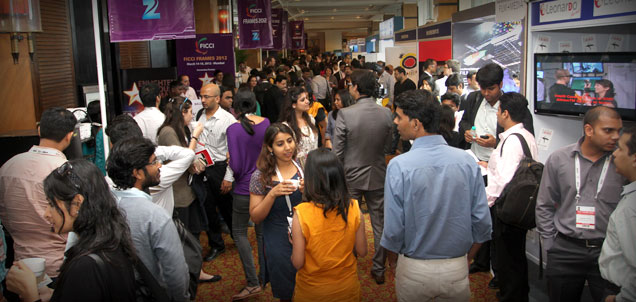
    Those familiar with the going-ons at FICCI Frames would testify how an infatuation gets displayed by delegates at the event each year so as to summarise the mood of the convention even before it broadly takes off across the three days that it is entitled to. But probably, the setting was a bit different this time around when the delegates – joined in unison by the media – were running ballroom to ballroom trying to ingest giveaways that were being thrown up abundantly across several sessions. May be, it was a year where each day had something new to offer to the delegates that kept them at tenterhooks throughout the 3-day event. And going by the loud decibels that were being emanated across every nook and corner of the venue, it was evidently clear that there was some motivating factor that was driving the gathering to go on an overdrive spree.


    The organisers of FICCI Frames 2012 have every right to take credit for coming up with a theme around a medium that attracted the attention of one and all. Having kept it on the sidelines till last year, digital was finally given its due at the convention as experts, authorities and enthusiastic youngsters came face to face to deliberate and come up with outcomes that would redefine the way the consumers consume the medium. From television to print to films and even radio, digitisation and the benefits and effects it would cast on these sectors were discussed in length at the venue. In fact Star India CEO Uday Shankar in his keynote address didn’t hesitate in thanking the FICCI committee for putting across a theme that would go on to redefine the way the industry functions in the future.


    What was apparently clear through the various sessions at the convention is that with the nearing of date for total digitisation across key metros by June 30 2012, and then across the country by 2014, broadcasters had to relook their distribution and content provision models so as to keep the consumer at the heart of every shift that will transpire in the future. Emphasising on the current digitisation scenario in the country, Mr Shankar said, “Most of the discussions that I have participated in are still around whether digitization will happen and if it indeed were to go through, how chaotic it would be. But all these are meaningless discussions triggered by a bunch of retrograde interests who are living in denial.” According to Mr Shankar, digitisation of distribution is a big reality and the 40-45 million homes that have bought DTH boxes at some point or the other are a conclusive evidence of that.


    Shooting back at critics who had doubted whether the makeover to digital would ever be a reality, Mr Shankar said, “To the critics and the cynics who are still wondering whether digitization would happen, my answer is: Look around, it is already happening and the rest of it is bound to happen because even in this country it would be difficult to undo such a momentous shift. To those who wonder how chaotic it would be, my response is that there would be some chaos, but chaos is not necessarily bad if the alternative is status quo or regression. When a transition at such a scale is happening that affects the illegitimate but strong vested interest in certain pockets, then there is an incentive to put up with chaos in the interest of the larger social objectives.”


    A broader outlook was provided by a few panellists who said that digitization will come in as a relief for broadcasters who will be benefitted from additional subscription revenue, relaxation on paying heavy carriage fees, and of course providing viewers with a superior content experience – MSOs and cable operators have to quickly respond to the digitization mandate by investing in set-top boxes – the cost that is only possible to recover after four years.


    Sounding off the challenges that digitisation would present for the broadcast sector, Tarun Katial, CEO of Reliance Broadcast Network Ltd said that, “For television, it will be a combination of content as well as marketing. The old model which was a combination of carriage and product, as it stands today, won’t work. The business plan which currently has a very high rate of carriage will obviously see the content taking precedence.” And as for content, it will be niche content that will call the shots for broadcasters as according to experts at the convention, niche isn’t niche any more as all niche channels put together command a share that is equivalent to the share of Hindi GECs and the mass channels, so to say.


    Perhaps the many advantages that digitisation will have on several mediums was rounded off by Vikram Sakhuja, CEO, South Asia, Group M who said, “The inherent power that digital brings along with it is interactivity and its ability to link multiple devices. Also the ability to enhance real-time consumption of content; linked to that is the entire thing about going mobile.” On the roadmap for the industry, Mr Sakhuja said, “I think integrated media is the best way forward. Today when people think of multimedia planning, they do a separate TV plan, print plan, radio plan, internet plan and so on. I believe that if you actually look at media agnostically and at common metrics of each cost per thousand impressions, these are the ways in which you can construct a media agnostic plan. What it does is, it suddenly gets more money into digital, and when more money can come into digital, that’s when focus is going to come in.”


    While digitisation was the mainstay of every discussion, the all-important issue of regulation too was taken up by panellists who chose to have the government respond to the many queries surrounding the topic. Uday K Varma, I&B Secretary, said that “if people at large seem to be happy with self regulation, I think the government would have no problem in legitimizing them. But I think the self regulation mechanism which has been set up by both the news broadcasters and the entertainment broadcasters, they’ll have to really prove it, not to the government but to the people at large.” He was joined in his cause by Prithviraj Chavan, Chief Minister ofMaharashtrawho said that the challenge would be to adopt the regulatory framework to new technology and ensure that over regulation doesn’t kill a good thing. The Chief Minister emphasised on the need for regulation and suggested that instead of the state regulating the media, the medium should look at regulating itself.


    The other important announcements that came up at the venue included the soon-to-be-passed Copyright Amendment Bill, the roll-out of the imminent phase 3 radio policy that would steer the growth of the medium and increased government aid for the film & entertainment sector.


    New ventures @ FICCI


    BARC takes wings

    In between the many promises and hopes that were being doled out at the sessions came the news of the Indian Broadcasting Foundation (IBF), the Indian Society of Advertisers (ISA) and Advertising Agencies Association of India (AAAI) announcing the official formation of a nationwide audience research joint body — Broadcast Audience Research Council (BARC).

    While IBF will have 60 per cent stake in BARC, ISA and AAAI will each hold 20 per cent stake. The Board of the council will have 10 members, six members from the IBF and two members each from the ISA and AAAI.


    Discovery Kids to flag off ops in April

    Another important announcement was made by President & CEO of Discovery Networks International, Mark Hollinger who announced the launch of its new network for children inIndia, ‘Discovery Kids’. Mr Hollinger said, “Launching in April, the network will initially be available in three languages – Hindi, English and Tamil. The channel will offer children a fun and entertaining way to satisfy their natural curiosity with stimulating and imaginative programming,” he said. The company plans to roll out the channel inPhilippinesandIndonesialater this year.


    Ten Golf tees off

    Taj Television India Pvt Ltd announced the launch of Ten Golf, a dedicated 24-hour golf channel. Ten Golf is the fifth channel from Taj Television India Pvt Ltd and began transmission on March 15, 2012. The dedicated golf channel will showcase a mix of live, non-live and feature programming. The channel will also broadcast live, high quality Golf action from around the world.

    Ten Golf has acquired rights for European Tour and Asian Tour till 2016, and has also entered into partnership with PGTI for three years to telecast the Indian Tour. Further, Ten Golf will be telecasting 400 hrs of golf programming in association with NBC.