Tag: Indian Broadcasting Federation

  • IBF President & VP statement on NTO-2

    By A Correspondent


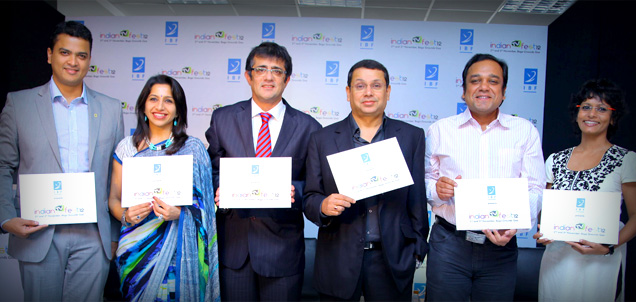
    NP Singh, MD and CEO, Sony Pictures India and Sudhanshu Vats, Group CEO, Viacom18 who are also President and Vice President of the Indian Broadcasting Federation (IBF) issued statements at a press conference convened in Mumbai on Friday.


    Here is the statement by NP Singh:

    “IBF is the industry body of broadcasters. It works towards ensuring that the television industry has a common voice which helps orderly growth of this sector. It also is a forum for the broadcasters to highlight issues which impact the industry as a whole. We all have gathered here under the aegis of IBF to discuss recent developments that can potentially trigger another round of large-scale disruptions, detrimental to the orderly growth of the sector.


    “Content is king and broadcasters invest substantial resources in producing and acquiring world class content, be it entertainment, knowledge or live sports. By packaging a variety of genres in economically priced bouquets, broadcasters offer the Indian consumer  world class news, sports, movies, music and entertainment at affordable prices. Any industry and especially one that is regulated, looks forward to a stable and consistent regulatory regime that works for the benefit of all stakeholders. As broadcasters, we expect a stable regulatory regime, which is necessary to enable long term business planning and a strategic approach towards investments. This is absolutely critical to enable us to provide the best of content to our consumers, more so in these times of rapid technological change.


    “As we have seen, in the last 15 years of regulating the broadcast sector, TRAI has issued more than 36 tariff orders, in an attempt to micro-manage what is arguably the most “value for money” form of news and entertainment in the world. This goes contrary to the Government’s stated position of ensuring the “ease of doing business”.


    “Last year in February 2019, TRAI came up with a New Tariff Order (NTO), which brought about far reaching changes to the way pricing of pay channels was managed. While the broadcasting industry was apprehensive about the magnitude of changes, we supported the move with the best of our abilities. The collective cost to the broadcasters was well over 1,000 crores in just communicating the changes to the consumers. Even with that, there was an overall loss of 12-15 million subscribers in the process. All stakeholders, most of all our consumers, went through considerable inconvenience during the transition period.


    “Even as the new regime was settling down, on 1st January 2020, TRAI notified certain amendments to the New Tariff Order and Interconnection Regulations for the Broadcast sector. These amendments attempt to make further disruptive changes in an industry already grappling with the paradigm shift to an MRP based pricing regime.


    “While the changes are many, I will summarise a few of the key ones:


    1. Arbitrary Reduction of MRP cap from Rs. 19/- to Rs. 12/-, for channels to be part of a bouquet: 

    Just a few months ago (February 2019) the Regulator notified a cap of Rs. 19/- as the threshold for creating bouquets and backed this up with empirical analysis. And now this has been reduced by 40% to Rs. 12/- without any logical rationale or consumer insight to back this change.


    Channel pricing is related to the quality and cost of content being offered, which the Regulator appears to consistently ignore. In a competitive and free market like broadcast, channel pricing should be determined through open market forces rather than through the arbitrary fixing of caps without any fundamental basis.


    2. Imposition of twin conditions on bouquet pricing:

    When the NTO was introduced last year, TRAI took a conscious decision to do away with the twin condition formula for bouquets as the Regulator advocated free pricing. Within a few months, in NTO 2.0, TRAI has sought to reintroduce the twin conditions, negatively impacting the pricing and packaging of bouquets. In order to offer wider choice to their consumers through affordable bouquets which is the practice world over, the broadcasters will have to either price their premier channels very low, hampering the ability to provide quality content or increase the price of other channels just to fit in the maths but artificially increase the burden on consumers.


    Another fall-out of the twin condition restrictions is that it limits the number of channels in the bouquet, which in-turn reduces the value delivered to consumers.


    Moreover, when SD and HD channels are clubbed together in a bouquet, the same price reduction is applicable to both in spite of HD being a premium offering.


    Additionally, using regulation to limit the number of bouquets being offered to consumers is fundamentally restricting consumer choice, given the large variability in consumer preference across 200 million TV homes.


    3. Restricting incentives only to a la carte:

    This is a completely arbitrary discrimination between a la carte and bouquet without a rationale. Just a few months back TRAI thought it fit to allow incentives on both bouquets and a la carte and now in NTO 2.0 TRAI has changed its mind and removed discounts on bouquets. From the regulator looking at the interests of all stakeholders and the industry at large, we expect a market facing and non-discriminatory approach to regulation.


    A few months back, at the request of the Regulator, the major broadcasters including Sony, Star, Zee, Viacom introduced promotional schemes and offered their premier channels at an MRP of Rs. 12/- for a limited period. But the results showed no uptick in the a la carte offering in spite of the price reduction, clearly highlighting the consumer’s preference for bouquets. In fact, our members suffered revenue losses in this whole exercise.


    Additionally, the on-ground experience of this consumer offer has indicated that the desired intention of consumers getting the benefit of such an offer has not materialised in a majority of cases but may have got absorbed as additional margin in the distribution chain. So, it begs the question whether the new changes being recommended will not again end up with the same outcome, given the challenges of on ground execution.


    However, TRAI appears to have a predisposition and bias towards a la carte and against bouquets and is attempting to compel DPOs to not offer bouquets by removing their incentives to do so. Clearly, this is arbitrary and discriminatory. Inspite of 15 years of regulations that sought to influence a consumer’s choice for a la carte, the lay consumer still prefers bundling, a fact the regulator seems unwilling to accept.


    4. Impact of NCF:

    While the stated intent of the Regulator is to allow consumers to get content at more affordable rates, the fact that it’s the imposed NCF is the single largest component of end consumer price is not being addressed.


    In the current NTO, if a consumer is paying, say Rs. 275 per month as his/her bill, ~60% goes to the distribution platforms, 15% towards taxes, and only ~25% comes to pay broadcasters. This when it’s the broadcasters who are creating the content, investing in talent and capability, and taking all the risks related to content development. Why then is the focus only on the broadcaster’s component of revenues, which is only 25% of the consumer bill?


    It is fair to say, the implementation of the MRP regime which came into effect on 1st February 2019 resulted in seismic changes in the distribution landscape. Nevertheless, with the support of all stakeholders and the end consumer, the transition to the new regime was managed relatively smoothly. Broadcasters, on their part, along with other stakeholders, did their best to ensure a smooth transition without disruption of services. It is therefore quite surprising that in less than 12 months after the commencement of the NTO and even before the industry at large and more importantly the end consumer has fully adapted to the new regulatory regime, TRAI has notified amendments in the NTO.


    IBF in its response to TRAI’s consultation paper had pleaded with the regulator to adopt a “soft touch” and allow the industry to come to terms with the current NTO before making further changes. In fact, TRAI itself had acknowledged this need by proposing a two-year moratorium on further regulation. Unfortunately, all IBF’s pleas have been ignored and, in this exercise, content creators and owners have been disempowered by taking away their fundamental right to monetize their content in the manner they choose.


    IBF believes these amendments will severely impair broadcasters’ ability to compete with other unregulated platforms and adversely affect the viability of the pay TV industry.


    And this is what Sudhanshu Vats said: “The objective of NTO 1 was first – to give choice to consumers, second – to bring transparency and third – to reduce litigation. While only the first two have happened, it’s too early to talk about the third. Statistically, overall 94% of Indians are aware of the NTO and the choices they have because of the efforts made by the broadcast industry collectively. The month on month churn in industry shows that people are continuously fine-tuning their choices. The other objective of NTO was transparency which it has also brought in. The question therefore, is “what is the fundamental need to change again? In my opinion there was no need.


    “India is a heterogenous country with different choices and abilities to pay. In every sector there is a wide spectrum and that needs to play out more in Indian media as well. This push for consistency shouldn’t come in the way of the industry’s and economy’s growth. In the M&E industry there is a lot of dynamism and flux and hence the broadcast sector needs to be able to settle down. If there has to be any change we need to allow for enough time for its implementation and also changes shouldn’t be suggested so frequently.”

     

  • Uday Shankar re-elected President of IBF

    By A Correspondent


    Uday Shankar

    Star India CEO Uday Shankar will once again be President of the Indian Broadcasting Federation (IBF), the apex body of television broadcasters in India. At the 15th Annual General Meeting (AGM) IBF held in New Delhi on Wednesday, and the Board of Directors meeting thereafter, Mr Shankar was elected President.


    The IBF Board also elected Punit Goenka as Vice President – Measurement, N P Singh as Vice President – Distribution, Rajat Sharma as Vice President – Strategic Affairs and Rahul Johri as Treasurer.


    Commenting on the development, Uday Shankar said: “I am privileged to be trusted by the members of IBF to lead the industry body at a critical juncture when the industry needs to leap to the next level by working collaboratively with the Government and other stake holders.”


    The move is seen to be significant as the all-important television viewership measurement system of joint industry body BARC is scheduled to be functional in the next few quarters.


  • Broadcasters set to mix ideas & business @ITF

    Announcing the Indian Televsion Fest (from left to right): Keertan Adyanthaya, Monica Tata, Sunil Lulla, Uday Shankar, Punit Goenka and Lydia Buthello


    By Johnson Napier


    The god-like status that the medium of television commands in India today is indicative from the endless attention that gets showered on it from all and sundry. Whether for the advertisers who are willing to bend rules and swing  to their tunes or for the viewers who can take a liking to anything that’s thrown across at them (well, almost), the Indian broadcast industry is calling the shots in a manner that is pivotal to its growth.


    In fact, the popularity that it commands can be gauged from the growth that the medium has been throwing up in the past five years, which has been in the range of 12 per cent. This of course is backed by its ability to occupy a lion’s share of the ad pie and still remain a favourite medium for the advertisers.


    But while there are some obvious highs that ensue from the medium, the medium has been at the receiving end as well. Like the constant criticism it attracts for not being able to display a show of unity to voice common issues rather letting personal goals take precedence. Then there are also those who question the absence of a platform for the industry to come together and air and share views of common interest. But the last peeve may well be a thing of the past with the announcement of the Indian Television Fest 2012.


    The Indian Broadcasting Federation (IBF), led by president Uday Shankar of Star India and core festival committee members comprising Sunil Lulla of Times Television Network, Punit Goenka of ZEEL, Keertan Adyanthaya of NGC Networks, Monica Tata of Turner International India and Lydia Buthello of Star India announced the first-of-its-kind event for the industry. The two-day festival will be held at the Baga Grounds,Goa on November 2 and 3, 2012.


    The two-day fest would be a unique platform for the Indian and global broadcasting industry to network and exchange ideas through engaging panel discussions and master classes. Renowned names from India and across the globe are expected to participate in the mega event. And since it’s Goa, with the inviting beaches for company and some fun.


    Throwing open the idea to the gathering, Mr Shankar began by thanking his core team members, without whom the fest wouldn’t have been a reality. Explaining the thought process behind the exercise, Mr Shankar said: “The idea has been in the pipeline for almost a year now. We felt it was the right time to launch Indian Television Fest as the industry has grown big enough to manage an event of this scale. It basically stemmed from the need to create a platform where the entire broadcast industry could come together under a single roof – irrespective of the organisational and competitive background – so that there could be co-sharing and exchange of ideas and conversations on how the industry can take a big leap into the future.”


    According to him, what would make the event special would be its ability to get together honchos and industry persons from different verticals under television to come and be a part of the give-and-take. He affirmed: “Apart from some familiar and popular names the event will see the best in broadcasting brain trust from India and the world descend at the venue. The ultimate aim of ITF would be to service the larger Indian broadcasting community. It will also be driven with the dual need of being business-minded in its approach while at the same time having a social connect, as we believe the two are interlinked and cannot work in isolation from each other. All in all, we plan to make this event truly iconic in nature.”


    Giving a lowdown on the two-day event, Monica Tata of Turner India began by bringing to light some of the high points of the Indian broadcast industry. Providing a bird’s eye view of the current media scenario, she said: “India is the third largest market for media behind US and China. It has reported a growth of 12 per cent in the last five years which will continue to keep swelling. Further, the country boasts a reach figure of 500 million and is estimated to be worth Rs33,000 crore. This number is expected to triple to almost Rs100,000 crore by 2017. Needless to say there are tremendous opportunities that will enable the industry reach this figure in the coming few years.”


    Highlighting the tremendous opportunities that the Indian market presented for the future, Ms Tata said: “India has a penetration level of just 60 per cent leaving a lot to be achieved going forward. Further the C&S households are expected to grow to 88 per cent from the current 81 per cent. Also, the average time spent on television viewing is still low at 150 minutes compared to other countries that are almost double the number. And finally, with digitisation, DTH, HD taking off in a big way coupled with the unhindered growth of regional channels should see the industry enjoy prime status in the near future.”


    According to Ms Tata, some of the key themes scheduled at ITF include: best practices and masterclass that’ll be weaved around core areas of content, distribution, revenues, technology, etc; presence of visionary speakers like James Murdoch of International News Corporation, Andy Bird of Walt Disney, Hugh Johnson of Channel 4, Michael Lynton of Sony Corporation of America, Subhash Chandra of Zee & Essel Group, etc; debates and conversations; interaction with regulators and policy-makers; and finally encouraging cross-genre ideation.


    Presenting his viewpoint, Sunil Lulla of Times Television Network said: “There was no platform as yet in India where the issues and concerns of the Indian television industry were being raised and addressed. ITF will be a platform where one can learn, interact and demonstrate the road for the future. Three factors that’ll drive this event include the need for conversations, need for confidence to hold an event of this stature and need for commitment from the industry to take this industry from Rs33,000 crore to Rs100,000 crore by 2017.”


    On the key highlights to be expected at the event, Punit Goenka of ZEEL said: “We all know how New Media is going to be the platform of the future and we also know how regionalisation is going to take the industry further…and since regional has a lower base it is growing faster than the other genres. However, there are avenues that we need to discuss. Nobody has an answer as to how we will reach the Rs 100,000-crore mark but one has to start the process of thinking about it.” When asked if it would be a practically possible to reach the Rs100,000 crore mark in a short span of four years he said: “We have to talk about it and see how we get there. Nobody has an answer as to how we would get there. But unless you talk about it and bring it up in discussions how do we even make a beginning to reach there? I think the end goal is not important; it’s the journey which is going to be important.”


    When asked on the initial response that the event has managed to generate, Mr Lulla said: “Members from the broadcast industry have shown tremendous enthusiasm to the initiative, which can be seen from the initial buzz that is being created where registrations are concerned. As you know, we are a little late industry as we like to start things a little later. We hope the television industry supports us in a fashion by sending more members to attend the event. We have fantastic line-up of speakers from India and abroad; and of course, we would like the industry to stretch themselves a bit and sponsor many other themes and elements that we have lined up out there.”


    Mr Lulla added: “As you know, we are always a last-minute booking.com industry, so it’ll be a challenge to get a lot of people to attend the event. Also, there will be the challenge of generating advertising revenues so that we can stage the event successfully. But we are confident of putting up a successful event.”


    On the benefits that will accrue to IBF from the event, he said: “What IBF will particularly benefit from is take the ideas that come out and find out what will be the cornerstones for the industry going forward and what will become items of agenda. What people who come there to attend the event to take off is personal learning – so there will be ideas, new friends will be made…in all, it will be a mind-opening event, so to speak.”


  • Govt can plug revenue leakage by banning carriage fees, says broadcasting industry

    By A Correspondent


    Industry sources have said that banning carriage fees in the new digitisation of cable distribution regime w.e.f July 1 is necessary to ensure that government can plug the huge revenue leakage upwards of Rs10,000 crore annually due to cable companies levying huge carriage fees and grossly under-declaring their subscriber base.


    Moreover, ensuring a “must carry” clause for all TV channels and putting an end to their regulatory pricing wherein TRAI mandates the price that viewers pay for every channel, are also critical to revive the sick TV broadcasting industry, which continues to reel under the triple burden of usurious carriage fees, regulated tariffs for their channels as well as getting a fraction of their due subscriber revenues.


    At present, over nine-tenths of TV channels are in the red and are unable to invest in quality programming, while many smaller/niche channels with big-ticket pedigrees – Imagine TV being the latest – have had to shut down.


    Another fallout of these distorted industry practices has been that potential new export avenues have closed, because India is not able to export television formats and finished content – while other industries like software, music and animation (which do not suffer such a usurious regulatory/industry scenario) have been big-ticket forex earners for over a decade.


    Industry sources said that TV channels collectively paid at least Rs3,500 crore last fiscal to cable companies and distributors as carriage and placement fees, of which news channels alone paid at least Rs1,500 crore. These carriage fees turned many profitable TV channels immediately into the red, thus denying the government a large income tax earning opportunity upwards of Rs1,000 crore per year.


    According to another industry estimate, given the estimated subscription revenues of all MSOs/LCOs in the country, the government has lost about Rs5,950 crore over the five-year period from 2006 to 2011 in service tax alone by reason of under-declaration while the evasion of income tax is about Rs17,413 crore over the five-year period 2006 to 2011; and loss of entertainment tax by states is in addition to that amount.


    Additionally, TRAI had, itself mentioned in a March 2010 paper that “there is evidence of tax evasion in the cable industry…the last publicly available CBEC report of 2005-06 shows only Rs75 crore of service tax being collected from the industry on a base of 68 million subscribers paying an average of Rs165 per month, the estimated service tax collection from analog cable should be in the range of Rs1,400 crore per annum”.


    Another estimate – from HSBC for 2011 – says that the government lost around Rs1,380 crore last year in entertainment and service taxes alone due to cable companies under-declaring their subscriber base by as much as four-fifths. This estimate assumed the potential revenue to government at Rs1,725.90 crore given a Rs165 ARPU for 67 million analog pay TV households and entertainment tax at Rs20 per household along with 12 per cent service tax.


    But because only 20 per cent or 13 million households are disclosed, the actual revenues collated were estimated to be only Rs 345 crore even as TV channels lost out on the bulk of their subscriber fees. These practices have ensured that India now has a cash-rich last mile; India already has the third-largest TV distribution industry in the world where viewers can and are willing to pay for content – borne out by the fact that pay TV penetration is as much as 80 per cent in India, which is amongst the highest in the world.


    On the contrary, TV channels, who actually create the content, get less than a fifth of what viewers actually pay the cable companies. However, broadcasters say that the only opportunity to correct these distortions and ensure that TV channels do not continue to close due to extraneous factors, lies in the digitisation of cable distribution, for which the government is currently putting together relevant rules.


    Under this, it will be mandatory for all viewers to get a digital set-top box and for operators to distribute channels in a digital and addressable format. This will give viewers a wider choice of channels with better viewing quality. In fact, digitisation is now being seen as the game changer for the entire Indian TV industry as it will also significantly benefit distributors the multisystem operators – (MSOs) and local cable operators (LCOs) – whose paying base will improve even further.


    In this regard, Dr Prannoy Roy, chairman, NDTV told ET, that “digitisation of cable distribution is a major step towards making India’s media achieve truly global quality”. However, Rajat Sharma, chairman, India TV, pointed out that digitisation will be “meaningless unless all channels are made available to the consumer and he is given the power to make a choice”.


    He told ET that this can be done “only if it is mandatory for the cable operators to carry all channels and ensure that set-top boxes have the capability to carry more than 500 channels” and added that the government must curb any effort to create an artificial scarcity at the head end or in the box in carrying the channels.


    Pointing to the other issue of price controls on TV channels, Uday Shankar, president, Indian Broadcasting Federation, told ET: “IBF has always believed that channel pricing should be kept under regulatory forbearance and market forces should be allowed to discover channel valuations. Internationally, apart from countries like China or Taiwan, there are no instances of government regulating the pricing of channels. Freedom in pricing is essential for channels to offer best in class, quality programming. In the absence of this freedom, broadcasters are compelled to somehow match spiraling input costs with regulated prices thereby running the risk of compromising quality”.


    He added that there is enough competition in every genre to “remove any fears of exorbitant pricing”, given that the consumer has a choice between multiple DTH platforms and cable operators and “as a result of that, we have seen that the ARPUs have been flat to down”.


    Source: The Economic Times
    Copyright © 2012, Bennett, Coleman & Co. Ltd. All Rights Reserved