We have carried a quick chat with K Ramakrishnan, GM and Country Head, IMRB Kantar World Panel along with Josep Montserrat, global CEO of Kantar Worldpanel recently. We had also spoken to Ramakrishnan on Parle being the #1 brand. Here is the complete interview with him by Anuka Roy
There are brand studies and brand studies, how would you say is the Brand Footprint Global Ranking different from the others?
The basis on which Brand Footprint works is penetration. It looks at the population size you are trying to reach, the penetration that the brand has, at least what percentage of them has access to your product in the last one year and also how often they have used. So, to that extent there is no other ranking which tries to take these in to account. They may take some brand parameters in to account or any of those but this one specifically takes the extent to which a brand has penetrated in to a household. That becomes the biggest point on which it is based and that way it is different.
What would you say is the reason for Parle to be the No 1 brand in India?
In India it is #1 because it reaches a very large number of people, a highly penetrated brand and bought at a frequency. You may have heard that many parts of the country, there is a lot of chai and biscuit happen. So, Parle has taken that occasion pretty well and to that extent that is the reason why it is right on top
In the Indian context where it’s said that India actually comprises many India, can you elaborate on the relevance of the Brand Footprint ranking? Especially the entire Loyalty v/s Penetration debate?
In my mind, it is really not a debate. Loyalty is important and penetration is important. But if you see growth of brands, the brands that have grown what have they improved on? Have they improved on penetration or have they improved on loyalty? At this point, it is very clearly established that penetration is what is leading to growth. In that sense, there is really no clash. So, therefore it is not a competition. And, the relevance in India for something like a Brand Footprint is very clear that the new measure or the new metric by which brands are getting assessed is actually penetration which means the number of new customers they are having, the extent to which you are able to reach. If that is the case, and if this is becoming a metric globally and in India many brands are taking on it, then there is clearly no other metric which can tell them well enough about their standing apart from Brand Footprint.
Has the proliferation of digital impacted the salience of brands in a country like India?
If anything, it has only added to it. Brand salience already exists because of the presence in media. Then the presence of these brands on the digital media. Third, the discussion about these brands on social media. If you add all these things together, it is only building salience in my view
And how would you rate the impact of e-commerce. It’s said that thanks to e-commerce, even the hinterland has access to products (if not services) that were not available because retailers wouldn’t stock the products because of low consumption.
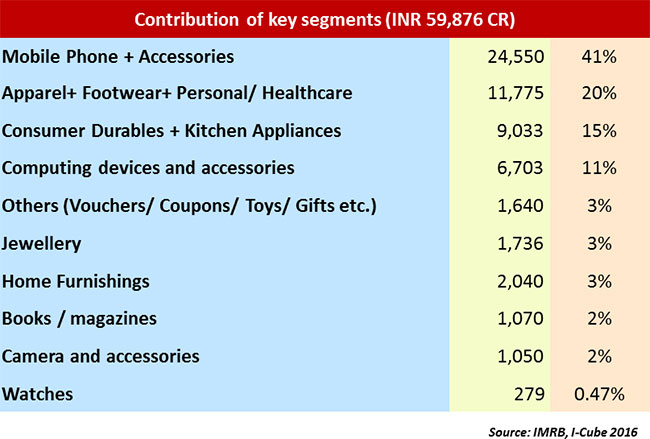
E-commerce at this point of time in our household panel data is a very small percentage. But that said, there are enough sources of information from Kantar itself which state that where and which part is e-commerce growing. Hinterland contributes to a significant percentage of business coming from e-commerce. That is one of the hypothesis is fundamentally those markets do not have access to products because of distribution reasons and other reasons. Since they do not have access by physical availability, they are reaching them through e-commerce is some of the Kantar studies are saying. It is not household panel but it is from Kantar.
Could you elaborate on the term CRP used in the Brand Footprint Study?
Brand Footprint study aims to assess the performance of brand year after year on a certain set of parameters. The term that Brand Footprint uses is called Consumer Reach Point (CRP). So, CRP is actually a product of the population that is available and that can be addressed by the brand, the penetration, which is what percentage of them have reached by this brand in the last particular year and their frequency. It tries to assess is by what extent is the brand able to touch that household in terms of its usage. So, that is what Brand Footprint tries to measure. Therefore, it is a real measure of consumer behaviour towards your brand.
Your study observes that consumers in India expect brands to contribute to creating a better society. But does that really result in better sales?
At the end of the day, we are talking about a case if it is only contributing something in society and not addressing the need for which the brand or product was created that would not be the case. But the fundamental assumption here is that there is product parity. So, each product is delivering on a certain promise. Over and above that, if it identifies with a certain cause then that cause affects a certain set of people and they get associated with the brand that is the benefit. Is there a direct correlation to sales? No. But if they do that consistently, repeatedly and if they are seen as doing that, it has a long term impact on sales.